×

Niger🇳🇪 | citiesNiameyNiger River banks, national museums, administrative center, open-air markets | things to do and best time to go

Explore MaradiExplore Tahoua

Backpacking in Niamey
🏆 Top pickcity ranked #1
By Johan Kruseman 🇳🇱 | Updated June 12, 2026

Most travelers only realize after arrival that Niamey’s real advantage is how quickly you can get things done—visas, permits, bus tickets, even a last-minute SIM card—without the bureaucratic gridlock you’d expect from a capital. Niamey sits on the lazy curve of the Niger River, southwest Niger, closer to Burkina Faso and Benin than to the Sahara’s edge. For backpackers, Niamey is a city of trade-offs: it’s safe by regional standards, with a police presence that’s more reassuring than oppressive, but you’ll need to keep your wits about you after dark. The National Museum is surprisingly engaging, with live hippos just across the river if you want a taste of the wild without leaving town. Don’t expect a backpacker scene—hostels are rare, and you’ll meet more aid workers than travelers, but that means every conversation feels like a discovery. Costs are higher than you’d hope for West Africa, but you’re paying for relative stability and a city that’s easy to navigate. Compared to Agadez or Zinder, Niamey is less exotic but far more functional—a place where logistics work, and that’s its own kind of luxury. The vibe? Unhurried, practical, and quietly confident.

Discover everything you want to know in the 📖 Niger Travel Guide.
Safety warning

The current risk level for Niger is high. Check the advice before going.


Get your Niger guide
69 ranked highlights, routes & tips, works offline (292 pages)
Loading the map 🌍
CLICK TO FILTER
cities
towns
villages
landmarks
national parks
hikes
attractions
festivals
regions
SHOW COUNTRY’S BESTSHOW ALL

✨ Why go?
Ranked #1 city in Niger
What makes it a must-see city

Niamey, the capital of Niger, is often seen as a gateway rather than a destination, but it has its own charm that can enrich your journey. The highlights here are not just about sights; they’re about the experience of the city itself. You’ll find a mix of affordable hostels that cater to backpackers, making it easy to meet fellow travelers and share stories over a meal. The food scene is a delightful exploration of local flavors, with street vendors serving up dishes that won’t break the bank.

What makes Niamey particularly appealing is its walkability. You can easily navigate the city on foot, soaking in the vibrant street life and local culture. As for nightlife, it’s laid-back but lively, with a few bars and music spots where you can unwind after a day of exploration.

From Niamey, you … read more 👉
Niamey, the capital of Niger, is often seen as a gateway rather than a destination, but it has its own charm that can enrich your journey. The highlights here are not just about sights; they’re about the experience of the city itself. You’ll find a mix of affordable hostels that cater to backpackers, making it easy to meet fellow travelers and share stories over a meal. The food scene is a delightful exploration of local flavors, with street vendors serving up dishes that won’t break the bank.

What makes Niamey particularly appealing is its walkability. You can easily navigate the city on foot, soaking in the vibrant street life and local culture. As for nightlife, it’s laid-back but lively, with a few bars and music spots where you can unwind after a day of exploration.

From Niamey, you can also plan day trips to nearby attractions, making it a solid base for those looking to explore further. The city’s transport links are decent, allowing for easy onward travel to other parts of West Africa. If you’re after a mix of culture and convenience, Niamey is worth considering, even if just for a short stop.
Want to include Niamey in your Niger route?
Create a personalized Niger itinerary that includes Niamey and the places that fit your trip — based on your travel style, budget, and available time. Get your route in seconds.

Generate my trip

💡 HighlightsDon't-miss highlights and experiences

  • Musée National Boubou Hama (National Museum) — The best single stop to read Niamey’s past: ethnographic exhibits, reconstructed traditional houses, and a pleasant park where local families picnic; the grounds also host small craft stalls and occasional cultural performances.
  • Grande Mosquée de Niamey — Niamey’s skyline anchor; the exterior architecture and the buzz around Friday prayers give a real feel for the city’s Islamic life (note: entry rules are conservative, so observe local customs).
  • La Corniche / Niger River Promenade — Riverfront life at its most honest: fishermen, pirogues, sunset boat trips and riverside cafés. A slow walk here shows a side of Niamey you won’t see in official photos.
  • Pont Kennedy — The main bridge over the Niger; great for people-watching, sunset views over
read more 👉
  • Musée National Boubou Hama (National Museum) — The best single stop to read Niamey’s past: ethnographic exhibits, reconstructed traditional houses, and a pleasant park where local families picnic; the grounds also host small craft stalls and occasional cultural performances.
  • Grande Mosquée de Niamey — Niamey’s skyline anchor; the exterior architecture and the buzz around Friday prayers give a real feel for the city’s Islamic life (note: entry rules are conservative, so observe local customs).
  • La Corniche / Niger River Promenade — Riverfront life at its most honest: fishermen, pirogues, sunset boat trips and riverside cafés. A slow walk here shows a side of Niamey you won’t see in official photos.
  • Pont Kennedy — The main bridge over the Niger; great for people-watching, sunset views over the river and to watch the everyday traffic that links both banks of the city.
  • Grand Marché (Central Market) — Loud, colourful and chaotic in the best way; come for spices, textiles and to watch the bargaining rituals that are central to urban life in Niamey.
  • Marché Artisanal / Village des Artisans — A focused spot for woodcarvers, leatherworkers and weavers. Better than mall souvenirs: you can watch pieces being made and buy directly from the maker.
  • Institut Français / Centre Culturel Franco-Nigérien — The cultural pulse for concerts, film nights and rotating exhibits; good place to catch contemporary Nigerien art and meet local creatives.
  • Jardin Zoologique de Niamey (Zoo) / Parc du Musée — Small but useful: a botanical feel, local fauna and shaded paths that make for a calm half-day if you want a break from markets and traffic.
  • Vieux Niamey (Old Quarter) and Riverside Docks — Narrow streets, traditional compounds and the working river docks where you can watch loading, small trade and daily routines that have shaped the city for generations.
  • Stade Général Seyni Kountché — More than a stadium: catch a local football match or a public event to feel the city’s energy and see how sports and national ceremonies bring people together.
A few real day-trip options a short drive from Niamey: the Kouré giraffe reserve (see the rare West African giraffes), the riverside town of Say with its historic mosque and pottery traditions, and the town of Dosso with its Sultan’s palace and lively regional market.
Spotted a mistake or missing something? Contact us.

🏘️ NeighborhoodsKey areas and districts to know

Niamey, the capital of Niger, offers a blend of vibrant culture and practical logistics for backpackers. Here’s a breakdown of key neighborhoods to help you navigate your stay.

Centre Ville: This is the heart of Niamey. It’s bustling, with markets and shops lining the streets. You’ll find affordable accommodations and plenty of eateries. Walkability is high, making it easy to explore on foot. Nightlife is lively, with bars and music venues nearby. Perfect for short stays where you want to soak in the local vibe.

Niamey 2000: A bit more upscale, this area features modern amenities and a quieter atmosphere. It’s a great spot for longer stays if you prefer a more relaxed environment. Transport options are good, but you might need to rely on taxis for longer distances. There are parks and cafes, … read more 👉
Niamey, the capital of Niger, offers a blend of vibrant culture and practical logistics for backpackers. Here’s a breakdown of key neighborhoods to help you navigate your stay.

Centre Ville: This is the heart of Niamey. It’s bustling, with markets and shops lining the streets. You’ll find affordable accommodations and plenty of eateries. Walkability is high, making it easy to explore on foot. Nightlife is lively, with bars and music venues nearby. Perfect for short stays where you want to soak in the local vibe.

Niamey 2000: A bit more upscale, this area features modern amenities and a quieter atmosphere. It’s a great spot for longer stays if you prefer a more relaxed environment. Transport options are good, but you might need to rely on taxis for longer distances. There are parks and cafes, making it ideal for unwinding after a day of exploration.

Goudel: Known for its local charm, Goudel is less touristy and offers a glimpse into everyday life in Niamey. Accommodations here are budget-friendly, and the area is walkable. It’s quieter, perfect for those who want to escape the hustle. While nightlife is limited, you can find local eateries serving authentic cuisine.

Hamani Dandji: This neighborhood is a bit off the beaten path but offers a unique experience. It’s more residential, which means you’ll get a taste of local life. Costs are lower, and it’s suitable for longer stays. Public transport is accessible, but be prepared for a bit of a trek to reach major attractions.

⌛️ 1 day1-day itinerary for Niamey

Niamey, the capital of Niger, pulses with a unique blend of culture, history, and a vibrant local scene. It’s not just a stopover; it’s a place where you can feel the rhythm of life in the Sahel. The Niger River flows gracefully through the city, offering a backdrop that’s both serene and lively.

Start your day in the bustling neighborhood of Grand Marché. The market is a sensory overload in the best way—colors, sounds, and aromas collide as vendors hawk everything from spices to textiles. Grab a breakfast of fresh bread and local tea from a street vendor. It’s a simple pleasure that sets the tone for your adventure.

After fueling up, make your way to the National Museum of Niger. This isn’t just a collection of artifacts; it’s a window into the rich history and diverse cultures of the … read more 👉
Niamey, the capital of Niger, pulses with a unique blend of culture, history, and a vibrant local scene. It’s not just a stopover; it’s a place where you can feel the rhythm of life in the Sahel. The Niger River flows gracefully through the city, offering a backdrop that’s both serene and lively.

Start your day in the bustling neighborhood of Grand Marché. The market is a sensory overload in the best way—colors, sounds, and aromas collide as vendors hawk everything from spices to textiles. Grab a breakfast of fresh bread and local tea from a street vendor. It’s a simple pleasure that sets the tone for your adventure.

After fueling up, make your way to the National Museum of Niger. This isn’t just a collection of artifacts; it’s a window into the rich history and diverse cultures of the region. Spend a couple of hours exploring the exhibits, and don’t miss the outdoor section featuring traditional huts and sculptures. It’s a peaceful spot that contrasts nicely with the market’s chaos.

As the sun climbs higher, head towards the riverfront. The area around the Niger River is perfect for a leisurely stroll. You can watch fishermen at work or simply enjoy the view. If you’re feeling adventurous, consider renting a canoe for a short paddle. It’s a chance to see the city from a different angle and escape the hustle for a bit.

For lunch, seek out a local eatery in the Plateau neighborhood. Try a plate of jollof rice or grilled fish, both staples that showcase the local flavors.

As evening approaches, visit the vibrant neighborhood of Niamey’s nightlife. Check out a local bar or café where you can sip on a refreshing bissap (hibiscus tea) while soaking in the atmosphere. If you’re up for it, find a spot that features live music—there’s often a band playing traditional Nigerien tunes.

By the end of the day, you’ll have woven through the heart of Niamey, experiencing its pulse and charm. You’ll leave with a deeper understanding of this city that often flies under the radar, but is rich in stories and warmth.
Turn your Niamey visit into an Niger adventure
Build a complete Niger route with Niamey, hidden gems, must-see destinations, and realistic travel times included.

Generate my trip

🌤️ When to go?Weather, crowds, and seasonal trade-offs


  • Weather: Niamey’s climate is dominated by a hot semi-arid pattern. The dry season from November to February offers clear skies and minimal rain, making it ideal for trekking and city exploration without the mud and humidity that dominate the wet months.

  • Temperature: Daytime highs in the dry season hover around 30-35°C (86-95°F), which is warm but manageable with early starts and shade. The wet season (June to September) spikes temperatures above 40°C (104°F), often paired with oppressive humidity, sapping energy fast.

  • Daylight Hours: Near the equator, Niamey enjoys roughly 12 hours of daylight year-round. This consistency means you can plan your days without worrying about seasonal shifts in sunrise or sunset times.

  • Crowds: Tourist traffic is minimal year-round, but the dry season
read more 👉

  • Weather: Niamey’s climate is dominated by a hot semi-arid pattern. The dry season from November to February offers clear skies and minimal rain, making it ideal for trekking and city exploration without the mud and humidity that dominate the wet months.

  • Temperature: Daytime highs in the dry season hover around 30-35°C (86-95°F), which is warm but manageable with early starts and shade. The wet season (June to September) spikes temperatures above 40°C (104°F), often paired with oppressive humidity, sapping energy fast.

  • Daylight Hours: Near the equator, Niamey enjoys roughly 12 hours of daylight year-round. This consistency means you can plan your days without worrying about seasonal shifts in sunrise or sunset times.

  • Crowds: Tourist traffic is minimal year-round, but the dry season sees a slight uptick as travelers avoid the rains. Expect a quiet, authentic experience with few other backpackers competing for space or resources.

  • Seasonal Activities: The dry season aligns with cultural festivals and markets, offering a richer immersion into local life. The wet season, while lush, limits outdoor activities and can disrupt transport due to flooding.

  • Price Fluctuations: Accommodation and transport costs peak slightly during the dry season when demand rises. The wet season offers lower prices but at the cost of comfort and accessibility.


Pro-tip: Aim for the shoulder months of November and February to balance pleasant weather, fewer crowds, and better prices—maximizing your value without sacrificing comfort.


source: climatestotravel.comJANJanuary: excellent for travelingFEBFebruary: excellent for travelingMARMarch: highly recommended for travelingAPRApril: good for travelingMAYMay: fair for travelingJUNJune: below average for travelingJULJuly: below average for travelingAUGAugust: below average for travelingSEPSeptember: fair for travelingOCTOctober: good for travelingNOVNovember: excellent for travelingDECDecember: excellent for traveling
when-to-go

✈️ The backpacker research shortcutNiger Travel Guide

An offline-friendly backpacking guide with optimized travel routes, ranked highlights, transport advice, and the best areas to stay.
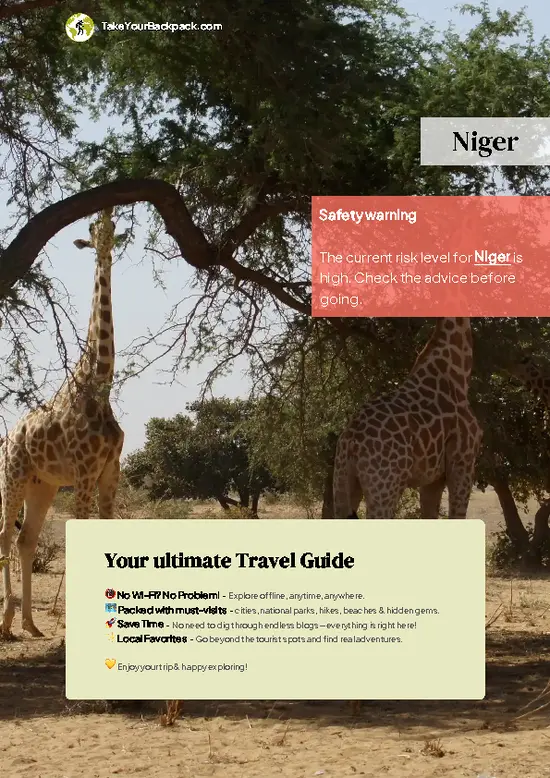
example page 0 from our offline Travel Guide for Niger
example page 1 from our offline Travel Guide for Niger
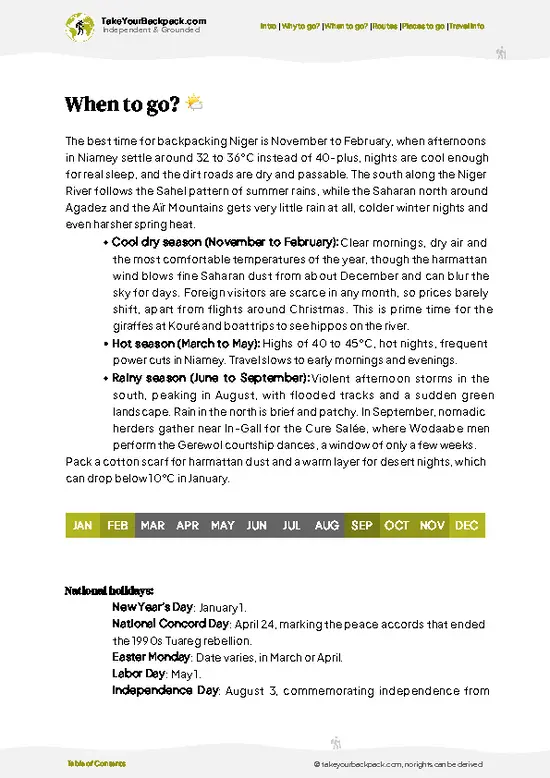
example page 2 from our offline Travel Guide for Niger
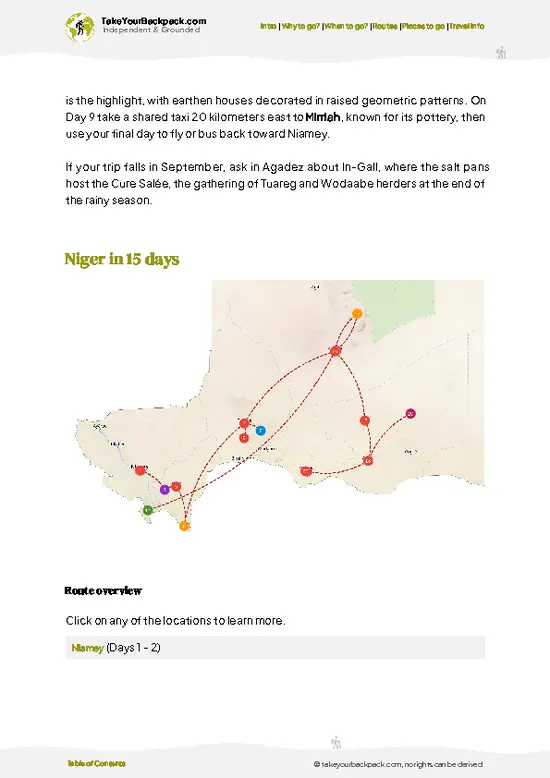
example page 3 from our offline Travel Guide for Niger
example page 4 from our offline Travel Guide for Niger
example page 5 from our offline Travel Guide for Niger
example page 6 from our offline Travel Guide for Niger
example page 7 from our offline Travel Guide for Niger
The digital guide (292 pages) contains:
69 highlights, ranked by travel appeal
Optimized 5, 10 & 15-day travel routes
Cities, national parks, landmarks, beaches
How to get around
Offline-friendly for travel without Wi-Fi
👉 Click to see all 30+ guide features

📅 Plan smarter in minutes, not weeks
Month by month travel advice
Festivals & national holidays
Budget expectations

🗺️ Go to the right places, skip the overrated ones
Honest pros & cons of destinations
Top hikes, parks & viewpoints
Lesser-known places most travelers miss
Clear “worth it vs skip it” guidance

🛏️ Travel smoothly without rookie mistakes
Best areas to stay
Transport systems explained simply
Common scams & safety advice
SIM cards, money & practical tips

🌍 Understand the country, not just visit it
Culture & traditions
52 Essential phrases & customs
Festivals worth planning around
Traveler-friendly historical context
Insights that make places more meaningful

📱 Built for real travel conditions
Fully downloadable PDF
Works completely offline
Optimized for phone use
Useful in remote areas & buses
Everything in one place
Save weeks of stressful planning
Get instant access to your full guide. 30‑day money-back guarantee.


By proceeding you agree to our terms.
Sent to your inbox immediately after payment • 100% Secure Checkout
Best Backpacking Travel Advisor 2025 tourism awardBest Backpacking
Travel Advisor
2025
What others say about Take Your Backpack Guides:
⭐⭐⭐⭐⭐
Fantastic, amazing amount of information!
⭐⭐⭐⭐⭐
My goodness this is amazing, it's what I've been looking for hats off too you!
⭐⭐⭐⭐⭐
I think this is absolutely BRILLIANT
⭐⭐⭐⭐
Very complete and informative. It's still missing places, but I gotta to commend you
⭐⭐⭐⭐⭐
This is truly amazing, thank you, can't wait to explore it with my kids!
⭐⭐⭐⭐⭐
Awesome resource, thank you!
⭐⭐⭐⭐⭐
This is amazing! Can't wait to explore the ones I haven't seen
⭐⭐⭐⭐
I love this! Well done, great idea.
⭐⭐⭐⭐⭐
Thanks for taking the time to make this gem!
⭐⭐⭐⭐⭐
This might be the best website I've ever seen.
⭐⭐⭐⭐⭐
Congratulations, and thank you so much for your work; it's incredibly valuable.
⭐⭐⭐⭐
In all seriousness I think you did a great job pointing out the important spots
⭐⭐⭐⭐⭐
10/10 very good
⭐⭐⭐⭐⭐
As someone who's only just starting to visit regularly this is awesome, thank you.
⭐⭐⭐⭐
Thank you very much! I'm going to visit my dad, it's going to be very useful!
⭐⭐⭐⭐⭐
This is really cool! We'll be travelling for the first time and this definitely come in handy.
⭐⭐⭐⭐⭐
You are now our minister of culture, congratulations 👨‍💼
⭐⭐⭐⭐⭐
Just wanted to tell you that this is a pearl! Going to follow your recommendations.
⭐⭐⭐⭐⭐
This is so cool. I'll definitely be using the resource for my travels soon.
⭐⭐⭐⭐⭐
This is very impressive! Good work.
⭐⭐⭐⭐⭐
This is an amazing and informative site. Very well done!

🛏️ Where to stay?Best areas and accommodation options

In Niamey, the backpacker’s sweet spot is the area around the city center, especially near the Grand Marché and the Boulevard de la République. This zone strikes a rare balance: it’s safe enough to wander after dark, lively enough to meet fellow travelers, and packed with budget-friendly guesthouses and hostels. You’ll find the social pulse here—street vendors hawking local snacks, cafés where you can swap stories with other solo adventurers, and a steady hum of daily life that’s neither overwhelming nor sterile.

Compared to the outskirts or newer districts, which tend to be quieter but isolated, … read more 👉
In Niamey, the backpacker’s sweet spot is the area around the city center, especially near the Grand Marché and the Boulevard de la République. This zone strikes a rare balance: it’s safe enough to wander after dark, lively enough to meet fellow travelers, and packed with budget-friendly guesthouses and hostels. You’ll find the social pulse here—street vendors hawking local snacks, cafés where you can swap stories with other solo adventurers, and a steady hum of daily life that’s neither overwhelming nor sterile.

Compared to the outskirts or newer districts, which tend to be quieter but isolated, staying central means you’re trading a bit of noise for convenience and connection. Public transport and shared taxis converge here, so you’re not burning time or money on long commutes. Comfort is basic but reliable—think clean rooms, communal spaces, and the kind of local hospitality that makes you feel part of the scene rather than a tourist bubble.

If you stray into the more residential or industrial neighborhoods, you’ll save a few bucks but lose the social vibe and easy access to markets and eateries. For a backpacker, that’s a false economy. The city center’s mix of safety, social energy, and budget options makes it the smartest base camp for exploring Niamey without sacrificing your sanity or your wallet.

🚌 Getting aroundTransportation options and practical tips

Niamey moves at its own rhythm—a blend of laid-back West African pace and bursts of urgent hustle. The city’s flow isn’t dictated by strict timetables or polished schedules but by a mix of informal networks and local intuition. You’ll find that time here is elastic: buses and taxis don’t always leave on the dot, but they rarely leave you stranded either. The trade-off is clear—embracing this fluidity means sacrificing predictability but gaining a raw, authentic pulse that no rigid system can replicate. Your challenge is to read the cues, spot the patterns, and slot yourself into the city’s tempo without losing your cool or your wallet.


  • Walking: The ultimate budget option and the best way to absorb Niamey’s street life. Distances within the central neighborhoods are manageable on foot,
read more 👉
Niamey moves at its own rhythm—a blend of laid-back West African pace and bursts of urgent hustle. The city’s flow isn’t dictated by strict timetables or polished schedules but by a mix of informal networks and local intuition. You’ll find that time here is elastic: buses and taxis don’t always leave on the dot, but they rarely leave you stranded either. The trade-off is clear—embracing this fluidity means sacrificing predictability but gaining a raw, authentic pulse that no rigid system can replicate. Your challenge is to read the cues, spot the patterns, and slot yourself into the city’s tempo without losing your cool or your wallet.


  • Walking: The ultimate budget option and the best way to absorb Niamey’s street life. Distances within the central neighborhoods are manageable on foot, especially early morning or late afternoon when the heat softens. Zero cost, full sensory immersion, but prepare for uneven sidewalks and occasional dust. Walking is slow but priceless for those who want to catch the city’s subtle details.


  • Local Buses (Sotrama): These minibuses are the backbone of Niamey’s public transit. They run roughly from 6:30 AM to 7 PM, with fares around 200-300 CFA francs (about $0.35-$0.50). Expect crowded, bumpy rides with frequent stops. Speed is moderate, comfort minimal, but they cover most routes and offer a genuine slice of daily life. Timing is flexible but erratic—buses leave when full, not on schedule.


  • Shared Taxis: A step up in speed and comfort, shared taxis operate on fixed routes but without strict timetables. They run from dawn until late evening, costing about 500-1000 CFA francs ($0.90-$1.80) depending on distance. Faster than buses and less cramped, but you’ll share the ride with locals and their goods. Negotiation skills help here; fares aren’t always fixed, and drivers may wait until full before departing.


  • Motorcycle Taxis (Zémidjans): The quickest way through Niamey’s traffic maze, zémidjans are everywhere and run 24/7. Prices start around 300 CFA francs ($0.50) for short trips but can rise with distance or night rides. They offer unmatched flexibility and speed but at the cost of safety and comfort—helmets are rare, and the ride can be rough. Ideal for urgent hops or when buses and taxis aren’t an option.


  • Private Taxis: The most comfortable and fastest option if you’re willing to spend. Prices vary widely but expect to pay 2000 CFA francs ($3.50) or more for typical city trips. Private taxis run on your schedule, no waiting for passengers, and provide air conditioning if you’re lucky. This is the trade-off: you buy time and comfort at a premium, leaving behind the budget traveler’s bargain.

👛 Costs (as of 23 October 2025)Money, prices, and spending tips

Backpacking in Niamey, Niger, presents a clear trade-off between stretching your budget and maintaining comfort, with costs that reflect the city’s developing infrastructure and local economy.
  • Dorm Accommodation (High Season): Expect to pay around €10-15 per night in basic guesthouses or hostels. These places offer simple, clean dorm beds but can fill up quickly during peak travel months, pushing prices to the higher end.
  • Dorm Accommodation (Off-Season): Prices drop to about €6-10 per night. Availability improves, and you might negotiate better deals, but facilities remain basic—think mosquito nets and shared bathrooms.
  • Meals: Street food and local eateries dominate the scene. Budget around €3-6 per day for three meals if you stick to local dishes like grilled meat skewers, rice, and fresh
read more 👉
Backpacking in Niamey, Niger, presents a clear trade-off between stretching your budget and maintaining comfort, with costs that reflect the city’s developing infrastructure and local economy.
  • Dorm Accommodation (High Season): Expect to pay around €10-15 per night in basic guesthouses or hostels. These places offer simple, clean dorm beds but can fill up quickly during peak travel months, pushing prices to the higher end.
  • Dorm Accommodation (Off-Season): Prices drop to about €6-10 per night. Availability improves, and you might negotiate better deals, but facilities remain basic—think mosquito nets and shared bathrooms.
  • Meals: Street food and local eateries dominate the scene. Budget around €3-6 per day for three meals if you stick to local dishes like grilled meat skewers, rice, and fresh fruit. Western-style or restaurant meals can easily double that.
  • Local Transport: Shared taxis and minibuses are the norm, costing roughly €0.30-0.50 per trip within the city. Budget about €1-2 daily if you move around frequently.
  • City Transport Pass: Niamey does not have a formal city transport pass system. Travel relies on cash payments for each ride, so plan accordingly.
  • Basic Activities/Entry Fees: Cultural sites and museums charge minimal fees, typically under €2. Expect to spend around €2-4 daily if you visit a couple of attractions.
  • Miscellaneous Expenses: Include water, snacks, occasional SIM cards, or small tips. Around €1-3 daily covers these incidentals comfortably.

Altogether, a realistic daily budget for backpacking in Niamey ranges from about €15 on a tight budget during the off-season, up to €30 if you lean towards more comfort or visit in high season. This spread lets you decide how much you want to invest in convenience versus stretching every euro.


source: niger-tourisme.com
⚠️ Prices can change and everyone travels differently, so take this as a rough guide. Hope it helps you plan your adventure!

🚌 Day tripsShort trips worth adding

Niamey, Niger, is a surprisingly strategic base for day trips that pack a punch. With a bit of planning, you can dive into the heart of Niger’s culture and landscapes without breaking the bank or sacrificing comfort.

W National Park
Just a couple of hours from Niamey, W National Park is a wildlife lover’s dream. You’ll find elephants, antelopes, and a variety of birds in their natural habitat. The park’s unique “W” shape, formed by the Niger River, offers stunning views and a chance to connect with nature. A guided tour typically costs around $30, including transport, and the best time to visit is during the dry season from November to April. Many first-timers underestimate the park’s size and miss out on key areas; don’t rush—take your time exploring.
👉 Explore W National Park

Gorouol read more 👉
Niamey, Niger, is a surprisingly strategic base for day trips that pack a punch. With a bit of planning, you can dive into the heart of Niger’s culture and landscapes without breaking the bank or sacrificing comfort.

W National Park
Just a couple of hours from Niamey, W National Park is a wildlife lover’s dream. You’ll find elephants, antelopes, and a variety of birds in their natural habitat. The park’s unique “W” shape, formed by the Niger River, offers stunning views and a chance to connect with nature. A guided tour typically costs around $30, including transport, and the best time to visit is during the dry season from November to April. Many first-timers underestimate the park’s size and miss out on key areas; don’t rush—take your time exploring.
👉 Explore W National Park

Gorouol River
A short drive from Niamey, the Gorouol River is a serene escape. You can kayak or simply relax by the water, soaking in the tranquility. The river is particularly beautiful during the rainy season when it swells and attracts wildlife. Expect to spend about $15 for a day of kayaking and snacks. The best time to visit is between June and September, but be cautious of the muddy paths if you go right after heavy rains. Many backpackers overlook the river, thinking it’s just a stopover, but it’s a perfect spot for a peaceful day.


Dosso
Head to Dosso, a vibrant town about an hour from Niamey, where you can immerse yourself in local markets and culture. The bustling atmosphere is infectious, and you’ll find everything from handmade crafts to delicious street food. A budget of around $10 should cover transport and a meal. The best time to visit is early morning when the market is in full swing. A common mistake is to stick to the main roads; venture into the side streets for a more authentic experience.
👉 Explore Dosso

Lake Tchad
Though a bit farther out, Lake Tchad is worth the effort for its stunning landscapes and unique ecosystems. It takes about three hours to reach, but the sight of the lake at sunset is breathtaking. You can rent a bike for around $5 to explore the area. The dry season is ideal for visiting, as the roads can become impassable during the rains. Many backpackers miss the chance to see the local fishing communities; take the time to chat with them for a richer experience.
Want to know what more Niger offers?
The Niger Travel Guide describes 69 highlights, from cities to national parks, from beaches to hikes

Get the Travel Guide -

🍲 FoodLocal Cuisine & Drinks

In Niamey, food is a vibrant tapestry of flavors and communal experiences. Start with jollof rice, a staple that’s a must-try. It’s often served with grilled chicken or fish, bursting with spices that dance on your palate. Pair it with suya, spicy skewers of meat that sizzle on street corners, filling the air with an irresistible aroma.

For a true local experience, hit the markets. The bustling atmosphere is electric, with vendors calling out, spices piled high, and the scent of fried plantains wafting through the air. Grab a plate of fufu, a starchy side that complements many dishes, and don’t miss out on bitter leaf soup—a unique blend of flavors that showcases Niger’s culinary heritage.

When it comes to drinks, try bissap, a refreshing hibiscus tea that’s both tart and sweet, perfect … read more 👉
In Niamey, food is a vibrant tapestry of flavors and communal experiences. Start with jollof rice, a staple that’s a must-try. It’s often served with grilled chicken or fish, bursting with spices that dance on your palate. Pair it with suya, spicy skewers of meat that sizzle on street corners, filling the air with an irresistible aroma.

For a true local experience, hit the markets. The bustling atmosphere is electric, with vendors calling out, spices piled high, and the scent of fried plantains wafting through the air. Grab a plate of fufu, a starchy side that complements many dishes, and don’t miss out on bitter leaf soup—a unique blend of flavors that showcases Niger’s culinary heritage.

When it comes to drinks, try bissap, a refreshing hibiscus tea that’s both tart and sweet, perfect for cooling off in the heat. The local drinking culture is social; sharing a meal or a drink is a way to connect. Expect to see people gathered around, chatting and laughing, often with a bowl of peanuts or a plate of grilled fish in hand.

Etiquette here is relaxed. It’s common to eat with your hands, so dive in! Just remember to use your right hand, as the left is considered impolite. Embrace the flavors and the warmth of the people; it’s all part of the adventure.

🛡️ SafetyTraveler Safety Guide

Niamey is generally safe for backpackers, but a few nuances can enhance your experience. Stay aware in crowded markets like the Grand Marché, where pickpockets may lurk. Keep your valuables close and avoid flashy displays of wealth.

If you’re traveling solo, especially at night, stick to well-lit areas and consider using a taxi instead of walking. The streets can feel quiet, and a little caution goes a long way.

Scams are rare, but be mindful of overly friendly locals who may offer unsolicited help, especially around tourist spots. Politely decline and trust your instincts.

Everyday annoyances include the heat and occasional power outages, so stay hydrated and be patient. Embrace the rhythm of the city; it’s part of the experience. By being aware and prepared, you can navigate Niamey … read more 👉
Niamey is generally safe for backpackers, but a few nuances can enhance your experience. Stay aware in crowded markets like the Grand Marché, where pickpockets may lurk. Keep your valuables close and avoid flashy displays of wealth.

If you’re traveling solo, especially at night, stick to well-lit areas and consider using a taxi instead of walking. The streets can feel quiet, and a little caution goes a long way.

Scams are rare, but be mindful of overly friendly locals who may offer unsolicited help, especially around tourist spots. Politely decline and trust your instincts.

Everyday annoyances include the heat and occasional power outages, so stay hydrated and be patient. Embrace the rhythm of the city; it’s part of the experience. By being aware and prepared, you can navigate Niamey confidently, turning potential pitfalls into opportunities for connection and adventure.

Other Nigerien cities near Niamey

Explore more nearby:

  • Dosso—royal palace, millet fields, annual festival| 128 km away
  • Illéla—livestock markets, Hausa villages, rural plateau| 353 km away
  • Tahoua—market town, Hausa architecture, regional crossroads| 371 km away

💡 Not sure where to go next?
Create a personalized itinerary for Niger including Niamey and the places that fit your trip.

Generate my itinerary

👉 Discover all cities

Or checkout all Niger has to offer (think cities, towns, villages, national parks, hikes, beaches, festivals)
Country photo of Niger

We 💚 feedbackWhat to keep in mind

Niamey has a pulse that’s hard to ignore. The Niger River glimmers under the sun, and the local markets buzz with life. You’ll find warmth in the smiles of the people, but don’t underestimate the heat—hydrate like it’s your job. The best surprise? Stumbling upon a traditional music night; the rhythms will pull you in. Just a heads-up: public transport can be an adventure in itself. Embrace the chaos, and you’ll leave with stories that stick.

✍️ Help improve this page!
The information on this page is based on in-depth research, insights shared by experienced travelers, and feedback from the local travel community in Niger. While every effort is made to keep the information accurate and current, conditions can change — so if you spot anything incorrect or outdated, please get in touch.


🙋‍♂️ Give feedback

👋 Meet the founderWho’s Behind Take Your Backpack?

Johan, backpacker and founder of TakeYourBackpackHi, I’m Johan (Netherlands 🇳🇱), the creator of TakeYourBackpack. Over the past decade, I’ve backpacked through 80+ countries across six continents, gaining extensive experience with independent travel, long-term trips, and overland routes.

This site is built on a combination of firsthand travel experience and carefully curated insights from other backpackers. Many guides are based on places I’ve personally visited, while others bring together tips, observations, and practical advice shared by trusted travelers I’ve met along the way.

The goal is to provide realistic, experience-driven guidance — not generic itineraries — so you can explore destinations with better context, clearer expectations, and more confidence.

Get full Niger guide •
Instant download • 69 highlights • Full Offline guide