×

Nigeria🇳🇬 | citiesBiuBiu Plateau, Fulani settlements, dry season farming | things to do and best time to go

Explore KafanchanExplore Azare

Backpacking in Biu
🌟 Highlightcity ranked #10
By Johan Kruseman 🇳🇱 | Updated June 11, 2026

You won’t read this on most travel blogs, but Biu’s highland air is crisp enough to make you forget you’re in the heart of northeastern Nigeria—especially at sunrise, when the haze lifts and the rocky hills glow gold. Biu sits in Borno State, far from the chaos of Maiduguri, and feels more like a crossroads than a destination. The town itself is modest: a handful of lively markets, the scent of roasted maize, and the slow rhythm of evenings where locals gather under neem trees. It’s not a nightlife hub or a backpacker magnet; you’ll find few hostels and even fewer fellow travelers, but that’s part of the appeal. Biu works best as a launchpad for exploring the surrounding Mandara Mountains or as a quiet, practical stopover between Gombe and the Cameroon border. Transport is mostly by battered minibuses—expect delays and dust, but also genuine hospitality. Costs are low, but so is infrastructure; safety is reasonable if you stick to daylight and avoid political hotspots. Compared to busier towns like Yola, Biu is more relaxed, less polished, and far more real—perfect if you want to trade convenience for authenticity.

Discover everything you want to know in the 📖 Nigeria Travel Guide.
Safety warning

The current risk level for Nigeria is high. Check the advice before going.


Get your Nigeria guide
89 ranked highlights, routes & tips, works offline (332 pages)
Loading the map 🌍
CLICK TO FILTER
cities
towns
landmarks
national parks
hikes
beaches
attractions
festivals
regions
SHOW COUNTRY’S BESTSHOW ALL

✨ Why go?
Ranked #10 city in Nigeria
What sets this place apart

Backpackers flock to Biu for its strategic location along popular hiking routes and access to cultural sites. The walkable streets invite exploration, while small-scale guesthouses offer a cozy, budget-friendly stay. You can savor local dishes at street stalls, where the aroma of spices fills the air, making meals a sensory experience. Travelers often linger a few days, soaking in the friendly atmosphere that encourages connection among solo adventurers and small groups alike. It’s not a party town, but the social vibe is warm, perfect for those seeking a blend of adventure and community.
Want to include Biu in your Nigeria route?
Create a personalized Nigeria itinerary that includes Biu and the places that fit your trip — based on your travel style, budget, and available time. Get your route in seconds.

Generate my trip

💡 HighlightsEssential experiences to have while visiting Biu

  • Biu Emir’s Palace — The traditional seat of the Emir of Biu, a living center of the emirate’s history and authority; visiting shows traditional architecture, court ceremonies, and is the best place to feel the town’s cultural heartbeat.
  • Biu Plateau (Biu Hills) — Rounded granite outcrops and plateaus that frame the town; easy hikes and viewpoints give wide panoramas, great photo ops, and a tangible sense of the landscape that shaped local life and agriculture.
  • Biu Central Market — A busy, authentic trading hub where farmers, herders, and townsfolk sell produce, grains, textiles and everyday goods; visiting immerses you in daily rhythms, street food, and local commerce.
  • Biu Durbar and Emirate Festivals — Traditional horse parades, music, and processionals held around major religious and
read more 👉
  • Biu Emir’s Palace — The traditional seat of the Emir of Biu, a living center of the emirate’s history and authority; visiting shows traditional architecture, court ceremonies, and is the best place to feel the town’s cultural heartbeat.
  • Biu Plateau (Biu Hills) — Rounded granite outcrops and plateaus that frame the town; easy hikes and viewpoints give wide panoramas, great photo ops, and a tangible sense of the landscape that shaped local life and agriculture.
  • Biu Central Market — A busy, authentic trading hub where farmers, herders, and townsfolk sell produce, grains, textiles and everyday goods; visiting immerses you in daily rhythms, street food, and local commerce.
  • Biu Durbar and Emirate Festivals — Traditional horse parades, music, and processionals held around major religious and civic celebrations; attending one delivers colorful pageantry, traditional dress, and communal spirit you won’t get from a museum.
Nearby day trips worth considering include the Gwoza Mountains for dramatic scenery and village hiking, the town of Chibok for local markets and rural culture, and Maiduguri for larger museums, markets, and transport connections.
Spotted a mistake or missing something? Contact us.
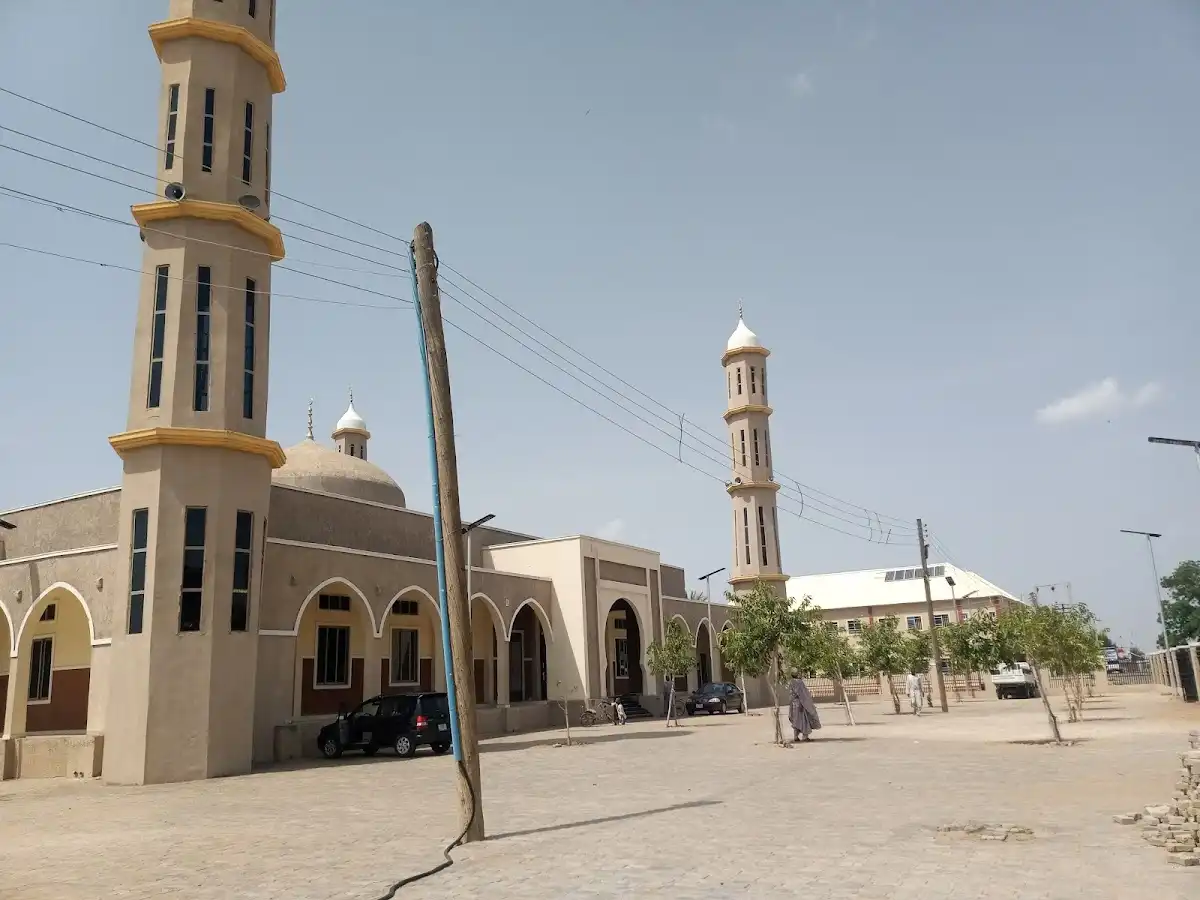
🏘️ NeighborhoodsKey areas and districts to know

Biu, Nigeria, offers a unique blend of culture and accessibility for backpackers. Here’s a breakdown of its neighborhoods:

Central Biu: The heart of the town, buzzing with local markets and street vendors. It’s walkable, with affordable accommodations. The nightlife is lively, thanks to nearby bars and eateries. Perfect for short stays to soak in the local vibe.

Gashua Road: A quieter area, ideal for those seeking a more laid-back experience. It’s less crowded, with a few guesthouses and local eateries. Good for longer stays if you want to immerse yourself in daily life. Transport links are decent, but expect a slower pace.

Wukari Street: Known for its vibrant atmosphere, this area is a hub for nightlife. It’s bustling, with plenty of options for food and drinks. While it can be noisy, … read more 👉
Biu, Nigeria, offers a unique blend of culture and accessibility for backpackers. Here’s a breakdown of its neighborhoods:

Central Biu: The heart of the town, buzzing with local markets and street vendors. It’s walkable, with affordable accommodations. The nightlife is lively, thanks to nearby bars and eateries. Perfect for short stays to soak in the local vibe.

Gashua Road: A quieter area, ideal for those seeking a more laid-back experience. It’s less crowded, with a few guesthouses and local eateries. Good for longer stays if you want to immerse yourself in daily life. Transport links are decent, but expect a slower pace.

Wukari Street: Known for its vibrant atmosphere, this area is a hub for nightlife. It’s bustling, with plenty of options for food and drinks. While it can be noisy, it’s great for social backpackers looking to connect. Short stays work best here to enjoy the energy without feeling overwhelmed.

⌛️ 1 dayWhat you can realistically do in a day

Biu, Nigeria, is a vibrant tapestry of culture and history, where the echoes of ancient traditions meet the pulse of modern life. Start your day early at the bustling Biu Market. The air is thick with the scent of spices and fresh produce, and the chatter of vendors creates a lively backdrop. Grab a local breakfast of yam porridge, a hearty way to fuel your adventures.

In the afternoon, wander through the historic streets of the Gombe neighborhood. Here, you’ll find the remnants of colonial architecture, each building telling a story. Don’t miss the Biu Emirate Palace, a striking structure that showcases the town’s rich heritage. For a unique experience, visit the nearby Kwaya Kusar National Park. It’s often overlooked, but the lush landscapes and diverse wildlife offer a refreshing escape. … read more 👉
Biu, Nigeria, is a vibrant tapestry of culture and history, where the echoes of ancient traditions meet the pulse of modern life. Start your day early at the bustling Biu Market. The air is thick with the scent of spices and fresh produce, and the chatter of vendors creates a lively backdrop. Grab a local breakfast of yam porridge, a hearty way to fuel your adventures.

In the afternoon, wander through the historic streets of the Gombe neighborhood. Here, you’ll find the remnants of colonial architecture, each building telling a story. Don’t miss the Biu Emirate Palace, a striking structure that showcases the town’s rich heritage. For a unique experience, visit the nearby Kwaya Kusar National Park. It’s often overlooked, but the lush landscapes and diverse wildlife offer a refreshing escape.

As the sun sets, head to a local eatery for dinner. Enjoy jollof rice and grilled chicken while soaking in the warm atmosphere. The day wraps up with the sounds of laughter and music, a perfect end to your Biu adventure.
Turn your Biu visit into an Nigeria adventure
Build a complete Nigeria route with Biu, hidden gems, must-see destinations, and realistic travel times included.

Generate my trip

🌤️ When to go?When to go for the best experience


  • Topic: Weather – Biu’s climate swings between a wet season from May to October and a dry season from November to April. The dry months bring clearer skies and less humidity, making hiking and exploring more comfortable. The wet season, with daily downpours and muddy trails, can turn your gear into a soggy mess.

  • Topic: Temperature – Expect highs around 30-35°C (86-95°F) during the dry season, with cooler nights dropping to 20°C (68°F). The wet season feels hotter and stickier, often pushing daytime temps above 35°C (95°F), which can sap your energy fast.

  • Topic: Daylight Hours – Near the equator, daylight stays steady year-round, roughly 12 hours. This consistency means you can plan your days without worrying about early sunsets cutting your adventures short.

  • Topic: Crowds – Biu isn’t
read more 👉

  • Topic: Weather – Biu’s climate swings between a wet season from May to October and a dry season from November to April. The dry months bring clearer skies and less humidity, making hiking and exploring more comfortable. The wet season, with daily downpours and muddy trails, can turn your gear into a soggy mess.

  • Topic: Temperature – Expect highs around 30-35°C (86-95°F) during the dry season, with cooler nights dropping to 20°C (68°F). The wet season feels hotter and stickier, often pushing daytime temps above 35°C (95°F), which can sap your energy fast.

  • Topic: Daylight Hours – Near the equator, daylight stays steady year-round, roughly 12 hours. This consistency means you can plan your days without worrying about early sunsets cutting your adventures short.

  • Topic: Crowds – Biu isn’t a tourist hotspot, so crowds are minimal year-round. However, local festivals during the dry season can bring a lively buzz, offering a chance to dive into authentic cultural experiences without overwhelming tourist traffic.

  • Topic: Seasonal Activities – Dry season is prime for trekking and visiting nearby natural sites. Wet season limits outdoor activities but brings lush greenery and birdwatching opportunities for those willing to brave the mud.

  • Topic: Price Fluctuations – Accommodation and transport costs dip slightly during the wet season due to fewer visitors, but the trade-off is dealing with unreliable roads and fewer open services.


Pro-tip: Aim for the tail end of the dry season (March-April) when the weather is still dry but the landscape starts to green up, giving you the best of comfort and scenery without the wet season’s hassle.


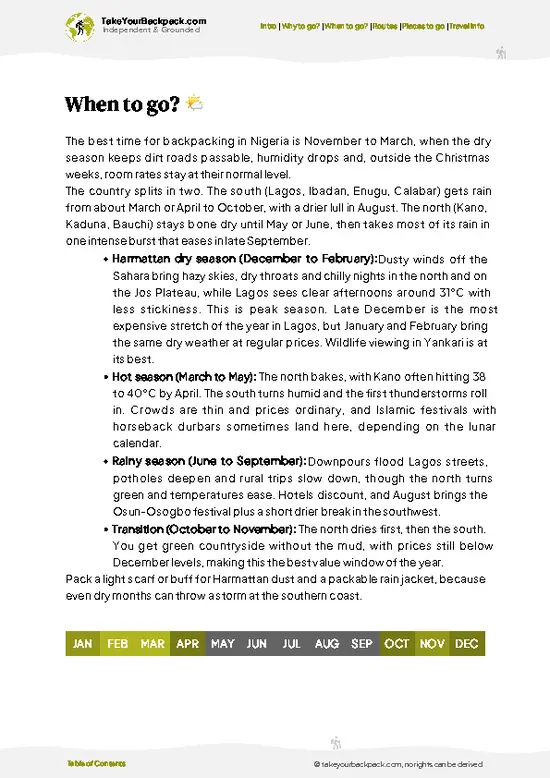
source: climatestotravel.comJANJanuary: excellent for travelingFEBFebruary: excellent for travelingMARMarch: excellent for travelingAPRApril: highly recommended for travelingMAYMay: fair for travelingJUNJune: fair for travelingJULJuly: fair for travelingAUGAugust: fair for travelingSEPSeptember: fair for travelingOCTOctober: fair for travelingNOVNovember: highly recommended for travelingDECDecember: excellent for traveling
nigeria-city-biu
© Google |

✈️ The backpacker research shortcutNigeria Travel Guide

An offline-friendly backpacking guide with optimized travel routes, ranked highlights, transport advice, and the best areas to stay.
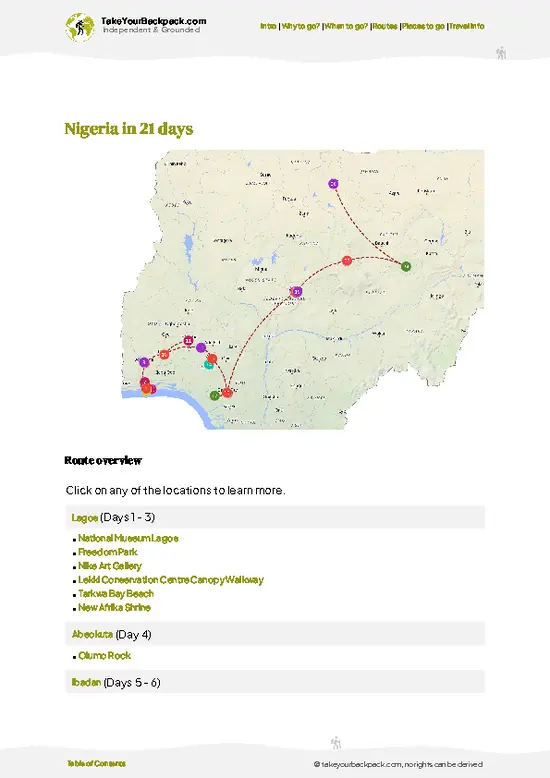
example page 0 from our offline Travel Guide for Nigeria
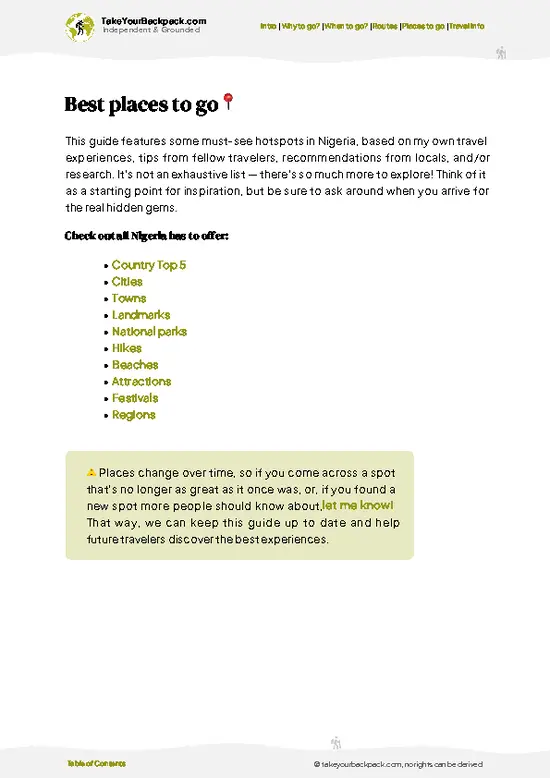
example page 1 from our offline Travel Guide for Nigeria
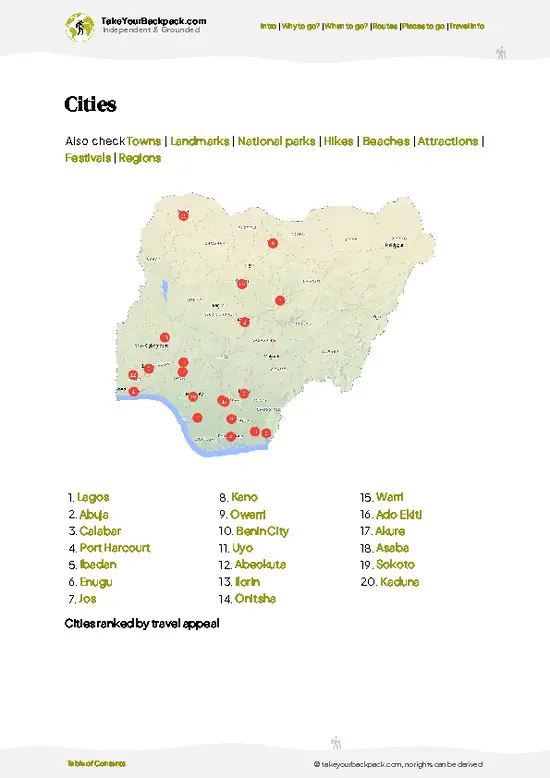
example page 2 from our offline Travel Guide for Nigeria
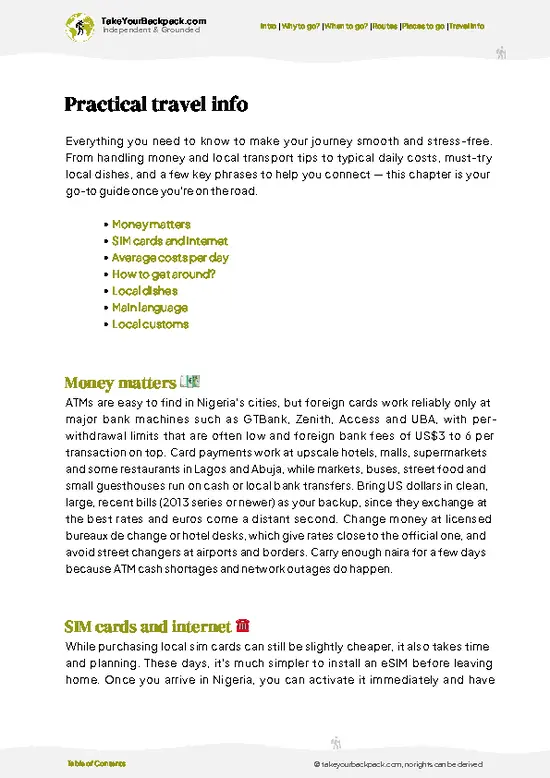
example page 3 from our offline Travel Guide for Nigeria
example page 4 from our offline Travel Guide for Nigeria
example page 5 from our offline Travel Guide for Nigeria
example page 6 from our offline Travel Guide for Nigeria
example page 7 from our offline Travel Guide for Nigeria
The digital guide (332 pages) contains:
89 highlights, ranked by travel appeal
Optimized 7, 14 & 21-day travel routes
Cities, national parks, landmarks, beaches
How to get around
Offline-friendly for travel without Wi-Fi
👉 Click to see all 30+ guide features

📅 Plan smarter in minutes, not weeks
Month by month travel advice
Festivals & national holidays
Budget expectations

🗺️ Go to the right places, skip the overrated ones
Honest pros & cons of destinations
Top hikes, parks & viewpoints
Lesser-known places most travelers miss
Clear “worth it vs skip it” guidance

🛏️ Travel smoothly without rookie mistakes
Best areas to stay
Transport systems explained simply
Common scams & safety advice
SIM cards, money & practical tips

🌍 Understand the country, not just visit it
Culture & traditions
52 Essential phrases & customs
Festivals worth planning around
Traveler-friendly historical context
Insights that make places more meaningful

📱 Built for real travel conditions
Fully downloadable PDF
Works completely offline
Optimized for phone use
Useful in remote areas & buses
Everything in one place
Save weeks of stressful planning
Get instant access to your full guide. 30‑day money-back guarantee.


By proceeding you agree to our terms.
Sent to your inbox immediately after payment • 100% Secure Checkout
Best Backpacking Travel Advisor 2025 tourism awardBest Backpacking
Travel Advisor
2025
What others say about Take Your Backpack Guides:
⭐⭐⭐⭐⭐
Fantastic, amazing amount of information!
⭐⭐⭐⭐⭐
My goodness this is amazing, it's what I've been looking for hats off too you!
⭐⭐⭐⭐⭐
I think this is absolutely BRILLIANT
⭐⭐⭐⭐
Very complete and informative. It's still missing places, but I gotta to commend you
⭐⭐⭐⭐⭐
This is truly amazing, thank you, can't wait to explore it with my kids!
⭐⭐⭐⭐⭐
Awesome resource, thank you!
⭐⭐⭐⭐⭐
This is amazing! Can't wait to explore the ones I haven't seen
⭐⭐⭐⭐
I love this! Well done, great idea.
⭐⭐⭐⭐⭐
Thanks for taking the time to make this gem!
⭐⭐⭐⭐⭐
This might be the best website I've ever seen.
⭐⭐⭐⭐⭐
Congratulations, and thank you so much for your work; it's incredibly valuable.
⭐⭐⭐⭐
In all seriousness I think you did a great job pointing out the important spots
⭐⭐⭐⭐⭐
10/10 very good
⭐⭐⭐⭐⭐
As someone who's only just starting to visit regularly this is awesome, thank you.
⭐⭐⭐⭐
Thank you very much! I'm going to visit my dad, it's going to be very useful!
⭐⭐⭐⭐⭐
This is really cool! We'll be travelling for the first time and this definitely come in handy.
⭐⭐⭐⭐⭐
You are now our minister of culture, congratulations 👨‍💼
⭐⭐⭐⭐⭐
Just wanted to tell you that this is a pearl! Going to follow your recommendations.
⭐⭐⭐⭐⭐
This is so cool. I'll definitely be using the resource for my travels soon.
⭐⭐⭐⭐⭐
This is very impressive! Good work.
⭐⭐⭐⭐⭐
This is an amazing and informative site. Very well done!

🛏️ Where to stay?Best areas to stay in Nigeria

In Biu, the best spot for backpackers is the town center around the main market and the nearby residential quarters. This area hums with life from dawn till dusk—the scent of grilled meat and fresh spices drifts through the air, mixing with the chatter of locals and the occasional honk of motorbikes. It’s where you’ll find the most budget-friendly guesthouses and a handful of hostels catering to solo travelers and small groups. Staying here means you’re plugged into the pulse of the town, with easy access to street food stalls and local hangouts where you can swap stories and pick up tips from … read more 👉
In Biu, the best spot for backpackers is the town center around the main market and the nearby residential quarters. This area hums with life from dawn till dusk—the scent of grilled meat and fresh spices drifts through the air, mixing with the chatter of locals and the occasional honk of motorbikes. It’s where you’ll find the most budget-friendly guesthouses and a handful of hostels catering to solo travelers and small groups. Staying here means you’re plugged into the pulse of the town, with easy access to street food stalls and local hangouts where you can swap stories and pick up tips from other travelers.

Compared to the outskirts, which can feel isolated and less secure after dark, the central neighborhoods offer a safer, more social environment. The streets are busier, well-lit, and you’re never far from a friendly face or a bustling café. It’s not luxury, but it’s authentic and practical—perfect for those who want to soak in the real Biu without the hassle of long commutes or sketchy corners.

🚌 Getting aroundGetting around like a local

Biu moves at its own rhythm—neither a frantic rush nor a clockwork precision. The town’s pulse is set by the sun climbing over dusty rooftops and the slow, steady hum of daily life. Streets don’t scream urgency; they invite you to lean into the warmth of midday heat, the scent of grilled meat from roadside stalls, and the occasional burst of laughter from market corners. Here, schedules are more like gentle suggestions, and intuition guides your steps better than any timetable. To navigate Biu like a local, you’ll want to blend patience with a keen eye for the flow of people and vehicles, catching rides and routes as they come rather than waiting for perfect timing.


  • Walking: The heart of Biu is best explored on foot. Streets are compact and the air carries the aroma of spices and earth,
read more 👉
Biu moves at its own rhythm—neither a frantic rush nor a clockwork precision. The town’s pulse is set by the sun climbing over dusty rooftops and the slow, steady hum of daily life. Streets don’t scream urgency; they invite you to lean into the warmth of midday heat, the scent of grilled meat from roadside stalls, and the occasional burst of laughter from market corners. Here, schedules are more like gentle suggestions, and intuition guides your steps better than any timetable. To navigate Biu like a local, you’ll want to blend patience with a keen eye for the flow of people and vehicles, catching rides and routes as they come rather than waiting for perfect timing.


  • Walking: The heart of Biu is best explored on foot. Streets are compact and the air carries the aroma of spices and earth, making every step a sensory experience. Walking costs nothing, offers unmatched freedom, and lets you soak in the town’s textures—from cracked walls to vibrant market chatter.


  • Motorcycle Taxis (Okada): These are the quickest way to dart through Biu’s narrow, uneven roads. Expect to pay a few hundred naira per short trip. They run from dawn until dusk, but negotiate fares upfront—there’s no meter, just street smarts. The breeze on your face and the engine’s buzz make for a raw, immediate connection to the town’s pulse.


  • Shared Minibuses (Danfo): These clunky, colorful minibuses follow semi-fixed routes connecting Biu’s outskirts to the center. They start early morning and slow down by early evening. Fares are cheap, but expect crowding and stops on demand. It’s a social ride—perfect for people-watching and catching local gossip.


  • Bicycle Rentals: For a bit more control and speed without losing the open-air feel, renting a bicycle is a solid choice. Rentals are affordable and available near markets. Pedaling through Biu’s dusty lanes lets you cover more ground than walking, while still feeling the town’s textures and smells up close.

👛 Costs (as of 3 March 2026)Money, prices, and spending tips

Backpacking in Biu, Nigeria, demands a practical approach to budgeting, reflecting the town’s modest infrastructure and local economy. Here’s what you can expect to spend daily as an independent traveler.
  • Dorm Accommodation: Options are limited and basic, often guesthouses rather than hostels. Expect to pay around $5 to $10 per night. Rooms might be simple, with shared bathrooms and minimal amenities, but clean enough to rest after a day of exploring.
  • Meals: Street food and local eateries dominate. A filling meal of local staples like tuwo or pounded yam with soup costs about $1 to $3. If you opt for something more substantial or a small restaurant, budget up to $5 per meal. Fresh fruit and snacks are cheap but less common.
  • Local Transport: Transport is mostly by motorcycle taxis (okadas)
read more 👉
Backpacking in Biu, Nigeria, demands a practical approach to budgeting, reflecting the town’s modest infrastructure and local economy. Here’s what you can expect to spend daily as an independent traveler.
  • Dorm Accommodation: Options are limited and basic, often guesthouses rather than hostels. Expect to pay around $5 to $10 per night. Rooms might be simple, with shared bathrooms and minimal amenities, but clean enough to rest after a day of exploring.
  • Meals: Street food and local eateries dominate. A filling meal of local staples like tuwo or pounded yam with soup costs about $1 to $3. If you opt for something more substantial or a small restaurant, budget up to $5 per meal. Fresh fruit and snacks are cheap but less common.
  • Local Transport: Transport is mostly by motorcycle taxis (okadas) or shared minibuses. Short rides cost around $0.50 to $1.50. For longer trips within the area, expect to pay up to $3. Walking is often the best way to soak in the atmosphere and save money.
  • Basic Activities/Entry Fees: Biu is more about the experience of the town and surrounding nature than formal tourist sites. Entry fees are rare or negligible, but if you visit local markets or cultural spots, budget around $1 to $2 for small donations or purchases.
  • Miscellaneous Expenses: This includes bottled water, occasional snacks, phone credit, or small tips. Plan for about $1 to $3 daily. Water quality varies, so bottled water is a must, adding a small but necessary cost.

Altogether, a realistic daily budget for backpacking in Biu falls between $10 and $20. This range covers the essentials without luxury, letting you focus on the raw, unfiltered experience of the town and its surroundings.
⚠️ Prices can change and everyone travels differently, so take this as a rough guide. Hope it helps you plan your adventure!

🚌 Day tripsBest day trips from Biu

Biu, Nigeria, is a fantastic launchpad for unforgettable day trips that blend adventure with cultural immersion.

Gashaka Gumti National Park
Just a few hours from Biu, this park is a paradise for nature lovers. The lush greenery and the sound of rustling leaves create a serene backdrop for hiking. Expect to pay around 1,500 Naira for entry, plus transport costs. The best time to visit is during the dry season, from November to March, when trails are more accessible. A common mistake? Underestimating the park’s size—plan for a full day to truly soak it in.
👉 Explore Gashaka Gumti National Park

Wukari Cultural Festival
If you’re in Biu during the festival season, don’t miss this vibrant celebration of the Jukun culture. It’s a short drive, about 90 minutes, and the atmosphere is electric … read more 👉
Biu, Nigeria, is a fantastic launchpad for unforgettable day trips that blend adventure with cultural immersion.

Gashaka Gumti National Park
Just a few hours from Biu, this park is a paradise for nature lovers. The lush greenery and the sound of rustling leaves create a serene backdrop for hiking. Expect to pay around 1,500 Naira for entry, plus transport costs. The best time to visit is during the dry season, from November to March, when trails are more accessible. A common mistake? Underestimating the park’s size—plan for a full day to truly soak it in.
👉 Explore Gashaka Gumti National Park

Wukari Cultural Festival
If you’re in Biu during the festival season, don’t miss this vibrant celebration of the Jukun culture. It’s a short drive, about 90 minutes, and the atmosphere is electric with traditional music and dance. Entry is usually free, but bring some cash for local crafts. The festival typically occurs in August, so plan ahead. Many first-timers overlook the importance of local customs—take time to engage with the community for a richer experience.


Yola’s Kiri Dam
A scenic two-hour drive leads you to Kiri Dam, where the shimmering water reflects the sky. It’s perfect for a picnic or a leisurely walk along the shore. Expect to spend around 1,000 Naira for transport and snacks. The dry season is ideal for clear views and pleasant weather. A rookie mistake? Forgetting sunscreen—those rays can be intense!
Want to know what more Nigeria offers?
The Nigeria Travel Guide describes 89 highlights, from cities to national parks, from beaches to hikes

Get the Travel Guide -

🍲 FoodEating & Drinking in Biu

In Biu, food is a lively negotiation between bold flavors and simple, hearty ingredients. You’ll want to dive into tuwo shinkafa, a sticky rice pudding that’s the perfect vehicle for rich, spicy soups like miyan kuka, made from baobab leaves. These dishes aren’t just meals; they’re a taste of local history, often enjoyed with your hands, which is both practical and deeply social.

Backpackers find their groove in the bustling markets and street stalls, where the air hums with sizzling meat and the sharp tang of freshly ground spices. Casual eateries here don’t fuss with fancy menus—expect chalkboard specials or just a nod to what’s fresh. It’s a place where sharing a plate with strangers over a cold zobo (hibiscus drink) or a locally brewed beer feels like joining a community rather than just … read more 👉
In Biu, food is a lively negotiation between bold flavors and simple, hearty ingredients. You’ll want to dive into tuwo shinkafa, a sticky rice pudding that’s the perfect vehicle for rich, spicy soups like miyan kuka, made from baobab leaves. These dishes aren’t just meals; they’re a taste of local history, often enjoyed with your hands, which is both practical and deeply social.

Backpackers find their groove in the bustling markets and street stalls, where the air hums with sizzling meat and the sharp tang of freshly ground spices. Casual eateries here don’t fuss with fancy menus—expect chalkboard specials or just a nod to what’s fresh. It’s a place where sharing a plate with strangers over a cold zobo (hibiscus drink) or a locally brewed beer feels like joining a community rather than just grabbing a bite.

When it comes to etiquette, don’t rush. Meals are a slow dance of conversation and savoring. Refusing food can be taken as a slight, so if you’re offered a taste, say yes—it’s part of the rhythm that makes eating in Biu more than fuel, but a genuine connection.

🛡️ SafetyTraveler Safety Guide

Biu, Nigeria, is generally safe, but awareness is key. Stick to well-lit areas at night and avoid wandering alone after dark; the streets can feel different when the sun sets.

Watch for common scams, like overly friendly locals offering unsolicited help that leads to a fee. Keep your belongings close, especially in crowded markets where distractions can occur.

Carry yourself confidently and engage with locals; a friendly demeanor can often disarm potential annoyances. Enjoy the vibrant atmosphere, but stay alert to make the most of your experience.

Other Nigerian cities near Biu

Explore more nearby:

  • Gombe—savannah landscape, Emir’s palace, regional markets| 117 km away
  • Mubi—border town, cattle trade, hillside neighborhoods| 123 km away
  • Damaturu—arid climate, administrative buildings, local mosques| 129 km away

💡 Not sure where to go next?
Create a personalized itinerary for Nigeria including Biu and the places that fit your trip.

Generate my itinerary

👉 Discover all cities

Or checkout all Nigeria has to offer (think cities, towns, villages, national parks, hikes, beaches, festivals)
Country photo of Nigeria

We 💚 feedbackFinal thoughts on visiting Biu

Biu pulses with a raw energy that’s hard to shake off. The aroma of spicy suya fills the air, mingling with laughter from street vendors. Just watch your step—some roads can surprise you with their unevenness. Embrace the chaos; it’s part of the charm.

✍️ Help improve this page!
The information on this page is based on in-depth research, insights shared by experienced travelers, and feedback from the local travel community in Nigeria. While every effort is made to keep the information accurate and current, conditions can change — so if you spot anything incorrect or outdated, please get in touch.


🙋‍♂️ Give feedback

👋 Meet the founderWho’s Behind Take Your Backpack?

Johan, backpacker and founder of TakeYourBackpackHi, I’m Johan (Netherlands 🇳🇱), the creator of TakeYourBackpack. Over the past decade, I’ve backpacked through 80+ countries across six continents, gaining extensive experience with independent travel, long-term trips, and overland routes.

This site is built on a combination of firsthand travel experience and carefully curated insights from other backpackers. Many guides are based on places I’ve personally visited, while others bring together tips, observations, and practical advice shared by trusted travelers I’ve met along the way.

The goal is to provide realistic, experience-driven guidance — not generic itineraries — so you can explore destinations with better context, clearer expectations, and more confidence.

Get full Nigeria guide •
Instant download • 89 highlights • Full Offline guide