×

Nigeria🇳🇬 | citiesGombesavannah landscape, Emir’s palace, regional markets | things to do and best time to go

Explore LokojaExplore Umuahia

Backpacking in Gombe
👌 Worth visitingcity ranked #28
By Johan Kruseman 🇳🇱 | Updated June 8, 2026

Forget the idea that Gombe is just a dusty stopover or a “blank spot” on the map—there’s more going on here than most travelers expect. Sitting in northeastern Nigeria, Gombe is a city where the pulse of daily life is visible on every corner: lively markets, the old Emir’s Palace, and the surprisingly green Gombe Abba Forest Reserve. It’s affordable, straightforward to navigate, and generally safe if you stick to daylight hours, though nightlife is minimal and you’ll rarely bump into other backpackers. Compared to Jos or Bauchi, Gombe is quieter, less cosmopolitan, but offers a raw, unfiltered look at northern Nigerian life—welcoming, sometimes chaotic, and always real.

Discover everything you want to know in the 📖 Nigeria Travel Guide.
Safety warning

The current risk level for Nigeria is high. Check the advice before going.


Get your Nigeria guide
89 ranked highlights, routes & tips, works offline (332 pages)
Loading the map 🌍
CLICK TO FILTER
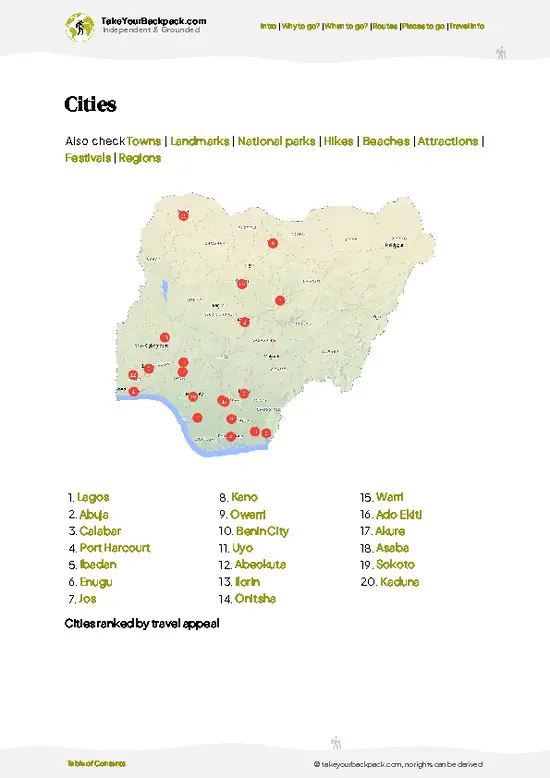
cities
towns
landmarks
national parks
hikes
beaches
attractions
festivals
regions
SHOW COUNTRY’S BESTSHOW ALL

✨ Why go?
Ranked #28 city in Nigeria
What makes this city worth visiting

Gombe is a strategic basecamp for backpackers, offering a mix of affordability and accessibility. The city’s walkability makes it easy to explore local markets and street food stalls, where you can savor authentic Nigerian flavors without breaking the bank. Hostels here are budget-friendly and often buzzing with fellow travelers, creating a vibrant community atmosphere. While Gombe may not have the most extensive nightlife, the laid-back bars provide a perfect spot to unwind after a day of adventure. Plus, its location allows for easy onward travel to nearby attractions, making it a smart stop on your journey rather than just a fleeting visit.
Want to include Gombe in your Nigeria route?
Create a personalized Nigeria itinerary that includes Gombe and the places that fit your trip — based on your travel style, budget, and available time. Get your route in seconds.

Generate my trip

💡 HighlightsWhat this place is best known for

  1. Gombe Emir’s Palace — The heart of the city’s traditional authority. Even if you can’t go inside on every visit, the palace compound, the guards in traditional dress, and the surrounding streets give a strong sense of historical rule, local pageantry, and Hausa-Fulani court culture.
  2. Gombe Main Market (Central Market) — A proper sensory hit: fabrics, spices, household goods and lively bargaining. Great for people-watching, sampling street food, and seeing how commerce really runs in the city.
  3. Pantami Stadium / Sports Complex — A modern-looking local stadium where you can catch football matches, local athletic events, or community fairs. It’s also a good place to meet locals who follow the city’s teams.
  4. Gombe State University (main campus) — Walk the campus to feel the city’s youthful side:
read more 👉
  1. Gombe Emir’s Palace — The heart of the city’s traditional authority. Even if you can’t go inside on every visit, the palace compound, the guards in traditional dress, and the surrounding streets give a strong sense of historical rule, local pageantry, and Hausa-Fulani court culture.
  2. Gombe Main Market (Central Market) — A proper sensory hit: fabrics, spices, household goods and lively bargaining. Great for people-watching, sampling street food, and seeing how commerce really runs in the city.
  3. Pantami Stadium / Sports Complex — A modern-looking local stadium where you can catch football matches, local athletic events, or community fairs. It’s also a good place to meet locals who follow the city’s teams.
  4. Gombe State University (main campus) — Walk the campus to feel the city’s youthful side: student life, small cafés, and occasional cultural events or exhibitions that reflect local creativity and politics.
  5. Government House & State Secretariat Area — The administrative center, useful for understanding modern Gombe’s civic life. The precincts, nearby monuments and public squares often host official events and are worth a slow walk.
  6. Gombe Central Mosque (Friday Mosque) — An accessible landmark that’s central to daily life and religious practice. Observing prayer time, architecture, and the rhythms around the mosque gives cultural context that photos alone won’t convey.
  7. Livestock/Cattle Market — Gombe’s livestock trade is important to the local economy. Visiting the cattle or livestock market early in the morning shows a different, rural-meets-urban side of the city—traders, animal handlers, and the noisy business of trade.
  8. Gongola/Gombe Riverbank (riverfront areas) — The river edges and small fishing/boat spots are soothing and reveal local livelihoods — fishermen, washerwomen, riverside vendors — and good sunset photo opportunities away from the traffic.
  9. Old Quarter / Traditional Streets — The older neighborhoods around the palace and central market where narrow lanes, local tailors, small craft workshops, and tea stalls still operate the old way. It’s where you’ll feel the city’s history under your feet.
  10. Public Parks and Community Gardens — Small municipal parks and green spaces that locals use for evening walks, family time and informal markets. They’re low-key but great for a relaxed break and a chance to chat with residents.
A few easy day trips from Gombe city are Yankari Game Reserve (famous for wildlife and warm springs in neighbouring Bauchi state), the rock-climbing and waterfall area around Kaltungo, and various scenic spots in Gombe State’s upland LGAs that offer hikes and rural markets.
Spotted a mistake or missing something? Contact us.

🏘️ NeighborhoodsUnderstanding the local layout

Gombe offers a unique blend of culture and accessibility for backpackers. Here’s how its neighborhoods stack up:

Gombe Town: The heart of the city, Gombe Town buzzes with local markets and street food. It’s affordable, with plenty of budget accommodations. Walkability is decent, but be prepared for some hustle. Nightlife is low-key, perfect for those who prefer a quieter evening. Great for short stays, as you can easily explore the main attractions.

Federal Low-Cost Housing: This area is more residential, offering a glimpse into everyday life. It’s quieter and less touristy, making it ideal for longer stays. Costs are moderate, and you’ll find local eateries. Walkability is good, but public transport is your best bet for reaching the city center.

Gombe State University Area: A youthful … read more 👉
Gombe offers a unique blend of culture and accessibility for backpackers. Here’s how its neighborhoods stack up:

Gombe Town: The heart of the city, Gombe Town buzzes with local markets and street food. It’s affordable, with plenty of budget accommodations. Walkability is decent, but be prepared for some hustle. Nightlife is low-key, perfect for those who prefer a quieter evening. Great for short stays, as you can easily explore the main attractions.

Federal Low-Cost Housing: This area is more residential, offering a glimpse into everyday life. It’s quieter and less touristy, making it ideal for longer stays. Costs are moderate, and you’ll find local eateries. Walkability is good, but public transport is your best bet for reaching the city center.

Gombe State University Area: A youthful vibe dominates here, thanks to the student population. Expect affordable guesthouses and lively evenings. It’s walkable, with plenty of cafes and bars. Ideal for both short and longer visits, especially if you enjoy a vibrant atmosphere.

⌛️ 1 dayHow to make the most of one day

Gombe, Nigeria, is a city where the pulse of everyday life meets the rich tapestry of culture. It’s a place where you can witness the vibrant local markets and the warmth of its people, making it a rewarding stop for any traveler.

Start your morning at the Gombe Central Market. The air is filled with the scent of spices and fresh produce. Engage with local vendors and savor a breakfast of puff-puff and zobo, a refreshing hibiscus drink. This bustling hub is not just about shopping; it’s a slice of life in Gombe.

In the afternoon, head to the Gombe State University area. The campus is a peaceful spot to stroll and soak in the local vibe. Nearby, the Gombe State Museum offers a glimpse into the region’s history, showcasing artifacts that tell stories of the past.

As evening approaches, make … read more 👉
Gombe, Nigeria, is a city where the pulse of everyday life meets the rich tapestry of culture. It’s a place where you can witness the vibrant local markets and the warmth of its people, making it a rewarding stop for any traveler.

Start your morning at the Gombe Central Market. The air is filled with the scent of spices and fresh produce. Engage with local vendors and savor a breakfast of puff-puff and zobo, a refreshing hibiscus drink. This bustling hub is not just about shopping; it’s a slice of life in Gombe.

In the afternoon, head to the Gombe State University area. The campus is a peaceful spot to stroll and soak in the local vibe. Nearby, the Gombe State Museum offers a glimpse into the region’s history, showcasing artifacts that tell stories of the past.

As evening approaches, make your way to the Gombe River. It’s less frequented by tourists, but the riverside is perfect for unwinding. Grab a seat at a local eatery and enjoy a plate of jollof rice while watching the sunset paint the sky. This day in Gombe will leave you with a deeper appreciation for its culture and community.
Turn your Gombe visit into an Nigeria adventure
Build a complete Nigeria route with Gombe, hidden gems, must-see destinations, and realistic travel times included.

Generate my trip

🌤️ When to go?Choosing the right time of year


  • Topic: Weather – Gombe’s dry season from November to March offers clear skies and minimal rain, perfect for trekking and outdoor exploration. The wet season (April to October) brings heavy rains that can turn trails into mud baths and disrupt plans.

  • Topic: Temperature – Expect highs around 32–38°C (90–100°F) in the dry season, with cooler nights dipping to 18–22°C (64–72°F). The wet season is slightly cooler but more humid, making exertion tougher.

  • Topic: Daylight Hours – Gombe enjoys roughly 11–12 hours of daylight year-round, so timing won’t affect how much you can hike or explore each day.

  • Topic: Crowds – Tourist traffic is low year-round, but the dry season sees a slight uptick as regional travelers avoid the rains. Expect more local festivals and activity then.

  • Topic: Seasonal
read more 👉

  • Topic: Weather – Gombe’s dry season from November to March offers clear skies and minimal rain, perfect for trekking and outdoor exploration. The wet season (April to October) brings heavy rains that can turn trails into mud baths and disrupt plans.

  • Topic: Temperature – Expect highs around 32–38°C (90–100°F) in the dry season, with cooler nights dipping to 18–22°C (64–72°F). The wet season is slightly cooler but more humid, making exertion tougher.

  • Topic: Daylight Hours – Gombe enjoys roughly 11–12 hours of daylight year-round, so timing won’t affect how much you can hike or explore each day.

  • Topic: Crowds – Tourist traffic is low year-round, but the dry season sees a slight uptick as regional travelers avoid the rains. Expect more local festivals and activity then.

  • Topic: Seasonal Activities – The dry season aligns with cultural festivals and wildlife viewing in nearby reserves, adding layers to your experience beyond just the city.

  • Topic: Price Fluctuations – Accommodation and transport costs rise modestly during the dry season due to demand, but the premium is worth smoother logistics and better conditions.


Pro-tip: Prioritize the dry season for a balance of comfort, accessibility, and richer cultural encounters—your best bet to turn logistics into an advantage, not a headache.


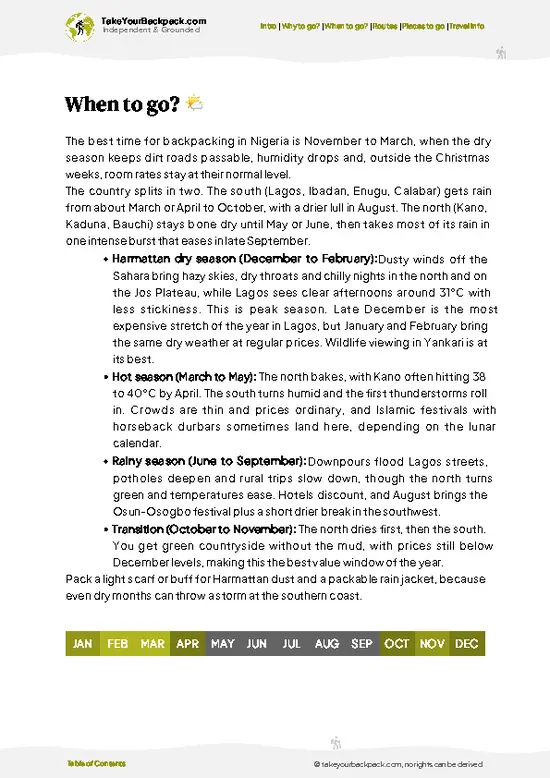
source: climatestotravel.comJANJanuary: excellent for travelingFEBFebruary: excellent for travelingMARMarch: excellent for travelingAPRApril: fair for travelingMAYMay: fair for travelingJUNJune: fair for travelingJULJuly: fair for travelingAUGAugust: fair for travelingSEPSeptember: fair for travelingOCTOctober: fair for travelingNOVNovember: excellent for travelingDECDecember: excellent for traveling
when-to-go

✈️ The backpacker research shortcutNigeria Travel Guide

An offline-friendly backpacking guide with optimized travel routes, ranked highlights, transport advice, and the best areas to stay.
example page 0 from our offline Travel Guide for Nigeria
example page 1 from our offline Travel Guide for Nigeria
example page 2 from our offline Travel Guide for Nigeria
example page 3 from our offline Travel Guide for Nigeria
example page 4 from our offline Travel Guide for Nigeria
example page 5 from our offline Travel Guide for Nigeria
example page 6 from our offline Travel Guide for Nigeria
example page 7 from our offline Travel Guide for Nigeria
The digital guide (332 pages) contains:
89 highlights, ranked by travel appeal
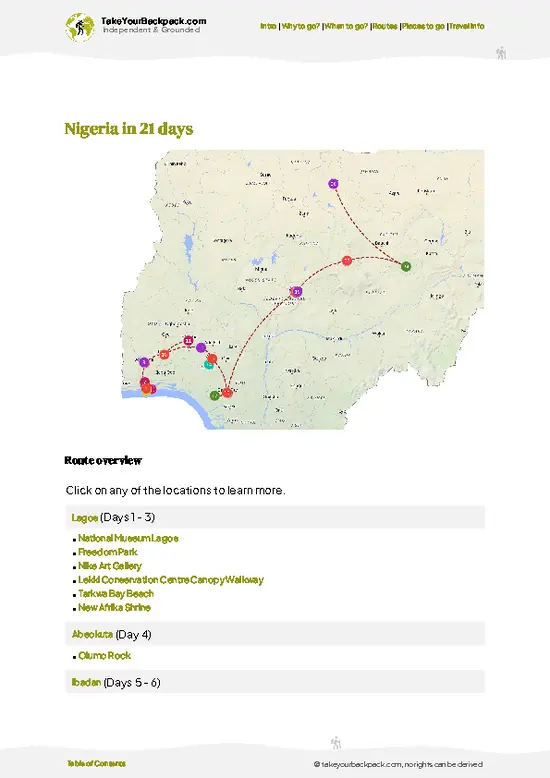
Optimized 7, 14 & 21-day travel routes
Cities, national parks, landmarks, beaches
How to get around
Offline-friendly for travel without Wi-Fi
👉 Click to see all 30+ guide features

📅 Plan smarter in minutes, not weeks
Month by month travel advice
Festivals & national holidays
Budget expectations

🗺️ Go to the right places, skip the overrated ones
Honest pros & cons of destinations
Top hikes, parks & viewpoints
Lesser-known places most travelers miss
Clear “worth it vs skip it” guidance

🛏️ Travel smoothly without rookie mistakes
Best areas to stay
Transport systems explained simply
Common scams & safety advice
SIM cards, money & practical tips

🌍 Understand the country, not just visit it
Culture & traditions
52 Essential phrases & customs
Festivals worth planning around
Traveler-friendly historical context
Insights that make places more meaningful

📱 Built for real travel conditions
Fully downloadable PDF
Works completely offline
Optimized for phone use
Useful in remote areas & buses
Everything in one place
Save weeks of stressful planning
Get instant access to your full guide. 30‑day money-back guarantee.


By proceeding you agree to our terms.
Sent to your inbox immediately after payment • 100% Secure Checkout
Best Backpacking Travel Advisor 2025 tourism awardBest Backpacking
Travel Advisor
2025
What others say about Take Your Backpack Guides:
⭐⭐⭐⭐⭐
Fantastic, amazing amount of information!
⭐⭐⭐⭐⭐
My goodness this is amazing, it's what I've been looking for hats off too you!
⭐⭐⭐⭐⭐
I think this is absolutely BRILLIANT
⭐⭐⭐⭐
Very complete and informative. It's still missing places, but I gotta to commend you
⭐⭐⭐⭐⭐
This is truly amazing, thank you, can't wait to explore it with my kids!
⭐⭐⭐⭐⭐
Awesome resource, thank you!
⭐⭐⭐⭐⭐
This is amazing! Can't wait to explore the ones I haven't seen
⭐⭐⭐⭐
I love this! Well done, great idea.
⭐⭐⭐⭐⭐
Thanks for taking the time to make this gem!
⭐⭐⭐⭐⭐
This might be the best website I've ever seen.
⭐⭐⭐⭐⭐
Congratulations, and thank you so much for your work; it's incredibly valuable.
⭐⭐⭐⭐
In all seriousness I think you did a great job pointing out the important spots
⭐⭐⭐⭐⭐
10/10 very good
⭐⭐⭐⭐⭐
As someone who's only just starting to visit regularly this is awesome, thank you.
⭐⭐⭐⭐
Thank you very much! I'm going to visit my dad, it's going to be very useful!
⭐⭐⭐⭐⭐
This is really cool! We'll be travelling for the first time and this definitely come in handy.
⭐⭐⭐⭐⭐
You are now our minister of culture, congratulations 👨‍💼
⭐⭐⭐⭐⭐
Just wanted to tell you that this is a pearl! Going to follow your recommendations.
⭐⭐⭐⭐⭐
This is so cool. I'll definitely be using the resource for my travels soon.
⭐⭐⭐⭐⭐
This is very impressive! Good work.
⭐⭐⭐⭐⭐
This is an amazing and informative site. Very well done!

🛏️ Where to stay?How to pick the right area

In Gombe, the sweet spot for backpackers is the city center and the nearby Tudun Wada district. These areas strike a rare balance: they’re safe enough to wander after dark, packed with local eateries and markets where you can stretch your naira without sacrificing flavor or experience. Social life bubbles here, with plenty of fellow travelers and locals crossing paths in casual hangouts. Hostels and budget guesthouses cluster around these neighborhoods, offering basic but clean digs that keep your wallet intact. Compared to the quieter, more residential outskirts or the business-heavy zones, this … read more 👉
In Gombe, the sweet spot for backpackers is the city center and the nearby Tudun Wada district. These areas strike a rare balance: they’re safe enough to wander after dark, packed with local eateries and markets where you can stretch your naira without sacrificing flavor or experience. Social life bubbles here, with plenty of fellow travelers and locals crossing paths in casual hangouts. Hostels and budget guesthouses cluster around these neighborhoods, offering basic but clean digs that keep your wallet intact. Compared to the quieter, more residential outskirts or the business-heavy zones, this is where comfort meets connection without the price tag or the isolation.

🚌 Getting aroundHow to get from A to B

Gombe moves at its own rhythm—neither clockwork precision nor total chaos, but a blend that rewards patience and street smarts. The city’s pulse is set by informal networks and a flexible sense of time, where schedules exist but bend to the flow of daily life. You’ll find that understanding this dance between order and spontaneity is your secret weapon. It’s not about rigid timetables but about reading the room, spotting the right moment, and choosing your transit mode like a chess player plotting several moves ahead.


  • Walking: The ultimate budget choice. Free, flexible, and immersive, walking lets you soak in the city’s textures at your own pace. Expect uneven sidewalks and occasional crowds, but the payoff is a ground-level view no vehicle can match.

  • Shared Minibuses: These are the
read more 👉
Gombe moves at its own rhythm—neither clockwork precision nor total chaos, but a blend that rewards patience and street smarts. The city’s pulse is set by informal networks and a flexible sense of time, where schedules exist but bend to the flow of daily life. You’ll find that understanding this dance between order and spontaneity is your secret weapon. It’s not about rigid timetables but about reading the room, spotting the right moment, and choosing your transit mode like a chess player plotting several moves ahead.


  • Walking: The ultimate budget choice. Free, flexible, and immersive, walking lets you soak in the city’s textures at your own pace. Expect uneven sidewalks and occasional crowds, but the payoff is a ground-level view no vehicle can match.

  • Shared Minibuses: These are the backbone of Gombe’s transit. Operating roughly from 6 AM to 8 PM, fares hover around a dollar or less. They’re slow and cramped but unbeatable for cost-efficiency and local interaction.

  • Motorcycle Taxis (Okadas): Fast and nimble, these dart through traffic jams with ease. Prices vary but expect to pay a bit more than minibuses. They run all day and night, offering a quick, if slightly adrenaline-fueled, ride.

  • Regular City Buses: Scheduled but not always punctual, these run from about 5:30 AM to 7 PM. Tickets cost a few dollars, offering more comfort and space than minibuses but less flexibility.

👛 Costs (as of 1 March 2026)Money, prices, and spending tips

Backpacking in Gombe, Nigeria, demands a clear-eyed view of what your money buys in terms of time and comfort. Here’s the breakdown of daily costs you can expect, with a focus on realistic, independent travel.
  • Dorm Accommodation (High Season): Around $10 to $15 per night. High season sees a slight bump due to demand, but options remain basic—expect simple, clean rooms without frills.
  • Dorm Accommodation (Off-Season): Drops to about $7 to $12 per night. Off-peak travel rewards you with better rates and more negotiating power, though availability can be patchy.
  • Meals: Budget roughly $5 to $8 daily if you stick to local eateries. Street food and small restaurants offer filling, authentic meals that won’t break the bank but won’t pamper your palate either.
  • Local Transport: Around $1 to $3 per
read more 👉
Backpacking in Gombe, Nigeria, demands a clear-eyed view of what your money buys in terms of time and comfort. Here’s the breakdown of daily costs you can expect, with a focus on realistic, independent travel.
  • Dorm Accommodation (High Season): Around $10 to $15 per night. High season sees a slight bump due to demand, but options remain basic—expect simple, clean rooms without frills.
  • Dorm Accommodation (Off-Season): Drops to about $7 to $12 per night. Off-peak travel rewards you with better rates and more negotiating power, though availability can be patchy.
  • Meals: Budget roughly $5 to $8 daily if you stick to local eateries. Street food and small restaurants offer filling, authentic meals that won’t break the bank but won’t pamper your palate either.
  • Local Transport: Around $1 to $3 per day. This covers shared minibuses or motorcycle taxis—efficient but expect a bit of a squeeze and some noise.
  • City Transport Pass: Not commonly available in Gombe. Most travelers rely on pay-as-you-go local transport, so factor in daily cash for rides rather than a pass.
  • Basic Activities/Entry Fees: Typically $2 to $5. Gombe’s attractions are modestly priced, focusing on cultural sites and markets rather than high-ticket tourist traps.
  • Miscellaneous Expenses: Set aside $2 to $4 for essentials like bottled water, snacks, or occasional small tips. These add up quietly but matter for comfort and convenience.

In total, expect to spend between $17 and $35 per day. This range balances the barebones with a touch of comfort, letting you decide how much you want to invest in convenience versus stretching your budget. Knowing these trade-offs upfront turns your planning into a strategic game where every dollar and minute counts.
⚠️ Prices can change and everyone travels differently, so take this as a rough guide. Hope it helps you plan your adventure!

🚌 Day tripsEasy escapes and nearby places

Gombe, Nigeria, is a fantastic launchpad for day trips that blend adventure with cultural immersion. Here are some standout options that make the most of your time and money.

Gombe National Park
Just a short drive from the city, Gombe National Park is a must for wildlife enthusiasts. Famous for its chimpanzee population, you can spend a day trekking through lush forests, spotting these fascinating primates in their natural habitat. Expect to pay around $10 for park entry and a guide, plus transport costs. The best time to visit is during the dry season, from November to April, when wildlife is more active. A common mistake? Underestimating the physical demands of the trek—bring good shoes and plenty of water.


Kaltungo Waterfalls
A hidden treasure, Kaltungo Waterfalls offers a refreshing … read more 👉
Gombe, Nigeria, is a fantastic launchpad for day trips that blend adventure with cultural immersion. Here are some standout options that make the most of your time and money.

Gombe National Park
Just a short drive from the city, Gombe National Park is a must for wildlife enthusiasts. Famous for its chimpanzee population, you can spend a day trekking through lush forests, spotting these fascinating primates in their natural habitat. Expect to pay around $10 for park entry and a guide, plus transport costs. The best time to visit is during the dry season, from November to April, when wildlife is more active. A common mistake? Underestimating the physical demands of the trek—bring good shoes and plenty of water.


Kaltungo Waterfalls
A hidden treasure, Kaltungo Waterfalls offers a refreshing escape. The journey takes about an hour by car, and the entrance fee is minimal. Once there, you can swim in the cool waters or simply relax by the falls. The rainy season (June to September) brings the waterfalls to life, but be cautious of slippery paths. Many first-timers miss the best views by sticking too close to the water’s edge—explore the surrounding area for stunning perspectives.


Bauchi’s Azumi Caves
A bit further afield, the Azumi Caves near Bauchi are worth the trip. The drive takes about two hours, and entry is usually around $5. These caves are steeped in local legend and provide a unique glimpse into the region’s history. The dry season is ideal for visiting, as the paths can get muddy during the rains. A common oversight is not bringing a flashlight; the caves can be dark and disorienting.
Want to know what more Nigeria offers?
The Nigeria Travel Guide describes 89 highlights, from cities to national parks, from beaches to hikes

Get the Travel Guide -

🍲 FoodWhat to Eat & Drink

In Gombe, local cuisine is a vibrant tapestry of flavors. Dive into jollof rice, a spicy, tomato-based dish that’s a staple at gatherings. Pair it with suya, skewered meat seasoned with a fiery blend of spices, often sold at bustling street stalls.

For drinks, try zobo, a refreshing hibiscus tea that’s both sweet and tart, perfect for cooling off in the heat.

Backpackers will find their meals in markets and from street vendors, where the atmosphere buzzes with chatter and sizzling grills. Eating with your hands is common, so embrace it! Just remember to greet vendors with a smile; it’s part of the experience. Enjoy the communal vibe, and let the flavors of Gombe linger long after your visit.

🛡️ SafetySafety Tips and Common Scams in Gombe

Gombe is generally safe for travelers, but staying aware is key. Stick to well-lit areas at night and avoid wandering alone after dark. The market can be bustling, so keep your belongings close; petty theft can happen in crowded spots.

Watch out for friendly locals who might offer unsolicited help—sometimes it leads to a request for money. Always negotiate prices upfront, especially for taxis. Carry yourself confidently, and don’t hesitate to say no if something feels off. With a bit of caution, you’ll navigate Gombe smoothly and enjoy its unique charm.

Other Nigerian cities near Gombe

Explore more nearby:

  • Biu—Biu Plateau, Fulani settlements, dry season farming| 117 km away
  • Bauchi—Yankari Game Reserve, Emir’s palace, pottery markets| 146 km away
  • Jalingo—Mambilla Plateau gateway, administrative center, local crafts| 156 km away

💡 Not sure where to go next?
Create a personalized itinerary for Nigeria including Gombe and the places that fit your trip.

Generate my itinerary

👉 Discover all cities

Or checkout all Nigeria has to offer (think cities, towns, villages, national parks, hikes, beaches, festivals)
Country photo of Nigeria

We 💚 feedbackSumming up the experience

Gombe’s charm lies in its raw, unfiltered vibe. Expect to be surprised by the warmth of the locals and the rich tapestry of culture. Just a heads-up: the roads can be rough, so brace yourself for a bumpy ride. But trust me, it’s worth every jolt.

✍️ Help improve this page!
The information on this page is based on in-depth research, insights shared by experienced travelers, and feedback from the local travel community in Nigeria. While every effort is made to keep the information accurate and current, conditions can change — so if you spot anything incorrect or outdated, please get in touch.


🙋‍♂️ Give feedback

👋 Meet the founderWho’s Behind Take Your Backpack?

Johan, backpacker and founder of TakeYourBackpackHi, I’m Johan (Netherlands 🇳🇱), the creator of TakeYourBackpack. Over the past decade, I’ve backpacked through 80+ countries across six continents, gaining extensive experience with independent travel, long-term trips, and overland routes.

This site is built on a combination of firsthand travel experience and carefully curated insights from other backpackers. Many guides are based on places I’ve personally visited, while others bring together tips, observations, and practical advice shared by trusted travelers I’ve met along the way.

The goal is to provide realistic, experience-driven guidance — not generic itineraries — so you can explore destinations with better context, clearer expectations, and more confidence.

Get full Nigeria guide •
Instant download • 89 highlights • Full Offline guide