×

Nigeria🇳🇬 | citiesIjebu-OdeOjude Oba festival, Yoruba heritage, kola nut trade | things to do and best time to go

Explore OgbomoshoExplore Eket

Backpacking in Ijebu-Ode
🏆 Top pickcity ranked #2
By Johan Kruseman 🇳🇱 | Updated June 5, 2026

Everyone talks about Ijebu-Ode for its legendary Ojude Oba festival—color, horses, royalty, the works. But unless you’re here on that exact week, the real draw is subtler: the slow, lived-in rhythm of a Yoruba town that’s neither Lagos chaos nor Abeokuta’s tourist circuit. Ijebu-Ode sits in Ogun State, southwest Nigeria, about two hours from Lagos if the traffic gods are kind. For backpackers, it’s less a destination for bucket-list sights and more a practical, atmospheric stopover—think a market town where the scent of smoked fish and palm oil lingers in the air, and the pace drops a gear. The old quarter is walkable, but you’ll need a bike or okada for anything beyond the center. Hostels are rare, so expect basic guesthouses and a quieter social scene—this isn’t a place for wild nights, but you’ll find friendly locals and slow evenings at roadside suya stalls. Costs are low, safety is reasonable with street smarts, and compared to Sagamu or bustling Abeokuta, Ijebu-Ode feels more relaxed, less polished, and refreshingly unhurried.

Discover everything you want to know in the 📖 Nigeria Travel Guide.
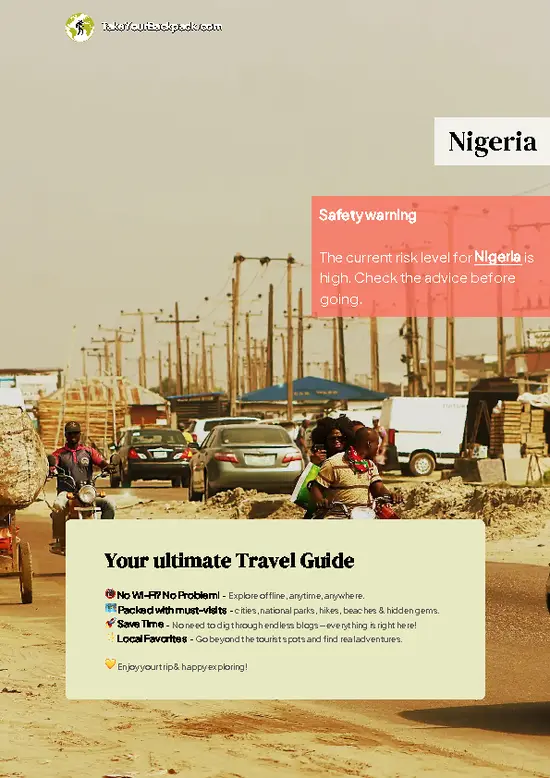
Safety warning

The current risk level for Nigeria is high. Check the advice before going.


Get your Nigeria guide
89 ranked highlights, routes & tips, works offline (332 pages)
Loading the map 🌍
CLICK TO FILTER
cities
towns
landmarks
national parks
hikes
beaches
attractions
festivals
regions
SHOW COUNTRY’S BESTSHOW ALL

✨ Why go?
Ranked #2 city in Nigeria
Why visitors keep coming back

Ijebu-Ode draws backpackers for its convenience as a gateway to nearby hikes and cultural sites. The walkable streets invite exploration, while small-scale guesthouses offer a cozy, budget-friendly stay. You’ll find local food experiences that burst with flavor, from street vendors to family-run eateries. This town feels friendly and social, perfect for solo travelers or small groups looking to connect. Most travelers linger a few days, soaking in the atmosphere before heading to the stunning beaches or lush trails nearby. It’s a place where the journey feels as rewarding as the destination.
Want to include Ijebu-Ode in your Nigeria route?
Create a personalized Nigeria itinerary that includes Ijebu-Ode and the places that fit your trip — based on your travel style, budget, and available time. Get your route in seconds.

Generate my trip

💡 HighlightsDon't-miss highlights and experiences

  1. Awujale’s Palace (Isale Oja) — The living seat of the Awujale, the traditional ruler of Ijebuland; the compound and gate architecture, court ceremonies, and nearby old-quarter streets show centuries of Ijebu royal culture and local power. Guided or respectful visits around palace grounds give a clear sense of the town’s history and traditional authority.
  2. Ojude Oba grounds and festival — The city’s signature cultural event held yearly (two days after Eid), where regberegbe age-groups, colourful processions, horse riders, and royal homage converge; attending during the festival is an intense, authentic immersion in Ijebu identity, fashion, pageantry and communal pride.
  3. Agemo festival sites — The masked Agemo pilgrimages and performances tied to Ijebu spirituality are staged from specific
read more 👉
  1. Awujale’s Palace (Isale Oja) — The living seat of the Awujale, the traditional ruler of Ijebuland; the compound and gate architecture, court ceremonies, and nearby old-quarter streets show centuries of Ijebu royal culture and local power. Guided or respectful visits around palace grounds give a clear sense of the town’s history and traditional authority.
  2. Ojude Oba grounds and festival — The city’s signature cultural event held yearly (two days after Eid), where regberegbe age-groups, colourful processions, horse riders, and royal homage converge; attending during the festival is an intense, authentic immersion in Ijebu identity, fashion, pageantry and communal pride.
  3. Agemo festival sites — The masked Agemo pilgrimages and performances tied to Ijebu spirituality are staged from specific shrines and public spaces in the town; visiting during Agemo reveals old beliefs, masked dance traditions, and rural-to-urban ritual routes that still shape local life.
  4. Ijebu-Ode Central Market (Oja Ijebu) — A bustling traditional market for kola nuts, fabrics, foodstuffs, beads and local crafts; walking its corridors is the best way to see everyday commerce, haggle for textiles and souvenirs, and watch traders who have served the region for generations.
A few real, visitable highlights just outside Ijebu-Ode worth day trips: Olumo Rock and the Itoku adire markets in Abeokuta, and the Chief Obafemi Awolowo mausoleum/museum in Ikenne.
Spotted a mistake or missing something? Contact us.

Things to do near Ijebu-Ode

Ratings based on Tripadvisor reviews. When you book through this link, you support our work at no extra cost to you.

🏘️ NeighborhoodsWhere things are and how it's laid out

Ijebu-Ode is a vibrant tapestry of culture and community, perfect for backpackers seeking authenticity.

Ode-Remo: This area buzzes with local markets and street food stalls. The vibe is lively, making it ideal for short stays. Walkability is high, but be ready for some hustle. Nightlife is minimal, focusing more on daytime exploration.

Ijebu-Ode Central: The heart of the town, it offers easy access to transport and amenities. Here, you’ll find a mix of budget accommodations and local eateries. It’s a great base for longer stays, with a balance of quiet streets and occasional nightlife.

Ode-Lemo: A quieter neighborhood, perfect for those looking to recharge. It’s less touristy, offering a genuine feel of local life. Walkability is decent, and while nightlife is sparse, the peaceful atmosphere … read more 👉
Ijebu-Ode is a vibrant tapestry of culture and community, perfect for backpackers seeking authenticity.

Ode-Remo: This area buzzes with local markets and street food stalls. The vibe is lively, making it ideal for short stays. Walkability is high, but be ready for some hustle. Nightlife is minimal, focusing more on daytime exploration.

Ijebu-Ode Central: The heart of the town, it offers easy access to transport and amenities. Here, you’ll find a mix of budget accommodations and local eateries. It’s a great base for longer stays, with a balance of quiet streets and occasional nightlife.

Ode-Lemo: A quieter neighborhood, perfect for those looking to recharge. It’s less touristy, offering a genuine feel of local life. Walkability is decent, and while nightlife is sparse, the peaceful atmosphere is a welcome retreat after a day of exploration.

⌛️ 1 dayHow to make the most of one day

Ijebu-Ode, a vibrant town in Nigeria, pulses with history and culture. It’s a place where the air is thick with the scent of spices, and the streets hum with the chatter of locals. Start your morning at the bustling Ijebu-Ode Market. The colors of fresh produce and the sounds of bargaining create an electric atmosphere. Grab a local breakfast of beans and plantains from a street vendor; the warmth of the food will fuel your day.

In the afternoon, head to the Olokun Shrine, a lesser-known spot that offers a glimpse into the spiritual heart of the town. The serene ambiance and intricate carvings invite reflection. Afterward, stroll through the nearby GRA neighborhood, where colonial architecture stands in contrast to the lively street life.

As evening falls, make your way to the local eateries … read more 👉
Ijebu-Ode, a vibrant town in Nigeria, pulses with history and culture. It’s a place where the air is thick with the scent of spices, and the streets hum with the chatter of locals. Start your morning at the bustling Ijebu-Ode Market. The colors of fresh produce and the sounds of bargaining create an electric atmosphere. Grab a local breakfast of beans and plantains from a street vendor; the warmth of the food will fuel your day.

In the afternoon, head to the Olokun Shrine, a lesser-known spot that offers a glimpse into the spiritual heart of the town. The serene ambiance and intricate carvings invite reflection. Afterward, stroll through the nearby GRA neighborhood, where colonial architecture stands in contrast to the lively street life.

As evening falls, make your way to the local eateries around Oke-Aje. Savor a plate of pounded yam with egusi soup, and soak in the laughter and stories shared among diners. This day in Ijebu-Ode isn’t just about sights; it’s about connecting with the rhythm of life here.
Turn your Ijebu-Ode visit into an Nigeria adventure
Build a complete Nigeria route with Ijebu-Ode, hidden gems, must-see destinations, and realistic travel times included.

Generate my trip

🌤️ When to go?When to go for the best experience


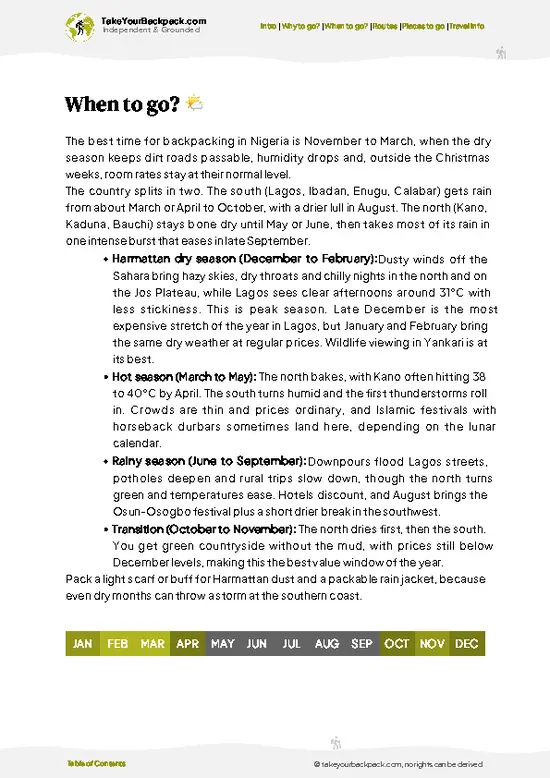
  • Topic: Weather – Ijebu-Ode’s tropical climate means heavy rains from April to October, turning dirt paths into slippery mud and flooding low areas. The dry season, November to March, offers clearer skies and easier trekking, with humidity dropping just enough to breathe easier.

  • Topic: Temperature – Temperatures hover between 24°C (75°F) and 32°C (90°F) year-round, but the dry season feels less oppressive. The wet season’s heat combined with humidity can sap your energy fast, so plan for lighter days then.

  • Topic: Daylight Hours – Expect roughly 12 hours of daylight year-round, but the dry season’s clearer mornings and evenings mean you get more usable light for exploring without the threat of sudden downpours.

  • Topic: Crowds – Local festivals like the Ojude Oba draw crowds in September,
read more 👉

  • Topic: Weather – Ijebu-Ode’s tropical climate means heavy rains from April to October, turning dirt paths into slippery mud and flooding low areas. The dry season, November to March, offers clearer skies and easier trekking, with humidity dropping just enough to breathe easier.

  • Topic: Temperature – Temperatures hover between 24°C (75°F) and 32°C (90°F) year-round, but the dry season feels less oppressive. The wet season’s heat combined with humidity can sap your energy fast, so plan for lighter days then.

  • Topic: Daylight Hours – Expect roughly 12 hours of daylight year-round, but the dry season’s clearer mornings and evenings mean you get more usable light for exploring without the threat of sudden downpours.

  • Topic: Crowds – Local festivals like the Ojude Oba draw crowds in September, which can be thrilling but also means higher prices and packed accommodations. For a quieter experience, avoid this peak cultural moment.

  • Topic: Seasonal Activities – The dry season is prime for hiking and village visits, while the wet season brings lush greenery and vibrant river scenes, though some trails may be inaccessible.

  • Topic: Price Fluctuations – Accommodation and transport costs spike during festival season and the dry months when tourists flock in. The wet season offers better deals but demands flexibility with your plans.


Pro-tip: Target late November to February for a sweet spot—dry, manageable heat, fewer crowds, and the landscape still fresh from the rains. It’s the perfect balance between comfort and authenticity.


source: climatestotravel.comJANJanuary: excellent for travelingFEBFebruary: excellent for travelingMARMarch: highly recommended for travelingAPRApril: fair for travelingMAYMay: fair for travelingJUNJune: fair for travelingJULJuly: fair for travelingAUGAugust: fair for travelingSEPSeptember: good for travelingOCTOctober: fair for travelingNOVNovember: highly recommended for travelingDECDecember: excellent for traveling
when-to-go

✈️ The backpacker research shortcutNigeria Travel Guide

An offline-friendly backpacking guide with optimized travel routes, ranked highlights, transport advice, and the best areas to stay.
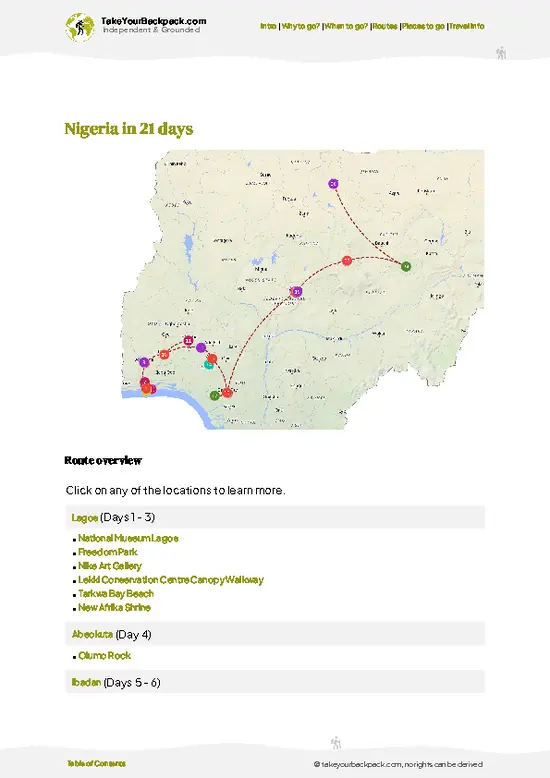
example page 0 from our offline Travel Guide for Nigeria
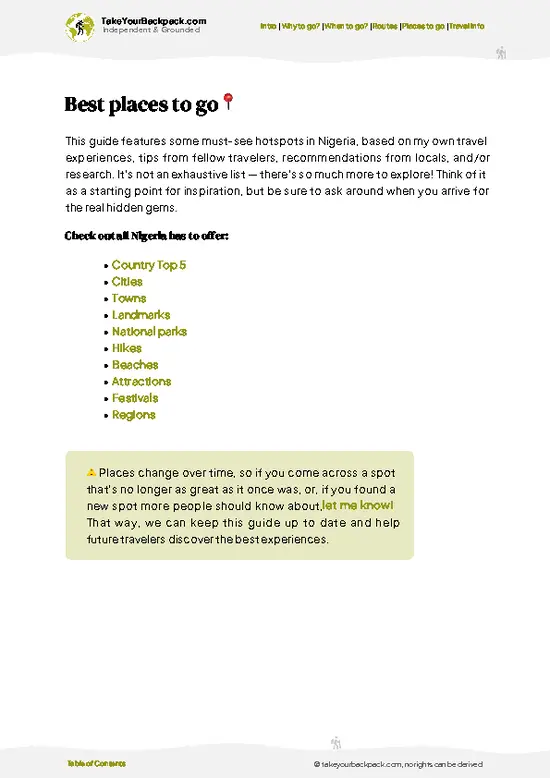
example page 1 from our offline Travel Guide for Nigeria
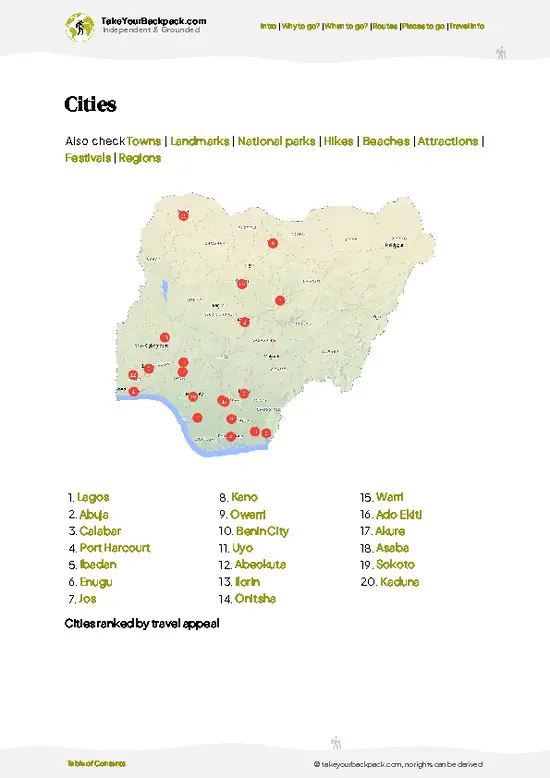
example page 2 from our offline Travel Guide for Nigeria
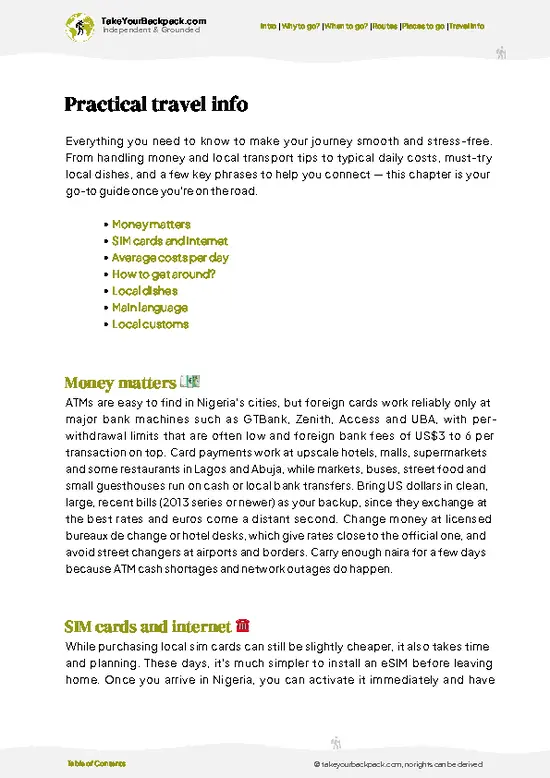
example page 3 from our offline Travel Guide for Nigeria
example page 4 from our offline Travel Guide for Nigeria
example page 5 from our offline Travel Guide for Nigeria
example page 6 from our offline Travel Guide for Nigeria
example page 7 from our offline Travel Guide for Nigeria
The digital guide (332 pages) contains:
89 highlights, ranked by travel appeal
Optimized 7, 14 & 21-day travel routes
Cities, national parks, landmarks, beaches
How to get around
Offline-friendly for travel without Wi-Fi
👉 Click to see all 30+ guide features

📅 Plan smarter in minutes, not weeks
Month by month travel advice
Festivals & national holidays
Budget expectations

🗺️ Go to the right places, skip the overrated ones
Honest pros & cons of destinations
Top hikes, parks & viewpoints
Lesser-known places most travelers miss
Clear “worth it vs skip it” guidance

🛏️ Travel smoothly without rookie mistakes
Best areas to stay
Transport systems explained simply
Common scams & safety advice
SIM cards, money & practical tips

🌍 Understand the country, not just visit it
Culture & traditions
52 Essential phrases & customs
Festivals worth planning around
Traveler-friendly historical context
Insights that make places more meaningful

📱 Built for real travel conditions
Fully downloadable PDF
Works completely offline
Optimized for phone use
Useful in remote areas & buses
Everything in one place
Save weeks of stressful planning
Get instant access to your full guide. 30‑day money-back guarantee.


By proceeding you agree to our terms.
Sent to your inbox immediately after payment • 100% Secure Checkout
Best Backpacking Travel Advisor 2025 tourism awardBest Backpacking
Travel Advisor
2025
What others say about Take Your Backpack Guides:
⭐⭐⭐⭐⭐
Fantastic, amazing amount of information!
⭐⭐⭐⭐⭐
My goodness this is amazing, it's what I've been looking for hats off too you!
⭐⭐⭐⭐⭐
I think this is absolutely BRILLIANT
⭐⭐⭐⭐
Very complete and informative. It's still missing places, but I gotta to commend you
⭐⭐⭐⭐⭐
This is truly amazing, thank you, can't wait to explore it with my kids!
⭐⭐⭐⭐⭐
Awesome resource, thank you!
⭐⭐⭐⭐⭐
This is amazing! Can't wait to explore the ones I haven't seen
⭐⭐⭐⭐
I love this! Well done, great idea.
⭐⭐⭐⭐⭐
Thanks for taking the time to make this gem!
⭐⭐⭐⭐⭐
This might be the best website I've ever seen.
⭐⭐⭐⭐⭐
Congratulations, and thank you so much for your work; it's incredibly valuable.
⭐⭐⭐⭐
In all seriousness I think you did a great job pointing out the important spots
⭐⭐⭐⭐⭐
10/10 very good
⭐⭐⭐⭐⭐
As someone who's only just starting to visit regularly this is awesome, thank you.
⭐⭐⭐⭐
Thank you very much! I'm going to visit my dad, it's going to be very useful!
⭐⭐⭐⭐⭐
This is really cool! We'll be travelling for the first time and this definitely come in handy.
⭐⭐⭐⭐⭐
You are now our minister of culture, congratulations 👨‍💼
⭐⭐⭐⭐⭐
Just wanted to tell you that this is a pearl! Going to follow your recommendations.
⭐⭐⭐⭐⭐
This is so cool. I'll definitely be using the resource for my travels soon.
⭐⭐⭐⭐⭐
This is very impressive! Good work.
⭐⭐⭐⭐⭐
This is an amazing and informative site. Very well done!

🛏️ Where to stay?Best areas to stay in Nigeria

Ijebu-Ode’s heart for backpackers pulses strongest around the city center and the adjoining areas near Oke-Ilewo. This zone strikes a rare balance: it’s safe enough to wander after dusk, yet alive with the hum of local markets, street food stalls, and casual hangouts where you can catch the scent of freshly roasted corn mingling with the earthiness of nearby trees. Staying here means you’re plugged into the social rhythm of the town—neighbors chatting on stoops, kids darting through alleys, and vendors calling out their wares in a melodic Yoruba cadence.

Hostel options are modest but present, … read more 👉
Ijebu-Ode’s heart for backpackers pulses strongest around the city center and the adjoining areas near Oke-Ilewo. This zone strikes a rare balance: it’s safe enough to wander after dusk, yet alive with the hum of local markets, street food stalls, and casual hangouts where you can catch the scent of freshly roasted corn mingling with the earthiness of nearby trees. Staying here means you’re plugged into the social rhythm of the town—neighbors chatting on stoops, kids darting through alleys, and vendors calling out their wares in a melodic Yoruba cadence.

Hostel options are modest but present, often tucked into guesthouses or converted family homes, offering a chance to meet fellow travelers without the sterile feel of a big hotel. The vibe is unpretentious and welcoming, with a strong sense of community that makes solo backpackers feel less like outsiders and more like temporary locals.

Compared to the quieter, more residential outskirts, where transport options thin out and the night feels heavier, the center’s buzz keeps you connected and safe. Plus, being close to transport hubs means you can slip out early for day trips without the hassle of long, unpredictable rides. In Ijebu-Ode, choosing your neighborhood isn’t just about where you sleep—it’s about stepping into the town’s pulse, where every street corner offers a story and every evening carries the promise of new connections.

🚌 Getting aroundTransportation options and practical tips

Ijebu-Ode moves at its own rhythm—neither frantic nor sluggish, but a steady pulse that matches the dusty roads and the chatter spilling from market stalls. The air carries a mix of earth and spices, a reminder that this town’s life is rooted in tradition and commerce. Time here isn’t dictated by clocks but by the ebb and flow of daily routines: traders setting up shop, motorbikes zipping through narrow streets, and the occasional lull when the sun leans low and shadows stretch long. You won’t find rigid schedules; instead, you’ll navigate a system built on local knowledge and a bit of patience. Mastering this flow means blending into the natural cadence, knowing when to move fast and when to soak in the slower moments.

Walking: The most straightforward way to get around, especially within … read more 👉
Ijebu-Ode moves at its own rhythm—neither frantic nor sluggish, but a steady pulse that matches the dusty roads and the chatter spilling from market stalls. The air carries a mix of earth and spices, a reminder that this town’s life is rooted in tradition and commerce. Time here isn’t dictated by clocks but by the ebb and flow of daily routines: traders setting up shop, motorbikes zipping through narrow streets, and the occasional lull when the sun leans low and shadows stretch long. You won’t find rigid schedules; instead, you’ll navigate a system built on local knowledge and a bit of patience. Mastering this flow means blending into the natural cadence, knowing when to move fast and when to soak in the slower moments.

Walking: The most straightforward way to get around, especially within the town center. Distances are manageable, and walking lets you absorb the textures of Ijebu-Ode—the cracked pavement, the scent of roasted corn, the hum of conversations. It’s free, flexible, and perfect for spontaneous detours. Just watch for uneven sidewalks and the occasional stray dog.

Okada (Motorcycle Taxi): The go-to for quick, nimble travel through congested streets. Okadas dart through traffic with ease, making them faster than cars during peak hours. Expect to negotiate fares upfront; prices usually range from 100 to 300 Naira depending on distance. They run from early morning until late evening, but avoid riding after dark unless you’re familiar with the routes and the rider’s reputation.

Danfo (Minibus): These shared minibuses cover main roads and connect Ijebu-Ode to nearby towns. They operate on a semi-fixed schedule, starting around 6 AM and tapering off by 7 PM. Fares are cheap—usually under 200 Naira—but expect crowded conditions and frequent stops. Danfos are a budget traveler’s lifeline for longer distances but less reliable for precise timing.

Tricycle (Keke Napep): Ideal for short trips within town, tricycles balance speed and comfort better than okadas. They’re slower but safer, with fares typically between 150 and 250 Naira. Tricycles are easy to flag down and run throughout the day, tapering off by early evening. Their covered design offers some shelter from sun and rain, a practical choice when the weather shifts.

Shared Taxi: For trips beyond the reach of danfos or when you want a bit more comfort, shared taxis offer a middle ground. They leave once full, so timing depends on passenger flow. Fares vary but expect to pay more than danfos, around 300 to 500 Naira for common routes. These taxis provide a smoother ride and more direct routes, making them worth the slight premium if you’re carrying gear or traveling longer distances.

Understanding these options means you’re not just moving through Ijebu-Ode—you’re syncing with its pulse. The town’s transport isn’t about strict timetables but about reading the street’s tempo, catching the right ride at the right moment, and letting the journey itself become part of the experience.

👛 Costs (as of 25 February 2026)What things cost and how to budget

Backpacking in Ijebu-Ode, Nigeria, offers a raw, authentic experience where your budget stretches further than in major cities, but the local pace and infrastructure shape your spending in distinct ways.
  • Dorm Accommodation: Options are limited and basic, often guesthouses or small hostels rather than formal dorms. Expect to pay around $5 to $10 per night for a simple shared room with a fan and basic bedding. Air conditioning is rare and will push prices higher.
  • Meals: Street food and local eateries dominate. A filling meal of traditional Nigerian dishes like amala or efo riro costs between $1.50 and $3. For a safer, slightly more comfortable sit-down meal, budget $3 to $5. Fresh fruit and snacks from markets are cheap and plentiful.
  • Local Transport: The town’s transport relies heavily on
read more 👉
Backpacking in Ijebu-Ode, Nigeria, offers a raw, authentic experience where your budget stretches further than in major cities, but the local pace and infrastructure shape your spending in distinct ways.
  • Dorm Accommodation: Options are limited and basic, often guesthouses or small hostels rather than formal dorms. Expect to pay around $5 to $10 per night for a simple shared room with a fan and basic bedding. Air conditioning is rare and will push prices higher.
  • Meals: Street food and local eateries dominate. A filling meal of traditional Nigerian dishes like amala or efo riro costs between $1.50 and $3. For a safer, slightly more comfortable sit-down meal, budget $3 to $5. Fresh fruit and snacks from markets are cheap and plentiful.
  • Local Transport: The town’s transport relies heavily on motorcycle taxis (okadas) and shared minibuses (danfos). Short rides cost about $0.30 to $0.70, but negotiate firmly. Expect to spend around $2 to $4 daily if you move around frequently.
  • Basic Activities/Entry Fees: Ijebu-Ode’s attractions are mostly cultural and natural, with minimal or no entry fees. Visiting local markets, shrines, or natural sites might cost $0 to $2, mainly for small donations or guides.
  • Miscellaneous Expenses: This covers bottled water, occasional phone credit, and small purchases. Budget around $1 to $3 daily. Water quality varies, so bottled water is a must, adding to your daily spend.

Overall, you’re looking at a daily budget of roughly $10 to $20. This range covers basic comfort without luxury, letting you dive into the local rhythm without overspending. The modest costs reflect the town’s slower pace and simpler infrastructure, but they also mean every dollar counts toward a genuine, grounded experience.
⚠️ Prices can change and everyone travels differently, so take this as a rough guide. Hope it helps you plan your adventure!

🚌 Day tripsShort trips worth adding

Ijebu-Ode is a vibrant hub for exploring Nigeria’s rich culture and natural beauty, making it an ideal base for day trips.

Olumo Rock
Just a couple of hours away, Olumo Rock is a stunning geological formation that offers breathtaking views of Abeokuta. The climb can be steep, but the reward is a panoramic vista that makes every step worthwhile. Expect to spend around 1,000 NGN for entry and transportation. Early mornings are best to avoid the heat and crowds. Many first-timers underestimate the physical effort required; wear sturdy shoes and bring water.
👉 Explore Olumo Rock

Erin Ijesha Waterfalls
This cascading beauty is about a two-hour drive from Ijebu-Ode. The sound of rushing water and the lush greenery create a serene atmosphere. Entry is typically around 500 NGN, and you’ll … read more 👉
Ijebu-Ode is a vibrant hub for exploring Nigeria’s rich culture and natural beauty, making it an ideal base for day trips.

Olumo Rock
Just a couple of hours away, Olumo Rock is a stunning geological formation that offers breathtaking views of Abeokuta. The climb can be steep, but the reward is a panoramic vista that makes every step worthwhile. Expect to spend around 1,000 NGN for entry and transportation. Early mornings are best to avoid the heat and crowds. Many first-timers underestimate the physical effort required; wear sturdy shoes and bring water.
👉 Explore Olumo Rock

Erin Ijesha Waterfalls
This cascading beauty is about a two-hour drive from Ijebu-Ode. The sound of rushing water and the lush greenery create a serene atmosphere. Entry is typically around 500 NGN, and you’ll want to pack a picnic to enjoy by the falls. The best time to visit is during the rainy season when the waterfalls are at their most impressive. A common mistake is not allowing enough time to explore the various tiers of the falls; plan for a full day.


Ogun State Arts and Culture Centre
Just a short ride away, this center showcases local artisans and cultural performances. Entry is often free, but you might want to budget for souvenirs. The vibrant colors and textures of the crafts are a feast for the senses. Weekends are lively, but weekdays offer a more intimate experience. Many travelers overlook the chance to engage with local artists; don’t miss the opportunity to learn about their craft.
Want to know what more Nigeria offers?
The Nigeria Travel Guide describes 89 highlights, from cities to national parks, from beaches to hikes

Get the Travel Guide -

🍲 FoodEating & Drinking in Ijebu-Ode

Ijebu-Ode’s food scene is a playground for your taste buds if you’re ready to dive into authentic Nigerian flavors without the tourist gloss. The city’s signature dish, Ofada rice, is a must-try—unpolished, earthy rice served with a spicy, palm oil-rich stew that hits the perfect balance between heat and depth. It’s not just a meal; it’s a local ritual that tells you you’re in the heart of Yoruba culinary tradition.

Backpackers will find themselves drawn to the bustling markets and street food stalls, where the air is thick with the scent of grilled suya (spiced meat skewers) and freshly fried akara (bean cakes). These spots aren’t just about grabbing a quick bite; they’re social hubs where locals gather, chat, and share stories over food. Casual eateries nearby offer hearty portions without … read more 👉
Ijebu-Ode’s food scene is a playground for your taste buds if you’re ready to dive into authentic Nigerian flavors without the tourist gloss. The city’s signature dish, Ofada rice, is a must-try—unpolished, earthy rice served with a spicy, palm oil-rich stew that hits the perfect balance between heat and depth. It’s not just a meal; it’s a local ritual that tells you you’re in the heart of Yoruba culinary tradition.

Backpackers will find themselves drawn to the bustling markets and street food stalls, where the air is thick with the scent of grilled suya (spiced meat skewers) and freshly fried akara (bean cakes). These spots aren’t just about grabbing a quick bite; they’re social hubs where locals gather, chat, and share stories over food. Casual eateries nearby offer hearty portions without the fuss, perfect for those who want to eat like a local without the language barrier.

Drinking culture here leans toward palm wine—a slightly sweet, tangy natural brew that’s as much about the experience as the taste. It’s often enjoyed in small, informal gatherings, where the pace slows and conversations deepen. Expect a relaxed vibe, but remember, sharing your drink is part of the unspoken code. In Ijebu-Ode, food and drink are less about formality and more about connection—jump in with an open mind and a hungry appetite.

🛡️ SafetySafety Tips and Common Scams in Ijebu-Ode

Ijebu-Ode is generally safe, but a few practical tips can enhance your experience. Stay aware in crowded markets, where pickpockets might lurk. If you’re solo, avoid wandering too far after dark; stick to well-lit areas and travel with a local if possible.

Common scams include overly friendly strangers offering unsolicited help—politely decline and keep moving. Carry yourself confidently, and don’t flash valuables. The atmosphere is warm and inviting, but a little caution goes a long way in ensuring your adventure remains smooth and enjoyable.

Other Nigerian cities near Ijebu-Ode

Explore more nearby:

  • Ikorodu—lagoon ferries, commuter suburbs, local markets| 51 km away
  • Ibadan—brown-roof skyline, university campus, bustling markets| 62 km away
  • Lagos—Atlantic beaches, megacity sprawl, nightlife districts| 68 km away

💡 Not sure where to go next?
Create a personalized itinerary for Nigeria including Ijebu-Ode and the places that fit your trip.

Generate my itinerary

👉 Discover all cities

Or checkout all Nigeria has to offer (think cities, towns, villages, national parks, hikes, beaches, festivals)
Country photo of Nigeria

We 💚 feedbackKey takeaways before you go

Ijebu-Ode pulses with a vibrant local life that feels genuine. The best surprise? The street food—try the pepper soup; it’s a flavor explosion. Just a heads-up: traffic can be chaotic, so plan your outings wisely to soak in the atmosphere without the stress.

✍️ Help improve this page!
The information on this page is based on in-depth research, insights shared by experienced travelers, and feedback from the local travel community in Nigeria. While every effort is made to keep the information accurate and current, conditions can change — so if you spot anything incorrect or outdated, please get in touch.


🙋‍♂️ Give feedback

👋 Meet the founderWho’s Behind Take Your Backpack?

Johan, backpacker and founder of TakeYourBackpackHi, I’m Johan (Netherlands 🇳🇱), the creator of TakeYourBackpack. Over the past decade, I’ve backpacked through 80+ countries across six continents, gaining extensive experience with independent travel, long-term trips, and overland routes.

This site is built on a combination of firsthand travel experience and carefully curated insights from other backpackers. Many guides are based on places I’ve personally visited, while others bring together tips, observations, and practical advice shared by trusted travelers I’ve met along the way.

The goal is to provide realistic, experience-driven guidance — not generic itineraries — so you can explore destinations with better context, clearer expectations, and more confidence.

Get full Nigeria guide •
Instant download • 89 highlights • Full Offline guide