×

Nigeria🇳🇬 | citiesLagosAtlantic beaches, megacity sprawl, nightlife districts | things to do and best time to go

Explore EnuguExplore Port Harcourt

Backpacking in Lagos
🏆 Top pickcity ranked #1
By Johan Kruseman 🇳🇱 | Updated June 10, 2026

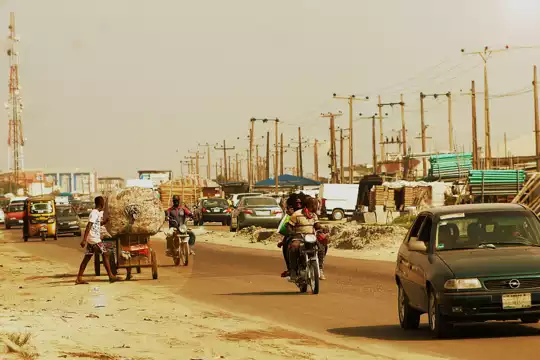
Forget the postcard myth: Lagos is not a laid-back beach town where time drifts by. It’s Nigeria’s relentless engine—Africa’s largest city—where chaos and creativity collide at full volume. Lagos sprawls along the Atlantic coast in the southwest, pulsing with energy that can feel both electrifying and overwhelming. For backpackers, Lagos is a test of adaptability and reward. You’ll find the National Museum’s artifacts, the Afrobeat legacy of the New Afrika Shrine, and the kinetic swirl of Balogun Market, but you’ll also wrestle with gridlocked traffic, unpredictable power, and a city that never really sleeps. Meeting fellow travelers is possible but not effortless; Lagos isn’t a classic backpacker hub like Accra or Cotonou. Costs swing wildly—street food is cheap, but accommodation and transport can sting. Safety demands street smarts and local advice. Lagos is not easy, but if you crave raw, unfiltered urban Africa, nowhere else in Nigeria compares.

Discover everything you want to know in the 📖 Nigeria Travel Guide.
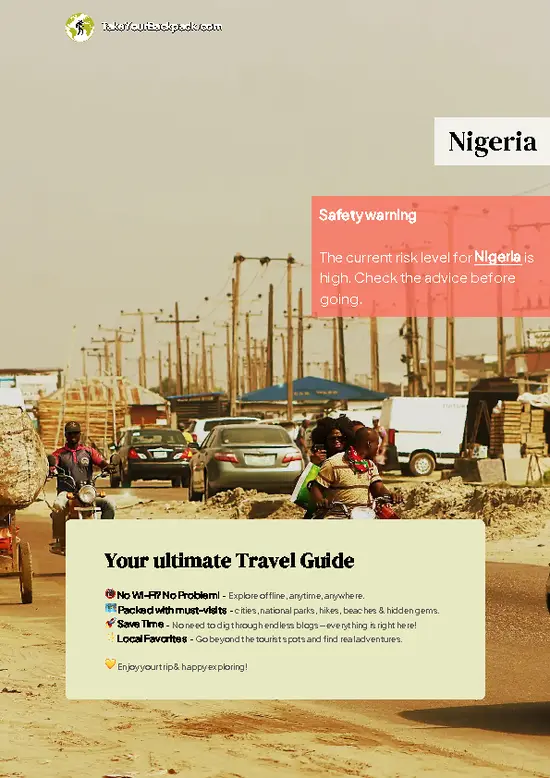
Safety warning

The current risk level for Nigeria is high. Check the advice before going.


Get your Nigeria guide
89 ranked highlights, routes & tips, works offline (332 pages)
Loading the map 🌍
CLICK TO FILTER
cities
towns
landmarks
national parks
hikes
beaches
attractions
festivals
regions
SHOW COUNTRY’S BESTSHOW ALL

✨ Why go?
Ranked #1 city in Nigeria
The unique appeal for travelers

Lagos is a backpacker’s hub that offers a unique blend of highlights and activities while serving as a strategic base for day trips. The city’s vibrant hostels cater to budget travelers, providing a social atmosphere that makes it easy to connect with fellow adventurers. You’ll find a range of affordable food options, from street vendors to local eateries, ensuring you can fuel up without breaking the bank.

Lagos is also remarkably walkable, allowing you to explore its lively streets and soak in the local culture without needing constant transportation. When the sun sets, the nightlife kicks in, offering everything from laid-back bars to energetic clubs, perfect for unwinding after a day of exploration.

As for onward travel, Lagos is well-connected, making it easy to hop on a bus or flight … read more 👉
Lagos is a backpacker’s hub that offers a unique blend of highlights and activities while serving as a strategic base for day trips. The city’s vibrant hostels cater to budget travelers, providing a social atmosphere that makes it easy to connect with fellow adventurers. You’ll find a range of affordable food options, from street vendors to local eateries, ensuring you can fuel up without breaking the bank.

Lagos is also remarkably walkable, allowing you to explore its lively streets and soak in the local culture without needing constant transportation. When the sun sets, the nightlife kicks in, offering everything from laid-back bars to energetic clubs, perfect for unwinding after a day of exploration.

As for onward travel, Lagos is well-connected, making it easy to hop on a bus or flight to your next destination. This city isn’t just a stopover; it’s a place where you can immerse yourself in the rhythm of Nigerian life. If you’re looking for a blend of adventure and cultural richness, Lagos is worth more than just a fleeting visit.
Want to include Lagos in your Nigeria route?
Create a personalized Nigeria itinerary that includes Lagos and the places that fit your trip — based on your travel style, budget, and available time. Get your route in seconds.

Generate my trip

💡 HighlightsDon't-miss highlights and experiences

  • National Museum, Onikan — Nigeria’s flagship museum with Benin bronzes, Nok terracottas and Yoruba artifacts; great place to ground yourself in the country’s history and see original pieces you won’t find in watching videos.
  • Freedom Park — a former colonial prison on Lagos Island turned open-air cultural space; live music, art shows and the history plaques make it one of the best spots to feel Lagos’ layered past and present.
  • Makoko Floating Community — a dense stilt village on the lagoon; take a guided canoe tour to see everyday life, improvised architecture and local entrepreneurship up close (go with a local guide and respect residents).
  • Balogun Market / Idumota area — chaotic, colourful and utterly Lagos: textiles, electronics, foodstuffs and bargaining at scale. It’s not tidy, but
read more 👉
  • National Museum, Onikan — Nigeria’s flagship museum with Benin bronzes, Nok terracottas and Yoruba artifacts; great place to ground yourself in the country’s history and see original pieces you won’t find in watching videos.
  • Freedom Park — a former colonial prison on Lagos Island turned open-air cultural space; live music, art shows and the history plaques make it one of the best spots to feel Lagos’ layered past and present.
  • Makoko Floating Community — a dense stilt village on the lagoon; take a guided canoe tour to see everyday life, improvised architecture and local entrepreneurship up close (go with a local guide and respect residents).
  • Balogun Market / Idumota area — chaotic, colourful and utterly Lagos: textiles, electronics, foodstuffs and bargaining at scale. It’s not tidy, but it’s where the city’s commerce and energy are on full display.
  • Nike Art Gallery — one of West Africa’s largest private art galleries, full of paintings, textiles and sculpture; you can watch artists work, buy pieces or book a short workshop to learn batik or carving.
  • New Afrika Shrine — the lively music venue started by Fela’s family. Expect energetic live Afrobeat nights, political satire and a real sense of music-as-resistance; best visited in the evening for the full vibe.
  • Kalakuta Republic Museum — Fela Kuti’s preserved home in Ikeja where you can see his memorabilia, hear stories about the original Kalakuta and learn about the personal history behind Afrobeat.
  • Lekki Conservation Centre — a surprising green lung: long canopy walkway, mangrove trails and small wildlife pockets right inside the city’s spread. Good for a quiet few hours and panoramic views from the walkway.
  • Tafawa Balewa Square (TBS) — historic ceremonial ground on Lagos Island with nationalist monuments and an everyday public square feel; a place to connect with the city’s colonial-to-independent story and watch civic life.
  • Tarkwa Bay Beach — a sheltered, boat-access beach popular with locals and surfers; bring cash, plan your boat ride back and enjoy a quieter beach stretch compared with mainland alternatives.
A few nearby day-trip highlights outside the city: the Badagry Slave Route and museum to the west, Olumo Rock in Abeokuta for history and climbing views, and the fishing/mangrove towns around Epe for fresh seafood and lagoon life.
Spotted a mistake or missing something? Contact us.

Things to do in Lagos

Ratings based on Tripadvisor reviews. When you book through this link, you support our work at no extra cost to you.

🏘️ NeighborhoodsKey areas and districts to know

Lagos is a bustling metropolis where every neighborhood offers a unique flavor. Understanding these areas can help you maximize your experience while balancing time, money, and comfort.

Victoria Island: This is the upscale heart of Lagos, where you’ll find luxury hotels and trendy restaurants. It’s walkable, but expect to spend more. The nightlife is vibrant, with clubs and bars that pulse until dawn. Perfect for short stays if you want to indulge, but it can feel a bit disconnected from the local vibe.

Lekki: A mix of modernity and culture, Lekki is known for its beaches and art scene. It’s more affordable than Victoria Island but still has a lively atmosphere. Walkability varies, so plan your routes. Great for longer stays if you want a blend of relaxation and exploration, with decent … read more 👉
Lagos is a bustling metropolis where every neighborhood offers a unique flavor. Understanding these areas can help you maximize your experience while balancing time, money, and comfort.

Victoria Island: This is the upscale heart of Lagos, where you’ll find luxury hotels and trendy restaurants. It’s walkable, but expect to spend more. The nightlife is vibrant, with clubs and bars that pulse until dawn. Perfect for short stays if you want to indulge, but it can feel a bit disconnected from the local vibe.

Lekki: A mix of modernity and culture, Lekki is known for its beaches and art scene. It’s more affordable than Victoria Island but still has a lively atmosphere. Walkability varies, so plan your routes. Great for longer stays if you want a blend of relaxation and exploration, with decent transport links to other parts of the city.

Yaba: This area is a hub for students and tech startups, giving it a youthful energy. It’s budget-friendly and offers a more authentic Lagos experience. Walkable and filled with local eateries, it’s ideal for longer stays if you want to immerse yourself in the local culture. Nightlife is quieter here, making it suitable for those who prefer a laid-back vibe.

Ikeja: The capital of Lagos State, Ikeja is less touristy and offers a glimpse into everyday life. It’s affordable and has good transport options. While not as lively at night, it’s perfect for longer stays if you want to explore local markets and parks. The walkability is decent, but you’ll want to use public transport for longer distances.

Surulere: Known for its sports culture, Surulere is a blend of residential and commercial areas. It’s budget-friendly and offers a quieter atmosphere. Walkability is good, and it’s well-connected by public transport. Ideal for longer stays if you want to experience local life without the tourist hustle.

⌛️ 1 dayHow to make the most of one day

Lagos, Nigeria, is a pulsating metropolis where tradition meets modernity. It’s a city that thrives on energy, creativity, and a rich cultural tapestry. From the bustling markets to the serene beaches, every corner tells a story. You can spend a day here and feel the heartbeat of Nigeria.

Start your morning in the vibrant neighborhood of Victoria Island. Grab a local breakfast at a roadside spot—try the akara (bean cakes) with a side of spicy pepper sauce. The aroma alone will wake you up. After fueling up, stroll along the waterfront at the Lekki-Ikoyi Link Bridge. The views of the lagoon and skyline are stunning, and it’s a great way to ease into the day.

As the sun climbs higher, head over to the Nike Art Gallery in Lekki. This place is a treasure trove of Nigerian art and culture, showcasing … read more 👉
Lagos, Nigeria, is a pulsating metropolis where tradition meets modernity. It’s a city that thrives on energy, creativity, and a rich cultural tapestry. From the bustling markets to the serene beaches, every corner tells a story. You can spend a day here and feel the heartbeat of Nigeria.

Start your morning in the vibrant neighborhood of Victoria Island. Grab a local breakfast at a roadside spot—try the akara (bean cakes) with a side of spicy pepper sauce. The aroma alone will wake you up. After fueling up, stroll along the waterfront at the Lekki-Ikoyi Link Bridge. The views of the lagoon and skyline are stunning, and it’s a great way to ease into the day.

As the sun climbs higher, head over to the Nike Art Gallery in Lekki. This place is a treasure trove of Nigerian art and culture, showcasing everything from textiles to sculptures. It’s not just a gallery; it’s a vibrant community hub. Spend some time chatting with local artists and maybe even pick up a unique piece to take home. This isn’t on every tourist’s radar, but it’s a slice of Lagos that’s worth your time.

For lunch, dive into the bustling Lekki Market. Here, you can sample local dishes like jollof rice or suya (spicy meat skewers). The atmosphere is electric, and you’ll find yourself mingling with locals, soaking in the sights and sounds.

As afternoon turns to evening, make your way to Tarkwa Bay Beach. It’s a short boat ride from Victoria Island, and the calm waters are perfect for a swim or just lounging on the sand. The sunset here is a spectacle, painting the sky in hues of orange and pink.

Wrap up your day with dinner at a local eatery in the nearby neighborhood of Ikoyi. Try some fresh seafood or traditional Nigerian dishes. As you savor your meal, reflect on a day well spent in a city that’s anything but ordinary.
Turn your Lagos visit into an Nigeria adventure
Build a complete Nigeria route with Lagos, hidden gems, must-see destinations, and realistic travel times included.

Generate my trip

🌤️ When to go?Seasonal considerations and timing


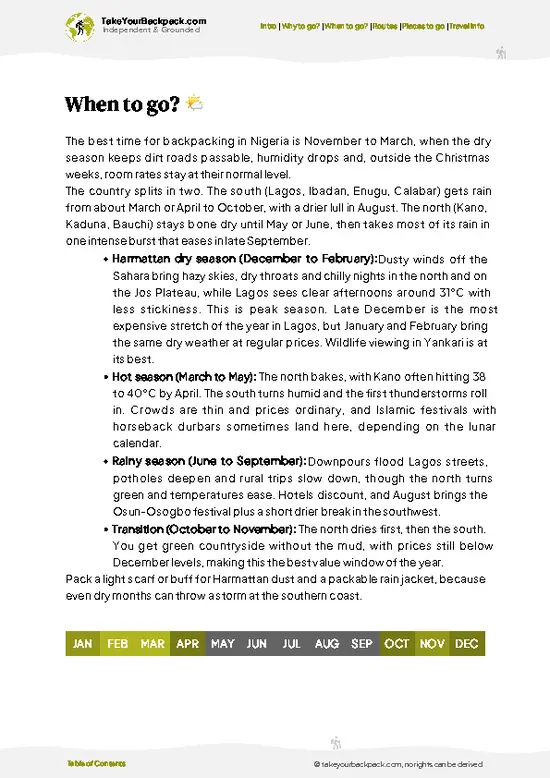
  • Topic: Weather – Lagos has a tropical climate with a wet season from April to October, bringing heavy rains and high humidity. The dry season, November to March, offers clearer skies and less moisture, making it easier to explore without constant downpours.

  • Topic: Temperature – Temperatures hover between 24°C (75°F) and 32°C (90°F) year-round. The dry season tends to feel more comfortable, with slightly cooler evenings and less oppressive heat compared to the wet season’s muggy afternoons.

  • Topic: Daylight Hours – Lagos enjoys roughly 12 hours of daylight year-round, with sunrise around 6:30 AM and sunset near 6:30 PM. This consistency means your daily schedule won’t need major adjustments based on the season.

  • Topic: Crowds – Peak tourist flow aligns with the dry season, especially
read more 👉

  • Topic: Weather – Lagos has a tropical climate with a wet season from April to October, bringing heavy rains and high humidity. The dry season, November to March, offers clearer skies and less moisture, making it easier to explore without constant downpours.

  • Topic: Temperature – Temperatures hover between 24°C (75°F) and 32°C (90°F) year-round. The dry season tends to feel more comfortable, with slightly cooler evenings and less oppressive heat compared to the wet season’s muggy afternoons.

  • Topic: Daylight Hours – Lagos enjoys roughly 12 hours of daylight year-round, with sunrise around 6:30 AM and sunset near 6:30 PM. This consistency means your daily schedule won’t need major adjustments based on the season.

  • Topic: Crowds – Peak tourist flow aligns with the dry season, especially December through February, when international visitors escape colder climates. Expect busier markets and higher demand for accommodations during this window.

  • Topic: Seasonal Activities – The dry season hosts major cultural events like the Lagos Carnival and various music festivals, injecting energy into the city’s nightlife and street scenes. The wet season slows down outdoor events but offers lush green landscapes.

  • Topic: Price Fluctuations – Accommodation and flights spike during the dry season’s peak months, particularly December. Traveling just before or after this period can save money without sacrificing much on weather or experience quality.


Pro-tip: Aim for late November or early March to balance pleasant weather, manageable crowds, and better prices—hacking Lagos’ timing game for maximum value.


source: climatestotravel.comJANJanuary: excellent for travelingFEBFebruary: excellent for travelingMARMarch: highly recommended for travelingAPRApril: fair for travelingMAYMay: fair for travelingJUNJune: fair for travelingJULJuly: fair for travelingAUGAugust: fair for travelingSEPSeptember: fair for travelingOCTOctober: fair for travelingNOVNovember: highly recommended for travelingDECDecember: excellent for traveling
when-to-go

✈️ The backpacker research shortcutNigeria Travel Guide

An offline-friendly backpacking guide with optimized travel routes, ranked highlights, transport advice, and the best areas to stay.
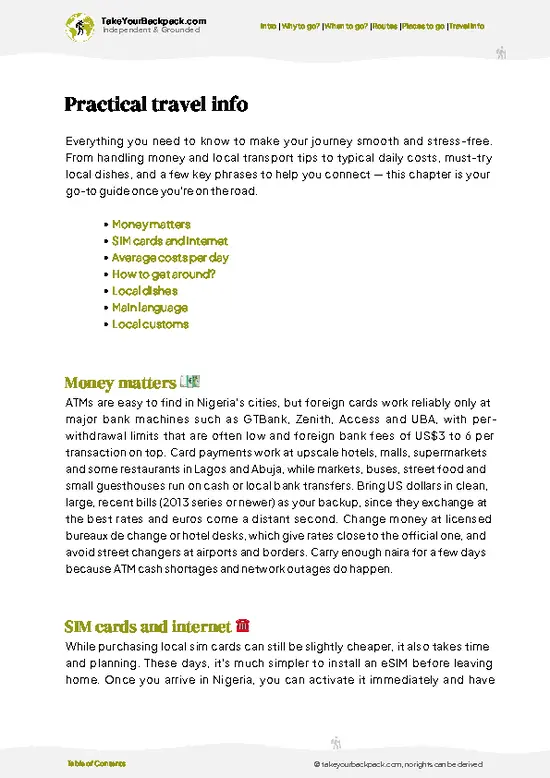
example page 0 from our offline Travel Guide for Nigeria
example page 1 from our offline Travel Guide for Nigeria
example page 2 from our offline Travel Guide for Nigeria
example page 3 from our offline Travel Guide for Nigeria
example page 4 from our offline Travel Guide for Nigeria
example page 5 from our offline Travel Guide for Nigeria
example page 6 from our offline Travel Guide for Nigeria
example page 7 from our offline Travel Guide for Nigeria
The digital guide (332 pages) contains:
89 highlights, ranked by travel appeal
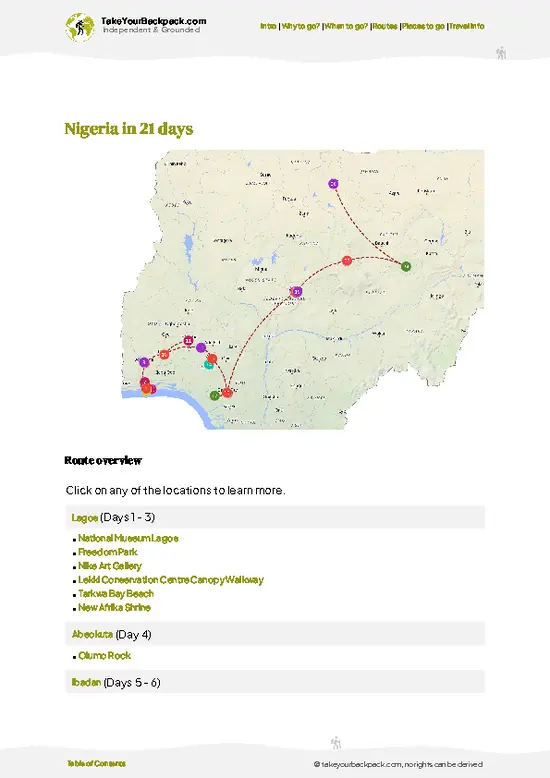
Optimized 7, 14 & 21-day travel routes
Cities, national parks, landmarks, beaches
How to get around
Offline-friendly for travel without Wi-Fi
👉 Click to see all 30+ guide features

📅 Plan smarter in minutes, not weeks
Month by month travel advice
Festivals & national holidays
Budget expectations

🗺️ Go to the right places, skip the overrated ones
Honest pros & cons of destinations
Top hikes, parks & viewpoints
Lesser-known places most travelers miss
Clear “worth it vs skip it” guidance

🛏️ Travel smoothly without rookie mistakes
Best areas to stay
Transport systems explained simply
Common scams & safety advice
SIM cards, money & practical tips

🌍 Understand the country, not just visit it
Culture & traditions
52 Essential phrases & customs
Festivals worth planning around
Traveler-friendly historical context
Insights that make places more meaningful

📱 Built for real travel conditions
Fully downloadable PDF
Works completely offline
Optimized for phone use
Useful in remote areas & buses
Everything in one place
Save weeks of stressful planning
Get instant access to your full guide. 30‑day money-back guarantee.


By proceeding you agree to our terms.
Sent to your inbox immediately after payment • 100% Secure Checkout
Best Backpacking Travel Advisor 2025 tourism awardBest Backpacking
Travel Advisor
2025
What others say about Take Your Backpack Guides:
⭐⭐⭐⭐⭐
Fantastic, amazing amount of information!
⭐⭐⭐⭐⭐
My goodness this is amazing, it's what I've been looking for hats off too you!
⭐⭐⭐⭐⭐
I think this is absolutely BRILLIANT
⭐⭐⭐⭐
Very complete and informative. It's still missing places, but I gotta to commend you
⭐⭐⭐⭐⭐
This is truly amazing, thank you, can't wait to explore it with my kids!
⭐⭐⭐⭐⭐
Awesome resource, thank you!
⭐⭐⭐⭐⭐
This is amazing! Can't wait to explore the ones I haven't seen
⭐⭐⭐⭐
I love this! Well done, great idea.
⭐⭐⭐⭐⭐
Thanks for taking the time to make this gem!
⭐⭐⭐⭐⭐
This might be the best website I've ever seen.
⭐⭐⭐⭐⭐
Congratulations, and thank you so much for your work; it's incredibly valuable.
⭐⭐⭐⭐
In all seriousness I think you did a great job pointing out the important spots
⭐⭐⭐⭐⭐
10/10 very good
⭐⭐⭐⭐⭐
As someone who's only just starting to visit regularly this is awesome, thank you.
⭐⭐⭐⭐
Thank you very much! I'm going to visit my dad, it's going to be very useful!
⭐⭐⭐⭐⭐
This is really cool! We'll be travelling for the first time and this definitely come in handy.
⭐⭐⭐⭐⭐
You are now our minister of culture, congratulations 👨‍💼
⭐⭐⭐⭐⭐
Just wanted to tell you that this is a pearl! Going to follow your recommendations.
⭐⭐⭐⭐⭐
This is so cool. I'll definitely be using the resource for my travels soon.
⭐⭐⭐⭐⭐
This is very impressive! Good work.
⭐⭐⭐⭐⭐
This is an amazing and informative site. Very well done!

🛏️ Where to stay?Best areas to stay in Nigeria

Lagos is a sprawling city with neighborhoods that vary wildly in vibe, safety, and budget friendliness. For backpackers, the sweet spot lies in areas that balance security with social energy and affordability—key ingredients for a trip that’s both manageable and memorable.

Start with Yaba. It’s a hub for creatives and students, buzzing with affordable eateries, street art, and a youthful crowd. The vibe is casual and open, making it easier to strike up conversations. Hostels here cater to budget travelers, offering basic but clean accommodations. It’s not as polished as some parts of Lagos, but … read more 👉
Lagos is a sprawling city with neighborhoods that vary wildly in vibe, safety, and budget friendliness. For backpackers, the sweet spot lies in areas that balance security with social energy and affordability—key ingredients for a trip that’s both manageable and memorable.

Start with Yaba. It’s a hub for creatives and students, buzzing with affordable eateries, street art, and a youthful crowd. The vibe is casual and open, making it easier to strike up conversations. Hostels here cater to budget travelers, offering basic but clean accommodations. It’s not as polished as some parts of Lagos, but that’s part of the charm—real city life, not a sanitized tourist bubble. Plus, it’s well-connected by public transport, so you can stretch your legs without breaking the bank.

Then there’s Surulere, a bit more residential but lively, with markets and local hangouts that give you a genuine feel for Lagos daily life. It’s safer than many other districts and has a handful of hostels that attract solo travelers looking for a low-key base with easy access to nightlife and cultural spots.

Avoid the glitz of Victoria Island and Ikoyi if you’re watching your wallet. They’re safer and more comfortable but come with a price tag that eats into your experience budget. Yaba and Surulere offer a trade-off: you sacrifice some polish and luxury for authentic encounters, social opportunities, and a wallet-friendly stay. For backpackers, that’s a winning formula.

🚌 Getting aroundHow to get around Lagos

Lagos doesn’t run on a clock so much as on a pulse—an unpredictable, vibrant rhythm that can either throw you off or pull you into its flow. Forget rigid timetables; here, transit is a dance between chaos and intuition. You’ll find yourself reading the street like a local, spotting the right moment to hop on a danfo or a keke, or deciding when to just walk and soak in the city’s relentless energy. The trade-off between time, money, and comfort isn’t just a spreadsheet exercise—it’s a daily negotiation with Lagos itself. Master this, and you’re not just getting around; you’re winning the game.


  • Walking: The ultimate budget option and the best way to absorb Lagos’ street life. It’s free, flexible, and often faster than you’d expect in traffic-choked areas. But be ready for uneven sidewalks,
read more 👉
Lagos doesn’t run on a clock so much as on a pulse—an unpredictable, vibrant rhythm that can either throw you off or pull you into its flow. Forget rigid timetables; here, transit is a dance between chaos and intuition. You’ll find yourself reading the street like a local, spotting the right moment to hop on a danfo or a keke, or deciding when to just walk and soak in the city’s relentless energy. The trade-off between time, money, and comfort isn’t just a spreadsheet exercise—it’s a daily negotiation with Lagos itself. Master this, and you’re not just getting around; you’re winning the game.


  • Walking: The ultimate budget option and the best way to absorb Lagos’ street life. It’s free, flexible, and often faster than you’d expect in traffic-choked areas. But be ready for uneven sidewalks, aggressive street vendors, and the occasional need to dodge traffic. Ideal for short hops under 2 kilometers.


  • Danfo Buses: These yellow minibuses are the backbone of Lagos transit. They run roughly from 6 AM to midnight, costing around 100–150 NGN per ride. Danfos are cheap and frequent but notoriously cramped and chaotic, with no fixed schedules. Expect to stand shoulder-to-shoulder and hold on tight during sudden stops. If you want to save money and don’t mind sacrificing comfort and predictability, danfos are your go-to.


  • Keke Napep (Tricycles): Perfect for short to medium distances where walking is too slow but a danfo feels overwhelming. Fares hover around 200–300 NGN. They’re faster than walking and more flexible than buses, weaving through traffic with ease. Comfort is basic—open-air, bumpy rides with little protection from Lagos’ sun or rain. They operate mostly during daylight hours, tapering off after dark for safety reasons.


  • Okada (Motorcycle Taxis): The fastest way to slice through Lagos traffic, especially during rush hour. Fares vary widely, typically 300–500 NGN for short trips. Okadas offer unmatched speed and door-to-door service but come with safety risks and are banned in some parts of the city. Use them when time is your priority and you’re comfortable with a bit of adrenaline.


  • Ride-Hailing Apps (Bolt, Uber): The most comfortable and predictable option, with fares starting around 1,000 NGN for short trips. These services run 24/7, offering air-conditioned cars and cashless payments. They save you the hassle of bargaining and navigating chaotic stops but come at a premium. Ideal when you want to prioritize comfort and time over cost, especially late at night or for longer distances.

👛 Costs (as of 1 March 2026)Travel costs and budget guide for Lagos

Backpacking in Lagos, Nigeria, demands a clear-eyed view of what your money buys in terms of comfort, convenience, and experience. Here’s the breakdown to help you strategize your spending like a pro.
  • Dorm Accommodation (High Season): Expect to pay around $15 to $25 per night in popular hostels or budget guesthouses. High season drives prices up due to demand, especially in areas like Victoria Island or Lekki.
  • Dorm Accommodation (Off-Season): Prices drop to about $10 to $18 per night when fewer tourists are around. This is your window for better deals if you can handle a bit of unpredictability in availability.
  • Meals: Street food and local eateries offer meals for $2 to $5. If you opt for mid-range restaurants, expect to spend $7 to $15 per meal. Lagos is a city where food quality and hygiene
read more 👉
Backpacking in Lagos, Nigeria, demands a clear-eyed view of what your money buys in terms of comfort, convenience, and experience. Here’s the breakdown to help you strategize your spending like a pro.
  • Dorm Accommodation (High Season): Expect to pay around $15 to $25 per night in popular hostels or budget guesthouses. High season drives prices up due to demand, especially in areas like Victoria Island or Lekki.
  • Dorm Accommodation (Off-Season): Prices drop to about $10 to $18 per night when fewer tourists are around. This is your window for better deals if you can handle a bit of unpredictability in availability.
  • Meals: Street food and local eateries offer meals for $2 to $5. If you opt for mid-range restaurants, expect to spend $7 to $15 per meal. Lagos is a city where food quality and hygiene vary widely, so choose wisely to balance cost and safety.
  • Local Transport: Mini-bus rides and shared taxis cost between $0.30 and $1 per trip. These are the cheapest ways to get around but can be crowded and chaotic, demanding a tolerance for local hustle.
  • City Transport Pass: Lagos does not have a unified city transport pass system like some global cities. Budgeting for daily transport means adding up individual fares, typically around $3 to $5 per day if you move around a lot.
  • Basic Activities/Entry Fees: Museums, cultural sites, and local attractions usually charge between $2 and $7. Some experiences, like guided tours or special events, can push this higher but remain affordable compared to global standards.
  • Miscellaneous Expenses: This covers essentials like bottled water, SIM cards, occasional snacks, and small tips. Allocate around $3 to $7 daily to avoid surprises.

The total daily budget for backpacking in Lagos typically ranges from $25 to $50. Your choices here directly shape your experience: skimp on accommodation and transport, and you gain more for food and activities, or vice versa. Understanding these trade-offs lets you craft a trip that feels rich without breaking the bank.
⚠️ Prices can change and everyone travels differently, so take this as a rough guide. Hope it helps you plan your adventure!

🚌 Day tripsWhere to go beyond the main area

Lagos is a bustling hub that serves as a perfect launchpad for day trips packed with culture, adventure, and local flavor. Here are some standout options that make the most of your time, money, and comfort.

Lekki Conservation Centre
Just about an hour from Lagos, this lush sanctuary is a breath of fresh air. You can stroll along the longest canopy walkway in Africa, which offers a unique perspective of the local flora and fauna. The entrance fee is around 1,000 NGN, making it a budget-friendly escape. Best visited in the dry season (November to March), you’ll avoid the muddy trails and enjoy clearer skies. A common mistake is underestimating the time needed to explore; plan for at least half a day to soak it all in.
👉 Explore Lekki Conservation Centre

Badagry
A trip to Badagry is like … read more 👉
Lagos is a bustling hub that serves as a perfect launchpad for day trips packed with culture, adventure, and local flavor. Here are some standout options that make the most of your time, money, and comfort.

Lekki Conservation Centre
Just about an hour from Lagos, this lush sanctuary is a breath of fresh air. You can stroll along the longest canopy walkway in Africa, which offers a unique perspective of the local flora and fauna. The entrance fee is around 1,000 NGN, making it a budget-friendly escape. Best visited in the dry season (November to March), you’ll avoid the muddy trails and enjoy clearer skies. A common mistake is underestimating the time needed to explore; plan for at least half a day to soak it all in.
👉 Explore Lekki Conservation Centre

Badagry
A trip to Badagry is like stepping into a history book. This coastal town, about 1.5 hours from Lagos, is rich in the legacy of the transatlantic slave trade. You can visit the Slave Museum and the Point of No Return, which are both eye-opening experiences. Expect to spend around 2,000 NGN for transport and entrance fees. The best time to visit is during the cooler months, but be wary of the traffic on weekends. Many first-timers miss the local eateries; don’t skip the chance to try some jollof rice at a roadside spot.


Tarkwa Bay
If you’re craving some beach time, Tarkwa Bay is your go-to. A short boat ride from Lagos Island, this sheltered beach is perfect for swimming and sunbathing. The total cost, including boat fare and beach access, is roughly 3,000 NGN. The best time to go is during the dry season when the waters are calm. A common pitfall is arriving too late; the beach can get crowded, so aim for an early start to snag a good spot.


Oshodi Market
For a taste of local life, head to Oshodi Market, just a 30-minute ride from central Lagos. This bustling market is a sensory overload, filled with vibrant colors and the aroma of street food. You can grab a meal for under 1,500 NGN, making it a wallet-friendly option. The market is lively year-round, but weekdays are less chaotic. Many first-timers get overwhelmed and miss out on haggling; embrace it! It’s part of the experience.


Nike Art Gallery
Art lovers will appreciate a visit to the Nike Art Gallery, about 30 minutes from Lagos. This vibrant space showcases traditional and contemporary Nigerian art, and entry is free. The best time to visit is during the afternoon when the light is perfect for photos. A common mistake is rushing through; take your time to engage with the artists and their stories.
👉 Explore Nike Art Gallery
Want to know what more Nigeria offers?
The Nigeria Travel Guide describes 89 highlights, from cities to national parks, from beaches to hikes

Get the Travel Guide -

🍲 FoodLocal Cuisine & Drinks

In Lagos, food and drinks are a vibrant tapestry of flavors and social connections. Jollof rice is a must-try; its spicy, smoky essence will dance on your palate. Pair it with suya, skewered meat marinated in a blend of spices, grilled to perfection. The street vendors are your best friends here, serving up these delights from bustling markets.

Don’t miss out on puff-puff, those fluffy, sweet dough balls that are perfect for a quick snack. You’ll find them at roadside stalls, often accompanied by a friendly smile and a chat. The local drinking culture thrives in open-air bars where you can sip on palm wine or zobo, a refreshing hibiscus drink that’s both tangy and sweet.

When dining, embrace the communal spirit. Sharing food is common, and it’s a way to bond with locals. Don’t be surprised … read more 👉
In Lagos, food and drinks are a vibrant tapestry of flavors and social connections. Jollof rice is a must-try; its spicy, smoky essence will dance on your palate. Pair it with suya, skewered meat marinated in a blend of spices, grilled to perfection. The street vendors are your best friends here, serving up these delights from bustling markets.

Don’t miss out on puff-puff, those fluffy, sweet dough balls that are perfect for a quick snack. You’ll find them at roadside stalls, often accompanied by a friendly smile and a chat. The local drinking culture thrives in open-air bars where you can sip on palm wine or zobo, a refreshing hibiscus drink that’s both tangy and sweet.

When dining, embrace the communal spirit. Sharing food is common, and it’s a way to bond with locals. Don’t be surprised if you’re offered a taste from someone’s plate; it’s a sign of hospitality. Just remember to eat with your right hand, as the left is considered impolite.

In Lagos, every meal is an experience, a chance to connect with the city’s heartbeat. Dive in, savor the flavors, and let the rhythm of the streets guide your culinary adventure.

🛡️ SafetySafety Tips and Common Scams in Lagos

Lagos is a bustling metropolis, and while it’s generally safe, a little awareness goes a long way. Stick to well-trodden areas like Victoria Island and Lekki, especially after dark. Solo travelers should be mindful of their surroundings; avoid empty streets and opt for rideshare apps instead of hailing cabs on the street.

Scams can pop up, particularly around markets or tourist spots. Be cautious of overly friendly locals offering unsolicited help; they might expect a tip. Keep your belongings close, especially in crowded areas. A simple crossbody bag can deter pickpockets.

Annoyances like aggressive street vendors are common, but a polite “no, thank you” usually does the trick. If you’re approached, maintain a confident demeanor and keep moving.

Overall, Lagos thrives on energy and connection. … read more 👉
Lagos is a bustling metropolis, and while it’s generally safe, a little awareness goes a long way. Stick to well-trodden areas like Victoria Island and Lekki, especially after dark. Solo travelers should be mindful of their surroundings; avoid empty streets and opt for rideshare apps instead of hailing cabs on the street.

Scams can pop up, particularly around markets or tourist spots. Be cautious of overly friendly locals offering unsolicited help; they might expect a tip. Keep your belongings close, especially in crowded areas. A simple crossbody bag can deter pickpockets.

Annoyances like aggressive street vendors are common, but a polite “no, thank you” usually does the trick. If you’re approached, maintain a confident demeanor and keep moving.

Overall, Lagos thrives on energy and connection. Embrace the chaos, stay aware, and you’ll navigate the city like a pro.

Other Nigerian cities near Lagos

Explore more nearby:

  • Ikorodu—lagoon ferries, commuter suburbs, local markets| 18 km away
  • Ijebu-Ode—Ojude Oba festival, Yoruba heritage, kola nut trade| 68 km away
  • Abeokuta—Olumo Rock, traditional markets, colonial relics| 69 km away

💡 Not sure where to go next?
Create a personalized itinerary for Nigeria including Lagos and the places that fit your trip.

Generate my itinerary

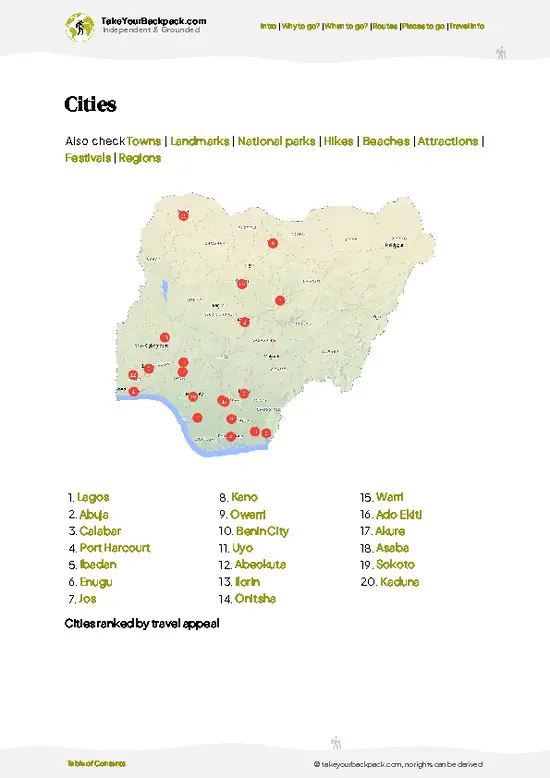
👉 Discover all cities

Or checkout all Nigeria has to offer (think cities, towns, villages, national parks, hikes, beaches, festivals)
Country photo of Nigeria

We 💚 feedbackKey takeaways before you go

Lagos is a whirlwind of energy and chaos that somehow feels like home. The best surprise? The street food—try the jollof rice from a local vendor; it’s a flavor explosion. Just be ready for the traffic; it can test your patience. Embrace the hustle, and don’t shy away from the vibrant markets. You’ll find treasures and stories that make the journey worthwhile. Trust me, the noise and the colors will stick with you long after you leave.

✍️ Help improve this page!
The information on this page is based on in-depth research, insights shared by experienced travelers, and feedback from the local travel community in Nigeria. While every effort is made to keep the information accurate and current, conditions can change — so if you spot anything incorrect or outdated, please get in touch.


🙋‍♂️ Give feedback

👋 Meet the founderWho’s Behind Take Your Backpack?

Johan, backpacker and founder of TakeYourBackpackHi, I’m Johan (Netherlands 🇳🇱), the creator of TakeYourBackpack. Over the past decade, I’ve backpacked through 80+ countries across six continents, gaining extensive experience with independent travel, long-term trips, and overland routes.

This site is built on a combination of firsthand travel experience and carefully curated insights from other backpackers. Many guides are based on places I’ve personally visited, while others bring together tips, observations, and practical advice shared by trusted travelers I’ve met along the way.

The goal is to provide realistic, experience-driven guidance — not generic itineraries — so you can explore destinations with better context, clearer expectations, and more confidence.

Get full Nigeria guide •
Instant download • 89 highlights • Full Offline guide