×

Nigeria🇳🇬 | citiesIkot Ekpeneraffia weaving, colonial relics, Annang cuisine | things to do and best time to go

Explore IwoExplore Okene

Backpacking in Ikot Ekpene
🏆 Top pickcity ranked #4
By Johan Kruseman 🇳🇱 | Updated June 4, 2026

Forget the idea that Ikot Ekpene is just another anonymous Nigerian crossroads. It’s not a chaotic Lagos or a polished Calabar; it’s a town with a pulse you feel in the ochre dust and the tang of smoked fish drifting from roadside grills. Ikot Ekpene sits in Akwa Ibom State, southeastern Nigeria, where the rainforest edges toward the savannah. For backpackers, it’s less a destination for bucket-list sights and more a living, breathing waypoint—practical, unpretentious, and surprisingly social if you lean in. The town’s old center is compact enough to wander on foot, especially around the raffia market, where you’ll see the craft that put Ikot Ekpene on the map. Buses and shared taxis connect you to Uyo or Aba, but don’t expect a slick transit system. Nights are slow, with more chatter at beer parlors than thumping hostels, and you’ll meet more locals than travelers. Costs are low, safety is decent if you keep your wits, and compared to busier hubs, Ikot Ekpene feels like a pause—a place to catch your breath, taste the region, and plan your next move.

Discover everything you want to know in the 📖 Nigeria Travel Guide.
Safety warning

The current risk level for Nigeria is high. Check the advice before going.


Get your Nigeria guide
89 ranked highlights, routes & tips, works offline (332 pages)
Loading the map 🌍
CLICK TO FILTER
cities
towns
landmarks
national parks
hikes
beaches
attractions
festivals
regions
SHOW COUNTRY’S BESTSHOW ALL

✨ Why go?
Ranked #4 city in Nigeria
What sets this place apart

Backpackers flock to Ikot Ekpene for its strategic location along the route to stunning hikes and cultural sites. The walkable streets invite exploration, with small-scale hostels and guesthouses offering a cozy atmosphere that feels like home. Here, you can savor local dishes that burst with flavor, making every meal an experience. Travelers often linger a few days, soaking in the friendly social vibe that encourages connections among solo adventurers and small groups alike. It’s not about nightlife; it’s about the authentic interactions and the rich culture that make this town a rewarding stop on your journey.
Want to include Ikot Ekpene in your Nigeria route?
Create a personalized Nigeria itinerary that includes Ikot Ekpene and the places that fit your trip — based on your travel style, budget, and available time. Get your route in seconds.

Generate my trip

💡 HighlightsDon't-miss highlights and experiences

  • Raffia weaving workshops and artisan clusters — Ikot Ekpene is famously the “Raffia City”: visiting local workshops lets you watch master weavers turn raffia palm into baskets, hats, mats and bags, talk to artisans, and buy authentic handicrafts straight from the maker.
  • Ikot Ekpene Main Market (the town market) — a busy, colorful daily market where you’ll see the city’s trade in raffia goods, local foodstuffs, smoked fish and spices; it’s the best place to feel the town’s rhythm, haggle for crafts, and try street food.
Nearby day-trip highlights include Uyo (the Akwa Ibom state capital), the coastal towns of Oron, and Ikot Abasi — all worth visiting from Ikot Ekpene for museums, bigger markets, and coastal scenery.
Spotted a mistake or missing something? Contact us.

🏘️ NeighborhoodsUnderstanding the local layout

Ikot Ekpene is a vibrant hub in Nigeria, rich in culture and local charm. Here’s how to navigate its neighborhoods for an authentic experience.

Central Market Area: This is the heartbeat of Ikot Ekpene. The air buzzes with vendors selling everything from fresh produce to handmade crafts. It’s walkable, lively, and perfect for short stays. Nightlife is minimal, but the daytime energy is infectious.

Uyo Road: A bit quieter, this area offers budget-friendly accommodations. It’s a good base for longer stays, with easy access to transport. You’ll find local eateries serving up delicious street food, making it a foodie’s delight.

Ikot Ekpene Town Hall: This area is more residential, providing a glimpse into daily life. It’s less touristy, ideal for those seeking peace. Walkability is decent, … read more 👉
Ikot Ekpene is a vibrant hub in Nigeria, rich in culture and local charm. Here’s how to navigate its neighborhoods for an authentic experience.

Central Market Area: This is the heartbeat of Ikot Ekpene. The air buzzes with vendors selling everything from fresh produce to handmade crafts. It’s walkable, lively, and perfect for short stays. Nightlife is minimal, but the daytime energy is infectious.

Uyo Road: A bit quieter, this area offers budget-friendly accommodations. It’s a good base for longer stays, with easy access to transport. You’ll find local eateries serving up delicious street food, making it a foodie’s delight.

Ikot Ekpene Town Hall: This area is more residential, providing a glimpse into daily life. It’s less touristy, ideal for those seeking peace. Walkability is decent, and you’ll find a few cozy spots to unwind after a day of exploring.

⌛️ 1 daySeeing the highlights in 24 hours

Ikot Ekpene, a bustling hub in southeastern Nigeria, is known for its rich culture and vibrant markets. The air is thick with the scent of spices and the sounds of lively chatter. Start your day at the local market, where you can wander through stalls brimming with colorful fabrics and fresh produce. The morning light dances on the vibrant textiles, making it a feast for the eyes.

After soaking in the market’s energy, head to the nearby Ikot Ekpene Cathedral. Its architecture is striking, and the serene atmosphere offers a moment of reflection. Grab a local breakfast of akara (bean cakes) from a street vendor; the crispy exterior and soft interior are a must-try.

In the afternoon, explore the less-traveled neighborhood of Urua Akpan. Here, you’ll find artisans crafting traditional baskets … read more 👉
Ikot Ekpene, a bustling hub in southeastern Nigeria, is known for its rich culture and vibrant markets. The air is thick with the scent of spices and the sounds of lively chatter. Start your day at the local market, where you can wander through stalls brimming with colorful fabrics and fresh produce. The morning light dances on the vibrant textiles, making it a feast for the eyes.

After soaking in the market’s energy, head to the nearby Ikot Ekpene Cathedral. Its architecture is striking, and the serene atmosphere offers a moment of reflection. Grab a local breakfast of akara (bean cakes) from a street vendor; the crispy exterior and soft interior are a must-try.

In the afternoon, explore the less-traveled neighborhood of Urua Akpan. Here, you’ll find artisans crafting traditional baskets and pottery. Engage with them; their stories add depth to your experience. As the sun begins to set, make your way to the Nkari River. The golden hour casts a warm glow, perfect for unwinding.

Finish your day with a meal at a local eatery, savoring jollof rice and grilled fish. The flavors are bold, and the atmosphere is welcoming. You’ll leave with a deeper appreciation for this hidden gem.
Turn your Ikot Ekpene visit into an Nigeria adventure
Build a complete Nigeria route with Ikot Ekpene, hidden gems, must-see destinations, and realistic travel times included.

Generate my trip

🌤️ When to go?Choosing the right time of year


  • Topic: Weather — Ikot Ekpene’s tropical climate means heavy rains from April to October, turning dirt roads into mud traps and making outdoor exploration a slog. The dry season from November to March offers clearer skies and easier trekking, with humidity dropping just enough to breathe easier.

  • Topic: Temperature — Expect highs around 31–33°C (88–91°F) year-round, but the dry season mornings dip to a more forgiving 22°C (72°F), perfect for early hikes or market strolls without overheating.

  • Topic: Daylight Hours — Near the equator, daylight stays steady at about 12 hours daily, so plan your outings knowing sunset hovers around 6:30 PM year-round, giving you a reliable window for adventures.

  • Topic: Crowds — Tourist traffic is minimal year-round, but local festivals in December and January
read more 👉

  • Topic: Weather — Ikot Ekpene’s tropical climate means heavy rains from April to October, turning dirt roads into mud traps and making outdoor exploration a slog. The dry season from November to March offers clearer skies and easier trekking, with humidity dropping just enough to breathe easier.

  • Topic: Temperature — Expect highs around 31–33°C (88–91°F) year-round, but the dry season mornings dip to a more forgiving 22°C (72°F), perfect for early hikes or market strolls without overheating.

  • Topic: Daylight Hours — Near the equator, daylight stays steady at about 12 hours daily, so plan your outings knowing sunset hovers around 6:30 PM year-round, giving you a reliable window for adventures.

  • Topic: Crowds — Tourist traffic is minimal year-round, but local festivals in December and January draw lively crowds. Visiting just before or after these events means quieter streets and more authentic interactions.

  • Topic: Seasonal Activities — The dry season aligns with cultural festivals and outdoor markets, where you can catch traditional crafts and performances. The rainy season, while less convenient, offers lush landscapes and fewer tourists if you’re up for the challenge.

  • Topic: Price Fluctuations — Accommodation and transport costs dip during the rainy months due to lower demand, but factor in potential delays and less comfortable conditions. The dry season commands a slight premium but rewards with smoother logistics.


Pro-tip: Aim for late November to early March—when the air is drier, the streets buzz with local life, and the balance between comfort and cultural immersion hits its stride.


source: climatestotravel.comJANJanuary: excellent for travelingFEBFebruary: excellent for travelingMARMarch: excellent for travelingAPRApril: fair for travelingMAYMay: fair for travelingJUNJune: fair for travelingJULJuly: fair for travelingAUGAugust: fair for travelingSEPSeptember: fair for travelingOCTOctober: fair for travelingNOVNovember: highly recommended for travelingDECDecember: excellent for traveling
when-to-go

✈️ The backpacker research shortcutNigeria Travel Guide

An offline-friendly backpacking guide with optimized travel routes, ranked highlights, transport advice, and the best areas to stay.
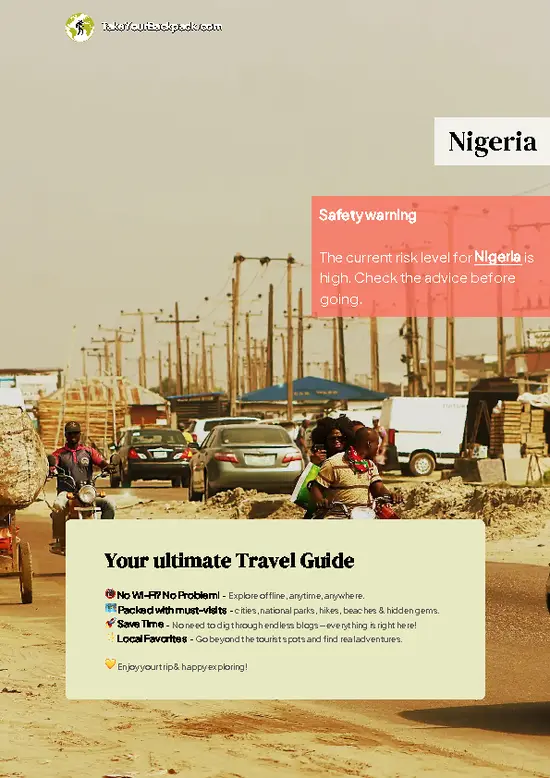
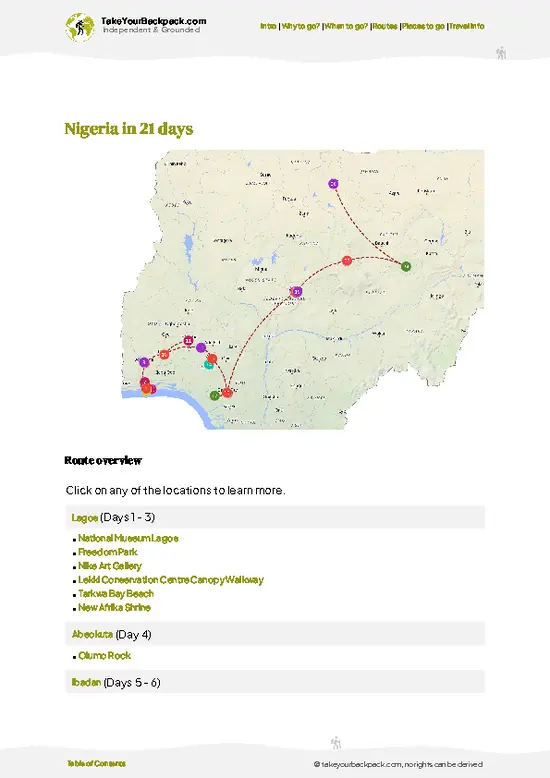
example page 0 from our offline Travel Guide for Nigeria
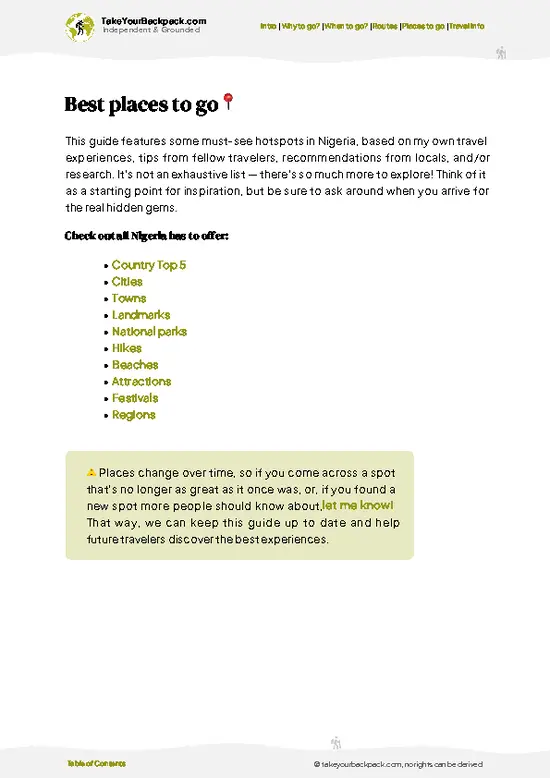
example page 1 from our offline Travel Guide for Nigeria
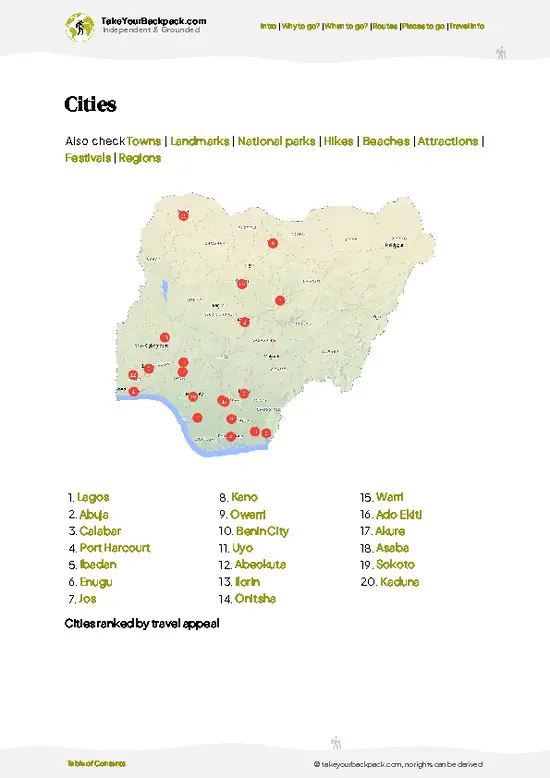
example page 2 from our offline Travel Guide for Nigeria
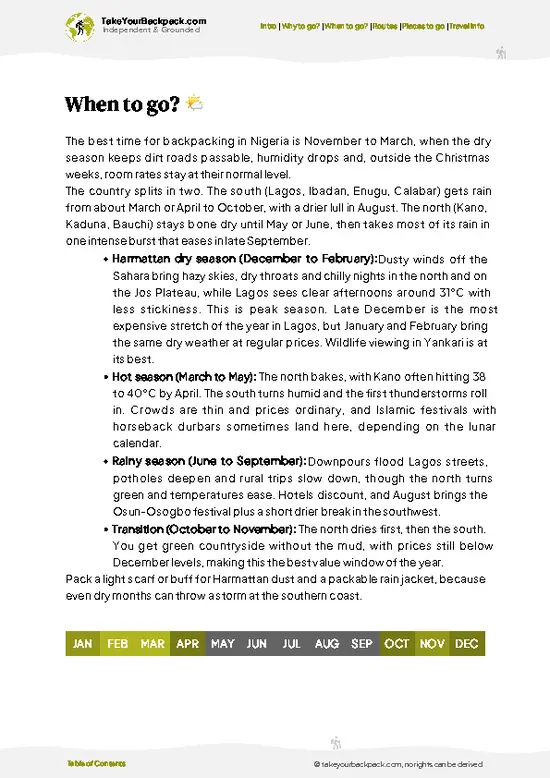
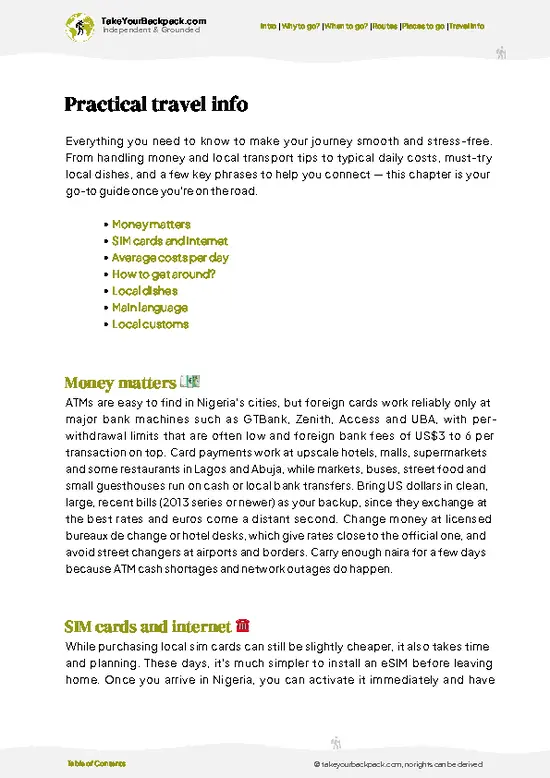
example page 3 from our offline Travel Guide for Nigeria
example page 4 from our offline Travel Guide for Nigeria
example page 5 from our offline Travel Guide for Nigeria
example page 6 from our offline Travel Guide for Nigeria
example page 7 from our offline Travel Guide for Nigeria
The digital guide (332 pages) contains:
89 highlights, ranked by travel appeal
Optimized 7, 14 & 21-day travel routes
Cities, national parks, landmarks, beaches
How to get around
Offline-friendly for travel without Wi-Fi
👉 Click to see all 30+ guide features

📅 Plan smarter in minutes, not weeks
Month by month travel advice
Festivals & national holidays
Budget expectations

🗺️ Go to the right places, skip the overrated ones
Honest pros & cons of destinations
Top hikes, parks & viewpoints
Lesser-known places most travelers miss
Clear “worth it vs skip it” guidance

🛏️ Travel smoothly without rookie mistakes
Best areas to stay
Transport systems explained simply
Common scams & safety advice
SIM cards, money & practical tips

🌍 Understand the country, not just visit it
Culture & traditions
52 Essential phrases & customs
Festivals worth planning around
Traveler-friendly historical context
Insights that make places more meaningful

📱 Built for real travel conditions
Fully downloadable PDF
Works completely offline
Optimized for phone use
Useful in remote areas & buses
Everything in one place
Save weeks of stressful planning
Get instant access to your full guide. 30‑day money-back guarantee.


By proceeding you agree to our terms.
Sent to your inbox immediately after payment • 100% Secure Checkout
Best Backpacking Travel Advisor 2025 tourism awardBest Backpacking
Travel Advisor
2025
What others say about Take Your Backpack Guides:
⭐⭐⭐⭐⭐
Fantastic, amazing amount of information!
⭐⭐⭐⭐⭐
My goodness this is amazing, it's what I've been looking for hats off too you!
⭐⭐⭐⭐⭐
I think this is absolutely BRILLIANT
⭐⭐⭐⭐
Very complete and informative. It's still missing places, but I gotta to commend you
⭐⭐⭐⭐⭐
This is truly amazing, thank you, can't wait to explore it with my kids!
⭐⭐⭐⭐⭐
Awesome resource, thank you!
⭐⭐⭐⭐⭐
This is amazing! Can't wait to explore the ones I haven't seen
⭐⭐⭐⭐
I love this! Well done, great idea.
⭐⭐⭐⭐⭐
Thanks for taking the time to make this gem!
⭐⭐⭐⭐⭐
This might be the best website I've ever seen.
⭐⭐⭐⭐⭐
Congratulations, and thank you so much for your work; it's incredibly valuable.
⭐⭐⭐⭐
In all seriousness I think you did a great job pointing out the important spots
⭐⭐⭐⭐⭐
10/10 very good
⭐⭐⭐⭐⭐
As someone who's only just starting to visit regularly this is awesome, thank you.
⭐⭐⭐⭐
Thank you very much! I'm going to visit my dad, it's going to be very useful!
⭐⭐⭐⭐⭐
This is really cool! We'll be travelling for the first time and this definitely come in handy.
⭐⭐⭐⭐⭐
You are now our minister of culture, congratulations 👨‍💼
⭐⭐⭐⭐⭐
Just wanted to tell you that this is a pearl! Going to follow your recommendations.
⭐⭐⭐⭐⭐
This is so cool. I'll definitely be using the resource for my travels soon.
⭐⭐⭐⭐⭐
This is very impressive! Good work.
⭐⭐⭐⭐⭐
This is an amazing and informative site. Very well done!

🛏️ Where to stay?How to pick the right area

In Ikot Ekpene, the best spot for backpackers is the central district around the main market and the nearby University of Uyo campus extension. This area pulses with life from dawn till dusk, where the scent of fresh palm wine mingles with the earthy aroma of street food stalls grilling suya. Staying here means you’re steps away from vibrant street scenes and local hangouts, making it easier to strike up conversations with friendly vendors and fellow travelers. The streets are busy but generally safe, especially during daylight hours, which is when you’ll want to do most of your exploring.

Hostel … read more 👉
In Ikot Ekpene, the best spot for backpackers is the central district around the main market and the nearby University of Uyo campus extension. This area pulses with life from dawn till dusk, where the scent of fresh palm wine mingles with the earthy aroma of street food stalls grilling suya. Staying here means you’re steps away from vibrant street scenes and local hangouts, making it easier to strike up conversations with friendly vendors and fellow travelers. The streets are busy but generally safe, especially during daylight hours, which is when you’ll want to do most of your exploring.

Hostel options are limited but tend to cluster near the university zone, offering basic but clean accommodations that attract solo backpackers and budget travelers. The vibe here is informal and welcoming, with a steady hum of student energy that keeps the atmosphere lively without overwhelming. Compared to quieter residential neighborhoods, this area offers a smoother social rhythm and easier access to transport links heading out to nearby attractions. Venturing beyond this hub means losing that easy connection to the town’s heartbeat and the chance to soak in Ikot Ekpene’s authentic daily life.

🚌 Getting aroundHow to get around Ikot Ekpene

Ikot Ekpene moves at its own rhythm—less a clockwork town and more a pulse you feel in the air. The streets hum with a mix of determined vendors, motorbikes darting like quicksilver, and locals who know exactly when to pause and when to push forward. It’s not about strict timetables here; it’s about reading the moment, catching the right ride, and flowing with the town’s natural tempo. The sun casts a warm, golden light that softens the edges of the bustling market and the dusty roads, making every step feel like part of a story unfolding. If you want to move smartly through Ikot Ekpene, you’ll need to blend a bit of patience with streetwise savvy—this town rewards those who watch, listen, and jump in at just the right time.


  • Walking: The best way to soak in Ikot Ekpene’s character. Streets
read more 👉
Ikot Ekpene moves at its own rhythm—less a clockwork town and more a pulse you feel in the air. The streets hum with a mix of determined vendors, motorbikes darting like quicksilver, and locals who know exactly when to pause and when to push forward. It’s not about strict timetables here; it’s about reading the moment, catching the right ride, and flowing with the town’s natural tempo. The sun casts a warm, golden light that softens the edges of the bustling market and the dusty roads, making every step feel like part of a story unfolding. If you want to move smartly through Ikot Ekpene, you’ll need to blend a bit of patience with streetwise savvy—this town rewards those who watch, listen, and jump in at just the right time.


  • Walking: The best way to soak in Ikot Ekpene’s character. Streets are compact and mostly flat, so you can cover the central market, local eateries, and craft shops on foot within an hour or two. Walking lets you catch the scent of fresh palm wine and the chatter of traders negotiating prices—plus, it’s free and flexible.


  • Okada (Motorcycle Taxi): The go-to for quick, nimble travel through narrow streets and offbeat paths. Prices hover around 100-200 NGN per short trip, but always agree on the fare before hopping on. Okadas start buzzing early, around 6 AM, and slow down after dark for safety. They’re fast but hold on tight—the ride can be bumpy on unpaved roads.


  • Shared Keke Napep (Tricycle): A budget-friendly middle ground between walking and okada. These three-wheelers run fixed routes through town and nearby neighborhoods, costing about 50-150 NGN. They operate from 7 AM to 7 PM, offering a slightly smoother ride than motorcycles and a chance to mingle with locals.


  • Local Buses (Danfo): For longer hauls or trips to surrounding towns, danfos are your best bet. They leave when full, so timing is flexible but unpredictable. Fares vary by distance, generally 200-500 NGN. Expect crowded conditions and frequent stops, but it’s a genuine slice of daily life and a way to stretch your legs between towns.


  • Private Car Hire: If your budget allows, renting a car with a driver can save time and hassle, especially for early morning or late-night travel. Rates start around 10,000 NGN per day. This option offers comfort and control but is less common among budget travelers.

👛 Costs (as of 23 February 2026)Typical daily expenses

Backpacking in Ikot Ekpene, Nigeria, means navigating a town where everyday life hums with a mix of local commerce and quiet streets, and your budget reflects the straightforward, no-frills reality of travel here.
  • Dorm Accommodation: Options are limited and basic, often guesthouses or budget hotels rather than hostels. Expect to pay around $5 to $10 per night. These places usually offer a fan, a simple bed, and a shared bathroom. Don’t expect luxury, but you’ll get a clean, safe spot to crash.
  • Meals: Street food and small local eateries dominate. A filling meal of local staples like garri, fish, or pounded yam with soup will cost between $1.50 and $3.50. If you want something more substantial or imported, prices rise quickly, but sticking to local fare keeps your wallet happy and your taste
read more 👉
Backpacking in Ikot Ekpene, Nigeria, means navigating a town where everyday life hums with a mix of local commerce and quiet streets, and your budget reflects the straightforward, no-frills reality of travel here.
  • Dorm Accommodation: Options are limited and basic, often guesthouses or budget hotels rather than hostels. Expect to pay around $5 to $10 per night. These places usually offer a fan, a simple bed, and a shared bathroom. Don’t expect luxury, but you’ll get a clean, safe spot to crash.
  • Meals: Street food and small local eateries dominate. A filling meal of local staples like garri, fish, or pounded yam with soup will cost between $1.50 and $3.50. If you want something more substantial or imported, prices rise quickly, but sticking to local fare keeps your wallet happy and your taste buds engaged.
  • Local Transport: The town’s transport is mostly motorbike taxis (okadas) and shared minibuses (danfos). Short rides cost about $0.30 to $0.70. For longer trips within the area, budget up to $1.50. It’s cheap but noisy and a bit chaotic—hold on tight and enjoy the breeze.
  • Basic Activities/Entry Fees: Ikot Ekpene isn’t a tourist hotspot, so formal entry fees are rare. Visiting local markets, cultural spots, or churches is usually free or costs a nominal fee under $1. Guided tours are uncommon, so exploring independently is the norm.
  • Miscellaneous Expenses: Think bottled water, snacks, occasional phone credit, or small tips. These add up to about $1 to $2 daily. Water safety is a concern, so bottled water is a must, and phone credit is essential for navigation and communication.

All told, you’re looking at roughly $10 to $18 per day to cover the essentials in Ikot Ekpene. It’s a modest sum that buys you a genuine slice of Nigerian town life, where the simplicity of the setting makes every moment feel earned.
⚠️ Prices can change and everyone travels differently, so take this as a rough guide. Hope it helps you plan your adventure!

🚌 Day tripsWhere to go beyond the main area

Ikot Ekpene is a vibrant hub for backpackers eager to explore the heart of Nigeria. With its strategic location, it opens doors to a variety of enriching day trips that blend culture, nature, and adventure.

Obot Akara Market
Just a short ride away, this bustling market is a sensory overload. The air is thick with the aroma of spicy jollof rice and fresh palm oil. You’ll find everything from handcrafted textiles to local produce. Spend a few hours wandering, tasting, and chatting with vendors. It’s a crash course in local life. Expect to spend around 500 Naira for transport and snacks. Early mornings are best to avoid the crowds.


Ikot Ekpene Cathedral
A quick 15-minute walk leads you to this stunning architectural marvel. The stained glass glimmers in the sunlight, casting colorful … read more 👉
Ikot Ekpene is a vibrant hub for backpackers eager to explore the heart of Nigeria. With its strategic location, it opens doors to a variety of enriching day trips that blend culture, nature, and adventure.

Obot Akara Market
Just a short ride away, this bustling market is a sensory overload. The air is thick with the aroma of spicy jollof rice and fresh palm oil. You’ll find everything from handcrafted textiles to local produce. Spend a few hours wandering, tasting, and chatting with vendors. It’s a crash course in local life. Expect to spend around 500 Naira for transport and snacks. Early mornings are best to avoid the crowds.


Ikot Ekpene Cathedral
A quick 15-minute walk leads you to this stunning architectural marvel. The stained glass glimmers in the sunlight, casting colorful patterns on the stone floor. Take a moment to soak in the tranquility. It’s a peaceful escape from the hustle of the market. Entry is free, making it a perfect stop for budget travelers. Late afternoons offer the best light for photos.


Uyo
A 30-minute bus ride takes you to Uyo, the capital of Akwa Ibom State. The city buzzes with energy, and the nightlife is a treat. Sample local dishes like Afang soup at a roadside eatery. Total costs can be around 1,500 Naira for transport and food. Visit on weekends to catch local events and music.
👉 Explore Uyo

Le Meridien Ibom Hotel & Golf Resort
For a splash of luxury, this resort is just a short drive away. While it’s a bit pricier, the serene environment and well-kept grounds are worth it. Spend the day lounging by the pool or enjoying a round of golf. Expect to spend around 5,000 Naira for a day pass. Weekdays are quieter, making it a perfect escape.
Want to know what more Nigeria offers?
The Nigeria Travel Guide describes 89 highlights, from cities to national parks, from beaches to hikes

Get the Travel Guide -

🍲 FoodLocal Cuisine & Drinks

In Ikot Ekpene, food is a lively conversation between bold flavors and local tradition. You’ll want to dive into Afang soup, a rich, leafy stew bursting with smoky, slightly bitter greens and tender meat or fish, usually paired with fufu—a doughy, satisfying staple that’s perfect for scooping. Another must-try is Edikang Ikong, a hearty vegetable soup that’s both earthy and refreshing, a true taste of the region’s agricultural roots.

Backpackers find their rhythm in the bustling markets and street corners where vendors serve up steaming bowls and skewers with a side of local chatter. These spots are where the city’s pulse is strongest—no frills, just authentic, affordable bites. Casual eateries offer a chance to sit and watch the world go by, while small bars and roadside cafés provide a … read more 👉
In Ikot Ekpene, food is a lively conversation between bold flavors and local tradition. You’ll want to dive into Afang soup, a rich, leafy stew bursting with smoky, slightly bitter greens and tender meat or fish, usually paired with fufu—a doughy, satisfying staple that’s perfect for scooping. Another must-try is Edikang Ikong, a hearty vegetable soup that’s both earthy and refreshing, a true taste of the region’s agricultural roots.

Backpackers find their rhythm in the bustling markets and street corners where vendors serve up steaming bowls and skewers with a side of local chatter. These spots are where the city’s pulse is strongest—no frills, just authentic, affordable bites. Casual eateries offer a chance to sit and watch the world go by, while small bars and roadside cafés provide a break with chilled palm wine or zobo, a tangy hibiscus drink that’s both thirst-quenching and a little tart.

Eating here isn’t just about the food; it’s about the pace and the company. Sharing meals is common, and you’ll notice a relaxed approach to time—meals stretch, stories flow, and the occasional handshake or nod seals new friendships. Don’t rush; savor the flavors and the social dance that makes Ikot Ekpene’s food scene genuinely memorable.

🛡️ SafetyStaying Safe: What Travelers Should Know

Ikot Ekpene is generally safe, but staying aware is key. Stick to well-lit areas at night, especially if you’re solo. The market can be bustling, and while the locals are friendly, keep an eye on your belongings. Watch for overly eager vendors; they might try to upsell or distract you. Always negotiate prices upfront to avoid surprises. Carry a small amount of cash for street food—it’s delicious and a great way to connect with the culture. Trust your instincts, and you’ll navigate the town smoothly.

Other Nigerian cities near Ikot Ekpene

Explore more nearby:

  • Uyo—modern boulevards, Ibom Plaza, palm groves| 27 km away
  • Umuahia—agricultural hub, National War Museum, palm wine bars| 46 km away
  • Eket—oil industry, palm groves, Ibibio culture| 64 km away

💡 Not sure where to go next?
Create a personalized itinerary for Nigeria including Ikot Ekpene and the places that fit your trip.

Generate my itinerary

👉 Discover all cities

Or checkout all Nigeria has to offer (think cities, towns, villages, national parks, hikes, beaches, festivals)
Country photo of Nigeria

We 💚 feedbackIs it worth it?

Ikot Ekpene buzzes with life. The market’s scents—spices, fresh produce—draw you in. Don’t miss the local crafts; they’re authentic and vibrant. Just be ready for the heat; it can be intense. Embrace it, and the warmth of the people will make it worth it.

✍️ Help improve this page!
The information on this page is based on in-depth research, insights shared by experienced travelers, and feedback from the local travel community in Nigeria. While every effort is made to keep the information accurate and current, conditions can change — so if you spot anything incorrect or outdated, please get in touch.


🙋‍♂️ Give feedback

👋 Meet the founderWho’s Behind Take Your Backpack?

Johan, backpacker and founder of TakeYourBackpackHi, I’m Johan (Netherlands 🇳🇱), the creator of TakeYourBackpack. Over the past decade, I’ve backpacked through 80+ countries across six continents, gaining extensive experience with independent travel, long-term trips, and overland routes.

This site is built on a combination of firsthand travel experience and carefully curated insights from other backpackers. Many guides are based on places I’ve personally visited, while others bring together tips, observations, and practical advice shared by trusted travelers I’ve met along the way.

The goal is to provide realistic, experience-driven guidance — not generic itineraries — so you can explore destinations with better context, clearer expectations, and more confidence.

Get full Nigeria guide •
Instant download • 89 highlights • Full Offline guide