×

Nigeria🇳🇬 | citiesPort Harcourtoil refineries, waterfront bars, expat enclaves | things to do and best time to go

Explore LagosExplore Ibadan

Backpacking in Port Harcourt
🏆 Top pickcity ranked #4
By Johan Kruseman 🇳🇱 | Updated June 3, 2026

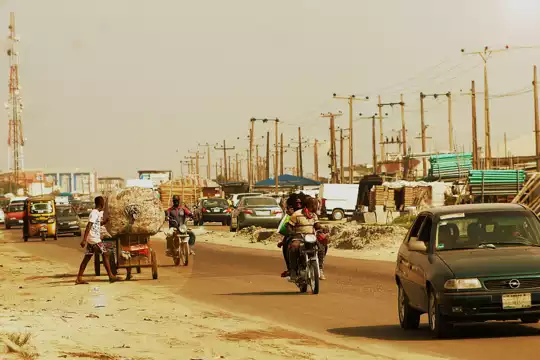
Forget the myth that Port Harcourt is just an oil city best skipped by travelers—there’s more nuance here than guidebooks admit. Tucked in Nigeria’s humid, energetic south, Port Harcourt is the capital of Rivers State and a major port on the Bonny River. For backpackers, it’s a city of contrasts: the waterfront buzzes with commerce and local life, but you won’t find the colonial charm of Lagos or the cultural density of Ibadan. The city’s best draws are its lively street food scene, the National Museum’s gritty exhibits on the Niger Delta, and the chaotic but fascinating Mile One Market. Nightlife is bold, but not always foreigner-friendly; you’ll need street smarts and a sense of humor. Costs are moderate—cheaper than Abuja, pricier than Calabar. Safety is a real concern after dark, and solo travelers rarely bump into fellow backpackers. The vibe? Industrious, raw, and unapologetically local.

Discover everything you want to know in the 📖 Nigeria Travel Guide.
Safety warning

The current risk level for Nigeria is high. Check the advice before going.


Get your Nigeria guide
89 ranked highlights, routes & tips, works offline (332 pages)
Loading the map 🌍
CLICK TO FILTER
cities
towns
landmarks
national parks
hikes
beaches
attractions
festivals
regions
SHOW COUNTRY’S BESTSHOW ALL

✨ Why go?
Ranked #4 city in Nigeria
What sets this place apart

Port Harcourt is a strategic stop for backpackers navigating Nigeria. It’s not just about the highlights; it’s about how the city fits into your broader journey. The basecamp value here is solid. You can easily launch day trips to nearby attractions without the hassle of long travel times.

Accommodations like hostels offer budget-friendly options that foster a social vibe, perfect for meeting fellow travelers. The food scene is vibrant, with local dishes that pack a punch—think spicy and satisfying. You’ll find plenty of street vendors and restaurants that won’t break the bank.

The city is relatively walkable, allowing you to soak in the local atmosphere while getting from point A to B. When the sun sets, the nightlife kicks in, offering a mix of bars and music venues that reflect the … read more 👉
Port Harcourt is a strategic stop for backpackers navigating Nigeria. It’s not just about the highlights; it’s about how the city fits into your broader journey. The basecamp value here is solid. You can easily launch day trips to nearby attractions without the hassle of long travel times.

Accommodations like hostels offer budget-friendly options that foster a social vibe, perfect for meeting fellow travelers. The food scene is vibrant, with local dishes that pack a punch—think spicy and satisfying. You’ll find plenty of street vendors and restaurants that won’t break the bank.

The city is relatively walkable, allowing you to soak in the local atmosphere while getting from point A to B. When the sun sets, the nightlife kicks in, offering a mix of bars and music venues that reflect the city’s culture.

For those looking to move on, easy onward travel options abound, making it a convenient hub. If you’re after a rich experience without overstaying your welcome, Port Harcourt is worth considering as a short stop on your adventure.
Want to include Port Harcourt in your Nigeria route?
Create a personalized Nigeria itinerary that includes Port Harcourt and the places that fit your trip — based on your travel style, budget, and available time. Get your route in seconds.

Generate my trip

💡 HighlightsKey sights and experiences for travelers

  • Port Harcourt Pleasure Park — A surprisingly well-kept green space in the city with walking paths, a small lake, playgrounds and evening lights; great for people-watching, a lazy jog, or grabbing street food without leaving the city bustle.
  • Isaac Boro Garden Park — A memorial park honoring the Ijaw activist Isaac Boro; shady lawns, statues and local life converge here, so it’s a nice place to feel the city’s political and social history up close.
  • Mile One Market (Main Market) — Port Harcourt’s busiest marketplace for fabrics, electronics, food and local crafts; chaotic, loud and honest — go with a local guide or a clear plan and you’ll leave with good stories and bargains.
  • Rivers State Cultural Centre — The city’s main venue for theatre, music and visual art; check the program and you
read more 👉
  • Port Harcourt Pleasure Park — A surprisingly well-kept green space in the city with walking paths, a small lake, playgrounds and evening lights; great for people-watching, a lazy jog, or grabbing street food without leaving the city bustle.
  • Isaac Boro Garden Park — A memorial park honoring the Ijaw activist Isaac Boro; shady lawns, statues and local life converge here, so it’s a nice place to feel the city’s political and social history up close.
  • Mile One Market (Main Market) — Port Harcourt’s busiest marketplace for fabrics, electronics, food and local crafts; chaotic, loud and honest — go with a local guide or a clear plan and you’ll leave with good stories and bargains.
  • Rivers State Cultural Centre — The city’s main venue for theatre, music and visual art; check the program and you might catch a dance troupe, a Nollywood shoot or a small gallery show that teaches more about local culture than any brochure will.
  • Adokiye Amiesimaka Stadium (Rivers Stadium) — Catching a Rivers United match here is a proper Port Harcourt experience: passionate crowds, loud music and the kind of atmosphere you can only get at a live game.
  • Old GRA & Government House area — Walkable streets lined with colonial-era buildings, embassies and leafy lawns; good for architecture, a relaxed café stop and a sense of the city’s administrative heart.
  • Port Harcourt Tourist Beach — A popular riverfront/beach spot on weekends for barbecues, informal music and boat-watching; it’s where locals go to unwind and where you can get a feel for riverside life.
  • University of Port Harcourt (Choba campus) — A large, lively campus with student culture, small eateries, occasional public lectures and green spaces; visiting gives insight into the city’s youth scene and academic life.
  • Rivers State Museum — Small but worthwhile for local history and artifacts related to the Niger Delta and Rivers State; useful context if you want to understand the region beyond the surface.
  • Port Harcourt Waterfront & Creekfront Areas — The riverfront neighborhoods and small jetties where you can arrange short boat trips into the mangroves, watch tanker traffic, and see the everyday life that revolves around the creeks.
A few excellent day trips outside the city: Bonny Island (historic sites and beaches), Opobo (Jaja’s palace and river history), and the mangrove villages around Okrika for boat trips and creek-side culture.
Spotted a mistake or missing something? Contact us.

🏘️ NeighborhoodsWhere things are and how it's laid out

Port Harcourt is a bustling hub in Nigeria, rich in culture and energy. Understanding its neighborhoods can help you maximize your experience while balancing time, money, and comfort.

GRA (Government Reserved Area): This upscale neighborhood is where you’ll find a mix of luxury hotels and restaurants. It’s safe and walkable, making it ideal for short stays. Expect higher prices here, but the comfort and amenities can be worth it. Nightlife is subdued, focusing more on dining than partying.

Diobu: A vibrant area with a local feel, Diobu offers affordable accommodations and street food that packs a punch. It’s less polished but rich in culture. Walkability is decent, but be cautious at night. This area is perfect for longer stays if you want to immerse yourself in local life.

Port Harcourt read more 👉
Port Harcourt is a bustling hub in Nigeria, rich in culture and energy. Understanding its neighborhoods can help you maximize your experience while balancing time, money, and comfort.

GRA (Government Reserved Area): This upscale neighborhood is where you’ll find a mix of luxury hotels and restaurants. It’s safe and walkable, making it ideal for short stays. Expect higher prices here, but the comfort and amenities can be worth it. Nightlife is subdued, focusing more on dining than partying.

Diobu: A vibrant area with a local feel, Diobu offers affordable accommodations and street food that packs a punch. It’s less polished but rich in culture. Walkability is decent, but be cautious at night. This area is perfect for longer stays if you want to immerse yourself in local life.

Port Harcourt Town: The city center is a hive of activity. It’s bustling and chaotic, with a mix of shops and markets. Prices are moderate, and you can find budget-friendly options. The nightlife here is lively, with bars and clubs catering to various tastes. It’s suitable for both short and longer stays, especially if you enjoy being in the thick of things.

Old Port Harcourt: This area is quieter and offers a glimpse into the city’s history. While not as walkable, it’s a good spot for those seeking a peaceful retreat. Prices are lower, making it a solid choice for budget travelers. Ideal for longer stays if you want to escape the hustle and bustle.

⌛️ 1 dayWhat you can realistically do in a day

Port Harcourt, Nigeria, is a bustling hub of commerce and culture, often overlooked by travelers. Yet, it pulses with life, showcasing the rich heritage of the Niger Delta. The city’s vibrant markets, lively streets, and warm locals offer a unique glimpse into Nigerian life that’s both authentic and engaging.

Start your day in the lively neighborhood of GRA (Government Reserved Area). Grab breakfast at a local spot like the popular Bubbles Restaurant, where you can savor a plate of jollof rice or a hearty Nigerian breakfast. The energy here is infectious, and the aroma of spices fills the air, setting the tone for your adventure.

After fueling up, head to the Port Harcourt Tourist Beach. It’s a bit off the typical tourist path, but the serene atmosphere and the sound of waves crashing against … read more 👉
Port Harcourt, Nigeria, is a bustling hub of commerce and culture, often overlooked by travelers. Yet, it pulses with life, showcasing the rich heritage of the Niger Delta. The city’s vibrant markets, lively streets, and warm locals offer a unique glimpse into Nigerian life that’s both authentic and engaging.

Start your day in the lively neighborhood of GRA (Government Reserved Area). Grab breakfast at a local spot like the popular Bubbles Restaurant, where you can savor a plate of jollof rice or a hearty Nigerian breakfast. The energy here is infectious, and the aroma of spices fills the air, setting the tone for your adventure.

After fueling up, head to the Port Harcourt Tourist Beach. It’s a bit off the typical tourist path, but the serene atmosphere and the sound of waves crashing against the shore provide a refreshing escape. Take a leisurely stroll along the beach, or simply relax and soak in the sun. This is a perfect spot to connect with locals who often gather here for picnics and socializing.

In the afternoon, make your way to the Port Harcourt Mall in the city center. It’s not just about shopping; the mall often hosts local art exhibitions and cultural events. Spend some time exploring the shops, and don’t miss the chance to try some local snacks from the food court.

As evening approaches, head to the lively Abacha Road area. Here, you’ll find a variety of street food vendors serving up delicious suya and pepper soup. Grab a bite and enjoy the vibrant atmosphere as the sun sets.

Finish your day at the nearby Isaac Boro Park. It’s a peaceful spot to unwind, reflecting on your day while surrounded by lush greenery. Port Harcourt may not be on every traveler’s radar, but with its rich experiences, it’s a city that rewards those who venture off the beaten path.
Turn your Port Harcourt visit into an Nigeria adventure
Build a complete Nigeria route with Port Harcourt, hidden gems, must-see destinations, and realistic travel times included.

Generate my trip

🌤️ When to go?Weather, crowds, and seasonal trade-offs


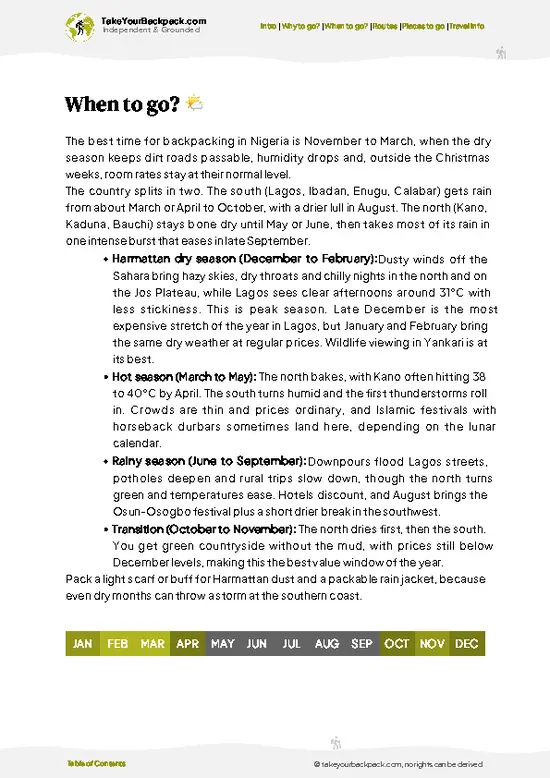
  • Topic: Weather – Port Harcourt’s climate is tropical, with a heavy rainy season from April to October. Expect daily downpours and humidity peaking around 85%. The dry season, November to March, offers clearer skies and less moisture, making it easier to move around without soggy gear.

  • Topic: Temperature – Temperatures hover between 24°C (75°F) at night and 31°C (88°F) during the day year-round. The dry season feels more comfortable because the humidity drops, so even if the thermometer reads the same, your body thanks you.

  • Topic: Daylight Hours – Daylight is steady, roughly 12 hours year-round, with sunrise around 6:30 AM and sunset near 6:30 PM. This consistency means you don’t have to juggle your schedule seasonally, but plan your outdoor activities within these windows.

  • Topic:
read more 👉

  • Topic: Weather – Port Harcourt’s climate is tropical, with a heavy rainy season from April to October. Expect daily downpours and humidity peaking around 85%. The dry season, November to March, offers clearer skies and less moisture, making it easier to move around without soggy gear.

  • Topic: Temperature – Temperatures hover between 24°C (75°F) at night and 31°C (88°F) during the day year-round. The dry season feels more comfortable because the humidity drops, so even if the thermometer reads the same, your body thanks you.

  • Topic: Daylight Hours – Daylight is steady, roughly 12 hours year-round, with sunrise around 6:30 AM and sunset near 6:30 PM. This consistency means you don’t have to juggle your schedule seasonally, but plan your outdoor activities within these windows.

  • Topic: Crowds – Tourist traffic is low year-round, but local festivals and holidays in December and January can swell crowds. If you want fewer people and more authentic interactions, avoid these peak local celebration times.

  • Topic: Seasonal Activities – The dry season hosts cultural events and outdoor markets in full swing. Rainy months limit these but bring lush greenery and fewer tourists, which can be a trade-off if you prefer quieter exploration over eventful days.

  • Topic: Price Fluctuations – Accommodation and transport costs dip during the rainy season due to lower demand. The dry season, especially around December holidays, sees prices spike. Budget travelers can save by braving the rain, but pack accordingly.


Pro-tip: Aim for late November to early March to balance comfort, activity, and cost—dry enough to enjoy the city without the crowds or inflated prices of peak holiday season.


source: climatestotravel.comJANJanuary: highly recommended for travelingFEBFebruary: excellent for travelingMARMarch: excellent for travelingAPRApril: fair for travelingMAYMay: fair for travelingJUNJune: fair for travelingJULJuly: fair for travelingAUGAugust: fair for travelingSEPSeptember: fair for travelingOCTOctober: fair for travelingNOVNovember: highly recommended for travelingDECDecember: good for traveling
when-to-go

✈️ The backpacker research shortcutNigeria Travel Guide

An offline-friendly backpacking guide with optimized travel routes, ranked highlights, transport advice, and the best areas to stay.
example page 0 from our offline Travel Guide for Nigeria
example page 1 from our offline Travel Guide for Nigeria
example page 2 from our offline Travel Guide for Nigeria
example page 3 from our offline Travel Guide for Nigeria
example page 4 from our offline Travel Guide for Nigeria
example page 5 from our offline Travel Guide for Nigeria
example page 6 from our offline Travel Guide for Nigeria
example page 7 from our offline Travel Guide for Nigeria
The digital guide (332 pages) contains:
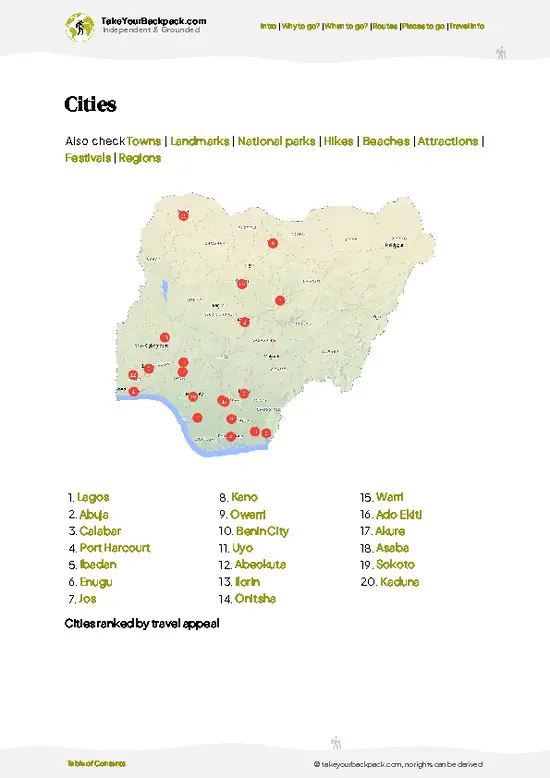
89 highlights, ranked by travel appeal
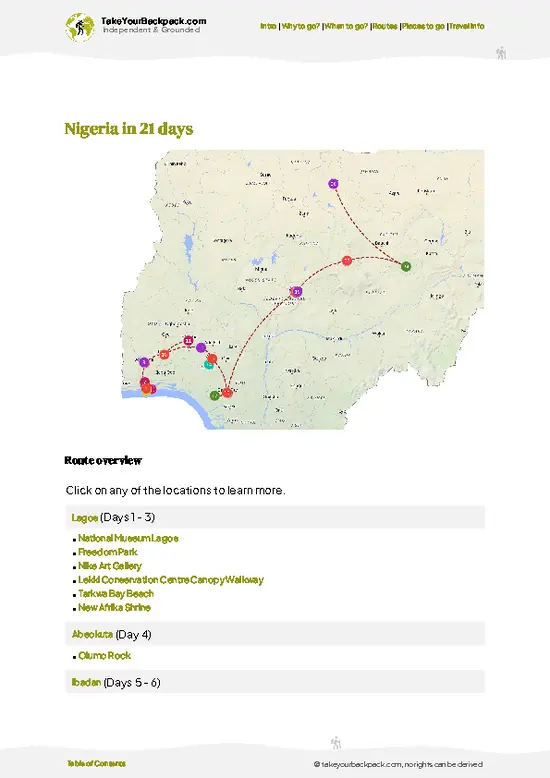
Optimized 7, 14 & 21-day travel routes
Cities, national parks, landmarks, beaches
How to get around
Offline-friendly for travel without Wi-Fi
👉 Click to see all 30+ guide features

📅 Plan smarter in minutes, not weeks
Month by month travel advice
Festivals & national holidays
Budget expectations

🗺️ Go to the right places, skip the overrated ones
Honest pros & cons of destinations
Top hikes, parks & viewpoints
Lesser-known places most travelers miss
Clear “worth it vs skip it” guidance

🛏️ Travel smoothly without rookie mistakes
Best areas to stay
Transport systems explained simply
Common scams & safety advice
SIM cards, money & practical tips

🌍 Understand the country, not just visit it
Culture & traditions
52 Essential phrases & customs
Festivals worth planning around
Traveler-friendly historical context
Insights that make places more meaningful

📱 Built for real travel conditions
Fully downloadable PDF
Works completely offline
Optimized for phone use
Useful in remote areas & buses
Everything in one place
Save weeks of stressful planning
Get instant access to your full guide. 30‑day money-back guarantee.


By proceeding you agree to our terms.
Sent to your inbox immediately after payment • 100% Secure Checkout
Best Backpacking Travel Advisor 2025 tourism awardBest Backpacking
Travel Advisor
2025
What others say about Take Your Backpack Guides:
⭐⭐⭐⭐⭐
Fantastic, amazing amount of information!
⭐⭐⭐⭐⭐
My goodness this is amazing, it's what I've been looking for hats off too you!
⭐⭐⭐⭐⭐
I think this is absolutely BRILLIANT
⭐⭐⭐⭐
Very complete and informative. It's still missing places, but I gotta to commend you
⭐⭐⭐⭐⭐
This is truly amazing, thank you, can't wait to explore it with my kids!
⭐⭐⭐⭐⭐
Awesome resource, thank you!
⭐⭐⭐⭐⭐
This is amazing! Can't wait to explore the ones I haven't seen
⭐⭐⭐⭐
I love this! Well done, great idea.
⭐⭐⭐⭐⭐
Thanks for taking the time to make this gem!
⭐⭐⭐⭐⭐
This might be the best website I've ever seen.
⭐⭐⭐⭐⭐
Congratulations, and thank you so much for your work; it's incredibly valuable.
⭐⭐⭐⭐
In all seriousness I think you did a great job pointing out the important spots
⭐⭐⭐⭐⭐
10/10 very good
⭐⭐⭐⭐⭐
As someone who's only just starting to visit regularly this is awesome, thank you.
⭐⭐⭐⭐
Thank you very much! I'm going to visit my dad, it's going to be very useful!
⭐⭐⭐⭐⭐
This is really cool! We'll be travelling for the first time and this definitely come in handy.
⭐⭐⭐⭐⭐
You are now our minister of culture, congratulations 👨‍💼
⭐⭐⭐⭐⭐
Just wanted to tell you that this is a pearl! Going to follow your recommendations.
⭐⭐⭐⭐⭐
This is so cool. I'll definitely be using the resource for my travels soon.
⭐⭐⭐⭐⭐
This is very impressive! Good work.
⭐⭐⭐⭐⭐
This is an amazing and informative site. Very well done!

🛏️ Where to stay?Best areas and accommodation options

In Port Harcourt, the real backpacker sweet spot is the Old GRA (Government Reserved Area). It’s the city’s heartbeat for safety and social energy without the inflated prices of the newer districts. Old GRA strikes a balance: it’s residential enough to avoid the chaos of commercial hubs but lively enough with cafes, street food vendors, and local hangouts that make solo travel feel less isolating. You’ll find a handful of hostels and guesthouses here, catering to budget travelers who want clean, secure digs without sacrificing access to the city’s pulse.

Compared to the bustling city center, … read more 👉
In Port Harcourt, the real backpacker sweet spot is the Old GRA (Government Reserved Area). It’s the city’s heartbeat for safety and social energy without the inflated prices of the newer districts. Old GRA strikes a balance: it’s residential enough to avoid the chaos of commercial hubs but lively enough with cafes, street food vendors, and local hangouts that make solo travel feel less isolating. You’ll find a handful of hostels and guesthouses here, catering to budget travelers who want clean, secure digs without sacrificing access to the city’s pulse.

Compared to the bustling city center, which can be overwhelming and less predictable, Old GRA offers a more controlled environment. It’s also safer than some of the outlying neighborhoods where security can be a concern, especially after dark. The vibe is relaxed but connected—perfect for meeting other travelers or locals without the pressure of tourist traps.

If you’re weighing your options, think of Old GRA as your strategic base camp: it costs less time and money on transit, offers decent comfort, and keeps you plugged into Port Harcourt’s social fabric. Other areas might promise cheaper stays but often at the expense of safety or convenience, turning your trip into a logistical headache rather than an adventure.

🚌 Getting aroundHow to get around Port Harcourt

Port Harcourt moves with a pulse that’s part hustle, part improvisation. It’s not a city where you’ll find clocks dictating your every step, but rather a rhythm set by the ebb and flow of people, markets, and traffic snarls. The streets don’t run on strict schedules; they run on gut feeling, local knowledge, and a bit of patience. If you want to win here, you learn to read the cues—when a bus is about to fill up, when a motorbike taxi will dart through a gap, or when the best time to walk is because the traffic has momentarily eased. This is a place where time, money, and comfort are constantly in negotiation, and knowing the trade-offs is your secret weapon.


  • Walking: The ultimate zero-cost option. Port Harcourt’s central areas are compact enough to explore on foot, giving you full control
read more 👉
Port Harcourt moves with a pulse that’s part hustle, part improvisation. It’s not a city where you’ll find clocks dictating your every step, but rather a rhythm set by the ebb and flow of people, markets, and traffic snarls. The streets don’t run on strict schedules; they run on gut feeling, local knowledge, and a bit of patience. If you want to win here, you learn to read the cues—when a bus is about to fill up, when a motorbike taxi will dart through a gap, or when the best time to walk is because the traffic has momentarily eased. This is a place where time, money, and comfort are constantly in negotiation, and knowing the trade-offs is your secret weapon.


  • Walking: The ultimate zero-cost option. Port Harcourt’s central areas are compact enough to explore on foot, giving you full control over your pace and route. It’s slow but free, and you get to soak in the city’s textures up close—street vendors, roadside food stalls, and the buzz of daily life. Comfort? That depends on the weather and your stamina, but it’s unbeatable for immersion.


  • Okada (Motorbike Taxi): Fast and flexible, okadas slice through traffic jams like a hot knife through butter. Expect to pay around 200-500 NGN for short to medium distances. They run 24/7, so timing isn’t an issue, but comfort is minimal and safety varies. If you’re in a hurry and can handle a bit of adrenaline, this is your go-to.


  • Mini-bus (Local Bus): The backbone of budget transit, these minibuses operate on semi-fixed routes but no strict timetable. Fares hover around 100-200 NGN. They’re slow and often packed, but they offer a genuine local experience and a chance to observe daily life. You sacrifice comfort and speed for price and authenticity.


  • Taxis (Shared or Private): More expensive, typically 1000 NGN and up, but they offer a smoother, more comfortable ride. Shared taxis can be a middle ground on price but still depend on how many passengers are onboard. Private taxis give you control over timing and route but at a premium. Ideal if you want to save time and avoid the chaos.


  • Tricycles (Keke Napep): A quirky middle option between okadas and minibuses. They’re slower than motorbikes but cheaper and more stable. Fares usually range from 150-300 NGN. They run mostly during the day and are good for short hops when you want to avoid walking but don’t want to splurge on a taxi.


Understanding these options is like mastering a game of trade-offs. You can’t have speed, comfort, and low cost all at once here. Pick two, and you’ll sacrifice the third. Your win comes from knowing exactly what you’re giving up—and why it’s worth it.

👛 Costs (as of 21 February 2026)Money, prices, and spending tips

Backpacking in Port Harcourt, Nigeria, demands a clear-eyed view of what your money buys in terms of comfort and convenience. Here’s the breakdown of daily costs you can expect as an independent traveler navigating this bustling city.
  • Dorm Accommodation (High Season): Expect to pay around $15 to $25 per night for a bed in a shared dormitory during peak travel times. These places offer basic security and cleanliness but can fill up quickly.
  • Dorm Accommodation (Off-Season): Prices drop to about $10 to $18 per night when demand falls. You might find more flexibility in booking and quieter surroundings, though some budget spots may close temporarily.
  • Meals: Street food and local eateries serve up filling meals for $2 to $5 each. If you opt for a mix of street snacks and occasional sit-down
read more 👉
Backpacking in Port Harcourt, Nigeria, demands a clear-eyed view of what your money buys in terms of comfort and convenience. Here’s the breakdown of daily costs you can expect as an independent traveler navigating this bustling city.
  • Dorm Accommodation (High Season): Expect to pay around $15 to $25 per night for a bed in a shared dormitory during peak travel times. These places offer basic security and cleanliness but can fill up quickly.
  • Dorm Accommodation (Off-Season): Prices drop to about $10 to $18 per night when demand falls. You might find more flexibility in booking and quieter surroundings, though some budget spots may close temporarily.
  • Meals: Street food and local eateries serve up filling meals for $2 to $5 each. If you opt for a mix of street snacks and occasional sit-down meals, budget around $8 to $12 daily. Western-style restaurants will push this higher.
  • Local Transport: Short rides on motorbike taxis (okadas) or shared minibuses (danfos) typically cost between $0.30 and $1.50 per trip. Budget $3 to $5 daily if you’re moving around frequently within neighborhoods.
  • City Transport Pass: Unlike some cities, Port Harcourt doesn’t have a unified city transport pass. You’ll pay per ride, so factor that into your daily transport budget rather than a single pass cost.
  • Basic Activities/Entry Fees: Most cultural sites and local attractions charge modest fees, usually $1 to $3. If you plan to visit a few spots daily, allocate around $5 to $8 for activities.
  • Miscellaneous Expenses: This covers bottled water, occasional snacks, phone credit, and small tips. Set aside about $3 to $6 to stay comfortable and connected.

Add it all up, and you’re looking at roughly $30 to $50 per day to cover the essentials without skimping on basic comfort or mobility. This range lets you balance time, money, and comfort smartly—spending enough to avoid hassles but not so much that you lose the gritty, authentic edge of backpacking Port Harcourt.
⚠️ Prices can change and everyone travels differently, so take this as a rough guide. Hope it helps you plan your adventure!

🚌 Day tripsBest day trips from Port Harcourt

Port Harcourt is a fantastic launchpad for day trips that let you dive deep into Nigeria’s rich culture and stunning landscapes. Here are some worthwhile excursions that will make your trip memorable.

Rivers State Cultural Center
Just a short 30-minute drive from the city, this cultural hub offers a vibrant glimpse into the local art scene. You can explore traditional crafts, enjoy live music, and even catch a dance performance. The entrance fee is minimal, usually around 500 Naira, making it a budget-friendly option. The best time to visit is during the dry season, from November to March, when events are more frequent. A common mistake is underestimating the traffic; leave early to avoid delays.


Okrika Beach
About an hour from Port Harcourt, Okrika Beach is a slice of paradise where … read more 👉
Port Harcourt is a fantastic launchpad for day trips that let you dive deep into Nigeria’s rich culture and stunning landscapes. Here are some worthwhile excursions that will make your trip memorable.

Rivers State Cultural Center
Just a short 30-minute drive from the city, this cultural hub offers a vibrant glimpse into the local art scene. You can explore traditional crafts, enjoy live music, and even catch a dance performance. The entrance fee is minimal, usually around 500 Naira, making it a budget-friendly option. The best time to visit is during the dry season, from November to March, when events are more frequent. A common mistake is underestimating the traffic; leave early to avoid delays.


Okrika Beach
About an hour from Port Harcourt, Okrika Beach is a slice of paradise where you can unwind and soak up the sun. The beach is known for its soft sands and clear waters, perfect for a refreshing dip. Expect to spend around 1,000 Naira for transportation and a small fee for beach access. The best time to go is during the dry season, when the weather is perfect for lounging. Many first-timers forget to bring snacks or water, so pack some to enjoy while you relax.


Bonny Island
A bit more adventurous, Bonny Island is accessible via a 1.5-hour boat ride from Port Harcourt. The island is rich in history and offers beautiful beaches, lush mangroves, and a chance to experience local life. The round-trip boat fare is around 3,000 Naira, and you can easily spend a day exploring. The dry season is ideal for this trip, as the waters are calmer. A common oversight is not checking the boat schedule; plan ahead to avoid long waits.


Eleme Botanical Garden
Just 45 minutes away, this serene garden is a hidden treasure for nature lovers. With diverse plant species and peaceful walking paths, it’s a great spot for a leisurely stroll or a picnic. Entrance is typically around 300 Naira, making it an affordable escape. The best time to visit is early morning to avoid the heat and crowds. First-timers often miss the best photo ops by sticking to the main paths; venture deeper into the garden for unique shots.


These day trips from Port Harcourt offer a blend of culture, relaxation, and adventure, making them perfect for any backpacker looking to enrich their Nigerian experience.
Want to know what more Nigeria offers?
The Nigeria Travel Guide describes 89 highlights, from cities to national parks, from beaches to hikes

Get the Travel Guide -

🍲 FoodEating & Drinking in Port Harcourt

In Port Harcourt, food is a vibrant tapestry of flavors that tells the story of the region. Dive into jollof rice, a spicy, tomato-based dish that’s a staple at any gathering. Pair it with suya, skewered meat seasoned with a fiery spice blend, often sold by street vendors. The aroma wafts through the air, drawing you in like a moth to a flame.

Markets are the heartbeat of the city. Here, you’ll find locals enjoying pepper soup, a fragrant broth that warms the soul, often made with fish or goat. The bustling atmosphere is infectious, with laughter and chatter blending into a symphony of daily life. Don’t shy away from street food; it’s where the real magic happens. Grab a bowl of efo riro, a rich vegetable stew, and savor it with pounded yam.

When it comes to drinks, try zobo, a refreshing … read more 👉
In Port Harcourt, food is a vibrant tapestry of flavors that tells the story of the region. Dive into jollof rice, a spicy, tomato-based dish that’s a staple at any gathering. Pair it with suya, skewered meat seasoned with a fiery spice blend, often sold by street vendors. The aroma wafts through the air, drawing you in like a moth to a flame.

Markets are the heartbeat of the city. Here, you’ll find locals enjoying pepper soup, a fragrant broth that warms the soul, often made with fish or goat. The bustling atmosphere is infectious, with laughter and chatter blending into a symphony of daily life. Don’t shy away from street food; it’s where the real magic happens. Grab a bowl of efo riro, a rich vegetable stew, and savor it with pounded yam.

When it comes to drinks, try zobo, a refreshing hibiscus drink that’s both tart and sweet. It’s a common sight at roadside stalls. Etiquette is relaxed; sharing food and drinks is a sign of friendship. Just remember, it’s customary to greet vendors and engage in a bit of banter. This isn’t just about eating; it’s about connecting with the culture.

🛡️ SafetySafety Tips and Common Scams in Port Harcourt

Port Harcourt has its quirks, but it’s not a no-go zone. Awareness is your best friend here. Stick to well-trodden areas like the city center during the day. At night, exercise caution; avoid wandering alone in less populated spots.

Solo travelers should be mindful of their surroundings, especially when using public transport. Always negotiate taxi fares upfront to sidestep misunderstandings.

Scams can pop up, particularly around markets. Be wary of overly friendly locals who may want to guide you for a fee or sell you something that’s not what it seems.

Annoyances like traffic jams are common, so plan your outings accordingly. Carry yourself confidently, and don’t flash valuables. A calm demeanor goes a long way in blending in.

Overall, with a little savvy and awareness, you can navigate … read more 👉
Port Harcourt has its quirks, but it’s not a no-go zone. Awareness is your best friend here. Stick to well-trodden areas like the city center during the day. At night, exercise caution; avoid wandering alone in less populated spots.

Solo travelers should be mindful of their surroundings, especially when using public transport. Always negotiate taxi fares upfront to sidestep misunderstandings.

Scams can pop up, particularly around markets. Be wary of overly friendly locals who may want to guide you for a fee or sell you something that’s not what it seems.

Annoyances like traffic jams are common, so plan your outings accordingly. Carry yourself confidently, and don’t flash valuables. A calm demeanor goes a long way in blending in.

Overall, with a little savvy and awareness, you can navigate Port Harcourt smoothly and enjoy its unique vibe.

Other Nigerian cities near Port Harcourt

Explore more nearby:

  • Owerri—nightlife districts, Imo River, local cuisine| 73 km away
  • Ikot Ekpene—raffia weaving, colonial relics, Annang cuisine| 86 km away
  • Umuahia—agricultural hub, National War Museum, palm wine bars| 92 km away

💡 Not sure where to go next?
Create a personalized itinerary for Nigeria including Port Harcourt and the places that fit your trip.

Generate my itinerary

👉 Discover all cities

Or checkout all Nigeria has to offer (think cities, towns, villages, national parks, hikes, beaches, festivals)
Country photo of Nigeria

We 💚 feedbackKey takeaways before you go

Port Harcourt is a whirlwind of energy. The streets pulse with life, and the local markets are a sensory overload in the best way. You’ll find incredible street food—try the pepper soup; it’s a game changer. But be cautious after dark; some areas can feel a bit sketchy. The best surprise? The warmth of the people. They’ll welcome you like family. Embrace the chaos, and you’ll leave with stories that stick. This city isn’t for everyone, but if you’re open, it’s worth every moment.

✍️ Help improve this page!
The information on this page is based on in-depth research, insights shared by experienced travelers, and feedback from the local travel community in Nigeria. While every effort is made to keep the information accurate and current, conditions can change — so if you spot anything incorrect or outdated, please get in touch.


🙋‍♂️ Give feedback

👋 Meet the founderWho’s Behind Take Your Backpack?

Johan, backpacker and founder of TakeYourBackpackHi, I’m Johan (Netherlands 🇳🇱), the creator of TakeYourBackpack. Over the past decade, I’ve backpacked through 80+ countries across six continents, gaining extensive experience with independent travel, long-term trips, and overland routes.

This site is built on a combination of firsthand travel experience and carefully curated insights from other backpackers. Many guides are based on places I’ve personally visited, while others bring together tips, observations, and practical advice shared by trusted travelers I’ve met along the way.

The goal is to provide realistic, experience-driven guidance — not generic itineraries — so you can explore destinations with better context, clearer expectations, and more confidence.

Get full Nigeria guide •
Instant download • 89 highlights • Full Offline guide