×

North Korea🇰🇵 | townsKiljurail junction, military presence, rural outskirts | things to do and best time to go

Explore SamjiyonExplore Yongbyon

Backpacking in Kilju
🌟 Highlighttown ranked #4
By Johan Kruseman 🇳🇱 | Updated June 15, 2026

Your first real fork in the road with Kilju is deciding whether to push for it at all or keep your North Korea route confined to the more controlled Pyongyang–Kaesong–Wonsan triangle. That choice matters because Kilju sits in North Hamgyong Province in the northeast, far from the usual showcase corridor, and anything off-script here amplifies both bureaucracy and risk. Kilju itself is a workaday town, known more to the outside world for the nearby nuclear test site than for temples or street food, so you come for context, not charm. As a backpacking “destination,” it’s really a transit dot and a lens on provincial life: low-rise concrete, coal dust in the air, quiet streets once the sun drops. Trains and roads are slow and unreliable, walking is how you explore, and there’s no organic hostel scene or café culture to lean on. Compared with Chongjin or Hamhung, Kilju feels smaller, more subdued, and more tightly watched, which makes it interesting in a raw, documentary way but a poor choice as a relaxed base or social stop.

Discover everything you want to know in the 📖 North Korea Travel Guide.
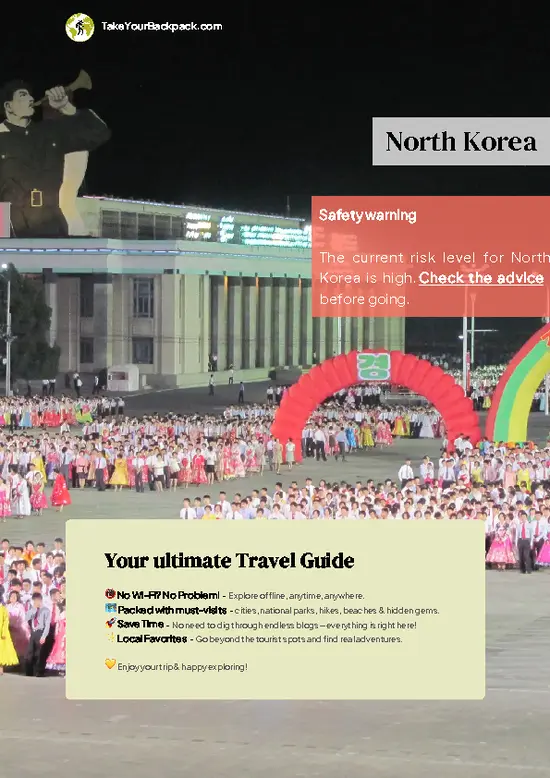
Safety warning

The current risk level for North Korea is high. Check the advice before going.


Get your North Korea guide
74 ranked highlights, routes & tips, works offline (296 pages)
Loading the map 🌍
CLICK TO FILTER
cities
towns
landmarks
national parks
hikes
beaches
attractions
festivals
regions
SHOW COUNTRY’S BESTSHOW ALL

✨ Why go?
Ranked #4 town in North Korea
Why Kilju should be on your travel list

Kilju is a strategic stop for backpackers exploring North Korea. Nestled between hiking trails and coastal beaches, it offers easy access to the stunning landscapes that define the region. The local guesthouses provide a cozy atmosphere, perfect for solo travelers or small groups looking to connect. You’ll find friendly locals eager to share stories over a bowl of kimchi stew or a plate of fresh seafood. The streets are walkable, inviting you to explore at your own pace, whether you’re seeking a quiet retreat or a brief social interaction. Most travelers stay for a couple of days, soaking in the culture and scenery, making Kilju a rewarding pit stop rather than just a fleeting visit.
Want to include Kilju in your North Korea route?
Create a personalized North Korea itinerary that includes Kilju and the places that fit your trip — based on your travel style, budget, and available time. Get your route in seconds.

Generate my trip

💡 HighlightsThe experiences that define the visit

  • Kilju Central Square and City Monument — the town’s focal point: a tidy plaza, a local monument/statue and regular public events. It’s where you’ll see choreographed displays, locals exercising and the everyday civic stagecraft that tells you a lot about life here.
  • Kilju Railway Station — a working provincial station with old-style ticket booths and trains running on regional lines. Not glamorous, but great for watching local routines, practicing basic DPRK rail etiquette, and catching a real sense of transit life outside the big cities.
  • Local Farmers’ Market — an open market where villagers and townsfolk sell produce, dried goods and simple prepared foods. Markets are the best place to read daily rhythms, sample street snacks (when allowed) and observe local trade habits.
  • Kilju County
read more 👉
  • Kilju Central Square and City Monument — the town’s focal point: a tidy plaza, a local monument/statue and regular public events. It’s where you’ll see choreographed displays, locals exercising and the everyday civic stagecraft that tells you a lot about life here.
  • Kilju Railway Station — a working provincial station with old-style ticket booths and trains running on regional lines. Not glamorous, but great for watching local routines, practicing basic DPRK rail etiquette, and catching a real sense of transit life outside the big cities.
  • Local Farmers’ Market — an open market where villagers and townsfolk sell produce, dried goods and simple prepared foods. Markets are the best place to read daily rhythms, sample street snacks (when allowed) and observe local trade habits.
  • Kilju County History / Revolutionary Exhibition — the small local museum or exhibition space that holds photographs, uniforms and local wartime/revolutionary memorabilia. It’s useful for grounding Kilju’s local narratives and seeing how history is presented at county level.
  • People’s Cultural House / Cultural Centre — the municipal cultural hall where plays, musical evenings and official performances happen. Even if you don’t catch a show, the murals, plaster reliefs and posters inside are a compact lesson in public art and official aesthetics.
  • Local Cinema — a provincial movie theatre screening domestic films and newsreels. Catching a screening gives a window into official storytelling and everyday leisure; plus, the building interiors often keep a lot of period charm.
  • Riverside Walk and Small Bridges — Kilju’s small riverfront areas and pedestrian bridges are quiet and good for low-key walking, photos of local life, and seeing how the town sits on the landscape — especially pleasant at dawn or late afternoon.
  • Workers’ Districts and Residential Blocks — the apartment blocks, block murals and public utility spaces tell a lot about everyday living patterns, communal design and local decorative themes. It’s an observational highlight for anyone interested in urban sociology or architecture.
  • Municipal Market Stalls & Street Food Pockets — pockets of street vendors and small food stalls where you’ll get the simplest, most authentic bites and the chance to watch locals going about routine meals. In small towns this is where flavor and daily life meet.
  • County Sports Ground / Public Gym Areas — open playgrounds, public exercise spaces and the sports field are where locals congregate for morning exercises, football and mass physical training. Great for people-watching and catching the local communal vibe in action.
A few real, visitable highlights just outside Kilju worth day-tripping to: the larger regional city of Chongjin (markets, coastal views and provincial museums), nearby county market towns and the rural countryside markets and villages — my personal favorite for a day trip is Chongjin’s central market and seafront area for its bustle and coastal character.
Spotted a mistake or missing something? Contact us.
🏘️ NeighborhoodsUnderstanding the local layout

Kilju, a lesser-known town in North Korea, offers a unique glimpse into local life, away from the typical tourist routes. Here’s how to navigate its neighborhoods effectively:

Downtown Kilju: This is the heart of the town. The vibe is bustling yet manageable. You’ll find local markets and eateries where you can taste authentic North Korean cuisine. It’s walkable, with everything within a few blocks. Ideal for short stays, but the lack of nightlife means it’s quiet after dark.

East Kilju: A more residential area, East Kilju has a relaxed atmosphere. The streets are lined with trees, and you can catch a whiff of fresh bread from local bakeries. It’s a bit further from transport hubs, but perfect for longer stays if you want to immerse yourself in daily life.

West Kilju: This area is quieter, … read more 👉
Kilju, a lesser-known town in North Korea, offers a unique glimpse into local life, away from the typical tourist routes. Here’s how to navigate its neighborhoods effectively:

Downtown Kilju: This is the heart of the town. The vibe is bustling yet manageable. You’ll find local markets and eateries where you can taste authentic North Korean cuisine. It’s walkable, with everything within a few blocks. Ideal for short stays, but the lack of nightlife means it’s quiet after dark.

East Kilju: A more residential area, East Kilju has a relaxed atmosphere. The streets are lined with trees, and you can catch a whiff of fresh bread from local bakeries. It’s a bit further from transport hubs, but perfect for longer stays if you want to immerse yourself in daily life.

West Kilju: This area is quieter, with parks and open spaces. It’s less touristy, making it a great spot for reflection. While it lacks nightlife, the tranquility is a refreshing change. Transport options are limited, so plan ahead if you want to explore further.

⌛️ 1 daySeeing the highlights in 24 hours

Kilju, North Korea, is a town that pulses with the rhythm of everyday life, far from the typical tourist trail. It’s a place where you can witness the genuine spirit of the country, with its lush landscapes and the hum of local industry.

Start your morning with a stroll through the bustling streets of the city center. The aroma of fresh kimchi wafts from nearby markets, mingling with the earthy scent of the surrounding fields. Grab a simple breakfast from a local vendor—perhaps some rice cakes or a bowl of warm porridge. This is your chance to engage with locals, who are often curious and welcoming.

In the afternoon, head to the nearby Mt. Myohyang area. While many tourists flock to Pyongyang, this mountain offers stunning views and a chance to explore the International Friendship Exhibition, … read more 👉
Kilju, North Korea, is a town that pulses with the rhythm of everyday life, far from the typical tourist trail. It’s a place where you can witness the genuine spirit of the country, with its lush landscapes and the hum of local industry.

Start your morning with a stroll through the bustling streets of the city center. The aroma of fresh kimchi wafts from nearby markets, mingling with the earthy scent of the surrounding fields. Grab a simple breakfast from a local vendor—perhaps some rice cakes or a bowl of warm porridge. This is your chance to engage with locals, who are often curious and welcoming.

In the afternoon, head to the nearby Mt. Myohyang area. While many tourists flock to Pyongyang, this mountain offers stunning views and a chance to explore the International Friendship Exhibition, showcasing gifts from foreign leaders. The cool mountain air and the vibrant greens create a refreshing contrast to the urban landscape.

As the sun sets, return to Kilju for dinner at a local eatery. Try the grilled fish, a specialty here, and enjoy the lively atmosphere as families gather to share meals. The day ends with a leisurely walk along the river, where the soft glow of lanterns reflects on the water, wrapping up your day with a sense of connection to this unique place.
Turn your Kilju visit into an North Korea adventure
Build a complete North Korea route with Kilju, hidden gems, must-see destinations, and realistic travel times included.

Generate my trip

🌤️ When to go?Choosing the right time of year


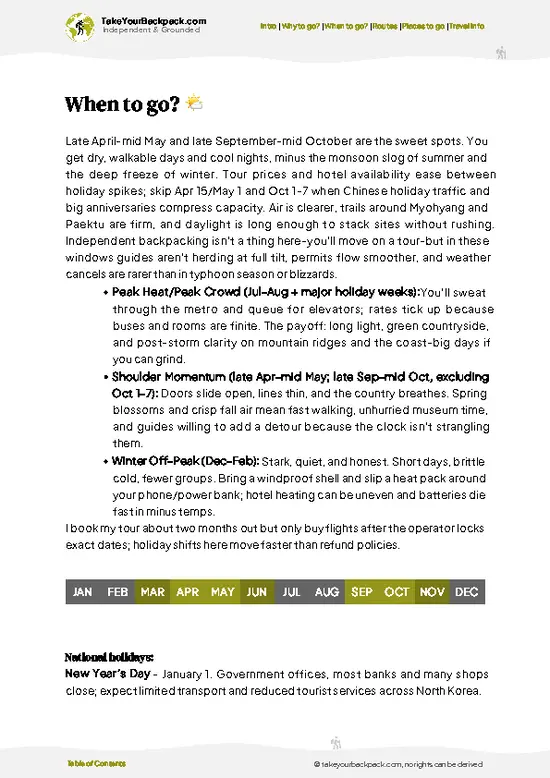
  • Weather: Kilju experiences cold winters with temperatures often dropping below -10°C (14°F), making outdoor exploration harsh and limiting. Summers hover around a comfortable 20-25°C (68-77°F), offering a pleasant climate for walking and sightseeing without the oppressive heat or humidity found in southern regions.

  • Temperature: Spring and autumn bring mild days averaging 10-18°C (50-64°F), perfect for layering and avoiding extremes. Avoid the bitter chill of winter and the muggy peak summer heat for a more comfortable experience.

  • Daylight Hours: In summer, Kilju enjoys up to 15 hours of daylight, giving you more time to explore. Winter days shrink to about 9 hours, which can cramp your schedule and make navigation trickier in the fading light.

  • Crowds: Tourist numbers are generally
read more 👉

  • Weather: Kilju experiences cold winters with temperatures often dropping below -10°C (14°F), making outdoor exploration harsh and limiting. Summers hover around a comfortable 20-25°C (68-77°F), offering a pleasant climate for walking and sightseeing without the oppressive heat or humidity found in southern regions.

  • Temperature: Spring and autumn bring mild days averaging 10-18°C (50-64°F), perfect for layering and avoiding extremes. Avoid the bitter chill of winter and the muggy peak summer heat for a more comfortable experience.

  • Daylight Hours: In summer, Kilju enjoys up to 15 hours of daylight, giving you more time to explore. Winter days shrink to about 9 hours, which can cramp your schedule and make navigation trickier in the fading light.

  • Crowds: Tourist numbers are generally low year-round due to strict access, but spring and autumn see a slight uptick with organized tours. Visiting off-peak means quieter streets and a more authentic feel, though some services might be limited.

  • Seasonal Activities: Autumn brings colorful foliage around the surrounding hills, enhancing the stark, rugged landscape with warm hues. Spring offers blooming wildflowers, but the terrain can be muddy from thawing snow.

  • Price Fluctuations: Prices for guided tours and accommodations remain relatively stable, but booking in shoulder seasons (late spring or early autumn) can yield better deals and more flexible arrangements.


Pro-tip: Aim for early October when the air is crisp, the colors pop, and daylight still stretches long enough to savor Kilju’s austere charm without the winter freeze setting in.


source: climatestotravel.comJANJanuary: below average for travelingFEBFebruary: below average for travelingMARMarch: good for travelingAPRApril: highly recommended for travelingMAYMay: highly recommended for travelingJUNJune: good for travelingJULJuly: fair for travelingAUGAugust: fair for travelingSEPSeptember: highly recommended for travelingOCTOctober: excellent for travelingNOVNovember: good for travelingDECDecember: below average for traveling
when-to-go

✈️ The backpacker research shortcutNorth Korea Travel Guide

An offline-friendly backpacking guide with optimized travel routes, ranked highlights, transport advice, and the best areas to stay.
example page 0 from our offline Travel Guide for North Korea
example page 1 from our offline Travel Guide for North Korea
example page 2 from our offline Travel Guide for North Korea
example page 3 from our offline Travel Guide for North Korea
example page 4 from our offline Travel Guide for North Korea
example page 5 from our offline Travel Guide for North Korea
example page 6 from our offline Travel Guide for North Korea
example page 7 from our offline Travel Guide for North Korea
The digital guide (296 pages) contains:
74 highlights, ranked by travel appeal
Optimized 5, 10 & 15-day travel routes
Cities, national parks, landmarks, beaches
How to get around
Offline-friendly for travel without Wi-Fi
👉 Click to see all 30+ guide features

📅 Plan smarter in minutes, not weeks
Month by month travel advice
Festivals & national holidays
Budget expectations

🗺️ Go to the right places, skip the overrated ones
Honest pros & cons of destinations
Top hikes, parks & viewpoints
Lesser-known places most travelers miss
Clear “worth it vs skip it” guidance

🛏️ Travel smoothly without rookie mistakes
Best areas to stay
Transport systems explained simply
Common scams & safety advice
SIM cards, money & practical tips

🌍 Understand the country, not just visit it
Culture & traditions
52 Essential phrases & customs
Festivals worth planning around
Traveler-friendly historical context
Insights that make places more meaningful

📱 Built for real travel conditions
Fully downloadable PDF
Works completely offline
Optimized for phone use
Useful in remote areas & buses
Everything in one place
Save weeks of stressful planning
Get instant access to your full guide. 30‑day money-back guarantee.


By proceeding you agree to our terms.
Sent to your inbox immediately after payment • 100% Secure Checkout
Best Backpacking Travel Advisor 2025 tourism awardBest Backpacking
Travel Advisor
2025
What others say about Take Your Backpack Guides:
⭐⭐⭐⭐⭐
Fantastic, amazing amount of information!
⭐⭐⭐⭐⭐
My goodness this is amazing, it's what I've been looking for hats off too you!
⭐⭐⭐⭐⭐
I think this is absolutely BRILLIANT
⭐⭐⭐⭐
Very complete and informative. It's still missing places, but I gotta to commend you
⭐⭐⭐⭐⭐
This is truly amazing, thank you, can't wait to explore it with my kids!
⭐⭐⭐⭐⭐
Awesome resource, thank you!
⭐⭐⭐⭐⭐
This is amazing! Can't wait to explore the ones I haven't seen
⭐⭐⭐⭐
I love this! Well done, great idea.
⭐⭐⭐⭐⭐
Thanks for taking the time to make this gem!
⭐⭐⭐⭐⭐
This might be the best website I've ever seen.
⭐⭐⭐⭐⭐
Congratulations, and thank you so much for your work; it's incredibly valuable.
⭐⭐⭐⭐
In all seriousness I think you did a great job pointing out the important spots
⭐⭐⭐⭐⭐
10/10 very good
⭐⭐⭐⭐⭐
As someone who's only just starting to visit regularly this is awesome, thank you.
⭐⭐⭐⭐
Thank you very much! I'm going to visit my dad, it's going to be very useful!
⭐⭐⭐⭐⭐
This is really cool! We'll be travelling for the first time and this definitely come in handy.
⭐⭐⭐⭐⭐
You are now our minister of culture, congratulations 👨‍💼
⭐⭐⭐⭐⭐
Just wanted to tell you that this is a pearl! Going to follow your recommendations.
⭐⭐⭐⭐⭐
This is so cool. I'll definitely be using the resource for my travels soon.
⭐⭐⭐⭐⭐
This is very impressive! Good work.
⭐⭐⭐⭐⭐
This is an amazing and informative site. Very well done!

🛏️ Where to stay?Where staying makes the most sense

Kilju is not your typical backpacker hub, but if you find yourself there, the best place to stay is near the town center, close to the main square and transportation nodes. This area is where you’ll catch the pulse of daily life—locals heading to markets, kids playing in the fading afternoon light, and the scent of street food mingling with the crisp mountain air. It’s safe, straightforward, and offers the most social opportunities for a traveler who wants to connect beyond the usual tourist bubble.

Hostel options are limited, but the few available are clustered here, making it easier to meet … read more 👉
Kilju is not your typical backpacker hub, but if you find yourself there, the best place to stay is near the town center, close to the main square and transportation nodes. This area is where you’ll catch the pulse of daily life—locals heading to markets, kids playing in the fading afternoon light, and the scent of street food mingling with the crisp mountain air. It’s safe, straightforward, and offers the most social opportunities for a traveler who wants to connect beyond the usual tourist bubble.

Hostel options are limited, but the few available are clustered here, making it easier to meet other travelers or guides. Staying outside this core means navigating quieter, more residential zones where language barriers thicken and social chances thin out. The town’s layout is compact, but venturing too far risks losing the convenience of nearby eateries and transport links that keep your day fluid and spontaneous.

Choosing the central neighborhood isn’t just about convenience—it’s about immersion. You’ll wake up to the hum of a town that’s quietly alive, with enough movement to keep you engaged but not overwhelmed. It’s the balance every backpacker craves: safety, social energy, and a genuine slice of North Korean small-town life.

🚌 Getting aroundHow to get around Kilju

Kilju moves at its own rhythm—less a clockwork town and more a place where the day unfolds like a slow, deliberate breath. The air carries a faint scent of pine and earth, mingling with the occasional metallic tang from the nearby rail lines. Streets don’t buzz with frantic urgency; instead, they invite you to lean into a pace that’s patient, almost meditative. You won’t find a rigid timetable stamped on every corner, but rather a flow that rewards those who watch, listen, and adapt. This isn’t a place where you race against time; it’s where you learn to read the subtle cues—the way locals gather at certain spots as the sun shifts, or how the clatter of a distant train signals a chance to move on. Understanding Kilju’s pulse means embracing its quiet unpredictability, and in return, you unlock … read more 👉
Kilju moves at its own rhythm—less a clockwork town and more a place where the day unfolds like a slow, deliberate breath. The air carries a faint scent of pine and earth, mingling with the occasional metallic tang from the nearby rail lines. Streets don’t buzz with frantic urgency; instead, they invite you to lean into a pace that’s patient, almost meditative. You won’t find a rigid timetable stamped on every corner, but rather a flow that rewards those who watch, listen, and adapt. This isn’t a place where you race against time; it’s where you learn to read the subtle cues—the way locals gather at certain spots as the sun shifts, or how the clatter of a distant train signals a chance to move on. Understanding Kilju’s pulse means embracing its quiet unpredictability, and in return, you unlock a smoother, more authentic experience.


  • Walking: The heart of Kilju is compact and best explored on foot. Streets are straightforward, with few cars, making walking not just practical but immersive. Expect to cover most key spots within 30 to 45 minutes at a relaxed pace, soaking in the scent of damp earth and the soft murmur of daily life.


  • Local Bus: Buses here run on a loose schedule, typically from 6:00 AM to 7:00 PM. They’re inexpensive—usually under 1,000 KRW—and offer a slow but steady way to reach outskirts or smaller villages nearby. Don’t expect plush comfort; seats are basic, and the ride can be bumpy, but the windows frame a raw, unfiltered view of the countryside.


  • Shared Taxis: These operate more on intuition than fixed routes, often gathering passengers at central spots when full. They’re faster than buses and cost a bit more, around 2,000 to 3,000 KRW, but the trade-off is a more direct route and a chance to chat with locals who know the backroads.


  • Train: Kilju’s train station is a key node, especially for longer hauls. Trains run infrequently, mostly in the early morning and late afternoon, so timing is crucial. Tickets are affordable, but the experience is less about speed and more about soaking in the rhythmic clatter and the shifting landscapes outside your window.

👛 Costs (as of 12 April 2026)Money, prices, and spending tips

Backpacking in Kilju, North Korea, is a rare and tightly controlled experience, and the costs reflect that unique reality. Here’s a breakdown of what you can expect to spend daily as an independent traveler navigating this tightly regulated environment.
  • Dorm Accommodation: Options are extremely limited and usually arranged through official tours or state-run guesthouses. Expect to pay around $30 to $50 per night. These places are basic, often with minimal heating and sparse furnishings, but they provide a rare window into local life under strict oversight.
  • Meals: Food choices are constrained, mostly simple Korean staples like rice, kimchi, and occasional meat or fish. Meals typically cost between $5 and $10 each. Street food is scarce and not recommended for independent travelers, so plan
read more 👉
Backpacking in Kilju, North Korea, is a rare and tightly controlled experience, and the costs reflect that unique reality. Here’s a breakdown of what you can expect to spend daily as an independent traveler navigating this tightly regulated environment.
  • Dorm Accommodation: Options are extremely limited and usually arranged through official tours or state-run guesthouses. Expect to pay around $30 to $50 per night. These places are basic, often with minimal heating and sparse furnishings, but they provide a rare window into local life under strict oversight.
  • Meals: Food choices are constrained, mostly simple Korean staples like rice, kimchi, and occasional meat or fish. Meals typically cost between $5 and $10 each. Street food is scarce and not recommended for independent travelers, so plan on eating at guesthouses or designated eateries.
  • Local Transport: Public transport is limited and often not accessible to foreigners independently. Most travelers rely on arranged transport included in tours, but if you manage local buses or taxis, expect to spend around $2 to $5 per short trip. The rides are slow and often crowded, with a distinct scent of diesel and old upholstery.
  • Basic Activities/Entry Fees: Entry to museums, monuments, and historical sites is usually bundled into tour packages, but if paid separately, fees range from $3 to $10. These places are heavily curated, offering a glimpse into the country’s narrative rather than a free exploration.
  • Miscellaneous Expenses: This includes bottled water, snacks, and small souvenirs. Bottled water can be pricey, around $1 to $2 per bottle, as tap water is not safe to drink. Souvenirs are limited and often state-approved, costing anywhere from $5 to $15.

All told, you’re looking at a daily budget roughly between $45 and $80. This isn’t a backpacking trip for the shoestring traveler; it’s more about the experience of navigating a place few outsiders see, where every step is carefully managed. The cost reflects the controlled access and limited infrastructure, but the payoff is a deeply unusual perspective on a country frozen in time.


source: korea-dpr.com
⚠️ Prices can change and everyone travels differently, so take this as a rough guide. Hope it helps you plan your adventure!

🚌 Day tripsEasy escapes and nearby places

Kilju, North Korea, is a unique base for day trips that reveal the country’s hidden layers. Here are some worthwhile excursions that will deepen your understanding of this enigmatic land.

Mount Myohyang
A trip to Mount Myohyang is a must. Just a couple of hours from Kilju, the mountain offers stunning vistas and a chance to explore the International Friendship Exhibition, showcasing gifts to Kim Il-sung. The air is crisp, filled with the scent of pine, and the trails are dotted with wildflowers in spring. Expect to spend around $10 for transportation and entry fees. Avoid the mistake of rushing; take your time to soak in the serene atmosphere.
👉 Explore Mount Myohyang

Chongsanri Cooperative Farm
Visiting the Chongsanri Cooperative Farm gives you a glimpse into North Korean agriculture … read more 👉
Kilju, North Korea, is a unique base for day trips that reveal the country’s hidden layers. Here are some worthwhile excursions that will deepen your understanding of this enigmatic land.

Mount Myohyang
A trip to Mount Myohyang is a must. Just a couple of hours from Kilju, the mountain offers stunning vistas and a chance to explore the International Friendship Exhibition, showcasing gifts to Kim Il-sung. The air is crisp, filled with the scent of pine, and the trails are dotted with wildflowers in spring. Expect to spend around $10 for transportation and entry fees. Avoid the mistake of rushing; take your time to soak in the serene atmosphere.
👉 Explore Mount Myohyang

Chongsanri Cooperative Farm
Visiting the Chongsanri Cooperative Farm gives you a glimpse into North Korean agriculture and daily life. It’s about an hour away, and you’ll see locals tending to rice paddies and livestock. The vibrant green fields contrast sharply with the gray of the surrounding mountains. A budget of $5 should cover transport and a small donation. Many first-timers overlook the chance to engage with farmers; don’t miss the opportunity to ask questions and learn.


Wonsan
Wonsan, a coastal city, is roughly a two-hour drive from Kilju. The beach here is a refreshing escape, with soft sand and the sound of waves crashing. Enjoy local seafood at a market stall for about $8. The best time to visit is during the summer when the weather is warm and inviting. A common mistake is to stick to the tourist spots; venture into the local neighborhoods for a more authentic experience.
👉 Explore Wonsan
Want to know what more North Korea offers?
The North Korea Travel Guide describes 74 highlights, from cities to national parks, from beaches to hikes

Get the Travel Guide -

🛡️ SafetyStaying Safe: What Travelers Should Know

In Kilju, safety is generally solid, but awareness is key. Stick to well-trodden paths, especially near the train station and local markets, where crowds can distract you. Solo travelers should avoid wandering alone after dark; the streets can feel eerily quiet, and it’s easy to lose your bearings.

While scams are rare, be cautious of overly friendly locals offering unsolicited help; they might expect a tip. Everyday annoyances include occasional language barriers, so a smile and patience go a long way. Carry yourself confidently, and engage with your surroundings—this openness often leads to genuine connections rather than pitfalls.

Other North Korean towns near Kilju

Explore more nearby:

  • Samjiyon—plateau town, Mount Paektu access, alpine scenery| 125 km away
  • Pujon—mountain valleys, terraced farms, remote settlements| 152 km away
  • Yongbyon—nuclear facility, restricted access, river bend| 326 km away

💡 Not sure where to go next?
Create a personalized itinerary for North Korea including Kilju and the places that fit your trip.

Generate my itinerary

👉 Discover all towns

Or checkout all North Korea has to offer (think cities, towns, villages, national parks, hikes, beaches, festivals)
Country photo of North Korea

We 💚 feedbackIs it worth it?

Kilju offers a rare glimpse into North Korean life, where the air is thick with the scent of local cuisine and the sounds of daily routines echo through the streets. But be prepared: the rigid regulations can feel stifling. Embrace the challenge, and you’ll uncover layers of authenticity that many miss. It’s a journey worth taking, despite the hurdles.

✈️ When did I visit North Korea?
As part of my 1.5 year travel around the world trip, I visited North Korea in August 2015. I had never expected I was able to get in.

✍️ Help improve this page!
The information on this page is based on my own backpacking experience in North Korea, supplemented with up-to-date research and feedback from other travelers. Travel details can change, so if you notice anything outdated or incomplete, feel free to let me know.


🙋‍♂️ Give feedback

👋 Meet the founderWho’s Behind Take Your Backpack?

Johan, backpacker and founder of TakeYourBackpackHi, I’m Johan (Netherlands 🇳🇱), the creator of TakeYourBackpack. Over the past decade, I’ve backpacked through 80+ countries across six continents, gaining extensive experience with independent travel, long-term trips, and overland routes.

This site is built on a combination of firsthand travel experience and carefully curated insights from other backpackers. Many guides are based on places I’ve personally visited, while others bring together tips, observations, and practical advice shared by trusted travelers I’ve met along the way.

The goal is to provide realistic, experience-driven guidance — not generic itineraries — so you can explore destinations with better context, clearer expectations, and more confidence.

Get full country guide •
Instant download • 74 highlights • Full Offline guide