×

North Korea🇰🇵 | best townsYour Guide to the 4 Best towns in North Korea

Exploring the best towns in North Korea offers a unique glimpse into a culture shaped by history and ideology. Each town presents distinct characteristics influenced by regional differences, from the bustling streets of Pyongyang to the quieter, more traditional atmosphere of Kaesong. Seasonal variations can affect accessibility and local events, impacting your backpacking experience. Choosing the right town is crucial; it determines the vibe, safety, and opportunities for cultural immersion. For independent travelers, understanding these nuances can enhance your journey, making it not just a visit, but a deeper connection to the land and its people.

By Johan Kruseman 🇳🇱 | Updated June 15, 2026
Explore the best villages in North Korea

Why go?Why These town Stand Out

Towns in North Korea offer a unique lens into a society shaped by decades of isolation and a distinct political framework. Unlike other countries, these towns reflect a controlled pace of life, where daily routines are often synchronized with state activities. This creates a rhythm that feels both foreign and fascinating.

Culturally, North Korean towns are steeped in historical significance. They serve as living museums, showcasing the country’s revolutionary past and its ongoing narrative. The architecture, often austere, tells stories of ideology and resilience, while local markets provide glimpses into daily life, albeit within strict parameters. Culinary experiences are limited but can reveal regional specialties, offering a taste of local flavors that are otherwise hard to find.

Traveling … read more 👉
Towns in North Korea offer a unique lens into a society shaped by decades of isolation and a distinct political framework. Unlike other countries, these towns reflect a controlled pace of life, where daily routines are often synchronized with state activities. This creates a rhythm that feels both foreign and fascinating.

Culturally, North Korean towns are steeped in historical significance. They serve as living museums, showcasing the country’s revolutionary past and its ongoing narrative. The architecture, often austere, tells stories of ideology and resilience, while local markets provide glimpses into daily life, albeit within strict parameters. Culinary experiences are limited but can reveal regional specialties, offering a taste of local flavors that are otherwise hard to find.

Traveling through these towns requires careful planning. The clustering of towns can optimize itineraries, allowing for deeper exploration of specific regions. However, this often comes at the cost of travel time, as distances can be deceptive and infrastructure is limited. Accessibility varies significantly; some areas are easier to reach than others, impacting the depth of immersion possible.

Understanding these constraints is crucial. The climatic conditions can also affect travel plans, with harsh winters limiting access to certain areas. Ultimately, the trade-offs between time, accessibility, and the richness of experience define the journey through North Korea’s towns.
Why These Made the Cut
The list of best towns in North Korea is created based on charm, local culture, atmosphere, hidden gems, and visitor appeal. If you feel a town is missing in this list, please let us know.

When to go?When to Plan Your Trip

Seasonality plays a crucial role in experiencing the towns of North Korea. The country has four distinct seasons, each offering a different perspective on local life.

Spring (March to May) brings mild temperatures and blooming landscapes. This is a prime time for cultural events and festivals, showcasing local traditions. However, early spring can still be chilly, so layering is essential.

Summer (June to August) is warm and humid, with temperatures often exceeding 30°C (86°F). This season sees a surge in domestic tourism, particularly during national holidays. While vibrant local life is on display, expect larger crowds and higher prices.

Autumn (September to November) offers cooler weather and stunning foliage. This is often considered the best time to visit, as the crowds thin out … read more 👉
Seasonality plays a crucial role in experiencing the towns of North Korea. The country has four distinct seasons, each offering a different perspective on local life.

Spring (March to May) brings mild temperatures and blooming landscapes. This is a prime time for cultural events and festivals, showcasing local traditions. However, early spring can still be chilly, so layering is essential.

Summer (June to August) is warm and humid, with temperatures often exceeding 30°C (86°F). This season sees a surge in domestic tourism, particularly during national holidays. While vibrant local life is on display, expect larger crowds and higher prices.

Autumn (September to November) offers cooler weather and stunning foliage. This is often considered the best time to visit, as the crowds thin out and prices drop. The weather is generally stable, making it ideal for exploring towns.

Winter (December to February) presents harsh conditions, with temperatures often plummeting below freezing. While the towns are quieter, the stark beauty of the landscape can be captivating. However, travel may be limited due to snow and cold.

Shoulder seasons—spring and autumn—provide a balance of favorable weather and manageable crowds. Planning visits during these times can enhance the experience, allowing for deeper engagement with local culture.

town hoppingSuggested Travel Strategies

Regional Clustering
Focus on grouping towns by region to minimize travel time and maximize immersion. The capital, Pyongyang, serves as a natural starting point. From there, consider branching out to nearby towns like Kaesong and Nampo. This cluster allows for a deep dive into North Korean history and culture without excessive backtracking.

Routing Logic
Travel generally flows from south to north. After exploring the southern towns, head toward the central regions, such as Pyongyang and Wonsan. This sequence helps maintain a logical flow and reduces fatigue. Each leg should ideally take no more than a few hours, allowing for exploration without feeling rushed.

Time Management
Allocate at least half a day per town to absorb local character and amenities. For larger towns, like Pyongyang, … read more 👉
Regional Clustering
Focus on grouping towns by region to minimize travel time and maximize immersion. The capital, Pyongyang, serves as a natural starting point. From there, consider branching out to nearby towns like Kaesong and Nampo. This cluster allows for a deep dive into North Korean history and culture without excessive backtracking.

Routing Logic
Travel generally flows from south to north. After exploring the southern towns, head toward the central regions, such as Pyongyang and Wonsan. This sequence helps maintain a logical flow and reduces fatigue. Each leg should ideally take no more than a few hours, allowing for exploration without feeling rushed.

Time Management
Allocate at least half a day per town to absorb local character and amenities. For larger towns, like Pyongyang, consider a full day. This pacing strikes a balance between depth and breadth, ensuring experiences are meaningful rather than superficial.

Common Mistakes
Travelers often underestimate the time needed for transfers and overestimate what can be accomplished in a day. Avoid cramming too many stops into a tight schedule. Prioritize quality experiences over quantity.

Trade-offs and Constraints
Speed may sacrifice depth; a rushed itinerary can lead to missed opportunities. Budget constraints might limit comfort, but investing in guided tours can enhance understanding. Flexibility is key; be prepared to adjust plans based on local conditions or interests.

The ListMust-Visit towns in North Korea

1 Samjiyon

plateau town, Mount Paektu access, alpine scenery

Begin journeys to volcanic landscapes and high-altitude forests, using this gateway town as a base for exploring the northern frontier.

2 Kilju

rail junction, military presence, rural outskirts

Pass through a strategic town marked by checkpoints and agricultural fields, where infrastructure and security shape the landscape.

3 Pujon

mountain valleys, terraced farms, remote settlements

Travel through rugged uplands where agriculture clings to steep slopes and isolation influences every aspect of community life.

4 Yongbyon

nuclear facility, restricted access, river bend

Approach a town known for its scientific installations and tight controls, set along a winding river in the country’s interior.

Loading the map 🌍

Expert viewPro Tips for Exploring the Best

Expert Commentary


When planning your journey through North Korea, focus on visiting around three to five towns. This range allows you to absorb the local culture without feeling rushed. Each town offers a unique glimpse into the country’s character, but travel logistics can be challenging. Prioritize towns based on your interests—historical sites, local customs, or natural beauty.

The capital region is a logical starting point. It serves as a hub for most tours, providing a base for day trips to nearby towns. However, don’t underestimate the travel time between locations. Roads can be in poor condition, and transportation is often limited to guided tours. Expect to spend a significant portion of your day on the move, which can be exhausting but also rewarding.

In the eastern regions, you’ll … read more 👉

Expert Commentary


When planning your journey through North Korea, focus on visiting around three to five towns. This range allows you to absorb the local culture without feeling rushed. Each town offers a unique glimpse into the country’s character, but travel logistics can be challenging. Prioritize towns based on your interests—historical sites, local customs, or natural beauty.

The capital region is a logical starting point. It serves as a hub for most tours, providing a base for day trips to nearby towns. However, don’t underestimate the travel time between locations. Roads can be in poor condition, and transportation is often limited to guided tours. Expect to spend a significant portion of your day on the move, which can be exhausting but also rewarding.

In the eastern regions, you’ll find towns that showcase coastal life and traditional fishing practices. These areas are less frequented by tourists, offering a more authentic experience. However, be prepared for limited infrastructure. Accommodations may not meet Western standards, and dining options can be sparse. This trade-off means you’ll experience genuine local life but should pack snacks and be ready for basic amenities.

The western towns often highlight agricultural practices and rural lifestyles. Here, you can witness the contrast between urban and rural North Korea. The pace is slower, and the people are often more open to interactions. However, language barriers can be significant. Most locals speak limited English, so having a guide who understands the nuances of local culture is essential. This will enhance your experience and help you navigate any misunderstandings.

Safety is a paramount concern in North Korea. Always adhere to the rules set by your guides. Straying from designated areas can lead to serious consequences. Respect local customs, especially in rural towns where traditions are deeply rooted. Dress conservatively and avoid discussing sensitive topics. A respectful demeanor goes a long way in fostering positive interactions.

Cultural considerations are equally important. Each region has its own customs and traditions. In some towns, you may encounter festivals or local markets, which can be vibrant and engaging. However, these events can also be tightly controlled. Participation may require prior approval, so plan accordingly.

Budget-wise, expect to spend more than you might in other countries. Tours often include transportation, meals, and accommodations, but the costs can add up quickly. Factor in the price of souvenirs and any additional fees for special activities. While it’s tempting to cut corners, investing in a reputable tour operator will enhance your experience and ensure your safety.

In summary, approach your North Korean adventure with a flexible mindset. The towns you choose to visit will shape your understanding of this complex country. Embrace the rhythm of travel, and be prepared for both the challenges and the rewards that come with exploring a place so rich in history and culture.

✈️ The backpacker research shortcutNorth Korea Travel Guide

An offline-friendly backpacking guide with optimized travel routes, ranked highlights, transport advice, and the best areas to stay.
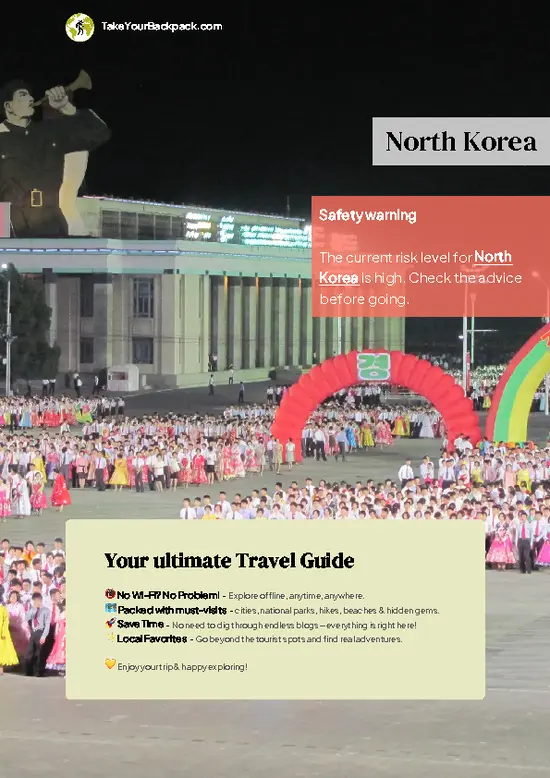
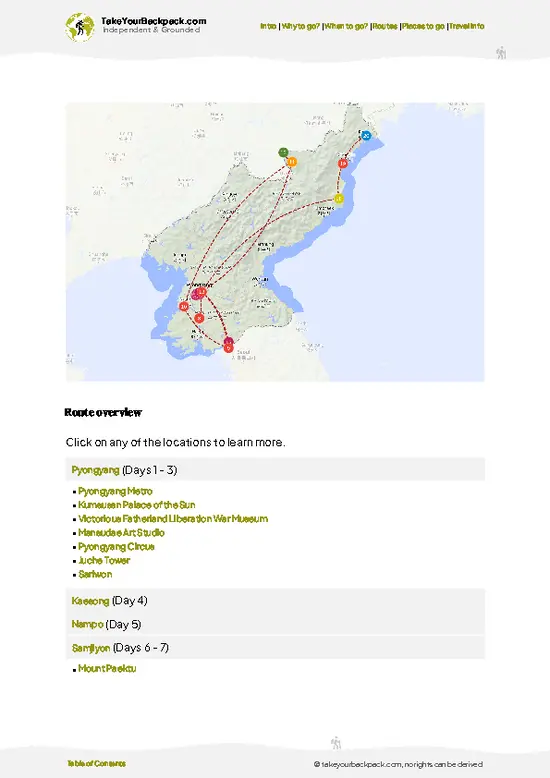
example page 0 from our offline Travel Guide for North Korea
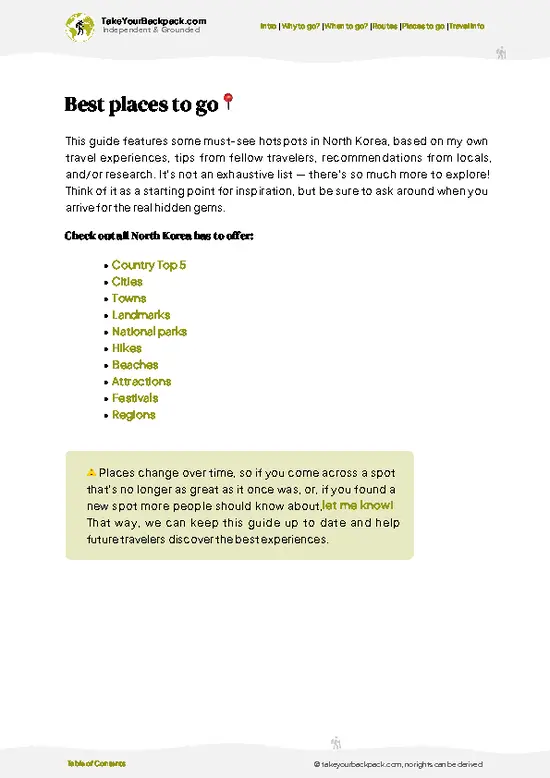
example page 1 from our offline Travel Guide for North Korea
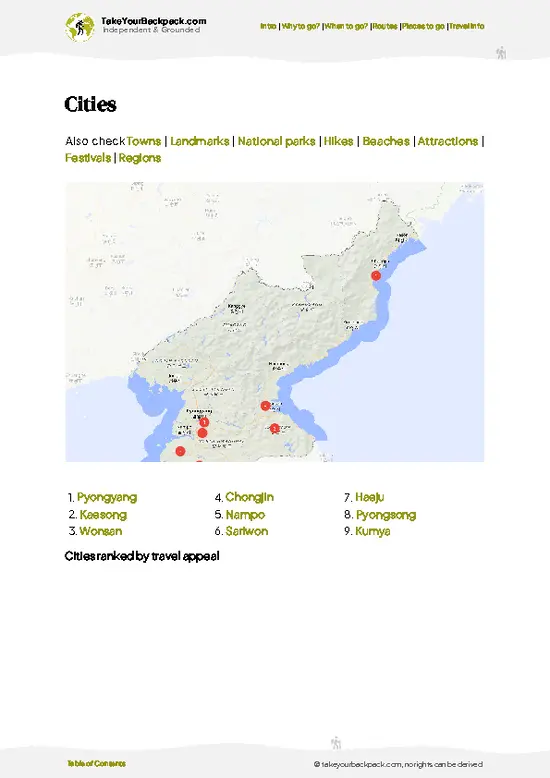
example page 2 from our offline Travel Guide for North Korea
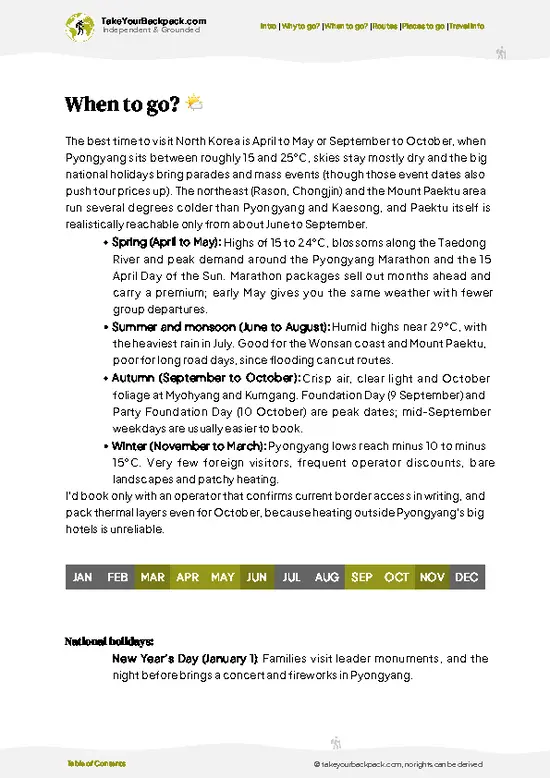
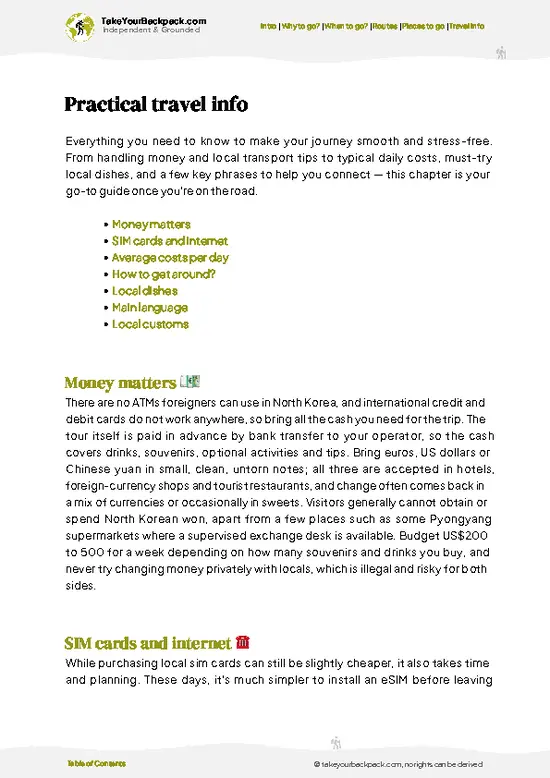
example page 3 from our offline Travel Guide for North Korea
example page 4 from our offline Travel Guide for North Korea
example page 5 from our offline Travel Guide for North Korea
example page 6 from our offline Travel Guide for North Korea
example page 7 from our offline Travel Guide for North Korea
The digital guide (296 pages) contains:
74 highlights, ranked by travel appeal
Optimized 5, 10 & 15-day travel routes
Cities, national parks, landmarks, beaches
How to get around
Offline-friendly for travel without Wi-Fi
👉 Click to see all 30+ guide features

📅 Plan smarter in minutes, not weeks
Month by month travel advice
Festivals & national holidays
Budget expectations

🗺️ Go to the right places, skip the overrated ones
Honest pros & cons of destinations
Top hikes, parks & viewpoints
Lesser-known places most travelers miss
Clear “worth it vs skip it” guidance

🛏️ Travel smoothly without rookie mistakes
Best areas to stay
Transport systems explained simply
Common scams & safety advice
SIM cards, money & practical tips

🌍 Understand the country, not just visit it
Culture & traditions
52 Essential phrases & customs
Festivals worth planning around
Traveler-friendly historical context
Insights that make places more meaningful

📱 Built for real travel conditions
Fully downloadable PDF
Works completely offline
Optimized for phone use
Useful in remote areas & buses
Everything in one place
Save weeks of stressful planning
Get instant access to your full guide. 30‑day money-back guarantee.


By proceeding you agree to our terms.
Sent to your inbox immediately after payment • 100% Secure Checkout
Best Backpacking Travel Advisor 2025 tourism awardBest Backpacking
Travel Advisor
2025
What others say about Take Your Backpack Guides:
⭐⭐⭐⭐⭐
Fantastic, amazing amount of information!
⭐⭐⭐⭐⭐
My goodness this is amazing, it's what I've been looking for hats off too you!
⭐⭐⭐⭐⭐
I think this is absolutely BRILLIANT
⭐⭐⭐⭐
Very complete and informative. It's still missing places, but I gotta to commend you
⭐⭐⭐⭐⭐
This is truly amazing, thank you, can't wait to explore it with my kids!
⭐⭐⭐⭐⭐
Awesome resource, thank you!
⭐⭐⭐⭐⭐
This is amazing! Can't wait to explore the ones I haven't seen
⭐⭐⭐⭐
I love this! Well done, great idea.
⭐⭐⭐⭐⭐
Thanks for taking the time to make this gem!
⭐⭐⭐⭐⭐
This might be the best website I've ever seen.
⭐⭐⭐⭐⭐
Congratulations, and thank you so much for your work; it's incredibly valuable.
⭐⭐⭐⭐
In all seriousness I think you did a great job pointing out the important spots
⭐⭐⭐⭐⭐
10/10 very good
⭐⭐⭐⭐⭐
As someone who's only just starting to visit regularly this is awesome, thank you.
⭐⭐⭐⭐
Thank you very much! I'm going to visit my dad, it's going to be very useful!
⭐⭐⭐⭐⭐
This is really cool! We'll be travelling for the first time and this definitely come in handy.
⭐⭐⭐⭐⭐
You are now our minister of culture, congratulations 👨‍💼
⭐⭐⭐⭐⭐
Just wanted to tell you that this is a pearl! Going to follow your recommendations.
⭐⭐⭐⭐⭐
This is so cool. I'll definitely be using the resource for my travels soon.
⭐⭐⭐⭐⭐
This is very impressive! Good work.
⭐⭐⭐⭐⭐
This is an amazing and informative site. Very well done!

🛏️ Where to stay?Top Areas to Stay

No independent hostels or backpacker-style budget accommodation exist openly in North Korea; lodging for foreign visitors is limited to state-run hotels and guesthouses usually arranged through organized tours, so you cannot count on walk-in dorms or independent low-cost stays.

Most options cluster in central Pyongyang (Kim Il Sung Square, Moranbong, Mansudae) — closest to the main sights and the few permitted evening activities but tightly controlled and lacking real nightlife; provincial hubs like Kaesong, Wonsan and Mount Kumgang offer quieter, often cheaper official guesthouses with sparse amenities and restricted access.

Crime risk for tourists is low, but movement, independent bookings … read more 👉
No independent hostels or backpacker-style budget accommodation exist openly in North Korea; lodging for foreign visitors is limited to state-run hotels and guesthouses usually arranged through organized tours, so you cannot count on walk-in dorms or independent low-cost stays.

Most options cluster in central Pyongyang (Kim Il Sung Square, Moranbong, Mansudae) — closest to the main sights and the few permitted evening activities but tightly controlled and lacking real nightlife; provincial hubs like Kaesong, Wonsan and Mount Kumgang offer quieter, often cheaper official guesthouses with sparse amenities and restricted access.

Crime risk for tourists is low, but movement, independent bookings and services are strictly limited; book through authorized channels and expect fixed itineraries, limited food choices and minimal budget flexibility to avoid being turned away.

If you enjoy meeting fellow travelers, consider choosing hostels with high ratings for atmosphere. On the other hand, if you prefer having your own space, a hotel might be a better option.

North KoreaDiscover the Country

👋 Meet the founderWho’s Behind Take Your Backpack?

Johan, backpacker and founder of TakeYourBackpackHi, I’m Johan (Netherlands 🇳🇱), the creator of TakeYourBackpack. Over the past decade, I’ve backpacked through 80+ countries across six continents, gaining extensive experience with independent travel, long-term trips, and overland routes.

This site is built on a combination of firsthand travel experience and carefully curated insights from other backpackers. Many guides are based on places I’ve personally visited, while others bring together tips, observations, and practical advice shared by trusted travelers I’ve met along the way.

The goal is to provide realistic, experience-driven guidance — not generic itineraries — so you can explore destinations with better context, clearer expectations, and more confidence.

Get full country guide •
Instant download • 74 highlights • Full Offline guide