×

North Korea🇰🇵 | citiesWonsanbeachfront promenade, seafood markets, ferry terminal | things to do and best time to go

Explore SariwonExplore Sinpo

Backpacking in Wonsan
🏆 Top pickcity ranked #3
By Johan Kruseman 🇳🇱 | Updated June 13, 2026

Most people who’ve heard of Wonsan imagine a sealed-off military harbor you’d never get near; in reality, it’s the regime’s pet “seaside resort” project, curated but surprisingly relaxed by North Korean standards. Wonsan sits on the east coast of the country on the Sea of Japan (East Sea), roughly midway down, facing Japan rather than China. For a backpacker, this is not a freestyle playground; you’re on a guided leash the whole time, but within that leash Wonsan can be oddly pleasant. There’s a long promenade, a beach locals genuinely use, a few war memorials, and the slightly surreal Songdowon International Children’s Camp. It’s cheaper than Pyongyang once you’re inside the tour bubble, but you won’t be handling money much anyway. It feels safer than it logically should, yet far more controlled. Compared with Pyongyang’s stage-set grandeur, Wonsan feels smaller, saltier, and a bit more human.

Discover everything you want to know in the 📖 North Korea Travel Guide.
Safety warning

The current risk level for North Korea is high. Check the advice before going.


Get your North Korea guide
74 ranked highlights, routes & tips, works offline (296 pages)
Loading the map 🌍
CLICK TO FILTER
cities
towns
landmarks
national parks
hikes
beaches
attractions
festivals
regions
SHOW COUNTRY’S BESTSHOW ALL

✨ Why go?
Ranked #3 city in North Korea
What makes it a must-see city

Wonsan is a strategic stop for backpackers navigating North Korea. It offers a unique blend of highlights and activities that cater to various interests, making it a worthwhile addition to your itinerary. The city’s basecamp value is significant; it serves as a launchpad for day trips to stunning coastal areas and historical sites.

Accommodations are surprisingly decent, with a few hostels that provide a chance to meet fellow travelers and share tips. The food scene is simple yet satisfying, featuring local dishes that are both affordable and filling. Wonsan’s walkability enhances the experience, allowing you to explore its streets and waterfront at your own pace.

When the sun sets, the nightlife offers a glimpse into local culture, with a few bars and cafes that welcome visitors. Plus, … read more 👉
Wonsan is a strategic stop for backpackers navigating North Korea. It offers a unique blend of highlights and activities that cater to various interests, making it a worthwhile addition to your itinerary. The city’s basecamp value is significant; it serves as a launchpad for day trips to stunning coastal areas and historical sites.

Accommodations are surprisingly decent, with a few hostels that provide a chance to meet fellow travelers and share tips. The food scene is simple yet satisfying, featuring local dishes that are both affordable and filling. Wonsan’s walkability enhances the experience, allowing you to explore its streets and waterfront at your own pace.

When the sun sets, the nightlife offers a glimpse into local culture, with a few bars and cafes that welcome visitors. Plus, the city’s easy onward travel options make it a convenient point for those heading to Pyongyang or other destinations. If you’re looking for a city that balances exploration with comfort, Wonsan is a solid choice, whether for a brief stop or a deeper dive into North Korean life.
Want to include Wonsan in your North Korea route?
Create a personalized North Korea itinerary that includes Wonsan and the places that fit your trip — based on your travel style, budget, and available time. Get your route in seconds.

Generate my trip

💡 HighlightsWhat this place is best known for

  1. Kalma Beach — a long, sandy stretch right on Wonsan’s coast; great for a stroll, watching working boats come and go, and seeing how the city’s seaside life hangs together. It’s the most obvious seaside draw and a good place to people-watch without any fuss.
  2. Songdowon International Children’s Camp — a curious mix of Soviet-era camp architecture and seaside landscaping; you won’t be camping there as an independent backpacker, but the complex and its seaside terraces offer a clear window into state-run leisure and youth culture.
  3. Songdowon Beach — the pine-fringed beach next to the children’s camp; quieter than Kalma for a relaxed walk and to watch locals and tour groups enjoying the water and shoreline.
  4. Wonsan Harbor & Waterfront Promenade — the working port is useful to visit for atmosphere:
read more 👉
  1. Kalma Beach — a long, sandy stretch right on Wonsan’s coast; great for a stroll, watching working boats come and go, and seeing how the city’s seaside life hangs together. It’s the most obvious seaside draw and a good place to people-watch without any fuss.
  2. Songdowon International Children’s Camp — a curious mix of Soviet-era camp architecture and seaside landscaping; you won’t be camping there as an independent backpacker, but the complex and its seaside terraces offer a clear window into state-run leisure and youth culture.
  3. Songdowon Beach — the pine-fringed beach next to the children’s camp; quieter than Kalma for a relaxed walk and to watch locals and tour groups enjoying the water and shoreline.
  4. Wonsan Harbor & Waterfront Promenade — the working port is useful to visit for atmosphere: fishing boats, cargo activity, coastal views and a practical sense of Wonsan’s role as a maritime city.
  5. Wonsan Central Market — a lively indoor/outdoor market where you can see local produce, snacks and everyday goods; low-key, very useful for picking up inexpensive bites and seeing ordinary urban life.
  6. Wonsan Railway Station — the city’s rail gateway on the Pyongyang-Wonsan line; trains, station life and the surrounding streets make for candid observations of transport and movement in the region.
  7. Kalma coastal development area (hotels and promenades) — recent coastal construction and seaside hotels give a snapshot of modern development efforts—good for an evening walk to compare old and new parts of the city.
  8. Wonsan People’s Cultural Hall / Local theatre spaces — if there’s a performance while you’re in town, these venues are where you’ll get the clearest view of local, state-sponsored culture and staged shows.
  9. Coastal seafood eateries and small fish markets — eating where the locals eat is the best hands-on cultural experience in Wonsan: fresh seafood, simple coastal dishes and the market-and-cafe rhythm of the port city.
  10. Seafront parks and public monuments — small parks, statues and local memorials scattered along the waterfront give a sense of the city’s civic identity and how public space is used for remembrance and leisure.
A few real day-trip options just outside Wonsan include Mount Kumgang (the famous scenic mountain and the Kumgangsan tourist area), nearby coastal islands and small fishing towns along the eastern shore — Mount Kumgang is my personal favorite for scenery and hiking if you can arrange the visit.
Spotted a mistake or missing something? Contact us.

🏘️ NeighborhoodsUnderstanding the local layout

Wonsan offers a unique blend of history and local culture, making it a fascinating stop for backpackers. Here’s how the neighborhoods stack up:

Central Wonsan: This is the heart of the city, where you’ll find the main attractions. The vibe is bustling, with local markets and street vendors. Costs are moderate, and you can easily walk to most sites. Nightlife is low-key, with a few bars and cafes. Perfect for short stays, as you can soak up the essence of Wonsan quickly.

Wonsan Beach Area: If you’re after relaxation, this is your spot. The beach is a draw, especially in warmer months. It’s a bit quieter, making it ideal for unwinding after a day of exploration. Costs can be higher here due to proximity to the coast. Transport options are limited, so plan to stay a while if you want to enjoy … read more 👉
Wonsan offers a unique blend of history and local culture, making it a fascinating stop for backpackers. Here’s how the neighborhoods stack up:

Central Wonsan: This is the heart of the city, where you’ll find the main attractions. The vibe is bustling, with local markets and street vendors. Costs are moderate, and you can easily walk to most sites. Nightlife is low-key, with a few bars and cafes. Perfect for short stays, as you can soak up the essence of Wonsan quickly.

Wonsan Beach Area: If you’re after relaxation, this is your spot. The beach is a draw, especially in warmer months. It’s a bit quieter, making it ideal for unwinding after a day of exploration. Costs can be higher here due to proximity to the coast. Transport options are limited, so plan to stay a while if you want to enjoy the scenery.

Songdowon: Known for its scenic views and parks, this area is great for nature lovers. It’s walkable, with plenty of green spaces to explore. Costs are reasonable, and it’s quieter than Central Wonsan, making it suitable for longer stays. The nightlife is minimal, but the tranquility is a trade-off worth considering.

East Wonsan: This area is more residential, giving you a glimpse into local life. It’s less touristy, which means lower costs and a more authentic experience. Walkability varies, but it’s a great place for longer stays if you want to immerse yourself in the culture. Nightlife is almost non-existent, so come here for peace rather than parties.

⌛️ 1 dayA smart one-day plan

Wonsan, North Korea, is a city where the past and present collide in fascinating ways. With its coastal charm and Soviet-era architecture, it offers a unique glimpse into a world few have seen. The beaches, parks, and monuments tell stories of a different time, making it a compelling destination for the adventurous traveler.

Start your day at the scenic Wonsan Beach. The early morning light casts a soft glow over the waves, and you can enjoy a quiet stroll along the shore. Grab a local breakfast from a nearby café—try the kimchi pancakes. They’re a delightful way to fuel up for the day ahead. After breakfast, head to the Wonsan Revolutionary Museum. This spot isn’t on every tourist’s radar, but it offers a deep dive into the city’s history and the revolutionary spirit that shaped it. The … read more 👉
Wonsan, North Korea, is a city where the past and present collide in fascinating ways. With its coastal charm and Soviet-era architecture, it offers a unique glimpse into a world few have seen. The beaches, parks, and monuments tell stories of a different time, making it a compelling destination for the adventurous traveler.

Start your day at the scenic Wonsan Beach. The early morning light casts a soft glow over the waves, and you can enjoy a quiet stroll along the shore. Grab a local breakfast from a nearby café—try the kimchi pancakes. They’re a delightful way to fuel up for the day ahead. After breakfast, head to the Wonsan Revolutionary Museum. This spot isn’t on every tourist’s radar, but it offers a deep dive into the city’s history and the revolutionary spirit that shaped it. The exhibits are engaging, and the guides are eager to share stories that bring the artifacts to life.

In the afternoon, make your way to the picturesque Songdowon International Children’s Camp. While it’s primarily a summer camp, the grounds are open for visitors, and you can wander through the colorful buildings and lush gardens. It’s a rare chance to see how the local youth engage with their culture. From there, stroll through the nearby neighborhoods, where you can observe daily life and perhaps even chat with locals.

As evening approaches, head to the Wonsan Grand Theatre. If you’re lucky, you might catch a performance. The atmosphere is electric, and the experience is a blend of culture and community. Afterward, unwind at a local eatery, savoring a bowl of naengmyeon, a cold noodle dish that’s a regional specialty.

This day in Wonsan isn’t just about ticking boxes; it’s about immersing yourself in a place that feels both foreign and familiar. Each moment is a chance to connect, learn, and appreciate the unique rhythm of life here.
Turn your Wonsan visit into an North Korea adventure
Build a complete North Korea route with Wonsan, hidden gems, must-see destinations, and realistic travel times included.

Generate my trip

🌤️ When to go?When to go for the best experience


  • Weather: Wonsan experiences a humid continental climate. Summers (June to August) are warm and humid, with temperatures often hitting 25-30°C (77-86°F), which can feel sticky but manageable. Winters (December to February) plunge below freezing, often between -5 to -15°C (23 to 5°F), making outdoor exploration tough without serious gear.

  • Temperature: Spring (April to May) and autumn (September to October) offer the sweet spot—mild, comfortable temps ranging from 10-20°C (50-68°F). These shoulder seasons avoid the extremes, perfect for hiking and city strolls without overheating or freezing.

  • Daylight Hours: In summer, expect long days with up to 14-15 hours of daylight, maximizing your exploration window. Winter days shrink to about 9-10 hours, limiting daylight activities and pushing
read more 👉

  • Weather: Wonsan experiences a humid continental climate. Summers (June to August) are warm and humid, with temperatures often hitting 25-30°C (77-86°F), which can feel sticky but manageable. Winters (December to February) plunge below freezing, often between -5 to -15°C (23 to 5°F), making outdoor exploration tough without serious gear.

  • Temperature: Spring (April to May) and autumn (September to October) offer the sweet spot—mild, comfortable temps ranging from 10-20°C (50-68°F). These shoulder seasons avoid the extremes, perfect for hiking and city strolls without overheating or freezing.

  • Daylight Hours: In summer, expect long days with up to 14-15 hours of daylight, maximizing your exploration window. Winter days shrink to about 9-10 hours, limiting daylight activities and pushing you indoors earlier.

  • Crowds: Wonsan isn’t a tourist hotspot, but summer sees a slight uptick in domestic visitors, especially around national holidays. Spring and autumn are quieter, giving you more breathing room and a more authentic experience.

  • Seasonal Activities: Summer brings beach access and water sports along the coast, while autumn offers vibrant foliage and cooler hiking conditions. Winter’s harshness limits outdoor options but can showcase a stark, serene landscape if you’re prepared.

  • Price Fluctuations: Prices for accommodation and tours tend to peak in summer due to demand from domestic tourists and seasonal activities. Shoulder seasons often provide better deals and more availability, balancing cost and comfort.


Pro-tip: Aim for late September to early October—cool temps, fewer crowds, and the landscape shifts into rich autumn colors, making every step outside feel like a reward rather than a challenge.


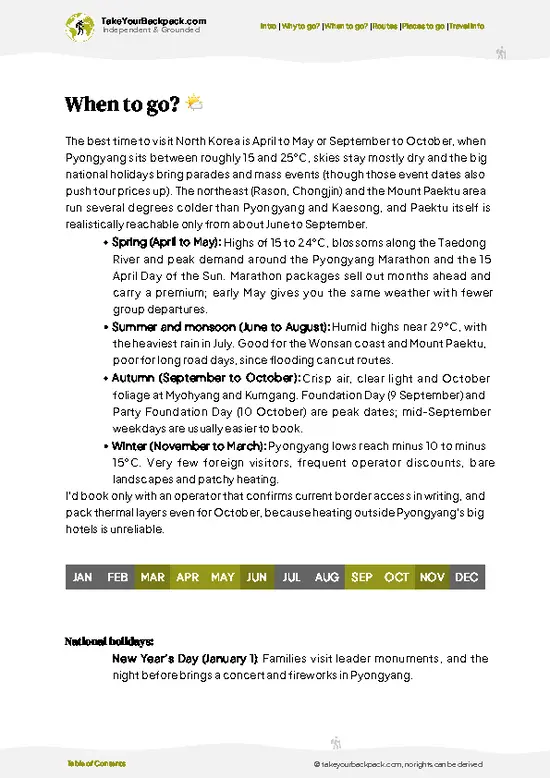
source: climatestotravel.comJANJanuary: below average for travelingFEBFebruary: below average for travelingMARMarch: fair for travelingAPRApril: highly recommended for travelingMAYMay: highly recommended for travelingJUNJune: good for travelingJULJuly: good for travelingAUGAugust: good for travelingSEPSeptember: excellent for travelingOCTOctober: excellent for travelingNOVNovember: good for travelingDECDecember: below average for traveling
when-to-go

✈️ The backpacker research shortcutNorth Korea Travel Guide

An offline-friendly backpacking guide with optimized travel routes, ranked highlights, transport advice, and the best areas to stay.
example page 0 from our offline Travel Guide for North Korea
example page 1 from our offline Travel Guide for North Korea
example page 2 from our offline Travel Guide for North Korea
example page 3 from our offline Travel Guide for North Korea
example page 4 from our offline Travel Guide for North Korea
example page 5 from our offline Travel Guide for North Korea
example page 6 from our offline Travel Guide for North Korea
example page 7 from our offline Travel Guide for North Korea
The digital guide (296 pages) contains:
74 highlights, ranked by travel appeal
Optimized 5, 10 & 15-day travel routes
Cities, national parks, landmarks, beaches
How to get around
Offline-friendly for travel without Wi-Fi
👉 Click to see all 30+ guide features

📅 Plan smarter in minutes, not weeks
Month by month travel advice
Festivals & national holidays
Budget expectations

🗺️ Go to the right places, skip the overrated ones
Honest pros & cons of destinations
Top hikes, parks & viewpoints
Lesser-known places most travelers miss
Clear “worth it vs skip it” guidance

🛏️ Travel smoothly without rookie mistakes
Best areas to stay
Transport systems explained simply
Common scams & safety advice
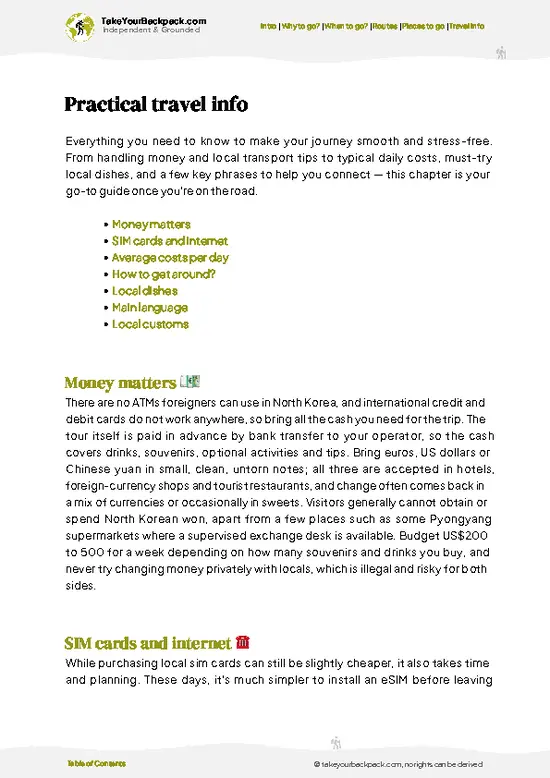
SIM cards, money & practical tips

🌍 Understand the country, not just visit it
Culture & traditions
52 Essential phrases & customs
Festivals worth planning around
Traveler-friendly historical context
Insights that make places more meaningful

📱 Built for real travel conditions
Fully downloadable PDF
Works completely offline
Optimized for phone use
Useful in remote areas & buses
Everything in one place
Save weeks of stressful planning
Get instant access to your full guide. 30‑day money-back guarantee.


By proceeding you agree to our terms.
Sent to your inbox immediately after payment • 100% Secure Checkout
Best Backpacking Travel Advisor 2025 tourism awardBest Backpacking
Travel Advisor
2025
What others say about Take Your Backpack Guides:
⭐⭐⭐⭐⭐
Fantastic, amazing amount of information!
⭐⭐⭐⭐⭐
My goodness this is amazing, it's what I've been looking for hats off too you!
⭐⭐⭐⭐⭐
I think this is absolutely BRILLIANT
⭐⭐⭐⭐
Very complete and informative. It's still missing places, but I gotta to commend you
⭐⭐⭐⭐⭐
This is truly amazing, thank you, can't wait to explore it with my kids!
⭐⭐⭐⭐⭐
Awesome resource, thank you!
⭐⭐⭐⭐⭐
This is amazing! Can't wait to explore the ones I haven't seen
⭐⭐⭐⭐
I love this! Well done, great idea.
⭐⭐⭐⭐⭐
Thanks for taking the time to make this gem!
⭐⭐⭐⭐⭐
This might be the best website I've ever seen.
⭐⭐⭐⭐⭐
Congratulations, and thank you so much for your work; it's incredibly valuable.
⭐⭐⭐⭐
In all seriousness I think you did a great job pointing out the important spots
⭐⭐⭐⭐⭐
10/10 very good
⭐⭐⭐⭐⭐
As someone who's only just starting to visit regularly this is awesome, thank you.
⭐⭐⭐⭐
Thank you very much! I'm going to visit my dad, it's going to be very useful!
⭐⭐⭐⭐⭐
This is really cool! We'll be travelling for the first time and this definitely come in handy.
⭐⭐⭐⭐⭐
You are now our minister of culture, congratulations 👨‍💼
⭐⭐⭐⭐⭐
Just wanted to tell you that this is a pearl! Going to follow your recommendations.
⭐⭐⭐⭐⭐
This is so cool. I'll definitely be using the resource for my travels soon.
⭐⭐⭐⭐⭐
This is very impressive! Good work.
⭐⭐⭐⭐⭐
This is an amazing and informative site. Very well done!

🛏️ Where to stay?Choosing the right base

Wonsan’s options for backpackers are limited but clear once you understand the city’s layout and the strict travel controls in place. The best area to stay is the central district near the Wonsan waterfront and the city’s main square. This zone is the hub for foreign visitors, offering the safest, most social environment within a tightly controlled city. It’s where you’ll find the handful of guesthouses and hostels that cater to budget travelers, often run by state-approved operators. Staying here means easy access to the main attractions, local eateries, and the few spots where you can interact … read more 👉
Wonsan’s options for backpackers are limited but clear once you understand the city’s layout and the strict travel controls in place. The best area to stay is the central district near the Wonsan waterfront and the city’s main square. This zone is the hub for foreign visitors, offering the safest, most social environment within a tightly controlled city. It’s where you’ll find the handful of guesthouses and hostels that cater to budget travelers, often run by state-approved operators. Staying here means easy access to the main attractions, local eateries, and the few spots where you can interact with other travelers or locals under supervision.

Compared to outlying neighborhoods, which are mostly residential or industrial and off-limits to foreigners, the central district offers a rare blend of comfort and social opportunity. It’s not about luxury but about maximizing your experience within the constraints—think communal spaces where you can swap stories with fellow backpackers and a vibe that’s quietly buzzing with cautious curiosity. Venturing beyond this core risks isolation and logistical headaches, as transport options are scarce and security checkpoints frequent. So, if you want to play the game smart, stick to the city center. It’s your best bet for safety, socializing, and a genuine feel for Wonsan’s unique rhythm.

🚌 Getting aroundHow to get around Wonsan

Wonsan moves at a pace that feels like a dance between strict order and a relaxed rhythm. You won’t find the frantic rush of a global megacity, but neither is it a free-for-all. The city’s flow is a subtle negotiation between the state’s structured timetables and the local intuition that fills the gaps. Here, timing is both a guideline and a flexible suggestion, especially for the traveler who’s willing to read between the lines. Understanding this balance is your first win: it lets you decide when to lean into efficiency and when to embrace the slower, more immersive moments.


  • Walking: The most straightforward and zero-cost way to navigate Wonsan’s compact center. Streets are generally quiet, making walking not just practical but a chance to absorb local life. Expect to cover 3-5 kilometers
read more 👉
Wonsan moves at a pace that feels like a dance between strict order and a relaxed rhythm. You won’t find the frantic rush of a global megacity, but neither is it a free-for-all. The city’s flow is a subtle negotiation between the state’s structured timetables and the local intuition that fills the gaps. Here, timing is both a guideline and a flexible suggestion, especially for the traveler who’s willing to read between the lines. Understanding this balance is your first win: it lets you decide when to lean into efficiency and when to embrace the slower, more immersive moments.


  • Walking: The most straightforward and zero-cost way to navigate Wonsan’s compact center. Streets are generally quiet, making walking not just practical but a chance to absorb local life. Expect to cover 3-5 kilometers comfortably in under an hour, depending on your pace. No schedules, just your own rhythm.


  • City Bus: Runs roughly from 6:00 AM to 8:00 PM, with fares around 5-10 North Korean won (negligible by international standards). Buses are slow and often crowded, but they offer a window into everyday routines. Comfort is basic—wooden or metal seats, no air conditioning—but the price and coverage make it a budget traveler’s backbone.


  • Shared Taxis (Minibuses): These operate on semi-fixed routes with flexible departure times, usually from early morning until dusk. Fares hover around 20-30 won. Faster than buses and more comfortable, with cushioned seats and less crowding, but you sacrifice predictability. You’ll often wait until the vehicle fills up before it leaves, so time savings can be hit or miss.


  • Bicycle Rentals: Available near major hotels and tourist spots, typically costing about 1,000 won per day. This option strikes a balance between speed and freedom, letting you cover more ground than walking without the constraints of public transit schedules. The terrain is mostly flat, so it’s a smooth ride, but be prepared for limited bike lanes and some traffic.


  • Boat Taxi: A niche but memorable choice for crossing Wonsan Bay or reaching nearby coastal points. These run irregularly and are more expensive (around 50-100 won), but they offer a unique perspective on the city’s maritime character. Comfort varies, and trips depend heavily on weather and demand, so consider this a splurge for the experience rather than a reliable commute.


In Wonsan, every mode of transit is a trade-off between time, money, and comfort. Walking costs nothing but demands time and energy. The city bus is cheap but slow and basic. Shared taxis speed things up but require patience and flexibility. Bicycles give you control but need some upfront effort and a small fee. And boat taxis? They’re the wildcard—more costly and less predictable, but they deliver a slice of local flavor you won’t get anywhere else. Knowing these trade-offs lets you play the system smartly, turning travel logistics into a strategic game where you decide what’s worth your time and wallet.

👛 Costs (as of 11 April 2026)Money, prices, and spending tips

Backpacking in Wonsan, North Korea, is a unique challenge where your budget choices directly shape your experience, especially given the controlled nature of tourism and limited independent travel options. Here’s a breakdown of what you’re likely to spend daily, based on the latest practical estimates for an independent traveler navigating this tightly managed city.
  • Dorm Accommodation (High Season): Expect to pay around €40-€60 per night. High season sees a spike due to limited availability and increased demand from official tours and visitors.
  • Dorm Accommodation (Off-Season): Prices drop to about €25-€40. Off-season offers a bit more breathing room, but options remain scarce and basic.
  • Meals: Meals are surprisingly affordable if you stick to local eateries, roughly €5-€10 per day. Western-style
read more 👉
Backpacking in Wonsan, North Korea, is a unique challenge where your budget choices directly shape your experience, especially given the controlled nature of tourism and limited independent travel options. Here’s a breakdown of what you’re likely to spend daily, based on the latest practical estimates for an independent traveler navigating this tightly managed city.
  • Dorm Accommodation (High Season): Expect to pay around €40-€60 per night. High season sees a spike due to limited availability and increased demand from official tours and visitors.
  • Dorm Accommodation (Off-Season): Prices drop to about €25-€40. Off-season offers a bit more breathing room, but options remain scarce and basic.
  • Meals: Meals are surprisingly affordable if you stick to local eateries, roughly €5-€10 per day. Western-style or hotel dining can push this higher, but local food is your best bet for budget and authenticity.
  • Local Transport: Public transport options are minimal and often restricted. Expect to spend around €1-€3 per trip on taxis or arranged transport within the city, as buses are not reliably accessible to foreigners.
  • City Transport Pass: There is no widely available city transport pass for tourists. Transport costs are generally pay-per-use and negotiated individually.
  • Basic Activities/Entry Fees: Entry fees to museums, monuments, and guided tours typically range from €5-€15. Many activities are bundled with official tours, which can raise costs but provide access otherwise unavailable.
  • Miscellaneous Expenses: Budget €3-€7 for essentials like bottled water, snacks, or small souvenirs. Internet access is extremely limited and expensive, so plan accordingly.

In total, you’re looking at a daily budget roughly between €60 and €100, depending on season and how tightly you control your spending on transport and activities. Wonsan’s travel system is less about spontaneous exploration and more about strategic planning—your choices here are about balancing access and cost within a very controlled environment. Understanding this trade-off is your key to making the most of your time and money in this rare destination.


source: korea-dpr.com
⚠️ Prices can change and everyone travels differently, so take this as a rough guide. Hope it helps you plan your adventure!

🚌 Day tripsShort trips worth adding

Wonsan serves as an intriguing base for day trips, offering a unique blend of history, culture, and natural beauty. Here are some standout options that make the most of your time and money.

**Kumgangsan Mountains**
A trip to the Kumgangsan Mountains is like stepping into a postcard. The jagged peaks and lush valleys create a breathtaking backdrop for hiking. Expect a travel time of about two hours from Wonsan, with a modest entry fee. The trails vary in difficulty, so there’s something for everyone. Aim for spring or early autumn when the weather is mild and the scenery is vibrant. A common mistake? Underestimating the weather; pack layers, as it can change quickly.


**Songdowon Beach**
Just a short 30-minute ride from Wonsan, Songdowon Beach offers a refreshing escape. The sandy shores … read more 👉
Wonsan serves as an intriguing base for day trips, offering a unique blend of history, culture, and natural beauty. Here are some standout options that make the most of your time and money.

**Kumgangsan Mountains**
A trip to the Kumgangsan Mountains is like stepping into a postcard. The jagged peaks and lush valleys create a breathtaking backdrop for hiking. Expect a travel time of about two hours from Wonsan, with a modest entry fee. The trails vary in difficulty, so there’s something for everyone. Aim for spring or early autumn when the weather is mild and the scenery is vibrant. A common mistake? Underestimating the weather; pack layers, as it can change quickly.


**Songdowon Beach**
Just a short 30-minute ride from Wonsan, Songdowon Beach offers a refreshing escape. The sandy shores are perfect for a leisurely day of sunbathing or swimming. You can grab a bite at local stalls, keeping costs low. Summer is peak season, but visiting in late spring or early fall means fewer crowds and pleasant temperatures. Many first-timers overlook the beach’s local vibe, so skip the touristy spots and mingle with locals for a more authentic experience.
👉 Explore Songdowon Beach

**Wonsan Agricultural University**
This unique trip is only about 20 minutes from the city center. The university’s campus is a blend of educational and cultural experiences, showcasing North Korean agricultural practices. You can stroll through the grounds and engage with students, making it a fascinating insight into daily life. The visit is free, but consider bringing small gifts like pens or notebooks to share with students. The best time to visit is during the harvest season in late summer. A common oversight is not checking the university’s schedule for events; plan ahead for the best experience.


**Chongsanri Cooperative Farm**
A 45-minute journey will take you to Chongsanri, where you can witness North Korean farming up close. This cooperative farm offers guided tours that provide insight into the agricultural methods and daily life of the farmers. The cost is minimal, and the experience is rich with cultural exchange. Spring is ideal for visiting, as you can see the fields in full bloom. Many backpackers miss the chance to interact with the farmers; don’t be shy—ask questions and learn from their stories.


**Mount Myohyang**
Though a bit further at about three hours away, Mount Myohyang is worth the trek. Known for its stunning landscapes and the International Friendship Exhibition, this trip combines natural beauty with cultural significance. The entrance fee is reasonable, and the views are breathtaking. Late spring or early fall offers the best weather for hiking. First-timers often underestimate the hike’s intensity; be prepared for a workout, but the payoff is worth every step.
👉 Explore Mount Myohyang
Want to know what more North Korea offers?
The North Korea Travel Guide describes 74 highlights, from cities to national parks, from beaches to hikes

Get the Travel Guide -

🍲 FoodLocal Cuisine & Drinks

In Wonsan, **food** is a vibrant reflection of local culture, and you’ll want to dive into the **signature dishes** that define the region. Start with **naengmyeon**, cold buckwheat noodles served in a tangy broth, perfect for the coastal climate. Pair it with **kimchi**, which here has a unique, spicy twist that’ll make your taste buds dance. Don’t miss out on **seafood**, especially the fresh catches from the East Sea; grilled fish with a sprinkle of sesame oil is a must.

For a true local experience, head to the **markets**. The bustling stalls are filled with the aroma of grilled meats and sizzling pancakes. Street food is where the magic happens; grab a **tteokbokki** (spicy rice cakes) from a vendor and enjoy it on the go.

When it comes to **drinks**, try the local **soju**—a clear, … read more 👉
In Wonsan, **food** is a vibrant reflection of local culture, and you’ll want to dive into the **signature dishes** that define the region. Start with **naengmyeon**, cold buckwheat noodles served in a tangy broth, perfect for the coastal climate. Pair it with **kimchi**, which here has a unique, spicy twist that’ll make your taste buds dance. Don’t miss out on **seafood**, especially the fresh catches from the East Sea; grilled fish with a sprinkle of sesame oil is a must.

For a true local experience, head to the **markets**. The bustling stalls are filled with the aroma of grilled meats and sizzling pancakes. Street food is where the magic happens; grab a **tteokbokki** (spicy rice cakes) from a vendor and enjoy it on the go.

When it comes to **drinks**, try the local **soju**—a clear, potent spirit that pairs well with meals. Etiquette here leans towards sharing; it’s common to pour drinks for one another, fostering a sense of camaraderie.

Dining in Wonsan is not just about the food; it’s about the **connections** you make. Embrace the local customs, and you’ll find that every bite and sip tells a story.

🛡️ SafetySafety Tips and Common Scams in Wonsan

Wonsan is generally safe for backpackers, but a few nuances can enhance your experience. Stay aware in crowded areas, especially near markets or tourist spots, where pickpockets might lurk. If you’re traveling solo, avoid wandering too far at night; the city can feel desolate after dark, and it’s best to stick to well-lit streets.

While scams are rare, some locals may try to sell overpriced souvenirs or services. Always negotiate prices upfront, and don’t hesitate to walk away if something feels off. Everyday annoyances can include language barriers; a translation app can be a lifesaver.

Carry yourself confidently, and engage with locals respectfully. They appreciate genuine interest in their culture. By staying aware and prepared, you’ll navigate Wonsan smoothly, turning potential pitfalls into opportunities for connection.

Other North Korean cities near Wonsan

Explore more nearby:

  • Kumya—coastal wetlands, fishing villages, tidal flats| 47 km away
  • Hamhung—chemical plants, broad avenues, theater| 93 km away
  • Sinpo—fishing fleet, shipyards, east coast harbor| 117 km away

💡 Not sure where to go next?
Create a personalized itinerary for North Korea including Wonsan and the places that fit your trip.

Generate my itinerary

👉 Discover all cities

Or checkout all North Korea has to offer (think cities, towns, villages, national parks, hikes, beaches, festivals)
Country photo of North Korea

We 💚 feedbackFinal thoughts on visiting Wonsan

Wonsan offers a rare glimpse into a world few get to see. The coastal scenery is striking, with beaches that feel untouched by time. But here’s the catch: the restrictions can be stifling. You’ll navigate a maze of rules and guides, which can feel limiting. Still, if you embrace the quirks and focus on the experience, Wonsan can be a fascinating chapter in your travel story. Just go in with open eyes and a flexible mindset.

✈️ When did I visit North Korea?
As part of my 1.5 year travel around the world trip, I visited North Korea in August 2015. I had never expected I was able to get in.

✍️ Help improve this page!
The information on this page is based on my own backpacking experience in North Korea, supplemented with up-to-date research and feedback from other travelers. Travel details can change, so if you notice anything outdated or incomplete, feel free to let me know.


🙋‍♂️ Give feedback

👋 Meet the founderWho’s Behind Take Your Backpack?

Johan, backpacker and founder of TakeYourBackpackHi, I’m Johan (Netherlands 🇳🇱), the creator of TakeYourBackpack. Over the past decade, I’ve backpacked through 80+ countries across six continents, gaining extensive experience with independent travel, long-term trips, and overland routes.

This site is built on a combination of firsthand travel experience and carefully curated insights from other backpackers. Many guides are based on places I’ve personally visited, while others bring together tips, observations, and practical advice shared by trusted travelers I’ve met along the way.

The goal is to provide realistic, experience-driven guidance — not generic itineraries — so you can explore destinations with better context, clearer expectations, and more confidence.

Get full country guide •
Instant download • 74 highlights • Full Offline guide