×

Pakistan🇵🇰 | regionsBaltistanCold desert, K2 approach, Balti forts | things to do and best time to go

Explore Shounter ValleyExplore Swat Valley

Backpacking in Baltistan
🏆 Top pickregion ranked #2
By Johan Kruseman 🇳🇱 | Updated October 15, 2026

Here's the thing everyone gets wrong: Skardu isn't some untouched wilderness where you'll be the only foreigner for miles. In peak July-August, the road to Shigar is lined with Land Cruisers full of Lahori and Karachi tourists, not just wandering trekkers. Skardu sits in Gilgit-Baltistan's east, the gateway to K2 and the Deosai Plateau. The trade-off here is stark: comfort costs you authenticity, and authenticity costs you time. A private jeep to Deosai saves six hours but seals you in a bubble; the shared van version means squeezing next to a goat-herder for eight hours but you'll hear stories about the wolves in Deosai that no guidebook mentions. I remember sitting on a boulder above Upper Kachura Lake at dawn, the water so still it doubled the mountains, my hands numb around a tin cup of salted tea a local handed me without a word. That silence, that tea, cost nothing and gave everything.

Discover everything you want to know in the 📖 Pakistan Travel Guide.


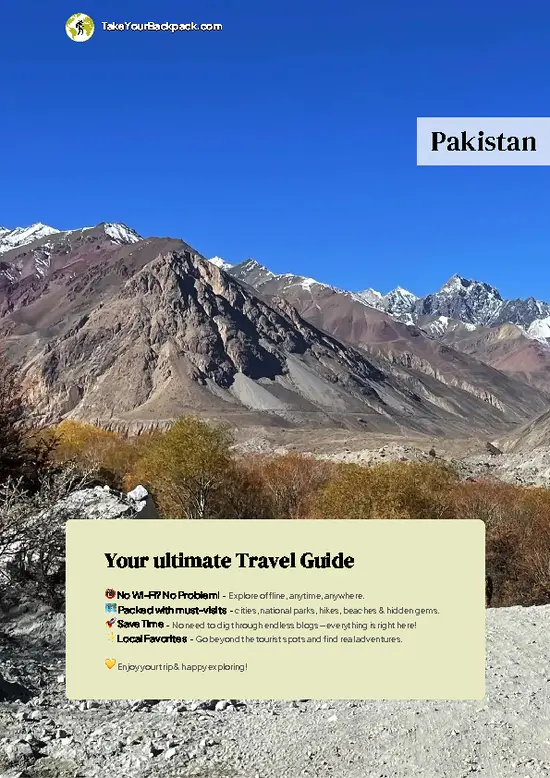
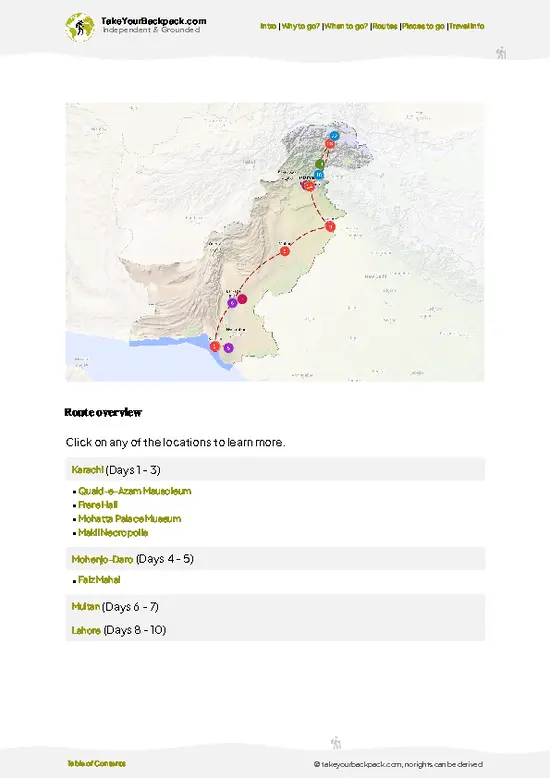
example page 0 from our offline Travel Guide for Pakistan
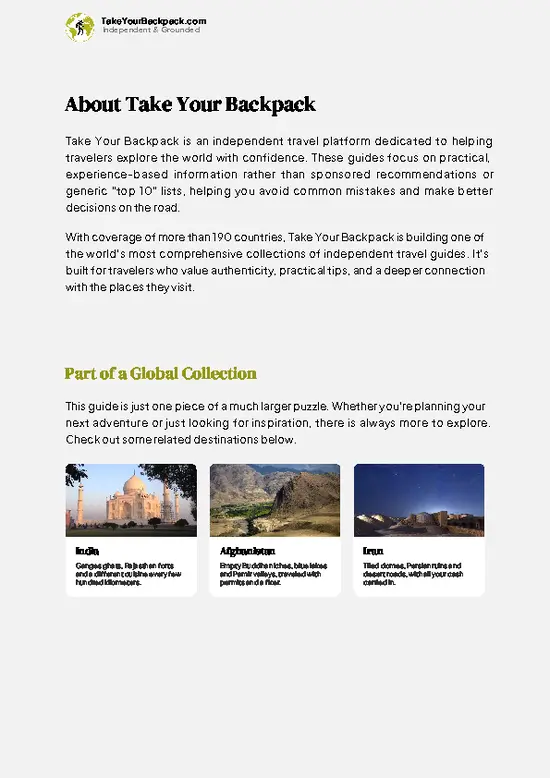
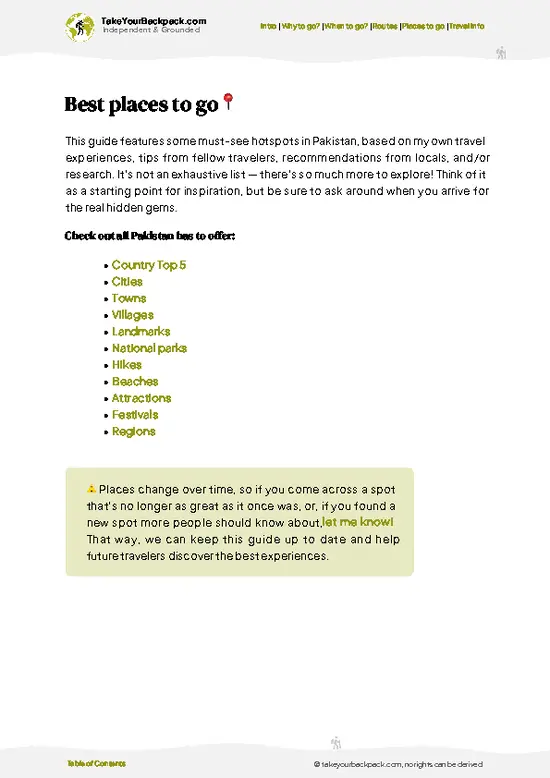
example page 1 from our offline Travel Guide for Pakistan
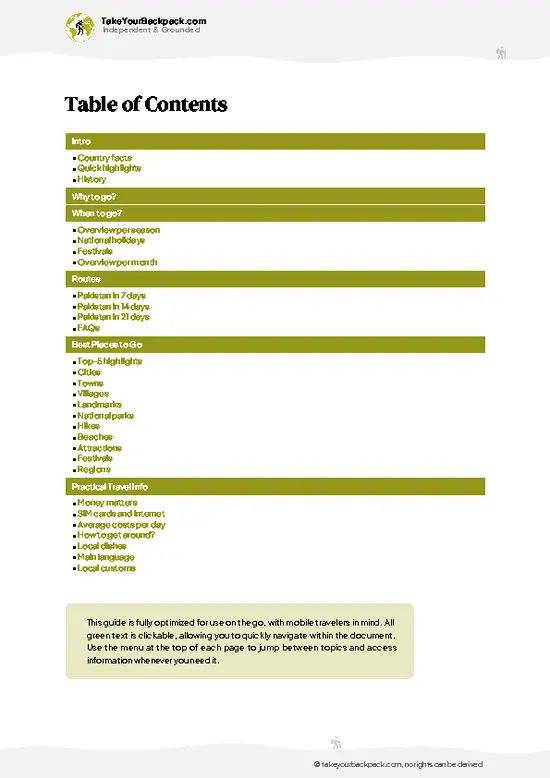
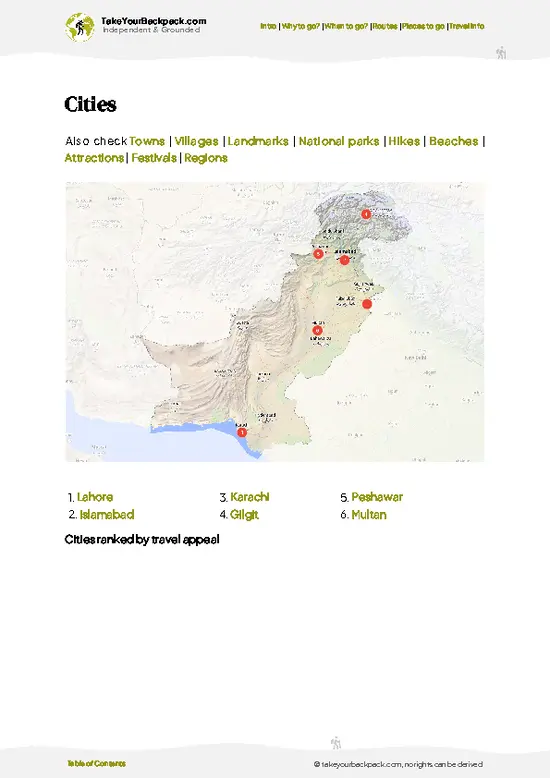
example page 2 from our offline Travel Guide for Pakistan
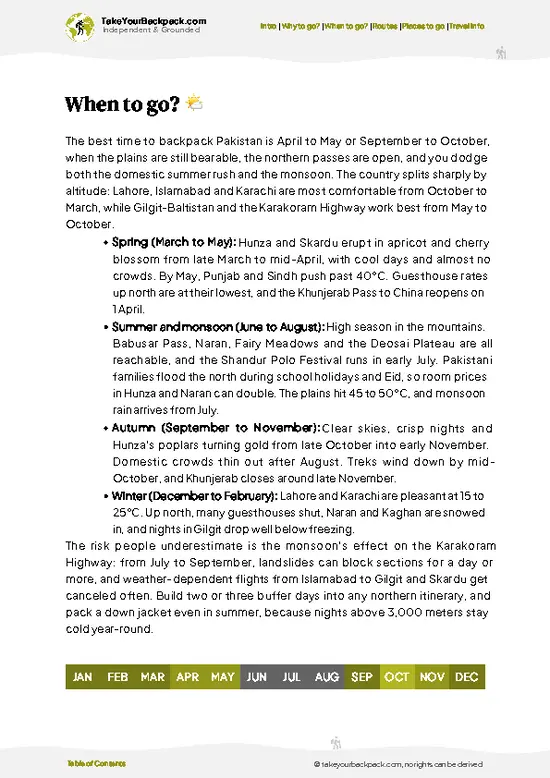
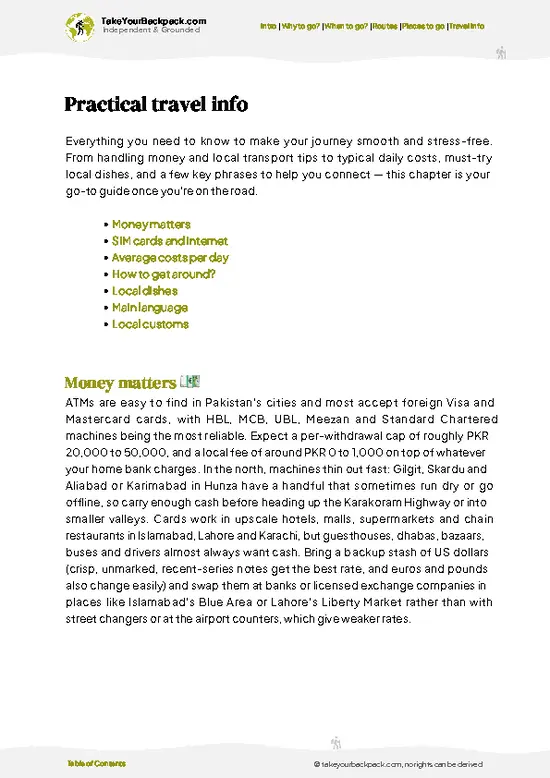
example page 3 from our offline Travel Guide for Pakistan
example page 4 from our offline Travel Guide for Pakistan
example page 5 from our offline Travel Guide for Pakistan
example page 6 from our offline Travel Guide for Pakistan
example page 7 from our offline Travel Guide for Pakistan
Loading the map 🌍
CLICK TO FILTER
cities
towns
villages
landmarks
national parks
hikes
beaches
attractions
festivals
regions
SHOW COUNTRY’S BESTSHOW ALL

✨ Why go?
Ranked #2 region in Pakistan
The unique appeal for travelers

Backpackers come to Skardu and Baltistan because you get glacial lakes, high-altitude desert, and K2 base camp access without needing three separate trips. The region works as a single slow-travel loop: Shigar's fort-town charm, Khaplu's quieter valleys, and Deosai's alpine plateau all sit within a few hours of each other on the same rough road network. That means fewer relocations and more time actually acclimatizing and soaking into a place rather than packing bags every night. Transport flexibility is real here too, jeeps, shared vans, and motorbike rentals all work, so you can scale your budget up or down depending on the day. It's also one of the few places where you can mix serious trekking (Baltoro, Nangma Valley) with easy cultural stops (Balti heritage houses, apricot orchards) without … read more 👉
Backpackers come to Skardu and Baltistan because you get glacial lakes, high-altitude desert, and K2 base camp access without needing three separate trips. The region works as a single slow-travel loop: Shigar's fort-town charm, Khaplu's quieter valleys, and Deosai's alpine plateau all sit within a few hours of each other on the same rough road network. That means fewer relocations and more time actually acclimatizing and soaking into a place rather than packing bags every night. Transport flexibility is real here too, jeeps, shared vans, and motorbike rentals all work, so you can scale your budget up or down depending on the day. It's also one of the few places where you can mix serious trekking (Baltoro, Nangma Valley) with easy cultural stops (Balti heritage houses, apricot orchards) without needing separate logistics for each. Few regions in Pakistan let you swing between raw wilderness and warm homestay hospitality this efficiently.

💡 HighlightsKey sights and experiences for travelers

  1. Upper Kachura Lake: A short detour from Skardu town, this alpine lake sits at a higher elevation than its sister lake below and stays noticeably colder and clearer, ideal for an early morning visit before day-trippers arrive.
  2. Deosai National Park: One of the highest plateaus in the world, home to the Himalayan brown bear and a carpet of wildflowers in July. The drive alone, crossing a barren moonscape before dropping into green plains, is worth the trip.
  3. Shigar Fort and Old Town: A restored 17th-century fort turned heritage guesthouse, surrounded by a stone-and-wood old town that still functions as a living village, not a museum piece.
  4. Khaplu Palace and Valley: Quieter than Skardu, Khaplu's old royal palace overlooks apricot orchards and terraced fields, and the valley sees a fraction of the
… read more 👉
  1. Upper Kachura Lake: A short detour from Skardu town, this alpine lake sits at a higher elevation than its sister lake below and stays noticeably colder and clearer, ideal for an early morning visit before day-trippers arrive.
  2. Deosai National Park: One of the highest plateaus in the world, home to the Himalayan brown bear and a carpet of wildflowers in July. The drive alone, crossing a barren moonscape before dropping into green plains, is worth the trip.
  3. Shigar Fort and Old Town: A restored 17th-century fort turned heritage guesthouse, surrounded by a stone-and-wood old town that still functions as a living village, not a museum piece.
  4. Khaplu Palace and Valley: Quieter than Skardu, Khaplu's old royal palace overlooks apricot orchards and terraced fields, and the valley sees a fraction of the tourist traffic Shigar gets.
  5. Nangma Valley: A lesser-known trekking valley near Khaplu with granite spires locals compare to Patagonia. Very few foreign trekkers make it here compared to Baltoro.
  6. Manthokha Waterfall: Tucked in the Kharmang Valley, this multi-tiered waterfall is a local picnic spot that rarely appears on standard itineraries.
  7. Katpana Desert (Cold Desert): A genuine sand desert sitting at over 2,200 meters altitude, with dunes framed by snow peaks, a strange combination that photographs don't quite prepare you for.
  8. Baltoro Glacier Approach (Askole to Jhola): Even a partial trek toward Baltoro, without going all the way to K2 base camp, gives you glacier walking and views of Trango Towers most tourists never see.
  9. Basho Valley: A pine-forested side valley near Skardu, popular with local families for camping but almost unknown to foreign backpackers, with a small alpine lake at its head.
  10. Sarfaranga Cold Desert Jeep Track: A rougher, less-visited stretch adjacent to Katpana where jeep tracks cut through dunes, favored by local youth for weekend rides rather than tour groups.
My personal favorite is Upper Kachura Lake at sunrise, before the tea stalls open and the water is completely undisturbed.
Spotted a mistake or missing something? Contact us.

Things to do around Baltistan

Ratings based on Tripadvisor reviews. When you book through this link, you support our work at no extra cost to you.

⌛️ 5 daysA smart one-week plan

Day 1: Skardu: Land in Skardu and use the day to acclimatize and sort logistics, permits, jeep-sharing, and SIM cards all get handled here. The town is the hub for everything east, so nothing moves without passing back through it.Day 2: Shigar: A short one-hour drive puts you in Shigar, where the fort and old town reward a slow half-day. Off-Path Reward: walk the irrigation channels behind the fort into the orchards, where locals still farm exactly as their grandparents did.Day 3: Khaplu: Move three hours east to Khaplu. The road quality drops, which is exactly why fewer tourists bother, and you get the palace and valley almost to yourself.Day 4-5: Deosai Plateau: Backtrack to Skardu, then push onward to Deosai. This is a full-day round-trip minimum, so budget two days if you want to camp … read more 👉
Day 1: Skardu: Land in Skardu and use the day to acclimatize and sort logistics, permits, jeep-sharing, and SIM cards all get handled here. The town is the hub for everything east, so nothing moves without passing back through it.Day 2: Shigar: A short one-hour drive puts you in Shigar, where the fort and old town reward a slow half-day. Off-Path Reward: walk the irrigation channels behind the fort into the orchards, where locals still farm exactly as their grandparents did.Day 3: Khaplu: Move three hours east to Khaplu. The road quality drops, which is exactly why fewer tourists bother, and you get the palace and valley almost to yourself.Day 4-5: Deosai Plateau: Backtrack to Skardu, then push onward to Deosai. This is a full-day round-trip minimum, so budget two days if you want to camp on the plateau rather than rush it. The road only opens seasonally, so this leg dictates your entire trip's timing more than any other.The must-do day is Deosai. Everything else is good, but waking up on that plateau, cold air, wildflowers, bears somewhere out of sight, is the day that justifies the whole trip.

🌤️ When to go?Weather, crowds, and seasonal trade-offs

  • Peak Summer (June-August): Daytime temps hit 25-30°C (77-86°F) in Skardu town, roads to Deosai and Khaplu are fully open, but this is also when domestic tourism floods in and guesthouse prices spike 30-50%.
  • Shoulder Season (April-May, September): Cooler days around 15-20°C (59-68°F), fewer crowds, orchards blossom in spring and turn gold in September, though some high passes may still have snow in April.
  • Winter (November-February): Brutal cold, down to -10°C (14°F) or lower at night, Deosai Plateau is completely snowbound and inaccessible, but Skardu town itself stays open with dramatically lower prices.
  • Daylight: Summer gives you nearly 15 hours of light, useful for long jeep days; winter drops to under 10 hours.
Pro-tip: hit early September. The tourist vans have thinned out, the poplar trees … read more 👉
  • Peak Summer (June-August): Daytime temps hit 25-30°C (77-86°F) in Skardu town, roads to Deosai and Khaplu are fully open, but this is also when domestic tourism floods in and guesthouse prices spike 30-50%.
  • Shoulder Season (April-May, September): Cooler days around 15-20°C (59-68°F), fewer crowds, orchards blossom in spring and turn gold in September, though some high passes may still have snow in April.
  • Winter (November-February): Brutal cold, down to -10°C (14°F) or lower at night, Deosai Plateau is completely snowbound and inaccessible, but Skardu town itself stays open with dramatically lower prices.
  • Daylight: Summer gives you nearly 15 hours of light, useful for long jeep days; winter drops to under 10 hours.
Pro-tip: hit early September. The tourist vans have thinned out, the poplar trees are turning, and you can still cross Deosai before the first snow closes it.


source: climatestotravel.comJANJanuary: below average for travelingFEBFebruary: below average for travelingMARMarch: fair for travelingAPRApril: fair for travelingMAYMay: excellent for travelingJUNJune: excellent for travelingJULJuly: highly recommended for travelingAUGAugust: highly recommended for travelingSEPSeptember: good for travelingOCTOctober: fair for travelingNOVNovember: below average for travelingDECDecember: below average for traveling
when-to-go

✈️ The backpacker research shortcutPakistan Travel Guide

An offline-friendly backpacking guide with optimized travel routes, ranked highlights, transport advice, and the best areas to stay.
example page 0 from our offline Travel Guide for Pakistan
example page 1 from our offline Travel Guide for Pakistan
example page 2 from our offline Travel Guide for Pakistan
example page 3 from our offline Travel Guide for Pakistan
example page 4 from our offline Travel Guide for Pakistan
example page 5 from our offline Travel Guide for Pakistan
example page 6 from our offline Travel Guide for Pakistan
example page 7 from our offline Travel Guide for Pakistan
The digital guide (290 pages) contains:
✅ 97 highlights, ranked by travel appeal
✅ Optimized 7, 14 & 21-day travel routes
✅ Cities, national parks, landmarks, beaches
✅ How to get around
✅ Offline-friendly for travel without Wi-Fi
👉 Click to see all 30+ guide features

📅 Plan smarter in minutes, not weeks
✅ Month by month travel advice
✅ Festivals & national holidays
✅ Budget expectations

🗺️ Go to the right places, skip the overrated ones
✅ Honest pros & cons of destinations
✅ Top hikes, parks & viewpoints
✅ Lesser-known places most travelers miss
✅ Clear “worth it vs skip it” guidance

🛏️ Travel smoothly without rookie mistakes
✅ Best areas to stay
✅ Transport systems explained simply
✅ Common scams & safety advice
✅ SIM cards, money & practical tips

🌍 Understand the country, not just visit it
✅ Culture & traditions
✅ 52 Essential phrases & customs
✅ Festivals worth planning around
✅ Traveler-friendly historical context
✅ Insights that make places more meaningful

📱 Built for real travel conditions
✅ Fully downloadable PDF
✅ Works completely offline
✅ Optimized for phone use
✅ Useful in remote areas & buses
✅ Everything in one place
Stop searching, start planning
Get instant access to your full guide. 30‑day money-back guarantee.
+ Add another guide for just

By proceeding you agree to our terms.
Sent to your inbox immediately after payment • 100% Secure Checkout
Best Backpacking Travel Advisor 2025 tourism awardBest Backpacking
Travel Advisor
2025
What others say about Take Your Backpack Guides:
⭐⭐⭐⭐⭐
Fantastic, amazing amount of information!
⭐⭐⭐⭐⭐
My goodness this is amazing, it's what I've been looking for hats off too you!
⭐⭐⭐⭐⭐
I think this is absolutely BRILLIANT
⭐⭐⭐⭐
Very complete and informative. It's still missing places, but I gotta to commend you
⭐⭐⭐⭐⭐
This is truly amazing, thank you, can't wait to explore it with my kids!
⭐⭐⭐⭐⭐
Awesome resource, thank you!
⭐⭐⭐⭐⭐
This is amazing! Can't wait to explore the ones I haven't seen
⭐⭐⭐⭐
I love this! Well done, great idea.
⭐⭐⭐⭐⭐
Thanks for taking the time to make this gem!
⭐⭐⭐⭐⭐
This might be the best website I've ever seen.
⭐⭐⭐⭐⭐
Congratulations, and thank you so much for your work; it's incredibly valuable.
⭐⭐⭐⭐
In all seriousness I think you did a great job pointing out the important spots
⭐⭐⭐⭐⭐
10/10 very good
⭐⭐⭐⭐⭐
As someone who's only just starting to visit regularly this is awesome, thank you.
⭐⭐⭐⭐
Thank you very much! I'm going to visit my dad, it's going to be very useful!
⭐⭐⭐⭐⭐
This is really cool! We'll be travelling for the first time and this definitely come in handy.
⭐⭐⭐⭐⭐
You are now our minister of culture, congratulations 👨‍💼
⭐⭐⭐⭐⭐
Just wanted to tell you that this is a pearl! Going to follow your recommendations.
⭐⭐⭐⭐⭐
This is so cool. I'll definitely be using the resource for my travels soon.
⭐⭐⭐⭐⭐
This is very impressive! Good work.
⭐⭐⭐⭐⭐
This is an amazing and informative site. Very well done!

🛏️ Where to stay?Choosing the right base

Skardu town is the obvious base and the right one for most first-timers. It has the highest concentration of guesthouses, the most reliable food options, and functions as the transport hub for jeeps heading to Deosai, Shigar, and Khaplu. It's social enough that you'll meet other trekkers in the evenings without feeling like you're in a tourist bubble.

Shigar makes a strong second stop, quieter than Skardu but still set up for travelers, with a slower pace that suits people who want a night or two away from jeep logistics. It feels safe and manageable even for solo travelers unfamiliar with the … read more 👉
Skardu town is the obvious base and the right one for most first-timers. It has the highest concentration of guesthouses, the most reliable food options, and functions as the transport hub for jeeps heading to Deosai, Shigar, and Khaplu. It's social enough that you'll meet other trekkers in the evenings without feeling like you're in a tourist bubble.

Shigar makes a strong second stop, quieter than Skardu but still set up for travelers, with a slower pace that suits people who want a night or two away from jeep logistics. It feels safe and manageable even for solo travelers unfamiliar with the region.

Khaplu is the better choice if you want fewer foreigners and more genuine village interaction. It's slightly further out and requires more planning, but the payoff is a warmer, less transactional welcome from locals who aren't yet used to constant tourist traffic.

Avoid trying to base yourself directly at Deosai unless you're camping; there's minimal permanent infrastructure, and most people treat it as a day-trip or overnight camping excursion from Skardu rather than a stay-over hub.

🚌 Getting aroundMoving around without the hassle

Skardu and Baltistan run on intuition, not timetables. Jeeps leave when they're full, not when a schedule says so, and the roads themselves (landslide-prone, single-lane in places) dictate your day more than any planner will. You're trading rigid efficiency for flexibility, and once you accept that, the region gets a lot easier to move through.
  • Shared Jeeps/Vans: The backbone of budget travel here, running Skardu to Shigar, Khaplu, and Deosai for roughly 500-1500 PKR per seat depending on distance, departing once full rather than on a fixed clock.
  • Private Jeep Hire: Costs multiply, often 8,000-15,000 PKR per day, but you gain control over stops and timing, essential if you want to catch Upper Kachura at sunrise or linger in Nangma Valley.
  • Motorbike Rental: Available in Skardu town for independent
… read more 👉
Skardu and Baltistan run on intuition, not timetables. Jeeps leave when they're full, not when a schedule says so, and the roads themselves (landslide-prone, single-lane in places) dictate your day more than any planner will. You're trading rigid efficiency for flexibility, and once you accept that, the region gets a lot easier to move through.
  • Shared Jeeps/Vans: The backbone of budget travel here, running Skardu to Shigar, Khaplu, and Deosai for roughly 500-1500 PKR per seat depending on distance, departing once full rather than on a fixed clock.
  • Private Jeep Hire: Costs multiply, often 8,000-15,000 PKR per day, but you gain control over stops and timing, essential if you want to catch Upper Kachura at sunrise or linger in Nangma Valley.
  • Motorbike Rental: Available in Skardu town for independent travelers, giving you freedom on flatter routes like Katpana desert, though the Deosai and Khaplu roads are rough enough that most riders stick to jeeps for those legs.
  • Walking/Trekking: Beyond Askole, jeep tracks end entirely, and porters or guides become necessary for glacier approaches toward Baltoro.
  • Local Buses: Slower, cheaper connections exist between Skardu and larger towns like Khaplu, but frequency is low and comfort minimal, worth it only if you're truly stretching a budget.
Here's the insider move: don't book a private jeep for Deosai from Skardu directly. Instead, share a jeep to Shigar first, ask around at the chai stalls for others heading to Deosai the next morning, and split a private hire from there. You'll cut the cost significantly and usually end up with better company than a random tour van. Timing matters too: jeeps to Deosai that leave before 7am beat the afternoon cloud buildup that can obscure the plateau's views by midday. And always carry more cash than you think you need, ATMs in Skardu are unreliable and nonexistent past town.

🍲 FoodLocal Flavors for Backpackers

Balti food centers on hearty, high-altitude staples built for cold nights and long treks. Mamtu, steamed dumplings filled with minced meat and onion, show up on most local menus, alongside Balti chapshuro, a stuffed flatbread that works well as trekking fuel. Don't skip apricot everything: dried apricots, apricot oil drizzled on bread, even apricot-kernel soup in some households, since the valleys around Shigar and Khaplu grow some of the best in the country. For drinks, noon chai, a salted, slightly pink butter tea, is the local staple and worth trying at least once even if the salt hits you unexpectedly.

Most eating happens in small roadside dhabas and family-run guesthouse kitchens rather than formal restaurants. Skardu town has a handful of casual sit-down spots serving Balti and Pakistani … read more 👉
Balti food centers on hearty, high-altitude staples built for cold nights and long treks. Mamtu, steamed dumplings filled with minced meat and onion, show up on most local menus, alongside Balti chapshuro, a stuffed flatbread that works well as trekking fuel. Don't skip apricot everything: dried apricots, apricot oil drizzled on bread, even apricot-kernel soup in some households, since the valleys around Shigar and Khaplu grow some of the best in the country. For drinks, noon chai, a salted, slightly pink butter tea, is the local staple and worth trying at least once even if the salt hits you unexpectedly.

Most eating happens in small roadside dhabas and family-run guesthouse kitchens rather than formal restaurants. Skardu town has a handful of casual sit-down spots serving Balti and Pakistani staples, while smaller villages like Khaplu rely almost entirely on homestay meals. Markets in Skardu are good for dried fruit, walnuts, and bread in the morning before vendors sell out.

One quirk worth knowing: meals in homestays are often communal, served on a shared cloth on the floor, and it's polite to eat with your right hand only. Turning down seconds can come across as odd, since hospitality here runs generous, so pace yourself early in the meal.

FAQCommon questions from travelers

Plan for at least 5 to 7 days to cover Skardu town, Shigar, and a trip into Deosai Plateau without rushing. Add 3 to 4 more days if you want to include Khaplu or a partial trek toward Baltoro Glacier. Shorter trips are possible but leave little room for road delays, which are common.
Shared jeeps and vans connect Skardu to Shigar, Khaplu, and Deosai, departing once full rather than on fixed schedules, and cost roughly 500 to 1500 PKR per seat depending on distance. Motorbike rental is available in Skardu town for flatter routes, while private jeep hire (around 8,000 to 15,000 PKR per day) offers more control for reaching remote spots. Beyond road's end near Askole, you'll need porters or guides on foot.
The region is known for K2 and Baltoro Glacier access, the high-altitude Deosai Plateau with its wildflowers and brown bears, and glacial lakes like Upper Kachura. It's also known for Balti culture, historic forts in Shigar and Khaplu, and some of the best dried apricots in Pakistan.
⚠️ Things can change over time, so always validate details locally before you go.

Other Pakistani regions near Baltistan

Explore more nearby:

  • Shounter Valley—Wildflower meadows, alpine lake, rough track| 102 km away
  • Hunza Valley—Terraced orchards, Karakoram views, stone forts| 138 km away
  • Naltar Valley—Ski slopes, alpine meadows, wooden huts| 154 km away

💡 Not sure where to go next?
Create a personalized itinerary for Pakistan including Baltistan and the places that fit your trip.

Generate my itinerary

👉 Discover all regions

Or checkout all Pakistan has to offer (think cities, towns, villages, national parks, hikes, beaches, festivals)
Country photo of Pakistan

We 💚 feedbackWhat to keep in mind

Skardu and Baltistan deliver landscapes that genuinely rival anything in the Himalaya, at a fraction of the cost and crowds. The drawback: infrastructure is thin, roads are rough, and things run on their own schedule, not yours. If you can handle unpredictability, it's worth every bumpy jeep ride.

✈️ When did I visit Pakistan?
Even though the media portrays Pakistan often as a dangerous country, it has its great spots, and for a mountain lover like me the mountain regions in the north are just heaven. Visited Pakistan in October 2022.

✍️ Help improve this page!
The information on this page is based on my own backpacking experience in Pakistan, supplemented with up-to-date research and feedback from other travelers. Travel details can change, so if you notice anything outdated or incomplete, feel free to let me know.


🙋‍♂️ Give feedback

👋 Meet the founderWho’s Behind Take Your Backpack?

Johan, backpacker and founder of TakeYourBackpackHi, I’m Johan (Netherlands 🇳🇱), the creator of TakeYourBackpack. Over the past 3 decades, I’ve backpacked through 90+ countries across six continents, gaining extensive experience with independent travel, long-term trips, and overland routes.

This site is built on a combination of firsthand travel experience and carefully curated insights from other backpackers. Many guides are based on places I’ve personally visited, while others bring together tips, observations, and practical advice shared by trusted travelers I’ve met along the way.

The goal is to provide realistic, experience-driven guidance — not generic itineraries — so you can explore destinations with better context, clearer expectations, and more confidence.