×

Pakistan🇵🇰 | regionsHunza Valleyglacial rivers, apricot orchards, high-altitude settlements | things to do and best time to go

Explore ChitralExplore Kaghan Valley

Backpacking in Hunza Valley
🏆 Top pickregion ranked #1
By Johan Kruseman 🇳🇱 | Updated September 4, 2026

Everyone shows up to Hunza thinking it’s some untouched Shangri-La with three tourists and a yak. It’s not. It’s gorgeous, yes, but it’s firmly on the backpacker circuit now. Hunza Valley sits in northern Pakistan in Gilgit-Baltistan, strung along the Karakoram Highway between Gilgit and the Khunjerab Pass to China.

For backpackers, Hunza is that sweet spot where wild mountains meet just-enough infrastructure. Karimabad is the hub: hostels, cafes, Baltit and Altit forts, sunset views that make you forget your knees hurt. Nearby, Passu and Ghulkin feel quieter and more old-school, with those iconic cones and glacier walks. It’s cheaper than Skardu overall, easier to hop between villages by shared jeep, and more social, but that also means selfie crowds in peak season and prices creeping up. Compared with more remote valleys like Chapursan or Shimshal, Hunza is less raw, more curated—but still real enough if you step one village off the main road.

Discover everything you want to know in the 📖 Pakistan Travel Guide.


Get your Pakistan guide
98 ranked highlights, routes & tips, works offline (338 pages)
Loading the map 🌍
CLICK TO FILTER
cities
towns
villages
landmarks
national parks
hikes
beaches
attractions
festivals
regions
SHOW COUNTRY’S BESTSHOW ALL

✨ Why go?
Ranked #1 region in Pakistan
The unique appeal for travelers

Backpackers flock to Hunza Valley for a reason. It’s a playground of varied landscapes that shifts from rugged mountains to lush valleys, all within a few hours. You can hike to fairytale-like villages or sip chai with locals, soaking in the culture without the hassle of constant relocation.

Transport here is surprisingly flexible. Shared jeeps and local buses make it easy to hop between stunning spots like Karimabad and Passu. You can spend a few days in one place, really getting to know the area, rather than just ticking boxes on a list.

This is where slow travel shines. You’ll find yourself immersed in the rhythm of daily life, whether it’s sharing stories with a family over dinner or exploring ancient forts. The blend of nature and culture is seamless; one moment you’re trekking through … read more 👉
Backpackers flock to Hunza Valley for a reason. It’s a playground of varied landscapes that shifts from rugged mountains to lush valleys, all within a few hours. You can hike to fairytale-like villages or sip chai with locals, soaking in the culture without the hassle of constant relocation.

Transport here is surprisingly flexible. Shared jeeps and local buses make it easy to hop between stunning spots like Karimabad and Passu. You can spend a few days in one place, really getting to know the area, rather than just ticking boxes on a list.

This is where slow travel shines. You’ll find yourself immersed in the rhythm of daily life, whether it’s sharing stories with a family over dinner or exploring ancient forts. The blend of nature and culture is seamless; one moment you’re trekking through breathtaking scenery, the next you’re at a bustling market, surrounded by the vibrant sounds and smells of local life.

In Hunza, you’re not just a visitor; you’re part of the experience. Choose wisely, and you’ll walk away with memories that last a lifetime.
Want to include Hunza Valley in your Pakistan route?
Create a personalized Pakistan itinerary that includes Hunza Valley and the places that fit your trip — based on your travel style, budget, and available time. Get your route in seconds.

Generate my trip

💡 HighlightsDon't-miss highlights and experiences

  1. Baltit Fort — A lived-in hill fort overlooking Karimabad with carved wooden balconies, centuries of Hunza history and one of the best skyline views of the valley. It’s been restored but still feels honest: rooms, terraces and a small museum that actually tells local stories, not just plaques.
  2. Altit Fort & Altit Village — Older and quieter than Baltit, Altit’s lanes, terraced orchards and traditional houses give a real feel for old Hunza life. The walk from Altit to Baltit (through walnut groves and irrigation channels) is simple and rewarding — do it slow.
  3. Duikar (Eagle’s Nest) viewpoint — Short climb above Karimabad to a rim with jaw-dropping sunrise/sunset views over Ultar, Rakaposhi and the Hunza terraces. Tiny tea stalls up top, big sky below. Personal favorite — nothing beats sipping
read more 👉
  1. Baltit Fort — A lived-in hill fort overlooking Karimabad with carved wooden balconies, centuries of Hunza history and one of the best skyline views of the valley. It’s been restored but still feels honest: rooms, terraces and a small museum that actually tells local stories, not just plaques.
  2. Altit Fort & Altit Village — Older and quieter than Baltit, Altit’s lanes, terraced orchards and traditional houses give a real feel for old Hunza life. The walk from Altit to Baltit (through walnut groves and irrigation channels) is simple and rewarding — do it slow.
  3. Duikar (Eagle’s Nest) viewpoint — Short climb above Karimabad to a rim with jaw-dropping sunrise/sunset views over Ultar, Rakaposhi and the Hunza terraces. Tiny tea stalls up top, big sky below. Personal favorite — nothing beats sipping hot chai while the valley lights up.
  4. Karimabad bazaar & rooftop tea-houses — Small market, huge character: dried apricots, walnut cakes, apricot oil, hand-knit caps and friendly vendors. Sit on a rooftop café for people-watching and uninterrupted valley panoramas that somehow taste better with local halva.
  5. Attabad Lake — The turquoise canyon lake created by the 2010 landslide is otherworldly: boat rides, dramatic cliffs and layers of color that change with the light. It’s one of those landscapes you’ll remember because you don’t see this exact combo anywhere else.
  6. Passu Cones & Passu Glacier viewpoint — The jagged Passu Cones are a unique geological signature of upper Hunza; the viewpoint from the Karakoram Highway near the village is perfectly placed for photos and a short walk down to see the glacier snout.
  7. Hussaini suspension bridge — Not for the faint-hearted but undeniably Hunza: a rickety, plank-by-plank crossing above the Hunza River with views into a wild side of the valley. It’s an adrenaline-snap and a proper local experience rather than a sanitized attraction.
  8. Ganish village — Hidden gem. Stone houses, ancient lanes and old prayer niches make Ganish feel like a time capsule. Locals still grow terraces and use communal water channels; quiet, authentic and great for wandering without tour-group pressure.
  9. Borith Lake — Hidden gem. A calm freshwater lake sitting below the Karakoram peaks, popular with birdlife and locals who picnic there. The walk from nearby villages has poplar-lined tracks and a properly remote feeling — good for an easy day hike and wildlife watching.
  10. Gulmit village & Wakhi cultural walk — Hidden gem. Gulmit is the cultural heart of Gojal (upper Hunza): Wakhi homes, small street markets, old mosques and unhurried tea stalls. Do a village walk with a local guide to learn about traditions, weaving and the seasonal rhythms of life here.
Spotted a mistake or missing something? Contact us.

Things to do around Hunza Valley

Ratings based on Tripadvisor reviews. When you book through this link, you support our work at no extra cost to you.

⌛️ 5 daysSeeing the highlights in 5 days

Day 1: Karimabad
The journey kicks off in Karimabad, the heart of Hunza Valley. You’ll want to settle in here first because it’s the hub for all your adventures. The views of Rakaposhi and the surrounding peaks are jaw-dropping, and the local culture is rich. Spend the day acclimatizing and exploring the ancient Baltit and Altit forts. These aren’t just tourist spots; they’re windows into the valley’s history. Plus, the evening light on the mountains is something you won’t want to miss.

Day 2: Passu
On Day 2, you’ll head to Passu, a short drive from Karimabad. The road is a winding marvel, hugging cliffs and offering glimpses of the Hunza River below. This is where the iconic Passu Cones rise dramatically. Take a hike to the nearby Passu Glacier; it’s a moderate trek that rewards you … read more 👉
Day 1: Karimabad
The journey kicks off in Karimabad, the heart of Hunza Valley. You’ll want to settle in here first because it’s the hub for all your adventures. The views of Rakaposhi and the surrounding peaks are jaw-dropping, and the local culture is rich. Spend the day acclimatizing and exploring the ancient Baltit and Altit forts. These aren’t just tourist spots; they’re windows into the valley’s history. Plus, the evening light on the mountains is something you won’t want to miss.

Day 2: Passu
On Day 2, you’ll head to Passu, a short drive from Karimabad. The road is a winding marvel, hugging cliffs and offering glimpses of the Hunza River below. This is where the iconic Passu Cones rise dramatically. Take a hike to the nearby Passu Glacier; it’s a moderate trek that rewards you with stunning views and a sense of solitude. The transport here is reliable, but be prepared for some delays—this is part of the charm.

Day 3: Husseini Suspension Bridge & Ghulkin
Today, take a detour to the Husseini Suspension Bridge. It’s not just a bridge; it’s an adrenaline rush. Cross it, and you’ll find yourself in Ghulkin, a village that feels untouched by time. The locals are warm, and you might even get invited for tea. This off-path reward adds depth to your experience, showcasing the valley’s authentic side.

Day 4: Khunjerab Pass
Day 4 is all about the Khunjerab Pass, the highest paved international border crossing in the world. The drive is long but worth it; you’ll feel like you’re on top of the world. Bring snacks and water, as amenities are sparse. The border area is a unique blend of cultures, and the views are surreal.

Day 5: Return to Karimabad
Wrap up your trip by returning to Karimabad. Use this day to revisit your favorite spots or discover new ones. The local markets are vibrant, and you can pick up some handicrafts as souvenirs.

The must-do day? Day 3, with the Husseini Suspension Bridge. It’s the perfect blend of thrill and cultural immersion, making it a highlight of your Hunza adventure.
Turn your Hunza Valley visit into an Pakistan adventure
Build a complete Pakistan route with Hunza Valley, hidden gems, must-see destinations, and realistic travel times included.

Generate my trip

🌤️ When to go?Seasonal considerations and timing


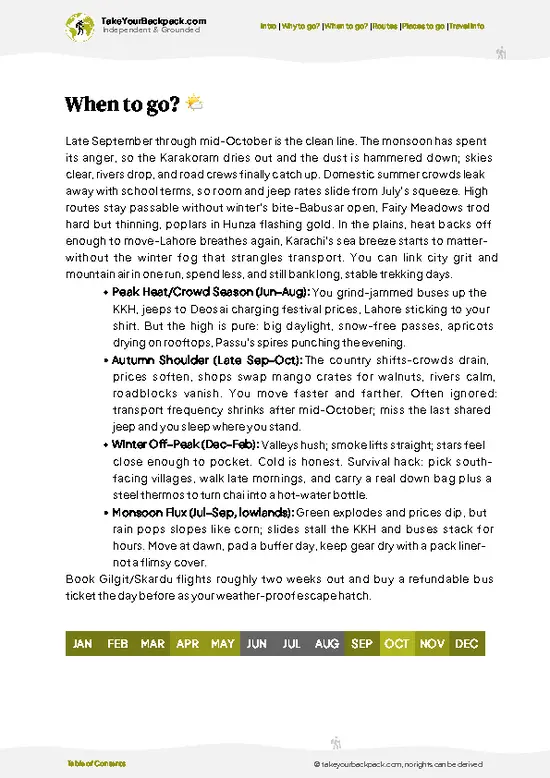
  • Topic: Weather and Temperature — The sweet spot is late May to early October. Daytime temps hover between 15°C to 25°C (59°F to 77°F), perfect for hiking without sweating buckets or freezing your toes off. Nights can dip to 5°C (41°F), so pack layers. Avoid winter unless you’re a hardcore snow trekker; it’s brutal and roads often close.

  • Topic: Daylight Hours — Summer gives you up to 14 hours of daylight, meaning more time to explore those jaw-dropping peaks and valleys. Spring and fall offer less light but softer sun, which some swear by for photography and mellow hikes.

  • Topic: Crowds — Peak season (July-August) draws the most visitors, especially locals on holiday. If you want quiet trails and empty guesthouses, aim for late May-June or September-early October. You’ll feel like you’ve
read more 👉

  • Topic: Weather and Temperature — The sweet spot is late May to early October. Daytime temps hover between 15°C to 25°C (59°F to 77°F), perfect for hiking without sweating buckets or freezing your toes off. Nights can dip to 5°C (41°F), so pack layers. Avoid winter unless you’re a hardcore snow trekker; it’s brutal and roads often close.

  • Topic: Daylight Hours — Summer gives you up to 14 hours of daylight, meaning more time to explore those jaw-dropping peaks and valleys. Spring and fall offer less light but softer sun, which some swear by for photography and mellow hikes.

  • Topic: Crowds — Peak season (July-August) draws the most visitors, especially locals on holiday. If you want quiet trails and empty guesthouses, aim for late May-June or September-early October. You’ll feel like you’ve got the valley to yourself.

  • Topic: Seasonal Activities — Summer is prime for trekking, river rafting, and cultural festivals. Spring brings blooming wildflowers, while autumn offers crisp air and golden foliage. Winter’s for serious mountaineers only.

  • Topic: Price Fluctuations — Expect prices to spike during peak summer months. Off-peak shoulder seasons offer better deals on accommodation and transport, without sacrificing too much on weather or access.


Pro-tip: Book your stay and transport early if you’re hitting July-August, but if you’re flexible, late May or September is your golden ticket to fewer crowds and better prices without losing the magic.


source: climatestotravel.comJANJanuary: below average for travelingFEBFebruary: below average for travelingMARMarch: fair for travelingAPRApril: good for travelingMAYMay: excellent for travelingJUNJune: excellent for travelingJULJuly: highly recommended for travelingAUGAugust: highly recommended for travelingSEPSeptember: excellent for travelingOCTOctober: highly recommended for travelingNOVNovember: fair for travelingDECDecember: below average for traveling
when-to-go

✈️ The backpacker research shortcutPakistan Travel Guide

An offline-friendly backpacking guide with optimized travel routes, ranked highlights, transport advice, and the best areas to stay.
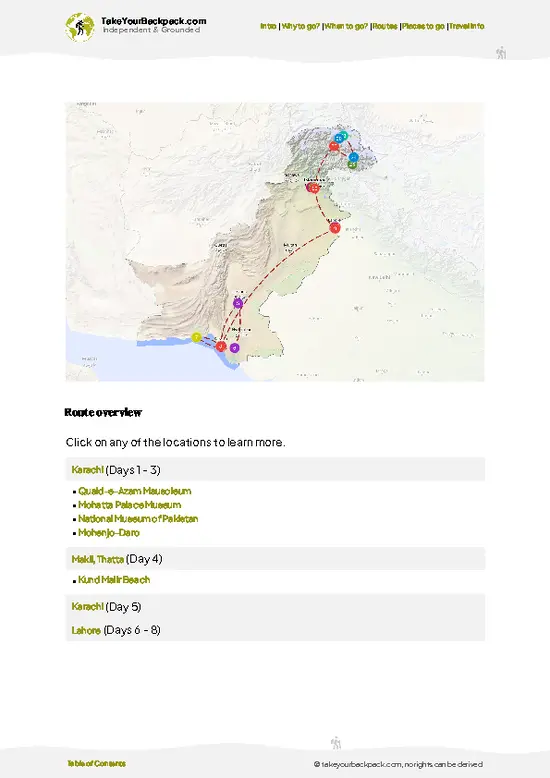
example page 0 from our offline Travel Guide for Pakistan
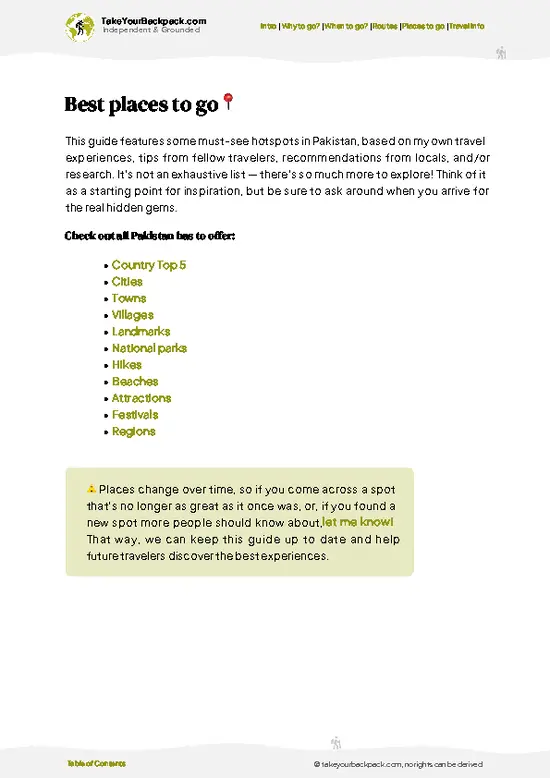
example page 1 from our offline Travel Guide for Pakistan
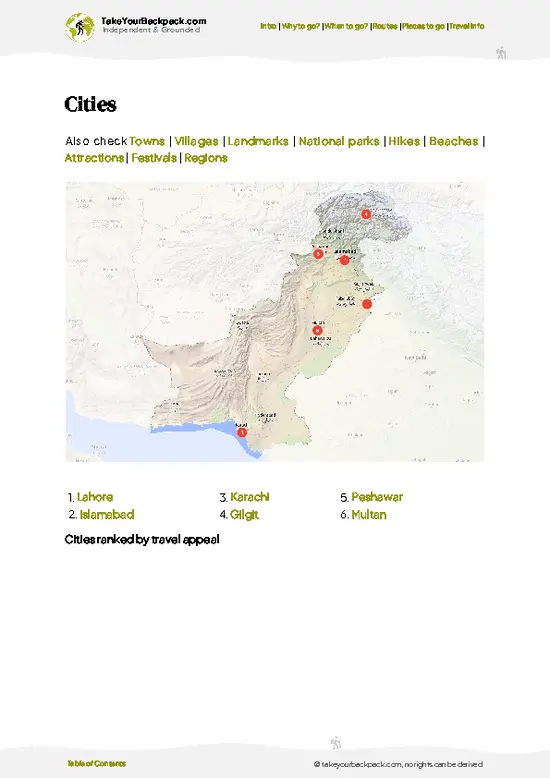
example page 2 from our offline Travel Guide for Pakistan
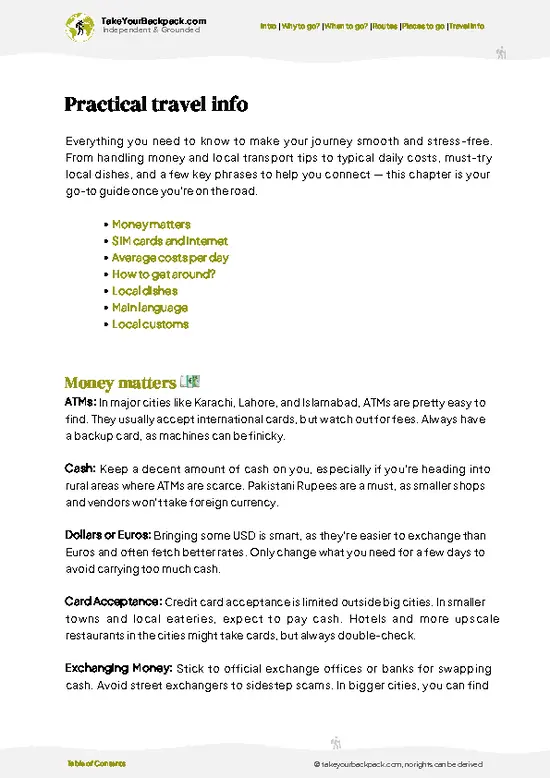
example page 3 from our offline Travel Guide for Pakistan
example page 4 from our offline Travel Guide for Pakistan
example page 5 from our offline Travel Guide for Pakistan
example page 6 from our offline Travel Guide for Pakistan
example page 7 from our offline Travel Guide for Pakistan
The digital guide (338 pages) contains:
98 highlights, ranked by travel appeal
Optimized 7, 14 & 21-day travel routes
Cities, national parks, landmarks, beaches
How to get around
Offline-friendly for travel without Wi-Fi
👉 Click to see all 30+ guide features

📅 Plan smarter in minutes, not weeks
Month by month travel advice
Festivals & national holidays
Budget expectations

🗺️ Go to the right places, skip the overrated ones
Honest pros & cons of destinations
Top hikes, parks & viewpoints
Lesser-known places most travelers miss
Clear “worth it vs skip it” guidance

🛏️ Travel smoothly without rookie mistakes
Best areas to stay
Transport systems explained simply
Common scams & safety advice
SIM cards, money & practical tips

🌍 Understand the country, not just visit it
Culture & traditions
52 Essential phrases & customs
Festivals worth planning around
Traveler-friendly historical context
Insights that make places more meaningful

📱 Built for real travel conditions
Fully downloadable PDF
Works completely offline
Optimized for phone use
Useful in remote areas & buses
Everything in one place
Save weeks of stressful planning
Get instant access to your full guide. 30‑day money-back guarantee.
+ Add another guide for just US$7.80

By proceeding you agree to our terms.
Sent to your inbox immediately after payment • 100% Secure Checkout
Best Backpacking Travel Advisor 2025 tourism awardBest Backpacking
Travel Advisor
2025
What others say about Take Your Backpack Guides:
⭐⭐⭐⭐⭐
Fantastic, amazing amount of information!
⭐⭐⭐⭐⭐
My goodness this is amazing, it's what I've been looking for hats off too you!
⭐⭐⭐⭐⭐
I think this is absolutely BRILLIANT
⭐⭐⭐⭐
Very complete and informative. It's still missing places, but I gotta to commend you
⭐⭐⭐⭐⭐
This is truly amazing, thank you, can't wait to explore it with my kids!
⭐⭐⭐⭐⭐
Awesome resource, thank you!
⭐⭐⭐⭐⭐
This is amazing! Can't wait to explore the ones I haven't seen
⭐⭐⭐⭐
I love this! Well done, great idea.
⭐⭐⭐⭐⭐
Thanks for taking the time to make this gem!
⭐⭐⭐⭐⭐
This might be the best website I've ever seen.
⭐⭐⭐⭐⭐
Congratulations, and thank you so much for your work; it's incredibly valuable.
⭐⭐⭐⭐
In all seriousness I think you did a great job pointing out the important spots
⭐⭐⭐⭐⭐
10/10 very good
⭐⭐⭐⭐⭐
As someone who's only just starting to visit regularly this is awesome, thank you.
⭐⭐⭐⭐
Thank you very much! I'm going to visit my dad, it's going to be very useful!
⭐⭐⭐⭐⭐
This is really cool! We'll be travelling for the first time and this definitely come in handy.
⭐⭐⭐⭐⭐
You are now our minister of culture, congratulations 👨‍💼
⭐⭐⭐⭐⭐
Just wanted to tell you that this is a pearl! Going to follow your recommendations.
⭐⭐⭐⭐⭐
This is so cool. I'll definitely be using the resource for my travels soon.
⭐⭐⭐⭐⭐
This is very impressive! Good work.
⭐⭐⭐⭐⭐
This is an amazing and informative site. Very well done!

🛏️ Where to stay?How to pick the right area

In the heart of the Hunza Valley, you’ve got a few standout spots that scream backpacker-friendly.

First up, Karimabad. This is the main hub, and for good reason. You’ll find a mix of travelers, from solo adventurers to groups. The vibe is social, with plenty of cafes where you can swap stories over chai. The views of Rakaposhi are jaw-dropping, and you can hike to Baltit Fort for a slice of history. Just be ready for the occasional tourist crowd, especially in peak season.

Next, consider Gulmit. It’s quieter but still has a welcoming atmosphere. You’ll get a taste of local life here, with … read more 👉
In the heart of the Hunza Valley, you’ve got a few standout spots that scream backpacker-friendly.

First up, Karimabad. This is the main hub, and for good reason. You’ll find a mix of travelers, from solo adventurers to groups. The vibe is social, with plenty of cafes where you can swap stories over chai. The views of Rakaposhi are jaw-dropping, and you can hike to Baltit Fort for a slice of history. Just be ready for the occasional tourist crowd, especially in peak season.

Next, consider Gulmit. It’s quieter but still has a welcoming atmosphere. You’ll get a taste of local life here, with fewer tourists around. The scenery is stunning, and you can easily access hikes like the trek to Passu Glacier. It’s a great spot if you want to chill and soak in the surroundings without the hustle.

Then there’s Passu. This village is famous for its iconic peaks and offers a more laid-back experience. You’ll find a tight-knit community of travelers and locals. The best part? The sunsets here are legendary.

Each of these places offers a unique slice of Hunza, balancing comfort, social opportunities, and budget-friendly options. Choose wisely, and you’ll create memories that linger long after you leave.

🚌 Getting aroundGetting around like a local

Hunza Valley is a realm where time bends and schedules are mere suggestions. You’ll find yourself swept up in a rhythm that dances between the chaotic and the serene. Here, the landscape is as dramatic as the journey itself. Roads twist and turn like a mountain stream, and the transport options reflect that spirit. Forget rigid timetables; it’s all about intuition and the pulse of the valley. Locals hop on and off shared rides, and you’ll soon learn that flexibility is your best friend. Embrace the unpredictability, and you’ll uncover the true essence of this stunning region.


  • Shared Vans: These are the lifeblood of Hunza Valley transport. They run frequently between major towns like Karimabad and Gilgit, usually starting around 6 AM and wrapping up by 5 PM. Expect to pay around 300 PKR for
read more 👉
Hunza Valley is a realm where time bends and schedules are mere suggestions. You’ll find yourself swept up in a rhythm that dances between the chaotic and the serene. Here, the landscape is as dramatic as the journey itself. Roads twist and turn like a mountain stream, and the transport options reflect that spirit. Forget rigid timetables; it’s all about intuition and the pulse of the valley. Locals hop on and off shared rides, and you’ll soon learn that flexibility is your best friend. Embrace the unpredictability, and you’ll uncover the true essence of this stunning region.


  • Shared Vans: These are the lifeblood of Hunza Valley transport. They run frequently between major towns like Karimabad and Gilgit, usually starting around 6 AM and wrapping up by 5 PM. Expect to pay around 300 PKR for a ride that takes about two hours. They’re a bit cramped but offer a chance to mingle with locals and soak in the scenery.


  • Private Taxis: If you’re looking for comfort and speed, this is your go-to. Prices vary widely, but budget around 4,000 PKR for a full-day hire. You can cover more ground in less time, making it ideal for those who want to hit multiple spots in a day. Just negotiate the fare upfront to avoid surprises.


  • Motorcycle Rentals: For the adventurous spirit, renting a motorcycle can be a game-changer. Daily rates hover around 1,500 PKR, and you can explore at your own pace. Just be cautious; the roads can be challenging, and you’ll want to be comfortable with two wheels before diving in.


  • Jeep Tours: If you’re aiming for the more remote areas, consider a jeep tour. Prices start at about 5,000 PKR for a day trip, and you’ll get to places that regular vehicles can’t reach. These tours often include a local guide, which adds depth to your experience.


  • Walking: Don’t underestimate the power of your own two feet. Many trails connect villages and offer breathtaking views. It’s free, and you’ll experience the valley in a way that no vehicle can replicate. Just pack snacks and water!


For a smooth journey, always check the local vibe before heading out. Early mornings are best for shared vans, while afternoons can be hit or miss. If you can, align your travel with local events or market days to maximize your experience. Embrace the flow, and you’ll navigate Hunza like a local.

🍲 FoodLocal Cuisine & Drinks

In the **Hunza Valley**, food is more than sustenance; it’s a celebration of culture. Start your culinary adventure with **Chapshuro**, a savory meat pie filled with spiced minced meat and onions, baked to golden perfection. The **Hunza Naan**, a flatbread, is a must-try, especially when dipped in local honey or paired with a steaming bowl of **Daal**.

For drinks, don’t miss out on **Apricot Juice**—it’s like liquid sunshine, sweet and refreshing. If you’re feeling adventurous, try **Chai** brewed with local herbs; it’s a ritual here, often shared among friends in cozy cafés or bustling markets.

When it comes to dining, seek out the **local markets**. Vendors serve up **street food** that’s both delicious and affordable. Grab a plate of **Samosas** or **Pakoras** from a stall and enjoy … read more 👉
In the **Hunza Valley**, food is more than sustenance; it’s a celebration of culture. Start your culinary adventure with **Chapshuro**, a savory meat pie filled with spiced minced meat and onions, baked to golden perfection. The **Hunza Naan**, a flatbread, is a must-try, especially when dipped in local honey or paired with a steaming bowl of **Daal**.

For drinks, don’t miss out on **Apricot Juice**—it’s like liquid sunshine, sweet and refreshing. If you’re feeling adventurous, try **Chai** brewed with local herbs; it’s a ritual here, often shared among friends in cozy cafés or bustling markets.

When it comes to dining, seek out the **local markets**. Vendors serve up **street food** that’s both delicious and affordable. Grab a plate of **Samosas** or **Pakoras** from a stall and enjoy them while mingling with locals. Casual eateries dot the landscape, where you can sit on low benches and savor your meal while soaking in the vibrant atmosphere.

Etiquette is simple: always greet your hosts with a smile and don’t hesitate to share your appreciation for the food. It’s common to see families sharing dishes, so don’t shy away from communal dining. Embrace the flavors, the warmth, and the stories that come with every bite.

FAQFrequently asked questions about Hunza Valley

4 to 5 days are ideal to explore Hunza Valley thoroughly. This allows time to visit key spots like Karimabad, Baltit Fort, and Attabad Lake, plus some trekking. Shorter trips can miss the remote villages and panoramic views.
You can get around Hunza Valley without a car using local jeeps, shared taxis, and buses. Jeep rides between major points like Karimabad and Passu cost around 300-500 PKR. Walking and hitchhiking are also common for short distances.
Hunza Valley is known for its stunning mountainous landscapes, ancient forts, and rich cultural heritage. It is famous for the Baltit and Altit forts and the breathtaking views of Rakaposhi and Ultar Sar peaks. The valley is also noted for its apricot orchards and hospitality.
⚠️ Things can change over time, so always validate details locally before you go.

Other Pakistani regions near Hunza Valley

Explore more nearby:


💡 Not sure where to go next?
Create a personalized itinerary for Pakistan including Hunza Valley and the places that fit your trip.

Generate my itinerary

👉 Discover all regions

Or checkout all Pakistan has to offer (think cities, towns, villages, national parks, hikes, beaches, festivals)
Country photo of Pakistan

We 💚 feedbackIs it worth it?

Hunza Valley is a slice of paradise where the mountains seem to whisper secrets. The locals are warm, and the food? Absolutely worth every calorie. But here’s the kicker: getting there takes time. The roads can be rough, and delays are common. Embrace the journey, though; it’s part of the experience. Just know that patience is key. If you’re ready for a little adventure, the rewards are beyond what you can imagine.

✈️ When did I visit Pakistan?
Even though the media portrays Pakistan often as a dangerous country, it has its great spots and loving a mountains, the mountain regions in the north are just heaven. Visited Pakistan in October 2022.

✍️ Help improve this page!
The information on this page is based on my own backpacking experience in Pakistan, supplemented with up-to-date research and feedback from other travelers. Travel details can change, so if you notice anything outdated or incomplete, feel free to let me know.


🙋‍♂️ Give feedback

👋 Meet the founderWho’s Behind Take Your Backpack?

Johan, backpacker and founder of TakeYourBackpackHi, I’m Johan (Netherlands 🇳🇱), the creator of TakeYourBackpack. Over the past decade, I’ve backpacked through 80+ countries across six continents, gaining extensive experience with independent travel, long-term trips, and overland routes.

This site is built on a combination of firsthand travel experience and carefully curated insights from other backpackers. Many guides are based on places I’ve personally visited, while others bring together tips, observations, and practical advice shared by trusted travelers I’ve met along the way.

The goal is to provide realistic, experience-driven guidance — not generic itineraries — so you can explore destinations with better context, clearer expectations, and more confidence.

Get full Pakistan guide •
Instant download • 98 highlights • Full Offline guide