×

Pakistan🇵🇰 | regionsNaltar Valleycolorful lakes, pine woods, rugged tracks | things to do and best time to go

Explore Kumrat ValleyExplore Neelum Valley

Backpacking in Naltar Valley
👌 Worth visitingregion ranked #9
By Johan Kruseman 🇳🇱 | Updated July 30, 2026

Most people only realize on the last day that Naltar’s chairlifts and side valleys give you “big Karakoram views” for a fraction of the time and effort you’d spend on a major trek elsewhere. Naltar Valley sits off the Karakoram Highway near Gilgit in northern Pakistan, up a rough, winding road that keeps casual tourists away. For backpackers, it’s a sweet spot: cheap jeeps, basic guesthouses, pine forests, lakes, and real village life instead of a polished resort scene. It’s quieter and more intimate than Hunza, less variety than Skardu, but also less Instagram circus. Downsides: bumpy access, limited food options, power cuts, and not much nightlife beyond chai and conversation. Upside: you trade comfort for a valley that still feels like it belongs to its residents, not to tourism.

Discover everything you want to know in the 📖 Pakistan Travel Guide.


Get your Pakistan guide
98 ranked highlights, routes & tips, works offline (338 pages)
Loading the map 🌍
CLICK TO FILTER
cities
towns
villages
landmarks
national parks
hikes
beaches
attractions
festivals
regions
SHOW COUNTRY’S BESTSHOW ALL

✨ Why go?
Ranked #9 region in Pakistan
Why Naltar Valley should be on your travel list

Naltar Valley is a backpacker’s dream, offering a variety of landscapes that keep your senses buzzing. You’ve got lush green meadows, towering peaks, and crystal-clear lakes all within reach. This means you can soak in the beauty without the hassle of constant relocation.

The transport flexibility here is a game-changer. Local jeeps can whisk you from one stunning spot to another, making it easy to explore at your own pace. You can dive into multiple experiences—hiking, cultural exchanges with locals, or simply chilling by a lake—without feeling rushed.

What’s more, Naltar allows for a perfect blend of nature and culture. You can sip chai with villagers after a day of trekking, soaking in stories that give depth to the stunning scenery. This is slow travel at its finest, where every moment feels rich and rewarding.
Want to include Naltar Valley in your Pakistan route?
Create a personalized Pakistan itinerary that includes Naltar Valley and the places that fit your trip — based on your travel style, budget, and available time. Get your route in seconds.

Generate my trip

💡 HighlightsDon't-miss highlights and experiences

  1. Naltar Lakes (Satrangi / the colorful lakes) — A cluster of small, vividly colored alpine lakes tucked high in the valley; the shifting blues and greens against pine and talus are unlike the big glacial lakes elsewhere in GB. Reaching them (a jarring jeep ride plus a short walk) feels properly remote — great for photos and quiet time away from crowds. This is my personal favorite.
  2. Naltar Ski Resort (Upper Naltar) — Pakistan’s most accessible high-altitude ski area, used for national competitions and local winter training. Even off-season the rusted chairlift and empty slopes make for an interesting, slightly melancholy place to hike around and imagine winter action.
  3. Naltar Wildlife Sanctuary & Pine Forests — Dense stands of spruce and pine protect high-altitude wildlife: marmots, Himalayan
read more 👉
  1. Naltar Lakes (Satrangi / the colorful lakes) — A cluster of small, vividly colored alpine lakes tucked high in the valley; the shifting blues and greens against pine and talus are unlike the big glacial lakes elsewhere in GB. Reaching them (a jarring jeep ride plus a short walk) feels properly remote — great for photos and quiet time away from crowds. This is my personal favorite.
  2. Naltar Ski Resort (Upper Naltar) — Pakistan’s most accessible high-altitude ski area, used for national competitions and local winter training. Even off-season the rusted chairlift and empty slopes make for an interesting, slightly melancholy place to hike around and imagine winter action.
  3. Naltar Wildlife Sanctuary & Pine Forests — Dense stands of spruce and pine protect high-altitude wildlife: marmots, Himalayan ibex sightings are common; raptors and migratory birds use the valley too. The mix of forest trails and animal tracks gives a real sense of wilderness without traveling to true backcountry.
  4. Upper Naltar (Naltar Bala) village — local Shina culture — A small hamlet where you can watch traditional wooden house construction, try local apricot products, and hang out with shepherd families. The rhythm of life here — simple, practical, and unfazed by tourists — is what makes Naltar feel lived-in rather than staged.
  5. Lower Naltar (Naltar Paeen) and orchard terraces — Hidden gem: most visitors push straight up the valley and miss these terraces. Quiet lanes, walnut and apricot trees, and small village shrines make for a peaceful stroll and real contact with local daily life.
  6. Naltar River, cascades and picnic waterfalls — The valley’s braided streams and little cascades are everywhere if you slow down. Short walks from the road drop you to pleasant picnic spots, cold plunge pools, and photogenic cascades that feel private even on busy days.
  7. High-altitude pastures and shepherd camps — Hidden gem: during summer local shepherds move flocks to grassy benches above the villages. Those pastures offer easy day hikes, improvised tea stops with herders, and unfiltered views of the bowls above the lakes — a rural experience most tourists miss.
  8. Glacial amphitheatre above the lakes — A small glacial cirque and moraines sit above the lakes, feeding the streams. It’s compact, dramatic and walkable — a good introduction to glacier landscape features without a full mountaineering commitment.
  9. Traditional wooden mosques and courtyard architecture in hamlets — Hidden gem: close-up examples of local carpentry and simple mosque architecture can be found in lesser-visited settlements. They’re modest, human-scaled buildings that tell you more about the valley’s culture than any brochure.
  10. The Naltar jeep track and ridge viewpoints — The four-wheel drive route itself is an experience: steep switchbacks, sudden clearings with sweeping valley views, and several natural viewpoints where you can sit and watch the valley compress into a gorge. It’s rough, short, and memorable — not just transport but part of the trip.
Spotted a mistake or missing something? Contact us.

Things to do near Naltar Valley

Ratings based on Tripadvisor reviews. When you book through this link, you support our work at no extra cost to you.

⌛️ 5 daysWhat you can realistically do in a week

Day 1: Naltar Valley

Start your journey in Naltar Valley, a place that feels like a secret shared among friends. The only way in is via a bumpy jeep ride from Gilgit, which sets the pace for your adventure. This ride is not just transport; it’s an experience. You’ll wind through narrow mountain roads, with the Indus River roaring below. The thrill of the journey primes you for what’s to come.

Day 2: Naltar Lake

After settling in, head to Naltar Lake. The hike is moderate, but the payoff is worth every step. The lake’s turquoise waters reflect the sky, and the surrounding peaks create a stunning backdrop. This is where you soak in the beauty and take a breather. Spend the night in a local guesthouse, where the hospitality will make you feel at home.

Day 3: Off-Path Reward - Khunjerab Pass
read more 👉
Day 1: Naltar Valley

Start your journey in Naltar Valley, a place that feels like a secret shared among friends. The only way in is via a bumpy jeep ride from Gilgit, which sets the pace for your adventure. This ride is not just transport; it’s an experience. You’ll wind through narrow mountain roads, with the Indus River roaring below. The thrill of the journey primes you for what’s to come.

Day 2: Naltar Lake

After settling in, head to Naltar Lake. The hike is moderate, but the payoff is worth every step. The lake’s turquoise waters reflect the sky, and the surrounding peaks create a stunning backdrop. This is where you soak in the beauty and take a breather. Spend the night in a local guesthouse, where the hospitality will make you feel at home.

Day 3: Off-Path Reward - Khunjerab Pass

Take a detour to Khunjerab Pass, the highest paved international border crossing in the world. It’s a bit of a trek, but the views are jaw-dropping. You’ll feel like you’re on top of the world, and the stories you’ll have to tell will be priceless.

Day 4: Return to Gilgit

Head back to Gilgit, where you can explore the local markets. This is your chance to pick up some unique handicrafts and sample local cuisine. The contrast between the serene valley and the bustling town is a refreshing shift.

Day 5: Must-Do - Trek to Naltar Valley’s Hidden Waterfalls

This is the day that justifies the trip. Trek to the hidden waterfalls of Naltar Valley. The journey is challenging but rewarding, with cascading water and lush greenery. It’s a perfect way to wrap up your adventure, leaving you with memories that linger long after you’ve returned home.
Turn your Naltar Valley visit into an Pakistan adventure
Build a complete Pakistan route with Naltar Valley, hidden gems, must-see destinations, and realistic travel times included.

Generate my trip

🌤️ When to go?When to go for the best experience


  • Weather: The sweet spot is late May to early October. Before May, snow still clings to the peaks, and after October, the valley starts locking down with winter’s grip.

  • Temperature: Summer days hover between 15°C to 25°C (59°F to 77°F), perfect for hiking without melting or freezing. Nights can dip to 5°C (41°F), so pack layers.

  • Daylight Hours: Long summer days mean you get up to 14 hours of light—ideal for squeezing in extra trails and those golden-hour photos.

  • Crowds: Peak season brings a handful of local trekkers but nothing like the tourist crush elsewhere. Early summer is quieter; late summer sees a gentle bump.

  • Seasonal Activities: Summer unlocks wildflower blooms and alpine lakes. Winter’s for hardcore mountaineers only—expect deep snow and limited access.

  • Price Fluctuations:
read more 👉

  • Weather: The sweet spot is late May to early October. Before May, snow still clings to the peaks, and after October, the valley starts locking down with winter’s grip.

  • Temperature: Summer days hover between 15°C to 25°C (59°F to 77°F), perfect for hiking without melting or freezing. Nights can dip to 5°C (41°F), so pack layers.

  • Daylight Hours: Long summer days mean you get up to 14 hours of light—ideal for squeezing in extra trails and those golden-hour photos.

  • Crowds: Peak season brings a handful of local trekkers but nothing like the tourist crush elsewhere. Early summer is quieter; late summer sees a gentle bump.

  • Seasonal Activities: Summer unlocks wildflower blooms and alpine lakes. Winter’s for hardcore mountaineers only—expect deep snow and limited access.

  • Price Fluctuations: Expect slightly higher rates for guides and lodging in July and August. Book early or aim for shoulder months to snag better deals.


Pro-tip: Arrive in late May to catch the valley waking up from winter—fewer people, fresh trails, and prices still low. It’s the insider’s sweet spot.


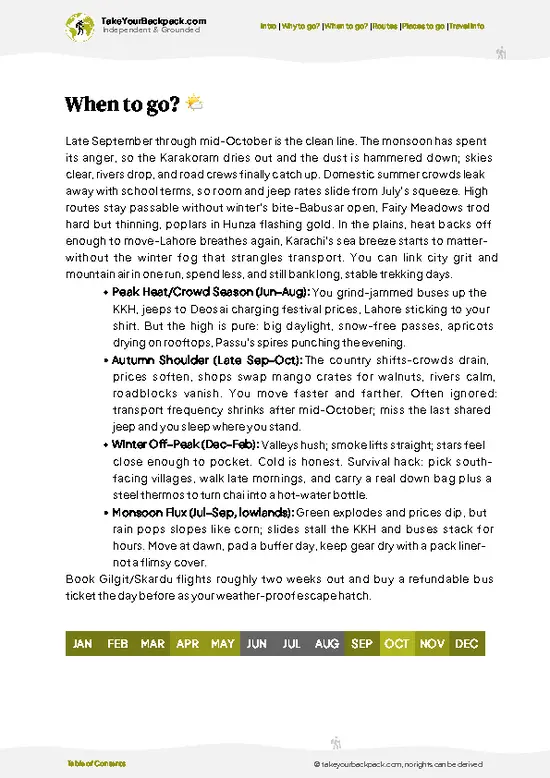
source: climatestotravel.comJANJanuary: below average for travelingFEBFebruary: below average for travelingMARMarch: fair for travelingAPRApril: fair for travelingMAYMay: excellent for travelingJUNJune: excellent for travelingJULJuly: highly recommended for travelingAUGAugust: highly recommended for travelingSEPSeptember: excellent for travelingOCTOctober: excellent for travelingNOVNovember: fair for travelingDECDecember: below average for traveling
when-to-go

✈️ The backpacker research shortcutPakistan Travel Guide

An offline-friendly backpacking guide with optimized travel routes, ranked highlights, transport advice, and the best areas to stay.
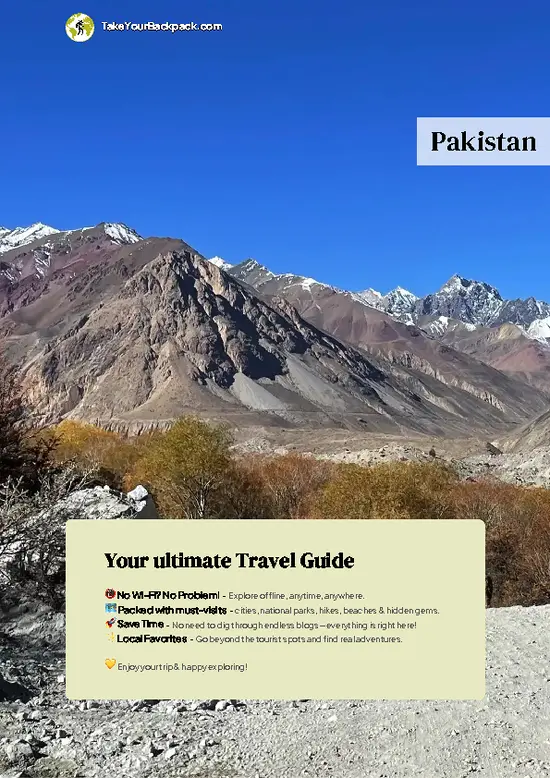
example page 0 from our offline Travel Guide for Pakistan
example page 1 from our offline Travel Guide for Pakistan
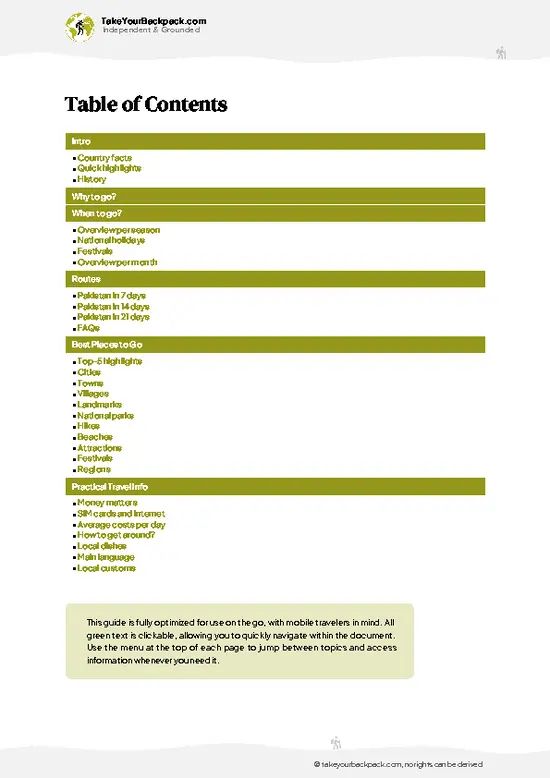
example page 2 from our offline Travel Guide for Pakistan
example page 3 from our offline Travel Guide for Pakistan
example page 4 from our offline Travel Guide for Pakistan
example page 5 from our offline Travel Guide for Pakistan
example page 6 from our offline Travel Guide for Pakistan
example page 7 from our offline Travel Guide for Pakistan
The digital guide (338 pages) contains:
98 highlights, ranked by travel appeal
Optimized 7, 14 & 21-day travel routes
Cities, national parks, landmarks, beaches
How to get around
Offline-friendly for travel without Wi-Fi
👉 Click to see all 30+ guide features

📅 Plan smarter in minutes, not weeks
Month by month travel advice
Festivals & national holidays
Budget expectations

🗺️ Go to the right places, skip the overrated ones
Honest pros & cons of destinations
Top hikes, parks & viewpoints
Lesser-known places most travelers miss
Clear “worth it vs skip it” guidance

🛏️ Travel smoothly without rookie mistakes
Best areas to stay
Transport systems explained simply
Common scams & safety advice
SIM cards, money & practical tips

🌍 Understand the country, not just visit it
Culture & traditions
52 Essential phrases & customs
Festivals worth planning around
Traveler-friendly historical context
Insights that make places more meaningful

📱 Built for real travel conditions
Fully downloadable PDF
Works completely offline
Optimized for phone use
Useful in remote areas & buses
Everything in one place
Save weeks of stressful planning
Get instant access to your full guide. 30‑day money-back guarantee.


By proceeding you agree to our terms.
Sent to your inbox immediately after payment • 100% Secure Checkout
Best Backpacking Travel Advisor 2025 tourism awardBest Backpacking
Travel Advisor
2025
What others say about Take Your Backpack Guides:
⭐⭐⭐⭐⭐
Fantastic, amazing amount of information!
⭐⭐⭐⭐⭐
My goodness this is amazing, it's what I've been looking for hats off too you!
⭐⭐⭐⭐⭐
I think this is absolutely BRILLIANT
⭐⭐⭐⭐
Very complete and informative. It's still missing places, but I gotta to commend you
⭐⭐⭐⭐⭐
This is truly amazing, thank you, can't wait to explore it with my kids!
⭐⭐⭐⭐⭐
Awesome resource, thank you!
⭐⭐⭐⭐⭐
This is amazing! Can't wait to explore the ones I haven't seen
⭐⭐⭐⭐
I love this! Well done, great idea.
⭐⭐⭐⭐⭐
Thanks for taking the time to make this gem!
⭐⭐⭐⭐⭐
This might be the best website I've ever seen.
⭐⭐⭐⭐⭐
Congratulations, and thank you so much for your work; it's incredibly valuable.
⭐⭐⭐⭐
In all seriousness I think you did a great job pointing out the important spots
⭐⭐⭐⭐⭐
10/10 very good
⭐⭐⭐⭐⭐
As someone who's only just starting to visit regularly this is awesome, thank you.
⭐⭐⭐⭐
Thank you very much! I'm going to visit my dad, it's going to be very useful!
⭐⭐⭐⭐⭐
This is really cool! We'll be travelling for the first time and this definitely come in handy.
⭐⭐⭐⭐⭐
You are now our minister of culture, congratulations 👨‍💼
⭐⭐⭐⭐⭐
Just wanted to tell you that this is a pearl! Going to follow your recommendations.
⭐⭐⭐⭐⭐
This is so cool. I'll definitely be using the resource for my travels soon.
⭐⭐⭐⭐⭐
This is very impressive! Good work.
⭐⭐⭐⭐⭐
This is an amazing and informative site. Very well done!

🛏️ Where to stay?How to pick the right area

Naltar Valley is a backpacker’s playground, but where you lay your head can make or break your experience.

Start in Naltar Village. It’s the heart of the valley, buzzing with fellow travelers. You’ll find a mix of local charm and social energy. The communal vibe here makes it easy to connect with others over shared meals or evening bonfires.

Then there’s Naltar Valley Base Camp. This spot is perfect for those looking to dive into nature. It’s a bit more remote, but the views are worth it. You’ll sacrifice some comfort for the raw beauty, but the camaraderie among trekkers is unbeatable.

read more 👉
Naltar Valley is a backpacker’s playground, but where you lay your head can make or break your experience.

Start in Naltar Village. It’s the heart of the valley, buzzing with fellow travelers. You’ll find a mix of local charm and social energy. The communal vibe here makes it easy to connect with others over shared meals or evening bonfires.

Then there’s Naltar Valley Base Camp. This spot is perfect for those looking to dive into nature. It’s a bit more remote, but the views are worth it. You’ll sacrifice some comfort for the raw beauty, but the camaraderie among trekkers is unbeatable.

Lastly, consider Bashkargah. It’s quieter, ideal for solo travelers seeking peace. You’ll trade a bit of social interaction for tranquility, but the stunning landscapes and fewer crowds make it a worthwhile choice.

Each area offers a unique flavor, so weigh your priorities. Time, money, comfort—choose wisely, and you’ll unlock the valley’s true magic.

🚌 Getting aroundGetting around like a local

Naltar Valley is a realm where time bends and schedules are mere suggestions. Picture this: the sun rises over jagged peaks, casting a golden hue on the emerald lakes, and you’re left to navigate a landscape that feels both wild and welcoming. Here, transport isn’t about rigid timetables; it’s an intuitive dance with the elements. You might find yourself waiting for a ride that feels like it’s on its own clock, but that’s part of the charm. Embrace the chaos, and you’ll discover the true rhythm of this enchanting valley.


  • Jeep Rides: The primary mode of transport, these rugged vehicles can take you from Gilgit to Naltar Valley. Expect to pay around PKR 3,000 to 4,000 per trip. They usually leave when full, which can mean a wait, but the ride is thrilling and scenic, lasting about 2-3 hours.
read more 👉
Naltar Valley is a realm where time bends and schedules are mere suggestions. Picture this: the sun rises over jagged peaks, casting a golden hue on the emerald lakes, and you’re left to navigate a landscape that feels both wild and welcoming. Here, transport isn’t about rigid timetables; it’s an intuitive dance with the elements. You might find yourself waiting for a ride that feels like it’s on its own clock, but that’s part of the charm. Embrace the chaos, and you’ll discover the true rhythm of this enchanting valley.


  • Jeep Rides: The primary mode of transport, these rugged vehicles can take you from Gilgit to Naltar Valley. Expect to pay around PKR 3,000 to 4,000 per trip. They usually leave when full, which can mean a wait, but the ride is thrilling and scenic, lasting about 2-3 hours.


  • Local Buses: For the budget-savvy traveler, local buses run from Gilgit to the valley. They cost around PKR 500 and depart in the morning, typically around 8 AM, but can be flexible. The journey is longer, about 4-5 hours, and comfort is basic, but you’ll soak up the local vibe.


  • Motorcycles for Hire: If you’re feeling adventurous, renting a motorcycle can be a game-changer. Prices hover around PKR 1,000 per day. This gives you the freedom to explore at your own pace, but be prepared for some rough terrain and a few bumps along the way.


  • Hiking: For the truly adventurous, hiking is an option to reach nearby villages or lakes. It’s free and offers breathtaking views, but plan for a full day of trekking. Bring plenty of water and snacks!


Here’s the insider tip: connect with locals for the best transport hacks. They often know the unspoken schedules and can help you find rides that aren’t listed. This will save you time and ensure you’re not left waiting in the valley longer than necessary.

🍲 FoodLocal Cuisine & Drinks

In **Naltar Valley**, food is a celebration of local culture. You can’t miss the **dumba karahi**, a tender lamb dish cooked in a rich, spicy gravy. The aroma wafts through the air, drawing you in like a moth to a flame. Pair it with **naan**, fresh from a tandoor, and you’re in for a treat.

Street vendors serve up **samosas** and **pakoras** that are crispy and bursting with flavor. Grab a few while wandering the bustling markets, where the chatter of locals mixes with the sizzling sounds of frying snacks.

For drinks, try **chai** brewed with cardamom and served in small cups. It’s a ritual here, a moment to pause and connect.

Dining is casual; locals often share meals, so don’t hesitate to join in. Use your right hand to eat—it’s a sign of respect. Embrace the communal vibe, and you’ll … read more 👉
In **Naltar Valley**, food is a celebration of local culture. You can’t miss the **dumba karahi**, a tender lamb dish cooked in a rich, spicy gravy. The aroma wafts through the air, drawing you in like a moth to a flame. Pair it with **naan**, fresh from a tandoor, and you’re in for a treat.

Street vendors serve up **samosas** and **pakoras** that are crispy and bursting with flavor. Grab a few while wandering the bustling markets, where the chatter of locals mixes with the sizzling sounds of frying snacks.

For drinks, try **chai** brewed with cardamom and served in small cups. It’s a ritual here, a moment to pause and connect.

Dining is casual; locals often share meals, so don’t hesitate to join in. Use your right hand to eat—it’s a sign of respect. Embrace the communal vibe, and you’ll leave with more than just a full belly; you’ll carry stories and friendships back home.

Other Pakistani regions near Naltar Valley

Explore more nearby:


💡 Not sure where to go next?
Create a personalized itinerary for Pakistan including Naltar Valley and the places that fit your trip.

Generate my itinerary

👉 Discover all regions

Or checkout all Pakistan has to offer (think cities, towns, villages, national parks, hikes, beaches, festivals)
Country photo of Pakistan

We 💚 feedbackFinal thoughts on visiting Naltar Valley

Naltar Valley is a slice of paradise, especially when the wildflowers bloom. The colors pop against the backdrop of those towering peaks, and you’ll feel like you’ve stumbled into a painting. But here’s the kicker: getting there isn’t a walk in the park. The road is bumpy, and it takes time. If you’re up for the adventure, the payoff is worth every jolt.

✈️ When did I visit Pakistan?
Even though the media portrays Pakistan often as a dangerous country, it has its great spots and loving a mountains, the mountain regions in the north are just heaven. Visited Pakistan in October 2022.

✍️ Help improve this page!
The information on this page is based on my own backpacking experience in Pakistan, supplemented with up-to-date research and feedback from other travelers. Travel details can change, so if you notice anything outdated or incomplete, feel free to let me know.


🙋‍♂️ Give feedback

👋 Meet the founderWho’s Behind Take Your Backpack?

Johan, backpacker and founder of TakeYourBackpackHi, I’m Johan (Netherlands 🇳🇱), the creator of TakeYourBackpack. Over the past decade, I’ve backpacked through 80+ countries across six continents, gaining extensive experience with independent travel, long-term trips, and overland routes.

This site is built on a combination of firsthand travel experience and carefully curated insights from other backpackers. Many guides are based on places I’ve personally visited, while others bring together tips, observations, and practical advice shared by trusted travelers I’ve met along the way.

The goal is to provide realistic, experience-driven guidance — not generic itineraries — so you can explore destinations with better context, clearer expectations, and more confidence.

Get full Pakistan guide •
Instant download • 98 highlights • Full Offline guide