×

Pakistan🇵🇰 | citiesIslamabadgreen belts, modern grid, diplomatic enclave | things to do and best time to go

Explore Tushan BeachExplore Karachi

Backpacking in Islamabad
🏆 Top pickcity ranked #2
By Johan Kruseman 🇳🇱 | Updated June 6, 2026

Most people only realize on the way out that Islamabad is the perfect “reset hub”: it’s where you fix your gear, rest, eat well, and sort permits before you launch into Pakistan’s heavy hitters like Hunza, Skardu, or the Kaghan Valley. The city sits in the north of the country, at the foot of the Margalla Hills, a calm base camp between the plains and the real mountains. For backpackers, it’s clean, organized, and relatively safe, with cheap ride-hailing, wide roads, and green space everywhere. You get big-mosque drama at Faisal Mosque, sunset hikes on Trail 3 or 5, and museum time at Lok Virsa or the Pakistan Monument complex. It’s not a party town and can feel sterile compared to raw, chaotic Rawalpindi next door or Lahore’s historic chaos, and meeting other travelers usually happens in a few hostels or trekking agencies, but costs are low and logistics are almost embarrassingly easy.

Discover everything you want to know in the 📖 Pakistan Travel Guide.
Loading the map 🌍
CLICK TO FILTER
cities
towns
villages
landmarks
national parks
hikes
beaches
attractions
festivals
regions
SHOW COUNTRY’S BESTSHOW ALL

✨ Why go?
Ranked #2 city in Pakistan
What makes it a must-see city

Islamabad is a strategic hub for backpackers, offering a blend of affordability and accessibility that makes it a smart stop on your journey. The city’s highlights are diverse, but what really draws travelers is its role as a basecamp for day trips into the stunning surrounding landscapes. You can easily hop on a bus or grab a ride to explore the nearby mountains, making it a perfect launchpad for adventure.

The hostel scene here is vibrant and budget-friendly, with options that cater to both social butterflies and solo travelers seeking a quiet corner. You’ll find plenty of spots to meet fellow adventurers, swap stories, and share tips. When it comes to food, the local cuisine is a delightful mix of flavors, and you can eat well without breaking the bank.

The city is walkable, allowing … read more 👉
Islamabad is a strategic hub for backpackers, offering a blend of affordability and accessibility that makes it a smart stop on your journey. The city’s highlights are diverse, but what really draws travelers is its role as a basecamp for day trips into the stunning surrounding landscapes. You can easily hop on a bus or grab a ride to explore the nearby mountains, making it a perfect launchpad for adventure.

The hostel scene here is vibrant and budget-friendly, with options that cater to both social butterflies and solo travelers seeking a quiet corner. You’ll find plenty of spots to meet fellow adventurers, swap stories, and share tips. When it comes to food, the local cuisine is a delightful mix of flavors, and you can eat well without breaking the bank.

The city is walkable, allowing you to soak in the atmosphere without the hassle of public transport. As for nightlife, it’s laid-back but lively enough to enjoy a few drinks or a late-night snack. Plus, onward travel is a breeze, connecting you to other parts of Pakistan and beyond. If you’re looking for a place that balances comfort and value, Islamabad is worth your time.
Want to include Islamabad in your Pakistan route?
Create a personalized Pakistan itinerary that includes Islamabad and the places that fit your trip — based on your travel style, budget, and available time. Get your route in seconds.

Generate my trip

💡 HighlightsMust-see experiences and standout moments

  1. Faisal Mosque — The city’s signature silhouette: modern, massive, and built against the Margalla backdrop. Even if you’re not religious, the architecture, serene courtyard and the view from the forecourt make it worth the stop; go early to avoid crowds and feel the scale properly.
  2. Pakistan Monument & Museum — A sculptural, petal-shaped monument that tells Pakistan’s story; the adjoining museum has well-presented exhibits and a rooftop view you won’t forget. It’s short, compact history that’s easy to absorb in an hour or two.
  3. Lok Virsa (Heritage Museum) — Folk arts, crafts and living traditions under one roof; great for seeing regional textiles, music instruments and street-replicas. The gift shop and artisans on-site are perfect if you want an authentic souvenir that isn’t mass-made.
read more 👉
  1. Faisal Mosque — The city’s signature silhouette: modern, massive, and built against the Margalla backdrop. Even if you’re not religious, the architecture, serene courtyard and the view from the forecourt make it worth the stop; go early to avoid crowds and feel the scale properly.
  2. Pakistan Monument & Museum — A sculptural, petal-shaped monument that tells Pakistan’s story; the adjoining museum has well-presented exhibits and a rooftop view you won’t forget. It’s short, compact history that’s easy to absorb in an hour or two.
  3. Lok Virsa (Heritage Museum) — Folk arts, crafts and living traditions under one roof; great for seeing regional textiles, music instruments and street-replicas. The gift shop and artisans on-site are perfect if you want an authentic souvenir that isn’t mass-made.
  4. Saidpur Village — A restored gurduwara/old-village turned cultural quarter tucked in the Margalla foothills. Cobblestone lanes, little cafes, and preserved architecture give a surprisingly pleasant sense of old Islamabad mixed with hillside charm.
  5. Margalla Hills (Trail 3 hike) — The most popular trail for brisk, accessible hiking with good viewpoints and a chance to spot langur troops and partridges. It’s the easiest way to escape the city bustle for an hour or three and feel like you’re in real wilderness.
  6. Daman-e-Koh — A mid-hill lookout with sweeping panoramas of Islamabad and the Faisal Mosque below; great for sunset photos without committing to a full hike. It’s touristy but for a short, high-reward stop it’s hard to beat.
  7. Golra Sharif Railway Museum — A charming, low-key museum of steam engines and colonial railways that feels like stepping into a train-lover’s scrapbook. You can walk around old carriages and see period signage — a quiet, tactile slice of history most visitors miss.
  8. Shah Allah Ditta Caves — Ancient rock-cut caves and a shaded village at the Margalla base with centuries-old carvings and a pleasant riverside walk. It’s archaeological with a relaxed local vibe — bring water and a hat for the short trek.
  9. Rawal Lake & Lake View Park — A recreational lakeside with boating, picnic spots and skyline views of the city; good for an easy half-day to chill, rent a paddle boat, or cycle the perimeter. Locals come here to run, fly kites and escape the heat.
  10. Fatima Jinnah Park (F-9 Park) — One of the largest urban parks in Pakistan where families jog, play and hang out; it’s a window into everyday Islamabad life and an easy place to people-watch. Bring a thermos and join the local rhythm—morning or evening.
If you’ve got extra time, easy day trips from Islamabad include the Taxila archaeological sites and museum (ancient Gandhara ruins), the hill station of Murree for cooler scenery, and Khanpur Dam for boating and cliffside views — Taxila is my personal favorite for a day trip because the ruins and museum make history feel immediate and walkable.
Spotted a mistake or missing something? Contact us.

Things to do in Islamabad

Ratings based on Tripadvisor reviews. When you book through this link, you support our work at no extra cost to you.

🏘️ NeighborhoodsWhere things are and how it's laid out

Islamabad, the capital of Pakistan, offers a unique blend of modernity and nature, making it a fascinating stop for backpackers. Here’s a breakdown of key neighborhoods to help you navigate your options.

F-6 Sector: This area is a backpacker favorite for its vibrant atmosphere and affordability. You’ll find budget hostels and local eateries. The walkability is decent, with parks nearby for a breather. Nightlife is low-key, perfect for those who prefer a quieter evening. It’s suitable for both short and longer stays, with easy access to public transport.

F-10 Sector: Known for its lively vibe, F-10 has a mix of cafes, shops, and parks. It’s slightly more upscale but still offers budget-friendly options. Walkability is excellent, and you can easily explore on foot. The nightlife here is more … read more 👉
Islamabad, the capital of Pakistan, offers a unique blend of modernity and nature, making it a fascinating stop for backpackers. Here’s a breakdown of key neighborhoods to help you navigate your options.

F-6 Sector: This area is a backpacker favorite for its vibrant atmosphere and affordability. You’ll find budget hostels and local eateries. The walkability is decent, with parks nearby for a breather. Nightlife is low-key, perfect for those who prefer a quieter evening. It’s suitable for both short and longer stays, with easy access to public transport.

F-10 Sector: Known for its lively vibe, F-10 has a mix of cafes, shops, and parks. It’s slightly more upscale but still offers budget-friendly options. Walkability is excellent, and you can easily explore on foot. The nightlife here is more active, with several cafes open late. Ideal for those wanting a balance of relaxation and social life, it works well for both short and extended visits.

Blue Area: This is the commercial heart of Islamabad. If you’re looking for convenience, this is the place. It’s bustling, with shops and restaurants lining the streets. While it’s not the quietest area, it’s highly walkable and well-connected by public transport. Perfect for short stays, especially if you want to be in the thick of things.

Margalla Hills: For nature lovers, this area is a must. It’s quieter and offers stunning hiking trails. Accommodation options are limited, but the tranquility is worth it. Ideal for longer stays if you want to escape the city buzz, but transport access can be a bit tricky.

⌛️ 1 dayWhat you can realistically do in a day

Islamabad, the capital of Pakistan, is a city that blends modernity with nature. It’s a place where sleek architecture meets lush greenery, and the majestic Margalla Hills provide a stunning backdrop. Spending a day here can be both enriching and invigorating if you know where to focus your energy.

Start your morning in the F-6 sector at the bustling Sunday Bazaar. This local market is a sensory overload, filled with vibrant colors and the aroma of street food. You’ll find everything from handmade crafts to fresh produce. Grab a cup of chai and some samosas from a vendor; it’s a delicious way to kick off your day. The energy here is infectious, and mingling with locals gives you a taste of everyday life in Islamabad.

Afterward, head to the iconic Faisal Mosque. Its unique architecture, resembling … read more 👉
Islamabad, the capital of Pakistan, is a city that blends modernity with nature. It’s a place where sleek architecture meets lush greenery, and the majestic Margalla Hills provide a stunning backdrop. Spending a day here can be both enriching and invigorating if you know where to focus your energy.

Start your morning in the F-6 sector at the bustling Sunday Bazaar. This local market is a sensory overload, filled with vibrant colors and the aroma of street food. You’ll find everything from handmade crafts to fresh produce. Grab a cup of chai and some samosas from a vendor; it’s a delicious way to kick off your day. The energy here is infectious, and mingling with locals gives you a taste of everyday life in Islamabad.

Afterward, head to the iconic Faisal Mosque. Its unique architecture, resembling a Bedouin tent, is striking against the backdrop of the hills. Spend some time wandering the grounds; the tranquility is palpable. If you’re feeling adventurous, hike up to the nearby trails for a panoramic view of the city. It’s a bit off the standard tourist path, but the fresh air and stunning vistas make it worth the effort.

In the afternoon, make your way to the Pakistan Monument and Museum in the Shakarparian area. The monument is a symbol of national unity, and the museum offers insights into the country’s rich history. It’s a great spot to reflect on what you’ve seen so far.

As evening approaches, head to the vibrant neighborhood of F-11 for dinner. Try out a local eatery like Monal, which offers a fantastic view of the city skyline. The food is a delightful mix of traditional and contemporary flavors.

End your day with a leisurely stroll in the nearby Daman-e-Koh viewpoint. The city lights twinkle below, and you’ll feel a sense of accomplishment for having experienced the heart of Islamabad in just one day.
Turn your Islamabad visit into an Pakistan adventure
Build a complete Pakistan route with Islamabad, hidden gems, must-see destinations, and realistic travel times included.

Generate my trip

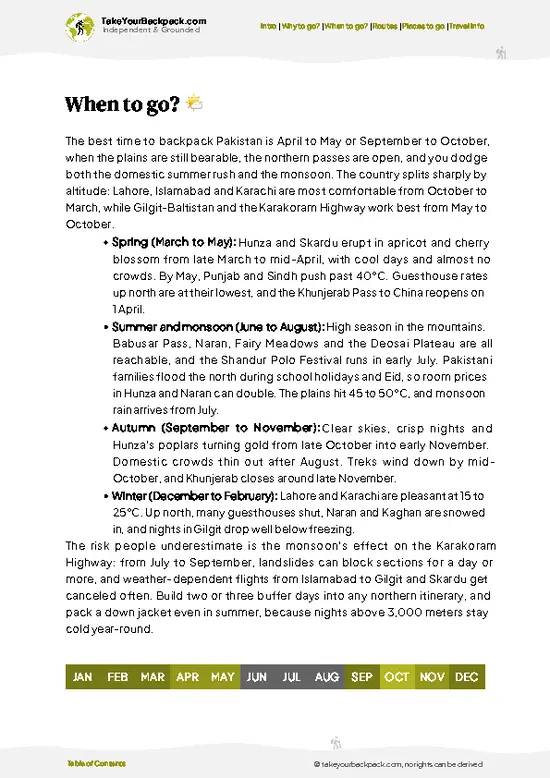
🌤️ When to go?Choosing the right time of year


  • Topic: Weather and Temperature — Islamabad’s best backpacking window is spring (March to May) and autumn (September to November). Temperatures hover between 15°C to 28°C (59°F to 82°F), avoiding the punishing summer heat that can spike above 40°C (104°F). Winters are mild but can dip to 3°C (37°F) at night, which might be a chill for light packers.

  • Topic: Daylight Hours — During spring and autumn, daylight stretches roughly 11 to 13 hours, giving you ample time to explore without rushing. Summers offer longer days but come with the trade-off of intense heat, while winters have shorter daylight, limiting your trekking and sightseeing windows.

  • Topic: Crowds — Tourist traffic peaks in spring and autumn, especially around national holidays. Summers see fewer visitors due to heat, which
read more 👉

  • Topic: Weather and Temperature — Islamabad’s best backpacking window is spring (March to May) and autumn (September to November). Temperatures hover between 15°C to 28°C (59°F to 82°F), avoiding the punishing summer heat that can spike above 40°C (104°F). Winters are mild but can dip to 3°C (37°F) at night, which might be a chill for light packers.

  • Topic: Daylight Hours — During spring and autumn, daylight stretches roughly 11 to 13 hours, giving you ample time to explore without rushing. Summers offer longer days but come with the trade-off of intense heat, while winters have shorter daylight, limiting your trekking and sightseeing windows.

  • Topic: Crowds — Tourist traffic peaks in spring and autumn, especially around national holidays. Summers see fewer visitors due to heat, which can mean quieter trails but less social buzz. Winter is low season, so expect fewer crowds but some attractions or services might scale back.

  • Topic: Seasonal Activities — Spring bursts with wildflowers and fresh greenery, perfect for hiking Margalla Hills. Autumn offers crisp air and clear skies, ideal for photography and cultural festivals. Summer’s heat limits outdoor activities, while winter brings occasional fog and a slower pace.

  • Topic: Price Fluctuations — Accommodation and transport costs rise during spring and autumn due to demand. Summer and winter offer better deals but come with the trade-off of less comfortable weather and fewer events. Booking ahead in peak seasons is essential to lock in reasonable rates.


Pro-tip: Aim for late March or early October—these sweet spots balance cool temperatures, manageable crowds, and vibrant local life, turning your Islamabad trip into a smooth, high-value win.


source: climatestotravel.comJANJanuary: good for travelingFEBFebruary: good for travelingMARMarch: excellent for travelingAPRApril: excellent for travelingMAYMay: excellent for travelingJUNJune: fair for travelingJULJuly: fair for travelingAUGAugust: fair for travelingSEPSeptember: excellent for travelingOCTOctober: excellent for travelingNOVNovember: highly recommended for travelingDECDecember: good for traveling
when-to-go

✈️ The backpacker research shortcutPakistan Travel Guide

An offline-friendly backpacking guide with optimized travel routes, ranked highlights, transport advice, and the best areas to stay.
example page 0 from our offline Travel Guide for Pakistan
example page 1 from our offline Travel Guide for Pakistan
example page 2 from our offline Travel Guide for Pakistan
example page 3 from our offline Travel Guide for Pakistan
example page 4 from our offline Travel Guide for Pakistan
example page 5 from our offline Travel Guide for Pakistan
example page 6 from our offline Travel Guide for Pakistan
example page 7 from our offline Travel Guide for Pakistan
The digital guide (371 pages) contains:
107 highlights, ranked by travel appeal
Optimized 7, 14 & 21-day travel routes
Cities, national parks, landmarks, beaches
How to get around
Offline-friendly for travel without Wi-Fi
👉 Click to see all 30+ guide features

📅 Plan smarter in minutes, not weeks
Month by month travel advice
Festivals & national holidays
Budget expectations

🗺️ Go to the right places, skip the overrated ones
Honest pros & cons of destinations
Top hikes, parks & viewpoints
Lesser-known places most travelers miss
Clear “worth it vs skip it” guidance

🛏️ Travel smoothly without rookie mistakes
Best areas to stay
Transport systems explained simply
Common scams & safety advice
SIM cards, money & practical tips

🌍 Understand the country, not just visit it
Culture & traditions
52 Essential phrases & customs
Festivals worth planning around
Traveler-friendly historical context
Insights that make places more meaningful

📱 Built for real travel conditions
Fully downloadable PDF
Works completely offline
Optimized for phone use
Useful in remote areas & buses
Everything in one place
Save weeks of stressful planning
Get instant access to your full guide. 30‑day money-back guarantee.


By proceeding you agree to our terms.
Sent to your inbox immediately after payment • 100% Secure Checkout
Best Backpacking Travel Advisor 2025 tourism awardBest Backpacking
Travel Advisor
2025
What others say about Take Your Backpack Guides:
⭐⭐⭐⭐⭐
Fantastic, amazing amount of information!
⭐⭐⭐⭐⭐
My goodness this is amazing, it's what I've been looking for hats off too you!
⭐⭐⭐⭐⭐
I think this is absolutely BRILLIANT
⭐⭐⭐⭐
Very complete and informative. It's still missing places, but I gotta to commend you
⭐⭐⭐⭐⭐
This is truly amazing, thank you, can't wait to explore it with my kids!
⭐⭐⭐⭐⭐
Awesome resource, thank you!
⭐⭐⭐⭐⭐
This is amazing! Can't wait to explore the ones I haven't seen
⭐⭐⭐⭐
I love this! Well done, great idea.
⭐⭐⭐⭐⭐
Thanks for taking the time to make this gem!
⭐⭐⭐⭐⭐
This might be the best website I've ever seen.
⭐⭐⭐⭐⭐
Congratulations, and thank you so much for your work; it's incredibly valuable.
⭐⭐⭐⭐
In all seriousness I think you did a great job pointing out the important spots
⭐⭐⭐⭐⭐
10/10 very good
⭐⭐⭐⭐⭐
As someone who's only just starting to visit regularly this is awesome, thank you.
⭐⭐⭐⭐
Thank you very much! I'm going to visit my dad, it's going to be very useful!
⭐⭐⭐⭐⭐
This is really cool! We'll be travelling for the first time and this definitely come in handy.
⭐⭐⭐⭐⭐
You are now our minister of culture, congratulations 👨‍💼
⭐⭐⭐⭐⭐
Just wanted to tell you that this is a pearl! Going to follow your recommendations.
⭐⭐⭐⭐⭐
This is so cool. I'll definitely be using the resource for my travels soon.
⭐⭐⭐⭐⭐
This is very impressive! Good work.
⭐⭐⭐⭐⭐
This is an amazing and informative site. Very well done!

🛏️ Where to stay?How to pick the right area

Islamabad’s layout is a strategic puzzle for backpackers balancing safety, social buzz, and budget. The sweet spot is the Blue Area and F-6 sectors. Blue Area is the commercial heart, buzzing with cafes, affordable eateries, and easy access to public transport. It’s not a party zone, but it’s where you’ll find fellow travelers and locals mingling over chai or quick bites. Hostels here cater to budget travelers, offering basic but clean accommodations, which means you’re sacrificing luxury for convenience and connection.

Slide over to F-6, especially F-6 Markaz, and you get a neighborhood that … read more 👉
Islamabad’s layout is a strategic puzzle for backpackers balancing safety, social buzz, and budget. The sweet spot is the Blue Area and F-6 sectors. Blue Area is the commercial heart, buzzing with cafes, affordable eateries, and easy access to public transport. It’s not a party zone, but it’s where you’ll find fellow travelers and locals mingling over chai or quick bites. Hostels here cater to budget travelers, offering basic but clean accommodations, which means you’re sacrificing luxury for convenience and connection.

Slide over to F-6, especially F-6 Markaz, and you get a neighborhood that feels more residential but still lively. It’s quieter, safer, and has a handful of hostels and guesthouses that attract solo travelers looking for a calm base with social potential. The vibe here is more laid-back, with parks and local markets that invite casual exploration without the noise of the city center.

Avoid the newer, sprawling sectors like G-13 or I-10 if you want to stay social and safe on a budget. They’re quieter, more isolated, and public transport options are limited, meaning you trade off time and social interaction for a bit more comfort and modernity. In Islamabad, the trade-off is clear: Blue Area and F-6 give you the best blend of safety, social life, and wallet-friendly stays, turning your base into a launchpad for authentic city experiences.

🚌 Getting aroundHow to get from A to B

Islamabad moves at its own rhythm—neither a frantic rush nor a laid-back drift. It’s a city where schedules exist but bend under the weight of local habits and traffic quirks. You’ll find moments where time feels elastic: a bus might show up early or late, and taxis negotiate routes on the fly. This isn’t a place where you can blindly trust a timetable, but it’s also not chaos. It’s a dance between order and improvisation, and understanding that flow is your first win. Once you get it, you’re not just a traveler; you’re a player in the city’s transit game, making smart choices that save you time, money, or both.


  • Walking: Islamabad’s layout is surprisingly walkable, especially in sectors like F-6 and F-7. Walking costs nothing, gives you full control over your pace, and lets you soak in
read more 👉
Islamabad moves at its own rhythm—neither a frantic rush nor a laid-back drift. It’s a city where schedules exist but bend under the weight of local habits and traffic quirks. You’ll find moments where time feels elastic: a bus might show up early or late, and taxis negotiate routes on the fly. This isn’t a place where you can blindly trust a timetable, but it’s also not chaos. It’s a dance between order and improvisation, and understanding that flow is your first win. Once you get it, you’re not just a traveler; you’re a player in the city’s transit game, making smart choices that save you time, money, or both.


  • Walking: Islamabad’s layout is surprisingly walkable, especially in sectors like F-6 and F-7. Walking costs nothing, gives you full control over your pace, and lets you soak in the city’s green spaces and architecture. It’s slow but unbeatable for comfort and zero expense. Use walking for short hops or when you want to explore without the hassle of waiting or haggling.


  • Metro Bus: The Metro Bus is the backbone of budget transit here. It runs from early morning (around 6:00 AM) until about 10:00 PM. Tickets are cheap—usually under 50 PKR—and the buses are air-conditioned, which is a rare comfort in public transport. It’s fast on dedicated lanes, cutting through traffic jams that would stall cars and taxis. The trade-off? You’re on a fixed route with scheduled stops, so it’s less flexible but highly efficient for main corridors.


  • Local Buses: These are the cheapest option, often under 30 PKR, but expect a bumpy ride and packed conditions during rush hours. They don’t run on strict schedules, so timing is unpredictable. Comfort is minimal, but if you’re prioritizing money over time and ease, local buses get you where you need to go. They cover more neighborhoods than the Metro Bus, so they’re essential for deeper exploration.


  • Ride-Hailing Apps (Careem, Uber): These offer door-to-door convenience and comfort, with prices that vary widely depending on traffic and demand. Expect to pay 3-5 times the cost of a bus ride. They’re perfect when you’re short on time or carrying heavy gear. The trade-off is clear: you pay more for speed and comfort, but you avoid the unpredictability of public transit schedules.


  • Rickshaws: The iconic three-wheelers are everywhere and offer flexible, short-distance rides. Prices are negotiable, usually affordable for budget travelers, but fares can spike if you don’t bargain. Rickshaws are slower than cars but more nimble in traffic, making them a good middle ground between cost and speed for short trips. Comfort is basic—expect noise, dust, and a tight squeeze.

👛 Costs (as of 12 February 2026)How expensive it really is

Backpacking in Islamabad offers a clear trade-off between cost and comfort, with prices that let you stretch your budget without sacrificing the essentials.
  • Dorm Accommodation (High Season): Expect to pay around $8 to $12 per night. High season, typically cooler months, sees a slight bump in prices due to demand, but dorms remain basic and clean.
  • Dorm Accommodation (Off-Season): Prices drop to about $5 to $8 per night. Off-season means fewer travelers, so you can negotiate or find quieter spots with similar standards.
  • Meals: Street food and local eateries offer meals for $1 to $3. A mix of hearty chapli kebabs, naan, and lentil dishes keeps costs low and flavors authentic. Mid-range restaurants push this to $5 to $8 if you want a sit-down meal.
  • Local Transport: Shared rickshaws and buses
read more 👉
Backpacking in Islamabad offers a clear trade-off between cost and comfort, with prices that let you stretch your budget without sacrificing the essentials.
  • Dorm Accommodation (High Season): Expect to pay around $8 to $12 per night. High season, typically cooler months, sees a slight bump in prices due to demand, but dorms remain basic and clean.
  • Dorm Accommodation (Off-Season): Prices drop to about $5 to $8 per night. Off-season means fewer travelers, so you can negotiate or find quieter spots with similar standards.
  • Meals: Street food and local eateries offer meals for $1 to $3. A mix of hearty chapli kebabs, naan, and lentil dishes keeps costs low and flavors authentic. Mid-range restaurants push this to $5 to $8 if you want a sit-down meal.
  • Local Transport: Shared rickshaws and buses cost between $0.20 and $0.50 per ride. They’re cheap but can be crowded and unpredictable in timing.
  • City Transport Pass: Islamabad doesn’t have a formal city transport pass system, so budgeting around $2 to $3 daily for multiple rides is realistic if you plan to move around a lot.
  • Basic Activities/Entry Fees: Most cultural sites and parks charge nominal fees, usually under $2. Museums and historical sites are affordable, but some private attractions might be closer to $5.
  • Miscellaneous Expenses: Budget $2 to $4 for bottled water, snacks, or small purchases. Islamabad’s markets offer good value but watch for tourist markups in certain areas.

Total daily costs for a backpacker in Islamabad typically range from $15 to $30, depending on how much you lean into comfort or hustle for bargains. This city rewards those who embrace its pace and local options, turning every dollar saved into an opportunity for a richer experience.
⚠️ Prices can change and everyone travels differently, so take this as a rough guide. Hope it helps you plan your adventure!

🚌 Day tripsShort trips worth adding

Islamabad is a strategic launchpad for day trips that blend culture, nature, and adventure, all while keeping your budget intact. Here are some standout options that will enrich your experience without draining your wallet.

**Murree**
Just a 60-minute drive from Islamabad, Murree is a popular hill station that offers a refreshing escape from the city heat. The lush pine forests and panoramic views are a feast for the senses. You can stroll along the Mall Road, grab a cup of chai, and soak in the vibrant local atmosphere. The best time to visit is from April to September when the weather is pleasantly cool. A common mistake is underestimating the traffic; leave early to avoid the crowds. Expect to spend around PKR 500-1000 for transport and snacks.


**Nathia Gali**
A bit further afield, … read more 👉
Islamabad is a strategic launchpad for day trips that blend culture, nature, and adventure, all while keeping your budget intact. Here are some standout options that will enrich your experience without draining your wallet.

**Murree**
Just a 60-minute drive from Islamabad, Murree is a popular hill station that offers a refreshing escape from the city heat. The lush pine forests and panoramic views are a feast for the senses. You can stroll along the Mall Road, grab a cup of chai, and soak in the vibrant local atmosphere. The best time to visit is from April to September when the weather is pleasantly cool. A common mistake is underestimating the traffic; leave early to avoid the crowds. Expect to spend around PKR 500-1000 for transport and snacks.


**Nathia Gali**
A bit further afield, Nathia Gali is about a two-hour drive and rewards you with stunning hiking trails and breathtaking vistas. The Mukshpuri and Miranjani treks are must-dos for nature lovers. The trails are well-marked, but be prepared for a workout. The best time to hike is from May to October. A typical day trip will cost you around PKR 1500-2000, including transport and a packed lunch. Many first-timers forget to bring enough water, so pack extra to stay hydrated.


**Khanaspur**
For a more off-the-beaten-path experience, head to Khanaspur, just under two hours from Islamabad. This quaint village offers a glimpse into local life and stunning views of the surrounding mountains. You can explore the village, interact with locals, and enjoy a simple meal at a local eatery. The best time to visit is during spring or early fall. Budget around PKR 1000-1500 for transport and food. A common pitfall is not checking the weather; it can get chilly, so dress in layers.


**Taxila**
A UNESCO World Heritage site, Taxila is only about 30 kilometers from Islamabad and is rich in history. The ancient ruins and museums showcase the region’s Buddhist heritage. Spend a few hours wandering through the archaeological sites, and don’t miss the Taxila Museum. The ideal time to visit is from October to March when the weather is cooler. Expect to spend around PKR 800-1200 for transport and entry fees. First-timers often overlook the museum, which is a treasure trove of artifacts.


**Margalla Hills National Park**
For those who prefer staying close to home, Margalla Hills National Park is just a short drive away. It offers numerous hiking trails with varying difficulty levels. The trails are well-maintained, and the views of Islamabad from the top are spectacular. The best time to hike is early morning or late afternoon, especially in spring and fall. A day trip here can cost as little as PKR 500 for transport and snacks. Many newcomers underestimate the park’s size and end up on longer trails than intended, so plan accordingly.
👉 Explore Margalla Hills National Park
Want to know what more Pakistan offers?
The Pakistan Travel Guide describes 107 highlights, from cities to national parks, from beaches to hikes

Get the Travel Guide -

🍲 FoodLocal Cuisine & Drinks

In Islamabad, **food** is a vibrant tapestry of flavors that tells the story of its culture. You can’t visit without trying **biryani**, a fragrant rice dish layered with tender meat and spices that dance on your palate. Pair it with **raita**, a cooling yogurt sauce, and you’ve got a meal that’s both hearty and refreshing.

Street food is where the magic happens. Stroll through local markets and you’ll find **samosas**—crispy pastries stuffed with spiced potatoes or meat. The aroma of **chaat** wafts through the air, a tangy mix of chickpeas, potatoes, and chutneys that’s perfect for a quick snack. Don’t miss out on **seekh kebabs**, grilled skewers that are juicy and packed with flavor, often served with fresh naan.

When it comes to drinks, **chai** is the lifeblood here. Vendors serve … read more 👉
In Islamabad, **food** is a vibrant tapestry of flavors that tells the story of its culture. You can’t visit without trying **biryani**, a fragrant rice dish layered with tender meat and spices that dance on your palate. Pair it with **raita**, a cooling yogurt sauce, and you’ve got a meal that’s both hearty and refreshing.

Street food is where the magic happens. Stroll through local markets and you’ll find **samosas**—crispy pastries stuffed with spiced potatoes or meat. The aroma of **chaat** wafts through the air, a tangy mix of chickpeas, potatoes, and chutneys that’s perfect for a quick snack. Don’t miss out on **seekh kebabs**, grilled skewers that are juicy and packed with flavor, often served with fresh naan.

When it comes to drinks, **chai** is the lifeblood here. Vendors serve it strong and sweet, often accompanied by lively conversations. You’ll notice locals sipping it at roadside stalls, a ritual that invites you to join in.

Etiquette is simple: share your food and enjoy the company. Eating with your hands is common, so dive in! This communal approach makes every meal a celebration, turning strangers into friends over shared plates.

🛡️ SafetyStaying Safe: What Travelers Should Know

Islamabad is generally safe for backpackers, but a few practical tips can enhance your experience. Stay aware in crowded markets like Aabpara and Sadar; petty theft can happen, especially if you’re distracted. Keep your belongings close and avoid flashy displays of wealth.

If you’re traveling solo, especially at night, stick to well-lit areas and main roads. Ride-hailing apps like Careem are reliable for getting around after dark. They provide a sense of security and help you avoid potential hassles with local taxis.

Scams are rare, but some touts may approach you with overly friendly offers or “guides” who expect payment for unsolicited assistance. Politely decline and keep moving. Everyday annoyances include honking traffic and the occasional stray dog, but these are part of the city’s … read more 👉
Islamabad is generally safe for backpackers, but a few practical tips can enhance your experience. Stay aware in crowded markets like Aabpara and Sadar; petty theft can happen, especially if you’re distracted. Keep your belongings close and avoid flashy displays of wealth.

If you’re traveling solo, especially at night, stick to well-lit areas and main roads. Ride-hailing apps like Careem are reliable for getting around after dark. They provide a sense of security and help you avoid potential hassles with local taxis.

Scams are rare, but some touts may approach you with overly friendly offers or “guides” who expect payment for unsolicited assistance. Politely decline and keep moving. Everyday annoyances include honking traffic and the occasional stray dog, but these are part of the city’s character.

By staying alert and maintaining a confident demeanor, you’ll navigate Islamabad smoothly, turning potential pitfalls into mere background noise on your adventure.

Other Pakistani cities near Islamabad

Explore more nearby:

  • Peshawar—frontier bazaars, Qissa Khwani, Pashtun heritage| 146 km away
  • Lahore—Mughal sites, food streets, walled city| 272 km away
  • Gilgit—mountain valleys, trekking base, river crossings| 273 km away

💡 Not sure where to go next?
Create a personalized itinerary for Pakistan including Islamabad and the places that fit your trip.

Generate my itinerary

👉 Discover all cities

Or checkout all Pakistan has to offer (think cities, towns, villages, national parks, hikes, beaches, festivals)
Country photo of Pakistan

We 💚 feedbackIs it worth it?

Islamabad is a breath of fresh air in a region often overshadowed by chaos. The lush Margalla Hills provide a stunning backdrop for hikes that feel like a secret escape. But let’s be real: the city’s infrastructure can be a bit of a puzzle. Traffic jams and limited public transport might test your patience. Embrace the challenge, and you’ll find that the rewards—both scenic and cultural—are well worth the effort.

✈️ When did I visit Pakistan?
Even though the media portrays Pakistan often as a dangerous country, it has its great spots and loving a mountains, the mountain regions in the north are just heaven. Visited Pakistan in October 2022.

✍️ Help improve this page!
The information on this page is based on my own backpacking experience in Pakistan, supplemented with up-to-date research and feedback from other travelers. Travel details can change, so if you notice anything outdated or incomplete, feel free to let me know.


🙋‍♂️ Give feedback

👋 Meet the founderWho’s Behind Take Your Backpack?

Johan, backpacker and founder of TakeYourBackpackHi, I’m Johan (Netherlands 🇳🇱), the creator of TakeYourBackpack. Over the past decade, I’ve backpacked through 80+ countries across six continents, gaining extensive experience with independent travel, long-term trips, and overland routes.

This site is built on a combination of firsthand travel experience and carefully curated insights from other backpackers. Many guides are based on places I’ve personally visited, while others bring together tips, observations, and practical advice shared by trusted travelers I’ve met along the way.

The goal is to provide realistic, experience-driven guidance — not generic itineraries — so you can explore destinations with better context, clearer expectations, and more confidence.

Get full Pakistan guide •
Instant download • 107 highlights • Full Offline guide