×

Pakistan🇵🇰 | best citiesEssential 6 cities to Explore in Pakistan

Pakistan’s cities hit you fast: motorbike rickshaws weaving through bazaars, tea stalls steaming at dawn, call to prayer rolling over rooftops. Forget one template. The Punjab plains pack the grandest Mughal-era architecture and the best food, with hot, dense streets and plentiful buses. The southern coast runs at a faster, rougher pace, with port-city grit and sea air. The northern foothills and mountain towns trade heat and horns for cooler air, big views and slower days, though roads are longer and schedules bend to weather. Costs stay low everywhere, often US$20 to 40 a day for independent travel, but access varies: big hubs have trains, apps and airports, while smaller towns need patience and local buses. Pick the kind of energy you want, then go chase it.

By Johan Kruseman 🇳🇱 | Updated October 18, 2026
Explore the best towns in Pakistan

Why go?What Makes Them Special

Pakistan packs an astonishing amount of history into its urban fabric. The Indus basin hosted some of the earliest cities on Earth, and later waves of Persian, Central Asian, Mughal, Sikh and British rule left layered walled cities, forts, shrines and colonial boulevards, often within a single mile. That depth is the reason cities here reward walking rather than box-ticking.

Geography splits the country into very different urban experiences. The fertile Punjab plains fed big imperial capitals and still feed a food culture built on tandoors, grilled meats and sweets. The Arabian Sea coast shaped a trading, multilingual metropolis. The mountain valleys in the north and northwest kept smaller, older market towns tied to Silk Road and Khyber routes. Climate matters too: plains summers are punishing, … read more 👉
Pakistan packs an astonishing amount of history into its urban fabric. The Indus basin hosted some of the earliest cities on Earth, and later waves of Persian, Central Asian, Mughal, Sikh and British rule left layered walled cities, forts, shrines and colonial boulevards, often within a single mile. That depth is the reason cities here reward walking rather than box-ticking.

Geography splits the country into very different urban experiences. The fertile Punjab plains fed big imperial capitals and still feed a food culture built on tandoors, grilled meats and sweets. The Arabian Sea coast shaped a trading, multilingual metropolis. The mountain valleys in the north and northwest kept smaller, older market towns tied to Silk Road and Khyber routes. Climate matters too: plains summers are punishing, so daily life shifts to evenings, and mountain towns can close roads in winter.

Before choosing Pakistan for its cities, know the practical realities. Sights are often living places, such as working shrines and active bazaars, so modest dress and a flexible mindset matter. Hospitality is real: expect tea invitations and curious conversation. English works in hotels and among students, less so in older neighborhoods. Infrastructure is uneven: expressways and a good intercity bus network sit beside power cuts, traffic jams and patchy signage. Mobile data is cheap, ride-hailing apps work in major cities, and cash remains king. Regional security conditions and permit rules change, so check current advisories for the specific province before committing. Arrive with curiosity, and the cities pay you back fast.
Evaluating the Top Choices
The list of best cities in Pakistan is created based on culture, vibe, attractions, transport ease, and local charm. If you feel a city is missing in this list, please let us know.

When to go?Optimal Periods for Travel

Best Months for City Travel: October to November and February to March are the best months for Pakistan’s cities, because daytime highs on the plains sit around 18 to 30°C instead of the 40 to 47°C of early summer. Skies are clearer, bazaar walks stay comfortable and festivals fill the streets.
Winter and Shoulder Seasons: December to January brings cool, foggy mornings in Punjab and the northern plains, with lows of 2 to 8°C and highs of 15 to 20°C. Sightseeing works fine, but pack a warm layer, and expect smog in some large plains cities. The coast stays mild, with daytime highs around 24 to 28°C, so the south suits winter. Hill and mountain towns can see snow, and road closures are common, so plan flexibility. March and early April warm up quickly but remain pleasant, and spring is a favorite … read more 👉
Best Months for City Travel: October to November and February to March are the best months for Pakistan’s cities, because daytime highs on the plains sit around 18 to 30°C instead of the 40 to 47°C of early summer. Skies are clearer, bazaar walks stay comfortable and festivals fill the streets.
Winter and Shoulder Seasons: December to January brings cool, foggy mornings in Punjab and the northern plains, with lows of 2 to 8°C and highs of 15 to 20°C. Sightseeing works fine, but pack a warm layer, and expect smog in some large plains cities. The coast stays mild, with daytime highs around 24 to 28°C, so the south suits winter. Hill and mountain towns can see snow, and road closures are common, so plan flexibility. March and early April warm up quickly but remain pleasant, and spring is a favorite for long city days.
Summer Heat and Monsoon: May to August is hard going on the plains, with heat of 40 to 47°C. Outdoor exploring shrinks to early mornings and evenings, and midday belongs to air-conditioned rest. The monsoon, roughly July to September, brings sudden downpours that flood streets in cities like Lahore and Karachi and can disrupt transport. The northern hills are cooler in summer, with highs of 20 to 30°C, and are busy with domestic tourists.
Holidays, Crowds and Prices: Ramadan shifts daily rhythms: many restaurants close until sunset, then evenings turn lively with iftar feasts. Eid holidays bring packed trains, buses and hotels, with fares and rooms often rising 20 to 50 percent, so book early or avoid those days. Outside holidays, prices stay steady year-round.

city hoppingSuggested Travel Strategies

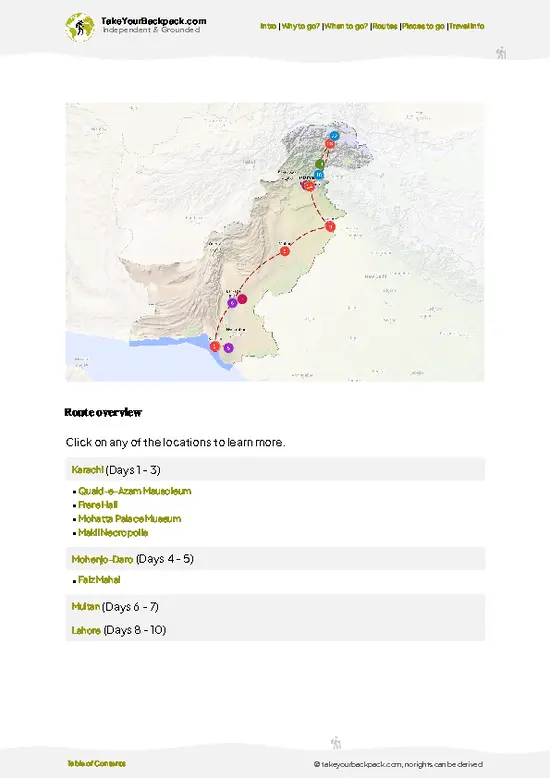
How Long and Which Direction: A trip linking several Pakistani cities needs 10 to 21 days, depending on how many regions you add. Group stops by region: the Punjab and Islamabad corridor clusters tightly, the Khyber Pakhtunkhwa foothills sit just beyond, and the southern coast is a separate leg. A sensible direction runs from the cooler north or northeast toward the south in winter, flipping to south first only if you want an early warm start. Use Islamabad, Lahore and Karachi airports as anchors for entering or leaving.
Time Per Stop and Transit: Give a big historic city 2 to 3 nights, and a smaller town 1 to 2. Neighboring cities in the Punjab corridor are 2 to 5 hours apart by motorway bus or train. Between the northern plains and the south, expect 18 to 24 hours by bus or train, or a 1. … read more 👉
How Long and Which Direction: A trip linking several Pakistani cities needs 10 to 21 days, depending on how many regions you add. Group stops by region: the Punjab and Islamabad corridor clusters tightly, the Khyber Pakhtunkhwa foothills sit just beyond, and the southern coast is a separate leg. A sensible direction runs from the cooler north or northeast toward the south in winter, flipping to south first only if you want an early warm start. Use Islamabad, Lahore and Karachi airports as anchors for entering or leaving.
Time Per Stop and Transit: Give a big historic city 2 to 3 nights, and a smaller town 1 to 2. Neighboring cities in the Punjab corridor are 2 to 5 hours apart by motorway bus or train. Between the northern plains and the south, expect 18 to 24 hours by bus or train, or a 1.5 to 2 hour domestic flight. Flights are the smarter choice for the long south leg, and fares often run US$40 to 90. Premium intercity buses and trains give comfort for mid-range hops, and seats sell out near holidays, so book a few days ahead.
Planning Mistakes to Avoid: The most common error is overpacking the schedule: three cities in four days leaves you seeing bus stations. Cut a stop and spend a full evening in the old quarter instead. Another is ignoring heat and fog, since winter fog can delay flights and trains in the north, so keep a buffer day before departures. Overnight road travel on poorly lit highways is also a poor trade, so favor daytime trips or trains. Finally, holiday timing causes sold-out transport, so check the Islamic calendar before locking dates.

The ListHighly Recommended cities of Pakistan

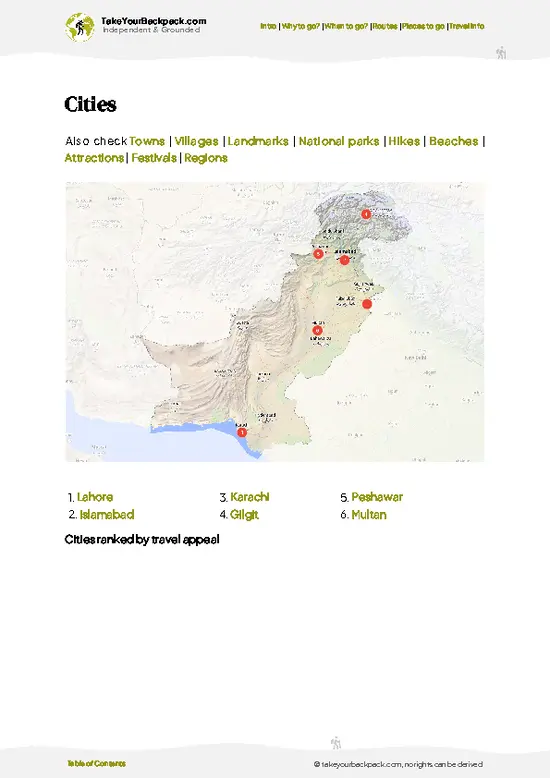
1 Lahore

Mughal monuments, walled old city, food street culture

Wander through centuries of Mughal architecture and narrow bazaar lanes packed with grilled meat stalls and tea shops.

pakistan-city-lahore
© Google |

2 Islamabad

Planned grid, Margalla foothills, government quarter

Wander wide avenues and forested hill trails in a city built from scratch, calmer and greener than Pakistan's older capitals.

3 Karachi

Arabian Sea port, sprawling megacity, street food scene

Navigate a coastal metropolis of markets, fishing harbors, and late-night food stalls that never quite go quiet.

4 Gilgit

Karakoram gateway, river valleys, trekking supply town

Base yourself here before heading into the high mountains, stocking up on gear amid glacial rivers and jeep tracks.

5 Peshawar

Frontier bazaars, Khyber approach, Pashtun culture

Step into storied bazaars near the Khyber Pass, where border trade and Pashtun tradition shape daily street life.

6 Multan

Sufi shrines, terracotta bazaars, desert-edge heat

Visit ancient shrine complexes and pottery workshops in a city known for scorching summers and layered religious history.

Loading the map 🌍

Expert viewPro Tips for Exploring the Best

How Many Cities to Visit: Three to four cities is the right number for a first trip of two to three weeks. Pakistani cities are dense, loud and rich, and each needs a couple of unhurried days to give up its character. Rushing through six means you spend the trip in transit rather than in tea houses and old lanes. Depth wins here: a long evening watching a food street fire up beats another ticked-off fort.
Choosing Between City Types: Pick historic Punjab cities if you love architecture, shrines and food: you get Mughal gates, qawwali nights and platters of grilled meat for US$3 to 6. Choose the southern port if you prefer raw, big-city energy, seafood and a more mixed, cosmopolitan crowd. Choose northern foothill and mountain towns for cooler air, mountain views and a calmer pace, with simpler … read more 👉
How Many Cities to Visit: Three to four cities is the right number for a first trip of two to three weeks. Pakistani cities are dense, loud and rich, and each needs a couple of unhurried days to give up its character. Rushing through six means you spend the trip in transit rather than in tea houses and old lanes. Depth wins here: a long evening watching a food street fire up beats another ticked-off fort.
Choosing Between City Types: Pick historic Punjab cities if you love architecture, shrines and food: you get Mughal gates, qawwali nights and platters of grilled meat for US$3 to 6. Choose the southern port if you prefer raw, big-city energy, seafood and a more mixed, cosmopolitan crowd. Choose northern foothill and mountain towns for cooler air, mountain views and a calmer pace, with simpler guesthouses and longer roads. Most first-timers do best mixing one plains city, the capital region and one hill stop.
What It Costs: Budget US$20 to 35 a day on a backpacker level: a dorm or basic room at US$6 to 15, meals at US$4 to 8, local transport US$2 to 5. Midrange comfort runs US$45 to 80. Entry fees at major monuments are typically 500 to 2,000 Pakistani rupees (about US$2 to 7) for foreigners, much higher than local rates. A licensed guide for a half day runs US$10 to 25. Ride-hailing within cities costs US$1 to 5 a trip, and intercity buses run US$5 to 15 for most hops. Withdraw cash in larger cities, as cards are accepted mostly in upscale shops and hotels.
Safety and Local Etiquette: Cities are generally welcoming, with strangers offering directions, tea and photos. Still, check government travel advisories for specific provinces, since conditions vary sharply by region and some areas require permits or police escorts. Use registered ride-hailing at night, keep a photocopy of your passport and visa, and carry your phone charged for ride apps and maps. Expect police checkpoints, which are routine: be polite, show documents and keep moving.
Culture on the Street: Dress modestly: loose long sleeves and trousers for everyone, and a light scarf for women to cover hair at shrines and mosques. Shoes come off at religious sites, so wear slip-ons. Women travelers often find women-only spaces at train stations and on some buses, plus more comfort in family sections of restaurants. Use your right hand for eating and passing things, ask before photographing people, especially women, and avoid public displays of affection. Alcohol is restricted, so skip it and order lassi or doodh patti chai. Reward: you leave with invitations, new friends and street meals you’ll talk about for years.

✈️ The backpacker research shortcutPakistan Travel Guide

An offline-friendly backpacking guide with optimized travel routes, ranked highlights, transport advice, and the best areas to stay.
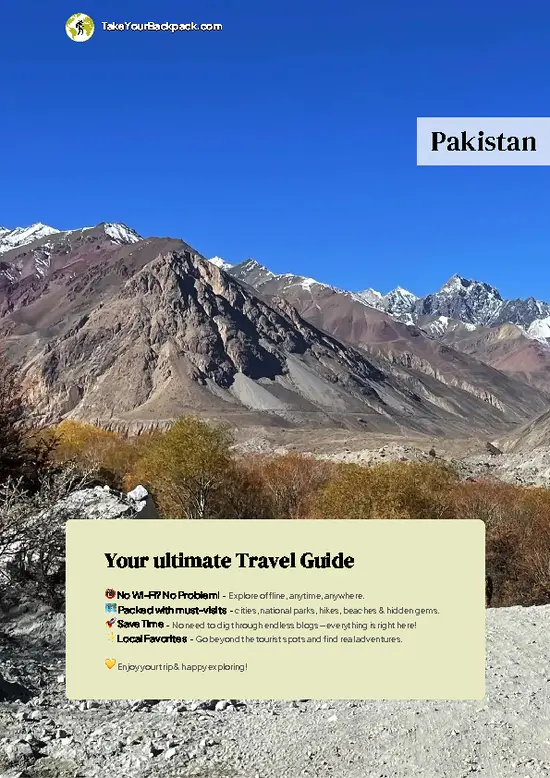
example page 0 from our offline Travel Guide for Pakistan
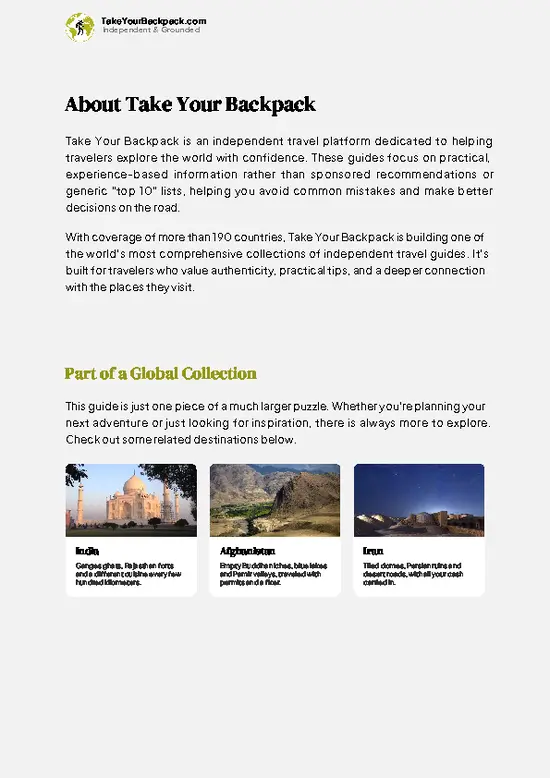
example page 1 from our offline Travel Guide for Pakistan
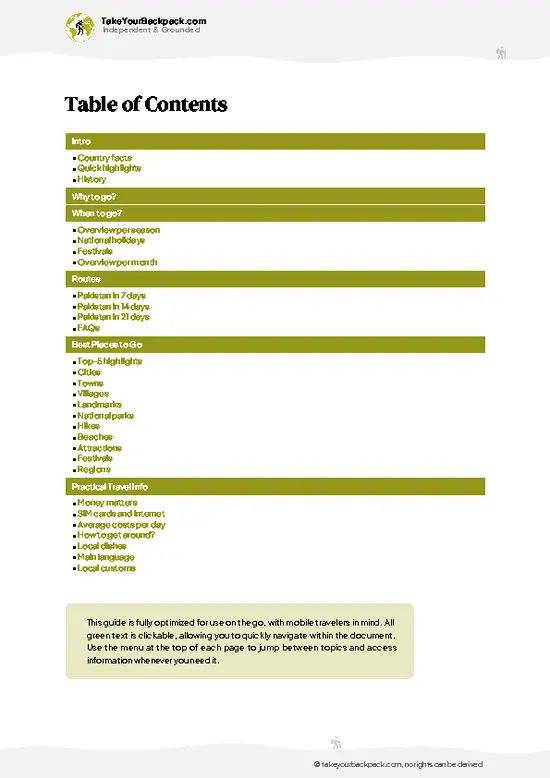
example page 2 from our offline Travel Guide for Pakistan
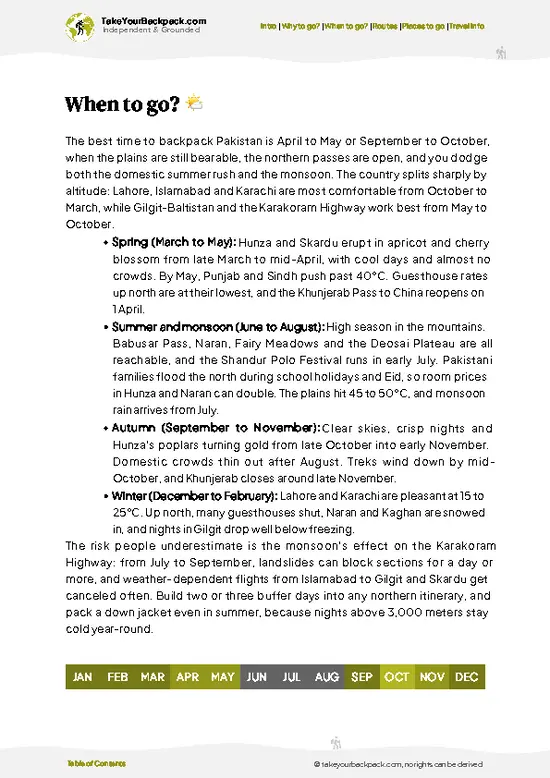
example page 3 from our offline Travel Guide for Pakistan
example page 4 from our offline Travel Guide for Pakistan
example page 5 from our offline Travel Guide for Pakistan
example page 6 from our offline Travel Guide for Pakistan
example page 7 from our offline Travel Guide for Pakistan
The digital guide (290 pages) contains:
✅ 97 highlights, ranked by travel appeal
✅ Optimized 7, 14 & 21-day travel routes
✅ Cities, national parks, landmarks, beaches
✅ How to get around
✅ Offline-friendly for travel without Wi-Fi
👉 Click to see all 30+ guide features

📅 Plan smarter in minutes, not weeks
✅ Month by month travel advice
✅ Festivals & national holidays
✅ Budget expectations

🗺️ Go to the right places, skip the overrated ones
✅ Honest pros & cons of destinations
✅ Top hikes, parks & viewpoints
✅ Lesser-known places most travelers miss
✅ Clear “worth it vs skip it” guidance

🛏️ Travel smoothly without rookie mistakes
✅ Best areas to stay
✅ Transport systems explained simply
✅ Common scams & safety advice
✅ SIM cards, money & practical tips

🌍 Understand the country, not just visit it
✅ Culture & traditions
✅ 52 Essential phrases & customs
✅ Festivals worth planning around
✅ Traveler-friendly historical context
✅ Insights that make places more meaningful

📱 Built for real travel conditions
✅ Fully downloadable PDF
✅ Works completely offline
✅ Optimized for phone use
✅ Useful in remote areas & buses
✅ Everything in one place
Stop searching, start planning
Get instant access to your full guide. 30‑day money-back guarantee.
+ Add another guide for just

By proceeding you agree to our terms.
Sent to your inbox immediately after payment • 100% Secure Checkout
Best Backpacking Travel Advisor 2025 tourism awardBest Backpacking
Travel Advisor
2025
What others say about Take Your Backpack Guides:
⭐⭐⭐⭐⭐
Fantastic, amazing amount of information!
⭐⭐⭐⭐⭐
My goodness this is amazing, it's what I've been looking for hats off too you!
⭐⭐⭐⭐⭐
I think this is absolutely BRILLIANT
⭐⭐⭐⭐
Very complete and informative. It's still missing places, but I gotta to commend you
⭐⭐⭐⭐⭐
This is truly amazing, thank you, can't wait to explore it with my kids!
⭐⭐⭐⭐⭐
Awesome resource, thank you!
⭐⭐⭐⭐⭐
This is amazing! Can't wait to explore the ones I haven't seen
⭐⭐⭐⭐
I love this! Well done, great idea.
⭐⭐⭐⭐⭐
Thanks for taking the time to make this gem!
⭐⭐⭐⭐⭐
This might be the best website I've ever seen.
⭐⭐⭐⭐⭐
Congratulations, and thank you so much for your work; it's incredibly valuable.
⭐⭐⭐⭐
In all seriousness I think you did a great job pointing out the important spots
⭐⭐⭐⭐⭐
10/10 very good
⭐⭐⭐⭐⭐
As someone who's only just starting to visit regularly this is awesome, thank you.
⭐⭐⭐⭐
Thank you very much! I'm going to visit my dad, it's going to be very useful!
⭐⭐⭐⭐⭐
This is really cool! We'll be travelling for the first time and this definitely come in handy.
⭐⭐⭐⭐⭐
You are now our minister of culture, congratulations 👨‍💼
⭐⭐⭐⭐⭐
Just wanted to tell you that this is a pearl! Going to follow your recommendations.
⭐⭐⭐⭐⭐
This is so cool. I'll definitely be using the resource for my travels soon.
⭐⭐⭐⭐⭐
This is very impressive! Good work.
⭐⭐⭐⭐⭐
This is an amazing and informative site. Very well done!

🛏️ Where to stay?Accommodation Highlights

But dedicated backpacker hostels in Pakistan are scarce, so most budget travelers sleep in family-run guesthouses at roughly Rs 3,000 to 7,000 (US$11 to 25) a night, with a small hostel scene in Lahore, Islamabad and the north. In Lahore, the area around Mall Road puts you close to the Walled City and Lahore Fort but is noisy and congested, while Gulberg is calmer and has the cafés and evening life, at the cost of long rides to the old town; in Islamabad, the leafy F-6 and F-7 sectors are safe, quiet and near the markets, but nightlife is close to nonexistent. Up north, Karimabad in Hunza has the densest cluster of cheap guesthouses with walkable valley views and a sociable traveler crowd, though … read more 👉
But dedicated backpacker hostels in Pakistan are scarce, so most budget travelers sleep in family-run guesthouses at roughly Rs 3,000 to 7,000 (US$11 to 25) a night, with a small hostel scene in Lahore, Islamabad and the north. In Lahore, the area around Mall Road puts you close to the Walled City and Lahore Fort but is noisy and congested, while Gulberg is calmer and has the cafés and evening life, at the cost of long rides to the old town; in Islamabad, the leafy F-6 and F-7 sectors are safe, quiet and near the markets, but nightlife is close to nonexistent. Up north, Karimabad in Hunza has the densest cluster of cheap guesthouses with walkable valley views and a sociable traveler crowd, though many places close or cut back between November and March.

If you enjoy meeting fellow travelers, consider choosing hostels with high ratings for atmosphere. On the other hand, if you prefer having your own space, a hotel might be a better option.

PakistanSee More of Pakistan

👋 Meet the founderWho’s Behind Take Your Backpack?

Johan, backpacker and founder of TakeYourBackpackHi, I’m Johan (Netherlands 🇳🇱), the creator of TakeYourBackpack. Over the past 3 decades, I’ve backpacked through 90+ countries across six continents, gaining extensive experience with independent travel, long-term trips, and overland routes.

This site is built on a combination of firsthand travel experience and carefully curated insights from other backpackers. Many guides are based on places I’ve personally visited, while others bring together tips, observations, and practical advice shared by trusted travelers I’ve met along the way.

The goal is to provide realistic, experience-driven guidance — not generic itineraries — so you can explore destinations with better context, clearer expectations, and more confidence.