×

Palau🇵🇼 | villagesAngaurwild coastline, phosphate mines, feral monkeys | things to do and best time to go

Explore AiraiExplore Melekeok

Backpacking in Angaur
🌟 Highlightvillage ranked #2
By Johan Kruseman 🇳🇱 | Updated June 12, 2026

Most people who’ve heard of Angaur imagine a castaway island with nobody on it and nothing to do; in reality, it’s quieter than the Palau postcards, but not empty, and the details matter. Angaur sits at Palau’s southern edge, a small island-state southwest of Koror, reached by boat or occasional flights when they’re running. The “town” of Angaur is more a loose cluster of houses, a few government buildings, and war relics under heavy jungle, so it works less as a base and more as a deliberate side trip for backpackers who like slow, raw places. You come for empty roads, WWII ruins half-swallowed by vines, wild monkeys, and that soft late-afternoon light over rocky coastline, not for nightlife or cafés. Transport is limited, everything closes early, and you’ll likely be the only foreigner, which can feel either deeply peaceful or isolating. Compared with Koror, Angaur is cheaper, far more basic, and much more about silence than convenience.

Discover everything you want to know in the 📖 Palau Travel Guide.


Get your Palau guide
28 ranked highlights, routes & tips, works offline (124 pages)
Loading the map 🌍
CLICK TO FILTER
towns
villages
landmarks
national parks
hikes
beaches
attractions
festivals
regions
SHOW COUNTRY’S BESTSHOW ALL

✨ Why go?
Ranked #2 village in Palau
What makes this village worth visiting

Angaur in Palau is a backpacker’s haven that serves as a strategic base for exploring the surrounding natural wonders. The convenience of its location makes it easy to access nearby hikes and beaches, allowing you to dive into the lush landscapes without wasting time on logistics. The small-scale hostels and guesthouses create a cozy atmosphere, where you can swap stories with fellow travelers over a plate of local fare, like grilled fish or taro.

The streets are walkable, inviting you to meander through the town and soak in the friendly vibe. While some travelers might just pass through, many find themselves lingering for a few days, drawn in by the slow pace and the chance to connect with the local culture. This spot is ideal for solo travelers and small groups looking for a blend of adventure … read more 👉
Angaur in Palau is a backpacker’s haven that serves as a strategic base for exploring the surrounding natural wonders. The convenience of its location makes it easy to access nearby hikes and beaches, allowing you to dive into the lush landscapes without wasting time on logistics. The small-scale hostels and guesthouses create a cozy atmosphere, where you can swap stories with fellow travelers over a plate of local fare, like grilled fish or taro.

The streets are walkable, inviting you to meander through the town and soak in the friendly vibe. While some travelers might just pass through, many find themselves lingering for a few days, drawn in by the slow pace and the chance to connect with the local culture. This spot is ideal for solo travelers and small groups looking for a blend of adventure and relaxation. If you’re seeking a vibrant nightlife, you might want to look elsewhere; here, the charm lies in the quiet moments and the beauty of the natural world around you.
Want to include Angaur in your Palau route?
Create a personalized Palau itinerary that includes Angaur and the places that fit your trip — based on your travel style, budget, and available time. Get your route in seconds.

Generate my trip

💡 HighlightsPlaces and moments you shouldn't skip

  • World War II battlefield ruins (bunkers, foxholes, pillboxes) — Tangible, walk-around remains from the 1944 battle are scattered through the village area; seeing concrete emplacements, collapsed trenches and shell-scarred ground gives a real sense of history that photos can’t capture. Expect uneven ground and skinny trails — wear boots and be respectful.
  • Angaur War Memorial — A small, quiet monument honoring those who fought on the island; a short stop here is a good moment to pause, read local inscriptions, and understand how the war shaped village life.
  • WWII airstrip / runway — The American-built strip is still visible and walkable; it’s both a historic artifact and a surprisingly photogenic long, flat stretch used by locals, with good views of the surrounding reef and coastline.
  • Phosphate-mining
read more 👉
  • World War II battlefield ruins (bunkers, foxholes, pillboxes) — Tangible, walk-around remains from the 1944 battle are scattered through the village area; seeing concrete emplacements, collapsed trenches and shell-scarred ground gives a real sense of history that photos can’t capture. Expect uneven ground and skinny trails — wear boots and be respectful.
  • Angaur War Memorial — A small, quiet monument honoring those who fought on the island; a short stop here is a good moment to pause, read local inscriptions, and understand how the war shaped village life.
  • WWII airstrip / runway — The American-built strip is still visible and walkable; it’s both a historic artifact and a surprisingly photogenic long, flat stretch used by locals, with good views of the surrounding reef and coastline.
  • Phosphate-mining terraces and quarries — Jagged pits and worked limestone left by decades of phosphate extraction make for dramatic landscapes you won’t see on postcards; they tell Angaur’s economic history and offer high, raw viewpoints over the interior.
  • Japanese-era concrete ruins and storage foundations — Scattered foundations, cisterns and storage structures from the Japanese administration are reachable by short walks; they’re atmospheric, easy to explore, and connect the island’s pre-and-during-war past.
  • Village bai / community meeting house — The village’s traditional meeting place (and social hub) is where local customs are still practiced; if community events or church celebrations are happening, you’ll get authentic cultural contact rather than a staged tourist show.
  • Local church and community center — More than architecture, this is where daily village life happens — weekend services, local gatherings, and the best chance to meet residents and hear stories handed down about the island’s past.
  • West-coast beaches and rocky shoreline — Small, accessible beaches and coral-rock stretches near the village are good for shelling, easy snorkeling in calm spots, and low-key sunset watching without the crowds you find elsewhere in Palau.
  • Fishing pier and boat landing — The working pier is where boats arrive, nets are mended, and you can watch (or hire) local fishers; it’s practical, lively, and a good starting point for short coastal trips.
  • Village cemetery and wartime gravesites — Quiet, sobering, and accessible — the cemetery and several wartime graves give a human face to Angaur’s history and are places locals maintain and visit with care.
A few nearby day-trip options: the island of Peleliu for more extensive WWII battlefields and beaches, Koror for the Belau National Museum and dive/boat operators, and the Rock Islands (boat tours, snorkeling and Jellyfish Lake) are all reachable from Angaur with planning.
Spotted a mistake or missing something? Contact us.

Things to do near Angaur

Ratings based on Tripadvisor reviews. When you book through this link, you support our work at no extra cost to you.

⌛️ 1 dayWhat you can realistically do in a day

Angaur, a small island in Palau, is a treasure trove of history and natural beauty. With its lush landscapes and rich World War II relics, it offers a unique glimpse into both the past and the vibrant life of the present. The air is thick with the scent of saltwater and tropical blooms, inviting you to explore its hidden corners.

Start your morning at the local market in the village center. The stalls brim with fresh fruits and vegetables, and the chatter of locals fills the air. Grab a ripe mango or a handful of bananas to fuel your day. As you wander, take in the colorful wooden houses that dot the landscape, each telling a story of the island’s culture.

After breakfast, head to the northern tip of the island to explore the remnants of the Japanese WWII bunkers. The path is overgrown but … read more 👉
Angaur, a small island in Palau, is a treasure trove of history and natural beauty. With its lush landscapes and rich World War II relics, it offers a unique glimpse into both the past and the vibrant life of the present. The air is thick with the scent of saltwater and tropical blooms, inviting you to explore its hidden corners.

Start your morning at the local market in the village center. The stalls brim with fresh fruits and vegetables, and the chatter of locals fills the air. Grab a ripe mango or a handful of bananas to fuel your day. As you wander, take in the colorful wooden houses that dot the landscape, each telling a story of the island’s culture.

After breakfast, head to the northern tip of the island to explore the remnants of the Japanese WWII bunkers. The path is overgrown but manageable, leading you through a canopy of trees. The cool shade contrasts with the warm sun, and the sound of rustling leaves adds to the atmosphere. Standing in the bunkers, you can almost hear the echoes of history, making it a worthwhile detour from the usual tourist spots.

In the afternoon, make your way to the stunning Angaur Beach. The soft sand and gentle waves provide the perfect backdrop for relaxation. Swim in the crystal-clear waters or simply lounge under a palm tree, soaking in the tranquility. If you’re feeling adventurous, rent a kayak and paddle around the nearby islets, where you might spot sea turtles gliding beneath the surface.

As evening approaches, return to the village for dinner at a local eatery. The grilled fish, caught fresh that day, is a must-try. Enjoy your meal while watching the sun dip below the horizon, painting the sky in hues of orange and pink. This day in Angaur, with its blend of history, nature, and local flavor, will leave you with memories that linger long after you leave.
Turn your Angaur visit into an Palau adventure
Build a complete Palau route with Angaur, hidden gems, must-see destinations, and realistic travel times included.

Generate my trip

🌤️ When to go?Seasonal considerations and timing


  • Weather: Angaur sits in a tropical zone, so expect warm, humid days year-round. The dry season from December to April offers clearer skies and less rain, making it easier to explore without soggy gear or slippery trails.

  • Temperature: Daily highs hover around 29-31°C (84-88°F), with nights cooling to about 24-26°C (75-79°F). This steady warmth means light clothing is a must, but the dry season’s lower humidity feels less oppressive.

  • Daylight Hours: Near the equator, Angaur enjoys roughly 12 hours of daylight year-round. Sunrise and sunset times shift only slightly, so you can plan hikes or beach time without worrying about early darkness.

  • Crowds: Angaur is off the beaten path, so crowds are minimal anytime. However, the dry season attracts more regional visitors, so expect a few more
read more 👉

  • Weather: Angaur sits in a tropical zone, so expect warm, humid days year-round. The dry season from December to April offers clearer skies and less rain, making it easier to explore without soggy gear or slippery trails.

  • Temperature: Daily highs hover around 29-31°C (84-88°F), with nights cooling to about 24-26°C (75-79°F). This steady warmth means light clothing is a must, but the dry season’s lower humidity feels less oppressive.

  • Daylight Hours: Near the equator, Angaur enjoys roughly 12 hours of daylight year-round. Sunrise and sunset times shift only slightly, so you can plan hikes or beach time without worrying about early darkness.

  • Crowds: Angaur is off the beaten path, so crowds are minimal anytime. However, the dry season attracts more regional visitors, so expect a few more faces but still plenty of space to roam.

  • Seasonal Activities: The dry months are best for snorkeling and diving, as water clarity improves. The wet season can bring rougher seas, limiting water activities but enhancing jungle hikes with lush greenery and fewer people.

  • Price Fluctuations: Accommodation and transport prices tend to rise slightly during the dry season due to increased demand, but the difference is modest compared to major tourist hubs.


Pro-tip: Aim for late dry season—March or April—when the island’s natural colors pop, the air feels fresh, and you dodge the peak crowd surge, unlocking the best balance of comfort and solitude.


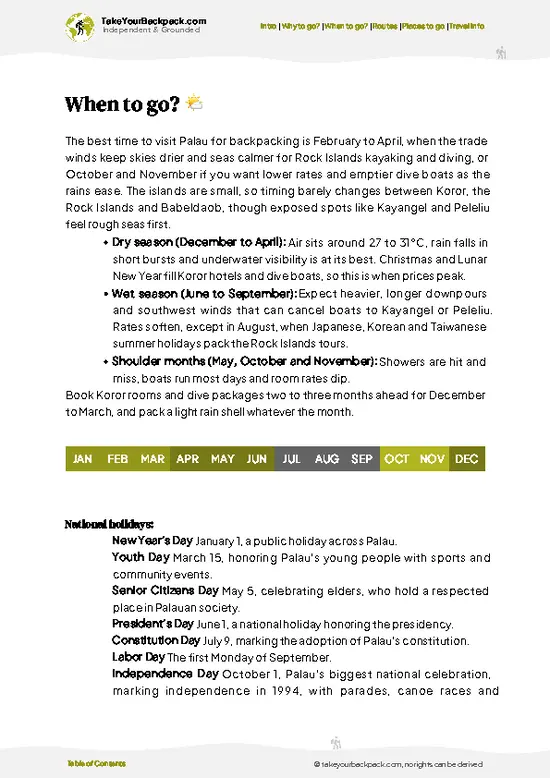
source: climatestotravel.comJANJanuary: highly recommended for travelingFEBFebruary: highly recommended for travelingMARMarch: excellent for travelingAPRApril: excellent for travelingMAYMay: good for travelingJUNJune: fair for travelingJULJuly: fair for travelingAUGAugust: fair for travelingSEPSeptember: fair for travelingOCTOctober: good for travelingNOVNovember: good for travelingDECDecember: highly recommended for traveling
when-to-go

✈️ The backpacker research shortcutPalau Travel Guide

An offline-friendly backpacking guide with optimized travel routes, ranked highlights, transport advice, and the best areas to stay.
example page 0 from our offline Travel Guide for Palau
example page 1 from our offline Travel Guide for Palau
example page 2 from our offline Travel Guide for Palau
example page 3 from our offline Travel Guide for Palau
example page 4 from our offline Travel Guide for Palau
example page 5 from our offline Travel Guide for Palau
example page 6 from our offline Travel Guide for Palau
example page 7 from our offline Travel Guide for Palau
The digital guide (124 pages) contains:
28 highlights, ranked by travel appeal
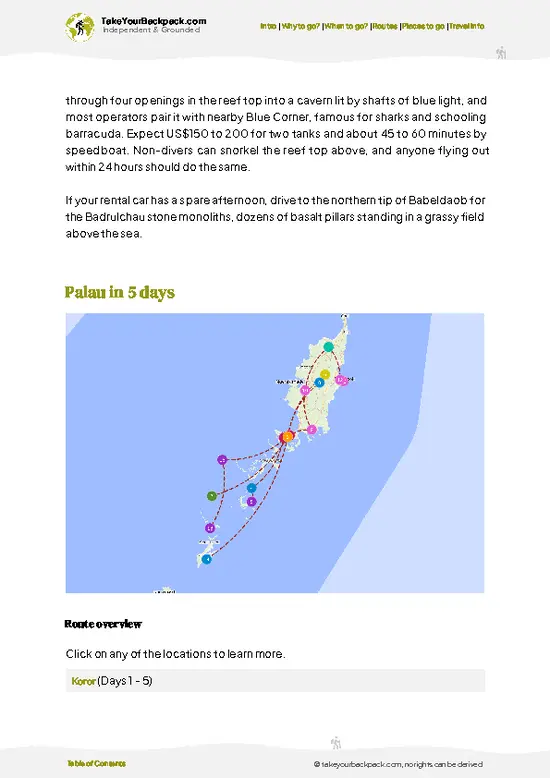
Optimized 2, 3 & 5-day travel routes
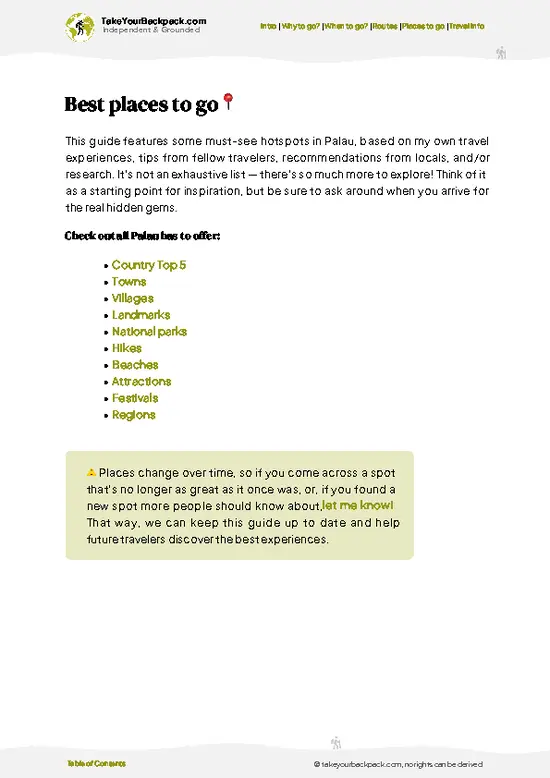
Cities, national parks, landmarks, beaches
How to get around
Offline-friendly for travel without Wi-Fi
👉 Click to see all 30+ guide features

📅 Plan smarter in minutes, not weeks
Month by month travel advice
Festivals & national holidays
Budget expectations

🗺️ Go to the right places, skip the overrated ones
Honest pros & cons of destinations
Top hikes, parks & viewpoints
Lesser-known places most travelers miss
Clear “worth it vs skip it” guidance

🛏️ Travel smoothly without rookie mistakes
Best areas to stay
Transport systems explained simply
Common scams & safety advice
SIM cards, money & practical tips

🌍 Understand the country, not just visit it
Culture & traditions
52 Essential phrases & customs
Festivals worth planning around
Traveler-friendly historical context
Insights that make places more meaningful

📱 Built for real travel conditions
Fully downloadable PDF
Works completely offline
Optimized for phone use
Useful in remote areas & buses
Everything in one place
Save weeks of stressful planning
Get instant access to your full guide. 30‑day money-back guarantee.


By proceeding you agree to our terms.
Sent to your inbox immediately after payment • 100% Secure Checkout
Best Backpacking Travel Advisor 2025 tourism awardBest Backpacking
Travel Advisor
2025
What others say about Take Your Backpack Guides:
⭐⭐⭐⭐⭐
Fantastic, amazing amount of information!
⭐⭐⭐⭐⭐
My goodness this is amazing, it's what I've been looking for hats off too you!
⭐⭐⭐⭐⭐
I think this is absolutely BRILLIANT
⭐⭐⭐⭐
Very complete and informative. It's still missing places, but I gotta to commend you
⭐⭐⭐⭐⭐
This is truly amazing, thank you, can't wait to explore it with my kids!
⭐⭐⭐⭐⭐
Awesome resource, thank you!
⭐⭐⭐⭐⭐
This is amazing! Can't wait to explore the ones I haven't seen
⭐⭐⭐⭐
I love this! Well done, great idea.
⭐⭐⭐⭐⭐
Thanks for taking the time to make this gem!
⭐⭐⭐⭐⭐
This might be the best website I've ever seen.
⭐⭐⭐⭐⭐
Congratulations, and thank you so much for your work; it's incredibly valuable.
⭐⭐⭐⭐
In all seriousness I think you did a great job pointing out the important spots
⭐⭐⭐⭐⭐
10/10 very good
⭐⭐⭐⭐⭐
As someone who's only just starting to visit regularly this is awesome, thank you.
⭐⭐⭐⭐
Thank you very much! I'm going to visit my dad, it's going to be very useful!
⭐⭐⭐⭐⭐
This is really cool! We'll be travelling for the first time and this definitely come in handy.
⭐⭐⭐⭐⭐
You are now our minister of culture, congratulations 👨‍💼
⭐⭐⭐⭐⭐
Just wanted to tell you that this is a pearl! Going to follow your recommendations.
⭐⭐⭐⭐⭐
This is so cool. I'll definitely be using the resource for my travels soon.
⭐⭐⭐⭐⭐
This is very impressive! Good work.
⭐⭐⭐⭐⭐
This is an amazing and informative site. Very well done!

🛏️ Where to stay?Where staying makes the most sense

Angaur is a small island, so the concept of neighborhoods here is more about clusters of local life than sprawling districts. For backpackers, the best place to settle is near the main village area along the western coast. This spot is where you’ll find the heart of the community—locals going about their day, fishermen hauling in their catch, and a handful of guesthouses that cater to budget travelers. Staying here means you’re close to the few social hubs on the island, where you can swap stories with other travelers or locals over a simple meal.

Why this area? Because Angaur’s charm is in its … read more 👉
Angaur is a small island, so the concept of neighborhoods here is more about clusters of local life than sprawling districts. For backpackers, the best place to settle is near the main village area along the western coast. This spot is where you’ll find the heart of the community—locals going about their day, fishermen hauling in their catch, and a handful of guesthouses that cater to budget travelers. Staying here means you’re close to the few social hubs on the island, where you can swap stories with other travelers or locals over a simple meal.

Why this area? Because Angaur’s charm is in its quiet, unpolished atmosphere. The air carries the salty tang of the ocean mixed with the earthy scent of tropical foliage. It’s safe, with a slow pace that invites you to slow down too. Other parts of the island are more isolated, with fewer accommodations and less chance to meet people. Plus, the western village is your launchpad for exploring the island’s WWII relics and coral reefs without long, expensive rides.

Hostels here are modest but friendly, often run by locals who know the island’s rhythms. You won’t find flashy amenities, but you will find a genuine welcome and a chance to connect. This is where the backpacker vibe lives—low-key, social, and real.

🚌 Getting aroundGetting around like a local

Angaur moves at its own rhythm—less a strict timetable and more a pulse you feel in the warm, salty air. The island’s pace is unhurried, shaped by the sun’s arc and the ebb of the tide rather than any clock. You’ll notice locals greeting each other with a relaxed nod, their steps measured but purposeful, as if the day’s work and the ocean breeze are in a quiet conversation. This isn’t a place where you’ll find buses roaring on the hour or trains clattering through; instead, transport here is about reading the signs of the day and syncing with the island’s natural flow. The scent of frangipani and sea salt lingers, and the light shifts slowly, casting long shadows that invite you to slow down and move deliberately.


  • Walking: The most reliable and immersive way to get around Angaur. The island
read more 👉
Angaur moves at its own rhythm—less a strict timetable and more a pulse you feel in the warm, salty air. The island’s pace is unhurried, shaped by the sun’s arc and the ebb of the tide rather than any clock. You’ll notice locals greeting each other with a relaxed nod, their steps measured but purposeful, as if the day’s work and the ocean breeze are in a quiet conversation. This isn’t a place where you’ll find buses roaring on the hour or trains clattering through; instead, transport here is about reading the signs of the day and syncing with the island’s natural flow. The scent of frangipani and sea salt lingers, and the light shifts slowly, casting long shadows that invite you to slow down and move deliberately.


  • Walking: The most reliable and immersive way to get around Angaur. The island is compact, with dirt paths and narrow roads that wind through coconut groves and small villages. Walking lets you soak in the humid air, hear the distant crash of waves, and catch the occasional burst of laughter from children playing. No cost, no schedule—just your own pace and the soft crunch of sand and gravel underfoot.


  • Shared Tricycle Taxis: These open-air three-wheelers are the island’s informal shuttle service. They don’t run on a strict timetable but circulate regularly during daylight hours, roughly from 6 a.m. to 6 p.m. Expect to pay a few dollars per ride, and be ready for a bumpy, sun-drenched trip with the wind whipping past. It’s a social experience, often packed with locals, so keep your belongings close and your camera ready for candid moments.


  • Private Motorbike Rentals: For those who want speed and flexibility, renting a motorbike is a smart move. Rentals typically cost around $15–$20 per day. The roads can be rough and unpaved, so a sturdy bike is essential. Riding lets you chase the golden light of late afternoon along the coast or slip into hidden coves before the sun dips. Helmets are scarce, so bring your own if safety matters to you.


  • Boat Transfers: Angaur’s connection to the outside world is mostly by sea. Small boats run irregularly between Angaur and nearby islands or the main island of Babeldaob. These trips depend heavily on weather and tides, often leaving early morning or late afternoon. Prices vary, but expect a modest fee. The ride is slow but scenic, with salt spray and the smell of diesel mixing in the air—an authentic reminder that you’re truly off the beaten path.

👛 Costs (as of 14 June 2026)Travel costs and budget guide for Angaur

Backpacking in Angaur, Palau, is a unique experience where the costs reflect its remote island vibe and limited infrastructure. Here’s what you can expect to spend daily as an independent traveler.
  • Dorm Accommodation: Options are scarce and basic, often in guesthouses or small lodges rather than formal hostels. Expect to pay around $20 to $35 USD per night for a shared room. The simplicity means no frills—think fan-cooled rooms and shared bathrooms, but it’s clean and functional.
  • Meals: Food is mostly local and fresh, but imported goods push prices up. A typical meal at a local eatery or market stalls will cost between $5 and $10 USD. Cooking your own food can save money but requires some planning since grocery options are limited and pricier than mainland Asia.
  • Local Transport: Angaur
read more 👉
Backpacking in Angaur, Palau, is a unique experience where the costs reflect its remote island vibe and limited infrastructure. Here’s what you can expect to spend daily as an independent traveler.
  • Dorm Accommodation: Options are scarce and basic, often in guesthouses or small lodges rather than formal hostels. Expect to pay around $20 to $35 USD per night for a shared room. The simplicity means no frills—think fan-cooled rooms and shared bathrooms, but it’s clean and functional.
  • Meals: Food is mostly local and fresh, but imported goods push prices up. A typical meal at a local eatery or market stalls will cost between $5 and $10 USD. Cooking your own food can save money but requires some planning since grocery options are limited and pricier than mainland Asia.
  • Local Transport: Angaur is small, so transport costs are minimal. Renting a bicycle or scooter is common, running about $10 to $15 USD per day. Public transport is almost non-existent, so expect to rely on these rentals or occasional shared rides.
  • Basic Activities/Entry Fees: The island’s main draws are natural and historical sites, many of which are free or have nominal fees. Budget around $5 to $10 USD daily if you plan to visit WWII relics or take part in guided snorkeling or hiking tours.
  • Miscellaneous Expenses: This includes bottled water, occasional snacks, and small essentials. Given the remote location, prices are higher than typical Southeast Asian islands. Set aside $5 to $10 USD for these extras.

The daily budget for backpacking in Angaur typically falls between $45 and $80 USD. This range covers basic comfort without luxury, balancing the island’s rustic charm with the practical need to plan for slightly elevated costs due to its isolation.


source: visit-palau.com
⚠️ Prices can change and everyone travels differently, so take this as a rough guide. Hope it helps you plan your adventure!

🚌 Day tripsShort trips worth adding

Angaur, a small island in Palau, is a backpacker’s dream base for day trips, offering a blend of adventure and relaxation. The laid-back vibe here sets the stage for exploring the surrounding beauty without the tourist rush.

Snorkeling at the Blue Hole
Just a short boat ride from Angaur, the Blue Hole is a must-see. This underwater sinkhole is a kaleidoscope of marine life, where vibrant corals and schools of fish dance in the sunlight. The trip takes about 30 minutes, and you can expect to pay around $30 for gear rental and the boat ride. Early morning is the best time to go; the water is calm, and the light is perfect for underwater photography. A common mistake? Forgetting to bring an underwater camera—trust me, you’ll want to capture this.


Exploring the Rock Islands
The Rock Islands … read more 👉
Angaur, a small island in Palau, is a backpacker’s dream base for day trips, offering a blend of adventure and relaxation. The laid-back vibe here sets the stage for exploring the surrounding beauty without the tourist rush.

Snorkeling at the Blue Hole
Just a short boat ride from Angaur, the Blue Hole is a must-see. This underwater sinkhole is a kaleidoscope of marine life, where vibrant corals and schools of fish dance in the sunlight. The trip takes about 30 minutes, and you can expect to pay around $30 for gear rental and the boat ride. Early morning is the best time to go; the water is calm, and the light is perfect for underwater photography. A common mistake? Forgetting to bring an underwater camera—trust me, you’ll want to capture this.


Exploring the Rock Islands
The Rock Islands are a stunning archipelago just a boat ride away. Spend the day kayaking through the lagoons, stopping at secluded beaches for a picnic. The trip can take 4-6 hours, depending on how much you explore. Budget around $50 for kayak rental and lunch supplies. Late afternoon is ideal; the sun casts a golden glow over the islands. Many first-timers underestimate the time needed to paddle back, so keep an eye on the clock to avoid a sunset scramble.


Visit the Angaur Lighthouse
Hiking to the Angaur Lighthouse offers a mix of history and breathtaking views. The trail is about 2 miles round trip and takes roughly an hour. You can do this for free, just bring water and snacks. The best time is early morning or late afternoon to avoid the heat and catch the sunrise or sunset. A common error is not wearing sturdy shoes; the path can be rocky and uneven.


Birdwatching at the Angaur Wetlands
For nature lovers, the Angaur Wetlands are a paradise. This area is home to various bird species, including the endangered Palau fruit dove. The wetlands are just a short walk from the village, making it an easy trip. Plan for a couple of hours and bring binoculars. Early morning is prime time for bird activity. Many visitors overlook this spot, thinking it’s just a marsh, but the diversity of life here is incredible.
Want to know what more Palau offers?
The Palau Travel Guide describes 28 highlights, from cities to national parks, from beaches to hikes

Get the Travel Guide -

🛡️ SafetyScams, Hazards, and Annoyances

Angaur, Palau, is generally safe, but a few practical tips can enhance your experience. The town is small, and most locals are friendly, but keep an eye on your belongings, especially in crowded areas. When wandering solo, especially at night, stick to well-lit paths and avoid isolated spots.

While scams are rare, be cautious of overly eager vendors who might push for sales. If you’re renting equipment, inspect it first; a quick check can save you from unexpected fees later.

Annoyances can include the occasional stray dog or a slow internet connection, but these are minor bumps in an otherwise smooth journey. Carry yourself confidently, engage with locals, and embrace the laid-back vibe. The beauty of Angaur is in its simplicity, and a little awareness goes a long way in making your adventure even more rewarding.

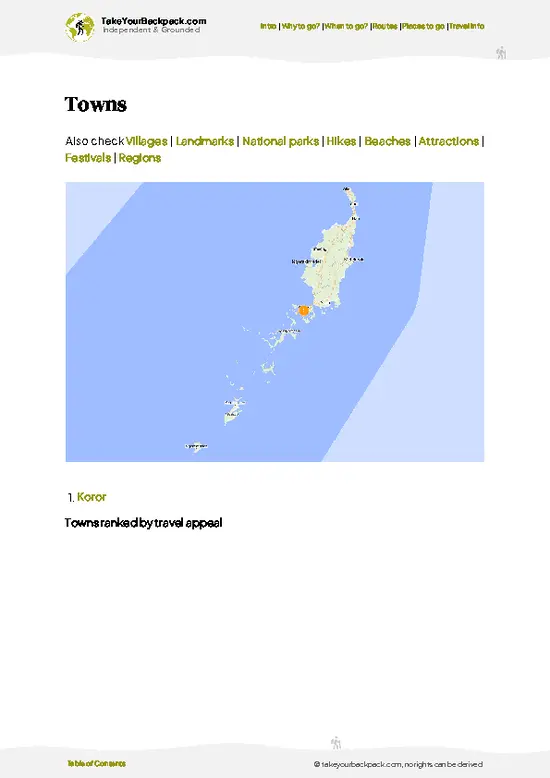
Other Palauan villages near Angaur

Explore more nearby:

  • Airai—Bai meeting house, mangrove forests, airport access, village market| 68 km away
  • Ngatpang—traditional villages, mangrove forests, taro fields| 77 km away
  • Ngerulmud—Parliament buildings, modern infrastructure, administrative center| 86 km away

💡 Not sure where to go next?
Create a personalized itinerary for Palau including Angaur and the places that fit your trip.

Generate my itinerary

👉 Discover all villages

Or checkout all Palau has to offer (think cities, towns, villages, national parks, hikes, beaches, festivals)
Country photo of Palau

We 💚 feedbackIs it worth it?

Angaur has a vibe that feels like stepping back in time. The air is thick with the scent of salt and tropical blooms, and the sound of waves crashing against ancient coral is a constant companion. The best surprise? The vibrant marine life just off the shore—snorkeling here is like diving into a living painting. Just a heads-up: the roads can be rough, so take your time. Embrace the journey; it’s all part of the experience.

✍️ Help improve this page!
The information on this page is based on in-depth research, insights shared by experienced travelers, and feedback from the local travel community in Palau. While every effort is made to keep the information accurate and current, conditions can change — so if you spot anything incorrect or outdated, please get in touch.


🙋‍♂️ Give feedback

👋 Meet the founderWho’s Behind Take Your Backpack?

Johan, backpacker and founder of TakeYourBackpackHi, I’m Johan (Netherlands 🇳🇱), the creator of TakeYourBackpack. Over the past decade, I’ve backpacked through 80+ countries across six continents, gaining extensive experience with independent travel, long-term trips, and overland routes.

This site is built on a combination of firsthand travel experience and carefully curated insights from other backpackers. Many guides are based on places I’ve personally visited, while others bring together tips, observations, and practical advice shared by trusted travelers I’ve met along the way.

The goal is to provide realistic, experience-driven guidance — not generic itineraries — so you can explore destinations with better context, clearer expectations, and more confidence.

Get full Palau guide •
Instant download • 28 highlights • Full Offline guide