×

Palau🇵🇼 | villagesAiraiBai meeting house, mangrove forests, airport access, village market | things to do and best time to go

Explore Blue Holes Dive SiteExplore Angaur

Backpacking in Airai
🏆 Top pickvillage ranked #1
By Johan Kruseman 🇳🇱 | Updated September 4, 2026

The air smells like wet earth and sea salt as you step off the minibus, cicadas buzzing so loud they almost drown out the thud of your pack hitting the ground. Roosters argue in the distance, kids race past with plastic flip-flops slapping the pavement, and the late-afternoon light turns the mangroves along the bay into dark, jagged silhouettes. This is Airai, on the southeastern side of Babeldaob Island in Palau, just inland from the bridge that links to Koror and close to the country’s main airport.

For backpackers, Airai is more waypoint than headline act. It’s quieter and more lived-in than Koror, less postcard-pretty than some Rock Islands beaches, but it feels real: village houses, church bells, the occasional traditional bai meeting house, jungle pressing in from the hills. Evenings are soft and early here—crickets, TV glow from open windows, maybe a simple guesthouse dinner if you’re staying. You won’t find a ready-made backpacker scene or easy meetups, but you do get a calm base between flights, day trips, and the wilder parts of Palau.

Discover everything you want to know in the 📖 Palau Travel Guide.


Get your Palau guide
27 ranked highlights, routes & tips, works offline (119 pages)
Loading the map 🌍
CLICK TO FILTER
towns
villages
landmarks
national parks
hikes
beaches
attractions
festivals
regions
SHOW COUNTRY’S BESTSHOW ALL

✨ Why go?
Ranked #1 village in Palau
Why visitors keep coming back

Airai in Palau is a breath of fresh air for backpackers seeking a slower pace. The village exudes a laid-back charm, where the scent of saltwater mingles with the earthy aroma of nearby jungles. It’s a perfect pause between busier spots like Koror and the stunning Rock Islands. Here, you can find local character in the friendly faces at the market, where fresh produce and handmade crafts tell stories of the island’s culture.

The natural surroundings are a draw, too. You’re just a short hike from pristine beaches and trails that lead to breathtaking viewpoints. This isn’t a place for the rushed traveler; it’s for those who want to linger, soak in the atmosphere, and perhaps chat with locals over a cup of coffee. Solo travelers and couples often find solace here, while hikers appreciate the … read more 👉
Airai in Palau is a breath of fresh air for backpackers seeking a slower pace. The village exudes a laid-back charm, where the scent of saltwater mingles with the earthy aroma of nearby jungles. It’s a perfect pause between busier spots like Koror and the stunning Rock Islands. Here, you can find local character in the friendly faces at the market, where fresh produce and handmade crafts tell stories of the island’s culture.

The natural surroundings are a draw, too. You’re just a short hike from pristine beaches and trails that lead to breathtaking viewpoints. This isn’t a place for the rushed traveler; it’s for those who want to linger, soak in the atmosphere, and perhaps chat with locals over a cup of coffee. Solo travelers and couples often find solace here, while hikers appreciate the access to trails without the crowds. If you’re looking for a calm retreat or a place to recharge, Airai is a worthy stop on your journey.
Want to include Airai in your Palau route?
Create a personalized Palau itinerary that includes Airai and the places that fit your trip — based on your travel style, budget, and available time. Get your route in seconds.

Generate my trip

💡 HighlightsDon't-miss highlights and experiences

  1. Palau International Airport (Roman Tmetuchl International Airport) — The actual gateway to Palau, physically in Airai. It’s worth a quick visit for practical reasons (arrival/departure logistics, car rental pickup) and for plane-spotting and people-watching; the airport’s name honors Roman Tmetuchl, a major Palauan leader.
  2. Airai Bai (traditional men’s meeting house) — A restored village bai with carved panels and traditional motifs. It’s a genuine cultural landmark where you can see local architecture, woodcarving style, and get a real feel for Palauan communal life and storytelling traditions.
A few great day trips from Airai are the Rock Islands/Southern Lagoon (including Jellyfish Lake), Koror town with the Belau National Museum, and nearby snorkel/diving sites around Koror.
Spotted a mistake or missing something? Contact us.

Things to do around Airai

Ratings based on Tripadvisor reviews. When you book through this link, you support our work at no extra cost to you.

🌤️ When to go?Seasonal considerations and timing


  • Topic: Weather — Airai’s tropical climate means it’s warm year-round, but the dry season from December to April offers clearer skies and less humidity. Rainfall peaks in July and August, turning trails muddy and skies gray, which can dull the island’s vibrant colors.

  • Topic: Temperature — Expect daily highs around 29-31°C (84-88°F) in the dry season, with nights cooling to 23-25°C (73-77°F). The wet season feels hotter and stickier, making outdoor activities less comfortable.

  • Topic: Daylight Hours — Daylight stays steady year-round, roughly 12 hours, but the sun rises earlier and sets earlier around December, giving you more morning light to explore before afternoon heat peaks.

  • Topic: Crowds — Airai is off the main tourist radar, but the dry season attracts more visitors, especially
read more 👉

  • Topic: Weather — Airai’s tropical climate means it’s warm year-round, but the dry season from December to April offers clearer skies and less humidity. Rainfall peaks in July and August, turning trails muddy and skies gray, which can dull the island’s vibrant colors.

  • Topic: Temperature — Expect daily highs around 29-31°C (84-88°F) in the dry season, with nights cooling to 23-25°C (73-77°F). The wet season feels hotter and stickier, making outdoor activities less comfortable.

  • Topic: Daylight Hours — Daylight stays steady year-round, roughly 12 hours, but the sun rises earlier and sets earlier around December, giving you more morning light to explore before afternoon heat peaks.

  • Topic: Crowds — Airai is off the main tourist radar, but the dry season attracts more visitors, especially around holidays. Visiting just before or after this window means quieter beaches and trails.

  • Topic: Seasonal Activities — The dry months are prime for snorkeling, diving, and hiking. The wet season can limit water clarity and trail access but brings lush greenery and fewer people.

  • Topic: Price Fluctuations — Accommodation and tours tend to rise during the dry season’s peak months. Booking early or traveling shoulder season can save money without sacrificing much on experience.


Pro-tip: Aim for late November or early May to catch the sweet spot—good weather, fewer crowds, and better prices—so you get Airai’s natural charm without the hassle.


source: climatestotravel.comJANJanuary: excellent for travelingFEBFebruary: excellent for travelingMARMarch: excellent for travelingAPRApril: highly recommended for travelingMAYMay: highly recommended for travelingJUNJune: good for travelingJULJuly: fair for travelingAUGAugust: fair for travelingSEPSeptember: good for travelingOCTOctober: good for travelingNOVNovember: highly recommended for travelingDECDecember: excellent for traveling
when-to-go

✈️ The backpacker research shortcutPalau Travel Guide

An offline-friendly backpacking guide with optimized travel routes, ranked highlights, transport advice, and the best areas to stay.
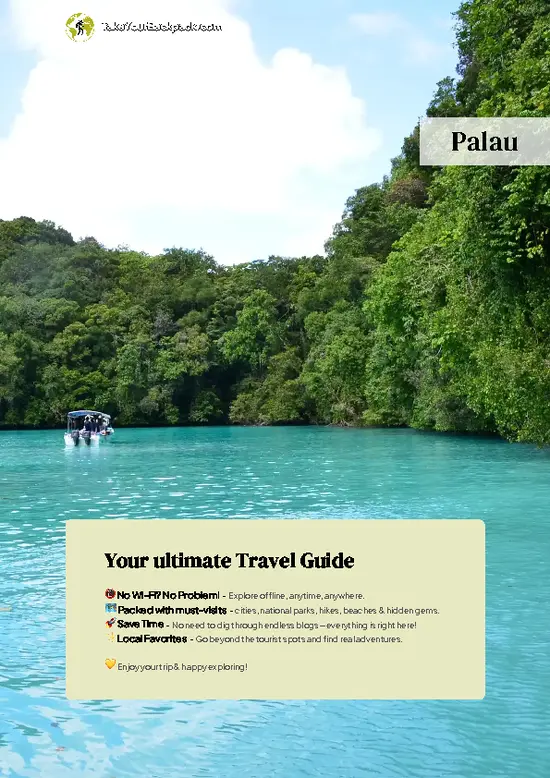
example page 0 from our offline Travel Guide for Palau
example page 1 from our offline Travel Guide for Palau
example page 2 from our offline Travel Guide for Palau
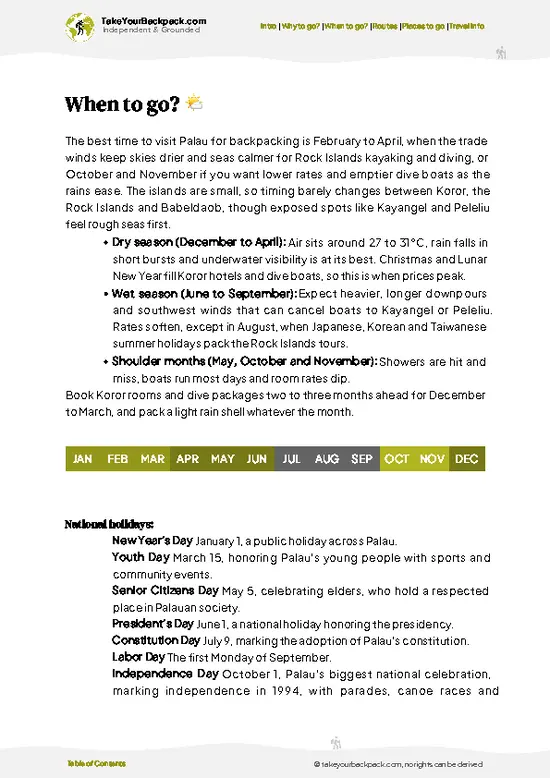
example page 3 from our offline Travel Guide for Palau
example page 4 from our offline Travel Guide for Palau
example page 5 from our offline Travel Guide for Palau
example page 6 from our offline Travel Guide for Palau
example page 7 from our offline Travel Guide for Palau
The digital guide (119 pages) contains:
27 highlights, ranked by travel appeal
Optimized 2, 3 & 5-day travel routes
Cities, national parks, landmarks, beaches
How to get around
Offline-friendly for travel without Wi-Fi
👉 Click to see all 30+ guide features

📅 Plan smarter in minutes, not weeks
Month by month travel advice
Festivals & national holidays
Budget expectations

🗺️ Go to the right places, skip the overrated ones
Honest pros & cons of destinations
Top hikes, parks & viewpoints
Lesser-known places most travelers miss
Clear “worth it vs skip it” guidance

🛏️ Travel smoothly without rookie mistakes
Best areas to stay
Transport systems explained simply
Common scams & safety advice
SIM cards, money & practical tips

🌍 Understand the country, not just visit it
Culture & traditions
52 Essential phrases & customs
Festivals worth planning around
Traveler-friendly historical context
Insights that make places more meaningful

📱 Built for real travel conditions
Fully downloadable PDF
Works completely offline
Optimized for phone use
Useful in remote areas & buses
Everything in one place
Save weeks of stressful planning
Get instant access to your full guide. 30‑day money-back guarantee.
+ Add another guide for just US$7.80

By proceeding you agree to our terms.
Sent to your inbox immediately after payment • 100% Secure Checkout
Best Backpacking Travel Advisor 2025 tourism awardBest Backpacking
Travel Advisor
2025
What others say about Take Your Backpack Guides:
⭐⭐⭐⭐⭐
Fantastic, amazing amount of information!
⭐⭐⭐⭐⭐
My goodness this is amazing, it's what I've been looking for hats off too you!
⭐⭐⭐⭐⭐
I think this is absolutely BRILLIANT
⭐⭐⭐⭐
Very complete and informative. It's still missing places, but I gotta to commend you
⭐⭐⭐⭐⭐
This is truly amazing, thank you, can't wait to explore it with my kids!
⭐⭐⭐⭐⭐
Awesome resource, thank you!
⭐⭐⭐⭐⭐
This is amazing! Can't wait to explore the ones I haven't seen
⭐⭐⭐⭐
I love this! Well done, great idea.
⭐⭐⭐⭐⭐
Thanks for taking the time to make this gem!
⭐⭐⭐⭐⭐
This might be the best website I've ever seen.
⭐⭐⭐⭐⭐
Congratulations, and thank you so much for your work; it's incredibly valuable.
⭐⭐⭐⭐
In all seriousness I think you did a great job pointing out the important spots
⭐⭐⭐⭐⭐
10/10 very good
⭐⭐⭐⭐⭐
As someone who's only just starting to visit regularly this is awesome, thank you.
⭐⭐⭐⭐
Thank you very much! I'm going to visit my dad, it's going to be very useful!
⭐⭐⭐⭐⭐
This is really cool! We'll be travelling for the first time and this definitely come in handy.
⭐⭐⭐⭐⭐
You are now our minister of culture, congratulations 👨‍💼
⭐⭐⭐⭐⭐
Just wanted to tell you that this is a pearl! Going to follow your recommendations.
⭐⭐⭐⭐⭐
This is so cool. I'll definitely be using the resource for my travels soon.
⭐⭐⭐⭐⭐
This is very impressive! Good work.
⭐⭐⭐⭐⭐
This is an amazing and informative site. Very well done!

🛏️ Where to stay?Best areas to stay in Palau

Airai is Palau’s quieter sidekick to Koror, but that calm is exactly why backpackers find it a smart base. The village itself is small, with a handful of guesthouses and homestays that feel more like staying with a local family than a faceless hotel. This means you wake up to the scent of tropical flowers and the soft murmur of daily village life, not the buzz of tourist crowds.

Why choose Airai? Because it’s a practical launchpad. The main airport is here, so you skip the hassle of long transfers after a long flight. Staying close means you can hit the ground running—grab fresh bread from a … read more 👉
Airai is Palau’s quieter sidekick to Koror, but that calm is exactly why backpackers find it a smart base. The village itself is small, with a handful of guesthouses and homestays that feel more like staying with a local family than a faceless hotel. This means you wake up to the scent of tropical flowers and the soft murmur of daily village life, not the buzz of tourist crowds.

Why choose Airai? Because it’s a practical launchpad. The main airport is here, so you skip the hassle of long transfers after a long flight. Staying close means you can hit the ground running—grab fresh bread from a local bakery, chat with fishermen unloading their catch, then head out to explore Palau’s famous dive spots or the nearby Babeldaob Island without wasting daylight on transport.

The best places to stay are modest guesthouses like Airai Backpackers or local homestays where the hosts often share insider tips and sometimes even meals. These spots don’t have flashy amenities, but they offer clean, simple rooms and a chance to connect with Palauan culture in a way resorts can’t match. Plus, the slower pace here lets you savor the island’s natural rhythms—the warm, salty breeze, the chorus of cicadas at dusk—setting the tone for a trip that’s about more than just ticking off sights.

🚌 Day tripsBest day trips from Airai

Airai, Palau, is your launchpad for unforgettable day trips that blend adventure with the island’s rich culture. Each journey offers a taste of what makes this place special, all while keeping your backpack light and your spirit high.

Snorkeling at Jellyfish Lake
This surreal spot is a must-see. The lake is home to millions of harmless jellyfish, and swimming among them feels like floating in a dream. The trip takes about 30 minutes by boat from Airai, costing around $30 for the ride. Bring your snorkel gear, or rent it for a few bucks. The best time to visit is early morning when the water is calm and the jellyfish are most active. A common mistake? Forgetting to bring water. You’ll want to stay hydrated while you marvel at these pulsating creatures. 👉 Explore Airai

Exploring the Rock read more 👉
Airai, Palau, is your launchpad for unforgettable day trips that blend adventure with the island’s rich culture. Each journey offers a taste of what makes this place special, all while keeping your backpack light and your spirit high.

Snorkeling at Jellyfish Lake
This surreal spot is a must-see. The lake is home to millions of harmless jellyfish, and swimming among them feels like floating in a dream. The trip takes about 30 minutes by boat from Airai, costing around $30 for the ride. Bring your snorkel gear, or rent it for a few bucks. The best time to visit is early morning when the water is calm and the jellyfish are most active. A common mistake? Forgetting to bring water. You’ll want to stay hydrated while you marvel at these pulsating creatures. 👉 Explore Airai

Exploring the Rock Islands
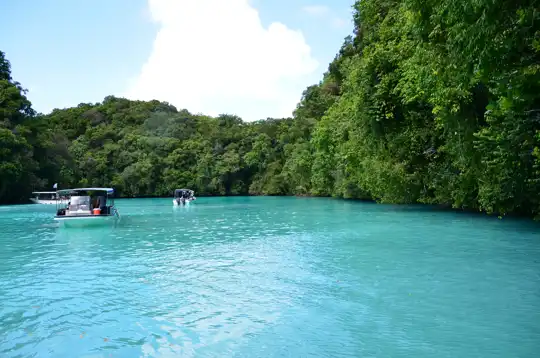
A day spent island-hopping through the Rock Islands is pure bliss. Picture lush greenery rising from turquoise waters, with hidden lagoons waiting to be discovered. You can rent a kayak for about $20 and paddle your way through this stunning archipelago. Expect to spend around 4-6 hours on the water. The best season is during the dry months, from November to April. Many first-timers underestimate the sun’s intensity; pack sunscreen and a hat to avoid a painful burn. 👉 Explore Airai

Visit the Belau National Museum
Dive into Palau’s history at the Belau National Museum, just a short ride from Airai. Admission is around $5, and you can easily spend a couple of hours here. The museum showcases artifacts and exhibits that tell the story of Palauan culture. Aim for a visit in the afternoon when the light filters beautifully through the windows, illuminating the displays. A common oversight? Rushing through without taking the time to chat with the knowledgeable staff. They can offer insights that enrich your experience. 👉 Explore Airai

Hiking to Ngerulmud
For a taste of local life, hike to Ngerulmud, the capital of Palau. The trail is about 1.5 hours from Airai and offers a mix of shaded paths and stunning views. The hike is free, but you might want to grab a snack for the journey. Early morning is ideal to avoid the heat. Many newcomers miss the chance to explore the small shops and eateries in Ngerulmud after the hike. Don’t skip the local cuisine; it’s a perfect way to refuel. 👉 Explore Airai
Want to know what more Palau offers?
The Palau Travel Guide describes 27 highlights, from cities to national parks, from beaches to hikes

Get the Travel Guide -

FAQCommon questions from travelers

Airai is accessible by road from Koror, the main city in Palau, located about 8 kilometers east. The easiest way to get there is by taxi or rental scooter, which takes around 15-20 minutes. There is no public bus service, so private transport is necessary.
Yes, Airai is worth the trip for its cultural sites and natural beauty. It is home to the Airai Bai, a traditional meeting house with intricate carvings, and offers access to nearby beaches and mangrove forests. Visitors often spend a few hours exploring these highlights.
Yes, Airai can be visited as a day trip from Koror. Its close proximity allows for a half-day or full-day visit, making it convenient for backpackers to explore without overnight accommodation. Plan for at least 3-4 hours to see the main attractions and enjoy the surroundings.
⚠️ Things can change over time, so always validate details locally before you go.

Other Palauan villages near Airai

Explore more nearby:

  • Ngatpang—traditional villages, mangrove forests, taro fields| 12 km away
  • Ngerulmud—Parliament buildings, modern infrastructure, administrative center| 18 km away
  • Melekeok—Capitol complex, Lake Ngardok, hillside views, government buildings| 18 km away

💡 Not sure where to go next?
Create a personalized itinerary for Palau including Airai and the places that fit your trip.

Generate my itinerary

👉 Discover all villages

Or checkout all Palau has to offer (think cities, towns, villages, national parks, hikes, beaches, festivals)
Country photo of Palau

We 💚 feedbackParting advice and final tips

Airai has a laid-back vibe that feels like a warm embrace. The best surprise? The local markets bursting with fresh produce and the scent of grilled fish wafting through the air. It’s a sensory delight. Just be ready for the humidity; it can hit hard. Embrace it. Dive into the culture, chat with the locals, and let the slower pace wash over you. That’s where the real magic happens.

✍️ Help improve this page!
The information on this page is based on in-depth research, insights shared by experienced travelers, and feedback from the local travel community in Palau. While every effort is made to keep the information accurate and current, conditions can change — so if you spot anything incorrect or outdated, please get in touch.


🙋‍♂️ Give feedback

👋 Meet the founderWho’s Behind Take Your Backpack?

Johan, backpacker and founder of TakeYourBackpackHi, I’m Johan (Netherlands 🇳🇱), the creator of TakeYourBackpack. Over the past decade, I’ve backpacked through 80+ countries across six continents, gaining extensive experience with independent travel, long-term trips, and overland routes.

This site is built on a combination of firsthand travel experience and carefully curated insights from other backpackers. Many guides are based on places I’ve personally visited, while others bring together tips, observations, and practical advice shared by trusted travelers I’ve met along the way.

The goal is to provide realistic, experience-driven guidance — not generic itineraries — so you can explore destinations with better context, clearer expectations, and more confidence.

Get full Palau guide •
Instant download • 27 highlights • Full Offline guide