v2.webp)
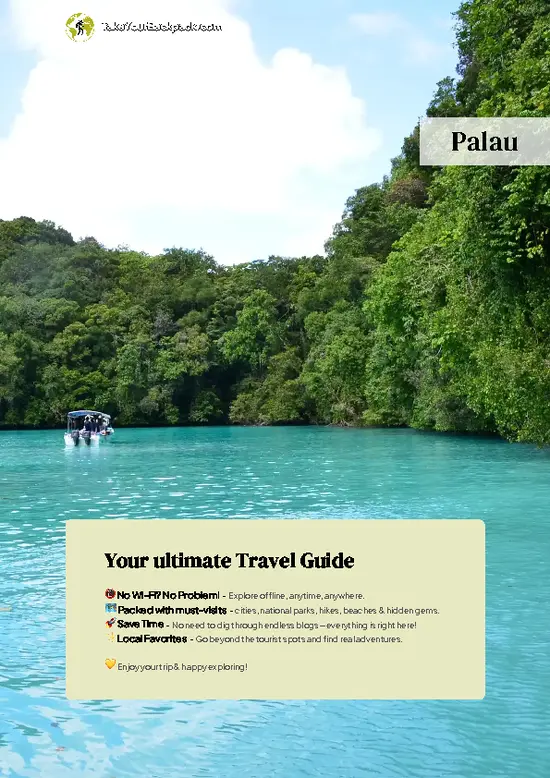
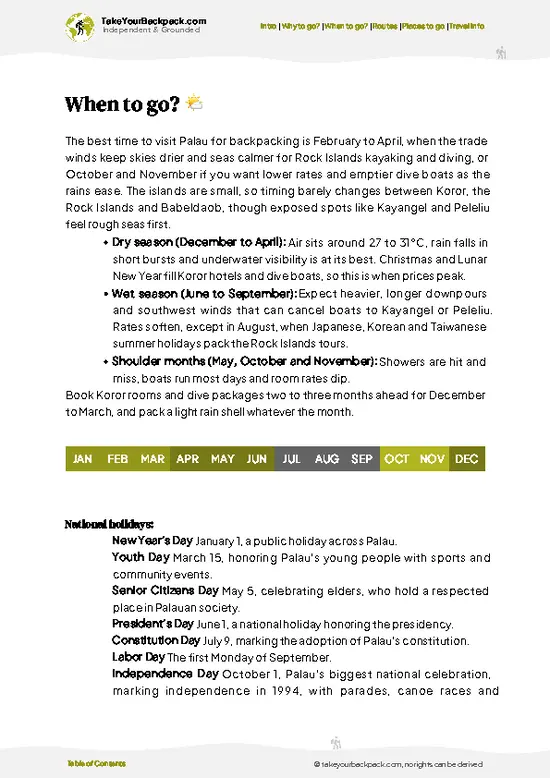
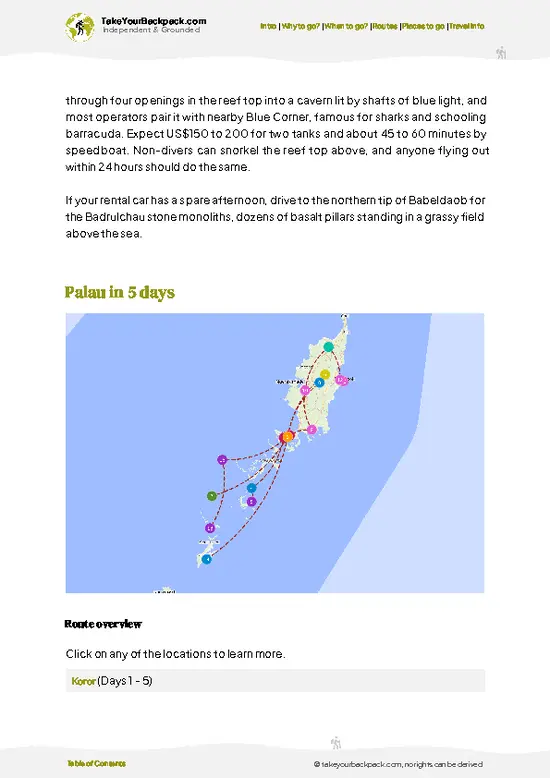
- Ngeremeduu Bay Mangroves: The area’s signature outing is paddling the tidal river lined with mangroves. Go in the morning on a rising tide, when the water is calm and birds are active. Guided kayak trips usually run US$40 to 80 per person for 2 to 3 hours, and you should book through a Koror operator or a local contact.
- Old Stone Paths and Village Sites: Traditional paved paths and platforms from earlier villages lie in the forest and along the old settlement areas. They are best early, before heat and mosquitoes build. Ask the state office or a neighbor for a local guide, who may ask for a tip of US$10 to 20. Allow 1 to 2 hours.
- Ngatpang Waterfront and Roadside Lookouts: Short stops along the shore show the lagoon edge and mangrove fringe, and they are free. Late afternoon gives the warmest
- Ngeremeduu Bay Mangroves: The area’s signature outing is paddling the tidal river lined with mangroves. Go in the morning on a rising tide, when the water is calm and birds are active. Guided kayak trips usually run US$40 to 80 per person for 2 to 3 hours, and you should book through a Koror operator or a local contact.
- Old Stone Paths and Village Sites: Traditional paved paths and platforms from earlier villages lie in the forest and along the old settlement areas. They are best early, before heat and mosquitoes build. Ask the state office or a neighbor for a local guide, who may ask for a tip of US$10 to 20. Allow 1 to 2 hours.
- Ngatpang Waterfront and Roadside Lookouts: Short stops along the shore show the lagoon edge and mangrove fringe, and they are free. Late afternoon gives the warmest light and cooler air. Allow 30 to 60 minutes, and bring insect repellent.
Spotted a mistake or missing something? Contact us.


 Best Backpacking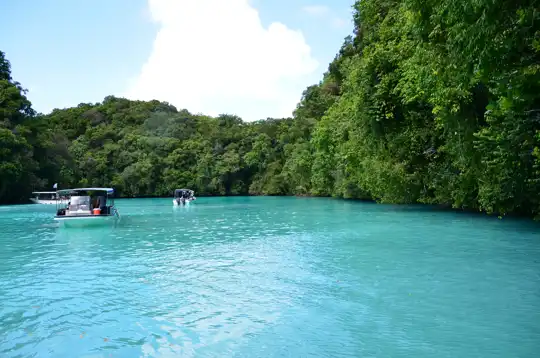
.jpg) Hi, I’m Johan (Netherlands 🇳🇱), the creator of TakeYourBackpack. Over the past 3 decades, I’ve backpacked through 90+ countries across six continents, gaining extensive experience with independent travel, long-term trips, and overland routes.
Hi, I’m Johan (Netherlands 🇳🇱), the creator of TakeYourBackpack. Over the past 3 decades, I’ve backpacked through 90+ countries across six continents, gaining extensive experience with independent travel, long-term trips, and overland routes.