
×

Palau🇵🇼 | landmarksJellyfish LakeGolden jellyfish, ridge trail, mangrove edge, Eil Malk | things to do and best time to go

Explore KororExplore Ulong Channel

Backpacking in Jellyfish Lake
🏆 Top pickunique site ranked #1
By Johan Kruseman 🇳🇱 | Updated October 15, 2026

Palau has dozens of marine lakes with jellyfish in them, but Ongeim’l Tketau on Eil Malk is the only one open to visitors, and it is not the same thing as a snorkel trip to the open lagoon. The lake sits among the southern Rock Islands, southwest of Koror, reached by boat and then a short, sweaty scramble over a limestone ridge. Is it worth the time? Yes. Floating through a slow cloud of golden jellyfish that brush your arms like wet silk is strange in the best way, and you can spend as long as the guide allows. The swim is also much calmer than the reef stops that fill the rest of the day. The crowds are real, though, so I would book the earliest departure and arrive before the tour boats stack up at the dock. Skip the souvenir stalls near the pier. Bring your own mask, because the rentals leak. The jellyfish drift east in the morning and back west in the afternoon, following the sun, so the sunny side is where they gather.

Discover everything you want to know in the 📖 Palau Travel Guide.


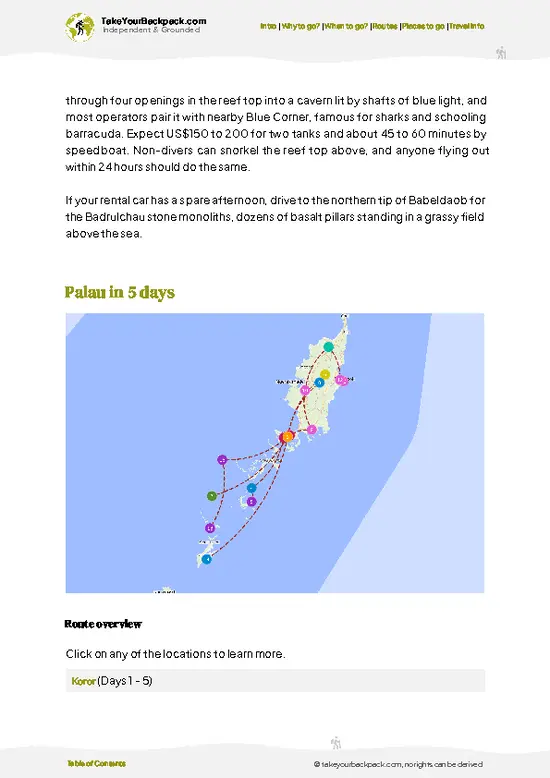
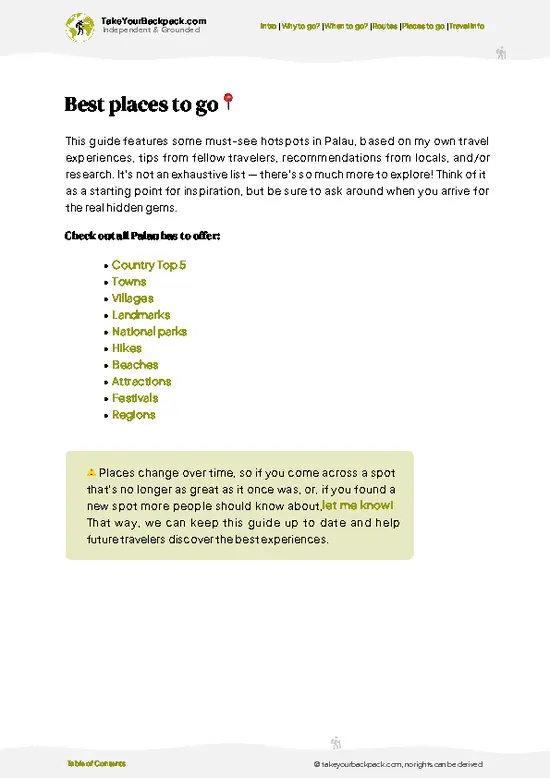
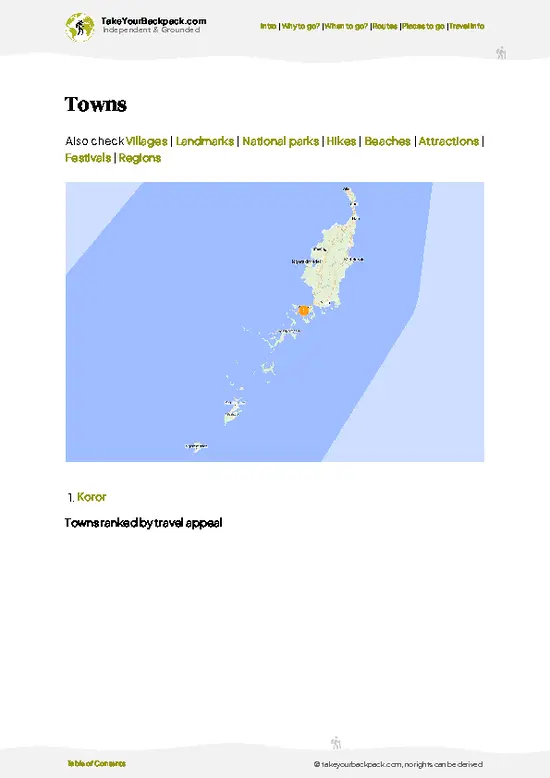
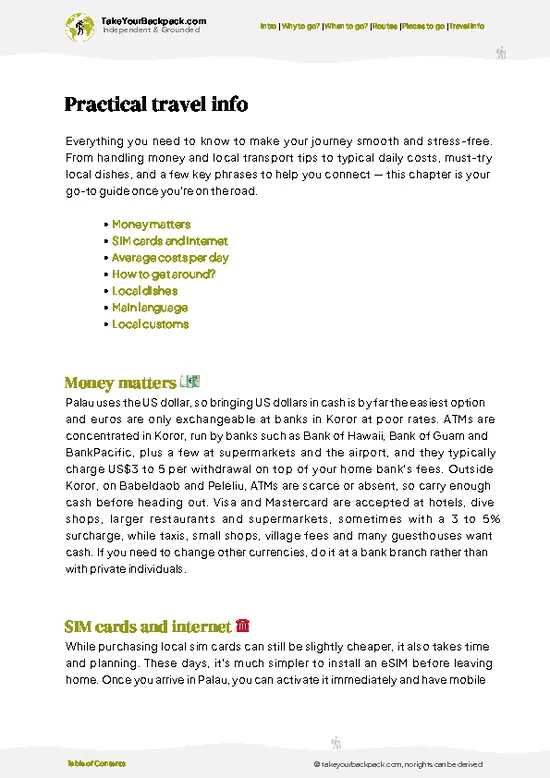
example page 0 from our offline Travel Guide for Palau
example page 1 from our offline Travel Guide for Palau
example page 2 from our offline Travel Guide for Palau
example page 3 from our offline Travel Guide for Palau
example page 4 from our offline Travel Guide for Palau
example page 5 from our offline Travel Guide for Palau
example page 6 from our offline Travel Guide for Palau
example page 7 from our offline Travel Guide for Palau
Loading the map 🌍
CLICK TO FILTER
towns
villages
landmarks
national parks
hikes
beaches
attractions
festivals
regions
SHOW COUNTRY’S BESTSHOW ALL

✨ Why go?
Ranked #1 unique site in Palau
Why visitors keep coming back

Go because nothing else in Southeast Asia or the Pacific lets you do this. Millions of golden jellyfish pulse around you in an enclosed saltwater lake, and their stingers are so weak that most people feel nothing at all. That is the kind of experience that rewires a trip, and it takes under an hour in the water.

The effort is modest and the place is better for it. You do not need a dive certificate, since scuba is banned here to protect the lake, so a mask and a snorkel are all it takes. The ridge trail over Eil Malk is short but steep and slick, which keeps casual visitors honest and gives the arrival some drama.

It also fits into a longer route rather than standing alone. Most boats pair it with other Rock Islands Southern Lagoon stops, a UNESCO World Heritage area, so one day covers a … read more 👉
Go because nothing else in Southeast Asia or the Pacific lets you do this. Millions of golden jellyfish pulse around you in an enclosed saltwater lake, and their stingers are so weak that most people feel nothing at all. That is the kind of experience that rewires a trip, and it takes under an hour in the water.

The effort is modest and the place is better for it. You do not need a dive certificate, since scuba is banned here to protect the lake, so a mask and a snorkel are all it takes. The ridge trail over Eil Malk is short but steep and slick, which keeps casual visitors honest and gives the arrival some drama.

It also fits into a longer route rather than standing alone. Most boats pair it with other Rock Islands Southern Lagoon stops, a UNESCO World Heritage area, so one day covers a lot of ground. If you are heading to Palau for the diving at Blue Corner or the German Channel, tacking on a lake morning is the easiest way to give non-diving friends their own highlight.

💡 HighlightsWhat this place is best known for

  1. The golden jellyfish swarm: The main event is the swim through thousands of Mastigias jellyfish, each about the size of a fist or a small melon. They pulse slowly and are so densely packed near the sunny side that you move through them rather than around them. The sting is too faint for most people to notice, but you still keep your hands loose and your fins quiet.
  2. The ridge trail from the dock: The path climbs over a limestone ridge in about ten to fifteen minutes, with rough steps and tree roots, and it is slick after rain. Wear water shoes with grip. It gives the swim a sense of arrival that a plain beach entry would not.
  3. The sun-chasing migration: The jellyfish travel east across the lake in the morning and back west in the afternoon to keep their algae in the light, and guides know where
… read more 👉
  1. The golden jellyfish swarm: The main event is the swim through thousands of Mastigias jellyfish, each about the size of a fist or a small melon. They pulse slowly and are so densely packed near the sunny side that you move through them rather than around them. The sting is too faint for most people to notice, but you still keep your hands loose and your fins quiet.
  2. The ridge trail from the dock: The path climbs over a limestone ridge in about ten to fifteen minutes, with rough steps and tree roots, and it is slick after rain. Wear water shoes with grip. It gives the swim a sense of arrival that a plain beach entry would not.
  3. The sun-chasing migration: The jellyfish travel east across the lake in the morning and back west in the afternoon to keep their algae in the light, and guides know where the densest clouds sit at your hour. Ask where to enter. Hitting the bright edge in mid-morning is much better than starting in the shade.
  4. Moon jellyfish: Smaller, paler Aurelia moon jellies also live here in far lower numbers than the golden ones. They are translucent with four clear rings, and spotting one feels like a small bonus.
  5. The mangrove shoreline: The lake is ringed by mangroves, and the roots hold the edge of the water in a green tangle. It is a good place to float for a minute and take in how enclosed and still the lake is, with rock walls all around.
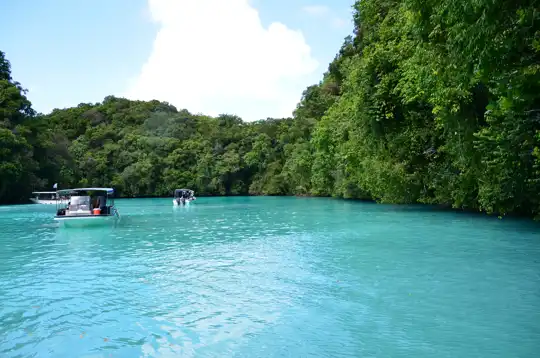
  6. The Rock Islands Southern Lagoon boat ride: The trip out takes you between mushroom-shaped limestone islets covered in forest, with turquoise channels between them. It is a UNESCO World Heritage area, and the boat ride alone is a highlight. The Jellyfish Lake permit costs about US$100 and also covers the Rock Islands, and your tour usually arranges it.
If time is short, skip the moon jellyfish hunt and spend the minutes in the golden swarm instead.
Spotted a mistake or missing something? Contact us.

Things to do near Jellyfish Lake

Ratings based on Tripadvisor reviews. When you book through this link, you support our work at no extra cost to you.

🌤️ When to go?Weather, crowds, and seasonal trade-offs

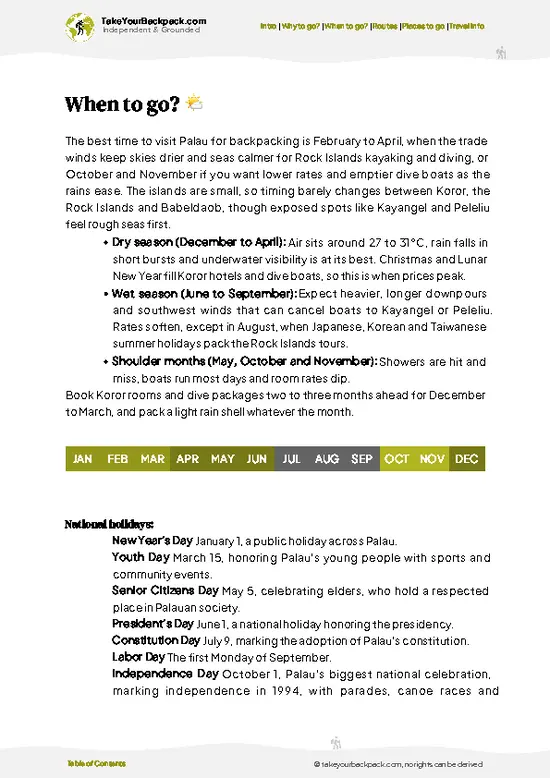
  • Dry Season (December to April): Calm seas make the boat ride from Koror smooth and visibility is best, so this is the easiest window for the lake. Days run 27 to 31°C (81 to 88°F) with sunrise near 6:15 a.m. and sunset near 6:15 p.m. Hotel rates and tour prices are at their highest, and Asian tour groups peak around Lunar New Year.
  • Wet Season (May to November): Rain showers come in short, heavy bursts, and July to September can bring the choppiest crossings. Temperatures stay at 26 to 31°C (79 to 88°F). Crowds thin out and some operators discount, though days with strong swells can cancel trips.
  • Typhoon Risk (August to December): Palau sits south of the main typhoon belt, but storm systems passing nearby can close the Rock Islands for a day or two.
  • Time of Day: Before 10 a.m. you get calmer water
… read more 👉
  • Dry Season (December to April): Calm seas make the boat ride from Koror smooth and visibility is best, so this is the easiest window for the lake. Days run 27 to 31°C (81 to 88°F) with sunrise near 6:15 a.m. and sunset near 6:15 p.m. Hotel rates and tour prices are at their highest, and Asian tour groups peak around Lunar New Year.
  • Wet Season (May to November): Rain showers come in short, heavy bursts, and July to September can bring the choppiest crossings. Temperatures stay at 26 to 31°C (79 to 88°F). Crowds thin out and some operators discount, though days with strong swells can cancel trips.
  • Typhoon Risk (August to December): Palau sits south of the main typhoon belt, but storm systems passing nearby can close the Rock Islands for a day or two.
  • Time of Day: Before 10 a.m. you get calmer water and fewer snorkelers. By midday tour boats stack up at the dock and the jetty queue grows.
Book your permit and boat for the first morning slot, since that is when the lake is quietest in any month.


source: climatestotravel.comJANJanuary: excellent for travelingFEBFebruary: excellent for travelingMARMarch: excellent for travelingAPRApril: highly recommended for travelingMAYMay: fair for travelingJUNJune: fair for travelingJULJuly: fair for travelingAUGAugust: fair for travelingSEPSeptember: fair for travelingOCTOctober: fair for travelingNOVNovember: highly recommended for travelingDECDecember: excellent for traveling

✈️ The backpacker research shortcutPalau Travel Guide

An offline-friendly backpacking guide with optimized travel routes, ranked highlights, transport advice, and the best areas to stay.
example page 0 from our offline Travel Guide for Palau
example page 1 from our offline Travel Guide for Palau
example page 2 from our offline Travel Guide for Palau
example page 3 from our offline Travel Guide for Palau
example page 4 from our offline Travel Guide for Palau
example page 5 from our offline Travel Guide for Palau
example page 6 from our offline Travel Guide for Palau
example page 7 from our offline Travel Guide for Palau
The digital guide (99 pages) contains:
✅ 22 highlights, ranked by travel appeal
✅ Optimized 2, 3 & 5-day travel routes
✅ Cities, national parks, landmarks, beaches
✅ How to get around
✅ Offline-friendly for travel without Wi-Fi
👉 Click to see all 30+ guide features

📅 Plan smarter in minutes, not weeks
✅ Month by month travel advice
✅ Festivals & national holidays
✅ Budget expectations

🗺️ Go to the right places, skip the overrated ones
✅ Honest pros & cons of destinations
✅ Top hikes, parks & viewpoints
✅ Lesser-known places most travelers miss
✅ Clear “worth it vs skip it” guidance

🛏️ Travel smoothly without rookie mistakes
✅ Best areas to stay
✅ Transport systems explained simply
✅ Common scams & safety advice
✅ SIM cards, money & practical tips

🌍 Understand the country, not just visit it
✅ Culture & traditions
✅ 52 Essential phrases & customs
✅ Festivals worth planning around
✅ Traveler-friendly historical context
✅ Insights that make places more meaningful

📱 Built for real travel conditions
✅ Fully downloadable PDF
✅ Works completely offline
✅ Optimized for phone use
✅ Useful in remote areas & buses
✅ Everything in one place
Stop searching, start planning
Get instant access to your full guide. 30‑day money-back guarantee.
+ Add another guide for just

By proceeding you agree to our terms.
Sent to your inbox immediately after payment • 100% Secure Checkout
Best Backpacking Travel Advisor 2025 tourism awardBest Backpacking
Travel Advisor
2025
What others say about Take Your Backpack Guides:
⭐⭐⭐⭐⭐
Fantastic, amazing amount of information!
⭐⭐⭐⭐⭐
My goodness this is amazing, it's what I've been looking for hats off too you!
⭐⭐⭐⭐⭐
I think this is absolutely BRILLIANT
⭐⭐⭐⭐
Very complete and informative. It's still missing places, but I gotta to commend you
⭐⭐⭐⭐⭐
This is truly amazing, thank you, can't wait to explore it with my kids!
⭐⭐⭐⭐⭐
Awesome resource, thank you!
⭐⭐⭐⭐⭐
This is amazing! Can't wait to explore the ones I haven't seen
⭐⭐⭐⭐
I love this! Well done, great idea.
⭐⭐⭐⭐⭐
Thanks for taking the time to make this gem!
⭐⭐⭐⭐⭐
This might be the best website I've ever seen.
⭐⭐⭐⭐⭐
Congratulations, and thank you so much for your work; it's incredibly valuable.
⭐⭐⭐⭐
In all seriousness I think you did a great job pointing out the important spots
⭐⭐⭐⭐⭐
10/10 very good
⭐⭐⭐⭐⭐
As someone who's only just starting to visit regularly this is awesome, thank you.
⭐⭐⭐⭐
Thank you very much! I'm going to visit my dad, it's going to be very useful!
⭐⭐⭐⭐⭐
This is really cool! We'll be travelling for the first time and this definitely come in handy.
⭐⭐⭐⭐⭐
You are now our minister of culture, congratulations 👨‍💼
⭐⭐⭐⭐⭐
Just wanted to tell you that this is a pearl! Going to follow your recommendations.
⭐⭐⭐⭐⭐
This is so cool. I'll definitely be using the resource for my travels soon.
⭐⭐⭐⭐⭐
This is very impressive! Good work.
⭐⭐⭐⭐⭐
This is an amazing and informative site. Very well done!

🛏️ Where to stay?Best areas and accommodation options

Koror is where you should sleep, because nearly every Jellyfish Lake boat tour leaves from the harbors here, about 30 to 45 minutes by speedboat from the lake in Eil Malk. No lodging exists on the Rock Islands near the lake itself.
Downtown Koror is the backpacker center. Guesthouses and dorm-style hostels cluster within walking distance of the minimart and restaurant streets. It is the easiest place to meet other travelers and split a boat charter, which makes a big difference to the per-person price. Dive shops and tour desks line the same streets, so you can compare quotes on foot and collect … read more 👉
Koror is where you should sleep, because nearly every Jellyfish Lake boat tour leaves from the harbors here, about 30 to 45 minutes by speedboat from the lake in Eil Malk. No lodging exists on the Rock Islands near the lake itself.
Downtown Koror is the backpacker center. Guesthouses and dorm-style hostels cluster within walking distance of the minimart and restaurant streets. It is the easiest place to meet other travelers and split a boat charter, which makes a big difference to the per-person price. Dive shops and tour desks line the same streets, so you can compare quotes on foot and collect boat pickups from nearby jetties.
Malakal, the island on the harbor’s edge, is quieter and closer to the main marina and many dive operators. It suits divers and early departures but has fewer places to eat after dark. You will want a ride or a short taxi in the evening.
Airai State, toward the airport, has a few guesthouses and a more residential feel. It is calm and safe, but you need a car or taxi for every outing, so it only makes sense for a long stay.
Koror is safe for solo travelers, including at night, though the streets are quiet after about 9 p.m.

👛 Costs (as of 15 October 2026)Money, prices, and spending tips

A realistic budget for a Jellyfish Lake day from Koror is about USD 190 to 290, and the permit plus boat transfer account for most of it.
CategoryBudget RangeLocal Reality
Jellyfish Lake PermitUSD 100The Rock Island Permit (USD 50) is valid for 10 days. The Jellyfish Lake permit (USD 100) also covers the Rock Islands.
Boat Tour or TransferUSD 60 to 100Shared Rock Islands day tours usually include the lake with lunch, snorkel gear and other stops. Splitting a charter lowers the price.
Accommodation (high season)USD 30 to 60A dorm bed or basic private room in Koror. Prices rise from December to April.
FoodUSD 15 to 30Cheap lunches at local takeaways in Koror, with dinners at sit-down restaurants costing more. Tour lunches are often included.
Local TransportUSD 5 to 15Short taxis within Koror cost
… read more 👉
A realistic budget for a Jellyfish Lake day from Koror is about USD 190 to 290, and the permit plus boat transfer account for most of it.
CategoryBudget RangeLocal Reality
Jellyfish Lake PermitUSD 100The Rock Island Permit (USD 50) is valid for 10 days. The Jellyfish Lake permit (USD 100) also covers the Rock Islands.
Boat Tour or TransferUSD 60 to 100Shared Rock Islands day tours usually include the lake with lunch, snorkel gear and other stops. Splitting a charter lowers the price.
Accommodation (high season)USD 30 to 60A dorm bed or basic private room in Koror. Prices rise from December to April.
FoodUSD 15 to 30Cheap lunches at local takeaways in Koror, with dinners at sit-down restaurants costing more. Tour lunches are often included.
Local TransportUSD 5 to 15Short taxis within Koror cost a few dollars. Some tours include hotel pickup.
Gear RentalUSD 0 to 10Mask, snorkel and fins are often included. A rash guard or reef-safe sunscreen is worth buying.
Total Daily BudgetUSD 190 to 290Per person, per day, in high season.
⚠️ Prices can change and everyone travels differently, so take this as a rough guide. Hope it helps you plan your adventure!

FAQTraveler FAQ

Jellyfish Lake is a marine lake on Eil Malk island in Palau’s Rock Islands, home to millions of golden jellyfish that have lost most of their stinging power. You snorkel with them only, since scuba is not allowed. The Jellyfish Lake permit costs USD 100 and also covers the Rock Islands.
Plan a half day, with the lake visit itself taking about 1 hour including a 10 to 15 minute walk over a steep trail to the water. Most travelers combine it with other Rock Islands stops on a full-day tour of 7 to 9 hours. Spend two or three days in Koror if you want to add diving or kayaking.
Take a speedboat from Koror, which takes roughly 30 to 45 minutes depending on the harbor and sea conditions. Almost everyone books a tour, since the lake is not reachable by public transport. Fly into Roman Tmetuchl International Airport on Babeldaob, about 30 to 40 minutes by road from Koror.
⚠️ Things can change over time, so always validate details locally before you go.

Other Palauan landmarks near Jellyfish Lake

Explore more nearby:

  • Turtle Cove—Resident turtles, gentle drift, coral ledges, Rock Islands| 15 km away
  • Ulong Channel—Tidal cut, grey reef sharks, giant clams, sandy floor| 16 km away
  • Blue Holes—Four chimneys, light beams, cavern exit, Ngemelis Wall| 17 km away

💡 Not sure where to go next?
Create a personalized itinerary for Palau including Jellyfish Lake and the places that fit your trip.

Generate my itinerary

👉 Discover all landmarks

Or checkout all Palau has to offer (think cities, towns, villages, national parks, hikes, beaches, festivals)
Country photo of Palau

We 💚 feedbackIs it worth it?

Give it one morning and no more. The swim is best in the first hour or so, before the crowds, and the jellyfish do not change much if you stay longer. Spend the rest of the day on the other lagoon stops instead. I would pack your own mask, wear water shoes for the ridge, and keep your fins out of the lake so you stay gentle on the swarm.

✍️ Help improve this page!
The information on this page is based on in-depth research, insights shared by experienced travelers, and feedback from the local travel community in Palau. While every effort is made to keep the information accurate and current, conditions can change — so if you spot anything incorrect or outdated, please get in touch.


🙋‍♂️ Give feedback

👋 Meet the founderWho’s Behind Take Your Backpack?

Johan, backpacker and founder of TakeYourBackpackHi, I’m Johan (Netherlands 🇳🇱), the creator of TakeYourBackpack. Over the past 3 decades, I’ve backpacked through 90+ countries across six continents, gaining extensive experience with independent travel, long-term trips, and overland routes.

This site is built on a combination of firsthand travel experience and carefully curated insights from other backpackers. Many guides are based on places I’ve personally visited, while others bring together tips, observations, and practical advice shared by trusted travelers I’ve met along the way.

The goal is to provide realistic, experience-driven guidance — not generic itineraries — so you can explore destinations with better context, clearer expectations, and more confidence.