×

Palau🇵🇼 | townsKororisland bridges, local markets, WWII relics, lagoon access | things to do and best time to go

Explore Kayangel AtollExplore Jellyfish Lake

Backpacking in Koror
🏆 Top picktown ranked #1
By Johan Kruseman 🇳🇱 | Updated June 18, 2026

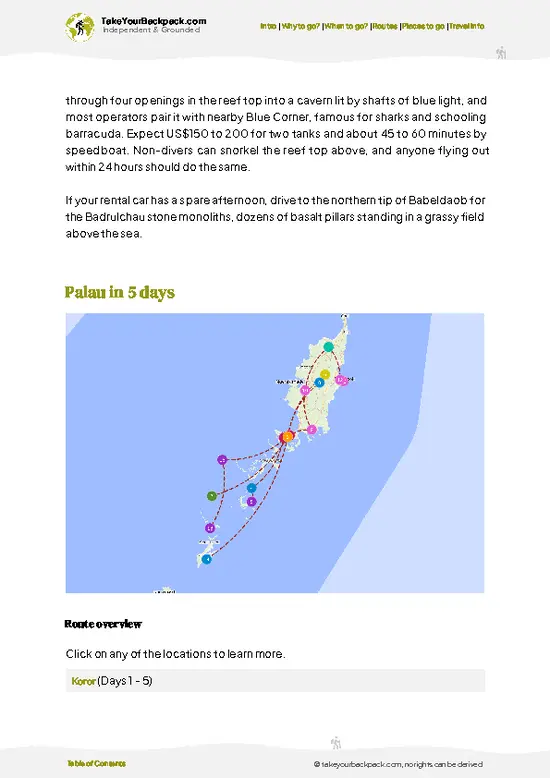
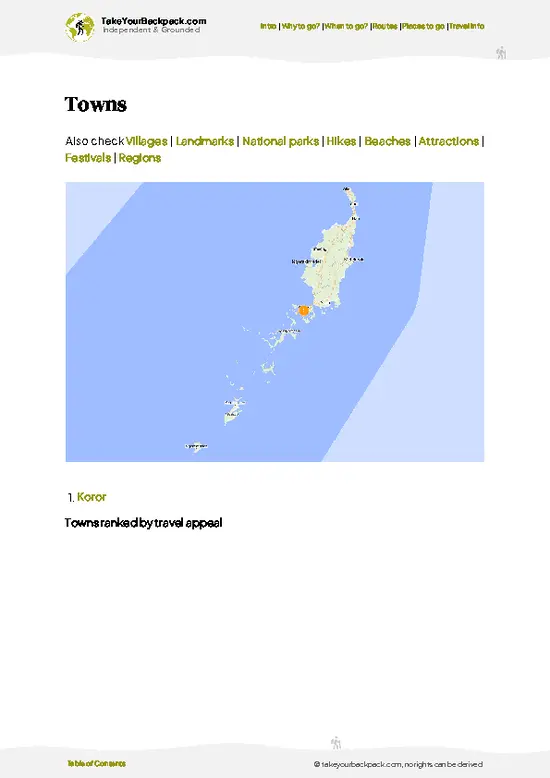
Your first real fork in the road in Koror is this: do you treat it as “the place you sleep between boat trips,” or as a small island town worth a couple of slow days? That choice shapes everything from your budget to how deeply you feel Palau. Koror sits in the central-western part of Palau, spread across a few linked islands just before you reach the famous Rock Islands to the south.

Koror itself is low-rise, humid, and practical rather than pretty. Neon-lit minimarts, dive shops, and government buildings under heavy, salty air. As a backpacker, you’re here mainly for access: dive boats, Rock Islands tours, Jellyfish Lake runs, WWII wrecks. It’s easy to move around with taxis and lifts from tour operators, but not very walkable beyond short stretches of roadside shops. Nights are quiet, with a few bars and simple eateries where you might meet other divers, not big hostel scenes. It’s safer and more functional than charming, more gateway than destination, especially compared with the wilder outer islands.

Discover everything you want to know in the 📖 Palau Travel Guide.


Get your Palau guide
28 ranked highlights, routes & tips, works offline (123 pages)
Loading the map 🌍
CLICK TO FILTER
towns
villages
landmarks
national parks
hikes
beaches
attractions
festivals
regions
SHOW COUNTRY’S BESTSHOW ALL

✨ Why go?
Ranked #1 town in Palau
The unique appeal for travelers

Koror is the gateway to Palau’s natural wonders, making it a strategic stop for backpackers. Its walkable streets are lined with small-scale hostels and guesthouses, perfect for solo travelers or small groups looking to connect. You’ll find a friendly atmosphere here, where locals and fellow backpackers share stories over local dishes like tinola or fresh seafood.

The town’s convenience is key; it’s the launchpad for nearby hikes and beaches. Just a short ride away, you can dive into the stunning Rock Islands or explore the lush trails of Babeldaob. Many travelers linger for a few days, soaking in the laid-back vibe and planning their next adventure.

While Koror isn’t a nightlife hub, it offers a social scene that feels intimate rather than overwhelming. Expect to meet like-minded adventurers, … read more 👉
Koror is the gateway to Palau’s natural wonders, making it a strategic stop for backpackers. Its walkable streets are lined with small-scale hostels and guesthouses, perfect for solo travelers or small groups looking to connect. You’ll find a friendly atmosphere here, where locals and fellow backpackers share stories over local dishes like tinola or fresh seafood.

The town’s convenience is key; it’s the launchpad for nearby hikes and beaches. Just a short ride away, you can dive into the stunning Rock Islands or explore the lush trails of Babeldaob. Many travelers linger for a few days, soaking in the laid-back vibe and planning their next adventure.

While Koror isn’t a nightlife hub, it offers a social scene that feels intimate rather than overwhelming. Expect to meet like-minded adventurers, whether you’re swapping tips over a cold drink or joining a group for a day trip. This town suits slow travelers who appreciate the balance of exploration and relaxation, making it a worthwhile stop on your Palauan journey.
Want to include Koror in your Palau route?
Create a personalized Palau itinerary that includes Koror and the places that fit your trip — based on your travel style, budget, and available time. Get your route in seconds.

Generate my trip

💡 HighlightsEssential experiences to have while visiting Koror

Belau National Museum
Step inside and the air shifts—cool, faintly woody, with the scent of old paper and polished floors. This is Palau’s memory palace, the oldest museum in Micronesia, and it’s not just for history buffs. The main building is compact but dense with artifacts: carved storyboards, traditional tools, WWII relics, and a full-scale bai (men’s meeting house) outside, its beams painted with legends. You’ll see how Palau’s past—clan politics, matrilineal society, foreign occupations—still shapes daily life. Go in the morning to avoid school groups and catch the light slanting through the windows. Entry is about $10, and you’ll want at least 60-90 minutes to do it justice.


Etpison Museum
A few blocks away, the Etpison Museum is smaller but more personal. The building itself is a … read more 👉
Belau National Museum
Step inside and the air shifts—cool, faintly woody, with the scent of old paper and polished floors. This is Palau’s memory palace, the oldest museum in Micronesia, and it’s not just for history buffs. The main building is compact but dense with artifacts: carved storyboards, traditional tools, WWII relics, and a full-scale bai (men’s meeting house) outside, its beams painted with legends. You’ll see how Palau’s past—clan politics, matrilineal society, foreign occupations—still shapes daily life. Go in the morning to avoid school groups and catch the light slanting through the windows. Entry is about $10, and you’ll want at least 60-90 minutes to do it justice.


Etpison Museum
A few blocks away, the Etpison Museum is smaller but more personal. The building itself is a quirky, three-story structure with a spiral staircase and a rooftop lookout. Inside, you’ll find intricate shell jewelry, model outrigger canoes, and photographs that feel like family albums. The gift shop is the best in town for locally made crafts—no plastic trinkets here. The museum’s founder, Mandy Etpison, is often around and happy to chat. Entry is $10, and an hour is enough unless you get lost in conversation.


Palau Aquarium (PICRC)
The Pacific Islands Conservation Research Center’s aquarium is the closest you’ll get to Palau’s underwater world without a wetsuit. Tanks curve around you, glowing with the soft blue of reef light, home to giant clams, baby sharks, and corals that pulse with color. It’s not huge, but the exhibits are sharp and focused—perfect for understanding what you’ll see if you dive or snorkel later. Go midday to dodge school groups. Entry is $10, and you’ll need 45-60 minutes.


Long Island Park
Locals come here to grill, nap, and let kids run wild. The park sits right on the water, with picnic tables shaded by ironwood trees and a gentle salt breeze. There’s a WWII Japanese cannon rusting quietly in the grass, a reminder that Palau’s beauty has always had an edge. Bring snacks and come late afternoon for the golden hour—sunset here is a communal event. Free entry, and you can linger as long as you like.


Koror Public Market
This is the pulse of Koror—noisy, humid, and alive with the smell of smoked fish, ripe betel nut, and fresh taro. Vendors chat in Palauan and English, selling everything from sea grapes to woven baskets. It’s the best place to try local snacks or just people-watch. Go early morning for the freshest produce and the most action. No entry fee; bring small bills for purchases. Thirty minutes is enough for a lap, but you might stay longer if you strike up a conversation.


If you’re itching for more, Koror is the launchpad for day trips to the Rock Islands, Jellyfish Lake, and WWII shipwrecks—each a short boat ride away and a world apart from the town’s steady rhythm.
Spotted a mistake or missing something? Contact us.

Things to do around Koror

Ratings based on Tripadvisor reviews. When you book through this link, you support our work at no extra cost to you.

🏘️ NeighborhoodsKey areas and districts to know

Koror, the bustling heart of Palau, offers a unique blend of culture, adventure, and relaxation. Each neighborhood has its own flavor, catering to different backpacker needs.

Downtown Koror
This is the pulse of the town. You’ll find local markets, shops, and eateries serving up fresh seafood and local dishes. The vibe is lively, especially in the evenings when the streets come alive with chatter and laughter. It’s walkable, making it easy to explore on foot. Budget-friendly accommodations are plentiful, perfect for short stays. Just be aware that it can get noisy at night.

Malakal Island
A short boat ride from Downtown, Malakal is quieter and more laid-back. It’s known for its stunning views and proximity to dive shops. If you’re into snorkeling or diving, this is your spot. The atmosphere … read more 👉
Koror, the bustling heart of Palau, offers a unique blend of culture, adventure, and relaxation. Each neighborhood has its own flavor, catering to different backpacker needs.

Downtown Koror
This is the pulse of the town. You’ll find local markets, shops, and eateries serving up fresh seafood and local dishes. The vibe is lively, especially in the evenings when the streets come alive with chatter and laughter. It’s walkable, making it easy to explore on foot. Budget-friendly accommodations are plentiful, perfect for short stays. Just be aware that it can get noisy at night.

Malakal Island
A short boat ride from Downtown, Malakal is quieter and more laid-back. It’s known for its stunning views and proximity to dive shops. If you’re into snorkeling or diving, this is your spot. The atmosphere is relaxed, ideal for longer stays where you can soak in the beauty. Accommodations here can be pricier, but the experience is worth it. Transport is easy with regular boats to the main town.

Ngermid
This residential area offers a glimpse into local life. It’s less touristy, giving you a more authentic experience. The vibe is peaceful, with fewer crowds. While it’s not as walkable, you can rent a bike or use local transport to get around. Accommodations are generally cheaper, making it a solid choice for budget travelers looking to stay longer and immerse themselves in the culture.

Airai
Located a bit further out, Airai is perfect for those seeking tranquility. It’s quieter, with fewer tourists and more nature. The area is great for hiking and exploring the lush surroundings. Transport options are limited, so renting a scooter is advisable. Accommodations here are affordable, making it suitable for longer stays if you want to escape the hustle and bustle.

⌛️ 1 dayA smart one-day plan

Koror, the bustling heart of Palau, is a vibrant mix of culture and nature, where the scent of saltwater mingles with the aroma of local street food. This town is your gateway to stunning marine life and rich history, making it a perfect spot for a day of exploration.

Start your morning at the Koror Market, where the sun casts a warm glow on fresh fruits and local crafts. Grab a ripe mango or a slice of papaya from a vendor; the sweetness is a burst of energy for your day. Take a moment to chat with the locals; their stories add depth to your experience. Afterward, head to the nearby Belau National Museum. This often-overlooked gem offers a glimpse into Palauan history and culture, with exhibits that showcase traditional artifacts and the island’s unique heritage.

As the afternoon rolls … read more 👉
Koror, the bustling heart of Palau, is a vibrant mix of culture and nature, where the scent of saltwater mingles with the aroma of local street food. This town is your gateway to stunning marine life and rich history, making it a perfect spot for a day of exploration.

Start your morning at the Koror Market, where the sun casts a warm glow on fresh fruits and local crafts. Grab a ripe mango or a slice of papaya from a vendor; the sweetness is a burst of energy for your day. Take a moment to chat with the locals; their stories add depth to your experience. Afterward, head to the nearby Belau National Museum. This often-overlooked gem offers a glimpse into Palauan history and culture, with exhibits that showcase traditional artifacts and the island’s unique heritage.

As the afternoon rolls in, make your way to the scenic Jellyfish Lake. It’s a bit of a trek, but the reward is worth it. The shimmering water is home to millions of harmless jellyfish, and swimming among them feels like stepping into another world. The light filtering through the trees creates a magical atmosphere, and the gentle sway of the jellyfish is mesmerizing. Bring a packed lunch to enjoy on the shore; the tranquility here is a perfect backdrop for reflection.

As evening approaches, return to Koror and stroll along the waterfront. The sunset paints the sky in hues of orange and pink, a breathtaking sight that feels like a well-earned reward after a day of adventure. For dinner, seek out a local eatery like the Taj, where you can savor traditional Palauan dishes. The flavors are rich and comforting, a fitting end to your day.

Koror may be small, but its charm lies in the details. Embrace the rhythm of the town, and you’ll find that every moment is a step deeper into its soul.
Turn your Koror visit into an Palau adventure
Build a complete Palau route with Koror, hidden gems, must-see destinations, and realistic travel times included.

Generate my trip

🌤️ When to go?Best time to visit Koror


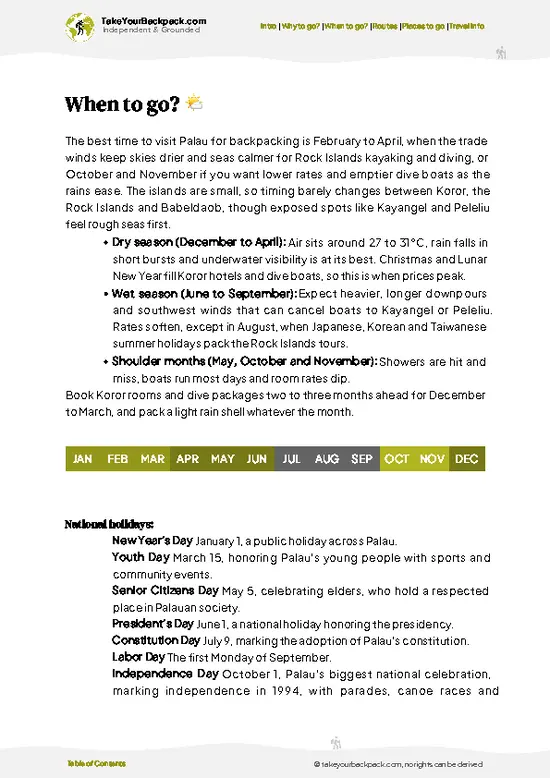
  • Topic: Weather and Temperature: Koror’s tropical climate means it’s warm year-round, hovering between 27°C and 31°C (81°F to 88°F). The dry season from November to April offers clearer skies and less humidity, making days feel lighter and evenings more comfortable. The wet season, May to October, brings heavy but brief downpours that can cool things off but also muddy trails and limit visibility underwater.

  • Topic: Daylight Hours: Near the equator, Koror enjoys roughly 12 hours of daylight year-round. Sunrise and sunset times shift only slightly, so you can count on consistent daylight for early starts or late dives, regardless of when you visit.

  • Topic: Crowds: The dry season attracts more tourists, especially between December and March, when international travelers flock here for diving
read more 👉

  • Topic: Weather and Temperature: Koror’s tropical climate means it’s warm year-round, hovering between 27°C and 31°C (81°F to 88°F). The dry season from November to April offers clearer skies and less humidity, making days feel lighter and evenings more comfortable. The wet season, May to October, brings heavy but brief downpours that can cool things off but also muddy trails and limit visibility underwater.

  • Topic: Daylight Hours: Near the equator, Koror enjoys roughly 12 hours of daylight year-round. Sunrise and sunset times shift only slightly, so you can count on consistent daylight for early starts or late dives, regardless of when you visit.

  • Topic: Crowds: The dry season attracts more tourists, especially between December and March, when international travelers flock here for diving and snorkeling. This means busier dive spots and higher accommodation demand. The wet season sees fewer visitors, offering a quieter experience but with the trade-off of unpredictable weather.

  • Topic: Seasonal Activities: Dry months are prime for underwater visibility, crucial for exploring Koror’s famous Blue Corner and Jellyfish Lake. The wet season can limit these activities but is ideal for witnessing lush jungle growth and bird migrations, rewarding those willing to brave the rain.

  • Topic: Price Fluctuations: Expect peak-season rates to spike from December through March, especially around holidays. Booking ahead is key. Off-season months bring better deals on lodging and tours, but factor in the risk of rain disrupting plans.


Pro-tip: Aim for the shoulder months of November or April to balance good weather, manageable crowds, and reasonable prices—giving you the best shot at Koror’s magic without the usual trade-offs.


source: climatestotravel.comJANJanuary: highly recommended for travelingFEBFebruary: highly recommended for travelingMARMarch: highly recommended for travelingAPRApril: excellent for travelingMAYMay: fair for travelingJUNJune: fair for travelingJULJuly: fair for travelingAUGAugust: fair for travelingSEPSeptember: fair for travelingOCTOctober: fair for travelingNOVNovember: excellent for travelingDECDecember: highly recommended for traveling
when-to-go

✈️ The backpacker research shortcutPalau Travel Guide

An offline-friendly backpacking guide with optimized travel routes, ranked highlights, transport advice, and the best areas to stay.
example page 0 from our offline Travel Guide for Palau
example page 1 from our offline Travel Guide for Palau
example page 2 from our offline Travel Guide for Palau
example page 3 from our offline Travel Guide for Palau
example page 4 from our offline Travel Guide for Palau
example page 5 from our offline Travel Guide for Palau
example page 6 from our offline Travel Guide for Palau
example page 7 from our offline Travel Guide for Palau
The digital guide (123 pages) contains:
28 highlights, ranked by travel appeal
Optimized 2, 3 & 5-day travel routes
Cities, national parks, landmarks, beaches
How to get around
Offline-friendly for travel without Wi-Fi
👉 Click to see all 30+ guide features

📅 Plan smarter in minutes, not weeks
Month by month travel advice
Festivals & national holidays
Budget expectations

🗺️ Go to the right places, skip the overrated ones
Honest pros & cons of destinations
Top hikes, parks & viewpoints
Lesser-known places most travelers miss
Clear “worth it vs skip it” guidance

🛏️ Travel smoothly without rookie mistakes
Best areas to stay
Transport systems explained simply
Common scams & safety advice
SIM cards, money & practical tips

🌍 Understand the country, not just visit it
Culture & traditions
52 Essential phrases & customs
Festivals worth planning around
Traveler-friendly historical context
Insights that make places more meaningful

📱 Built for real travel conditions
Fully downloadable PDF
Works completely offline
Optimized for phone use
Useful in remote areas & buses
Everything in one place
Save weeks of stressful planning
Get instant access to your full guide. 30‑day money-back guarantee.


By proceeding you agree to our terms.
Sent to your inbox immediately after payment • 100% Secure Checkout
Best Backpacking Travel Advisor 2025 tourism awardBest Backpacking
Travel Advisor
2025
What others say about Take Your Backpack Guides:
⭐⭐⭐⭐⭐
Fantastic, amazing amount of information!
⭐⭐⭐⭐⭐
My goodness this is amazing, it's what I've been looking for hats off too you!
⭐⭐⭐⭐⭐
I think this is absolutely BRILLIANT
⭐⭐⭐⭐
Very complete and informative. It's still missing places, but I gotta to commend you
⭐⭐⭐⭐⭐
This is truly amazing, thank you, can't wait to explore it with my kids!
⭐⭐⭐⭐⭐
Awesome resource, thank you!
⭐⭐⭐⭐⭐
This is amazing! Can't wait to explore the ones I haven't seen
⭐⭐⭐⭐
I love this! Well done, great idea.
⭐⭐⭐⭐⭐
Thanks for taking the time to make this gem!
⭐⭐⭐⭐⭐
This might be the best website I've ever seen.
⭐⭐⭐⭐⭐
Congratulations, and thank you so much for your work; it's incredibly valuable.
⭐⭐⭐⭐
In all seriousness I think you did a great job pointing out the important spots
⭐⭐⭐⭐⭐
10/10 very good
⭐⭐⭐⭐⭐
As someone who's only just starting to visit regularly this is awesome, thank you.
⭐⭐⭐⭐
Thank you very much! I'm going to visit my dad, it's going to be very useful!
⭐⭐⭐⭐⭐
This is really cool! We'll be travelling for the first time and this definitely come in handy.
⭐⭐⭐⭐⭐
You are now our minister of culture, congratulations 👨‍💼
⭐⭐⭐⭐⭐
Just wanted to tell you that this is a pearl! Going to follow your recommendations.
⭐⭐⭐⭐⭐
This is so cool. I'll definitely be using the resource for my travels soon.
⭐⭐⭐⭐⭐
This is very impressive! Good work.
⭐⭐⭐⭐⭐
This is an amazing and informative site. Very well done!

🛏️ Where to stay?Choosing the right base

Koror’s heart beats strongest around the downtown area, where the streets hum with local life and the scent of grilled seafood drifts through the air. This is the prime spot for backpackers who want to plug into Palau’s pulse without draining their wallets. Staying here means you’re steps away from small markets, casual eateries, and the occasional street vendor selling fresh fruit or handmade crafts. The vibe is laid-back but lively, a place where solo travelers can easily strike up conversations over a cold drink or while waiting for a boat tour.

Compared to the quieter, more residential outskirts, … read more 👉
Koror’s heart beats strongest around the downtown area, where the streets hum with local life and the scent of grilled seafood drifts through the air. This is the prime spot for backpackers who want to plug into Palau’s pulse without draining their wallets. Staying here means you’re steps away from small markets, casual eateries, and the occasional street vendor selling fresh fruit or handmade crafts. The vibe is laid-back but lively, a place where solo travelers can easily strike up conversations over a cold drink or while waiting for a boat tour.

Compared to the quieter, more residential outskirts, downtown Koror offers a safer, more social environment. The streets are well-lit at night, and there’s a steady flow of locals and tourists mingling, which naturally keeps things secure. Hostels and budget guesthouses cluster here, providing simple but clean accommodations that encourage interaction—think communal kitchens and shared lounges where stories and tips get swapped.

If you wander too far from this core, you’ll find fewer options tailored to backpackers and less of that spontaneous social energy. The farther you go, the more isolated and car-dependent the experience becomes, which can dull the sense of discovery. Downtown Koror isn’t just a place to crash; it’s where the island’s rhythm becomes part of your own.

🚌 Getting aroundGetting around like a local

Koror moves at its own rhythm—less a strict timetable and more a pulse you feel in the humid air, the chatter of locals, and the occasional honk of a tricycle weaving through narrow streets. The sun hangs heavy, casting sharp shadows that shift as the day unfolds, and the scent of saltwater mingles with grilled fish from street vendors. This isn’t a place where you’ll find neat schedules posted on every corner. Instead, you’ll learn to read the flow: when the tricycles start filling up, when the boats gather at the dock, and when the streets quiet down as the island settles into evening. Embracing this intuitive pace is your first step to moving like a local rather than a tourist.


  • Walking: Koror’s compact size makes walking the most straightforward way to get around. The streets are mostly
read more 👉
Koror moves at its own rhythm—less a strict timetable and more a pulse you feel in the humid air, the chatter of locals, and the occasional honk of a tricycle weaving through narrow streets. The sun hangs heavy, casting sharp shadows that shift as the day unfolds, and the scent of saltwater mingles with grilled fish from street vendors. This isn’t a place where you’ll find neat schedules posted on every corner. Instead, you’ll learn to read the flow: when the tricycles start filling up, when the boats gather at the dock, and when the streets quiet down as the island settles into evening. Embracing this intuitive pace is your first step to moving like a local rather than a tourist.


  • Walking: Koror’s compact size makes walking the most straightforward way to get around. The streets are mostly flat, but watch for uneven sidewalks and occasional stray dogs. Walking lets you soak in the salty breeze and catch spontaneous street scenes—plus, it’s free and flexible anytime you want.


  • Tricycles: These three-wheeled motorbikes are Koror’s unofficial taxis. They don’t run on a fixed schedule; instead, they cruise the main roads waiting for passengers. Expect to pay around $2-$3 for short rides within town. They’re quick and nimble, perfect for darting through traffic, but be ready to negotiate fares upfront and hold on tight during sharp turns.


  • Public Buses: Limited but budget-friendly, the buses run a few routes connecting Koror with nearby islands and some inland spots. They usually start around 6:30 AM and wind down by 6 PM. Tickets cost about $1-$2. The buses aren’t luxurious—think open windows, occasional stops for locals, and a slower pace—but they offer a genuine slice of daily life.


  • Boat Taxis: For hopping between Koror and surrounding islands, boat taxis are essential. They don’t follow strict timetables; departures depend on passenger demand and tides. Prices vary but expect around $5-$10 for short trips. The ride offers a refreshing sea breeze and panoramic views, but be prepared for a bit of rocking and the occasional splash.


  • Rental Scooters: If you want freedom beyond public transit, renting a scooter is a solid choice. Rates hover around $15-$25 per day. It’s faster than walking and gives you access to less-traveled spots. Just remember, traffic rules are loose, roads can be narrow, and the tropical sun can be relentless—pack sunscreen and a helmet.

👛 Costs (as of 15 June 2026)What things cost and how to budget

Backpacking in Koror, Palau, means stepping into a tropical island vibe where costs lean toward the higher side compared to many Southeast Asian destinations, but the experience is worth every cent. Here’s a clear breakdown of what you’ll typically spend daily as an independent traveler.
  • Dorm Accommodation: Expect to pay around $20 to $40 per night for a bed in a basic guesthouse or hostel dorm. Options are limited and often simple, with fan rooms rather than air conditioning, but clean and close to the waterfront. Booking ahead is smart, especially in peak season.
  • Meals: Food costs hover between $10 and $20 daily if you stick to local eateries and small cafes. Palauan cuisine leans heavily on fresh seafood and tropical fruits, but imported goods push prices up. Street food is rare, so meals
read more 👉
Backpacking in Koror, Palau, means stepping into a tropical island vibe where costs lean toward the higher side compared to many Southeast Asian destinations, but the experience is worth every cent. Here’s a clear breakdown of what you’ll typically spend daily as an independent traveler.
  • Dorm Accommodation: Expect to pay around $20 to $40 per night for a bed in a basic guesthouse or hostel dorm. Options are limited and often simple, with fan rooms rather than air conditioning, but clean and close to the waterfront. Booking ahead is smart, especially in peak season.
  • Meals: Food costs hover between $10 and $20 daily if you stick to local eateries and small cafes. Palauan cuisine leans heavily on fresh seafood and tropical fruits, but imported goods push prices up. Street food is rare, so meals usually come from small restaurants or markets where you can find rice, fish, and veggies.
  • Local Transport: Getting around Koror is mostly by shared taxis or minibuses, which cost about $1 to $3 per ride depending on distance. Renting a scooter is an option at roughly $25 to $40 per day, giving you freedom to explore the island’s hidden coves and dive spots at your own pace.
  • Basic Activities/Entry Fees: Many natural attractions like beaches and hiking trails are free, but diving and snorkeling trips dominate the activity scene and come at a premium. Expect to pay $50 to $100 for a single dive or guided snorkeling tour. Museum or cultural site entries are minimal, around $5 to $10.
  • Miscellaneous Expenses: Budget $5 to $10 for essentials like bottled water, snacks, or occasional internet access. Palau’s remote location means imported goods and services carry a markup, so small extras add up.

Koror’s daily budget for a backpacker realistically falls between $50 and $100. This range balances basic comfort with the island’s higher cost of living and the premium on activities that make Palau unique. Planning with these figures in mind helps you avoid surprises and focus on soaking in the island’s raw, ocean-scented charm.


source: visit-palau.com
⚠️ Prices can change and everyone travels differently, so take this as a rough guide. Hope it helps you plan your adventure!

🚌 Day tripsEasy escapes and nearby places

Koror, Palau, is a backpacker’s dream base, offering easy access to some of the most breathtaking spots in the Pacific. With a vibrant local culture and stunning natural beauty, you can dive into adventure without breaking the bank. Here are some day trips that will elevate your experience.

Snorkeling at Jellyfish Lake
This surreal spot is a must-see. Picture yourself floating in a lake filled with thousands of harmless jellyfish, their golden bodies glimmering in the sunlight. The trip takes about 30 minutes by boat from Koror, and you’ll want to budget around $30 for the round trip. Early morning is best to avoid crowds and catch the serene beauty of the lake. A common mistake? Many first-timers forget to bring a waterproof camera. Trust me, you’ll want to capture this unique experience. … read more 👉
Koror, Palau, is a backpacker’s dream base, offering easy access to some of the most breathtaking spots in the Pacific. With a vibrant local culture and stunning natural beauty, you can dive into adventure without breaking the bank. Here are some day trips that will elevate your experience.

Snorkeling at Jellyfish Lake
This surreal spot is a must-see. Picture yourself floating in a lake filled with thousands of harmless jellyfish, their golden bodies glimmering in the sunlight. The trip takes about 30 minutes by boat from Koror, and you’ll want to budget around $30 for the round trip. Early morning is best to avoid crowds and catch the serene beauty of the lake. A common mistake? Many first-timers forget to bring a waterproof camera. Trust me, you’ll want to capture this unique experience.
👉 Explore Jellyfish Lake

Exploring Rock Islands
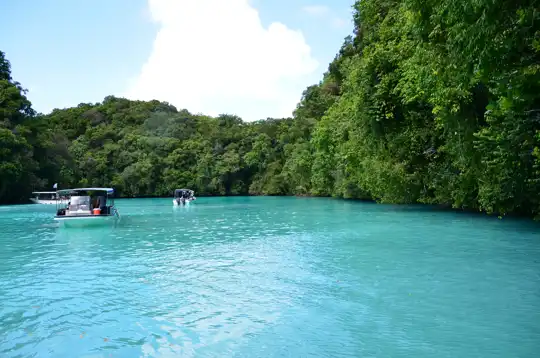
The Rock Islands are a stunning archipelago, dotted with lush greenery and hidden lagoons. A day trip here typically involves a boat ride of about 45 minutes. Expect to spend around $50 for a full-day tour, which often includes snorkeling gear. The best time to go is during the dry season from November to April. One pitfall to avoid is not checking the tide schedule; some lagoons are only accessible at certain times.


Visit the Palau National Museum
For a cultural deep dive, head to the Palau National Museum. It’s a short 10-minute ride from Koror, and entry is usually around $5. The museum showcases Palauan history, art, and traditions, giving you a richer understanding of the islands. Aim for a weekday visit to enjoy a quieter atmosphere. Many backpackers overlook this gem, but it’s a fantastic way to connect with the local culture before heading out on your adventures.


Hiking to Ngardmau Waterfall
If you’re up for a bit of a trek, Ngardmau Waterfall is worth the effort. The hike takes about an hour, winding through lush jungle and offering glimpses of local wildlife. Budget around $10 for transportation to the trailhead. The best time to visit is after a rain, when the waterfall is at its most powerful. A common mistake is underestimating the trail; wear sturdy shoes and bring plenty of water.


Each of these trips offers a unique slice of Palau, making your stay in Koror not just a stopover, but a gateway to unforgettable experiences.
Want to know what more Palau offers?
The Palau Travel Guide describes 28 highlights, from cities to national parks, from beaches to hikes

Get the Travel Guide -

🛡️ SafetyTraveler Safety Guide

Koror, Palau, is generally safe, but a little awareness goes a long way. The town has a relaxed vibe, but keep an eye on your belongings, especially in crowded markets or near popular tourist spots. Those vibrant local markets can be bustling, and while the people are friendly, it’s easy to get distracted.

If you’re wandering solo at night, stick to well-lit areas and main streets. The atmosphere can shift after dark, so trust your instincts. If something feels off, don’t hesitate to change your route.

Scams are rare, but be cautious of overly friendly locals offering unsolicited help. They might expect a tip or try to steer you toward specific shops. Politely decline and keep your plans to yourself.

Everyday annoyances can include the occasional stray dog or a few persistent vendors, … read more 👉
Koror, Palau, is generally safe, but a little awareness goes a long way. The town has a relaxed vibe, but keep an eye on your belongings, especially in crowded markets or near popular tourist spots. Those vibrant local markets can be bustling, and while the people are friendly, it’s easy to get distracted.

If you’re wandering solo at night, stick to well-lit areas and main streets. The atmosphere can shift after dark, so trust your instincts. If something feels off, don’t hesitate to change your route.

Scams are rare, but be cautious of overly friendly locals offering unsolicited help. They might expect a tip or try to steer you toward specific shops. Politely decline and keep your plans to yourself.

Everyday annoyances can include the occasional stray dog or a few persistent vendors, but a friendly smile and a firm “no, thank you” usually do the trick. Embrace the local rhythm, and you’ll find Koror welcoming and rewarding.

More places to explore across Palau

Koror isn’t the only highlight in Palau. Explore all what Palau has to offer.
Country photo of Palau

We 💚 feedbackWhat to keep in mind

Koror has a laid-back vibe that feels like a warm hug after a long trek. The best surprise? The local markets bursting with fresh fruit and the scent of grilled seafood wafting through the air. Grab a mango or try the grilled fish; it’s a game changer. Just a heads-up: the humidity can be intense, so stay hydrated and take it slow. Embrace the rhythm of island life, and you’ll find that the little challenges only make the beauty more rewarding.

✍️ Help improve this page!
The information on this page is based on in-depth research, insights shared by experienced travelers, and feedback from the local travel community in Palau. While every effort is made to keep the information accurate and current, conditions can change — so if you spot anything incorrect or outdated, please get in touch.


🙋‍♂️ Give feedback

👋 Meet the founderWho’s Behind Take Your Backpack?

Johan, backpacker and founder of TakeYourBackpackHi, I’m Johan (Netherlands 🇳🇱), the creator of TakeYourBackpack. Over the past decade, I’ve backpacked through 80+ countries across six continents, gaining extensive experience with independent travel, long-term trips, and overland routes.

This site is built on a combination of firsthand travel experience and carefully curated insights from other backpackers. Many guides are based on places I’ve personally visited, while others bring together tips, observations, and practical advice shared by trusted travelers I’ve met along the way.

The goal is to provide realistic, experience-driven guidance — not generic itineraries — so you can explore destinations with better context, clearer expectations, and more confidence.

Get full Palau guide •
Instant download • 28 highlights • Full Offline guide