v2.webp)
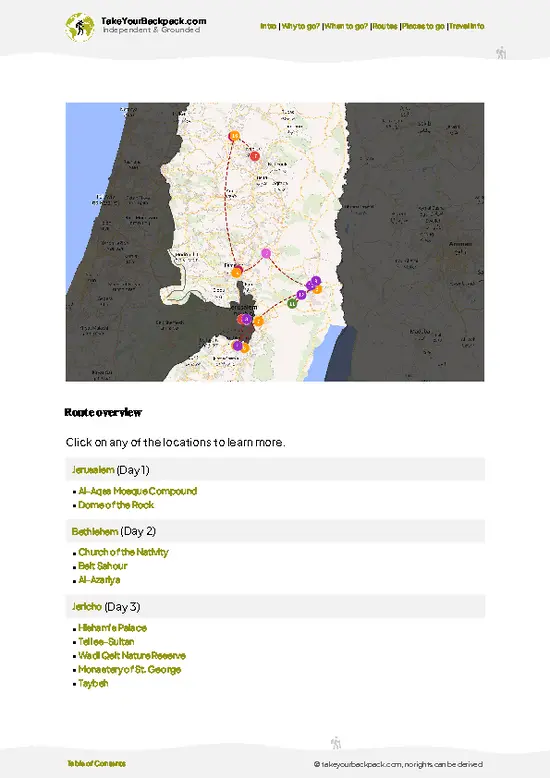
- Tomb of Lazarus & Church complex — The town’s headline: a cave-tomb venerated as Lazarus’s burial place with a church built around it. It’s a quiet, pilgrimage-y spot where history, faith and local life meet; the cave itself and the surrounding courtyard make for a compact, memorable visit.
- Traditional stone alleys of the old town — Short winding streets, low stone houses and shaded doorways that haven’t been erased by development. Walking these alleys gives the clearest sense of everyday Al-Azariya: neighbors chatting, kids playing, older architecture up close.
- Main market street and food stalls — A lively strip of shops and bakeries where you can eat cheap, real food: warm flatbread, falafel, fresh za’atar, and strong coffee. Great for people-watching and spotting local rhythms that
- Tomb of Lazarus & Church complex — The town’s headline: a cave-tomb venerated as Lazarus’s burial place with a church built around it. It’s a quiet, pilgrimage-y spot where history, faith and local life meet; the cave itself and the surrounding courtyard make for a compact, memorable visit.
- Traditional stone alleys of the old town — Short winding streets, low stone houses and shaded doorways that haven’t been erased by development. Walking these alleys gives the clearest sense of everyday Al-Azariya: neighbors chatting, kids playing, older architecture up close.
- Main market street and food stalls — A lively strip of shops and bakeries where you can eat cheap, real food: warm flatbread, falafel, fresh za’atar, and strong coffee. Great for people-watching and spotting local rhythms that guide town life.
- House traditions site (traditional Mary-Martha-Lazarus area) — A handful of small chapels and local markers point to the traditional location associated with Jesus’s visits to Mary, Martha and Lazarus. Quiet, devotional and low-key — meaningful if you like pilgrimage trails off the beaten track.
- Olive groves and terrace walks — Short walks from the center lead into working olive groves and old terraces where locals press olive oil and harvest in season. It’s simple countryside that tells you how people here have lived for generations.
- Neighborhood mosque and courtyard — The town’s main mosque is a good place to observe community life (visit respectfully outside prayer times). The adjoining courtyard is often where conversations, small commerce and neighborhood routines happen.
- Panoramic viewpoint over the Judean slope — A small hill/edge inside town gives sweeping views toward the Mount of Olives and the Judean wilderness. Sunset from here is compact, real, and free of the tourist circus.
- Local bakeries and home kitchens — Not a single landmark but a cluster of family-run bakeries where you can watch taboon bread being made and taste regionally specific pastries. The food alone is worth lingering for a half hour.
- Community cemetery and old grave inscriptions — A reflective spot showing Ottoman-era and later gravestones with worn Arabic and sometimes Armenian or Greek inscriptions. Good for those interested in local genealogies and layered histories.
- Small craft and stonework workshops — Local craftsmen and small workshops on the town’s edges do stone carving, metalwork and repairs. Watching a stonecutter or a carpenter at work gives you a hands-on sense of practical skills that keep the town running.
Spotted a mistake or missing something? Contact us.

 Best Backpacking
.jpg) Hi, I’m Johan (Netherlands 🇳🇱), the creator of TakeYourBackpack. Over the past 3 decades, I’ve backpacked through 90+ countries across six continents, gaining extensive experience with independent travel, long-term trips, and overland routes.
Hi, I’m Johan (Netherlands 🇳🇱), the creator of TakeYourBackpack. Over the past 3 decades, I’ve backpacked through 90+ countries across six continents, gaining extensive experience with independent travel, long-term trips, and overland routes.