×

Palestine🇵🇸 | attractionsDome of the Rockoctagonal shrine, golden dome, religious relic | things to do and best time to go

Explore Al-Aqsa Mosque CompoundExplore Ibrahimi Mosque / Cave of the Patriarchs

Backpacking in Dome of the Rock
🏆 Top pickattraction ranked #2
By Johan Kruseman 🇳🇱 | Updated September 4, 2026

Your socks squeak against marble as you step into the shade, the gold above you throwing sunlight in every direction. The air smells faintly of dust and incense. You hear a guide whispering in French, a child’s laugh echoing off ancient stones, and the distant, relentless hum of Jerusalem’s Old City just beyond the walls.

The Dome of the Rock sits at the heart of East Jerusalem, inside the Palestinian territories—a place that’s been fought over, prayed over, and photographed to exhaustion. Here’s the truth: it’s not just a pretty dome for your feed. The crowds are real, the security is tight, and non-Muslims can’t enter the shrine itself, only the platform. But even from the outside, the energy is electric—centuries of devotion, tension, and beauty packed into one plaza. It’s not cheap or easy to get here, but the sheer gravity of the place makes every checkpoint and sweaty walk worth it. Compared to Bethlehem or Hebron, the Dome is less intimate, more overwhelming—a masterpiece you feel in your bones, not just your eyes.

Discover everything you want to know in the 📖 Palestine Travel Guide.
Safety warning

The current risk level for Palestine is high. Check the advice before going.


Get your Palestine guide
69 ranked highlights, routes & tips, works offline (273 pages)
Loading the map 🌍
CLICK TO FILTER
cities
towns
villages
landmarks
national parks
hikes
attractions
festivals
regions
SHOW COUNTRY’S BESTSHOW ALL

✨ Why go?
Ranked #2 attraction in Palestine
Why visitors keep coming back

The Dome of the Rock in Palestine is not some postcard-perfect, crowd-free sanctuary. Brace yourself for the throngs—tourists, pilgrims, and locals all converging in a tight, intense space. It’s loud, it’s busy, and yes, it can feel overwhelming. But here’s the kicker: this isn’t just another pretty dome to snap and move on. It’s a milestone on any serious Middle East route, a symbolic powerhouse that anchors centuries of faith, conflict, and culture in one spot. The golden dome isn’t just eye candy; it’s a living relic of Islamic architecture and religious history, standing on a site sacred to three major religions. The historical depth here is staggering—layers of stories, from ancient prophets to modern struggles, all wrapped in intricate mosaics and stonework that demand more than a glance. … read more 👉
The Dome of the Rock in Palestine is not some postcard-perfect, crowd-free sanctuary. Brace yourself for the throngs—tourists, pilgrims, and locals all converging in a tight, intense space. It’s loud, it’s busy, and yes, it can feel overwhelming. But here’s the kicker: this isn’t just another pretty dome to snap and move on. It’s a milestone on any serious Middle East route, a symbolic powerhouse that anchors centuries of faith, conflict, and culture in one spot. The golden dome isn’t just eye candy; it’s a living relic of Islamic architecture and religious history, standing on a site sacred to three major religions. The historical depth here is staggering—layers of stories, from ancient prophets to modern struggles, all wrapped in intricate mosaics and stonework that demand more than a glance. For backpackers, the effort to navigate the crowds and political tensions pays off with a raw, unfiltered connection to a place that’s shaped human history. It’s not about a polished experience; it’s about standing where history still breathes, and that’s a rush no Instagram filter can replicate.
Want to include Dome of the Rock in your Palestine route?
Create a personalized Palestine itinerary that includes Dome of the Rock and the places that fit your trip — based on your travel style, budget, and available time. Get your route in seconds.

Generate my trip

💡 HighlightsMust-see experiences and standout moments

The Dome’s Exterior: Gold That Isn’t Just for Show
Let’s get real: the Dome of the Rock’s golden roof is the Instagram shot everyone wants, but standing beneath it is a different animal. The gold glints in the sun, sure, but it’s the geometry that’ll stop you. The octagonal base, the blue-and-turquoise tilework, the Arabic calligraphy—this is not a backdrop, it’s a statement. The closer you get, the more you realize this isn’t just a religious symbol; it’s a flex of medieval engineering and artistry. The dome itself is visible from all over Jerusalem, but up close, the craftsmanship is almost defiant in its detail. You’ll see pilgrims, tourists, and locals all craning their necks, and for good reason: this is one of the world’s most recognizable silhouettes, and it earns every bit of that fame. … read more 👉
The Dome’s Exterior: Gold That Isn’t Just for Show
Let’s get real: the Dome of the Rock’s golden roof is the Instagram shot everyone wants, but standing beneath it is a different animal. The gold glints in the sun, sure, but it’s the geometry that’ll stop you. The octagonal base, the blue-and-turquoise tilework, the Arabic calligraphy—this is not a backdrop, it’s a statement. The closer you get, the more you realize this isn’t just a religious symbol; it’s a flex of medieval engineering and artistry. The dome itself is visible from all over Jerusalem, but up close, the craftsmanship is almost defiant in its detail. You’ll see pilgrims, tourists, and locals all craning their necks, and for good reason: this is one of the world’s most recognizable silhouettes, and it earns every bit of that fame.


The Mosaics: A 7th-Century Power Move
Forget the tired travel-brochure talk about “intricate mosaics.” These are not just pretty patterns. The mosaics inside the Dome are a visual manifesto—no human or animal figures, just swirling vegetal motifs and Quranic inscriptions. They’re a direct challenge to the Byzantine churches of the era, and they still hold up. If you’re lucky enough to get inside (access is restricted for non-Muslims, and the rules change often), you’ll see gold, green, and blue glass tesserae that shimmer in the filtered light. It’s a sensory overload, but in a way that feels intentional, not gaudy.


The Foundation Stone: Where Myth Meets Stone
This is the heart of the Dome, and the reason for its existence. The Foundation Stone is where, according to tradition, Abraham prepared to sacrifice his son, and where Muslims believe the Prophet Muhammad began his Night Journey. The stone itself is rough, ancient, and unspectacular—until you realize you’re standing at the crossroads of three major religions. There’s no velvet rope, no glass case. Just raw history, right under your feet. This is the spot that gives the Dome its gravity, and it’s the one place where the noise of the crowds seems to drop away. This is my personal favorite—there’s nothing quite like feeling the weight of centuries in a single, silent moment.


The Atmosphere on Fridays
If you want to feel the pulse of the place, come on a Friday. The plaza fills with worshippers, the air hums with anticipation, and the call to prayer bounces off the ancient stones. It’s not a quiet, meditative experience; it’s communal, alive, and unapologetically public. You’ll see families picnicking, kids darting between columns, and elders deep in conversation. It’s a reminder that this isn’t just a monument—it’s a living, breathing part of Palestinian daily life.


The Panoramic Views of Jerusalem
Step back from the Dome and look out over the city. You’ll see the Mount of Olives, the Church of the Holy Sepulchre, and the tangled streets of the Old City. The view is a crash course in history and conflict, beauty and heartbreak. It’s not sanitized for tourists, and that’s exactly what makes it unforgettable.
Spotted a mistake or missing something? Contact us.

Things to do around Dome of the Rock

Ratings based on Tripadvisor reviews. When you book through this link, you support our work at no extra cost to you.

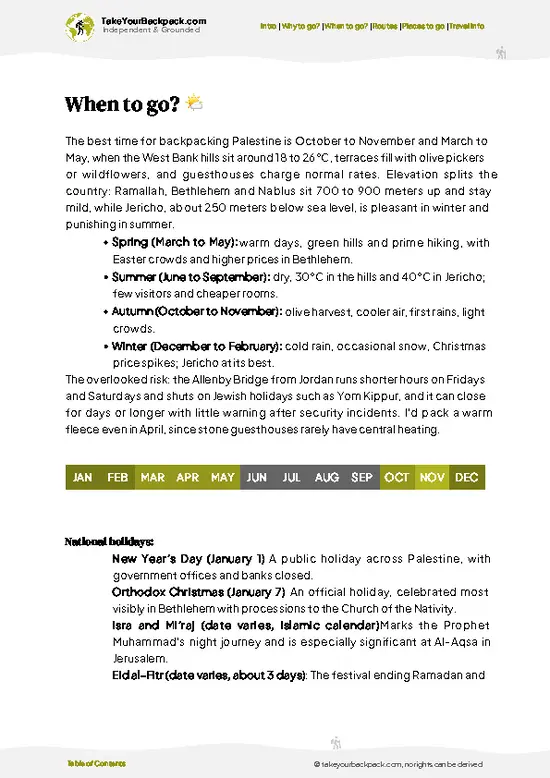
🌤️ When to go?When to go for the best experience


  • Weather: The Dome of the Rock bakes under a Mediterranean sun from June to August, with highs often hitting 32-35°C (90-95°F). Winters, December through February, are mild but can be rainy, averaging 10-15°C (50-59°F). Spring (March-May) and autumn (September-November) offer the most comfortable weather, with temperatures ranging from 18-25°C (64-77°F).

  • Temperature: Summer heat can be relentless, making midday visits exhausting. Early spring and late autumn provide cooler, more pleasant conditions for exploring without overheating or shivering.

  • Daylight Hours: Long summer days mean more time to wander, but also more sun exposure. Winter days shrink to about 10 hours of light, which limits sightseeing but offers cooler temperatures and softer light for photography.

  • Crowds: Peak tourist
read more 👉

  • Weather: The Dome of the Rock bakes under a Mediterranean sun from June to August, with highs often hitting 32-35°C (90-95°F). Winters, December through February, are mild but can be rainy, averaging 10-15°C (50-59°F). Spring (March-May) and autumn (September-November) offer the most comfortable weather, with temperatures ranging from 18-25°C (64-77°F).

  • Temperature: Summer heat can be relentless, making midday visits exhausting. Early spring and late autumn provide cooler, more pleasant conditions for exploring without overheating or shivering.

  • Daylight Hours: Long summer days mean more time to wander, but also more sun exposure. Winter days shrink to about 10 hours of light, which limits sightseeing but offers cooler temperatures and softer light for photography.

  • Crowds: Peak tourist season aligns with spring and autumn, especially around religious holidays like Ramadan and Easter, when the site fills with pilgrims and tourists alike. Winter sees fewer visitors, giving a quieter, more reflective experience.

  • Seasonal Activities: Religious festivals and local events cluster in spring and autumn, adding layers of cultural depth but also crowd pressure. Winter’s calm allows for more personal space but fewer organized activities.

  • Price Fluctuations: Accommodation and travel costs spike during spring and autumn due to demand. Winter months often bring lower prices and better deals, though some services may reduce hours or close.


Pro-tip: Aim for late October or early April—cool enough to explore comfortably, fewer crowds, and you’ll catch the city’s rhythm without the tourist crush or the scorch.


source: climatestotravel.comJANJanuary: good for travelingFEBFebruary: good for travelingMARMarch: highly recommended for travelingAPRApril: excellent for travelingMAYMay: highly recommended for travelingJUNJune: fair for travelingJULJuly: below average for travelingAUGAugust: below average for travelingSEPSeptember: good for travelingOCTOctober: excellent for travelingNOVNovember: highly recommended for travelingDECDecember: good for traveling
when-to-go

✈️ The backpacker research shortcutPalestine Travel Guide

An offline-friendly backpacking guide with optimized travel routes, ranked highlights, transport advice, and the best areas to stay.
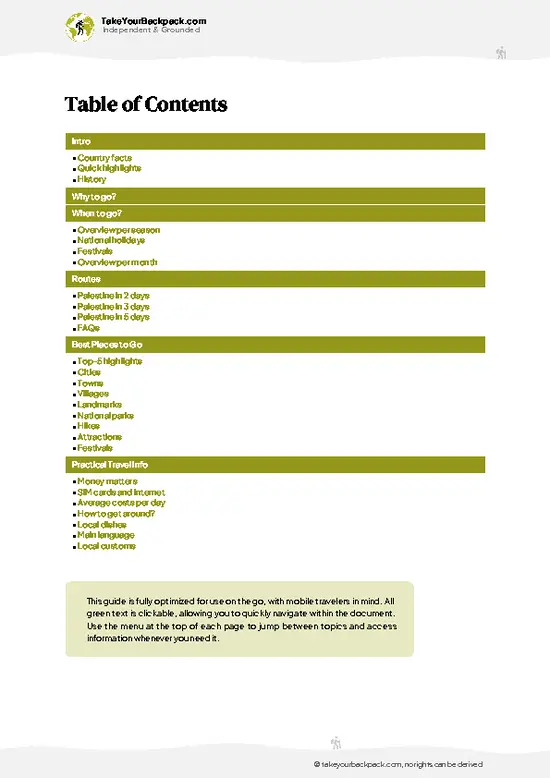
example page 0 from our offline Travel Guide for Palestine
example page 1 from our offline Travel Guide for Palestine
example page 2 from our offline Travel Guide for Palestine
example page 3 from our offline Travel Guide for Palestine
example page 4 from our offline Travel Guide for Palestine
example page 5 from our offline Travel Guide for Palestine
example page 6 from our offline Travel Guide for Palestine
example page 7 from our offline Travel Guide for Palestine
The digital guide (273 pages) contains:
69 highlights, ranked by travel appeal
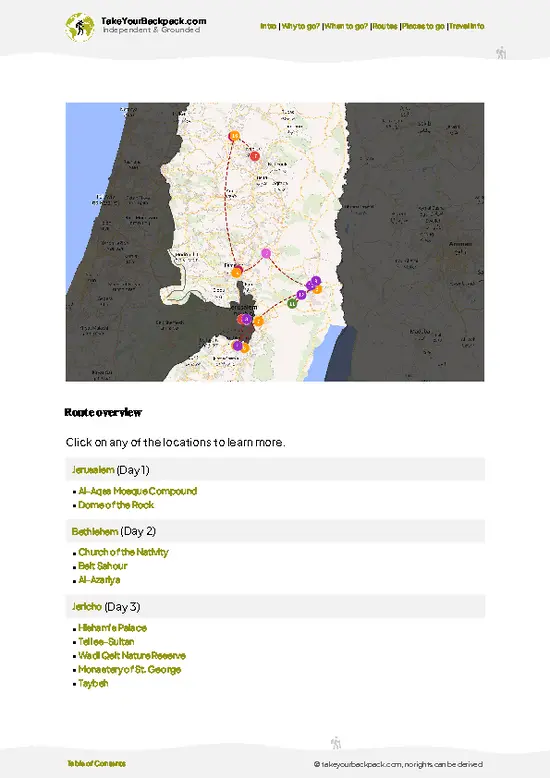
Optimized 2, 3 & 5-day travel routes
Cities, national parks, landmarks, beaches
How to get around
Offline-friendly for travel without Wi-Fi
👉 Click to see all 30+ guide features

📅 Plan smarter in minutes, not weeks
Month by month travel advice
Festivals & national holidays
Budget expectations

🗺️ Go to the right places, skip the overrated ones
Honest pros & cons of destinations
Top hikes, parks & viewpoints
Lesser-known places most travelers miss
Clear “worth it vs skip it” guidance

🛏️ Travel smoothly without rookie mistakes
Best areas to stay
Transport systems explained simply
Common scams & safety advice
SIM cards, money & practical tips

🌍 Understand the country, not just visit it
Culture & traditions
52 Essential phrases & customs
Festivals worth planning around
Traveler-friendly historical context
Insights that make places more meaningful

📱 Built for real travel conditions
Fully downloadable PDF
Works completely offline
Optimized for phone use
Useful in remote areas & buses
Everything in one place
Save weeks of stressful planning
Get instant access to your full guide. 30‑day money-back guarantee.
+ Add another guide for just US$7.80

By proceeding you agree to our terms.
Sent to your inbox immediately after payment • 100% Secure Checkout
Best Backpacking Travel Advisor 2025 tourism awardBest Backpacking
Travel Advisor
2025
What others say about Take Your Backpack Guides:
⭐⭐⭐⭐⭐
Fantastic, amazing amount of information!
⭐⭐⭐⭐⭐
My goodness this is amazing, it's what I've been looking for hats off too you!
⭐⭐⭐⭐⭐
I think this is absolutely BRILLIANT
⭐⭐⭐⭐
Very complete and informative. It's still missing places, but I gotta to commend you
⭐⭐⭐⭐⭐
This is truly amazing, thank you, can't wait to explore it with my kids!
⭐⭐⭐⭐⭐
Awesome resource, thank you!
⭐⭐⭐⭐⭐
This is amazing! Can't wait to explore the ones I haven't seen
⭐⭐⭐⭐
I love this! Well done, great idea.
⭐⭐⭐⭐⭐
Thanks for taking the time to make this gem!
⭐⭐⭐⭐⭐
This might be the best website I've ever seen.
⭐⭐⭐⭐⭐
Congratulations, and thank you so much for your work; it's incredibly valuable.
⭐⭐⭐⭐
In all seriousness I think you did a great job pointing out the important spots
⭐⭐⭐⭐⭐
10/10 very good
⭐⭐⭐⭐⭐
As someone who's only just starting to visit regularly this is awesome, thank you.
⭐⭐⭐⭐
Thank you very much! I'm going to visit my dad, it's going to be very useful!
⭐⭐⭐⭐⭐
This is really cool! We'll be travelling for the first time and this definitely come in handy.
⭐⭐⭐⭐⭐
You are now our minister of culture, congratulations 👨‍💼
⭐⭐⭐⭐⭐
Just wanted to tell you that this is a pearl! Going to follow your recommendations.
⭐⭐⭐⭐⭐
This is so cool. I'll definitely be using the resource for my travels soon.
⭐⭐⭐⭐⭐
This is very impressive! Good work.
⭐⭐⭐⭐⭐
This is an amazing and informative site. Very well done!

🛏️ Where to stay?How to pick the right area

If you’re aiming to stay near the Dome of the Rock, brace yourself: the Old City of Jerusalem is a maze of history, faith, and yes, crowds. This isn’t a quiet retreat. It’s a bustling, intense place where every corner hums with centuries of stories—and tourists. The real challenge is finding a spot that feels safe and social without getting swallowed by the tourist tide or the political tension.

For backpackers, the Muslim Quarter is your best bet. It’s the heart of the action, just a short walk from the Dome of the Rock. This area pulses with life—street vendors hawking spices, locals chatting … read more 👉
If you’re aiming to stay near the Dome of the Rock, brace yourself: the Old City of Jerusalem is a maze of history, faith, and yes, crowds. This isn’t a quiet retreat. It’s a bustling, intense place where every corner hums with centuries of stories—and tourists. The real challenge is finding a spot that feels safe and social without getting swallowed by the tourist tide or the political tension.

For backpackers, the Muslim Quarter is your best bet. It’s the heart of the action, just a short walk from the Dome of the Rock. This area pulses with life—street vendors hawking spices, locals chatting over coffee, and a mix of travelers swapping stories in small guesthouses. It’s gritty, authentic, and packed with budget options that don’t sacrifice safety. You’ll find yourself rubbing shoulders with solo travelers and small groups who appreciate the raw energy here.

If you want a bit more breathing room but still crave that Old City vibe, the nearby neighborhoods of East Jerusalem, like Wadi al-Joz, offer quieter streets and a more local feel. It’s less touristy, which means better prices and a chance to connect with Palestinians living their daily lives, not just the tourist circuit.

Bottom line: staying close to the Dome of the Rock means embracing the chaos and complexity. But if you pick the right neighborhood, you’ll find a social, safe base that’s rich with the kind of real experiences no Instagram filter can capture.

👛 Costs (as of 4 September 2026)Travel costs and budget guide for Dome of the Rock

Access to the Dome of the Rock is free for Muslims. Non-Muslim visitors may need to pay a small fee, typically around €1-€5 (USD $1-5), depending on the time of day and any special events. Guided tours are available, with prices ranging from €20 to €50 (USD $20-50) per person, depending on the length and inclusivity of the tour. Additional costs may include transportation, with taxi fares around €10-€20 (USD $10-20) from nearby areas, and public transport bus fares around €1 (USD $1) within Jerusalem. Food and drink options are available nearby, with meals ranging from €5 to €15 (USD $5-15). Souvenirs can be purchased for around €5 to €30 (USD $5-30). Please note that prices can change, and it's advisable to check the latest information before planning your visit.
⚠️ Prices can change and everyone travels differently, so take this as a rough guide. Hope it helps you plan your adventure!

FAQTraveler FAQ

1 to 2 hours is sufficient to visit the Dome of the Rock, allowing time to appreciate its architecture and surroundings. The site is part of the larger Al-Aqsa Mosque compound, so additional time may be needed if exploring the entire area. Visiting early in the morning or late afternoon helps avoid crowds.
Yes, the Dome of the Rock is worth the entrance fee, which is generally free for Muslim visitors but may require a permit or fee for non-Muslims depending on current regulations. Its historical, religious, and architectural significance makes it a must-see landmark in Jerusalem. The experience offers unique insight into Islamic art and history.
To get to the Dome of the Rock, enter the Old City of Jerusalem through the Muslim Quarter. The closest major access point is the Lion's Gate, about a 10-minute walk from there. Public transport and taxis can drop you near the Old City walls, but walking inside is necessary to reach the site.
⚠️ Things can change over time, so always validate details locally before you go.

Other Palestinian attractions near Dome of the Rock

Explore more nearby:


💡 Not sure where to go next?
Create a personalized itinerary for Palestine including Dome of the Rock and the places that fit your trip.

Generate my itinerary

👉 Discover all attractions

Or checkout all Palestine has to offer (think cities, towns, villages, national parks, hikes, beaches, festivals)
Country photo of Palestine

We 💚 feedbackParting advice and final tips

The Dome of the Rock isn’t just a photo op—it’s a pulse of history and faith that hits you in the chest. Yes, the crowds can feel like a crush, and the security checks slow you down, but standing there, under that golden dome, you’re touching a story that’s shaped millennia. If you can push past the chaos, the weight of that moment is something no picture can capture.

✈️ When did I visit Palestine?
I visited Palestine (Westbank) in October 2013 in the same trip as I backpacked through Israel.

✍️ Help improve this page!
The information on this page is based on my own backpacking experience in Palestine, supplemented with up-to-date research and feedback from other travelers. Travel details can change, so if you notice anything outdated or incomplete, feel free to let me know.


🙋‍♂️ Give feedback

👋 Meet the founderWho’s Behind Take Your Backpack?

Johan, backpacker and founder of TakeYourBackpackHi, I’m Johan (Netherlands 🇳🇱), the creator of TakeYourBackpack. Over the past decade, I’ve backpacked through 80+ countries across six continents, gaining extensive experience with independent travel, long-term trips, and overland routes.

This site is built on a combination of firsthand travel experience and carefully curated insights from other backpackers. Many guides are based on places I’ve personally visited, while others bring together tips, observations, and practical advice shared by trusted travelers I’ve met along the way.

The goal is to provide realistic, experience-driven guidance — not generic itineraries — so you can explore destinations with better context, clearer expectations, and more confidence.

Get full Palestine guide •
Instant download • 69 highlights • Full Offline guide