×

Palestine🇵🇸 | attractionsIbrahimi Mosque / Cave of the Patriarchsshared sanctuary, monumental stonework, ancestral tombs | things to do and best time to go

Explore Dome of the RockExplore Yasser Arafat Museum

Backpacking in Ibrahimi Mosque / Cave of the Patriarchs
🌟 Highlightattraction ranked #4
By Johan Kruseman 🇳🇱 | Updated May 7, 2026

Here’s what nobody tells you until you’re standing at the checkpoint: the Ibrahimi Mosque (Cave of the Patriarchs) has separate entrances and security lines for Muslims and Jews, and the experience you get depends entirely on which side you enter. This isn’t just a footnote—it shapes everything, from what you see to how you feel. You’ll find the site in the heart of Hebron, deep in the West Bank, where the tension is as thick as the history. Backpackers come for the gravity: this is one of the oldest continuously used prayer sites on earth, revered by Jews, Muslims, and Christians alike. The architecture is fortress-like, the atmosphere electric—sometimes literally, with soldiers and checkpoints everywhere. It’s not cheap or easy to reach, and the crowds can be intense, especially during religious holidays. But if you want raw, unfiltered history—something that’ll stick with you long after the Instagram likes fade—this place delivers. Just be ready for the emotional whiplash.

Discover everything you want to know in the 📖 Palestine Travel Guide.
Safety warning

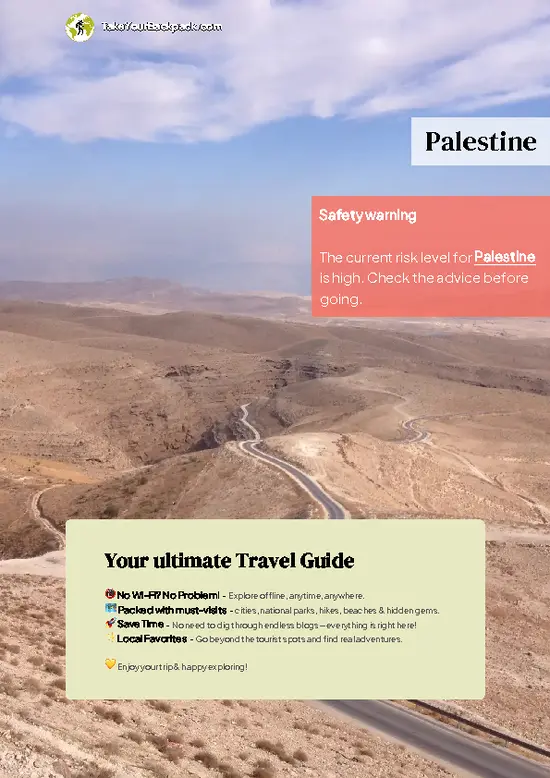
The current risk level for Palestine is high. Check the advice before going.


Get your Palestine guide
70 ranked highlights, routes & tips, works offline (276 pages)
Loading the map 🌍
CLICK TO FILTER
cities
towns
villages
landmarks
national parks
hikes
attractions
festivals
regions
SHOW COUNTRY’S BESTSHOW ALL

✨ Why go?
Ranked #4 attraction in Palestine
What sets this place apart

The Ibrahimi Mosque, also known as the Cave of the Patriarchs, is not your typical postcard stop. Yes, it’s crowded and the security checks can feel like a hassle, but that’s part of the raw reality here—this place is a living, breathing crossroads of faith and history. It’s one of the oldest continuously used religious sites on Earth, sacred to Jews, Muslims, and Christians alike. That alone makes it a heavyweight on any Palestine itinerary. Backpackers don’t just come for the iconic status; they come for the weight of millennia pressing down in the stone, the palpable tension between reverence and conflict, and the stories carved into every corner. The adrenaline of navigating the complex political and cultural layers here pays off with a profound sense of connection to human history that … read more 👉
The Ibrahimi Mosque, also known as the Cave of the Patriarchs, is not your typical postcard stop. Yes, it’s crowded and the security checks can feel like a hassle, but that’s part of the raw reality here—this place is a living, breathing crossroads of faith and history. It’s one of the oldest continuously used religious sites on Earth, sacred to Jews, Muslims, and Christians alike. That alone makes it a heavyweight on any Palestine itinerary. Backpackers don’t just come for the iconic status; they come for the weight of millennia pressing down in the stone, the palpable tension between reverence and conflict, and the stories carved into every corner. The adrenaline of navigating the complex political and cultural layers here pays off with a profound sense of connection to human history that no sanitized tourist trap can offer. If you’re threading through Palestine, skipping the Ibrahimi Mosque is like skipping the heart of the story. It’s a milestone that forces you to reckon with the past and present in a way few places can.
Want to include Ibrahimi Mosque / Cave of the Patriarchs in your Palestine route?
Create a personalized Palestine itinerary that includes Ibrahimi Mosque / Cave of the Patriarchs and the places that fit your trip — based on your travel style, budget, and available time. Get your route in seconds.

Generate my trip

💡 HighlightsMust-see experiences and standout moments

The Tombs Themselves
Let’s cut through the Instagram haze: the Ibrahimi Mosque/Cave of the Patriarchs is not a photogenic backdrop—it’s a living, breathing crossroads of faith, history, and tension. The cenotaphs of Abraham, Isaac, Jacob, Sarah, Rebecca, and Leah are the main event. These are not dusty relics behind glass; they’re massive, ornate monuments, each with its own architectural quirks and scriptural calligraphy. The emotional charge in the air is real—pilgrims weep, guards watch, and you feel the centuries pressing in. This is not a place for casual selfies; it’s a place to feel the weight of millennia.

The Soundscape of Prayer
Here’s the truth: you’ll never find a quiet moment. The soundscape is a collision of muezzin calls, whispered Hebrew prayers, and the shuffle of security … read more 👉
The Tombs Themselves
Let’s cut through the Instagram haze: the Ibrahimi Mosque/Cave of the Patriarchs is not a photogenic backdrop—it’s a living, breathing crossroads of faith, history, and tension. The cenotaphs of Abraham, Isaac, Jacob, Sarah, Rebecca, and Leah are the main event. These are not dusty relics behind glass; they’re massive, ornate monuments, each with its own architectural quirks and scriptural calligraphy. The emotional charge in the air is real—pilgrims weep, guards watch, and you feel the centuries pressing in. This is not a place for casual selfies; it’s a place to feel the weight of millennia.

The Soundscape of Prayer
Here’s the truth: you’ll never find a quiet moment. The soundscape is a collision of muezzin calls, whispered Hebrew prayers, and the shuffle of security boots. It’s chaotic, sometimes jarring, but it’s also electric. The overlapping rituals are a living reminder that this site is claimed, loved, and fiercely protected by multiple faiths. If you want a sanitized, museum-like experience, look elsewhere. If you want to feel the pulse of living religion, this is it.

The Divided Spaces
This is not a single, unified sanctuary. The mosque and synagogue are split by bulletproof glass and heavy doors, with separate entrances, security checks, and even prayer times. The division is not just physical—it’s palpable. You’ll see the tension in the eyes of worshippers and soldiers alike. It’s uncomfortable, but it’s also a raw, unfiltered lesson in coexistence and conflict. If you want to understand the reality of the region, stand at the threshold between the two sides.

The Architecture—Layers of Power
Forget the tourist brochures. The building is a Frankenstein’s monster of Herodian stonework, Crusader arches, Mamluk embellishments, and Ottoman flourishes. Every layer is a chapter of conquest and reclamation. Run your hand along the ancient stones—some of them are over 2,000 years old. The place is a physical timeline, and you can literally touch history.

The Friday and Saturday Switch
Here’s a detail the Instagram crowd misses: on Fridays, the entire site becomes a mosque; on Saturdays, it flips to a synagogue. The transformation is total—different guards, different rituals, different energy. If you time it right, you can witness the changeover, which is both surreal and deeply symbolic. It’s a logistical headache, but also a one-of-a-kind window into the choreography of sacred space.

Personal Favorite: The Human Mosaic
My top pick isn’t a room or a relic—it’s the people. The mix of pilgrims, soldiers, local families, and wide-eyed travelers is unlike anywhere else on earth. You’ll see heartbreak, devotion, suspicion, and hope, all in a single glance. The real magic isn’t in the stones; it’s in the human drama that unfolds every hour. If you want an experience that will challenge your assumptions and stick with you for years, this is the spot.
Spotted a mistake or missing something? Contact us.
🌤️ When to go?Weather, crowds, and seasonal trade-offs


  • Weather: The best weather hits between March and May or September to November. You’ll dodge the brutal summer heat that can soar above 35°C (95°F) and the chilly winter months that dip below 5°C (41°F). Spring and fall offer mild, comfortable days perfect for exploring without melting or freezing.

  • Temperature: Expect highs around 20-25°C (68-77°F) in spring and fall, which is ideal for walking and absorbing the atmosphere without sweating buckets or shivering.

  • Daylight Hours: From March to October, you get roughly 11 to 13 hours of daylight, giving you plenty of time to soak in the site and the surrounding city without rushing.

  • Crowds: The site is a magnet for religious pilgrims year-round, but the biggest crush hits during Ramadan and major Jewish holidays. Visiting outside these
read more 👉

  • Weather: The best weather hits between March and May or September to November. You’ll dodge the brutal summer heat that can soar above 35°C (95°F) and the chilly winter months that dip below 5°C (41°F). Spring and fall offer mild, comfortable days perfect for exploring without melting or freezing.

  • Temperature: Expect highs around 20-25°C (68-77°F) in spring and fall, which is ideal for walking and absorbing the atmosphere without sweating buckets or shivering.

  • Daylight Hours: From March to October, you get roughly 11 to 13 hours of daylight, giving you plenty of time to soak in the site and the surrounding city without rushing.

  • Crowds: The site is a magnet for religious pilgrims year-round, but the biggest crush hits during Ramadan and major Jewish holidays. Visiting outside these times means fewer crowds and a more personal experience.

  • Seasonal Activities: Religious festivals bring intense energy but also tight security and limited access. If you want the raw, unfiltered vibe, avoid these periods and focus on quieter months like April or October.

  • Price Fluctuations: Accommodation and transport prices spike during peak pilgrimage seasons and holidays. Booking in shoulder seasons like late spring or early fall can save you money and hassle.


Pro-tip: Aim for late April or early October—weather’s sweet, crowds thin, and you get the real pulse of Hebron without the tourist circus.


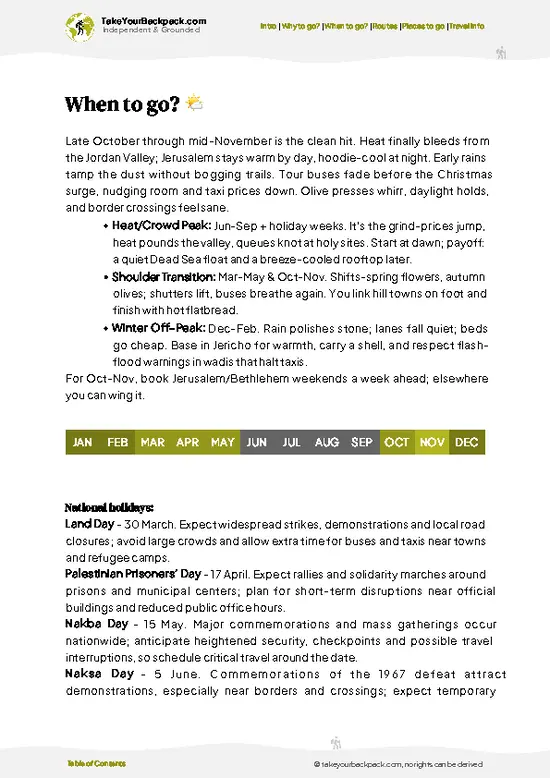
source: climatestotravel.comJANJanuary: fair for travelingFEBFebruary: fair for travelingMARMarch: highly recommended for travelingAPRApril: excellent for travelingMAYMay: highly recommended for travelingJUNJune: fair for travelingJULJuly: below average for travelingAUGAugust: below average for travelingSEPSeptember: highly recommended for travelingOCTOctober: excellent for travelingNOVNovember: highly recommended for travelingDECDecember: fair for traveling
when-to-go

✈️ The backpacker research shortcutPalestine Travel Guide

An offline-friendly backpacking guide with optimized travel routes, ranked highlights, transport advice, and the best areas to stay.
example page 0 from our offline Travel Guide for Palestine
example page 1 from our offline Travel Guide for Palestine
example page 2 from our offline Travel Guide for Palestine
example page 3 from our offline Travel Guide for Palestine
example page 4 from our offline Travel Guide for Palestine
example page 5 from our offline Travel Guide for Palestine
example page 6 from our offline Travel Guide for Palestine
example page 7 from our offline Travel Guide for Palestine
The digital guide (276 pages) contains:
70 highlights, ranked by travel appeal
Optimized 2, 3 & 5-day travel routes
Cities, national parks, landmarks, beaches
How to get around
Offline-friendly for travel without Wi-Fi
👉 Click to see all 30+ guide features

📅 Plan smarter in minutes, not weeks
Month by month travel advice
Festivals & national holidays
Budget expectations

🗺️ Go to the right places, skip the overrated ones
Honest pros & cons of destinations
Top hikes, parks & viewpoints
Lesser-known places most travelers miss
Clear “worth it vs skip it” guidance

🛏️ Travel smoothly without rookie mistakes
Best areas to stay
Transport systems explained simply
Common scams & safety advice
SIM cards, money & practical tips

🌍 Understand the country, not just visit it
Culture & traditions
52 Essential phrases & customs
Festivals worth planning around
Traveler-friendly historical context
Insights that make places more meaningful

📱 Built for real travel conditions
Fully downloadable PDF
Works completely offline
Optimized for phone use
Useful in remote areas & buses
Everything in one place
Save weeks of stressful planning
Get instant access to your full guide. 30‑day money-back guarantee.


By proceeding you agree to our terms.
Sent to your inbox immediately after payment • 100% Secure Checkout
Best Backpacking Travel Advisor 2025 tourism awardBest Backpacking
Travel Advisor
2025
What others say about Take Your Backpack Guides:
⭐⭐⭐⭐⭐
Fantastic, amazing amount of information!
⭐⭐⭐⭐⭐
My goodness this is amazing, it's what I've been looking for hats off too you!
⭐⭐⭐⭐⭐
I think this is absolutely BRILLIANT
⭐⭐⭐⭐
Very complete and informative. It's still missing places, but I gotta to commend you
⭐⭐⭐⭐⭐
This is truly amazing, thank you, can't wait to explore it with my kids!
⭐⭐⭐⭐⭐
Awesome resource, thank you!
⭐⭐⭐⭐⭐
This is amazing! Can't wait to explore the ones I haven't seen
⭐⭐⭐⭐
I love this! Well done, great idea.
⭐⭐⭐⭐⭐
Thanks for taking the time to make this gem!
⭐⭐⭐⭐⭐
This might be the best website I've ever seen.
⭐⭐⭐⭐⭐
Congratulations, and thank you so much for your work; it's incredibly valuable.
⭐⭐⭐⭐
In all seriousness I think you did a great job pointing out the important spots
⭐⭐⭐⭐⭐
10/10 very good
⭐⭐⭐⭐⭐
As someone who's only just starting to visit regularly this is awesome, thank you.
⭐⭐⭐⭐
Thank you very much! I'm going to visit my dad, it's going to be very useful!
⭐⭐⭐⭐⭐
This is really cool! We'll be travelling for the first time and this definitely come in handy.
⭐⭐⭐⭐⭐
You are now our minister of culture, congratulations 👨‍💼
⭐⭐⭐⭐⭐
Just wanted to tell you that this is a pearl! Going to follow your recommendations.
⭐⭐⭐⭐⭐
This is so cool. I'll definitely be using the resource for my travels soon.
⭐⭐⭐⭐⭐
This is very impressive! Good work.
⭐⭐⭐⭐⭐
This is an amazing and informative site. Very well done!

🛏️ Where to stay?Choosing the right base

Staying near the Ibrahimi Mosque, also known as the Cave of the Patriarchs, means diving headfirst into one of the most charged, layered places on earth. Let’s cut through the Instagram gloss: this area is crowded, tense, and far from a polished tourist zone. You’ll hear the calls to prayer echoing off ancient stone, but you’ll also navigate checkpoints and a mix of locals and pilgrims that can feel overwhelming if you’re not prepared.

That said, the real magic is in the neighborhoods just outside the mosque’s immediate perimeter—places where backpackers actually live and breathe the city’s … read more 👉
Staying near the Ibrahimi Mosque, also known as the Cave of the Patriarchs, means diving headfirst into one of the most charged, layered places on earth. Let’s cut through the Instagram gloss: this area is crowded, tense, and far from a polished tourist zone. You’ll hear the calls to prayer echoing off ancient stone, but you’ll also navigate checkpoints and a mix of locals and pilgrims that can feel overwhelming if you’re not prepared.

That said, the real magic is in the neighborhoods just outside the mosque’s immediate perimeter—places where backpackers actually live and breathe the city’s pulse. These areas are gritty but safe enough if you keep your wits. They offer a raw, authentic experience with narrow streets lined by small cafes and markets where locals gather. It’s social, not sanitized. You’ll find other budget travelers and solo backpackers here, drawn by the chance to connect with the city’s complex history and vibrant street life, not just snap a photo.

If you want to experience Hebron beyond the surface, stay where the city’s contradictions play out in real time. It’s not easy, but it’s worth it. This is where you’ll find stories, conversations, and moments that no guidebook can capture.

👛 Costs (as of 18 March 2026)How expensive it really is

As of the most recent estimates, visiting the Ibrahimi Mosque (Cave of the Patriarchs) in Hebron, Palestine, typically involves guided tours. A one-day tour is priced at $75, which is approximately €70. A two-day tour costs $135, about €125, and a three-day tour is $200, roughly €185. These tours often include transportation, meals, and accommodation. Individual entry to the mosque is free, but donations are appreciated. Please note that prices may vary, and it's advisable to check with local tour operators for the most current information. ([govolunteerinpalestine.org](https://www.govolunteerinpalestine.org/hebron-city-guided-tour/?utm_source=openai))

source: govolunteerinpalestine.org
⚠️ Prices can change and everyone travels differently, so take this as a rough guide. Hope it helps you plan your adventure!

Other Palestinian attractions near Ibrahimi Mosque / Cave of the Patriarchs

Explore more nearby:


💡 Not sure where to go next?
Create a personalized itinerary for Palestine including Ibrahimi Mosque / Cave of the Patriarchs and the places that fit your trip.

Generate my itinerary

👉 Discover all attractions

Or checkout all Palestine has to offer (think cities, towns, villages, national parks, hikes, beaches, festivals)
Country photo of Palestine

We 💚 feedbackParting advice and final tips

Visiting the Ibrahimi Mosque isn’t about ticking off another landmark; it’s stepping into a place where history and faith collide in a way that’s raw and real. The weight of centuries presses in, especially in the Cave of the Patriarchs beneath. But brace yourself—the site is crowded, and the tension between religious groups can be palpable. If you can navigate that, you’ll find a moment that sticks with you long after you leave.

✈️ When did I visit Palestine?
I visited Palestine (Westbank) in October 2013 in the same trip as I backpacked through Israel.

✍️ Help improve this page!
The information on this page is based on my own backpacking experience in Palestine, supplemented with up-to-date research and feedback from other travelers. Travel details can change, so if you notice anything outdated or incomplete, feel free to let me know.


🙋‍♂️ Give feedback

👋 Meet the founderWho’s Behind Take Your Backpack?

Johan, backpacker and founder of TakeYourBackpackHi, I’m Johan (Netherlands 🇳🇱), the creator of TakeYourBackpack. Over the past decade, I’ve backpacked through 80+ countries across six continents, gaining extensive experience with independent travel, long-term trips, and overland routes.

This site is built on a combination of firsthand travel experience and carefully curated insights from other backpackers. Many guides are based on places I’ve personally visited, while others bring together tips, observations, and practical advice shared by trusted travelers I’ve met along the way.

The goal is to provide realistic, experience-driven guidance — not generic itineraries — so you can explore destinations with better context, clearer expectations, and more confidence.

Get full Palestine guide •
Instant download • 70 highlights • Full Offline guide