×

Palestine🇵🇸 | attractionsSebastia Archaeological Site and Roman Ruinshilltop ruins, Roman amphitheater, ancient columns | things to do and best time to go

Explore Burqin ChurchExplore Hebron

Backpacking in Sebastia Archaeological Site and Roman Ruins
🌟 Highlightattraction ranked #6
By Johan Kruseman 🇳🇱 | Updated May 2, 2026

Here’s the curveball: Sebastia’s Roman ruins are so open and unguarded, you can literally picnic on a 2,000-year-old column—no velvet ropes, no ticket booths, just you and the ghosts of empires. Sebastia sits northwest of Nablus, in the rolling hills of the northern West Bank, and it’s the kind of place that Instagram barely touches. The amphitheater and crumbling basilica are usually empty except for a few local kids, a stray goat, and maybe a lone archaeologist with a sunburn. That means no crowds, no tourist buses, and no inflated prices—just a tiny entrance fee or sometimes none at all. The catch? Getting here is a minor adventure: public transport is patchy, and you’ll need to be comfortable with the region’s political realities. But if you want ancient stones without the selfie sticks, Sebastia is Palestine’s real magic—quiet, raw, and weirdly intimate.

Discover everything you want to know in the 📖 Palestine Travel Guide.
Safety warning

The current risk level for Palestine is high. Check the advice before going.


Get your Palestine guide
70 ranked highlights, routes & tips, works offline (276 pages)
Loading the map 🌍
CLICK TO FILTER
cities
towns
villages
landmarks
national parks
hikes
attractions
festivals
regions
SHOW COUNTRY’S BESTSHOW ALL

✨ Why go?
Ranked #6 attraction in Palestine
The unique appeal for travelers

Sebastia Archaeological Site and Roman Ruins in Palestine don’t just sit pretty for your Instagram feed—they demand your time because they’re a raw, unfiltered dive into layers of history few places can match. Yes, it’s a hotspot, so expect crowds, especially during peak seasons, and don’t kid yourself about the entry fees—they’re not dirt cheap. But here’s the kicker: this site isn’t just about ruins; it’s a living timeline where you walk through centuries of conquest, faith, and rebellion. The Roman theater, the ancient city walls, and the Byzantine mosaics aren’t just relics; they’re chapters of a story that shaped the region’s identity. For backpackers threading through Palestine, Sebastia is a milestone—an adrenaline rush of discovery that pays off with every stone you touch. It’s a place … read more 👉
Sebastia Archaeological Site and Roman Ruins in Palestine don’t just sit pretty for your Instagram feed—they demand your time because they’re a raw, unfiltered dive into layers of history few places can match. Yes, it’s a hotspot, so expect crowds, especially during peak seasons, and don’t kid yourself about the entry fees—they’re not dirt cheap. But here’s the kicker: this site isn’t just about ruins; it’s a living timeline where you walk through centuries of conquest, faith, and rebellion. The Roman theater, the ancient city walls, and the Byzantine mosaics aren’t just relics; they’re chapters of a story that shaped the region’s identity. For backpackers threading through Palestine, Sebastia is a milestone—an adrenaline rush of discovery that pays off with every stone you touch. It’s a place where effort meets reward in a way that feels both humbling and electrifying. Skip the polished tourist traps; this is the real deal, gritty and profound, and exactly why you’re here.
Want to include Sebastia Archaeological Site and Roman Ruins in your Palestine route?
Create a personalized Palestine itinerary that includes Sebastia Archaeological Site and Roman Ruins and the places that fit your trip — based on your travel style, budget, and available time. Get your route in seconds.

Generate my trip

💡 HighlightsEssential experiences to have while visiting Sebastia Archaeological Site and Roman Ruins

The Roman Forum
Forget the Instagram shots of empty ruins at sunrise. Sebastia’s Roman Forum is rarely empty—kids play soccer between the columns, and local families picnic where senators once schemed. The columns themselves are battered but proud, and you can actually touch them—no velvet ropes, no guards barking at you. The real thrill is standing in the same public square where Roman power flexed its muscles, but now it’s woven into the daily life of a Palestinian village. That collision of ancient empire and modern resilience? You feel it in your bones.


The Basilica of John the Baptist
Here’s the honest truth: the basilica is half-ruin, half-mosque, and all atmosphere. The Crusader-era stonework is rough and raw, not polished for tourists. You’ll see local worshippers and curious travelers … read more 👉
The Roman Forum
Forget the Instagram shots of empty ruins at sunrise. Sebastia’s Roman Forum is rarely empty—kids play soccer between the columns, and local families picnic where senators once schemed. The columns themselves are battered but proud, and you can actually touch them—no velvet ropes, no guards barking at you. The real thrill is standing in the same public square where Roman power flexed its muscles, but now it’s woven into the daily life of a Palestinian village. That collision of ancient empire and modern resilience? You feel it in your bones.


The Basilica of John the Baptist
Here’s the honest truth: the basilica is half-ruin, half-mosque, and all atmosphere. The Crusader-era stonework is rough and raw, not polished for tourists. You’ll see local worshippers and curious travelers sharing the same echoing space. The supposed tomb of John the Baptist is here, but the real magic is the way the site bridges faiths and centuries. It’s not a sanitized relic; it’s a living, breathing crossroads.


The Hellenistic Tower
This isn’t your average “climb a tower, snap a selfie” spot. The Hellenistic Tower is squat, scarred, and absolutely real. Climb up (carefully—no handrails, no lawsuits) and you get a 360-degree view that’s pure time travel: olive groves, minarets, and the skeletons of empires. It’s the best vantage point for grasping why Sebastia mattered to conquerors from Alexander to the Ottomans. My personal favorite—because the wind up here tastes like every century that’s passed.


The Ancient City Walls
These walls aren’t just background for your photos—they’re the reason Sebastia survived so many invasions. Walk along the stones, some dating back to the Iron Age, and you’ll spot the patchwork repairs from every era. It’s a crash course in siege warfare, minus the bloodshed. The stones are pitted and sun-bleached, and if you listen, you’ll catch the echo of every army that tried—and failed—to break through.


The Ottoman-Era Village Square
Most guides skip this, but that’s a mistake. The square is where Sebastia’s past and present collide. You’ll find old men playing backgammon, kids darting between ancient stones, and the smell of cardamom coffee drifting from a nearby café. It’s not curated for tourists, which is exactly why it’s worth your time. This is where you see the real, unfiltered pulse of the town—history as lived, not displayed.
Spotted a mistake or missing something? Contact us.
🌤️ When to go?When to go for the best experience


  • Weather: The best weather hits from March to May and September to November. Spring and fall bring mild, dry days perfect for wandering ruins without sweating buckets or freezing your fingers off.

  • Temperature: Expect highs around 20-25°C (68-77°F) in spring and fall, which is ideal for hiking and exploring. Summer can scorch you with 30-35°C (86-95°F), while winter dips to 10-15°C (50-59°F), sometimes chillier in the mornings.

  • Daylight Hours: Longer days from April to September offer up to 12-14 hours of light, giving you plenty of time to soak in the site without rushing. Winter months shorten daylight to about 10 hours, which can cramp your exploration time.

  • Crowds: Peak tourist season aligns with spring and fall, so expect more visitors around Easter and autumn holidays. Winter
read more 👉

  • Weather: The best weather hits from March to May and September to November. Spring and fall bring mild, dry days perfect for wandering ruins without sweating buckets or freezing your fingers off.

  • Temperature: Expect highs around 20-25°C (68-77°F) in spring and fall, which is ideal for hiking and exploring. Summer can scorch you with 30-35°C (86-95°F), while winter dips to 10-15°C (50-59°F), sometimes chillier in the mornings.

  • Daylight Hours: Longer days from April to September offer up to 12-14 hours of light, giving you plenty of time to soak in the site without rushing. Winter months shorten daylight to about 10 hours, which can cramp your exploration time.

  • Crowds: Peak tourist season aligns with spring and fall, so expect more visitors around Easter and autumn holidays. Winter and summer see fewer tourists, but summer’s heat can be brutal, and winter might feel a bit dreary.

  • Seasonal Activities: Spring brings wildflowers and a livelier landscape, enhancing the ruins’ atmosphere. Fall offers harvest festivals nearby, adding cultural flavor. Winter and summer lack these extras, making the site feel more isolated.

  • Price Fluctuations: Entry fees and local prices stay fairly steady year-round, but accommodation and transport costs spike during spring and fall due to higher demand. Budget travelers can save by visiting in winter, accepting shorter days and cooler temps.


Pro-tip: Aim for late April or early October—sweet spot weather, manageable crowds, and the landscape’s character at its richest. Skip the summer scorch and winter chill unless you’re after solitude or a serious challenge.


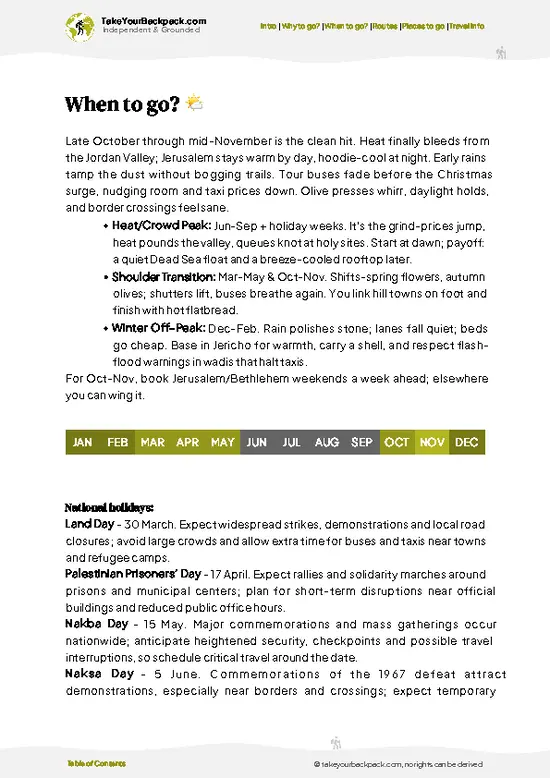
source: climatestotravel.comJANJanuary: fair for travelingFEBFebruary: fair for travelingMARMarch: highly recommended for travelingAPRApril: excellent for travelingMAYMay: highly recommended for travelingJUNJune: good for travelingJULJuly: fair for travelingAUGAugust: fair for travelingSEPSeptember: highly recommended for travelingOCTOctober: excellent for travelingNOVNovember: highly recommended for travelingDECDecember: fair for traveling
when-to-go

✈️ The backpacker research shortcutPalestine Travel Guide

An offline-friendly backpacking guide with optimized travel routes, ranked highlights, transport advice, and the best areas to stay.
example page 0 from our offline Travel Guide for Palestine
example page 1 from our offline Travel Guide for Palestine
example page 2 from our offline Travel Guide for Palestine
example page 3 from our offline Travel Guide for Palestine
example page 4 from our offline Travel Guide for Palestine
example page 5 from our offline Travel Guide for Palestine
example page 6 from our offline Travel Guide for Palestine
example page 7 from our offline Travel Guide for Palestine
The digital guide (276 pages) contains:
70 highlights, ranked by travel appeal
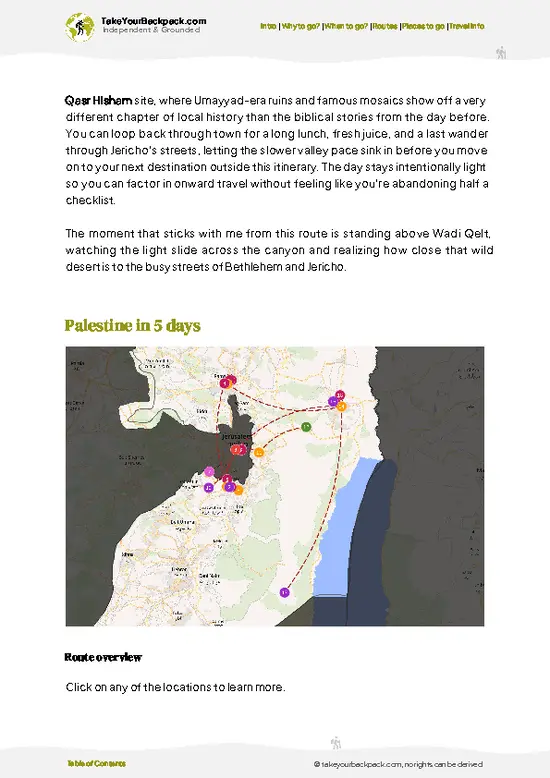
Optimized 2, 3 & 5-day travel routes
Cities, national parks, landmarks, beaches
How to get around
Offline-friendly for travel without Wi-Fi
👉 Click to see all 30+ guide features

📅 Plan smarter in minutes, not weeks
Month by month travel advice
Festivals & national holidays
Budget expectations

🗺️ Go to the right places, skip the overrated ones
Honest pros & cons of destinations
Top hikes, parks & viewpoints
Lesser-known places most travelers miss
Clear “worth it vs skip it” guidance

🛏️ Travel smoothly without rookie mistakes
Best areas to stay
Transport systems explained simply
Common scams & safety advice
SIM cards, money & practical tips

🌍 Understand the country, not just visit it
Culture & traditions
52 Essential phrases & customs
Festivals worth planning around
Traveler-friendly historical context
Insights that make places more meaningful

📱 Built for real travel conditions
Fully downloadable PDF
Works completely offline
Optimized for phone use
Useful in remote areas & buses
Everything in one place
Save weeks of stressful planning
Get instant access to your full guide. 30‑day money-back guarantee.


By proceeding you agree to our terms.
Sent to your inbox immediately after payment • 100% Secure Checkout
Best Backpacking Travel Advisor 2025 tourism awardBest Backpacking
Travel Advisor
2025
What others say about Take Your Backpack Guides:
⭐⭐⭐⭐⭐
Fantastic, amazing amount of information!
⭐⭐⭐⭐⭐
My goodness this is amazing, it's what I've been looking for hats off too you!
⭐⭐⭐⭐⭐
I think this is absolutely BRILLIANT
⭐⭐⭐⭐
Very complete and informative. It's still missing places, but I gotta to commend you
⭐⭐⭐⭐⭐
This is truly amazing, thank you, can't wait to explore it with my kids!
⭐⭐⭐⭐⭐
Awesome resource, thank you!
⭐⭐⭐⭐⭐
This is amazing! Can't wait to explore the ones I haven't seen
⭐⭐⭐⭐
I love this! Well done, great idea.
⭐⭐⭐⭐⭐
Thanks for taking the time to make this gem!
⭐⭐⭐⭐⭐
This might be the best website I've ever seen.
⭐⭐⭐⭐⭐
Congratulations, and thank you so much for your work; it's incredibly valuable.
⭐⭐⭐⭐
In all seriousness I think you did a great job pointing out the important spots
⭐⭐⭐⭐⭐
10/10 very good
⭐⭐⭐⭐⭐
As someone who's only just starting to visit regularly this is awesome, thank you.
⭐⭐⭐⭐
Thank you very much! I'm going to visit my dad, it's going to be very useful!
⭐⭐⭐⭐⭐
This is really cool! We'll be travelling for the first time and this definitely come in handy.
⭐⭐⭐⭐⭐
You are now our minister of culture, congratulations 👨‍💼
⭐⭐⭐⭐⭐
Just wanted to tell you that this is a pearl! Going to follow your recommendations.
⭐⭐⭐⭐⭐
This is so cool. I'll definitely be using the resource for my travels soon.
⭐⭐⭐⭐⭐
This is very impressive! Good work.
⭐⭐⭐⭐⭐
This is an amazing and informative site. Very well done!

🛏️ Where to stay?Where staying makes the most sense

If you’re heading to the Sebastia Archaeological Site, brace yourself: this isn’t a polished tourist playground. The crowds are manageable but mostly local pilgrims and history buffs, not selfie-stick armies. The real magic here isn’t in slick visitor centers or cushy hotels—it’s in the raw, rugged experience of walking through ruins that have seen empires rise and fall.

For backpackers, the best base isn’t right at the site but in nearby Nablus. It’s about 15 minutes away by taxi, safe enough if you stick to the main streets, and buzzing with life. Nablus offers a gritty, authentic Palestinian … read more 👉
If you’re heading to the Sebastia Archaeological Site, brace yourself: this isn’t a polished tourist playground. The crowds are manageable but mostly local pilgrims and history buffs, not selfie-stick armies. The real magic here isn’t in slick visitor centers or cushy hotels—it’s in the raw, rugged experience of walking through ruins that have seen empires rise and fall.

For backpackers, the best base isn’t right at the site but in nearby Nablus. It’s about 15 minutes away by taxi, safe enough if you stick to the main streets, and buzzing with life. Nablus offers a gritty, authentic Palestinian city vibe with plenty of budget guesthouses and small inns where you can meet other travelers and locals alike. The social scene is low-key but genuine—think shared meals, street markets, and spontaneous conversations over strong coffee.

Avoid isolated spots; safety and connection matter here. Staying in Nablus means you’re close enough to hit Sebastia early, beating any local weekend rush, and you get the bonus of exploring a city that’s as rich in culture as the ruins themselves. This is where history meets real life, and that’s the kind of trip worth taking.

👛 Costs (as of 12 March 2026)Travel costs and budget guide for Sebastia Archaeological Site and Roman Ruins

As of mid-2024, the entrance fee to the Sebastia Archaeological Site and Roman Ruins is approximately €5 to €10. Guided tours are available for an additional €15 to €30. Transportation costs vary, with taxis from Nablus to Sebastia ranging from €10 to €20 one-way, while public transport is cheaper, typically between €2 and €5. Meals in the area range from €8 to €25, depending on the choice of dining. ([takeyourbackpack.com](https://www.takeyourbackpack.com/backpacking-in-palestine/visit-sebastia/?utm_source=openai))

source: takeyourbackpack.com
⚠️ Prices can change and everyone travels differently, so take this as a rough guide. Hope it helps you plan your adventure!

Other Palestinian attractions near Sebastia Archaeological Site and Roman Ruins

Explore more nearby:

  • Burqin Church—Byzantine chapel, pilgrimage site, ancient mosaics| 21 km away
  • Palestinian Museum—contemporary exhibitions, landscaped terraces, cultural narratives| 35 km away
  • Yasser Arafat Museum—personal memorabilia, political history, multimedia displays| 41 km away

💡 Not sure where to go next?
Create a personalized itinerary for Palestine including Sebastia Archaeological Site and Roman Ruins and the places that fit your trip.

Generate my itinerary

👉 Discover all attractions

Or checkout all Palestine has to offer (think cities, towns, villages, national parks, hikes, beaches, festivals)
Country photo of Palestine

We 💚 feedbackFinal thoughts on visiting Sebastia Archaeological Site and Roman Ruins

Sebastia Archaeological Site isn’t your polished postcard spot—it’s raw, sprawling ruins where you can almost hear the echoes of centuries. The real draw? Standing amid layers of history that feel alive, not staged. But heads up: it’s not a crowd-free sanctuary. Expect some local visitors and uneven signage that can throw you off. If you’re after genuine connection over convenience, this place delivers in spades.

✈️ When did I visit Palestine?
I visited Palestine (Westbank) in October 2013 in the same trip as I backpacked through Israel.

✍️ Help improve this page!
The information on this page is based on my own backpacking experience in Palestine, supplemented with up-to-date research and feedback from other travelers. Travel details can change, so if you notice anything outdated or incomplete, feel free to let me know.


🙋‍♂️ Give feedback

👋 Meet the founderWho’s Behind Take Your Backpack?

Johan, backpacker and founder of TakeYourBackpackHi, I’m Johan (Netherlands 🇳🇱), the creator of TakeYourBackpack. Over the past decade, I’ve backpacked through 80+ countries across six continents, gaining extensive experience with independent travel, long-term trips, and overland routes.

This site is built on a combination of firsthand travel experience and carefully curated insights from other backpackers. Many guides are based on places I’ve personally visited, while others bring together tips, observations, and practical advice shared by trusted travelers I’ve met along the way.

The goal is to provide realistic, experience-driven guidance — not generic itineraries — so you can explore destinations with better context, clearer expectations, and more confidence.

Get full Palestine guide •
Instant download • 70 highlights • Full Offline guide