×

Panama🇵🇦 | attractionsMuseo del Canal Interoceánico de Panamácanal history, engineering models, archival photos, trade routes | things to do and best time to go

Explore Amador CausewayExplore Teatro Nacional de Panamá

Backpacking in Museo del Canal Interoceánico de Panamá
👍 Recommendedattraction ranked #8
By Johan Kruseman 🇳🇱 | Updated September 4, 2026

Here’s what nobody tells you: Museo del Canal Interoceánico de Panamá is air-conditioned, and in the Old Town’s midday furnace, that’s not just a perk—it’s survival. You’ll find it in the heart of Casco Viejo, Panama City’s historic district, wedged between colonial facades and the kind of coffee shops that charge more than your hostel bed. The museum itself? It’s not the Panama Canal—don’t expect roaring locks or container ships. Instead, you get the full, unvarnished story: French failures, American ambition, and the messy, fascinating birth of modern Panama. Backpackers sometimes skip it, thinking it’s just for cruise-ship crowds, but that’s a rookie mistake. Yes, you’ll dodge school groups and the odd tour bus, and the entry fee isn’t pocket change, but the exhibits are sharp, bilingual, and refreshingly honest about imperialism and engineering. Compared to the Miraflores Locks’ spectacle, this place trades adrenaline for depth. If you want to understand Panama, not just photograph it, this is your shortcut.

Discover everything you want to know in the 📖 Panama Travel Guide.


Get your Panama guide
93 ranked highlights, routes & tips, works offline (349 pages)
Loading the map 🌍
CLICK TO FILTER
cities
towns
villages
landmarks
national parks
hikes
beaches
attractions
festivals
regions
SHOW COUNTRY’S BESTSHOW ALL

✨ Why go?
Ranked #8 attraction in Panama
Why visitors keep coming back

The Museo del Canal Interoceánico de Panamá isn’t just another museum you tick off your list because it’s “iconic.” Sure, it’s famous—how could it not be? The Panama Canal is one of the most ambitious engineering feats in human history. But here’s the real deal: this museum digs deep beyond the glossy postcards and Instagram shots. It’s where you get the gritty, unvarnished story of sweat, blood, and geopolitical chess moves that shaped not just Panama, but global trade and power dynamics.

Backpackers who make the trek here aren’t just chasing a photo op; they’re after context. The exhibits don’t sugarcoat the brutal labor conditions or the staggering scale of the project. You’ll find yourself face-to-face with artifacts and narratives that bring the canal’s construction to life in a way … read more 👉
The Museo del Canal Interoceánico de Panamá isn’t just another museum you tick off your list because it’s “iconic.” Sure, it’s famous—how could it not be? The Panama Canal is one of the most ambitious engineering feats in human history. But here’s the real deal: this museum digs deep beyond the glossy postcards and Instagram shots. It’s where you get the gritty, unvarnished story of sweat, blood, and geopolitical chess moves that shaped not just Panama, but global trade and power dynamics.

Backpackers who make the trek here aren’t just chasing a photo op; they’re after context. The exhibits don’t sugarcoat the brutal labor conditions or the staggering scale of the project. You’ll find yourself face-to-face with artifacts and narratives that bring the canal’s construction to life in a way no quick online search can. It’s a major milestone on the Central American route because it connects you to the pulse of Panama’s identity—its resilience, ambition, and strategic importance.

Yes, the museum can get busy, and the entrance fee isn’t dirt cheap by local standards. But the payoff? A genuine understanding of why this narrow strip of land commands global attention. That’s worth every cent and every minute.
Want to include Museo del Canal Interoceánico de Panamá in your Panama route?
Create a personalized Panama itinerary that includes Museo del Canal Interoceánico de Panamá and the places that fit your trip — based on your travel style, budget, and available time. Get your route in seconds.

Generate my trip

💡 HighlightsWhat this place is best known for

The Original French Canal Plans and Artifacts
Skip the glossy canal postcards and get your hands (well, eyes) on the real drama: the French attempt. This isn’t just a dusty display of old maps. The museum’s collection of original blueprints, rusted surveying tools, and personal effects from the doomed French engineers is a crash course in hubris and heartbreak. You’ll see the scale of their ambition—and the scale of their failure—etched into every artifact. It’s a rare chance to feel the weight of a global disaster that shaped Panama’s destiny. If you want to understand why the canal was nearly impossible, start here.


The American Era Engineering Room
This is where the museum flexes its muscle. The American takeover of the canal project is laid out with a mix of technical swagger and raw … read more 👉
The Original French Canal Plans and Artifacts
Skip the glossy canal postcards and get your hands (well, eyes) on the real drama: the French attempt. This isn’t just a dusty display of old maps. The museum’s collection of original blueprints, rusted surveying tools, and personal effects from the doomed French engineers is a crash course in hubris and heartbreak. You’ll see the scale of their ambition—and the scale of their failure—etched into every artifact. It’s a rare chance to feel the weight of a global disaster that shaped Panama’s destiny. If you want to understand why the canal was nearly impossible, start here.


The American Era Engineering Room
This is where the museum flexes its muscle. The American takeover of the canal project is laid out with a mix of technical swagger and raw storytelling. Massive wall diagrams, original machinery, and hands-on models let you trace the leap from French folly to American triumph. You’ll see the actual tools used to carve through the continental divide, and the scale models are more than just eye candy—they’re a tactile reminder of what it took to bend a continent to human will. The best part? The museum doesn’t sugarcoat the cost: disease, death, and the relentless grind of labor are front and center.


Interactive Lock Simulator
If you’re the type who needs to push buttons and see things move, this is your playground. The lock simulator lets you operate a miniaturized version of the canal’s famous locks. It’s not just for kids—adults get sucked in, too. You’ll finally grasp why the canal is an engineering marvel, not just a big ditch. The tactile satisfaction of moving ships up and down, even in miniature, beats any YouTube video or drone shot.


Panamanian Social History Gallery
This is where the museum earns its stripes as more than a shrine to steel and concrete. The gallery dives into the lives of the workers—West Indian laborers, Panamanian families, and the communities uprooted or transformed by the canal. Expect personal stories, battered suitcases, and photographs that cut through the propaganda. It’s a sobering, necessary counterweight to the engineering heroics. If you want to understand the real cost of the canal, don’t skip this room. This one’s my personal favorite—it’s where the human story hits hardest.


Historic Casco Viejo Building
The museum itself is housed in a colonial-era building in Casco Viejo, and that’s not just a backdrop. The creaking floors, thick walls, and sunlit courtyards are a living artifact. You’re not just looking at history—you’re standing inside it. The building’s architecture is a reminder that Panama’s story is older and richer than the canal alone. It’s a rare museum where the setting is as memorable as the exhibits.
Spotted a mistake or missing something? Contact us.

Things to do around Museo del Canal Interoceánico de Panamá

Ratings based on Tripadvisor reviews. When you book through this link, you support our work at no extra cost to you.

🌤️ When to go?Weather, crowds, and seasonal trade-offs


  • Weather: Panama’s tropical climate means it’s hot and humid year-round, but the dry season from January to April offers the most comfortable conditions for exploring the Museo del Canal Interoceánico. Expect less rain and clearer skies during these months, making your visit more pleasant.

  • Temperature: Temperatures hover around 27-32°C (80-90°F) throughout the year. The dry season feels less oppressive, while the rainy season (May to December) brings higher humidity and occasional downpours that can disrupt outdoor plans.

  • Daylight Hours: Panama sits near the equator, so daylight is consistent year-round—roughly 12 hours daily. This means you won’t have to rush your visit due to early sunsets, no matter when you go.

  • Crowds: Tourist numbers peak during the dry season, especially around
read more 👉

  • Weather: Panama’s tropical climate means it’s hot and humid year-round, but the dry season from January to April offers the most comfortable conditions for exploring the Museo del Canal Interoceánico. Expect less rain and clearer skies during these months, making your visit more pleasant.

  • Temperature: Temperatures hover around 27-32°C (80-90°F) throughout the year. The dry season feels less oppressive, while the rainy season (May to December) brings higher humidity and occasional downpours that can disrupt outdoor plans.

  • Daylight Hours: Panama sits near the equator, so daylight is consistent year-round—roughly 12 hours daily. This means you won’t have to rush your visit due to early sunsets, no matter when you go.

  • Crowds: Tourist numbers peak during the dry season, especially around March and April, coinciding with spring break and local holidays. If you want to dodge the crowds, aim for the shoulder months of January or November.

  • Seasonal Activities: The dry season aligns with cultural events and canal-related celebrations, adding layers to your visit. The rainy season is quieter but expect some exhibits or tours to be less accessible due to weather.

  • Price Fluctuations: Entrance fees remain stable, but accommodation and flights spike during the dry season. Booking early can save you a bundle, especially if you plan to visit in March or April.


Pro-tip: Visit in late January or early November for the sweet spot of good weather, fewer tourists, and better prices—giving you a clearer, more personal look at Panama’s canal history without the hassle.


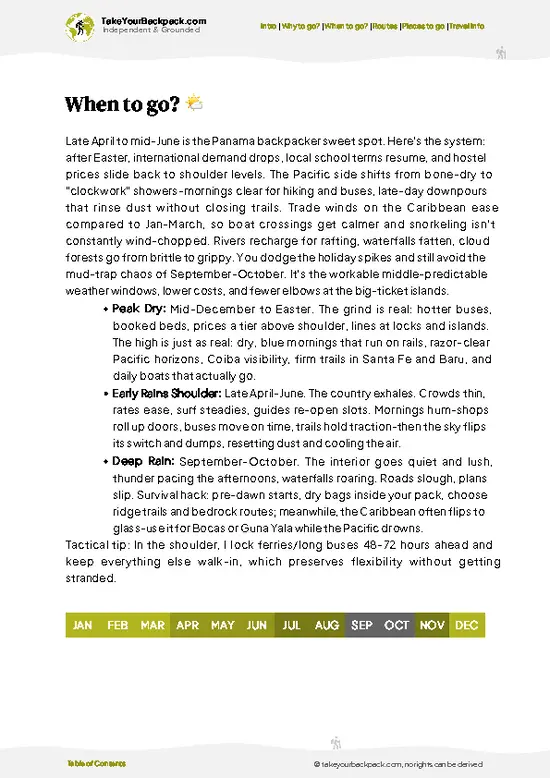
source: climatestotravel.comJANJanuary: excellent for travelingFEBFebruary: highly recommended for travelingMARMarch: highly recommended for travelingAPRApril: highly recommended for travelingMAYMay: fair for travelingJUNJune: fair for travelingJULJuly: fair for travelingAUGAugust: fair for travelingSEPSeptember: fair for travelingOCTOctober: fair for travelingNOVNovember: good for travelingDECDecember: fair for traveling
panama-attraction-museo-del-canal-interoceanico-de-panama
© Google |

✈️ The backpacker research shortcutPanama Travel Guide

An offline-friendly backpacking guide with optimized travel routes, ranked highlights, transport advice, and the best areas to stay.
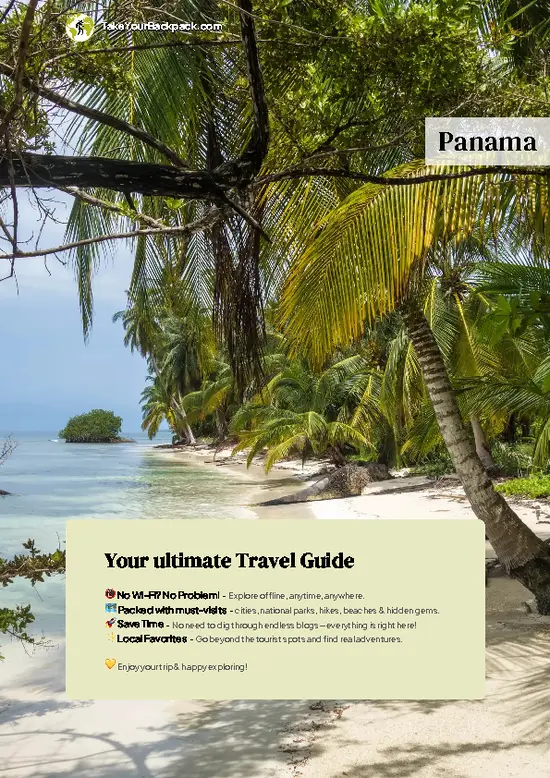
example page 0 from our offline Travel Guide for Panama
example page 1 from our offline Travel Guide for Panama
example page 2 from our offline Travel Guide for Panama
example page 3 from our offline Travel Guide for Panama
example page 4 from our offline Travel Guide for Panama
example page 5 from our offline Travel Guide for Panama
example page 6 from our offline Travel Guide for Panama
example page 7 from our offline Travel Guide for Panama
The digital guide (349 pages) contains:
93 highlights, ranked by travel appeal
Optimized 5, 10 & 15-day travel routes
Cities, national parks, landmarks, beaches
How to get around
Offline-friendly for travel without Wi-Fi
👉 Click to see all 30+ guide features

📅 Plan smarter in minutes, not weeks
Month by month travel advice
Festivals & national holidays
Budget expectations

🗺️ Go to the right places, skip the overrated ones
Honest pros & cons of destinations
Top hikes, parks & viewpoints
Lesser-known places most travelers miss
Clear “worth it vs skip it” guidance

🛏️ Travel smoothly without rookie mistakes
Best areas to stay
Transport systems explained simply
Common scams & safety advice
SIM cards, money & practical tips

🌍 Understand the country, not just visit it
Culture & traditions
52 Essential phrases & customs
Festivals worth planning around
Traveler-friendly historical context
Insights that make places more meaningful

📱 Built for real travel conditions
Fully downloadable PDF
Works completely offline
Optimized for phone use
Useful in remote areas & buses
Everything in one place
Save weeks of stressful planning
Get instant access to your full guide. 30‑day money-back guarantee.
+ Add another guide for just US$7.80

By proceeding you agree to our terms.
Sent to your inbox immediately after payment • 100% Secure Checkout
Best Backpacking Travel Advisor 2025 tourism awardBest Backpacking
Travel Advisor
2025
What others say about Take Your Backpack Guides:
⭐⭐⭐⭐⭐
Fantastic, amazing amount of information!
⭐⭐⭐⭐⭐
My goodness this is amazing, it's what I've been looking for hats off too you!
⭐⭐⭐⭐⭐
I think this is absolutely BRILLIANT
⭐⭐⭐⭐
Very complete and informative. It's still missing places, but I gotta to commend you
⭐⭐⭐⭐⭐
This is truly amazing, thank you, can't wait to explore it with my kids!
⭐⭐⭐⭐⭐
Awesome resource, thank you!
⭐⭐⭐⭐⭐
This is amazing! Can't wait to explore the ones I haven't seen
⭐⭐⭐⭐
I love this! Well done, great idea.
⭐⭐⭐⭐⭐
Thanks for taking the time to make this gem!
⭐⭐⭐⭐⭐
This might be the best website I've ever seen.
⭐⭐⭐⭐⭐
Congratulations, and thank you so much for your work; it's incredibly valuable.
⭐⭐⭐⭐
In all seriousness I think you did a great job pointing out the important spots
⭐⭐⭐⭐⭐
10/10 very good
⭐⭐⭐⭐⭐
As someone who's only just starting to visit regularly this is awesome, thank you.
⭐⭐⭐⭐
Thank you very much! I'm going to visit my dad, it's going to be very useful!
⭐⭐⭐⭐⭐
This is really cool! We'll be travelling for the first time and this definitely come in handy.
⭐⭐⭐⭐⭐
You are now our minister of culture, congratulations 👨‍💼
⭐⭐⭐⭐⭐
Just wanted to tell you that this is a pearl! Going to follow your recommendations.
⭐⭐⭐⭐⭐
This is so cool. I'll definitely be using the resource for my travels soon.
⭐⭐⭐⭐⭐
This is very impressive! Good work.
⭐⭐⭐⭐⭐
This is an amazing and informative site. Very well done!

🛏️ Where to stay?Choosing the right base

If you’re hitting up the Museo del Canal Interoceánico de Panamá, you’re in for more than just a history lesson about the canal—it’s a dive into the guts of Panama’s identity. But here’s the real talk: the area around the museum, primarily in the district of Ancón and parts of Panama City’s historic core, isn’t a backpacker’s playground in the traditional sense. It’s not flooded with hostels or buzzing with nightlife like Casco Viejo, but that’s exactly why it’s worth your attention.

Ancón is where you’ll find a quieter, safer vibe with a local pulse. It’s residential but close enough to the … read more 👉
If you’re hitting up the Museo del Canal Interoceánico de Panamá, you’re in for more than just a history lesson about the canal—it’s a dive into the guts of Panama’s identity. But here’s the real talk: the area around the museum, primarily in the district of Ancón and parts of Panama City’s historic core, isn’t a backpacker’s playground in the traditional sense. It’s not flooded with hostels or buzzing with nightlife like Casco Viejo, but that’s exactly why it’s worth your attention.

Ancón is where you’ll find a quieter, safer vibe with a local pulse. It’s residential but close enough to the museum to walk without hassle. You won’t be elbowing through tourist crowds here, which is a rare find near such a major attraction. It’s a place where you can actually soak in the everyday life of Panamanians, grab a street-side ceviche, and chat with folks who aren’t just there to serve tourists.

If you want social energy and budget options, Casco Viejo is your fallback, just a short ride away. It’s packed with hostels, bars, and fellow travelers, but it’s also where the tourist bubble bursts. The charm is real, but so are the inflated prices and crowds. For a genuine connection to the canal’s story and a safe, low-key base, Ancón edges out as the smarter choice. It’s not flashy, but it’s honest—and that’s the kind of authenticity that sticks with you.

👛 Costs (as of 4 September 2026)How expensive it really is

As of the most recent estimates, the entrance fees for the Museo del Canal Interoceánico de Panamá are as follows: for non-residents, adults pay $15.00, students and retirees $7.50, and children (6-12 years) $7.50; for residents, adults pay $5.00, students and retirees $2.50, and children (6-12 years) $2.50. Additional costs may apply for guided tours, which are mandatory and require a donation of $25.00 for foreigners and $20.00 for nationals and residents. The museum is open from Tuesday to Sunday, 9:00 a.m. to 6:00 p.m.

source: museodelcanal.com
⚠️ Prices can change and everyone travels differently, so take this as a rough guide. Hope it helps you plan your adventure!

FAQCommon questions from travelers

Plan for about 1 to 2 hours to visit Museo del Canal Interoceánico de Panamá to fully explore the exhibits and understand the history of the Panama Canal.
Yes, the entrance fee is worth it. The museum offers detailed historical context and interactive displays about the Panama Canal, with tickets typically costing around $10 USD.
You can reach Museo del Canal Interoceánico de Panamá by taking a taxi or public bus to the Casco Viejo area in Panama City, where the museum is located. It is about a 15-minute drive from the city center.
⚠️ Things can change over time, so always validate details locally before you go.

Other Panamanian attractions near Museo del Canal Interoceánico de Panamá

Explore more nearby:


💡 Not sure where to go next?
Create a personalized itinerary for Panama including Museo del Canal Interoceánico de Panamá and the places that fit your trip.

Generate my itinerary

👉 Discover all attractions

Or checkout all Panama has to offer (think cities, towns, villages, national parks, hikes, beaches, festivals)
Country photo of Panama

We 💚 feedbackFinal thoughts on visiting Museo del Canal Interoceánico de Panamá

The Museo del Canal Interoceánico de Panamá isn’t some glossy tourist trap—it’s a deep dive into the guts of one of the world’s most impressive engineering feats. The real magic? Seeing how Panama’s history and sweat shaped global trade. But heads up: it can feel a bit quiet and slow if you’re expecting flashy exhibits or crowds. If you’re after raw, unvarnished history told with respect and detail, this place nails it.

✈️ When did I visit Panama?
Panama I visited during my half year trip through South and Central America back in 2003

✍️ Help improve this page!
The information on this page is based on my own backpacking experience in Panama, supplemented with up-to-date research and feedback from other travelers. Travel details can change, so if you notice anything outdated or incomplete, feel free to let me know.


🙋‍♂️ Give feedback

👋 Meet the founderWho’s Behind Take Your Backpack?

Johan, backpacker and founder of TakeYourBackpackHi, I’m Johan (Netherlands 🇳🇱), the creator of TakeYourBackpack. Over the past decade, I’ve backpacked through 80+ countries across six continents, gaining extensive experience with independent travel, long-term trips, and overland routes.

This site is built on a combination of firsthand travel experience and carefully curated insights from other backpackers. Many guides are based on places I’ve personally visited, while others bring together tips, observations, and practical advice shared by trusted travelers I’ve met along the way.

The goal is to provide realistic, experience-driven guidance — not generic itineraries — so you can explore destinations with better context, clearer expectations, and more confidence.

Get full Panama guide •
Instant download • 93 highlights • Full Offline guide