×

Papua New Guinea🇵🇬 | hikesCrater Mountain Trekvolcanic plateaus, mossy rainforest, birdlife hotspots | things to do and best time to go

Explore Saruwaged Range TrekExplore Finisterre Range Trek

Backpacking in Crater Mountain Trek
By Johan Kruseman 🇳🇱 | Updated October 15, 2026

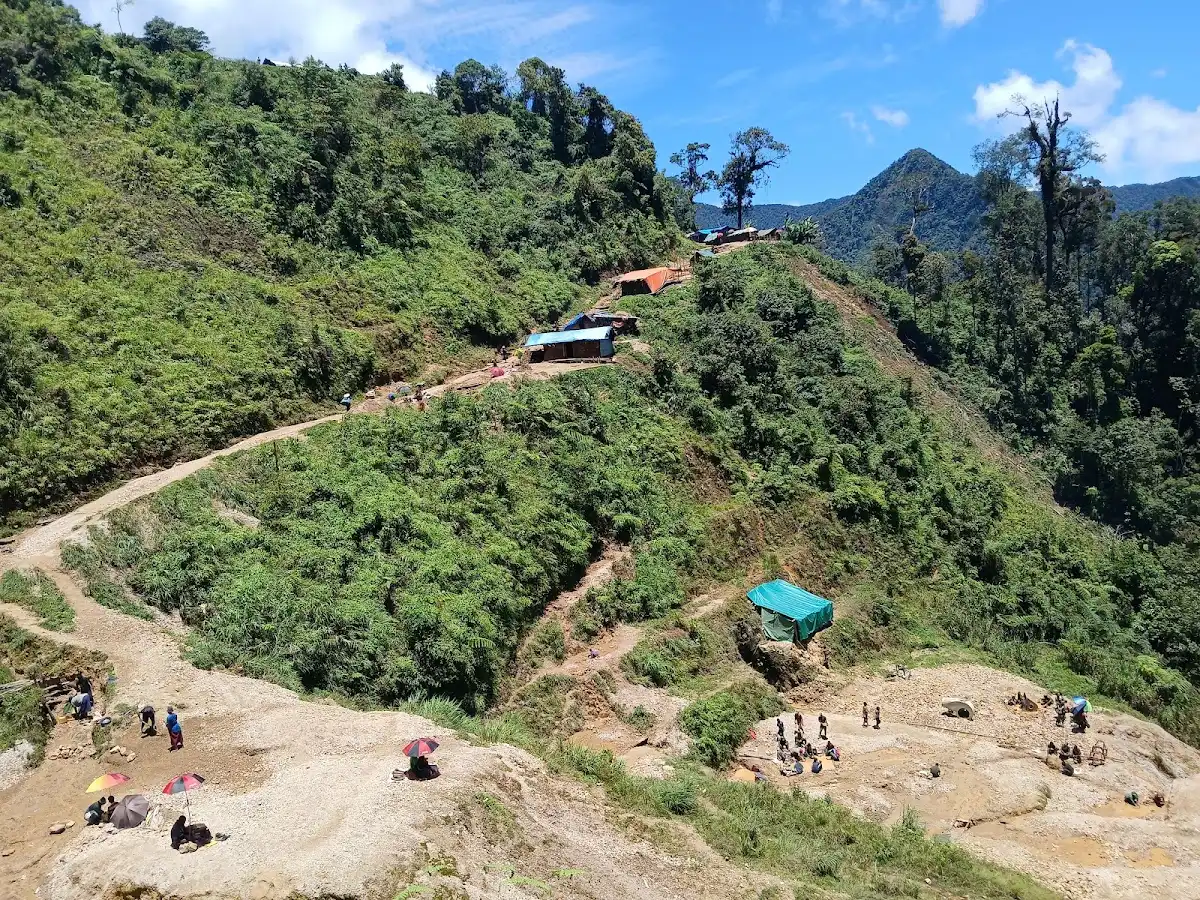
Most online blurbs sell Crater Mountain as a quick jungle stroll; in reality, it feels more like a multi-day stair machine soaked in mud and leeches, with village kids laughing as they outpace you in flip-flops. Crater Mountain Trek sits in the Eastern Highlands of Papua New Guinea, south of Goroka, in a patchwork of rainforest, limestone ridges, and conservation areas. The trail punches straight up and down slick clay slopes, then rewards you with cloud-scraping viewpoints over folded green valleys and bird-of-paradise country. It’s shorter and less historic than the Kokoda Track, but steeper in bursts and far rougher underfoot than most day hikes near Goroka. Public transport gets you only partway; you’ll usually juggle PMVs, then arrange a 4WD or local guide pickup. The payoff is raw, quiet, community-run trekking that still feels genuinely off-grid.

Discover everything you want to know in the 📖 Papua New Guinea Travel Guide.
Best time to go: May - October
Duration: 7 days
Distance: 60 kilometers
Total ascent: 1,200 meters


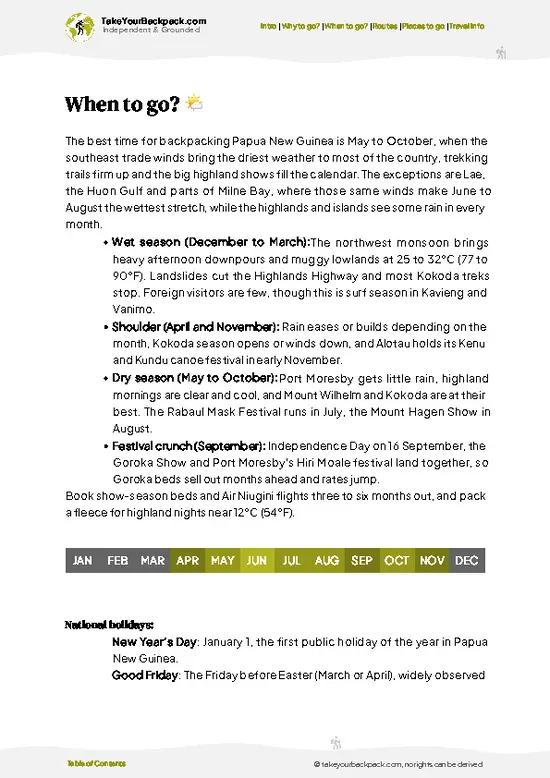
example page 0 from our offline Travel Guide for Papua New Guinea
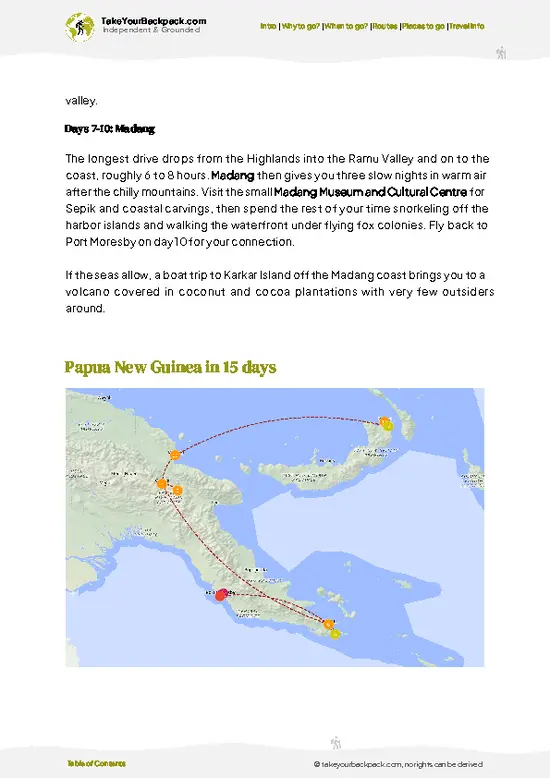
example page 1 from our offline Travel Guide for Papua New Guinea
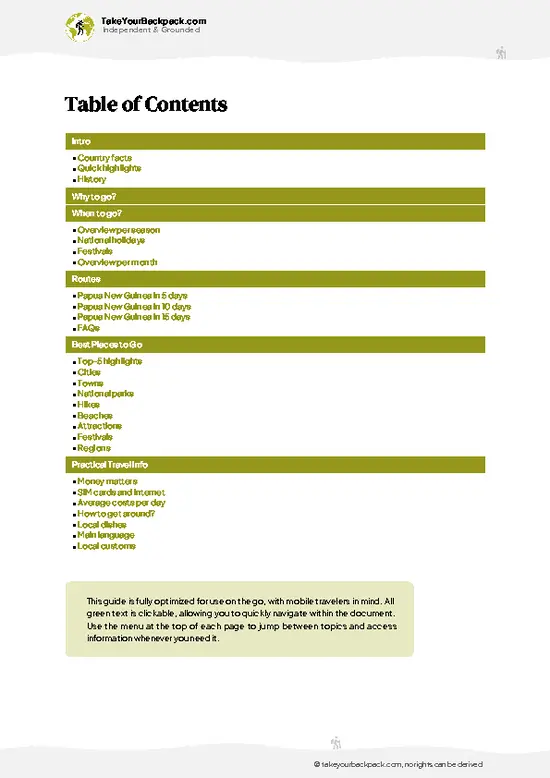
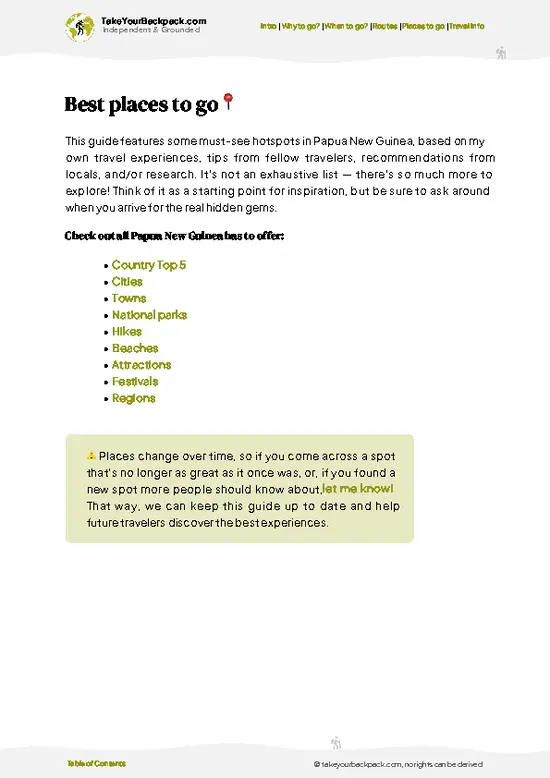
example page 2 from our offline Travel Guide for Papua New Guinea
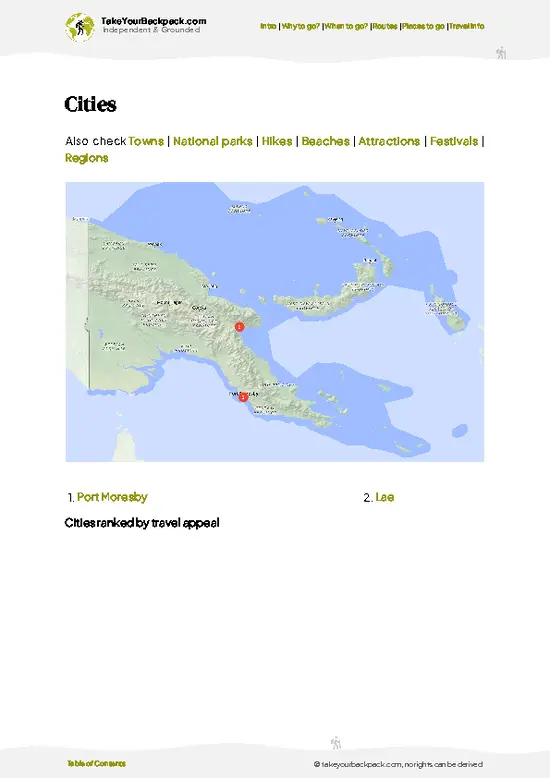
example page 3 from our offline Travel Guide for Papua New Guinea
example page 4 from our offline Travel Guide for Papua New Guinea
example page 5 from our offline Travel Guide for Papua New Guinea
example page 6 from our offline Travel Guide for Papua New Guinea
example page 7 from our offline Travel Guide for Papua New Guinea
Loading the map 🌍
CLICK TO FILTER
cities
towns
national parks
hikes
beaches
attractions
festivals
regions
SHOW COUNTRY’S BESTSHOW ALL

✨ Why go?
Ranked #99 hike in Papua New Guinea
Why Crater Mountain Trek should be on your travel list

The Crater Mountain Trek in Papua New Guinea is a magnet for backpackers craving both challenge and reward. The scenery-to-effort ratio is off the charts; you’ll sweat through dense rainforest, tackle steep ascents, and navigate rugged trails, all for the payoff of breathtaking views over lush valleys and distant peaks.

Getting there is a breeze. Public transport access is straightforward, with local buses whisking you from Goroka to the trailhead. Once you’re on the path, the trek offers flexible distances—you can choose to tackle it in a few days or stretch it out, depending on your pace and energy.

Cost? Minimal. You’ll find that the trek is a low-cost adventure, allowing you to stretch your budget while soaking in the raw beauty of the land. Plus, it fits seamlessly into a longer backpacking … read more 👉
The Crater Mountain Trek in Papua New Guinea is a magnet for backpackers craving both challenge and reward. The scenery-to-effort ratio is off the charts; you’ll sweat through dense rainforest, tackle steep ascents, and navigate rugged trails, all for the payoff of breathtaking views over lush valleys and distant peaks.

Getting there is a breeze. Public transport access is straightforward, with local buses whisking you from Goroka to the trailhead. Once you’re on the path, the trek offers flexible distances—you can choose to tackle it in a few days or stretch it out, depending on your pace and energy.

Cost? Minimal. You’ll find that the trek is a low-cost adventure, allowing you to stretch your budget while soaking in the raw beauty of the land. Plus, it fits seamlessly into a longer backpacking route through PNG, making it a perfect stopover.

Every step is a dance with nature, and the moment you reach that summit, the satisfaction is palpable. A cold beer at the end? That’s just the cherry on top.

💡 HighlightsTop highlights of Crater Mountain Trek

  • Summit Crater Rim — The payoff: a raw, panoramic look down into a volcanic crater and out over Papua New Guinea’s highlands. On a clear morning you can stand above a sea of cloud and watch the light sweep across knife-edged ridges — that sunrise moment is why people drag themselves up before dawn.
  • Mossy cloud forest — Thick, dripping moss, giant tree ferns and a tangle of epiphytes make stretches of the trail feel like another planet. The air is cool and saturated, the trails are soft underfoot, and every fallen log is carpeted with orchids and lichens you won’t see on lowland walks.
  • Birds of Paradise and endemic birdlife — Crater Mountain sits in one of the world’s richest bird zones, so expect early-morning soundtracks of exotic calls and, if you’re lucky, vivid Birds of Paradise displays.
… read more 👉
  • Summit Crater Rim — The payoff: a raw, panoramic look down into a volcanic crater and out over Papua New Guinea’s highlands. On a clear morning you can stand above a sea of cloud and watch the light sweep across knife-edged ridges — that sunrise moment is why people drag themselves up before dawn.
  • Mossy cloud forest — Thick, dripping moss, giant tree ferns and a tangle of epiphytes make stretches of the trail feel like another planet. The air is cool and saturated, the trails are soft underfoot, and every fallen log is carpeted with orchids and lichens you won’t see on lowland walks.
  • Birds of Paradise and endemic birdlife — Crater Mountain sits in one of the world’s richest bird zones, so expect early-morning soundtracks of exotic calls and, if you’re lucky, vivid Birds of Paradise displays. Even if you don’t get a perfect angle, the sheer diversity of parrots, honeyeaters and other endemics sets this trek apart.
  • Village encounters and living culture — The route passes remote highland villages where local guides, gardens and traditional crafts are part of the landscape. Night chats around a fire, a peek at subsistence terraces, or a simple bilum trade offer real cultural texture that long-distance trails often lack.
  • Streams, waterfalls and slippery crossings — The hike weaves through crystal mountain streams, sudden cascades and bamboo-bridged ravines that add drama and variety to the day. It’s great for quick swims, wildlife watching at quiet pools, and those splashy photo moments that remind you why multi-day hikes beat day trips.
Spotted a mistake or missing something? Contact us.
🌤️ When to go?Seasonal considerations and timing

  • Weather: The dry season from May to October is your best bet. Trails firm up, and rain won’t turn your boots into mud magnets. The wet season, November to April, brings heavy downpours that can wash out paths and make river crossings dicey.
  • Temperature: Daytime temps hover around 20-25°C (68-77°F), perfect for trekking without overheating. Nights dip to 10-15°C (50-59°F), so pack layers. The higher altitudes can feel brisk, especially early mornings.
  • Daylight Hours: Papua New Guinea sits near the equator, so expect roughly 12 hours of daylight year-round. That means early starts and late finishes are equally doable, letting you maximize every step on the trail.
  • Crowds: The Crater Mountain Trek is off the beaten path, so crowds are minimal year-round. Still, the dry season sees a slight
… read more 👉
  • Weather: The dry season from May to October is your best bet. Trails firm up, and rain won’t turn your boots into mud magnets. The wet season, November to April, brings heavy downpours that can wash out paths and make river crossings dicey.
  • Temperature: Daytime temps hover around 20-25°C (68-77°F), perfect for trekking without overheating. Nights dip to 10-15°C (50-59°F), so pack layers. The higher altitudes can feel brisk, especially early mornings.
  • Daylight Hours: Papua New Guinea sits near the equator, so expect roughly 12 hours of daylight year-round. That means early starts and late finishes are equally doable, letting you maximize every step on the trail.
  • Crowds: The Crater Mountain Trek is off the beaten path, so crowds are minimal year-round. Still, the dry season sees a slight uptick in hikers, but you’ll rarely feel like you’re sharing the trail.
  • Seasonal Activities: Dry months align with local festivals and cultural events, adding a rich layer to your trek. Timing your hike to catch these can turn a tough slog into a vibrant cultural immersion.
  • Price Fluctuations: Expect higher costs during the dry season when demand peaks. Guides, gear rentals, and accommodations can spike, so budget accordingly or book early to lock in rates.
Pro-tip: Aim for late May or early June—trails are solid, crowds are light, and you’ll catch the tail end of local festivities before prices climb.


source: climatestotravel.comJANJanuary: fair for travelingFEBFebruary: fair for travelingMARMarch: fair for travelingAPRApril: fair for travelingMAYMay: highly recommended for travelingJUNJune: excellent for travelingJULJuly: excellent for travelingAUGAugust: excellent for travelingSEPSeptember: excellent for travelingOCTOctober: highly recommended for travelingNOVNovember: fair for travelingDECDecember: fair for traveling
papua-new-guinea-hike-crater-mountain-trek
© Google |

✈️ The backpacker research shortcutPapua New Guinea Travel Guide

An offline-friendly backpacking guide with optimized travel routes, ranked highlights, transport advice, and the best areas to stay.
example page 0 from our offline Travel Guide for Papua New Guinea
example page 1 from our offline Travel Guide for Papua New Guinea
example page 2 from our offline Travel Guide for Papua New Guinea
example page 3 from our offline Travel Guide for Papua New Guinea
example page 4 from our offline Travel Guide for Papua New Guinea
example page 5 from our offline Travel Guide for Papua New Guinea
example page 6 from our offline Travel Guide for Papua New Guinea
example page 7 from our offline Travel Guide for Papua New Guinea
The digital guide (251 pages) contains:
✅ 81 highlights, ranked by travel appeal
✅ Optimized 5, 10 & 15-day travel routes
✅ Cities, national parks, landmarks, beaches
✅ How to get around
✅ Offline-friendly for travel without Wi-Fi
👉 Click to see all 30+ guide features

📅 Plan smarter in minutes, not weeks
✅ Month by month travel advice
✅ Festivals & national holidays
✅ Budget expectations

🗺️ Go to the right places, skip the overrated ones
✅ Honest pros & cons of destinations
✅ Top hikes, parks & viewpoints
✅ Lesser-known places most travelers miss
✅ Clear “worth it vs skip it” guidance

🛏️ Travel smoothly without rookie mistakes
✅ Best areas to stay
✅ Transport systems explained simply
✅ Common scams & safety advice
✅ SIM cards, money & practical tips

🌍 Understand the country, not just visit it
✅ Culture & traditions
✅ 52 Essential phrases & customs
✅ Festivals worth planning around
✅ Traveler-friendly historical context
✅ Insights that make places more meaningful

📱 Built for real travel conditions
✅ Fully downloadable PDF
✅ Works completely offline
✅ Optimized for phone use
✅ Useful in remote areas & buses
✅ Everything in one place
Stop searching, start planning
Get instant access to your full guide. 30‑day money-back guarantee.
+ Add another guide for just

By proceeding you agree to our terms.
Sent to your inbox immediately after payment • 100% Secure Checkout
Best Backpacking Travel Advisor 2025 tourism awardBest Backpacking
Travel Advisor
2025
What others say about Take Your Backpack Guides:
⭐⭐⭐⭐⭐
Fantastic, amazing amount of information!
⭐⭐⭐⭐⭐
My goodness this is amazing, it's what I've been looking for hats off too you!
⭐⭐⭐⭐⭐
I think this is absolutely BRILLIANT
⭐⭐⭐⭐
Very complete and informative. It's still missing places, but I gotta to commend you
⭐⭐⭐⭐⭐
This is truly amazing, thank you, can't wait to explore it with my kids!
⭐⭐⭐⭐⭐
Awesome resource, thank you!
⭐⭐⭐⭐⭐
This is amazing! Can't wait to explore the ones I haven't seen
⭐⭐⭐⭐
I love this! Well done, great idea.
⭐⭐⭐⭐⭐
Thanks for taking the time to make this gem!
⭐⭐⭐⭐⭐
This might be the best website I've ever seen.
⭐⭐⭐⭐⭐
Congratulations, and thank you so much for your work; it's incredibly valuable.
⭐⭐⭐⭐
In all seriousness I think you did a great job pointing out the important spots
⭐⭐⭐⭐⭐
10/10 very good
⭐⭐⭐⭐⭐
As someone who's only just starting to visit regularly this is awesome, thank you.
⭐⭐⭐⭐
Thank you very much! I'm going to visit my dad, it's going to be very useful!
⭐⭐⭐⭐⭐
This is really cool! We'll be travelling for the first time and this definitely come in handy.
⭐⭐⭐⭐⭐
You are now our minister of culture, congratulations 👨‍💼
⭐⭐⭐⭐⭐
Just wanted to tell you that this is a pearl! Going to follow your recommendations.
⭐⭐⭐⭐⭐
This is so cool. I'll definitely be using the resource for my travels soon.
⭐⭐⭐⭐⭐
This is very impressive! Good work.
⭐⭐⭐⭐⭐
This is an amazing and informative site. Very well done!

🛏️ Where to stay?Best areas and accommodation options

If you enjoy meeting fellow travelers, consider choosing hostels with high ratings for atmosphere. On the other hand, if you prefer having your own space, a hotel might be a better option.

🥾 Hike detailsEverything you need to know before hiking Crater Mountain Trek

Total Distance: The Crater Mountain Trek spans approximately 60 kilometers (about 37 miles) from start to finish.

Estimated Duration: Most hikers take around 4 to 6 days to complete the trek, depending on your pace and how much time you spend soaking in the scenery.

Difficulty Level: This trek is considered challenging. Expect steep ascents, rugged terrain, and variable weather conditions that can make navigation tricky.

Starting Point: The trek kicks off in the village of Keglsugl. To get there, you can catch a bus from Goroka, which is about an hour away. The buses are pretty frequent, but … read more 👉
Total Distance: The Crater Mountain Trek spans approximately 60 kilometers (about 37 miles) from start to finish.

Estimated Duration: Most hikers take around 4 to 6 days to complete the trek, depending on your pace and how much time you spend soaking in the scenery.

Difficulty Level: This trek is considered challenging. Expect steep ascents, rugged terrain, and variable weather conditions that can make navigation tricky.

Starting Point: The trek kicks off in the village of Keglsugl. To get there, you can catch a bus from Goroka, which is about an hour away. The buses are pretty frequent, but it’s wise to check local schedules since they can be a bit unpredictable.

Major Landmarks:
  • Crater Mountain: The main highlight, offering stunning views from various vantage points.
  • Local Villages: You’ll pass through several small villages like Keglsugl and others, where you can interact with locals and get a taste of their culture.
  • Waterfalls: There are a few beautiful waterfalls along the route, perfect for a refreshing dip.

Type of Terrain and Scenery: The terrain is a mix of dense rainforest, steep ridges, and muddy paths. You’ll encounter rocky sections that require careful footing. The scenery is breathtaking, with lush valleys, towering peaks, and panoramic views that make the effort worthwhile.

Typical Vegetation: Expect to see a variety of tropical plants, including ferns, orchids, and towering trees. The undergrowth can be thick, so be prepared for some bushwhacking in spots.

Wildlife: Keep your eyes peeled for unique wildlife, such as:
  • Birds: Look out for colorful birds of paradise and various endemic species.
  • Wallabies: You might spot these small marsupials hopping around in the forest.
  • Insects: Be ready for a few buzzing companions; the insect life can be pretty lively.

This trek is not just a physical challenge; it’s a chance to experience the rich culture and natural beauty of Papua New Guinea. Just make sure to pack smart, stay hydrated, and enjoy the adventure!
⚠️ Hiking info can sometimes be outdated or inaccurate. Before you hit the trail, check the latest conditions with locals. If you do spot anything that's off, I'd love to hear from you, so I can update it for fellow travelers.

🛡️ SafetyTraveler Safety Guide

The Crater Mountain Trek in Papua New Guinea is a wild ride, but it’s manageable with the right mindset and preparation. Expect weather shifts; the sun can blaze, then clouds roll in, drenching you without warning. Dress in layers and pack a reliable rain jacket.

The terrain is rugged—steep ascents and descents demand focus. Footing can be tricky, especially after rain, so sturdy hiking boots with good grip are essential. Navigation is straightforward, but keep your map handy; trails can be overgrown in spots.

Wildlife encounters are part of the adventure. You might spot birds of paradise or even a curious wallaby. Keep your distance and respect their space—this is their home.

Pace yourself. The trek rewards steady effort with breathtaking views and the satisfaction of conquering each … read more 👉
The Crater Mountain Trek in Papua New Guinea is a wild ride, but it’s manageable with the right mindset and preparation. Expect weather shifts; the sun can blaze, then clouds roll in, drenching you without warning. Dress in layers and pack a reliable rain jacket.

The terrain is rugged—steep ascents and descents demand focus. Footing can be tricky, especially after rain, so sturdy hiking boots with good grip are essential. Navigation is straightforward, but keep your map handy; trails can be overgrown in spots.

Wildlife encounters are part of the adventure. You might spot birds of paradise or even a curious wallaby. Keep your distance and respect their space—this is their home.

Pace yourself. The trek rewards steady effort with breathtaking views and the satisfaction of conquering each rise. Carry enough water and snacks to fuel your journey; a cold drink at the end feels like pure victory.

FAQCommon questions from travelers

The Crater Mountain Trek typically takes 4 to 6 days to complete, covering around 50 kilometers through varied terrain. The duration depends on the pace and weather conditions.
The hike is considered moderately difficult due to steep ascents, muddy trails, and unpredictable weather. It requires good fitness and experience with tropical mountain trekking.
Yes, a local guide is required for the Crater Mountain Trek, and permits must be obtained through local authorities or tour operators. Hiring a guide ensures safety and supports the local community.
⚠️ Things can change over time, so always validate details locally before you go.

Other Papua New Guinean hikes near Crater Mountain Trek

Explore more nearby:

  • Kundiawa to Salt Nomane—Salt springs, Sinasina gardens, Chimbu gorge, Mount Wilhelm views| 64 km away
  • Finisterre Range Trek—Ramu Valley ridges, garden-terrace villages, cane bridges, Madang Province| 138 km away
  • Black Cat Track—Black Cat Gap, wartime pits, log-bridge gorges, Wau to Salamaua| 198 km away

💡 Not sure where to go next?
Create a personalized itinerary for Papua New Guinea including Crater Mountain Trek and the places that fit your trip.

Generate my itinerary

👉 Discover all hikes

Or checkout all Papua New Guinea has to offer (think cities, towns, villages, national parks, hikes, beaches, festivals)
Country photo of Papua New Guinea

We 💚 feedbackIs it worth it?

The Crater Mountain Trek is a wild ride. Expect mud, sweat, and the occasional slip, but the payoff? Jaw-dropping views that make every step worth it. The locals are a highlight—genuine smiles and stories that ground you in their world. Just a heads-up: the weather can turn on a dime. Pack for rain, and don’t underestimate the trail’s demands. But when you finally crack open that cold beer at the end, you’ll feel like you’ve earned every drop.

✍️ Help improve this page!
The information on this page is based on in-depth research, insights shared by experienced travelers, and feedback from the local travel community in Papua New Guinea. While every effort is made to keep the information accurate and current, conditions can change — so if you spot anything incorrect or outdated, please get in touch.


🙋‍♂️ Give feedback

👋 Meet the founderWho’s Behind Take Your Backpack?

Johan, backpacker and founder of TakeYourBackpackHi, I’m Johan (Netherlands 🇳🇱), the creator of TakeYourBackpack. Over the past 3 decades, I’ve backpacked through 90+ countries across six continents, gaining extensive experience with independent travel, long-term trips, and overland routes.

This site is built on a combination of firsthand travel experience and carefully curated insights from other backpackers. Many guides are based on places I’ve personally visited, while others bring together tips, observations, and practical advice shared by trusted travelers I’ve met along the way.

The goal is to provide realistic, experience-driven guidance — not generic itineraries — so you can explore destinations with better context, clearer expectations, and more confidence.