×

Papua New Guinea🇵🇬 | attractionsBomana War CemeteryBronze headstone rows, Anzac wreaths, Owen Stanley backdrop, free entry | things to do and best time to go

Explore Lae War CemeteryExplore J.K. McCarthy Museum

Backpacking in Bomana War Cemetery
👌 Worth visitingattraction ranked #9
By Johan Kruseman 🇳🇱 | Updated October 15, 2026

Bomana is a Commonwealth War Graves Commission site, not a Japanese or Kokoda battlefield, and no Kokoda Track fighting happened here. It sits on the outskirts of Port Moresby, Papua New Guinea’s capital, north of the city center along the road toward Sogeri, and holds the graves of Allied servicemen. Entry costs nothing, crowds are close to nonexistent, and a taxi or hired driver is the only real expense. That silence is the draw. Rows of bronze plaques run across clipped lawns under tropical sun, with the Owen Stanley Range hazy behind them, and the scale hits you before you read a single name. Walk the lines, read the regiments, hunt for the Port Moresby Memorial names. Plan a morning here, then roll on to the Port Moresby markets by lunch.

Discover everything you want to know in the 📖 Papua New Guinea Travel Guide.


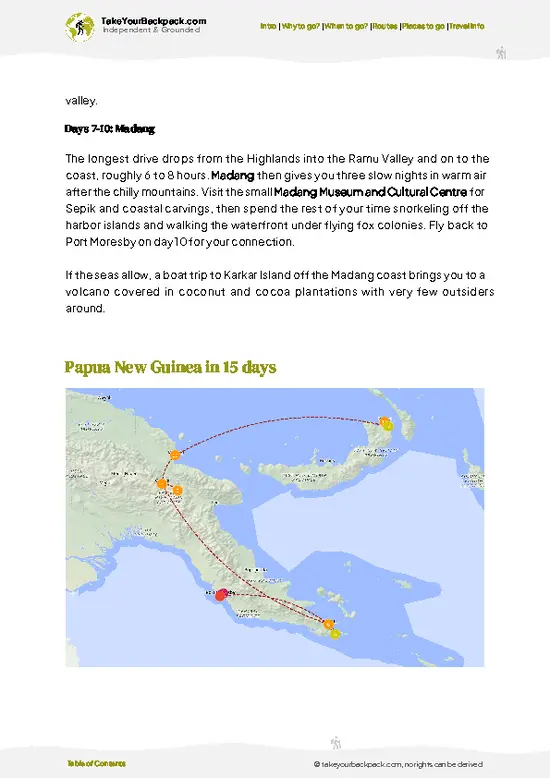
example page 0 from our offline Travel Guide for Papua New Guinea
example page 1 from our offline Travel Guide for Papua New Guinea
example page 2 from our offline Travel Guide for Papua New Guinea
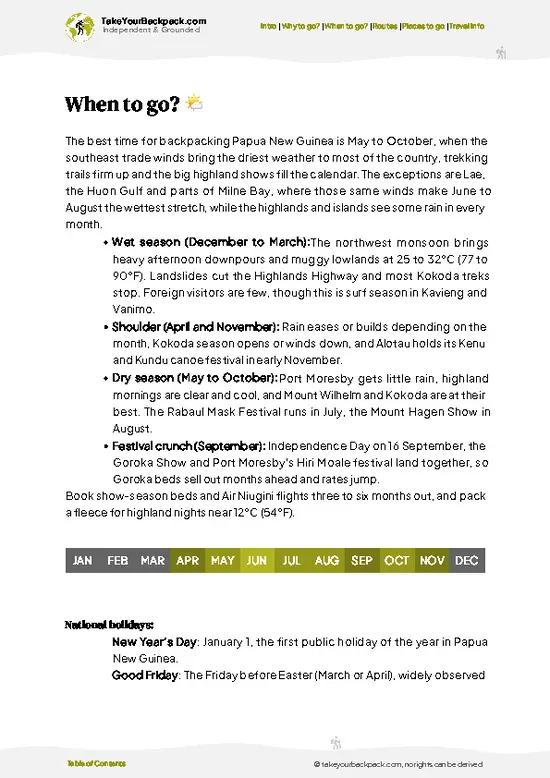
example page 3 from our offline Travel Guide for Papua New Guinea
example page 4 from our offline Travel Guide for Papua New Guinea
example page 5 from our offline Travel Guide for Papua New Guinea
example page 6 from our offline Travel Guide for Papua New Guinea
example page 7 from our offline Travel Guide for Papua New Guinea
Loading the map 🌍
CLICK TO FILTER
cities
towns
national parks
hikes
beaches
attractions
festivals
regions
SHOW COUNTRY’S BESTSHOW ALL

✨ Why go?
Ranked #9 attraction in Papua New Guinea
What sets this place apart

Bomana puts a number on the New Guinea campaign: more than 3,800 Commonwealth burials, most of them Australians who died on the Kokoda Track, at Milne Bay and around Buna and Gona. If you plan to hike Kokoda or have read about it, this is where the names stop being history and become rows you can walk. It is also the best-kept ground in a country where public spaces often struggle, with gardeners tending every plot.

The site holds a second layer too. The Port Moresby Memorial commemorates missing Australian and Papua New Guinean soldiers with no known grave, and the cemetery also contains graves of the Papuan Infantry Battalion and other local servicemen. For a traveler building a route around Port Moresby, it is a quiet, free milestone that gives the rest of the country’s wartime landscape its meaning.

💡 HighlightsPlaces and moments you shouldn't skip

  1. Cross of Sacrifice and Stone of Remembrance: the focal monuments at the heart of the grounds, where most visitors begin and where wreaths gather around Anzac Day.
  2. The headstone plots: long, even rows of bronze and stone markers, many inscribed with family epitaphs. Walking one row slowly teaches more than any plaque.
  3. Port Moresby Memorial: walls bearing the names of Australian and Papua New Guinean servicemen who have no known grave.
  4. Graves of the Papuan Infantry Battalion: local soldiers buried here beside the Allies they fought with, a reminder that Papua New Guineans carried wounded and fought in this war.
  5. The gardens: frangipani, lawn and flowering borders kept immaculate in tropical heat. The care is part of the experience.
  6. Visitor register and shelter: a place to sign in, read a short record
… read more 👉
  1. Cross of Sacrifice and Stone of Remembrance: the focal monuments at the heart of the grounds, where most visitors begin and where wreaths gather around Anzac Day.
  2. The headstone plots: long, even rows of bronze and stone markers, many inscribed with family epitaphs. Walking one row slowly teaches more than any plaque.
  3. Port Moresby Memorial: walls bearing the names of Australian and Papua New Guinean servicemen who have no known grave.
  4. Graves of the Papuan Infantry Battalion: local soldiers buried here beside the Allies they fought with, a reminder that Papua New Guineans carried wounded and fought in this war.
  5. The gardens: frangipani, lawn and flowering borders kept immaculate in tropical heat. The care is part of the experience.
  6. Visitor register and shelter: a place to sign in, read a short record and sit in shade out of the midday sun.
  7. Ranges on the horizon: the Owen Stanley foothills behind the plots show how close the Kokoda campaign sat to the capital.
If time is short, skip the visitor shelter and spend your minutes at the memorial walls and the headstone rows.
Spotted a mistake or missing something? Contact us.

Things to do near Bomana War Cemetery

Ratings based on Tripadvisor reviews. When you book through this link, you support our work at no extra cost to you.

🌤️ When to go?Seasonal considerations and timing

The dry season from May to October is the easiest window for Bomana, with clear mornings and firm paths between the lawns.
  • Dry Season (May to October): Days reach 29 to 32°C (84 to 90°F), nights drop to 21 to 23°C (70 to 73°F), and rain is light. Daylight runs roughly 6am to 6pm. Port Moresby is dusty and the grass turns tawny.
  • Wet Season (December to April): Humid heat of 30 to 33°C (86 to 91°F) and heavy afternoon downpours. The lawns are at their greenest, but you will sweat through a shirt in minutes.
  • Anzac Day (April 25): Dawn service draws veterans, diplomats and school groups. Expect crowds and road closures, though it is a moving time to be there.
  • Visitor Numbers: Quiet most of the year, with a few tour groups on weekday mornings. Prices for rooms and cars in Port Moresby stay fairly flat
… read more 👉
The dry season from May to October is the easiest window for Bomana, with clear mornings and firm paths between the lawns.
  • Dry Season (May to October): Days reach 29 to 32°C (84 to 90°F), nights drop to 21 to 23°C (70 to 73°F), and rain is light. Daylight runs roughly 6am to 6pm. Port Moresby is dusty and the grass turns tawny.
  • Wet Season (December to April): Humid heat of 30 to 33°C (86 to 91°F) and heavy afternoon downpours. The lawns are at their greenest, but you will sweat through a shirt in minutes.
  • Anzac Day (April 25): Dawn service draws veterans, diplomats and school groups. Expect crowds and road closures, though it is a moving time to be there.
  • Visitor Numbers: Quiet most of the year, with a few tour groups on weekday mornings. Prices for rooms and cars in Port Moresby stay fairly flat all year.
Go before 10am, when the heat is bearable and the light on the bronze plaques is best.


source: climatestotravel.comJANJanuary: fair for travelingFEBFebruary: fair for travelingMARMarch: fair for travelingAPRApril: highly recommended for travelingMAYMay: excellent for travelingJUNJune: excellent for travelingJULJuly: excellent for travelingAUGAugust: excellent for travelingSEPSeptember: excellent for travelingOCTOctober: excellent for travelingNOVNovember: fair for travelingDECDecember: fair for traveling
papua-new-guinea-attraction-bomana-war-cemetery
© Google |

✈️ The backpacker research shortcutPapua New Guinea Travel Guide

An offline-friendly backpacking guide with optimized travel routes, ranked highlights, transport advice, and the best areas to stay.
example page 0 from our offline Travel Guide for Papua New Guinea
example page 1 from our offline Travel Guide for Papua New Guinea
example page 2 from our offline Travel Guide for Papua New Guinea
example page 3 from our offline Travel Guide for Papua New Guinea
example page 4 from our offline Travel Guide for Papua New Guinea
example page 5 from our offline Travel Guide for Papua New Guinea
example page 6 from our offline Travel Guide for Papua New Guinea
example page 7 from our offline Travel Guide for Papua New Guinea
The digital guide (251 pages) contains:
✅ 81 highlights, ranked by travel appeal
✅ Optimized 5, 10 & 15-day travel routes
✅ Cities, national parks, landmarks, beaches
✅ How to get around
✅ Offline-friendly for travel without Wi-Fi
👉 Click to see all 30+ guide features

📅 Plan smarter in minutes, not weeks
✅ Month by month travel advice
✅ Festivals & national holidays
✅ Budget expectations

🗺️ Go to the right places, skip the overrated ones
✅ Honest pros & cons of destinations
✅ Top hikes, parks & viewpoints
✅ Lesser-known places most travelers miss
✅ Clear “worth it vs skip it” guidance

🛏️ Travel smoothly without rookie mistakes
✅ Best areas to stay
✅ Transport systems explained simply
✅ Common scams & safety advice
✅ SIM cards, money & practical tips

🌍 Understand the country, not just visit it
✅ Culture & traditions
✅ 52 Essential phrases & customs
✅ Festivals worth planning around
✅ Traveler-friendly historical context
✅ Insights that make places more meaningful

📱 Built for real travel conditions
✅ Fully downloadable PDF
✅ Works completely offline
✅ Optimized for phone use
✅ Useful in remote areas & buses
✅ Everything in one place
Stop searching, start planning
Get instant access to your full guide. 30‑day money-back guarantee.
+ Add another guide for just

By proceeding you agree to our terms.
Sent to your inbox immediately after payment • 100% Secure Checkout
Best Backpacking Travel Advisor 2025 tourism awardBest Backpacking
Travel Advisor
2025
What others say about Take Your Backpack Guides:
⭐⭐⭐⭐⭐
Fantastic, amazing amount of information!
⭐⭐⭐⭐⭐
My goodness this is amazing, it's what I've been looking for hats off too you!
⭐⭐⭐⭐⭐
I think this is absolutely BRILLIANT
⭐⭐⭐⭐
Very complete and informative. It's still missing places, but I gotta to commend you
⭐⭐⭐⭐⭐
This is truly amazing, thank you, can't wait to explore it with my kids!
⭐⭐⭐⭐⭐
Awesome resource, thank you!
⭐⭐⭐⭐⭐
This is amazing! Can't wait to explore the ones I haven't seen
⭐⭐⭐⭐
I love this! Well done, great idea.
⭐⭐⭐⭐⭐
Thanks for taking the time to make this gem!
⭐⭐⭐⭐⭐
This might be the best website I've ever seen.
⭐⭐⭐⭐⭐
Congratulations, and thank you so much for your work; it's incredibly valuable.
⭐⭐⭐⭐
In all seriousness I think you did a great job pointing out the important spots
⭐⭐⭐⭐⭐
10/10 very good
⭐⭐⭐⭐⭐
As someone who's only just starting to visit regularly this is awesome, thank you.
⭐⭐⭐⭐
Thank you very much! I'm going to visit my dad, it's going to be very useful!
⭐⭐⭐⭐⭐
This is really cool! We'll be travelling for the first time and this definitely come in handy.
⭐⭐⭐⭐⭐
You are now our minister of culture, congratulations 👨‍💼
⭐⭐⭐⭐⭐
Just wanted to tell you that this is a pearl! Going to follow your recommendations.
⭐⭐⭐⭐⭐
This is so cool. I'll definitely be using the resource for my travels soon.
⭐⭐⭐⭐⭐
This is very impressive! Good work.
⭐⭐⭐⭐⭐
This is an amazing and informative site. Very well done!

🛏️ Where to stay?Choosing the right base

Stay in Port Moresby, because Bomana sits about 15 km northeast of the center and has no lodging of its own.
Gordons and the Waigani area are the most practical bases. Both have guesthouses, a few mid-range hotels and supermarkets, and the road to the cemetery runs past Gordons toward Bomana, so a taxi or hired driver is short and easy to arrange. Many travelers also pick Boroko, which has the densest cluster of shops, cafes and banks, and the PMV minibuses pass through it.
Port Moresby has no true backpacker scene, so social stays mean guesthouses and church-run lodgings where you meet aid workers, … read more 👉
Stay in Port Moresby, because Bomana sits about 15 km northeast of the center and has no lodging of its own.
Gordons and the Waigani area are the most practical bases. Both have guesthouses, a few mid-range hotels and supermarkets, and the road to the cemetery runs past Gordons toward Bomana, so a taxi or hired driver is short and easy to arrange. Many travelers also pick Boroko, which has the densest cluster of shops, cafes and banks, and the PMV minibuses pass through it.
Port Moresby has no true backpacker scene, so social stays mean guesthouses and church-run lodgings where you meet aid workers, trekkers heading for Kokoda and volunteers. Choose somewhere with a walled compound and a 24-hour guard. Book ahead, since beds are limited and rooms fill with business travelers midweek.
Avoid walking after dark in any district. Arrange rides through your accommodation, and keep valuables out of sight in vehicles.

👛 Costs (as of 15 October 2026)What things cost and how to budget

A visit to Bomana War Cemetery costs most backpackers about US$60 to 125 a day, mainly because Port Moresby accommodation and taxis are expensive. The cemetery itself is free to enter.
CategoryBudget RangeLocal Reality
EntryUSD 0Open to visitors with no ticket. A small donation is optional.
Accommodation (high season)USD 40 to 80Guesthouses or basic rooms in Gordons, Boroko or Waigani. Prices stay similar year-round.
TransportUSD 10 to 25A round-trip taxi or hired driver with waiting time, about 30 to 45 minutes each way. PMV minibuses cost under USD 1 but are less safe and less convenient for this route.
FoodUSD 8 to 15Bakeries, takeaway counters and supermarket picnics. Restaurant meals run USD 12 to 20.
ExtrasUSD 2 to 5Water and a phone SIM top-up. Guides are not required.
Total Daily BudgetUSD 60 to 125Per person, per day, in high season.
⚠️ Prices can change and everyone travels differently, so take this as a rough guide. Hope it helps you plan your adventure!

FAQCommon questions from travelers

Plan on 1 to 2 hours at the cemetery itself, plus about 30 to 45 minutes each way from central Port Moresby. The site holds more than 3,800 Commonwealth war graves, and walking the lawns, reading the plaques and visiting the Port Moresby Memorial takes most of that time. Many travelers add the nearby Bomana Memorial area or pair it with the city’s museums to fill a half day.
Yes, because entry is free and the site is one of the most carefully kept places in the country. The rows of bronze plaques, the Cross of Sacrifice and the names of missing Australian and Papua New Guinean soldiers give real context if you are walking the Kokoda Track. It costs only the taxi fare, roughly US$10 to 25 round trip with a waiting driver.
Take a taxi or hired driver from Port Moresby, about 15 km northeast of the center and 30 to 45 minutes by road depending on traffic. The route runs through Gordons and Waigani toward Bomana. Expect to pay roughly US$10 to 25 round trip with the driver waiting. PMV minibuses go part of the way for under US$1, but a private car is safer and simpler.
⚠️ Things can change over time, so always validate details locally before you go.

Other Papua New Guinean attractions near Bomana War Cemetery

Explore more nearby:


💡 Not sure where to go next?
Create a personalized itinerary for Papua New Guinea including Bomana War Cemetery and the places that fit your trip.

Generate my itinerary

👉 Discover all attractions

Or checkout all Papua New Guinea has to offer (think cities, towns, villages, national parks, hikes, beaches, festivals)
Country photo of Papua New Guinea

We 💚 feedbackParting advice and final tips

One to two hours is plenty, and a morning visit keeps the heat bearable. If you are heading to Kokoda, I would come before the trek, not after, so the names carry weight on the trail. Bring water and a hat, and leave the camera shy of the plaques.

✍️ Help improve this page!
The information on this page is based on in-depth research, insights shared by experienced travelers, and feedback from the local travel community in Papua New Guinea. While every effort is made to keep the information accurate and current, conditions can change — so if you spot anything incorrect or outdated, please get in touch.


🙋‍♂️ Give feedback

👋 Meet the founderWho’s Behind Take Your Backpack?

Johan, backpacker and founder of TakeYourBackpackHi, I’m Johan (Netherlands 🇳🇱), the creator of TakeYourBackpack. Over the past 3 decades, I’ve backpacked through 90+ countries across six continents, gaining extensive experience with independent travel, long-term trips, and overland routes.

This site is built on a combination of firsthand travel experience and carefully curated insights from other backpackers. Many guides are based on places I’ve personally visited, while others bring together tips, observations, and practical advice shared by trusted travelers I’ve met along the way.

The goal is to provide realistic, experience-driven guidance — not generic itineraries — so you can explore destinations with better context, clearer expectations, and more confidence.