


×

Papua New Guinea🇵🇬 | attractionsTawali ResortHoia Bay, pebbly shore, house reef drop-off, muck diving | things to do and best time to go

Explore KiungaExplore National Museum and Art Gallery

Backpacking in Tawali Resort
🌟 Highlightattraction ranked #5
By Johan Kruseman 🇳🇱 | Updated October 15, 2026

Step off the boat and the reef is already under your feet, because Tawali Resort’s house reef starts a few strides from the sand. The beach sits on Milne Bay’s eastern edge in the south-east of Papua New Guinea, on Hoia Bay, and it is small, pebbly and shaded by palms rather than a long white sweep. Swimming is calm and clear, snorkeling and diving are the headline act, and crowds barely exist, since you may share the water with a handful of guests. Surf is nil. The flip side is cost and logistics: this is a dive resort, so it runs pricey for a backpacker, and there is no street of cheap cafes next door, only the resort kitchen and village stalls. Scenery is steep jungle tumbling into blue water. Book ahead and arrange your airport transfer in advance.

Discover everything you want to know in the 📖 Papua New Guinea Travel Guide.


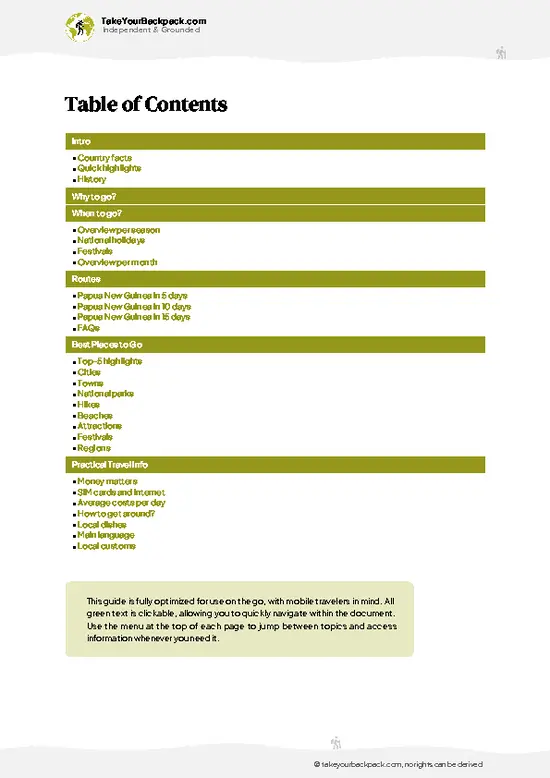
example page 0 from our offline Travel Guide for Papua New Guinea
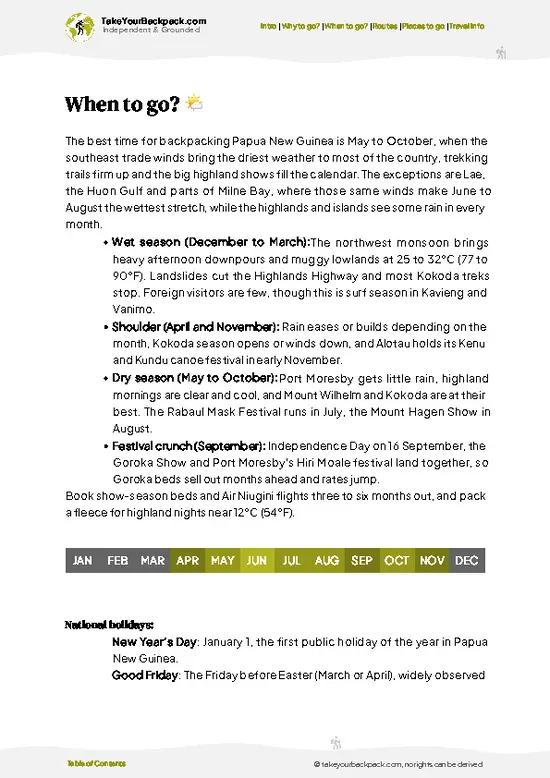
example page 1 from our offline Travel Guide for Papua New Guinea
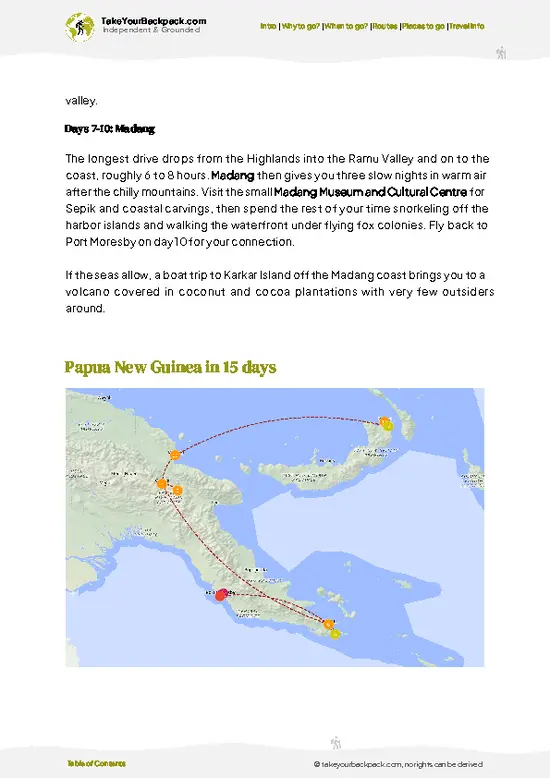
example page 2 from our offline Travel Guide for Papua New Guinea
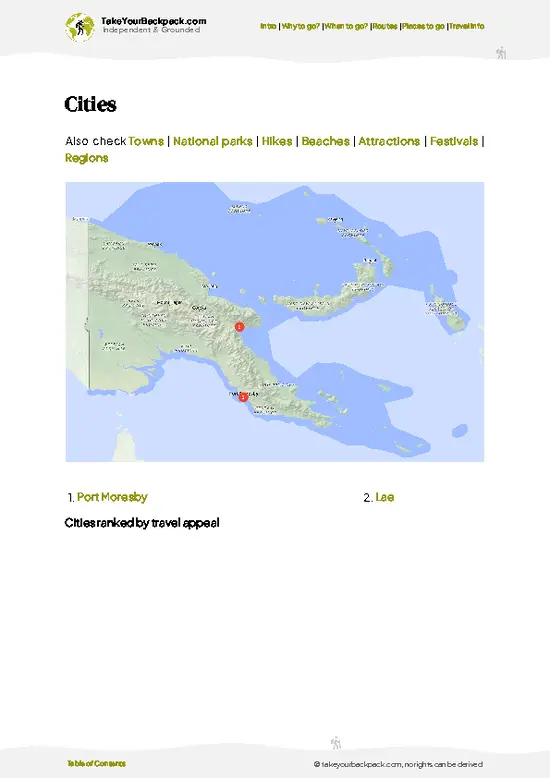
example page 3 from our offline Travel Guide for Papua New Guinea
example page 4 from our offline Travel Guide for Papua New Guinea
example page 5 from our offline Travel Guide for Papua New Guinea
example page 6 from our offline Travel Guide for Papua New Guinea
example page 7 from our offline Travel Guide for Papua New Guinea
Loading the map 🌍
CLICK TO FILTER
cities
towns
national parks
hikes
beaches
attractions
festivals
regions
SHOW COUNTRY’S BESTSHOW ALL

✨ Why go?
Ranked #5 attraction in Papua New Guinea
What makes it a must-see attraction

Backpackers stop here for one reason above all: the house reef at Tawali, where a drop-off begins almost at the shoreline and you can snorkel straight from the beach without a boat. Macro life is the specialty, so expect nudibranchs, pipefish and frogfish in the sand and coral rubble, plus the oddities that bring underwater photographers back repeatedly. The second pull is the contrast with the rest of the country. Most of Papua New Guinea demands careful planning around transport and security, yet Milne Bay is among the gentler corners, with villagers who paddle out in outrigger canoes and welcome visitors to markets and singsings. You can book a bed with meals included, which removes the daily scramble for food in a region with few restaurants. It works well as a quiet reset between the … read more 👉
Backpackers stop here for one reason above all: the house reef at Tawali, where a drop-off begins almost at the shoreline and you can snorkel straight from the beach without a boat. Macro life is the specialty, so expect nudibranchs, pipefish and frogfish in the sand and coral rubble, plus the oddities that bring underwater photographers back repeatedly. The second pull is the contrast with the rest of the country. Most of Papua New Guinea demands careful planning around transport and security, yet Milne Bay is among the gentler corners, with villagers who paddle out in outrigger canoes and welcome visitors to markets and singsings. You can book a bed with meals included, which removes the daily scramble for food in a region with few restaurants. It works well as a quiet reset between the busier trails of the south-east, and it suits anyone who wants sea access, a hammock and a week of unhurried reef time.

💡 HighlightsThe experiences that define the visit

  1. The house reef: A drop-off sits just off the shore, so you can wade in and snorkel over healthy hard coral with schools of small reef fish. Diving here is easy to arrange with the resort and the macro life is excellent.
  2. Muck diving in Milne Bay: Boat trips run to nearby sandy sites where critters hide, from frogfish to ghost pipefish. Divers travel a long way for this kind of subject.
  3. Canoe visits to nearby villages: Local paddlers and guides can take you to nearby settlements for a look at daily life, gardens and handmade crafts. Bring small cash to buy carvings.
  4. Jungle walks above the bay: Trails climb behind the resort through tropical forest, with birdsong, butterflies and views down over the water. Go early before the heat builds.
  5. Sunset from the shoreline: The bay catches evening color behind
… read more 👉
  1. The house reef: A drop-off sits just off the shore, so you can wade in and snorkel over healthy hard coral with schools of small reef fish. Diving here is easy to arrange with the resort and the macro life is excellent.
  2. Muck diving in Milne Bay: Boat trips run to nearby sandy sites where critters hide, from frogfish to ghost pipefish. Divers travel a long way for this kind of subject.
  3. Canoe visits to nearby villages: Local paddlers and guides can take you to nearby settlements for a look at daily life, gardens and handmade crafts. Bring small cash to buy carvings.
  4. Jungle walks above the bay: Trails climb behind the resort through tropical forest, with birdsong, butterflies and views down over the water. Go early before the heat builds.
  5. Sunset from the shoreline: The bay catches evening color behind the hills, and the quiet is near total once the generator hum settles. It is a simple night, with dinner and stars rather than clubs.
For a first visit, start with the house reef, since it needs no boat and shows you why people come.
Spotted a mistake or missing something? Contact us.

🌤️ When to go?Seasonal considerations and timing

  • Dry Season (May to October): Southeast trade winds bring the calmest-feeling, clearest conditions on Milne Bay’s shoreline, with highs of 28 to 30°C (82 to 86°F), nights near 23°C (73°F), and the best underwater visibility for the reef off the resort. Seas can be choppy on windy afternoons.
  • Wet Season (December to March): Expect heavy downpours, humidity, and highs of 30 to 32°C (86 to 90°F). Flat, glassy mornings are common, but rain can cloud the water and delay boat transfers.
  • Shoulder Months (April and November): Rain tapers off or builds, and the sea is often calm. Dive boats run with few other guests.
  • Daylight and Crowds: Days run about 11 to 13 hours all year, with sunrise near 6 a.m. and sunset near 6 p.m. Visitor numbers are small in every month, and prices barely shift.
Book flights … read more 👉
  • Dry Season (May to October): Southeast trade winds bring the calmest-feeling, clearest conditions on Milne Bay’s shoreline, with highs of 28 to 30°C (82 to 86°F), nights near 23°C (73°F), and the best underwater visibility for the reef off the resort. Seas can be choppy on windy afternoons.
  • Wet Season (December to March): Expect heavy downpours, humidity, and highs of 30 to 32°C (86 to 90°F). Flat, glassy mornings are common, but rain can cloud the water and delay boat transfers.
  • Shoulder Months (April and November): Rain tapers off or builds, and the sea is often calm. Dive boats run with few other guests.
  • Daylight and Crowds: Days run about 11 to 13 hours all year, with sunrise near 6 a.m. and sunset near 6 p.m. Visitor numbers are small in every month, and prices barely shift.
Book flights into Alotau well ahead for June to September, since seats on the Port Moresby route fill first.


source: climatestotravel.comJANJanuary: fair for travelingFEBFebruary: fair for travelingMARMarch: fair for travelingAPRApril: good for travelingMAYMay: highly recommended for travelingJUNJune: excellent for travelingJULJuly: excellent for travelingAUGAugust: excellent for travelingSEPSeptember: excellent for travelingOCTOctober: highly recommended for travelingNOVNovember: good for travelingDECDecember: fair for traveling
when-to-go

✈️ The backpacker research shortcutPapua New Guinea Travel Guide

An offline-friendly backpacking guide with optimized travel routes, ranked highlights, transport advice, and the best areas to stay.
example page 0 from our offline Travel Guide for Papua New Guinea
example page 1 from our offline Travel Guide for Papua New Guinea
example page 2 from our offline Travel Guide for Papua New Guinea
example page 3 from our offline Travel Guide for Papua New Guinea
example page 4 from our offline Travel Guide for Papua New Guinea
example page 5 from our offline Travel Guide for Papua New Guinea
example page 6 from our offline Travel Guide for Papua New Guinea
example page 7 from our offline Travel Guide for Papua New Guinea
The digital guide (251 pages) contains:
✅ 81 highlights, ranked by travel appeal
✅ Optimized 5, 10 & 15-day travel routes
✅ Cities, national parks, landmarks, beaches
✅ How to get around
✅ Offline-friendly for travel without Wi-Fi
👉 Click to see all 30+ guide features

📅 Plan smarter in minutes, not weeks
✅ Month by month travel advice
✅ Festivals & national holidays
✅ Budget expectations

🗺️ Go to the right places, skip the overrated ones
✅ Honest pros & cons of destinations
✅ Top hikes, parks & viewpoints
✅ Lesser-known places most travelers miss
✅ Clear “worth it vs skip it” guidance

🛏️ Travel smoothly without rookie mistakes
✅ Best areas to stay
✅ Transport systems explained simply
✅ Common scams & safety advice
✅ SIM cards, money & practical tips

🌍 Understand the country, not just visit it
✅ Culture & traditions
✅ 52 Essential phrases & customs
✅ Festivals worth planning around
✅ Traveler-friendly historical context
✅ Insights that make places more meaningful

📱 Built for real travel conditions
✅ Fully downloadable PDF
✅ Works completely offline
✅ Optimized for phone use
✅ Useful in remote areas & buses
✅ Everything in one place
Stop searching, start planning
Get instant access to your full guide. 30‑day money-back guarantee.
+ Add another guide for just

By proceeding you agree to our terms.
Sent to your inbox immediately after payment • 100% Secure Checkout
Best Backpacking Travel Advisor 2025 tourism awardBest Backpacking
Travel Advisor
2025
What others say about Take Your Backpack Guides:
⭐⭐⭐⭐⭐
Fantastic, amazing amount of information!
⭐⭐⭐⭐⭐
My goodness this is amazing, it's what I've been looking for hats off too you!
⭐⭐⭐⭐⭐
I think this is absolutely BRILLIANT
⭐⭐⭐⭐
Very complete and informative. It's still missing places, but I gotta to commend you
⭐⭐⭐⭐⭐
This is truly amazing, thank you, can't wait to explore it with my kids!
⭐⭐⭐⭐⭐
Awesome resource, thank you!
⭐⭐⭐⭐⭐
This is amazing! Can't wait to explore the ones I haven't seen
⭐⭐⭐⭐
I love this! Well done, great idea.
⭐⭐⭐⭐⭐
Thanks for taking the time to make this gem!
⭐⭐⭐⭐⭐
This might be the best website I've ever seen.
⭐⭐⭐⭐⭐
Congratulations, and thank you so much for your work; it's incredibly valuable.
⭐⭐⭐⭐
In all seriousness I think you did a great job pointing out the important spots
⭐⭐⭐⭐⭐
10/10 very good
⭐⭐⭐⭐⭐
As someone who's only just starting to visit regularly this is awesome, thank you.
⭐⭐⭐⭐
Thank you very much! I'm going to visit my dad, it's going to be very useful!
⭐⭐⭐⭐⭐
This is really cool! We'll be travelling for the first time and this definitely come in handy.
⭐⭐⭐⭐⭐
You are now our minister of culture, congratulations 👨‍💼
⭐⭐⭐⭐⭐
Just wanted to tell you that this is a pearl! Going to follow your recommendations.
⭐⭐⭐⭐⭐
This is so cool. I'll definitely be using the resource for my travels soon.
⭐⭐⭐⭐⭐
This is very impressive! Good work.
⭐⭐⭐⭐⭐
This is an amazing and informative site. Very well done!

🛏️ Where to stay?Where staying makes the most sense

The best base is the stretch of coast on Milne Bay’s eastern shore around Tawali itself, because this is a remote shoreline with almost no independent lodging and no town within walking distance. Staying on site means reef access from the beach, shared meals, and a captive crowd of divers and snorkelers who swap notes at the communal table. That social setup suits solo travelers well, though the guest list stays small, usually a dozen or so people at a time.
If the budget is tight, Alotau town is the practical alternative, roughly 2 hours by road and a short boat ride, depending on conditions. … read more 👉
The best base is the stretch of coast on Milne Bay’s eastern shore around Tawali itself, because this is a remote shoreline with almost no independent lodging and no town within walking distance. Staying on site means reef access from the beach, shared meals, and a captive crowd of divers and snorkelers who swap notes at the communal table. That social setup suits solo travelers well, though the guest list stays small, usually a dozen or so people at a time.
If the budget is tight, Alotau town is the practical alternative, roughly 2 hours by road and a short boat ride, depending on conditions. Guesthouses there run about K150 to 350 (US$40 to 90) a night, and you can buy supplies, change money, and meet other travelers at the market and waterfront cafes. Alotau works best as an arrival and departure night rather than a base for this beach.
Village homestays in the nearby coastal communities exist for adventurous travelers, with basic rooms, simple meals, and a direct look at local life. Arrange these through local contacts in Alotau rather than turning up unannounced, and carry cash in kina since cards are rarely accepted outside town.

👛 Costs (as of 15 October 2026)Typical daily expenses

Tawali Resort costs roughly US$150 to 235 per person per day, because the lodge sells meals and activities as part of the stay and sits far from any cheaper alternative.
CategoryBudget RangeLocal Reality
Accommodation (high season)US$85 to 120Garden or beachfront bungalows on Hoia Bay, priced per person. Rates are lower in the wetter months.
MealsUS$30 to 45Three meals a day served at the lodge, mostly fish, rice and garden vegetables. There are no other restaurants nearby.
Diving and snorkelingUS$20 to 40Guided boat dives run about US$60 to 90 each, but snorkeling from the house reef is free. The figure shown assumes one paid snorkel or boat outing a day.
Local transportUS$5 to 10Village trips by dinghy or truck are priced per outing. Travelers pay in kina.
Airport transfer (averaged per day)US$5
… read more 👉
Tawali Resort costs roughly US$150 to 235 per person per day, because the lodge sells meals and activities as part of the stay and sits far from any cheaper alternative.
CategoryBudget RangeLocal Reality
Accommodation (high season)US$85 to 120Garden or beachfront bungalows on Hoia Bay, priced per person. Rates are lower in the wetter months.
MealsUS$30 to 45Three meals a day served at the lodge, mostly fish, rice and garden vegetables. There are no other restaurants nearby.
Diving and snorkelingUS$20 to 40Guided boat dives run about US$60 to 90 each, but snorkeling from the house reef is free. The figure shown assumes one paid snorkel or boat outing a day.
Local transportUS$5 to 10Village trips by dinghy or truck are priced per outing. Travelers pay in kina.
Airport transfer (averaged per day)US$5 to 10The transfer from Alotau by road and boat costs about US$40 to 70 each way, spread over a multi-night stay.
Drinks and extrasUS$5 to 10Beer and soft drinks are sold at the bar. Village market snacks and carvings cost only a few dollars.
Total Daily BudgetUS$150 to 235Based on high-season rates with one paid activity a day. Beach time, snorkeling off the shore and village walks cost nothing extra.
Bring enough cash from Alotau, since there are no banks or ATMs near the bay and card payments at the lodge can be unreliable.
⚠️ Prices can change and everyone travels differently, so take this as a rough guide. Hope it helps you plan your adventure!

🛡️ SafetyTraveler Safety Guide

The water here is calm and sheltered, since the beach faces into Milne Bay rather than open ocean, and rips or heavy surf are not a normal concern. Swimming is easy from the shore, and the reef begins close in, so wear reef shoes or fins to avoid cuts on coral and sea urchin spines. Stonefish and lionfish live around the reef edges; shuffle your feet in shallow rubble and don’t grab at coral. Saltwater crocodiles occur in parts of PNG, so ask staff where locals swim and stay out of river mouths and murky water. Sun is intense from mid-morning, and a rash shirt saves your skin during long snorkels. Afternoon winds can roughen the bay, so go out in the morning. Malaria is present in Milne Bay, so bring repellent and talk to a doctor about prophylaxis. Petty theft is uncommon at the resort, but keep valuables locked away in town.

FAQCommon questions from travelers

Fly from Port Moresby to Gurney Airport in Alotau, a flight of roughly 1.5 hours, then take a transfer by boat or road to the resort, usually arranged in advance. The road and boat trip takes about 1 to 2 hours depending on the route and sea conditions. Flights are operated by Air Niugini and PNG Air, and fares vary widely, so book early for peak months from June to September.
Snorkeling and diving are the main draws, with healthy coral starting just off the shore and clear water in the dry months from May to October. Swimming is easy in the sheltered bay, with no real surf, so surfing is not a reason to come. Dive trips usually run to nearby reefs, wrecks, and muck sites, with boat dives priced at around US$60 to 100 per dive depending on package.
The beach itself is not ticketed, but access is through the resort, which is the practical way to reach it. Day visitors should arrange this ahead because transfers from Alotau must be booked by boat. Budget for transfers of around K200 to 500 (US$50 to 130) and meals on site, and carry kina in cash.
⚠️ Things can change over time, so always validate details locally before you go.

Other Papua New Guinean attractions near Tawali Resort

Explore more nearby:


💡 Not sure where to go next?
Create a personalized itinerary for Papua New Guinea including Tawali Resort and the places that fit your trip.

Generate my itinerary

👉 Discover all attractions

Or checkout all Papua New Guinea has to offer (think cities, towns, villages, national parks, hikes, beaches, festivals)
Country photo of Papua New Guinea

We 💚 feedbackWhat to keep in mind

Pair Tawali with a few days in Alotau, where the market and the Kula-area culture add the town side that the resort lacks. I would book the reef first and the town second, so you arrive at the water rested. Bring a rash guard and reef shoes for the pebbly entry, and carry extra cash for village visits.

✍️ Help improve this page!
The information on this page is based on in-depth research, insights shared by experienced travelers, and feedback from the local travel community in Papua New Guinea. While every effort is made to keep the information accurate and current, conditions can change — so if you spot anything incorrect or outdated, please get in touch.


🙋‍♂️ Give feedback

👋 Meet the founderWho’s Behind Take Your Backpack?

Johan, backpacker and founder of TakeYourBackpackHi, I’m Johan (Netherlands 🇳🇱), the creator of TakeYourBackpack. Over the past 3 decades, I’ve backpacked through 90+ countries across six continents, gaining extensive experience with independent travel, long-term trips, and overland routes.

This site is built on a combination of firsthand travel experience and carefully curated insights from other backpackers. Many guides are based on places I’ve personally visited, while others bring together tips, observations, and practical advice shared by trusted travelers I’ve met along the way.

The goal is to provide realistic, experience-driven guidance — not generic itineraries — so you can explore destinations with better context, clearer expectations, and more confidence.