×

Papua New Guinea🇵🇬 | attractionsKokopo Cultural CentreTolai masks, shell money, local crafts, community events | things to do and best time to go

Explore Rainforest HabitatExplore Doini Island

Backpacking in Kokopo Cultural Centre
👍 Recommendedattraction ranked #6
By Johan Kruseman 🇳🇱 | Updated September 4, 2026

Most travelers only realize after the fact: Kokopo Cultural Centre is one of the rare places in Papua New Guinea where you can actually interact with local artisans and elders without a fixer or a fat tour fee. It’s in East New Britain, a short drive from the center of Kokopo—close enough to the airport that you can squeeze it in between volcano hikes or market runs.

Here’s the truth: Kokopo Cultural Centre isn’t the flashiest stop in PNG, but it’s a goldmine for anyone who wants to get under the skin of the country’s culture without the usual tourist choreography. The displays are real—sometimes rough around the edges, sometimes jaw-dropping, always personal. You’ll see war relics, traditional masks, and the kind of hand-carved canoes that Instagram never shows. Yes, it can get busy when cruise ships dock, and yes, the facilities are basic. But compared to the overhyped “cultural villages” elsewhere, this place is refreshingly unpolished and affordable. The vibe? Welcoming, a little chaotic, and absolutely worth your time if you want stories, not just snapshots.

Discover everything you want to know in the 📖 Papua New Guinea Travel Guide.
Loading the map 🌍
CLICK TO FILTER
cities
towns
national parks
hikes
beaches
attractions
festivals
regions
SHOW COUNTRY’S BESTSHOW ALL

✨ Why go?
Ranked #6 attraction in Papua New Guinea
Why Kokopo Cultural Centre should be on your travel list

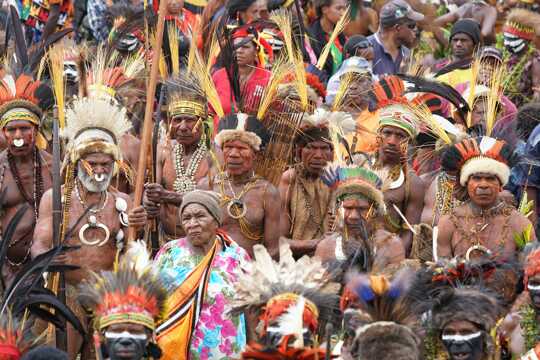
The Kokopo Cultural Centre isn’t some polished, Instagram-ready tourist trap. It’s raw, real, and unapologetically Papua New Guinean. Sure, it draws crowds, but that’s because it’s a rare spot where you can actually *feel* the pulse of the local culture, not just snap a quick photo. This place is a cultural powerhouse—a living archive of the Tolai people’s traditions, art, and history. You get to witness authentic ceremonies, intricate carvings, and stories that have survived colonial upheavals and volcanic eruptions.

Backpackers make time here because it’s a major milestone on the Papua New Guinea route, a place where you can pause and connect with the country’s soul beyond the usual jungle treks and beach escapes. The effort to get here—often involving a mix of boats, buses, and patience—is … read more 👉
The Kokopo Cultural Centre isn’t some polished, Instagram-ready tourist trap. It’s raw, real, and unapologetically Papua New Guinean. Sure, it draws crowds, but that’s because it’s a rare spot where you can actually *feel* the pulse of the local culture, not just snap a quick photo. This place is a cultural powerhouse—a living archive of the Tolai people’s traditions, art, and history. You get to witness authentic ceremonies, intricate carvings, and stories that have survived colonial upheavals and volcanic eruptions.

Backpackers make time here because it’s a major milestone on the Papua New Guinea route, a place where you can pause and connect with the country’s soul beyond the usual jungle treks and beach escapes. The effort to get here—often involving a mix of boats, buses, and patience—is rewarded with an experience that’s as educational as it is emotional. It’s not about polished presentations; it’s about raw, unfiltered heritage that challenges your assumptions and expands your understanding of what culture means in this part of the world. If you want to skip the tourist gloss and dive into something genuinely transformative, Kokopo Cultural Centre is where you do it.
Want to include Kokopo Cultural Centre in your Papua New Guinea route?
Create a personalized Papua New Guinea itinerary that includes Kokopo Cultural Centre and the places that fit your trip — based on your travel style, budget, and available time. Get your route in seconds.

Generate my trip

💡 HighlightsWhat this place is best known for

1. The Haus Tambaran (Spirit House) Architecture
Forget the Instagram filters—this is the real deal. The Centre’s Haus Tambaran isn’t just a photogenic backdrop; it’s a crash course in Papua New Guinea’s spiritual backbone. The sharply pitched roof, the hand-carved support beams, the ochre and charcoal motifs—they’re not for show. Every line and swirl is a coded message, a living record of clan stories and taboos. Stand beneath that roof and you’ll feel the weight of centuries. No velvet ropes, no glass cases—just you and the raw pulse of Melanesian tradition.


2. Live Baining Fire Dance Demonstrations
This isn’t a sanitized “cultural show” for cruise ship crowds. If you time it right (usually during festivals or by arrangement), you’ll witness the Baining men stomping barefoot through live … read more 👉
1. The Haus Tambaran (Spirit House) Architecture
Forget the Instagram filters—this is the real deal. The Centre’s Haus Tambaran isn’t just a photogenic backdrop; it’s a crash course in Papua New Guinea’s spiritual backbone. The sharply pitched roof, the hand-carved support beams, the ochre and charcoal motifs—they’re not for show. Every line and swirl is a coded message, a living record of clan stories and taboos. Stand beneath that roof and you’ll feel the weight of centuries. No velvet ropes, no glass cases—just you and the raw pulse of Melanesian tradition.


2. Live Baining Fire Dance Demonstrations
This isn’t a sanitized “cultural show” for cruise ship crowds. If you time it right (usually during festivals or by arrangement), you’ll witness the Baining men stomping barefoot through live coals, masked and howling, sparks flying into the night. It’s not a stunt. It’s a rite of passage, a spiritual gauntlet, and it’s performed with a kind of wild, unselfconscious intensity that makes every “tribal dance” you’ve seen elsewhere look like a rehearsal. You’ll smell the singed grass, feel the heat, and realize you’re watching something that isn’t performed for tourists—it’s performed for the ancestors.


3. WWII Relics and Oral Histories
Kokopo was ground zero for some of the Pacific’s most brutal fighting. The Centre doesn’t just display rusted helmets and dog tags; it pairs them with first-person stories from local elders. You’ll see Japanese swords, battered canteens, and even the odd aircraft part, but the real punch comes from hearing how these objects shaped families and villages. This is history with teeth—messy, personal, and impossible to forget.


4. Tolai Shell Money and Trade Artifacts
You’ve heard of Bitcoin; now meet the original cryptocurrency. The Centre’s collection of shell money—meticulously strung rings of tiny shells—was (and in some cases, still is) the backbone of Tolai commerce and social life. These aren’t just museum pieces; they’re living currency, used for bride price, compensation, and big community deals. The staff will show you how it’s made, and if you’re lucky, you’ll catch a demonstration of how it’s counted and exchanged. It’s tactile, beautiful, and absolutely unique to this corner of the world.


5. Hands-On Carving and Weaving Workshops
This isn’t a “watch from behind the rope” kind of place. The Centre often runs workshops where you can try your hand at traditional wood carving or mat weaving. The local artists aren’t just instructors—they’re keepers of techniques passed down through generations. You’ll leave with sore fingers, a lopsided souvenir, and a new respect for the skill it takes to turn raw materials into something meaningful. This is the antidote to passive tourism: you’re not just looking, you’re doing.
Spotted a mistake or missing something? Contact us.
🌤️ When to go?Choosing the right time of year


  • Topic: Weather – Kokopo’s climate is tropical, hot, and humid year-round, but the dry season from May to October offers the most comfortable conditions. Expect less rain and more manageable humidity, making trekking and exploring the cultural centre far more enjoyable.

  • Topic: Temperature – Temperatures hover between 24°C and 30°C (75°F to 86°F) throughout the year. The dry season months tend to feel slightly cooler, especially in the evenings, which can be a relief after daytime heat.

  • Topic: Daylight Hours – Daylight is fairly consistent, with roughly 11 to 12 hours daily. From June to August, days are a bit longer, giving you extra daylight to soak in the cultural exhibits and local life without rushing.

  • Topic: Crowds – Kokopo Cultural Centre isn’t a tourist hotspot, but the dry
read more 👉

  • Topic: Weather – Kokopo’s climate is tropical, hot, and humid year-round, but the dry season from May to October offers the most comfortable conditions. Expect less rain and more manageable humidity, making trekking and exploring the cultural centre far more enjoyable.

  • Topic: Temperature – Temperatures hover between 24°C and 30°C (75°F to 86°F) throughout the year. The dry season months tend to feel slightly cooler, especially in the evenings, which can be a relief after daytime heat.

  • Topic: Daylight Hours – Daylight is fairly consistent, with roughly 11 to 12 hours daily. From June to August, days are a bit longer, giving you extra daylight to soak in the cultural exhibits and local life without rushing.

  • Topic: Crowds – Kokopo Cultural Centre isn’t a tourist hotspot, but the dry season sees a modest uptick in visitors, mostly local and regional tourists. If you want near solitude, aim for shoulder months like April or November.

  • Topic: Seasonal Activities – The dry season aligns with local festivals and traditional ceremonies, offering a rare chance to witness authentic cultural performances. These events don’t happen year-round, so timing your visit here can elevate the experience beyond static displays.

  • Topic: Price Fluctuations – Accommodation and transport costs rise slightly during the dry season due to increased demand. Budget travelers can save by booking in the shoulder months when prices dip but weather remains decent.


Pro-tip: Visit just before or after the dry season to dodge crowds and high prices while still catching good weather and local cultural events in full swing.


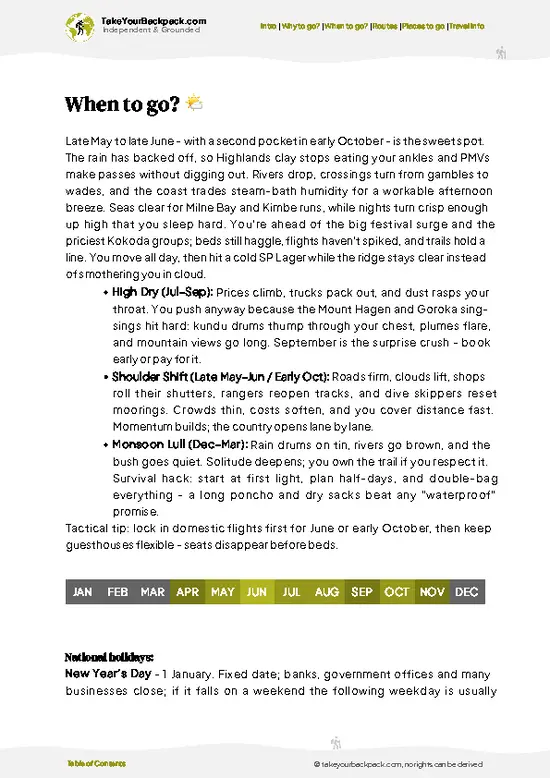
source: climatestotravel.comJANJanuary: fair for travelingFEBFebruary: fair for travelingMARMarch: fair for travelingAPRApril: highly recommended for travelingMAYMay: excellent for travelingJUNJune: excellent for travelingJULJuly: excellent for travelingAUGAugust: excellent for travelingSEPSeptember: excellent for travelingOCTOctober: excellent for travelingNOVNovember: highly recommended for travelingDECDecember: fair for traveling
papua-new-guinea-attraction-kokopo-cultural-centre
© Google |

✈️ The backpacker research shortcutPapua New Guinea Travel Guide

An offline-friendly backpacking guide with optimized travel routes, ranked highlights, transport advice, and the best areas to stay.
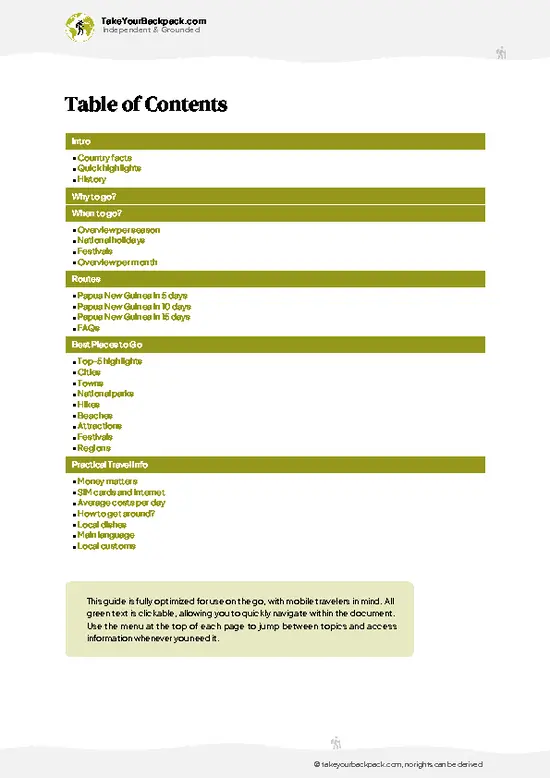
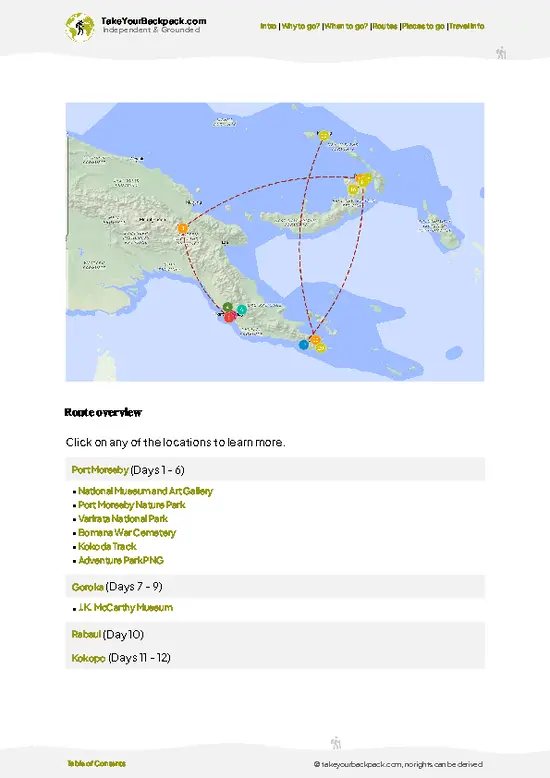
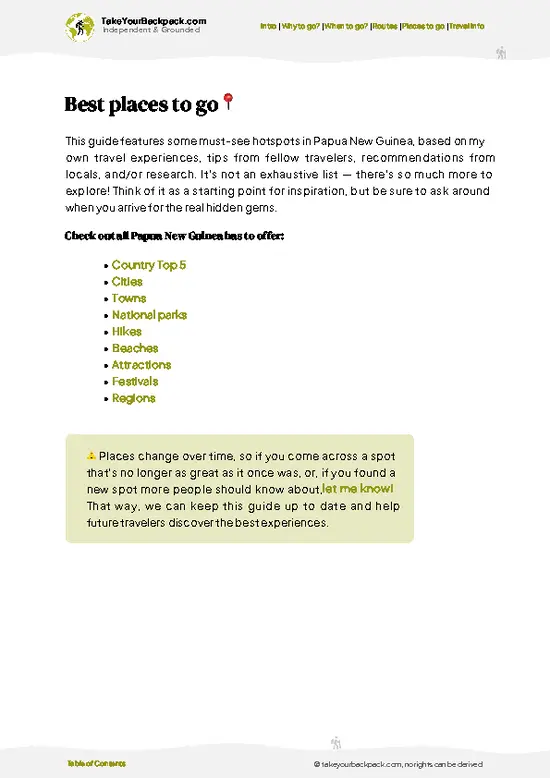
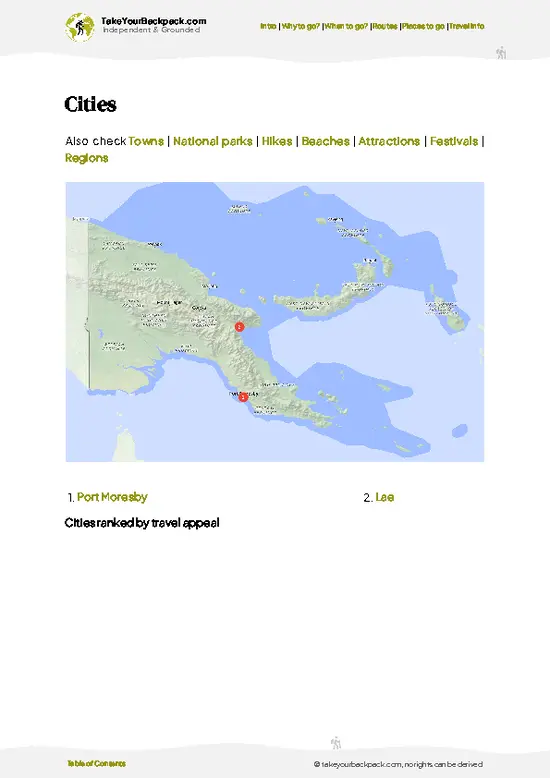
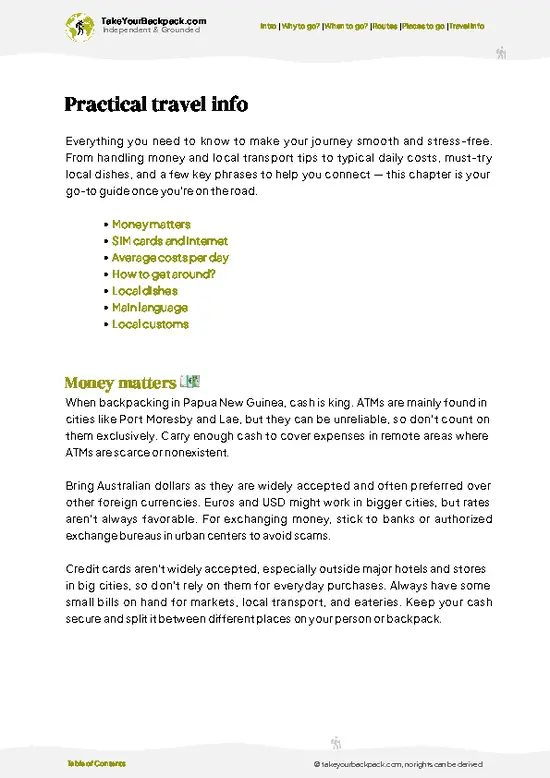
example page 0 from our offline Travel Guide for Papua New Guinea
example page 1 from our offline Travel Guide for Papua New Guinea
example page 2 from our offline Travel Guide for Papua New Guinea
example page 3 from our offline Travel Guide for Papua New Guinea
example page 4 from our offline Travel Guide for Papua New Guinea
example page 5 from our offline Travel Guide for Papua New Guinea
example page 6 from our offline Travel Guide for Papua New Guinea
example page 7 from our offline Travel Guide for Papua New Guinea
The digital guide (319 pages) contains:
86 highlights, ranked by travel appeal
Optimized 5, 10 & 15-day travel routes
Cities, national parks, landmarks, beaches
How to get around
Offline-friendly for travel without Wi-Fi
👉 Click to see all 30+ guide features

📅 Plan smarter in minutes, not weeks
Month by month travel advice
Festivals & national holidays
Budget expectations

🗺️ Go to the right places, skip the overrated ones
Honest pros & cons of destinations
Top hikes, parks & viewpoints
Lesser-known places most travelers miss
Clear “worth it vs skip it” guidance

🛏️ Travel smoothly without rookie mistakes
Best areas to stay
Transport systems explained simply
Common scams & safety advice
SIM cards, money & practical tips

🌍 Understand the country, not just visit it
Culture & traditions
52 Essential phrases & customs
Festivals worth planning around
Traveler-friendly historical context
Insights that make places more meaningful

📱 Built for real travel conditions
Fully downloadable PDF
Works completely offline
Optimized for phone use
Useful in remote areas & buses
Everything in one place
Save weeks of stressful planning
Get instant access to your full guide. 30‑day money-back guarantee.
+ Add another guide for just €6.50

By proceeding you agree to our terms.
Sent to your inbox immediately after payment • 100% Secure Checkout
Best Backpacking Travel Advisor 2025 tourism awardBest Backpacking
Travel Advisor
2025
What others say about Take Your Backpack Guides:
⭐⭐⭐⭐⭐
Fantastic, amazing amount of information!
⭐⭐⭐⭐⭐
My goodness this is amazing, it's what I've been looking for hats off too you!
⭐⭐⭐⭐⭐
I think this is absolutely BRILLIANT
⭐⭐⭐⭐
Very complete and informative. It's still missing places, but I gotta to commend you
⭐⭐⭐⭐⭐
This is truly amazing, thank you, can't wait to explore it with my kids!
⭐⭐⭐⭐⭐
Awesome resource, thank you!
⭐⭐⭐⭐⭐
This is amazing! Can't wait to explore the ones I haven't seen
⭐⭐⭐⭐
I love this! Well done, great idea.
⭐⭐⭐⭐⭐
Thanks for taking the time to make this gem!
⭐⭐⭐⭐⭐
This might be the best website I've ever seen.
⭐⭐⭐⭐⭐
Congratulations, and thank you so much for your work; it's incredibly valuable.
⭐⭐⭐⭐
In all seriousness I think you did a great job pointing out the important spots
⭐⭐⭐⭐⭐
10/10 very good
⭐⭐⭐⭐⭐
As someone who's only just starting to visit regularly this is awesome, thank you.
⭐⭐⭐⭐
Thank you very much! I'm going to visit my dad, it's going to be very useful!
⭐⭐⭐⭐⭐
This is really cool! We'll be travelling for the first time and this definitely come in handy.
⭐⭐⭐⭐⭐
You are now our minister of culture, congratulations 👨‍💼
⭐⭐⭐⭐⭐
Just wanted to tell you that this is a pearl! Going to follow your recommendations.
⭐⭐⭐⭐⭐
This is so cool. I'll definitely be using the resource for my travels soon.
⭐⭐⭐⭐⭐
This is very impressive! Good work.
⭐⭐⭐⭐⭐
This is an amazing and informative site. Very well done!

🛏️ Where to stay?Choosing the right base

Kokopo Cultural Centre sits in a part of Papua New Guinea that’s not exactly crawling with backpackers, so don’t expect a buzzing hostel scene right next door. The real action for budget travelers is in Kokopo town itself, about a 10-15 minute drive away. This is where you’ll find the safest, most social spots to crash. Kokopo isn’t a sprawling city; it’s compact, which means you can easily mingle with locals and fellow travelers without the hassle of long commutes.

The vibe here is low-key but genuine—think small guesthouses and family-run lodges rather than flashy resorts. This is where you … read more 👉
Kokopo Cultural Centre sits in a part of Papua New Guinea that’s not exactly crawling with backpackers, so don’t expect a buzzing hostel scene right next door. The real action for budget travelers is in Kokopo town itself, about a 10-15 minute drive away. This is where you’ll find the safest, most social spots to crash. Kokopo isn’t a sprawling city; it’s compact, which means you can easily mingle with locals and fellow travelers without the hassle of long commutes.

The vibe here is low-key but genuine—think small guesthouses and family-run lodges rather than flashy resorts. This is where you get the real PNG experience: informal chats over local food, impromptu invitations to community events, and a chance to hear stories that don’t make it into glossy travel brochures. Safety-wise, sticking to Kokopo town is smart. It’s the hub with the best infrastructure and a friendly, watchful community that looks out for visitors.

If you want to soak in the culture without the tourist bubble, this is your base. It’s not about Instagram-perfect views but about authentic connections and a front-row seat to the everyday life that shapes the cultural centre’s significance.

👛 Costs (as of 4 September 2026)What things cost and how to budget

As of the most recent estimates, visiting the Kokopo Cultural Centre in Papua New Guinea involves a daily cost ranging from €80 to €150. This includes accommodation, meals, and activities. Specific entrance fees for the centre are not detailed in the available sources. However, local tours and activities in Kokopo typically range from €80 to €150 per day. ([bestofpng.com](https://www.bestofpng.com/scheduled-tours.html?utm_source=openai))

source: bestofpng.com
⚠️ Prices can change and everyone travels differently, so take this as a rough guide. Hope it helps you plan your adventure!

FAQFrequently asked questions about Kokopo Cultural Centre

Plan to spend about 1 to 2 hours visiting Kokopo Cultural Centre to fully explore the exhibits and cultural displays. This allows enough time to appreciate the traditional artifacts and local history without rushing.
Yes, Kokopo Cultural Centre is worth the entrance fee, which is typically around 10 to 15 Papua New Guinean Kina. The fee supports the preservation of local culture and offers a unique insight into the indigenous heritage of the East New Britain region.
To get to Kokopo Cultural Centre, travel to Kokopo town, which is about 20 kilometers from Rabaul. From Kokopo, the centre is accessible by local taxi or a short walk if you are staying nearby; taxis are the most practical option for backpackers.
⚠️ Things can change over time, so always validate details locally before you go.

Other Papua New Guinean attractions near Kokopo Cultural Centre

Explore more nearby:

  • Kokopo War Museum—military vehicles, WWII relics, Japanese tunnels, battlefield artifacts
  • Rabao Historical Museum—WWII documents, local history, photographic archives, small exhibits| 19 km away
  • Rainforest Habitat—canopy walkways, birdwatching, tropical flora, ecological tours| 637 km away

💡 Not sure where to go next?
Create a personalized itinerary for Papua New Guinea including Kokopo Cultural Centre and the places that fit your trip.

Generate my itinerary

👉 Discover all attractions

Or checkout all Papua New Guinea has to offer (think cities, towns, villages, national parks, hikes, beaches, festivals)
Country photo of Papua New Guinea

We 💚 feedbackKey takeaways before you go

The Kokopo Cultural Centre isn’t some polished, Instagram-perfect spot. Expect a bit of chaos—locals chatting loudly, kids darting around, and artifacts that have seen better days. But that’s exactly the point. The real magic is in the rawness: genuine stories told by people who live this culture every day. If you want a sanitized museum, look elsewhere. Here, you get the pulse of Papua New Guinea’s spirit, unfiltered and alive. Just bring patience and an open mind—this place rewards those who lean in.

✍️ Help improve this page!
The information on this page is based on in-depth research, insights shared by experienced travelers, and feedback from the local travel community in Papua New Guinea. While every effort is made to keep the information accurate and current, conditions can change — so if you spot anything incorrect or outdated, please get in touch.


🙋‍♂️ Give feedback

👋 Meet the founderWho’s Behind Take Your Backpack?

Johan, backpacker and founder of TakeYourBackpackHi, I’m Johan (Netherlands 🇳🇱), the creator of TakeYourBackpack. Over the past decade, I’ve backpacked through 80+ countries across six continents, gaining extensive experience with independent travel, long-term trips, and overland routes.

This site is built on a combination of firsthand travel experience and carefully curated insights from other backpackers. Many guides are based on places I’ve personally visited, while others bring together tips, observations, and practical advice shared by trusted travelers I’ve met along the way.

The goal is to provide realistic, experience-driven guidance — not generic itineraries — so you can explore destinations with better context, clearer expectations, and more confidence.

Get full country guide •
Instant download • 86 highlights • Full Offline guide