×

Papua New Guinea🇵🇬 | attractionsRabao Historical MuseumWWII documents, local history, photographic archives, small exhibits | things to do and best time to go

Explore J.K. McCarthy MuseumExplore Kokopo War Museum

Backpacking in Rabao Historical Museum
👀 For curious travelersattraction ranked #11
By Johan Kruseman 🇳🇱 | Updated September 4, 2026

A fan whirs overhead, slicing the thick, humid air as your fingers trace the pockmarked metal of a rusted helmet—Japanese script still ghosting the surface. The scent here is part mildew, part old paper, part salt from the nearby bay. You hear the distant thrum of a truck outside, but inside, it’s just you and the artifacts: battered rifles, faded photographs, and the silent weight of stories that never made it into textbooks.

Rabao Historical Museum sits in Rabaul, on the northeastern tip of Papua New Guinea’s East New Britain province—a place that’s seen more eruptions and invasions than most cities see tourists. Here’s the truth: you won’t find crowds jostling for selfies, and you won’t find slick displays or air-conditioned comfort. Entry is cheap, but the real cost is emotional—this place hits hard if you let it. Compared to the volcano hikes and reef dives that lure most backpackers, Rabao’s museum is raw, unpolished, and deeply human. It’s not for everyone, but if you want to feel the pulse of history under your skin, this is where you come.

Discover everything you want to know in the 📖 Papua New Guinea Travel Guide.
Loading the map 🌍
CLICK TO FILTER
cities
towns
national parks
hikes
beaches
attractions
festivals
regions
SHOW COUNTRY’S BESTSHOW ALL

✨ Why go?
Ranked #11 attraction in Papua New Guinea
What sets this place apart

The Rabao Historical Museum in Papua New Guinea isn’t some polished, Instagram-perfect spot where you snap a quick selfie and move on. It’s raw, real, and packed with layers of history that hit harder than any postcard view. Sure, it’s not a crowd magnet like the beaches or markets, but that’s exactly why it’s a must-stop. This place is a deep dive into Papua New Guinea’s complex past—colonial struggles, tribal legacies, and the fierce spirit of a people who’ve fought to keep their identity intact.

Backpackers who carve out time here aren’t just ticking off a tourist checklist. They’re stepping into a living story, where every artifact and exhibit challenges you to rethink what you know about history and culture. The effort to get here—often involving bumpy rides and a bit of patience—is … read more 👉
The Rabao Historical Museum in Papua New Guinea isn’t some polished, Instagram-perfect spot where you snap a quick selfie and move on. It’s raw, real, and packed with layers of history that hit harder than any postcard view. Sure, it’s not a crowd magnet like the beaches or markets, but that’s exactly why it’s a must-stop. This place is a deep dive into Papua New Guinea’s complex past—colonial struggles, tribal legacies, and the fierce spirit of a people who’ve fought to keep their identity intact.

Backpackers who carve out time here aren’t just ticking off a tourist checklist. They’re stepping into a living story, where every artifact and exhibit challenges you to rethink what you know about history and culture. The effort to get here—often involving bumpy rides and a bit of patience—is rewarded with a perspective that no guidebook can capture. It’s a milestone on the Papua New Guinea route because it grounds your journey in something real, something that lasts beyond the usual travel highlights. If you want to understand the soul of this country, Rabao is where you start shedding the surface and get to the core.
Want to include Rabao Historical Museum in your Papua New Guinea route?
Create a personalized Papua New Guinea itinerary that includes Rabao Historical Museum and the places that fit your trip — based on your travel style, budget, and available time. Get your route in seconds.

Generate my trip

💡 HighlightsPlaces and moments you shouldn't skip

World War II Relics—No Filter, No Gloss
Forget the sanitized museum cases you’ll find in big-city war museums. Rabao Historical Museum is raw. You’ll see rusted helmets, battered rifles, and even the twisted remains of aircraft—some pulled straight from the jungle or the sea. These aren’t replicas or polished artifacts; they’re the real deal, still carrying the scars of battle. If you want to feel the weight of history, not just read about it, this is where you stand face-to-face with the past. The entertainment here is visceral: you’re not just looking, you’re imagining the chaos that left these objects behind.


Local Oral Histories—Stories You Won’t Find in Textbooks
Here’s where Rabao leaves the Instagram crowd in the dust. The museum doesn’t just display objects; it gives you access to the … read more 👉
World War II Relics—No Filter, No Gloss
Forget the sanitized museum cases you’ll find in big-city war museums. Rabao Historical Museum is raw. You’ll see rusted helmets, battered rifles, and even the twisted remains of aircraft—some pulled straight from the jungle or the sea. These aren’t replicas or polished artifacts; they’re the real deal, still carrying the scars of battle. If you want to feel the weight of history, not just read about it, this is where you stand face-to-face with the past. The entertainment here is visceral: you’re not just looking, you’re imagining the chaos that left these objects behind.


Local Oral Histories—Stories You Won’t Find in Textbooks
Here’s where Rabao leaves the Instagram crowd in the dust. The museum doesn’t just display objects; it gives you access to the living memory of the region. Staff and local guides often share stories passed down from elders—tales of survival, resistance, and daily life during the Japanese occupation. These aren’t polished, rehearsed scripts. They’re raw, sometimes contradictory, and always deeply personal. You’ll walk away with a version of history that’s messy, human, and impossible to forget.


Japanese Tunnels—Claustrophobia Included
This isn’t a theme park ride. The tunnels beneath Rabao, dug by Japanese forces during the war, are cramped, dark, and absolutely real. You can walk through sections of these tunnels, feeling the oppressive heat and imagining what it was like to live and fight underground. It’s not for the faint of heart or the selfie-obsessed. But if you want to experience history with your whole body, this is as immersive as it gets.


Handmade Local Exhibits—History on a Shoestring
Rabao’s displays aren’t curated by international experts with million-dollar budgets. They’re put together by locals, often using whatever materials are available. That means hand-painted signs, improvised display cases, and a kind of scrappy authenticity you won’t find in slick, air-conditioned museums. It’s imperfect, sometimes chaotic, but it’s real. The entertainment value comes from the unpredictability—one moment you’re looking at a rusted machine gun, the next you’re reading a hand-scrawled note from a village elder.


Connection to the Community—Not Just a Museum, but a Living Archive
Rabao isn’t just about the past. It’s a hub for the local community, a place where history is actively remembered and debated. You might stumble into a school group, a veterans’ gathering, or a spontaneous storytelling session. The museum’s role as a living archive means you’re not just a spectator; you’re part of an ongoing conversation about what the past means for the present. That’s a kind of entertainment you can’t buy—a chance to be part of something bigger than yourself.

Spotted a mistake or missing something? Contact us.
🌤️ When to go?Best time to visit Rabao Historical Museum


  • Weather: Papua New Guinea’s climate is tropical, so expect high humidity and frequent rain, especially from December through March. The best window is May to October when the weather is drier and more manageable for exploring the Rabao Historical Museum without getting drenched.

  • Temperature: Temperatures hover between 24°C and 30°C (75°F to 86°F) year-round, but the dry season feels less oppressive. The wet season can push humidity to uncomfortable levels, making museum visits less pleasant.

  • Daylight Hours: Daylight is fairly consistent, roughly 11 to 12 hours daily, so you won’t lose much time regardless of when you go. Early starts are smart to beat the midday heat and crowds.

  • Crowds: The Rabao Historical Museum isn’t a major tourist magnet, but local school groups and cultural
read more 👉

  • Weather: Papua New Guinea’s climate is tropical, so expect high humidity and frequent rain, especially from December through March. The best window is May to October when the weather is drier and more manageable for exploring the Rabao Historical Museum without getting drenched.

  • Temperature: Temperatures hover between 24°C and 30°C (75°F to 86°F) year-round, but the dry season feels less oppressive. The wet season can push humidity to uncomfortable levels, making museum visits less pleasant.

  • Daylight Hours: Daylight is fairly consistent, roughly 11 to 12 hours daily, so you won’t lose much time regardless of when you go. Early starts are smart to beat the midday heat and crowds.

  • Crowds: The Rabao Historical Museum isn’t a major tourist magnet, but local school groups and cultural tours peak during the dry season, especially July and August. Visiting early in the week or morning helps avoid these bursts.

  • Seasonal Activities: Dry months coincide with local festivals and cultural events, adding layers to your visit beyond the museum’s exhibits. These events are rare and raw, offering a deeper connection to Papua New Guinea’s heritage.

  • Price Fluctuations: Expect slightly higher accommodation and transport costs during the dry season due to increased travel demand. The wet season offers cheaper rates but comes with the trade-off of unpredictable weather and muddy trails.


Pro-tip: Aim for June or September to balance dry weather, manageable crowds, and a chance to catch authentic cultural events without the premium prices.


source: climatestotravel.comJANJanuary: fair for travelingFEBFebruary: fair for travelingMARMarch: fair for travelingAPRApril: good for travelingMAYMay: excellent for travelingJUNJune: excellent for travelingJULJuly: highly recommended for travelingAUGAugust: highly recommended for travelingSEPSeptember: excellent for travelingOCTOctober: excellent for travelingNOVNovember: good for travelingDECDecember: fair for traveling
when-to-go

✈️ The backpacker research shortcutPapua New Guinea Travel Guide

An offline-friendly backpacking guide with optimized travel routes, ranked highlights, transport advice, and the best areas to stay.
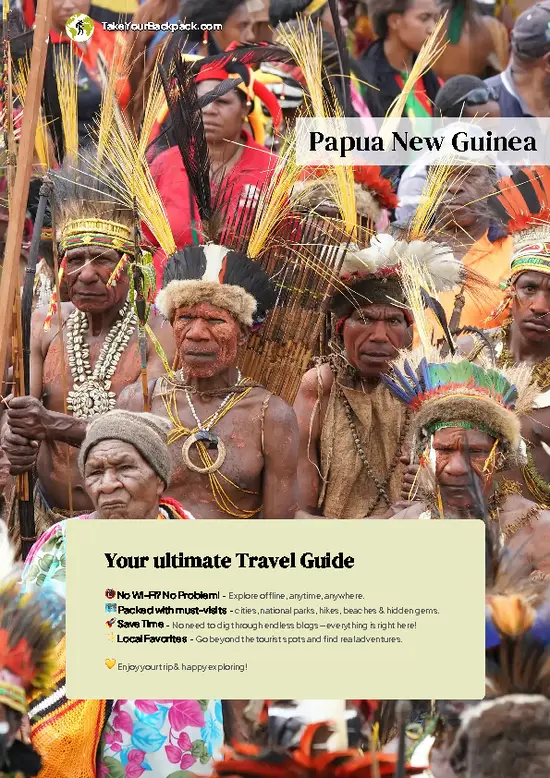
example page 0 from our offline Travel Guide for Papua New Guinea
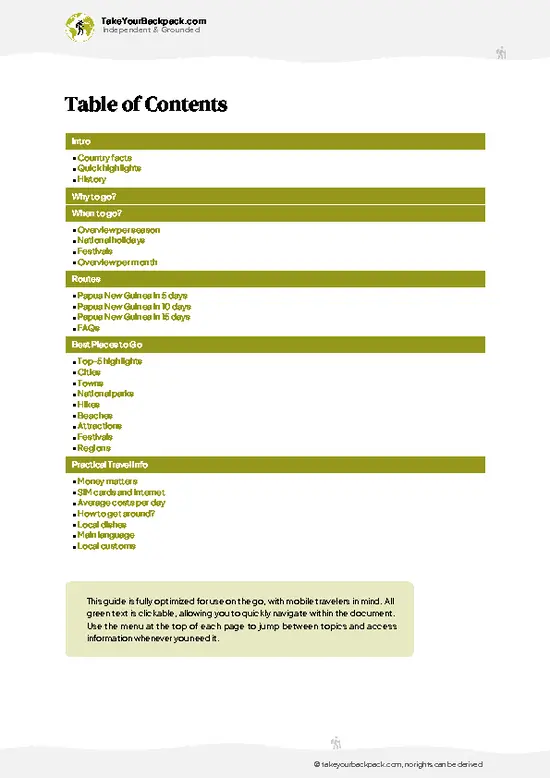
example page 1 from our offline Travel Guide for Papua New Guinea
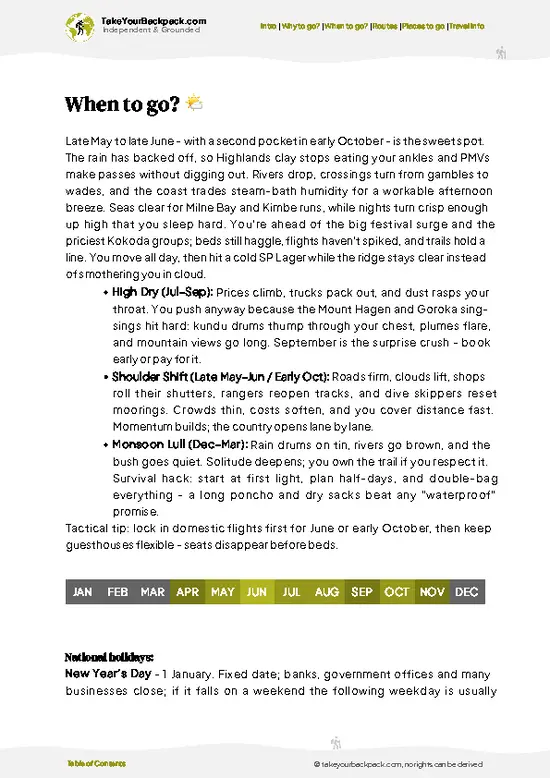
example page 2 from our offline Travel Guide for Papua New Guinea
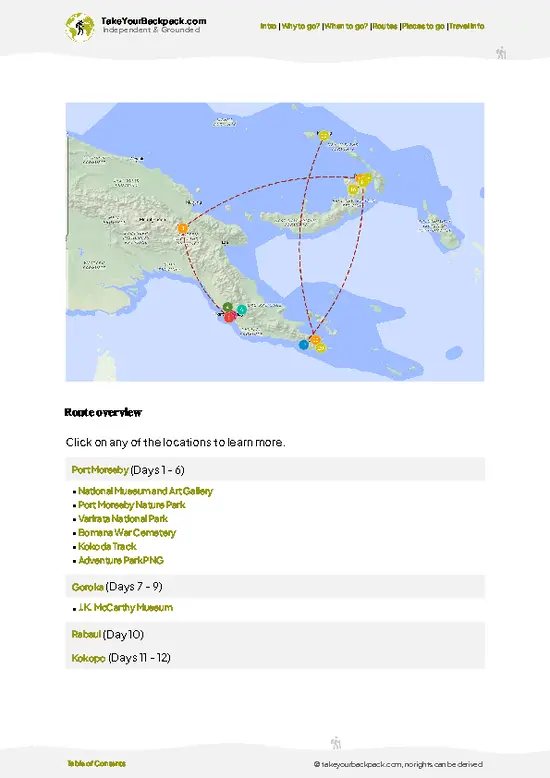
example page 3 from our offline Travel Guide for Papua New Guinea
example page 4 from our offline Travel Guide for Papua New Guinea
example page 5 from our offline Travel Guide for Papua New Guinea
example page 6 from our offline Travel Guide for Papua New Guinea
example page 7 from our offline Travel Guide for Papua New Guinea
The digital guide (319 pages) contains:
86 highlights, ranked by travel appeal
Optimized 5, 10 & 15-day travel routes
Cities, national parks, landmarks, beaches
How to get around
Offline-friendly for travel without Wi-Fi
👉 Click to see all 30+ guide features

📅 Plan smarter in minutes, not weeks
Month by month travel advice
Festivals & national holidays
Budget expectations

🗺️ Go to the right places, skip the overrated ones
Honest pros & cons of destinations
Top hikes, parks & viewpoints
Lesser-known places most travelers miss
Clear “worth it vs skip it” guidance

🛏️ Travel smoothly without rookie mistakes
Best areas to stay
Transport systems explained simply
Common scams & safety advice
SIM cards, money & practical tips

🌍 Understand the country, not just visit it
Culture & traditions
52 Essential phrases & customs
Festivals worth planning around
Traveler-friendly historical context
Insights that make places more meaningful

📱 Built for real travel conditions
Fully downloadable PDF
Works completely offline
Optimized for phone use
Useful in remote areas & buses
Everything in one place
Save weeks of stressful planning
Get instant access to your full guide. 30‑day money-back guarantee.
+ Add another guide for just US$7.80

By proceeding you agree to our terms.
Sent to your inbox immediately after payment • 100% Secure Checkout
Best Backpacking Travel Advisor 2025 tourism awardBest Backpacking
Travel Advisor
2025
What others say about Take Your Backpack Guides:
⭐⭐⭐⭐⭐
Fantastic, amazing amount of information!
⭐⭐⭐⭐⭐
My goodness this is amazing, it's what I've been looking for hats off too you!
⭐⭐⭐⭐⭐
I think this is absolutely BRILLIANT
⭐⭐⭐⭐
Very complete and informative. It's still missing places, but I gotta to commend you
⭐⭐⭐⭐⭐
This is truly amazing, thank you, can't wait to explore it with my kids!
⭐⭐⭐⭐⭐
Awesome resource, thank you!
⭐⭐⭐⭐⭐
This is amazing! Can't wait to explore the ones I haven't seen
⭐⭐⭐⭐
I love this! Well done, great idea.
⭐⭐⭐⭐⭐
Thanks for taking the time to make this gem!
⭐⭐⭐⭐⭐
This might be the best website I've ever seen.
⭐⭐⭐⭐⭐
Congratulations, and thank you so much for your work; it's incredibly valuable.
⭐⭐⭐⭐
In all seriousness I think you did a great job pointing out the important spots
⭐⭐⭐⭐⭐
10/10 very good
⭐⭐⭐⭐⭐
As someone who's only just starting to visit regularly this is awesome, thank you.
⭐⭐⭐⭐
Thank you very much! I'm going to visit my dad, it's going to be very useful!
⭐⭐⭐⭐⭐
This is really cool! We'll be travelling for the first time and this definitely come in handy.
⭐⭐⭐⭐⭐
You are now our minister of culture, congratulations 👨‍💼
⭐⭐⭐⭐⭐
Just wanted to tell you that this is a pearl! Going to follow your recommendations.
⭐⭐⭐⭐⭐
This is so cool. I'll definitely be using the resource for my travels soon.
⭐⭐⭐⭐⭐
This is very impressive! Good work.
⭐⭐⭐⭐⭐
This is an amazing and informative site. Very well done!

🛏️ Where to stay?Choosing the right base

The area around Rabao Historical Museum isn’t exactly a backpacker hotspot, so don’t expect a buzzing hostel scene or a slew of budget hotels. But that’s part of the charm. Staying in the nearby town center puts you right in the thick of local life—markets, street food stalls, and genuine interactions that no polished tourist zone can offer. It’s safe enough if you keep your wits, and the social vibe comes from mingling with locals rather than fellow travelers, which is a rare and rewarding angle. If you want the real Papua New Guinea experience, this is where you’ll find it—raw, unfiltered, and worth every moment.

👛 Costs (as of 4 September 2026)How expensive it really is

As of the most recent estimates, the Rabaul Historical Society Museum in Papua New Guinea charges an entry fee of approximately 5 to 10 Papua New Guinean Kina (PGK). This fee grants access to exhibits showcasing artifacts from World War II and local culture. Additional costs may include transportation to and from the museum, which can vary depending on your location and mode of travel. It's advisable to check with local tour operators or the museum directly for the most current pricing and any potential additional fees.

source: papuanewguinea.travel
⚠️ Prices can change and everyone travels differently, so take this as a rough guide. Hope it helps you plan your adventure!

FAQFrequently asked questions about Rabao Historical Museum

1 to 2 hours is sufficient to visit Rabao Historical Museum. This allows time to explore the exhibits and understand the local history without rushing. The museum is compact but rich in cultural artifacts.
Yes, Rabao Historical Museum is worth the entrance fee, which is typically around 10 to 15 PGK. It offers valuable insights into Papua New Guinea's colonial and local history, making it a meaningful stop for history enthusiasts.
To get to Rabao Historical Museum, take a taxi or local bus from Port Moresby city center, about 10 kilometers away. The museum is located in the suburb of Rabao, accessible via the main road heading east from the city.
⚠️ Things can change over time, so always validate details locally before you go.

Other Papua New Guinean attractions near Rabao Historical Museum

Explore more nearby:

  • Kokopo War Museum—military vehicles, WWII relics, Japanese tunnels, battlefield artifacts| 19 km away
  • Kokopo Cultural Centre—Tolai masks, shell money, local crafts, community events| 19 km away
  • Rainforest Habitat—canopy walkways, birdwatching, tropical flora, ecological tours| 636 km away

💡 Not sure where to go next?
Create a personalized itinerary for Papua New Guinea including Rabao Historical Museum and the places that fit your trip.

Generate my itinerary

👉 Discover all attractions

Or checkout all Papua New Guinea has to offer (think cities, towns, villages, national parks, hikes, beaches, festivals)
Country photo of Papua New Guinea

We 💚 feedbackWhat to keep in mind

The Rabao Historical Museum isn’t your polished, crowd-pleasing spectacle. It’s a bit rough around the edges, and yes, you’ll share the space with a handful of curious locals rather than hordes of tourists. But that’s exactly where its charm lies. The real magic is in the raw stories etched into each artifact and the quiet pride of the people who guard them. If you’re after glossy displays, look elsewhere. If you want to feel the pulse of Papua New Guinea’s past in a way that sticks with you, this is the spot.

✍️ Help improve this page!
The information on this page is based on in-depth research, insights shared by experienced travelers, and feedback from the local travel community in Papua New Guinea. While every effort is made to keep the information accurate and current, conditions can change — so if you spot anything incorrect or outdated, please get in touch.


🙋‍♂️ Give feedback

👋 Meet the founderWho’s Behind Take Your Backpack?

Johan, backpacker and founder of TakeYourBackpackHi, I’m Johan (Netherlands 🇳🇱), the creator of TakeYourBackpack. Over the past decade, I’ve backpacked through 80+ countries across six continents, gaining extensive experience with independent travel, long-term trips, and overland routes.

This site is built on a combination of firsthand travel experience and carefully curated insights from other backpackers. Many guides are based on places I’ve personally visited, while others bring together tips, observations, and practical advice shared by trusted travelers I’ve met along the way.

The goal is to provide realistic, experience-driven guidance — not generic itineraries — so you can explore destinations with better context, clearer expectations, and more confidence.

Get full country guide •
Instant download • 86 highlights • Full Offline guide