×

Papua New Guinea🇵🇬 | attractionsMadang Museum and Cultural CentreSepik carvings, regional art, local textiles, anthropological exhibits | things to do and best time to go

Explore Kokopo War MuseumExplore PNG National Theatre

Backpacking in Madang Museum and Cultural Centre
👍 Recommendedattraction ranked #7
By Johan Kruseman 🇳🇱 | Updated September 4, 2026

A carved ancestor figure stares back at you, its eyes lacquered with age and humidity, while the faint scent of coconut oil and old wood lingers in the air. A local guide’s voice cuts through the quiet, sharing a story about clan warfare that’s more gripping than any museum plaque. You’re in the Madang Museum and Cultural Centre, tucked behind the main market in Madang town, on Papua New Guinea’s north coast—about as far from a polished, air-conditioned gallery as you can get.

Here’s the straight talk: Madang Museum isn’t going to blow up your Instagram feed. The lighting is uneven, the displays are a little rough around the edges, and you’ll probably have the place to yourself—because most travelers skip it. But that’s exactly the point. This is one of the rare places in PNG where you can actually touch the pulse of local history without a tour bus in sight. It’s cheap, easy to walk to, and the staff are genuinely passionate. Don’t expect blockbuster artifacts or a slick experience; expect raw, real stories and a sense of connection you won’t get at the bigger, glossier museums in Port Moresby. If you want to understand Madang beyond the postcard lagoons, this is where you start.

Discover everything you want to know in the 📖 Papua New Guinea Travel Guide.
Loading the map 🌍
CLICK TO FILTER
cities
towns
national parks
hikes
beaches
attractions
festivals
regions
SHOW COUNTRY’S BESTSHOW ALL

✨ Why go?
Ranked #7 attraction in Papua New Guinea
What makes it a must-see attraction

Madang Museum and Cultural Centre isn’t some polished, Instagram-ready shrine. It’s a gritty, real-deal dive into Papua New Guinea’s tangled history and vibrant cultures. Sure, it won’t wow you with crowds or flashy exhibits—expect modest foot traffic and a no-frills setup. But that’s exactly why it’s a must-stop. This place is a time capsule of Melanesian life, showcasing artifacts and stories that you won’t find plastered all over tourist brochures. It’s where you get face-to-face with the raw, unfiltered soul of PNG’s diverse tribes, their struggles, and their triumphs.

For backpackers grinding through the country’s rugged routes, the museum is a major milestone—a moment to pause and absorb the layers beneath the landscapes and beaches. It’s not about adrenaline or luxury; it’s about context. … read more 👉
Madang Museum and Cultural Centre isn’t some polished, Instagram-ready shrine. It’s a gritty, real-deal dive into Papua New Guinea’s tangled history and vibrant cultures. Sure, it won’t wow you with crowds or flashy exhibits—expect modest foot traffic and a no-frills setup. But that’s exactly why it’s a must-stop. This place is a time capsule of Melanesian life, showcasing artifacts and stories that you won’t find plastered all over tourist brochures. It’s where you get face-to-face with the raw, unfiltered soul of PNG’s diverse tribes, their struggles, and their triumphs.

For backpackers grinding through the country’s rugged routes, the museum is a major milestone—a moment to pause and absorb the layers beneath the landscapes and beaches. It’s not about adrenaline or luxury; it’s about context. Understanding the historical depth here transforms your entire journey, turning random villages and jungle trails into chapters of a living story. The effort to reach Madang pays off in a way that flashy attractions can’t match: it roots you in the place, giving your adventure meaning beyond the usual checklist. If you want to know why PNG sticks with you long after you leave, this is where it starts.
Want to include Madang Museum and Cultural Centre in your Papua New Guinea route?
Create a personalized Papua New Guinea itinerary that includes Madang Museum and Cultural Centre and the places that fit your trip — based on your travel style, budget, and available time. Get your route in seconds.

Generate my trip

💡 HighlightsMust-see experiences and standout moments

1. The Haus Tambaran (Spirit House) Replica
Forget the sanitized museum dioramas you’ve seen elsewhere. The Madang Museum’s Haus Tambaran isn’t just a display—it’s a living, breathing echo of Sepik River culture. The intricate, hand-carved façade is a riot of ancestral faces and mythic creatures, each one a story in wood. Stand beneath the soaring roof and you’ll feel the weight of centuries of ritual and rivalry. This isn’t Instagram’s “pretty hut in the tropics”—it’s the architectural equivalent of a drumbeat in your chest. You’re not just looking at art; you’re standing inside a worldview.


2. The Canoe Collection
These aren’t decorative props. The canoes here are battered, patched, and proud—real river warriors that have seen crocodiles, cargo, and clan feuds. Each one is carved from a … read more 👉
1. The Haus Tambaran (Spirit House) Replica
Forget the sanitized museum dioramas you’ve seen elsewhere. The Madang Museum’s Haus Tambaran isn’t just a display—it’s a living, breathing echo of Sepik River culture. The intricate, hand-carved façade is a riot of ancestral faces and mythic creatures, each one a story in wood. Stand beneath the soaring roof and you’ll feel the weight of centuries of ritual and rivalry. This isn’t Instagram’s “pretty hut in the tropics”—it’s the architectural equivalent of a drumbeat in your chest. You’re not just looking at art; you’re standing inside a worldview.


2. The Canoe Collection
These aren’t decorative props. The canoes here are battered, patched, and proud—real river warriors that have seen crocodiles, cargo, and clan feuds. Each one is carved from a single log, with prows that curl like the tails of river spirits. You’ll spot the subtle differences between coastal and riverine styles, and if you listen to the guides, you’ll hear how these boats are more than transport—they’re passports, battle flags, and sometimes, coffins. The stories stick with you longer than any photo.


3. Shell Money and Bride Price Artifacts
This is where the museum gets personal. The glass cases hold strings of shell money, boar tusks, and dog teeth—Papua New Guinea’s original currency. But these aren’t just relics. They’re the backbone of social contracts, marriage deals, and peace treaties. The display is a crash course in value systems that don’t care about your credit score. If you want to understand how relationships and power actually work in PNG, linger here.


4. War Shields and Ceremonial Masks
The shields are scarred and painted with symbols that mean “keep out” in a dozen dialects. The masks are wild—some grinning, some terrifying, all carved to channel spirits or intimidate rivals. This isn’t the sanitized “tribal art” you’ll find in airport gift shops. These objects were made to be used, not admired. The museum doesn’t shy away from the raw edge of PNG’s warrior cultures, and you shouldn’t either.


5. Oral History Recordings and Local Storytelling
If you’re lucky enough to visit when a local elder is present, drop everything and listen. The museum sometimes hosts impromptu storytelling sessions—no script, no filter, just living memory. Even if you miss the live version, the audio recordings in the exhibit rooms are worth your time. You’ll hear Tok Pisin, Motu, and a dozen other languages, each one a key to a different worldview. This is the real magic: voices that refuse to be flattened into a caption.


6. The Museum’s Location and Community Vibe
Here’s the part the travel brochures skip: the museum sits right in the heart of Madang town, not behind a paywall or a manicured lawn. Locals actually use the place—schoolkids on field trips, elders debating the finer points of clan history, artists sketching in the shade. You’re not just a visitor; you’re part of the daily rhythm. If you want a museum that feels alive, not embalmed, this is it.
Spotted a mistake or missing something? Contact us.
🌤️ When to go?Seasonal considerations and timing


  • Topic: Weather – Papua New Guinea’s Madang region is hot and humid year-round, but the dry season from May to October offers the most comfortable conditions. Expect less rain and clearer skies, making museum visits and outdoor cultural activities more enjoyable.

  • Topic: Temperature – Temperatures hover between 24°C and 30°C (75°F to 86°F) throughout the year. The dry season tends to feel a bit cooler and less sticky, which is a relief when you’re exploring exhibits and local crafts without melting into your shirt.

  • Topic: Daylight Hours – Daylight stays pretty consistent, roughly 11 to 12 hours daily. This means you can plan your visit anytime during the day without worrying about early sunsets cutting your exploration short.

  • Topic: Crowds – The Madang Museum isn’t exactly a tourist
read more 👉

  • Topic: Weather – Papua New Guinea’s Madang region is hot and humid year-round, but the dry season from May to October offers the most comfortable conditions. Expect less rain and clearer skies, making museum visits and outdoor cultural activities more enjoyable.

  • Topic: Temperature – Temperatures hover between 24°C and 30°C (75°F to 86°F) throughout the year. The dry season tends to feel a bit cooler and less sticky, which is a relief when you’re exploring exhibits and local crafts without melting into your shirt.

  • Topic: Daylight Hours – Daylight stays pretty consistent, roughly 11 to 12 hours daily. This means you can plan your visit anytime during the day without worrying about early sunsets cutting your exploration short.

  • Topic: Crowds – The Madang Museum isn’t exactly a tourist hotspot, but expect a slight uptick in visitors during the dry season, especially July and August. If you want a quieter experience, aim for shoulder months like May or September.

  • Topic: Seasonal Activities – Cultural events and traditional performances often align with the dry season, giving you a chance to see authentic ceremonies and crafts demonstrations that don’t happen year-round.

  • Topic: Price Fluctuations – Prices for local tours and accommodations can spike during the dry season’s peak months (July-August), so booking early or visiting just before or after can save you some cash without sacrificing experience.


Pro-tip: Visit in May or September to dodge the crowds and high prices while still enjoying great weather and cultural events—perfect for soaking up Madang’s real vibe without the tourist gloss.


source: climatestotravel.comJANJanuary: fair for travelingFEBFebruary: fair for travelingMARMarch: fair for travelingAPRApril: good for travelingMAYMay: excellent for travelingJUNJune: highly recommended for travelingJULJuly: highly recommended for travelingAUGAugust: highly recommended for travelingSEPSeptember: excellent for travelingOCTOctober: highly recommended for travelingNOVNovember: good for travelingDECDecember: fair for traveling
papua-new-guinea-attraction-madang-museum-and-cultural-centre
© Google |

✈️ The backpacker research shortcutPapua New Guinea Travel Guide

An offline-friendly backpacking guide with optimized travel routes, ranked highlights, transport advice, and the best areas to stay.
example page 0 from our offline Travel Guide for Papua New Guinea
example page 1 from our offline Travel Guide for Papua New Guinea
example page 2 from our offline Travel Guide for Papua New Guinea
example page 3 from our offline Travel Guide for Papua New Guinea
example page 4 from our offline Travel Guide for Papua New Guinea
example page 5 from our offline Travel Guide for Papua New Guinea
example page 6 from our offline Travel Guide for Papua New Guinea
example page 7 from our offline Travel Guide for Papua New Guinea
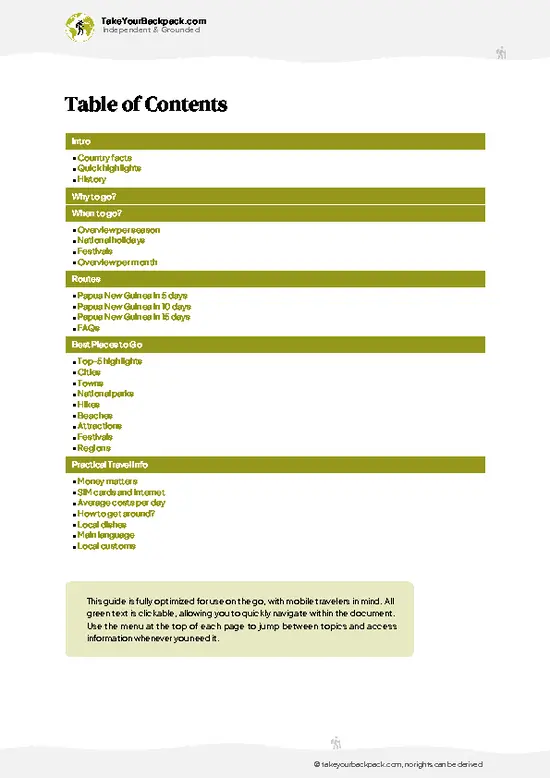
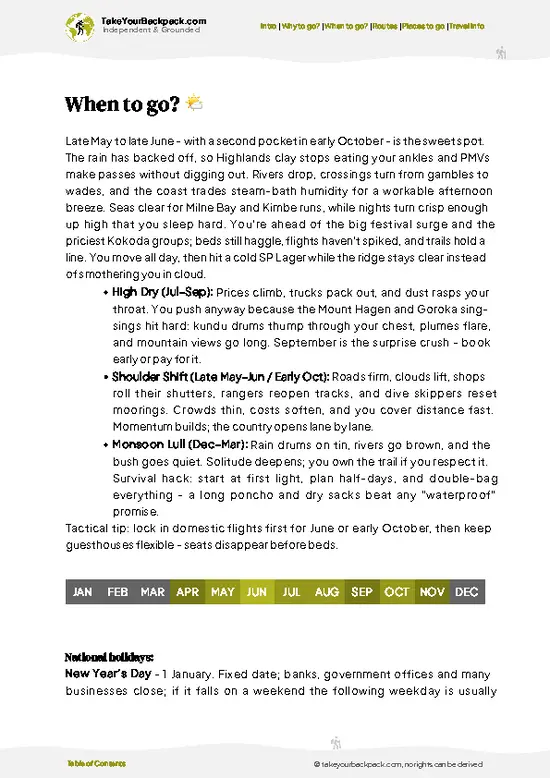
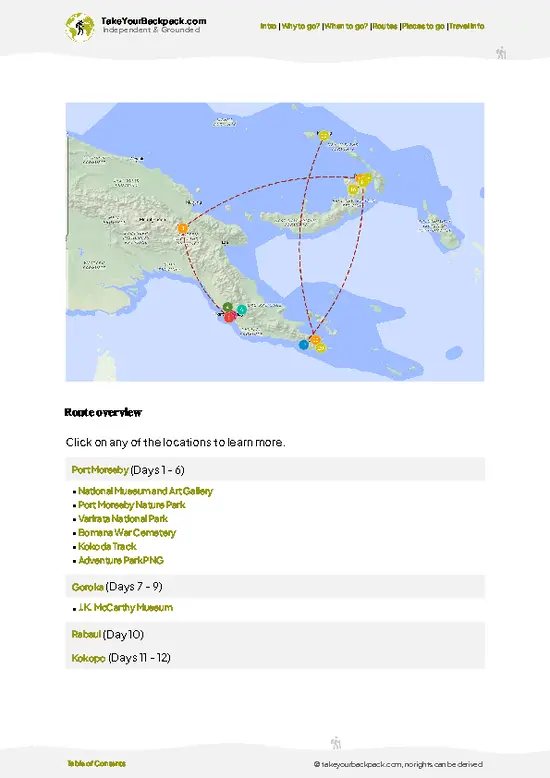
The digital guide (319 pages) contains:
86 highlights, ranked by travel appeal
Optimized 5, 10 & 15-day travel routes
Cities, national parks, landmarks, beaches
How to get around
Offline-friendly for travel without Wi-Fi
👉 Click to see all 30+ guide features

📅 Plan smarter in minutes, not weeks
Month by month travel advice
Festivals & national holidays
Budget expectations

🗺️ Go to the right places, skip the overrated ones
Honest pros & cons of destinations
Top hikes, parks & viewpoints
Lesser-known places most travelers miss
Clear “worth it vs skip it” guidance

🛏️ Travel smoothly without rookie mistakes
Best areas to stay
Transport systems explained simply
Common scams & safety advice
SIM cards, money & practical tips

🌍 Understand the country, not just visit it
Culture & traditions
52 Essential phrases & customs
Festivals worth planning around
Traveler-friendly historical context
Insights that make places more meaningful

📱 Built for real travel conditions
Fully downloadable PDF
Works completely offline
Optimized for phone use
Useful in remote areas & buses
Everything in one place
Save weeks of stressful planning
Get instant access to your full guide. 30‑day money-back guarantee.
+ Add another guide for just US$7.80

By proceeding you agree to our terms.
Sent to your inbox immediately after payment • 100% Secure Checkout
Best Backpacking Travel Advisor 2025 tourism awardBest Backpacking
Travel Advisor
2025
What others say about Take Your Backpack Guides:
⭐⭐⭐⭐⭐
Fantastic, amazing amount of information!
⭐⭐⭐⭐⭐
My goodness this is amazing, it's what I've been looking for hats off too you!
⭐⭐⭐⭐⭐
I think this is absolutely BRILLIANT
⭐⭐⭐⭐
Very complete and informative. It's still missing places, but I gotta to commend you
⭐⭐⭐⭐⭐
This is truly amazing, thank you, can't wait to explore it with my kids!
⭐⭐⭐⭐⭐
Awesome resource, thank you!
⭐⭐⭐⭐⭐
This is amazing! Can't wait to explore the ones I haven't seen
⭐⭐⭐⭐
I love this! Well done, great idea.
⭐⭐⭐⭐⭐
Thanks for taking the time to make this gem!
⭐⭐⭐⭐⭐
This might be the best website I've ever seen.
⭐⭐⭐⭐⭐
Congratulations, and thank you so much for your work; it's incredibly valuable.
⭐⭐⭐⭐
In all seriousness I think you did a great job pointing out the important spots
⭐⭐⭐⭐⭐
10/10 very good
⭐⭐⭐⭐⭐
As someone who's only just starting to visit regularly this is awesome, thank you.
⭐⭐⭐⭐
Thank you very much! I'm going to visit my dad, it's going to be very useful!
⭐⭐⭐⭐⭐
This is really cool! We'll be travelling for the first time and this definitely come in handy.
⭐⭐⭐⭐⭐
You are now our minister of culture, congratulations 👨‍💼
⭐⭐⭐⭐⭐
Just wanted to tell you that this is a pearl! Going to follow your recommendations.
⭐⭐⭐⭐⭐
This is so cool. I'll definitely be using the resource for my travels soon.
⭐⭐⭐⭐⭐
This is very impressive! Good work.
⭐⭐⭐⭐⭐
This is an amazing and informative site. Very well done!

🛏️ Where to stay?Best areas to stay in Papua New Guinea

Madang isn’t some polished postcard destination where you’ll find spotless hostels on every corner. The reality? It’s a laid-back town with a handful of budget spots clustered near the waterfront and town center, where the Madang Museum and Cultural Centre sits. This area is your best bet. It’s where you’ll bump into other backpackers, traders, and locals, making it easy to swap stories or find a guide for a dive trip or jungle trek. Safety here is relative—stick to well-trodden paths, avoid wandering after dark, and keep your wits about you.

The vibe is raw and real, not sanitized for tourists. … read more 👉
Madang isn’t some polished postcard destination where you’ll find spotless hostels on every corner. The reality? It’s a laid-back town with a handful of budget spots clustered near the waterfront and town center, where the Madang Museum and Cultural Centre sits. This area is your best bet. It’s where you’ll bump into other backpackers, traders, and locals, making it easy to swap stories or find a guide for a dive trip or jungle trek. Safety here is relative—stick to well-trodden paths, avoid wandering after dark, and keep your wits about you.

The vibe is raw and real, not sanitized for tourists. You’ll hear the hum of boats, chatter in Tok Pisin, and the occasional drumbeat from a nearby village. It’s not about luxury; it’s about connection. Staying close to the museum means you’re in the thick of Madang’s cultural pulse, with easy access to markets, local eateries, and the chance to see Papua New Guinea beyond the usual clichés. This is where the real magic happens—if you’re ready to lean into it.

👛 Costs (as of 4 September 2026)How expensive it really is

Entry to the Madang Museum is free, with donations welcome for special exhibitions. ([virtualtourist.com](https://www.virtualtourist.com/travel/Australia_and_Oceania/Papua_New_Guinea/Madang_Province/Madang-1894646/Things_To_Do-Madang-Madang_Museum-BR-1.html?utm_source=openai))

source: virtualtourist.com
⚠️ Prices can change and everyone travels differently, so take this as a rough guide. Hope it helps you plan your adventure!

FAQTraveler FAQ

1 to 2 hours is sufficient to visit Madang Museum and Cultural Centre. This allows time to explore the exhibits and cultural displays without rushing. The museum is compact but rich in local history and artifacts.
Yes, Madang Museum and Cultural Centre is worth the entrance fee, which is typically around 10 PGK. It offers valuable insights into Papua New Guinea's cultural heritage and local traditions. The experience is educational and well-curated for travelers interested in the region.
You can get to Madang Museum and Cultural Centre by taxi or local bus from Madang town center, located about 2 kilometers away. The museum is easily accessible on foot if you are staying nearby. Taxis are the quickest option and cost a few PGK.
⚠️ Things can change over time, so always validate details locally before you go.

Other Papua New Guinean attractions near Madang Museum and Cultural Centre

Explore more nearby:

  • J.K. McCarthy Museum—Highlands artifacts, colonial relics, ethnographic displays, regional history| 106 km away
  • Rainforest Habitat—canopy walkways, birdwatching, tropical flora, ecological tours| 207 km away
  • Lae War Cemetery—Allied graves, tropical landscaping, memorial plaques, tranquil setting| 213 km away

💡 Not sure where to go next?
Create a personalized itinerary for Papua New Guinea including Madang Museum and Cultural Centre and the places that fit your trip.

Generate my itinerary

👉 Discover all attractions

Or checkout all Papua New Guinea has to offer (think cities, towns, villages, national parks, hikes, beaches, festivals)
Country photo of Papua New Guinea

We 💚 feedbackKey takeaways before you go

Madang Museum and Cultural Centre isn’t your glossy postcard stop. It’s a bit rough around the edges, and yes, the crowds can be a handful if you hit it on a weekend. But here’s the kicker: the real magic is in the raw, unfiltered stories told by the locals themselves. The artifacts don’t just sit behind glass—they carry voices and histories you won’t find in any guidebook. If you want a quick, polished show, skip it. But if you crave something that sticks with you, this place delivers.

✍️ Help improve this page!
The information on this page is based on in-depth research, insights shared by experienced travelers, and feedback from the local travel community in Papua New Guinea. While every effort is made to keep the information accurate and current, conditions can change — so if you spot anything incorrect or outdated, please get in touch.


🙋‍♂️ Give feedback

👋 Meet the founderWho’s Behind Take Your Backpack?

Johan, backpacker and founder of TakeYourBackpackHi, I’m Johan (Netherlands 🇳🇱), the creator of TakeYourBackpack. Over the past decade, I’ve backpacked through 80+ countries across six continents, gaining extensive experience with independent travel, long-term trips, and overland routes.

This site is built on a combination of firsthand travel experience and carefully curated insights from other backpackers. Many guides are based on places I’ve personally visited, while others bring together tips, observations, and practical advice shared by trusted travelers I’ve met along the way.

The goal is to provide realistic, experience-driven guidance — not generic itineraries — so you can explore destinations with better context, clearer expectations, and more confidence.

Get full country guide •
Instant download • 86 highlights • Full Offline guide