
×

Papua New Guinea🇵🇬 | townsMadangcoral reefs, waterfront promenade, colonial relics | things to do and best time to go

Explore KokopoExplore Mount Hagen

Backpacking in Madang
🏆 Top picktown ranked #3
By Johan Kruseman 🇳🇱 | Updated September 4, 2026

Ten, fifteen years ago Madang felt like a sleepy South Pacific postcard: a few divers, mission planes humming overhead, kids fishing off the seawall, almost no infrastructure but a lot of easy warmth. Today it’s rougher around the edges and quieter on the tourist front, but that’s exactly why it still feels real. Madang sits on the north coast of Papua New Guinea, on a peninsula poking into the Bismarck Sea, and it works best as a base for reefs, offshore islands, and village life rather than as a “city break.”

The town itself is small, spread-out, and functional more than pretty; think hot streets, concrete shops, a market that smells of betel nut and smoked fish. You’ll walk some, but for most things you’ll grab a PMV or shared taxi. It’s less intense than Lae, less cosmopolitan than Port Moresby, and more scenic than both, with that blue water always in the corner of your eye.

For backpackers, Madang is a hub, not a hangout. You come here to arrange dives, island stays, and cultural visits, then escape the heat again. Nights are quiet, with a couple of guesthouses and small hotels rather than classic hostels, so meeting other travelers takes effort and patience. Costs are high for what you get by Southeast Asia standards, and safety is situational: daylight errands and market runs are fine if you stay alert, but after dark you move by vehicle, stick to known accommodations, and listen to local advice. If you want nightlife and backpacker bars, you’ll be frustrated; if you want a working port town that opens the door to serious PNG adventures, Madang still earns its place on the route.

Discover everything you want to know in the 📖 Papua New Guinea Travel Guide.
Loading the map 🌍
CLICK TO FILTER
cities
towns
national parks
hikes
beaches
attractions
festivals
regions
SHOW COUNTRY’S BESTSHOW ALL

✨ Why go?
Ranked #3 town in Papua New Guinea
What makes this town worth visiting

Madang is a backpacker’s hub in Papua New Guinea, offering a blend of convenience and authenticity. Nestled along the coast, it serves as a gateway to stunning hikes and cultural experiences. The nearby Bismarck Sea invites you to explore its vibrant coral reefs, while the Mount Wilhelm trek is just a bus ride away.

The town’s walkable streets make it easy to navigate, with small-scale hostels and guesthouses that foster a friendly atmosphere. You’ll find locals eager to share stories over a plate of laplap or a bowl of fresh sashimi. This isn’t a place for the party-seeker; instead, it attracts slow travelers, hikers, and solo adventurers looking to connect with both the land and its people.

Most backpackers tend to linger a few days, soaking in the laid-back vibe and the scent of the read more 👉
Madang is a backpacker’s hub in Papua New Guinea, offering a blend of convenience and authenticity. Nestled along the coast, it serves as a gateway to stunning hikes and cultural experiences. The nearby Bismarck Sea invites you to explore its vibrant coral reefs, while the Mount Wilhelm trek is just a bus ride away.

The town’s walkable streets make it easy to navigate, with small-scale hostels and guesthouses that foster a friendly atmosphere. You’ll find locals eager to share stories over a plate of laplap or a bowl of fresh sashimi. This isn’t a place for the party-seeker; instead, it attracts slow travelers, hikers, and solo adventurers looking to connect with both the land and its people.

Most backpackers tend to linger a few days, soaking in the laid-back vibe and the scent of the ocean mingling with the earthy aroma of the surrounding jungle. Whether you’re here for the cultural richness or the natural beauty, Madang offers a meaningful prelude to the adventures that await beyond its shores.
Want to include Madang in your Papua New Guinea route?
Create a personalized Papua New Guinea itinerary that includes Madang and the places that fit your trip — based on your travel style, budget, and available time. Get your route in seconds.

Generate my trip

💡 HighlightsTop highlights of Madang

  • Madang waterfront / harbour — The town’s spine: a working harbour with colourful stilt houses, fishing boats, coconut palms and a short promenade where locals gather. Great for a relaxed stroll at sunrise or sunset, watching unloading and island traffic, and getting a clear feel for everyday life in Madang.
  • Madang Main Market — A lively, compact market in town selling fresh fish, tropical fruit, root crops, sago, betel nut and locally made crafts. The sensory rush—vendors calling, piles of catch, and traditional food on sale—gives a real, unvarnished slice of local culture and is where you’ll meet Madang people doing daily business.
  • Madang Provincial Museum (Madang Museum & Heritage displays) — Small but useful; it houses local ethnographic material, carvings and objects that explain the
read more 👉
  • Madang waterfront / harbour — The town’s spine: a working harbour with colourful stilt houses, fishing boats, coconut palms and a short promenade where locals gather. Great for a relaxed stroll at sunrise or sunset, watching unloading and island traffic, and getting a clear feel for everyday life in Madang.
  • Madang Main Market — A lively, compact market in town selling fresh fish, tropical fruit, root crops, sago, betel nut and locally made crafts. The sensory rush—vendors calling, piles of catch, and traditional food on sale—gives a real, unvarnished slice of local culture and is where you’ll meet Madang people doing daily business.
  • Madang Provincial Museum (Madang Museum & Heritage displays) — Small but useful; it houses local ethnographic material, carvings and objects that explain the region’s cultural groups and history. Visiting gives context to what you see around town and is worth an hour for background before exploring villages or buying art.
Karkar Island, Manam Island and the coral islands/reef systems off Madang are excellent, visitable day trips from town.
Spotted a mistake or missing something? Contact us.

🏘️ NeighborhoodsWhere things are and how it's laid out

Madang is a vibrant coastal town that offers a unique blend of culture, adventure, and relaxation. Here’s how to navigate its neighborhoods like a pro.

Town Center
This is the heartbeat of Madang. You’ll find bustling markets, local eateries, and shops. The vibe is energetic, perfect for soaking in the local culture. Walkability is high; everything is within a few blocks. Nightlife is modest but lively, with a few bars where locals gather. Ideal for short stays, it’s a great launchpad for day trips.

North Coast
For those seeking tranquility, the North Coast is your haven. It’s quieter, with stunning ocean views and fewer tourists. Accommodations range from budget guesthouses to mid-range resorts. The area is less walkable, so renting a bike or using local transport is wise. Perfect for … read more 👉
Madang is a vibrant coastal town that offers a unique blend of culture, adventure, and relaxation. Here’s how to navigate its neighborhoods like a pro.

Town Center
This is the heartbeat of Madang. You’ll find bustling markets, local eateries, and shops. The vibe is energetic, perfect for soaking in the local culture. Walkability is high; everything is within a few blocks. Nightlife is modest but lively, with a few bars where locals gather. Ideal for short stays, it’s a great launchpad for day trips.

North Coast
For those seeking tranquility, the North Coast is your haven. It’s quieter, with stunning ocean views and fewer tourists. Accommodations range from budget guesthouses to mid-range resorts. The area is less walkable, so renting a bike or using local transport is wise. Perfect for longer stays, you can unwind while still accessing the town’s amenities.

South Seas
This area is known for its upscale resorts and beautiful beaches. The atmosphere is laid-back, attracting travelers looking to relax. While it’s pricier, the experience is worth it for the stunning sunsets and beachfront access. Transport options are available, but you may want to rent a vehicle for convenience. Best for those planning a longer retreat.

East Madang
A bit off the beaten path, East Madang offers a glimpse into local life. The vibe is authentic, with fewer tourists and more community interaction. It’s walkable, but be prepared for uneven paths. Accommodations are budget-friendly, making it suitable for both short and longer stays. This area is ideal for those wanting to immerse themselves in the local culture.

⌛️ 1 dayA smart one-day plan

Madang, a coastal town in Papua New Guinea, is a vibrant blend of culture and nature. The air is thick with the scent of salt and tropical blooms, and the turquoise waters beckon with promise. This is a place where the rhythm of life slows down, allowing you to soak in the beauty around you.

Start your day with a stroll along the waterfront. The morning light dances on the waves, and the local fishermen are already out, their boats bobbing gently. Grab a breakfast of fresh fruit and a cup of strong, local coffee at a nearby café. The sweet, juicy papaya and the rich aroma of the coffee will kickstart your adventure.

After breakfast, head to the nearby **Mawson’s Point**. This spot isn’t on every tourist’s radar, but it offers stunning views of the bay and the surrounding islands. The rocky … read more 👉
Madang, a coastal town in Papua New Guinea, is a vibrant blend of culture and nature. The air is thick with the scent of salt and tropical blooms, and the turquoise waters beckon with promise. This is a place where the rhythm of life slows down, allowing you to soak in the beauty around you.

Start your day with a stroll along the waterfront. The morning light dances on the waves, and the local fishermen are already out, their boats bobbing gently. Grab a breakfast of fresh fruit and a cup of strong, local coffee at a nearby café. The sweet, juicy papaya and the rich aroma of the coffee will kickstart your adventure.

After breakfast, head to the nearby **Mawson’s Point**. This spot isn’t on every tourist’s radar, but it offers stunning views of the bay and the surrounding islands. The rocky outcrops are perfect for a bit of exploration. You might even catch a glimpse of a sea turtle gliding by. The tranquility here is a refreshing contrast to the hustle of more popular sights.

In the afternoon, make your way to **Madang Market**. The vibrant colors of the produce and handmade crafts create a sensory feast. Engage with the locals; their stories and laughter are as rich as the fruits they sell. Pick up some handmade jewelry or a woven basket as a memento.

As the sun begins to set, find your way to **Coconut Beach**. The golden light casts a warm glow, and the sound of waves crashing against the shore is soothing. Settle in for a picnic dinner with local delicacies from the market. The flavors of grilled fish and fresh salads will linger long after the sun dips below the horizon.

Madang is not just a destination; it’s an experience. Each moment, from the morning light to the evening calm, is a reminder that the journey is as beautiful as the destination itself.
Turn your Madang visit into an Papua New Guinea adventure
Build a complete Papua New Guinea route with Madang, hidden gems, must-see destinations, and realistic travel times included.

Generate my trip

🌤️ When to go?Choosing the right time of year


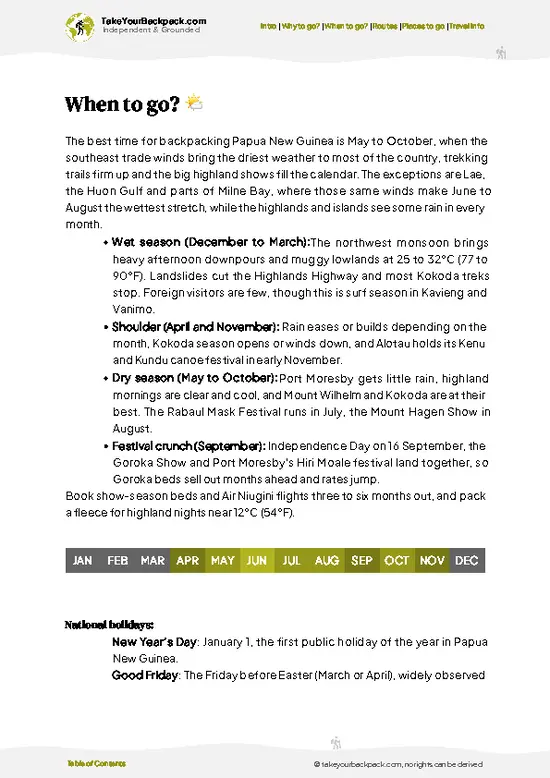
  • Weather: Madang’s tropical climate means it’s warm year-round, but the dry season from June to September offers clearer skies and less humidity, making hiking and beach days more comfortable. The wet season, November to April, brings heavy rains that can turn trails into mud baths and limit outdoor plans.

  • Temperature: Expect daytime highs around 28–32°C (82–90°F) consistently. Nights cool slightly to 22–24°C (72–75°F), which is pleasant for sleeping without heavy gear. The dry season feels less sticky, so your energy won’t drain as fast.

  • Daylight Hours: Near the equator, daylight stays steady—about 12 hours year-round. This means you can plan your day without worrying about early sunsets cutting adventures short.

  • Crowds: Madang isn’t a tourist hotspot, but the dry season draws more
read more 👉

  • Weather: Madang’s tropical climate means it’s warm year-round, but the dry season from June to September offers clearer skies and less humidity, making hiking and beach days more comfortable. The wet season, November to April, brings heavy rains that can turn trails into mud baths and limit outdoor plans.

  • Temperature: Expect daytime highs around 28–32°C (82–90°F) consistently. Nights cool slightly to 22–24°C (72–75°F), which is pleasant for sleeping without heavy gear. The dry season feels less sticky, so your energy won’t drain as fast.

  • Daylight Hours: Near the equator, daylight stays steady—about 12 hours year-round. This means you can plan your day without worrying about early sunsets cutting adventures short.

  • Crowds: Madang isn’t a tourist hotspot, but the dry season draws more visitors, especially divers and birdwatchers. You’ll find a livelier vibe but also slightly higher prices and busier accommodations.

  • Seasonal Activities: Dive visibility peaks in the dry months, revealing vibrant coral and marine life. Birdwatchers flock during breeding seasons, mostly in the dry months, to catch rare species in action. Wet season limits these activities but offers lush, green landscapes.

  • Price Fluctuations: Accommodation and tours tend to be pricier in the dry season due to demand. The wet season sees discounts, but factor in the trade-off with weather challenges.


Pro-tip: Aim for the shoulder months of May or October to balance fewer crowds, decent weather, and better prices—giving you a smoother, more authentic Madang experience without the extremes.


source: climatestotravel.comJANJanuary: fair for travelingFEBFebruary: fair for travelingMARMarch: fair for travelingAPRApril: fair for travelingMAYMay: highly recommended for travelingJUNJune: excellent for travelingJULJuly: excellent for travelingAUGAugust: excellent for travelingSEPSeptember: excellent for travelingOCTOctober: highly recommended for travelingNOVNovember: fair for travelingDECDecember: fair for traveling
when-to-go

✈️ The backpacker research shortcutPapua New Guinea Travel Guide

An offline-friendly backpacking guide with optimized travel routes, ranked highlights, transport advice, and the best areas to stay.
example page 0 from our offline Travel Guide for Papua New Guinea
example page 1 from our offline Travel Guide for Papua New Guinea
example page 2 from our offline Travel Guide for Papua New Guinea
example page 3 from our offline Travel Guide for Papua New Guinea
example page 4 from our offline Travel Guide for Papua New Guinea
example page 5 from our offline Travel Guide for Papua New Guinea
example page 6 from our offline Travel Guide for Papua New Guinea
example page 7 from our offline Travel Guide for Papua New Guinea
The digital guide (319 pages) contains:
86 highlights, ranked by travel appeal
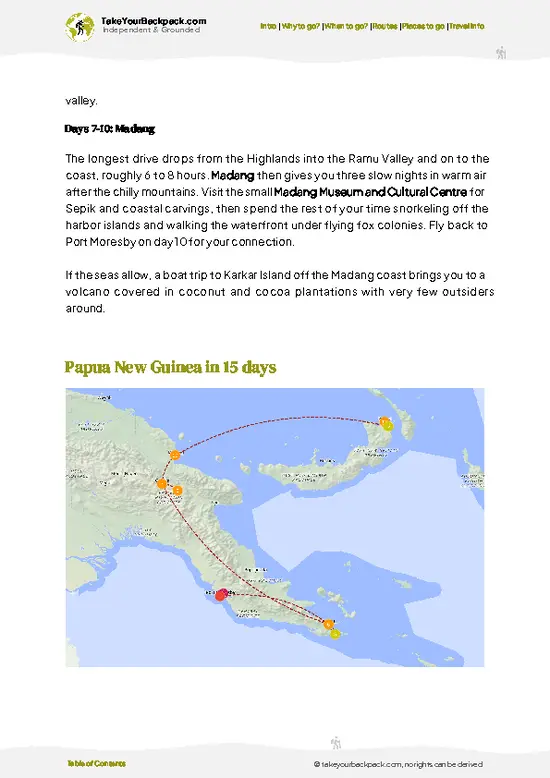
Optimized 5, 10 & 15-day travel routes
Cities, national parks, landmarks, beaches
How to get around
Offline-friendly for travel without Wi-Fi
👉 Click to see all 30+ guide features

📅 Plan smarter in minutes, not weeks
Month by month travel advice
Festivals & national holidays
Budget expectations

🗺️ Go to the right places, skip the overrated ones
Honest pros & cons of destinations
Top hikes, parks & viewpoints
Lesser-known places most travelers miss
Clear “worth it vs skip it” guidance

🛏️ Travel smoothly without rookie mistakes
Best areas to stay
Transport systems explained simply
Common scams & safety advice
SIM cards, money & practical tips

🌍 Understand the country, not just visit it
Culture & traditions
52 Essential phrases & customs
Festivals worth planning around
Traveler-friendly historical context
Insights that make places more meaningful

📱 Built for real travel conditions
Fully downloadable PDF
Works completely offline
Optimized for phone use
Useful in remote areas & buses
Everything in one place
Save weeks of stressful planning
Get instant access to your full guide. 30‑day money-back guarantee.
+ Add another guide for just US$7.80

By proceeding you agree to our terms.
Sent to your inbox immediately after payment • 100% Secure Checkout
Best Backpacking Travel Advisor 2025 tourism awardBest Backpacking
Travel Advisor
2025
What others say about Take Your Backpack Guides:
⭐⭐⭐⭐⭐
Fantastic, amazing amount of information!
⭐⭐⭐⭐⭐
My goodness this is amazing, it's what I've been looking for hats off too you!
⭐⭐⭐⭐⭐
I think this is absolutely BRILLIANT
⭐⭐⭐⭐
Very complete and informative. It's still missing places, but I gotta to commend you
⭐⭐⭐⭐⭐
This is truly amazing, thank you, can't wait to explore it with my kids!
⭐⭐⭐⭐⭐
Awesome resource, thank you!
⭐⭐⭐⭐⭐
This is amazing! Can't wait to explore the ones I haven't seen
⭐⭐⭐⭐
I love this! Well done, great idea.
⭐⭐⭐⭐⭐
Thanks for taking the time to make this gem!
⭐⭐⭐⭐⭐
This might be the best website I've ever seen.
⭐⭐⭐⭐⭐
Congratulations, and thank you so much for your work; it's incredibly valuable.
⭐⭐⭐⭐
In all seriousness I think you did a great job pointing out the important spots
⭐⭐⭐⭐⭐
10/10 very good
⭐⭐⭐⭐⭐
As someone who's only just starting to visit regularly this is awesome, thank you.
⭐⭐⭐⭐
Thank you very much! I'm going to visit my dad, it's going to be very useful!
⭐⭐⭐⭐⭐
This is really cool! We'll be travelling for the first time and this definitely come in handy.
⭐⭐⭐⭐⭐
You are now our minister of culture, congratulations 👨‍💼
⭐⭐⭐⭐⭐
Just wanted to tell you that this is a pearl! Going to follow your recommendations.
⭐⭐⭐⭐⭐
This is so cool. I'll definitely be using the resource for my travels soon.
⭐⭐⭐⭐⭐
This is very impressive! Good work.
⭐⭐⭐⭐⭐
This is an amazing and informative site. Very well done!

🛏️ Where to stay?How to pick the right area

Madang’s best backpacker base is the area around the town center and the nearby waterfront. This zone is where you’ll find the pulse of local life mixed with a steady trickle of budget travelers and solo adventurers. It’s compact enough to walk everywhere, which matters because Madang’s charm is in its laid-back, open-air vibe—think salty sea breezes mingling with the scent of tropical flowers and fresh fish from the market stalls. Staying here means you’re close to the main pier, where boats come and go, and the local eateries hum with chatter and clinking glasses well into the evening.

Compared … read more 👉
Madang’s best backpacker base is the area around the town center and the nearby waterfront. This zone is where you’ll find the pulse of local life mixed with a steady trickle of budget travelers and solo adventurers. It’s compact enough to walk everywhere, which matters because Madang’s charm is in its laid-back, open-air vibe—think salty sea breezes mingling with the scent of tropical flowers and fresh fish from the market stalls. Staying here means you’re close to the main pier, where boats come and go, and the local eateries hum with chatter and clinking glasses well into the evening.

Compared to the quieter, more residential neighborhoods farther inland, the town center offers a safer, more social atmosphere. You’ll find hostels and guesthouses clustered here, making it easier to meet fellow travelers without sacrificing comfort or security. The streets are lively but not overwhelming, with enough local shops and cafes to keep you grounded in the everyday rhythm of Madang life. Venturing outside this hub means fewer options for socializing and a heavier reliance on taxis or motorbikes, which can eat into your time and budget. So, lock in your spot near the waterfront and town center—it’s where the real Madang experience unfolds, with the right balance of safety, community, and easy access to the natural beauty that draws you here.

🚌 Getting aroundHow to get around Madang

Madang moves at its own rhythm, a blend of laid-back coastal calm and bursts of local hustle. The sun slants low in the late afternoon, casting long shadows over the palm-fringed streets, where the scent of saltwater mingles with the earthy aroma of fresh produce from the market. Time here isn’t rigid; it’s more a suggestion than a rule. You’ll find that schedules blur, and the best way to get around is to embrace the flow—watch, listen, and jump in when the moment feels right. This town rewards patience and a bit of street-smart intuition, especially if you’re traveling on a budget.


  • Walking: Madang’s compact center is made for foot traffic. Strolling along the waterfront or through the market lets you soak in the salty breeze and vibrant local chatter. It’s free, flexible, and the best
read more 👉
Madang moves at its own rhythm, a blend of laid-back coastal calm and bursts of local hustle. The sun slants low in the late afternoon, casting long shadows over the palm-fringed streets, where the scent of saltwater mingles with the earthy aroma of fresh produce from the market. Time here isn’t rigid; it’s more a suggestion than a rule. You’ll find that schedules blur, and the best way to get around is to embrace the flow—watch, listen, and jump in when the moment feels right. This town rewards patience and a bit of street-smart intuition, especially if you’re traveling on a budget.


  • Walking: Madang’s compact center is made for foot traffic. Strolling along the waterfront or through the market lets you soak in the salty breeze and vibrant local chatter. It’s free, flexible, and the best way to catch the town’s pulse up close.


  • Local Buses (PMVs): These minibuses run irregularly from early morning until late afternoon, typically costing just a few kina. They’re slow and often packed, but they cover key routes between Madang town, the airport, and nearby villages. Flag one down anywhere along the road—no fixed stops—just be ready to hop on quickly.


  • Motorcycle Taxis (PMVs on two wheels): For a few kina more than the bus, motorcycle taxis dart through traffic and take you door-to-door. They operate from dawn till dusk, but always agree on the fare upfront. The wind in your face and the quick pace make this a thrilling, budget-friendly choice for short hops.


  • Shared Taxis: These are less formal than city buses but more comfortable. They leave when full, so timing is unpredictable, but fares remain low. They’re a good middle ground if you want to avoid the crush of minibuses but still keep costs down.


  • Boat Transfers: If your journey extends to nearby islands or coastal villages, small boats leave irregularly from the harbor. Prices vary, and schedules depend on weather and demand, so flexibility is key. The salty spray and open horizon make this a scenic, if occasionally bumpy, way to travel.

👛 Costs (as of 4 September 2026)Typical daily expenses

Backpacking in Madang, Papua New Guinea, means balancing rugged charm with practical costs. Here’s what you can expect to spend daily as an independent traveler.
  • Dorm Accommodation: Dorm beds in Madang typically run between $10 and $20 USD per night. Options are basic but clean, often with shared bathrooms and mosquito nets. Expect simple fan-cooled rooms rather than air conditioning, which keeps prices reasonable.
  • Meals: Local meals are affordable, with street food and small eateries offering dishes for $2 to $5 USD. Fresh seafood and tropical fruits are common, but imported goods push prices higher in supermarkets. Budget around $8 to $15 USD daily if you mix street food with occasional restaurant meals.
  • Local Transport: Public transport is mostly minibuses or shared taxis, costing about
read more 👉
Backpacking in Madang, Papua New Guinea, means balancing rugged charm with practical costs. Here’s what you can expect to spend daily as an independent traveler.
  • Dorm Accommodation: Dorm beds in Madang typically run between $10 and $20 USD per night. Options are basic but clean, often with shared bathrooms and mosquito nets. Expect simple fan-cooled rooms rather than air conditioning, which keeps prices reasonable.
  • Meals: Local meals are affordable, with street food and small eateries offering dishes for $2 to $5 USD. Fresh seafood and tropical fruits are common, but imported goods push prices higher in supermarkets. Budget around $8 to $15 USD daily if you mix street food with occasional restaurant meals.
  • Local Transport: Public transport is mostly minibuses or shared taxis, costing about $0.50 to $1.50 USD per trip within town. For more remote spots or day trips, hiring a motorbike or a private taxi can run $10 to $20 USD. Walking is often the best way to soak in the atmosphere and save cash.
  • Basic Activities/Entry Fees: Entry to local cultural sites or natural attractions usually costs between $5 and $15 USD. Guided tours or diving excursions can push this higher, but simple hikes and beach visits are often free or very cheap.
  • Miscellaneous Expenses: This includes bottled water, snacks, occasional internet access, or small souvenirs. Budget around $3 to $7 USD daily, as imported goods and connectivity can be pricier than expected.

A realistic daily budget for backpacking in Madang falls between $30 and $60 USD. This range covers basic comfort without cutting corners, letting you experience the town’s unique coastal vibe without constant money stress.


source: papuanewguinea.travel
⚠️ Prices can change and everyone travels differently, so take this as a rough guide. Hope it helps you plan your adventure!

🚌 Day tripsBest day trips from Madang

Madang, with its vibrant coastal charm and rich cultural tapestry, serves as an ideal base for unforgettable day trips. The surrounding landscapes and local experiences are just waiting to be explored.

Snorkeling at Pig Island
A short boat ride from Madang, Pig Island offers some of the best snorkeling in Papua New Guinea. The coral gardens here are alive with color, teeming with fish that dart around like confetti in the water. The trip takes about 30 minutes, and you can rent gear for around 20 Kina. Early mornings are best; the water is calm, and the light filters beautifully through the surface. Many first-timers underestimate the sun’s intensity, so slather on that reef-safe sunscreen.


Visit the Siar Village
Immerse yourself in local culture with a visit to Siar Village, just … read more 👉
Madang, with its vibrant coastal charm and rich cultural tapestry, serves as an ideal base for unforgettable day trips. The surrounding landscapes and local experiences are just waiting to be explored.

Snorkeling at Pig Island
A short boat ride from Madang, Pig Island offers some of the best snorkeling in Papua New Guinea. The coral gardens here are alive with color, teeming with fish that dart around like confetti in the water. The trip takes about 30 minutes, and you can rent gear for around 20 Kina. Early mornings are best; the water is calm, and the light filters beautifully through the surface. Many first-timers underestimate the sun’s intensity, so slather on that reef-safe sunscreen.


Visit the Siar Village
Immerse yourself in local culture with a visit to Siar Village, just a 20-minute drive from Madang. Here, you’ll find friendly locals eager to share their traditions. The village is known for its vibrant handicrafts and traditional dances. Plan for a half-day trip; you can easily grab a ride for about 50 Kina. The best time to visit is during the dry season, when the village is bustling with activity. A common mistake is arriving unannounced; a little prior communication can enhance your experience.


Hike to the Waterfall at Karkar Island
For the adventurous, a day hike to the waterfall on Karkar Island is a must. The boat ride takes about 45 minutes, and the hike itself is moderately challenging, taking around 2 hours. The reward? A secluded waterfall where you can take a refreshing dip. Expect to spend around 100 Kina for the round trip, including boat fare. The dry season is ideal for this trek, as the trails can get muddy. Many backpackers miss the turn-off for the trailhead, so keep your eyes peeled for local guides who can point you in the right direction.


Explore the Madang Market
Staying local can be just as rewarding. The Madang Market is a sensory overload of colors, scents, and sounds. You can wander through stalls filled with fresh produce, local crafts, and street food. It’s a great way to spend a few hours, and you can easily walk there from most accommodations. Bring around 30 Kina for snacks and souvenirs. Early mornings are best to avoid the crowds and get the freshest produce. Many travelers overlook the market, thinking it’s just another tourist stop, but it’s a genuine slice of local life.
Want to know what more Papua New Guinea offers?
The Papua New Guinea Travel Guide describes 86 highlights, from cities to national parks, from beaches to hikes

Get the Travel Guide -

🛡️ SafetyTraveler Safety Guide

Madang is generally safe, but like any place, a bit of awareness goes a long way. The waterfront area is lively during the day, filled with the scent of fresh fish and the sound of laughter. Stick to well-lit streets at night, especially if you’re solo. The local vibe is friendly, but it’s wise to avoid wandering too far from the main areas after dark.

Keep an eye on your belongings, particularly in crowded markets where distractions can lead to pickpocketing. If someone approaches you with an overly friendly demeanor, be cautious; they might be trying to sell you something you don’t need.

Annoyances can pop up, like aggressive vendors or taxi drivers who might quote inflated prices. Always negotiate before getting in a cab, and don’t hesitate to walk away if the price feels off. Carry … read more 👉
Madang is generally safe, but like any place, a bit of awareness goes a long way. The waterfront area is lively during the day, filled with the scent of fresh fish and the sound of laughter. Stick to well-lit streets at night, especially if you’re solo. The local vibe is friendly, but it’s wise to avoid wandering too far from the main areas after dark.

Keep an eye on your belongings, particularly in crowded markets where distractions can lead to pickpocketing. If someone approaches you with an overly friendly demeanor, be cautious; they might be trying to sell you something you don’t need.

Annoyances can pop up, like aggressive vendors or taxi drivers who might quote inflated prices. Always negotiate before getting in a cab, and don’t hesitate to walk away if the price feels off. Carry yourself confidently, and engage with locals; they’re often more than willing to help if you show respect. This approach not only enhances your experience but also keeps you grounded in the community.

FAQFrequently asked questions about Madang

Madang is worth visiting for its natural beauty, diving spots, and cultural experiences, not just a stopover. It offers access to coral reefs and nearby islands, making it a good base for exploring. The town has a relaxed vibe with markets and local art to enjoy.
You need about 2 to 3 days in Madang to explore the main attractions, including diving, hiking, and visiting local villages. This allows time for a day trip to nearby islands and to experience the town's cultural sites. Staying longer is recommended if you want to dive extensively or take multiple island tours.
No, Madang cannot be easily visited as a day trip from a nearby city due to limited transport options and travel times. The closest major city, Lae, is about 5 hours away by road, making day trips impractical. Overnight stays in Madang are necessary to fully experience the area.
⚠️ Things can change over time, so always validate details locally before you go.

Other Papua New Guinean towns near Madang

Explore more nearby:

  • Goroka—highland market, coffee plantations, cultural festivals| 106 km away
  • Kainantu—Eastern Highlands, pottery workshops, missionary history| 119 km away
  • Sinasina—Chimbu highlands, subsistence gardens, clan villages| 128 km away

💡 Not sure where to go next?
Create a personalized itinerary for Papua New Guinea including Madang and the places that fit your trip.

Generate my itinerary

👉 Discover all towns

Or checkout all Papua New Guinea has to offer (think cities, towns, villages, national parks, hikes, beaches, festivals)
Country photo of Papua New Guinea

We 💚 feedbackSumming up the experience

Madang has a pulse that’s hard to ignore. The air is thick with the scent of salt and tropical blooms, and the locals’ warmth is genuine. Don’t miss the market; it’s a sensory overload of colors and chatter. The best surprise? Snorkeling right off the coast—vibrant coral and fish galore. Just a heads-up: the roads can be rough, so take your time. Embrace the journey; it’s all part of the experience. You’ll leave with stories that linger long after you’ve gone.

✍️ Help improve this page!
The information on this page is based on in-depth research, insights shared by experienced travelers, and feedback from the local travel community in Papua New Guinea. While every effort is made to keep the information accurate and current, conditions can change — so if you spot anything incorrect or outdated, please get in touch.


🙋‍♂️ Give feedback

👋 Meet the founderWho’s Behind Take Your Backpack?

Johan, backpacker and founder of TakeYourBackpackHi, I’m Johan (Netherlands 🇳🇱), the creator of TakeYourBackpack. Over the past decade, I’ve backpacked through 80+ countries across six continents, gaining extensive experience with independent travel, long-term trips, and overland routes.

This site is built on a combination of firsthand travel experience and carefully curated insights from other backpackers. Many guides are based on places I’ve personally visited, while others bring together tips, observations, and practical advice shared by trusted travelers I’ve met along the way.

The goal is to provide realistic, experience-driven guidance — not generic itineraries — so you can explore destinations with better context, clearer expectations, and more confidence.

Get full country guide •
Instant download • 86 highlights • Full Offline guide