×

Papua New Guinea🇵🇬 | townsGorokahighland market, coffee plantations, cultural festivals | things to do and best time to go

Explore FinschhafenExplore Kavieng

Backpacking in Goroka
🏆 Top picktown ranked #5
By Johan Kruseman 🇳🇱 | Updated September 4, 2026

Goroka is not for anyone chasing rooftop bars, slick infrastructure, or an easy first step into Papua New Guinea. It’s for backpackers who can handle rough edges, slow logistics, and a town that feels more like a working highlands hub than a curated destination. Sitting in the cooler, green Eastern Highlands, roughly midway between Lae and Mount Hagen, Goroka works best as a base: you come here to catch your breath, organize village visits, and explore coffee country and nearby valleys rather than to “do the sights.” The town is compact and walkable by day, with a low-key market, a few simple guesthouses, and evenings that go quiet fast; meeting other travelers is hit-or-miss outside festival time. PMVs and shared vehicles make it reachable but never exactly easy, and while it feels calmer than Mount Hagen, you still move with awareness, pay for secure lodging, and accept that comfort costs more than you’d expect for what you get.

Discover everything you want to know in the 📖 Papua New Guinea Travel Guide.
Loading the map 🌍
CLICK TO FILTER
cities
towns
national parks
hikes
beaches
attractions
festivals
regions
SHOW COUNTRY’S BESTSHOW ALL

✨ Why go?
Ranked #5 town in Papua New Guinea
Reasons people choose to visit here

Goroka is a backpacker’s hub in Papua New Guinea, serving as a convenient launchpad for nearby hikes and cultural experiences. The town’s walkable streets make it easy to explore local markets, where the scent of roasted coffee mingles with the vibrant chatter of vendors. You’ll find a mix of small-scale hostels and guesthouses that cater to budget travelers, fostering a friendly social atmosphere.

Most backpackers tend to stay a few days, soaking in the local culture and preparing for treks to the surrounding mountains. The nearby hikes offer stunning views and a chance to connect with nature, while the cultural sites provide a glimpse into the rich traditions of the Highlands. This isn’t a place for wild nightlife; instead, it’s perfect for slow travelers and solo adventurers looking to … read more 👉
Goroka is a backpacker’s hub in Papua New Guinea, serving as a convenient launchpad for nearby hikes and cultural experiences. The town’s walkable streets make it easy to explore local markets, where the scent of roasted coffee mingles with the vibrant chatter of vendors. You’ll find a mix of small-scale hostels and guesthouses that cater to budget travelers, fostering a friendly social atmosphere.

Most backpackers tend to stay a few days, soaking in the local culture and preparing for treks to the surrounding mountains. The nearby hikes offer stunning views and a chance to connect with nature, while the cultural sites provide a glimpse into the rich traditions of the Highlands. This isn’t a place for wild nightlife; instead, it’s perfect for slow travelers and solo adventurers looking to immerse themselves in the local vibe.

If you’re after a quick stop, you can easily check out the highlights in a day, but lingering allows you to savor the local food experiences and engage with fellow travelers. Goroka is about embracing the journey, not just the destination.
Want to include Goroka in your Papua New Guinea route?
Create a personalized Papua New Guinea itinerary that includes Goroka and the places that fit your trip — based on your travel style, budget, and available time. Get your route in seconds.

Generate my trip

💡 HighlightsTop highlights of Goroka

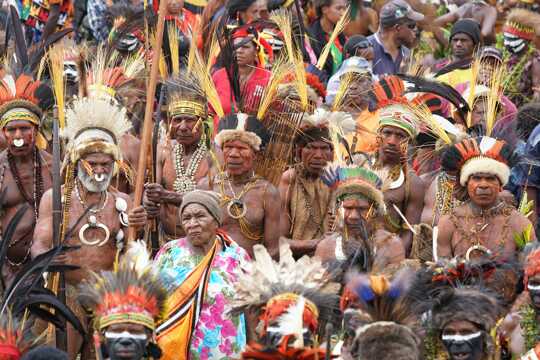
  • Goroka Showground (Goroka Cultural Show) — The heart of Goroka’s identity: a handful-of-days-a-year event and the grounds it uses where hundreds of tribes dress in full regalia, dance, and trade. Visiting the showground on event day means one of the world’s most vivid culture festivals up close; off-show it’s still a place where you’ll see rehearsals, local markets and the energy that makes Goroka tick.
  • Goroka Market (Central Market) — The busiest, most immediate way to read Goroka: mountains of fresh produce, cut flowers, hand-woven bilums, shell ornaments and Highlands food stalls. Walk through for people-watching, cheap snacks and direct contact with local sellers and tribespeople who come into town.
  • University of Goroka campus — A compact, lively campus where teacher-training students
read more 👉
  • Goroka Showground (Goroka Cultural Show) — The heart of Goroka’s identity: a handful-of-days-a-year event and the grounds it uses where hundreds of tribes dress in full regalia, dance, and trade. Visiting the showground on event day means one of the world’s most vivid culture festivals up close; off-show it’s still a place where you’ll see rehearsals, local markets and the energy that makes Goroka tick.
  • Goroka Market (Central Market) — The busiest, most immediate way to read Goroka: mountains of fresh produce, cut flowers, hand-woven bilums, shell ornaments and Highlands food stalls. Walk through for people-watching, cheap snacks and direct contact with local sellers and tribespeople who come into town.
  • University of Goroka campus — A compact, lively campus where teacher-training students meet visiting cultural groups; there are regular student events and good views over town. The grounds give a real sense of daily life in Goroka and often host small exhibitions, performances and affordable cafés where locals and visitors mingle.
  • Goroka Airport — A working Highlands airstrip with short, dramatic approaches and constant inter-island movement; sitting by the fence gives an up-close feel for Highlands aviation. Flights connect you to the highland villages and are a great way to watch the landscape change from the air while observing local travel routines.
  • Gahavisuka Provincial Park — A nearby public reserve inside the Goroka area with picnic spots, short rainforest walks and viewpoints over the valley. Local families use it on weekends and festivals often include gatherings here, so it’s a practical spot to soak up local outdoor life without leaving town limits.
Aiyura Valley’s coffee plantations and agricultural station, Kainantu’s museum and hot springs, and the Highlands villages accessible along the Highlands Highway make excellent day trips from Goroka.
Spotted a mistake or missing something? Contact us.

🏘️ NeighborhoodsWhere things are and how it's laid out

Goroka is a vibrant hub in Papua New Guinea, rich in culture and surrounded by stunning landscapes. Understanding its neighborhoods can elevate your experience from basic to brilliant.

Goroka Town Center
This is the heart of the action. You’ll find local markets bursting with fresh produce and handmade crafts. The vibe is energetic, especially in the mornings. It’s walkable, but be cautious of traffic. Accommodations range from budget hostels to mid-range hotels, making it suitable for both short and longer stays. Nightlife is low-key, with a few bars where you can mingle with locals.

Kerevat
A bit further out, Kerevat offers a quieter experience. The atmosphere is laid-back, perfect for those seeking a peaceful retreat. It’s less walkable, so consider arranging transport. This area … read more 👉
Goroka is a vibrant hub in Papua New Guinea, rich in culture and surrounded by stunning landscapes. Understanding its neighborhoods can elevate your experience from basic to brilliant.

Goroka Town Center
This is the heart of the action. You’ll find local markets bursting with fresh produce and handmade crafts. The vibe is energetic, especially in the mornings. It’s walkable, but be cautious of traffic. Accommodations range from budget hostels to mid-range hotels, making it suitable for both short and longer stays. Nightlife is low-key, with a few bars where you can mingle with locals.

Kerevat
A bit further out, Kerevat offers a quieter experience. The atmosphere is laid-back, perfect for those seeking a peaceful retreat. It’s less walkable, so consider arranging transport. This area is great for longer stays, especially if you want to immerse yourself in local life. You’ll find homestays that provide a more authentic experience, often with home-cooked meals.

Kokopo Road
This area is a blend of residential and commercial spaces. It’s more suburban, with a relaxed vibe. Walkability is decent, but you’ll want to use public transport or taxis for longer distances. It’s ideal for backpackers looking for a longer stay, as you can find affordable guesthouses. Nightlife is minimal, but the local eateries serve up delicious, hearty meals.

Goroka Airport Area
Convenient for arrivals and departures, this area is practical but lacks the charm of the town center. It’s not particularly walkable, so plan for transport. Short stays work best here, especially if you’re just passing through. The atmosphere is utilitarian, but you can find a few budget accommodations nearby.

⌛️ 1 dayWhat you can realistically do in a day

Goroka, the heart of Papua New Guinea’s Eastern Highlands, pulses with vibrant culture and rich traditions. It’s a place where the air is thick with the scent of fresh coffee and the sounds of lively markets. You can feel the spirit of the local people in every corner, making it a captivating stop for any traveler.

Start your morning at the Goroka Market. Arrive early to witness the hustle and bustle as vendors set up their stalls. The colors of fresh produce and handmade crafts are a feast for the eyes. Grab a cup of locally brewed coffee—it’s a must. The rich aroma will wake you up better than any energy drink. As you wander, engage with the vendors; their stories add depth to the experience.

After soaking in the market’s energy, head to the nearby Goroka Cultural Center. This spot is … read more 👉
Goroka, the heart of Papua New Guinea’s Eastern Highlands, pulses with vibrant culture and rich traditions. It’s a place where the air is thick with the scent of fresh coffee and the sounds of lively markets. You can feel the spirit of the local people in every corner, making it a captivating stop for any traveler.

Start your morning at the Goroka Market. Arrive early to witness the hustle and bustle as vendors set up their stalls. The colors of fresh produce and handmade crafts are a feast for the eyes. Grab a cup of locally brewed coffee—it’s a must. The rich aroma will wake you up better than any energy drink. As you wander, engage with the vendors; their stories add depth to the experience.

After soaking in the market’s energy, head to the nearby Goroka Cultural Center. This spot is often overlooked by tourists, but it’s a treasure trove of local history and art. The center showcases traditional artifacts and offers insights into the diverse cultures of the Highlands. Spend a couple of hours here, absorbing the stories behind the vibrant displays.

For lunch, make your way to the nearby town center and find a local eatery. Try the “mumu,” a traditional dish cooked in an underground oven. The smoky flavor is a delightful contrast to the fresh veggies you had earlier.

In the afternoon, take a short hike to the nearby Mount Goroka. The trail is manageable, and the views from the top are worth every step. You’ll see the sprawling valley below, a patchwork of greens and browns, and the distant mountains framing the horizon.

As the sun begins to set, return to town and find a spot at a local bar. Enjoy a cold “SP” beer while mingling with locals. The atmosphere is relaxed, and you’ll likely hear stories of the Goroka Show, a colorful festival that celebrates the region’s cultural diversity.

Your day in Goroka may be short, but it’s packed with experiences that connect you to the heart of Papua New Guinea. Each moment, from the market’s energy to the mountain’s tranquility, weaves together a narrative that’s both enriching and unforgettable.
Turn your Goroka visit into an Papua New Guinea adventure
Build a complete Papua New Guinea route with Goroka, hidden gems, must-see destinations, and realistic travel times included.

Generate my trip

🌤️ When to go?When to go for the best experience


  • Topic: Weather – Goroka’s climate swings between wet and dry seasons. The dry season, from June to September, offers clearer skies and less mud, making trails and village visits easier. The wet season (October to May) brings heavy rains that can turn roads into slippery challenges and obscure mountain views.

  • Topic: Temperature – Expect mild days around 20-25°C (68-77°F) during the dry months, perfect for hiking without overheating. Nights can dip to 10-12°C (50-54°F), so layering is essential. The wet season feels warmer but stickier, with humidity pushing temps closer to 27°C (80°F).

  • Topic: Daylight Hours – Near the equator, daylight stays steady year-round, roughly 11-12 hours. This consistency means you can plan hikes and activities without worrying about early sunsets, but mornings
read more 👉

  • Topic: Weather – Goroka’s climate swings between wet and dry seasons. The dry season, from June to September, offers clearer skies and less mud, making trails and village visits easier. The wet season (October to May) brings heavy rains that can turn roads into slippery challenges and obscure mountain views.

  • Topic: Temperature – Expect mild days around 20-25°C (68-77°F) during the dry months, perfect for hiking without overheating. Nights can dip to 10-12°C (50-54°F), so layering is essential. The wet season feels warmer but stickier, with humidity pushing temps closer to 27°C (80°F).

  • Topic: Daylight Hours – Near the equator, daylight stays steady year-round, roughly 11-12 hours. This consistency means you can plan hikes and activities without worrying about early sunsets, but mornings often start misty, especially in the wet season.

  • Topic: Crowds – The highlight is the Goroka Show in September, drawing visitors from across PNG and beyond. If you want the cultural buzz without the crowd crush, arrive just before or after the event. Outside this, expect very few tourists, which means more authentic interactions.

  • Topic: Seasonal Activities – The Goroka Show is the crown jewel, showcasing tribal dances, costumes, and crafts. Outside of that, dry months are best for trekking and exploring local markets, while the wet season invites lush greenery but limits outdoor plans.

  • Topic: Price Fluctuations – Accommodation and transport costs spike around the Goroka Show due to demand. Booking early can save you a premium. During the off-peak wet season, prices drop, but some services may be less reliable or closed.


Pro-tip: Time your visit for late August to early October to catch the Goroka Show’s full spectacle while enjoying manageable weather and daylight—this window balances cultural immersion with practical comfort.


source: climatestotravel.comJANJanuary: fair for travelingFEBFebruary: fair for travelingMARMarch: fair for travelingAPRApril: fair for travelingMAYMay: fair for travelingJUNJune: highly recommended for travelingJULJuly: highly recommended for travelingAUGAugust: excellent for travelingSEPSeptember: excellent for travelingOCTOctober: highly recommended for travelingNOVNovember: fair for travelingDECDecember: fair for traveling
when-to-go

✈️ The backpacker research shortcutPapua New Guinea Travel Guide

An offline-friendly backpacking guide with optimized travel routes, ranked highlights, transport advice, and the best areas to stay.
example page 0 from our offline Travel Guide for Papua New Guinea
example page 1 from our offline Travel Guide for Papua New Guinea
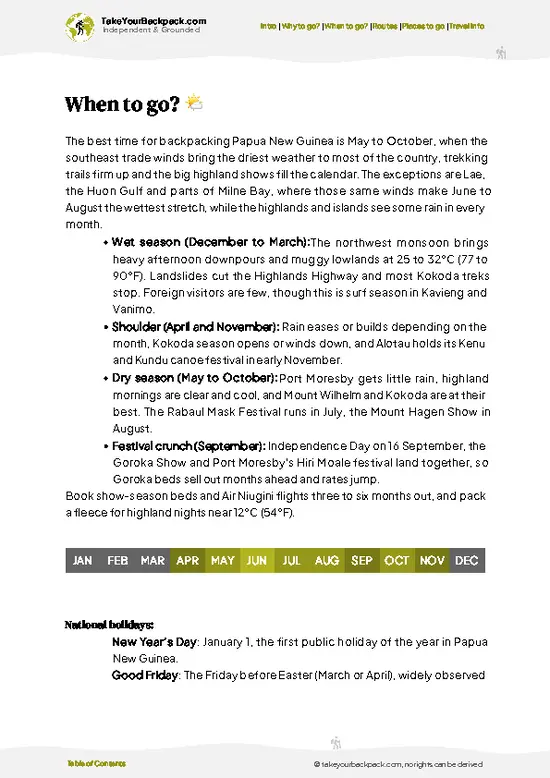
example page 2 from our offline Travel Guide for Papua New Guinea
example page 3 from our offline Travel Guide for Papua New Guinea
example page 4 from our offline Travel Guide for Papua New Guinea
example page 5 from our offline Travel Guide for Papua New Guinea
example page 6 from our offline Travel Guide for Papua New Guinea
example page 7 from our offline Travel Guide for Papua New Guinea
The digital guide (319 pages) contains:
86 highlights, ranked by travel appeal
Optimized 5, 10 & 15-day travel routes
Cities, national parks, landmarks, beaches
How to get around
Offline-friendly for travel without Wi-Fi
👉 Click to see all 30+ guide features

📅 Plan smarter in minutes, not weeks
Month by month travel advice
Festivals & national holidays
Budget expectations

🗺️ Go to the right places, skip the overrated ones
Honest pros & cons of destinations
Top hikes, parks & viewpoints
Lesser-known places most travelers miss
Clear “worth it vs skip it” guidance

🛏️ Travel smoothly without rookie mistakes
Best areas to stay
Transport systems explained simply
Common scams & safety advice
SIM cards, money & practical tips

🌍 Understand the country, not just visit it
Culture & traditions
52 Essential phrases & customs
Festivals worth planning around
Traveler-friendly historical context
Insights that make places more meaningful

📱 Built for real travel conditions
Fully downloadable PDF
Works completely offline
Optimized for phone use
Useful in remote areas & buses
Everything in one place
Save weeks of stressful planning
Get instant access to your full guide. 30‑day money-back guarantee.
+ Add another guide for just US$7.80

By proceeding you agree to our terms.
Sent to your inbox immediately after payment • 100% Secure Checkout
Best Backpacking Travel Advisor 2025 tourism awardBest Backpacking
Travel Advisor
2025
What others say about Take Your Backpack Guides:
⭐⭐⭐⭐⭐
Fantastic, amazing amount of information!
⭐⭐⭐⭐⭐
My goodness this is amazing, it's what I've been looking for hats off too you!
⭐⭐⭐⭐⭐
I think this is absolutely BRILLIANT
⭐⭐⭐⭐
Very complete and informative. It's still missing places, but I gotta to commend you
⭐⭐⭐⭐⭐
This is truly amazing, thank you, can't wait to explore it with my kids!
⭐⭐⭐⭐⭐
Awesome resource, thank you!
⭐⭐⭐⭐⭐
This is amazing! Can't wait to explore the ones I haven't seen
⭐⭐⭐⭐
I love this! Well done, great idea.
⭐⭐⭐⭐⭐
Thanks for taking the time to make this gem!
⭐⭐⭐⭐⭐
This might be the best website I've ever seen.
⭐⭐⭐⭐⭐
Congratulations, and thank you so much for your work; it's incredibly valuable.
⭐⭐⭐⭐
In all seriousness I think you did a great job pointing out the important spots
⭐⭐⭐⭐⭐
10/10 very good
⭐⭐⭐⭐⭐
As someone who's only just starting to visit regularly this is awesome, thank you.
⭐⭐⭐⭐
Thank you very much! I'm going to visit my dad, it's going to be very useful!
⭐⭐⭐⭐⭐
This is really cool! We'll be travelling for the first time and this definitely come in handy.
⭐⭐⭐⭐⭐
You are now our minister of culture, congratulations 👨‍💼
⭐⭐⭐⭐⭐
Just wanted to tell you that this is a pearl! Going to follow your recommendations.
⭐⭐⭐⭐⭐
This is so cool. I'll definitely be using the resource for my travels soon.
⭐⭐⭐⭐⭐
This is very impressive! Good work.
⭐⭐⭐⭐⭐
This is an amazing and informative site. Very well done!

🛏️ Where to stay?Choosing the right base

In Goroka, the best spot for backpackers is the area around the town center, especially near the main market and the airport road. This zone pulses with local life—vendors shouting over the scent of fresh fruit and sizzling street food, the chatter of locals weaving through the stalls. It’s where you’ll find the handful of budget hostels and guesthouses that cater to solo travelers and small groups. Staying here means you’re plugged into the social rhythm of the town, with easy access to communal spaces where you can swap stories with fellow backpackers or locals over a cold drink.

Compared to … read more 👉
In Goroka, the best spot for backpackers is the area around the town center, especially near the main market and the airport road. This zone pulses with local life—vendors shouting over the scent of fresh fruit and sizzling street food, the chatter of locals weaving through the stalls. It’s where you’ll find the handful of budget hostels and guesthouses that cater to solo travelers and small groups. Staying here means you’re plugged into the social rhythm of the town, with easy access to communal spaces where you can swap stories with fellow backpackers or locals over a cold drink.

Compared to the quieter, more residential outskirts, the town center’s vibe is raw and immediate, but it’s also safer because of the steady flow of people and the presence of small businesses. You won’t find sprawling resorts here, but that’s the point—the energy is authentic, and the connections you make feel earned. The streets are dusty and alive, with the afternoon light casting long shadows on corrugated iron roofs. This is where you get the real Goroka experience, not just a place to crash but a base to soak in the culture and prepare for the rugged adventures beyond town.

🚌 Getting aroundTransportation options and practical tips

Goroka moves at its own rhythm—neither frantic nor sluggish, but a steady pulse that matches the cool mountain air and the distant hum of daily market chatter. The town’s flow isn’t about strict timetables or rigid schedules; it’s more about reading the moment, catching the right ride when it rolls by, and blending into the local cadence. The streets are alive with the scent of fresh coffee and earth after rain, and the occasional honk from a shared taxi signals a new wave of arrivals or departures. Here, patience isn’t just a virtue—it’s your ticket to a smoother journey. Understanding this flow means you won’t just get from point A to B; you’ll move with the town, not against it.


  • Walking: The heart of Goroka is compact enough to explore on foot, especially around the market and main
read more 👉
Goroka moves at its own rhythm—neither frantic nor sluggish, but a steady pulse that matches the cool mountain air and the distant hum of daily market chatter. The town’s flow isn’t about strict timetables or rigid schedules; it’s more about reading the moment, catching the right ride when it rolls by, and blending into the local cadence. The streets are alive with the scent of fresh coffee and earth after rain, and the occasional honk from a shared taxi signals a new wave of arrivals or departures. Here, patience isn’t just a virtue—it’s your ticket to a smoother journey. Understanding this flow means you won’t just get from point A to B; you’ll move with the town, not against it.


  • Walking: The heart of Goroka is compact enough to explore on foot, especially around the market and main street. Walking lets you soak in the scent of roasted peanuts and the chatter of vendors, plus it’s free and flexible—perfect for spontaneous detours or quick errands.


  • Shared Taxis: These are the backbone of local transit, running from early morning (around 6 AM) until dusk (about 6 PM). Fares hover around 2 to 5 PGK depending on distance. They’re not the fastest, often stopping to pick up or drop off passengers, but they offer a direct, affordable way to navigate between neighborhoods and the bus station.


  • PMVs (Public Motor Vehicles): Think of these as minibuses or vans that follow loose routes. They start rolling around 7 AM and taper off by 5 PM. Tickets cost roughly 3 to 7 PGK. PMVs are a bit cramped but faster than shared taxis, ideal if you’re heading to the outskirts or nearby villages. Expect a lively atmosphere with locals chatting and music playing.


  • Motorbike Taxis (Hondas): For quick hops or places where four wheels can’t go, motorbike taxis are your go-to. They operate all day, with prices negotiable but generally between 5 and 10 PGK for short trips. They slice through traffic and rough roads, but helmet use is spotty—bring your own if safety is a priority.


  • Airport Shuttle: If you’re catching a flight or arriving by air, the shuttle service between Goroka Airport and town runs on flight schedules, usually early morning and late afternoon. It’s pricier (around 20 PGK) but reliable and comfortable, a good choice when timing is tight or you’re carrying gear.

👛 Costs (as of 4 September 2026)Typical daily expenses

Backpacking in Goroka, Papua New Guinea, means stepping into a world where costs stay modest but the experience feels rich and raw. Here’s how your daily budget breaks down in practical terms:
  • Dorm Accommodation: Expect to pay around $10 to $20 USD per night for a basic dorm bed. Options are limited and often simple, with shared bathrooms and minimal amenities, but clean enough to rest after a day of exploring.
  • Meals: Local food stalls and small eateries serve up filling meals for $2 to $5 USD. Think hearty rice and meat dishes or fresh vegetables, often cooked with local spices. Western-style meals or imported goods can push costs higher, around $7 to $10 USD.
  • Local Transport: Getting around town usually means hopping on a PMV (public motor vehicle) or a shared taxi. Fares hover between
read more 👉
Backpacking in Goroka, Papua New Guinea, means stepping into a world where costs stay modest but the experience feels rich and raw. Here’s how your daily budget breaks down in practical terms:
  • Dorm Accommodation: Expect to pay around $10 to $20 USD per night for a basic dorm bed. Options are limited and often simple, with shared bathrooms and minimal amenities, but clean enough to rest after a day of exploring.
  • Meals: Local food stalls and small eateries serve up filling meals for $2 to $5 USD. Think hearty rice and meat dishes or fresh vegetables, often cooked with local spices. Western-style meals or imported goods can push costs higher, around $7 to $10 USD.
  • Local Transport: Getting around town usually means hopping on a PMV (public motor vehicle) or a shared taxi. Fares hover between $0.50 and $1.50 USD per trip, depending on distance. Walking is also common, especially in the compact town center.
  • Basic Activities/Entry Fees: Cultural sites and local markets generally charge modest fees, around $2 to $5 USD. If you’re aiming for guided tours or special events, budget closer to $10 to $15 USD, but many experiences are accessible on your own for less.
  • Miscellaneous Expenses: This covers essentials like bottled water, snacks, or small souvenirs. Plan for about $1 to $3 USD daily, though costs can spike if you need internet access or phone credit.

Altogether, a realistic daily budget for backpacking in Goroka falls between $15 and $40 USD. This range covers basic needs without cutting corners, letting you soak in the local atmosphere without the stress of overspending.


source: papuanewguinea.travel
⚠️ Prices can change and everyone travels differently, so take this as a rough guide. Hope it helps you plan your adventure!

🚌 Day tripsExploring the surroundings

Goroka, the heart of Papua New Guinea’s Highlands, is a vibrant base for day trips that reveal the region’s rich culture and stunning landscapes. Here are some standout adventures that will make your backpacking experience truly memorable.

Mount Giluwe Trek
This trek is a must for those craving a challenge. Standing at 4,367 meters, Mount Giluwe is the second-highest peak in PNG. The journey takes about 6-8 hours round trip, and while it’s tough, the views from the summit are worth every bead of sweat. You’ll pass through lush forests, with the scent of damp earth and wildflowers filling the air. Budget around 50-70 Kina for transport and snacks. The best time to tackle this trek is during the dry season, from May to October. A common mistake? Underestimating the weather; pack layers to … read more 👉
Goroka, the heart of Papua New Guinea’s Highlands, is a vibrant base for day trips that reveal the region’s rich culture and stunning landscapes. Here are some standout adventures that will make your backpacking experience truly memorable.

Mount Giluwe Trek
This trek is a must for those craving a challenge. Standing at 4,367 meters, Mount Giluwe is the second-highest peak in PNG. The journey takes about 6-8 hours round trip, and while it’s tough, the views from the summit are worth every bead of sweat. You’ll pass through lush forests, with the scent of damp earth and wildflowers filling the air. Budget around 50-70 Kina for transport and snacks. The best time to tackle this trek is during the dry season, from May to October. A common mistake? Underestimating the weather; pack layers to stay warm at the top.


Goroka Market
Dive into the local culture at the Goroka Market, a sensory overload of colors and sounds. Open daily, this market is a feast for the eyes, with fresh produce, handmade crafts, and the aroma of street food wafting through the air. Spend a few hours here, chatting with locals and sampling traditional dishes like mumu (a type of pit-cooked meal). It’s free to explore, but bring about 20 Kina for snacks and small purchases. Early mornings are best to avoid the crowds and soak in the vibrant atmosphere. Don’t miss the chance to haggle; it’s part of the experience!


Asaro Mudmen Village
A visit to the Asaro Mudmen Village is like stepping into a living history book. Just a short drive from Goroka, this unique cultural experience showcases the Mudmen’s fascinating traditions. The visit typically lasts 2-3 hours, and you’ll learn about their legendary battles and the significance of their mud masks. Expect to pay around 30 Kina for transport and a small fee for the guided tour. The best time to visit is during the dry season when the village is bustling with activity. A rookie mistake? Skipping the chance to participate in a mud mask-making session; it’s a blast!


Hiking to the Goroka Lookout
For a quick escape, the hike to Goroka Lookout is perfect. It’s a leisurely 1-2 hour trek that rewards you with panoramic views of the town and surrounding mountains. The trail is well-marked, but watch out for muddy patches after rain. This trip is free, making it a budget-friendly option. Early mornings or late afternoons offer the best light for photos. Many first-timers miss the lookout entirely; don’t forget to ask locals for directions!
Want to know what more Papua New Guinea offers?
The Papua New Guinea Travel Guide describes 86 highlights, from cities to national parks, from beaches to hikes

Get the Travel Guide -

🛡️ SafetyTraveler Safety Guide

Goroka is generally safe, but like any place, a little awareness goes a long way. The bustling market is a vibrant hub, but keep your belongings close. Pickpockets can lurk in crowded areas, so wear a crossbody bag and avoid flashy jewelry.

If you’re traveling solo, daytime is your friend. The streets are lively, filled with the scent of fresh produce and the sounds of local chatter. But as night falls, it’s best to stick to well-lit areas and avoid wandering too far from your accommodation.

Scams are rare, but be cautious with unofficial taxi services. Always opt for registered taxis or arrange rides through your hotel. Annoyances can include persistent vendors, but a polite “no, thank you” usually does the trick.

Embrace the local culture, engage with the people, and maintain a friendly … read more 👉
Goroka is generally safe, but like any place, a little awareness goes a long way. The bustling market is a vibrant hub, but keep your belongings close. Pickpockets can lurk in crowded areas, so wear a crossbody bag and avoid flashy jewelry.

If you’re traveling solo, daytime is your friend. The streets are lively, filled with the scent of fresh produce and the sounds of local chatter. But as night falls, it’s best to stick to well-lit areas and avoid wandering too far from your accommodation.

Scams are rare, but be cautious with unofficial taxi services. Always opt for registered taxis or arrange rides through your hotel. Annoyances can include persistent vendors, but a polite “no, thank you” usually does the trick.

Embrace the local culture, engage with the people, and maintain a friendly demeanor. This openness often leads to genuine interactions and a richer experience. Enjoy the journey; it’s all part of the adventure.

FAQFrequently asked questions about Goroka

Yes, Goroka is worth visiting, especially for its famous Goroka Show held annually in September, showcasing traditional tribal dances and culture. It offers a unique cultural experience not found in many other parts of Papua New Guinea. The town also serves as a gateway to the Eastern Highlands and nearby natural attractions.
You need about 2 to 3 days in Goroka to fully experience the Goroka Show if visiting in September, explore local markets, and take short trips to nearby villages or natural sites. This duration allows time to acclimate to the altitude and enjoy cultural activities without rushing.
No, Goroka cannot be easily visited as a day trip from a nearby city due to its remote location and limited transport options. The closest major city, Lae, is about 280 kilometers away and requires a full day of travel by road or a short domestic flight, making day trips impractical.
⚠️ Things can change over time, so always validate details locally before you go.

Other Papua New Guinean towns near Goroka

Explore more nearby:

  • Sinasina—Chimbu highlands, subsistence gardens, clan villages| 40 km away
  • Kainantu—Eastern Highlands, pottery workshops, missionary history| 57 km away
  • Madang—coral reefs, waterfront promenade, colonial relics| 106 km away

💡 Not sure where to go next?
Create a personalized itinerary for Papua New Guinea including Goroka and the places that fit your trip.

Generate my itinerary

👉 Discover all towns

Or checkout all Papua New Guinea has to offer (think cities, towns, villages, national parks, hikes, beaches, festivals)
Country photo of Papua New Guinea

We 💚 feedbackWhat to keep in mind

Goroka is a sensory feast. The air hums with the scent of roasting coffee and the vibrant chatter of locals. You’ll be surprised by the warmth of the people; they’re genuinely curious about you. Don’t miss the Goroka Show if you can swing it—it’s a riot of color and culture. Just be prepared for the altitude; it can sneak up on you. Embrace the challenge, and you’ll find the beauty here is worth every step.

✍️ Help improve this page!
The information on this page is based on in-depth research, insights shared by experienced travelers, and feedback from the local travel community in Papua New Guinea. While every effort is made to keep the information accurate and current, conditions can change — so if you spot anything incorrect or outdated, please get in touch.


🙋‍♂️ Give feedback

👋 Meet the founderWho’s Behind Take Your Backpack?

Johan, backpacker and founder of TakeYourBackpackHi, I’m Johan (Netherlands 🇳🇱), the creator of TakeYourBackpack. Over the past decade, I’ve backpacked through 80+ countries across six continents, gaining extensive experience with independent travel, long-term trips, and overland routes.

This site is built on a combination of firsthand travel experience and carefully curated insights from other backpackers. Many guides are based on places I’ve personally visited, while others bring together tips, observations, and practical advice shared by trusted travelers I’ve met along the way.

The goal is to provide realistic, experience-driven guidance — not generic itineraries — so you can explore destinations with better context, clearer expectations, and more confidence.

Get full country guide •
Instant download • 86 highlights • Full Offline guide