×

Papua New Guinea🇵🇬 | festivalsTumbuna Festivalancestral stories, oral history, Simbu province | things to do and best time to go

Explore Enga Cultural ShowExplore Morobe Show

Backpacking in Tumbuna
👌 Worth visitingfestival ranked #10
By Johan Kruseman 🇳🇱 | Updated July 30, 2026

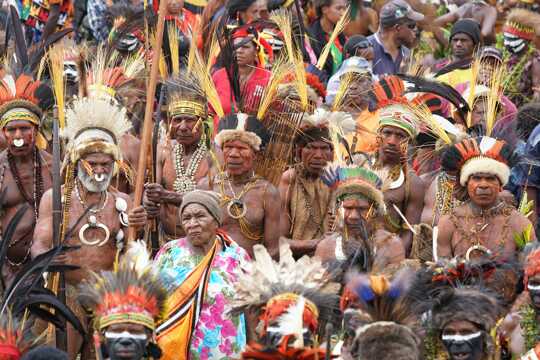
Most summaries sell Tumbuna Festival as a polished “mini–Mount Hagen Show,” but on the ground it’s rougher, smaller, and way more intimate – you’ll spend more time standing in the mud beside performers than watching them from a grandstand. The festival takes place near Mount Hagen in the Western Highlands of Papua New Guinea. It’s a one-day, pre–Mount Hagen cultural show built around sing-sing groups, kundu drums, bamboo flutes, and clan origin stories rather than big-stage production. Expect mostly tour groups, a few independent backpackers, and a curious, relaxed local crowd. The vibe is close-up, chaotic, and photogenic, with short bursts of dancing and long lulls. Worth it if you crave proximity and raw culture, not if you need slick organization.

Discover everything you want to know in the 📖 Papua New Guinea Travel Guide.
Loading the map 🌍
CLICK TO FILTER
cities
towns
national parks
hikes
beaches
attractions
festivals
regions
SHOW COUNTRY’S BESTSHOW ALL

✨ Why go?
Ranked #10 festival in Papua New Guinea
What makes it a must-see festival

Backpackers flock to the Tumbuna Festival in Papua New Guinea for a jolt of social energy and a taste of temporary community. This vibrant event is a cultural immersion like no other, where you can witness traditional dances, music, and art that pulse with life. It’s not just about the spectacle; it’s about connecting with locals and fellow travelers, sharing stories over a shared meal.

Affordability is a major draw, especially compared to similar festivals worldwide. You can experience this rich tapestry of culture without breaking the bank. Plus, it fits seamlessly into longer travel plans, serving as a perfect pit stop between treks through the stunning landscapes of PNG. Plan your route around this festival, and you’ll unlock a deeper, more rewarding journey.
Want to include Tumbuna Festival in your Papua New Guinea route?
Create a personalized Papua New Guinea itinerary that includes Tumbuna Festival and the places that fit your trip — based on your travel style, budget, and available time. Get your route in seconds.

Generate my trip

💡 HighlightsDon't-miss highlights and experiences

  • Ancestral ceremonies and storytelling — Intimate, powerful rituals led by elders that connect people to their lineage; the songs, chants and oral histories feel alive rather than staged, so you get a direct window into beliefs that have been carried for generations.
  • Sing-sing and group dances — Villages bring their own dance troupes with striking rhythms, call-and-response vocals and synchronized movements; each performance has a different mood and story, so it’s a nonstop, colorful display of local identity.
  • Costumes, masks and body paint — Elaborate headdresses, carved masks and vibrant body paint made from local materials turn people into walking artworks; the symbolism and craftsmanship are a standout—great for photos and for noticing tiny details that reveal clan histories.
  • Handicrafts,
read more 👉
  • Ancestral ceremonies and storytelling — Intimate, powerful rituals led by elders that connect people to their lineage; the songs, chants and oral histories feel alive rather than staged, so you get a direct window into beliefs that have been carried for generations.
  • Sing-sing and group dances — Villages bring their own dance troupes with striking rhythms, call-and-response vocals and synchronized movements; each performance has a different mood and story, so it’s a nonstop, colorful display of local identity.
  • Costumes, masks and body paint — Elaborate headdresses, carved masks and vibrant body paint made from local materials turn people into walking artworks; the symbolism and craftsmanship are a standout—great for photos and for noticing tiny details that reveal clan histories.
  • Handicrafts, carving and live demonstrations — Craftspeople sell and demonstrate carving, weaving and bilum-making right on site; it’s a chance to buy authentic pieces, talk to makers, and see how everyday objects are also cultural stories.
  • Communal feasts, food stalls and late-night drumming — The food scene is communal and unpretentious: pit roasts, fresh produce and simple shared meals that bring everyone together, followed by informal drumming sessions that keep the vibe alive long after official events end.
Spotted a mistake or missing something? Contact us.

🌤️ When to go?When is the celebration of Tumbuna Festival?


  • Topic: Weather – The Tumbuna Festival thrives in Papua New Guinea’s dry season, from May to October. Expect less rain, which means trails stay firm and your gear won’t be soaked. Avoid the wet season (November to April) when downpours can turn paths into mudslides.

  • Topic: Temperature – Daytime temps hover around 24-28°C (75-82°F), perfect for hiking and dancing without overheating. Nights dip to 15-18°C (59-64°F), so pack a light jacket to stay comfortable after sunset.

  • Topic: Daylight Hours – Roughly 11 to 12 hours of daylight give you plenty of time to explore and soak in the festival’s energy without rushing. Early starts maximize your experience.

  • Topic: Crowds – The festival draws locals and a modest number of travelers. Visit early in the dry season to avoid peak crowding and
read more 👉

  • Topic: Weather – The Tumbuna Festival thrives in Papua New Guinea’s dry season, from May to October. Expect less rain, which means trails stay firm and your gear won’t be soaked. Avoid the wet season (November to April) when downpours can turn paths into mudslides.

  • Topic: Temperature – Daytime temps hover around 24-28°C (75-82°F), perfect for hiking and dancing without overheating. Nights dip to 15-18°C (59-64°F), so pack a light jacket to stay comfortable after sunset.

  • Topic: Daylight Hours – Roughly 11 to 12 hours of daylight give you plenty of time to explore and soak in the festival’s energy without rushing. Early starts maximize your experience.

  • Topic: Crowds – The festival draws locals and a modest number of travelers. Visit early in the dry season to avoid peak crowding and secure better accommodation deals.

  • Topic: Seasonal Activities – The dry season aligns with traditional dances, rituals, and market days. Timing your visit here means catching authentic cultural moments that vanish in the wet months.

  • Topic: Price Fluctuations – Prices spike during the festival’s peak weeks but drop sharply before and after. Booking just outside the main event window can save cash without missing the core experience.


Pro-tip: Aim for late May or early June—dry trails, manageable crowds, and festival magic without the premium price tag.


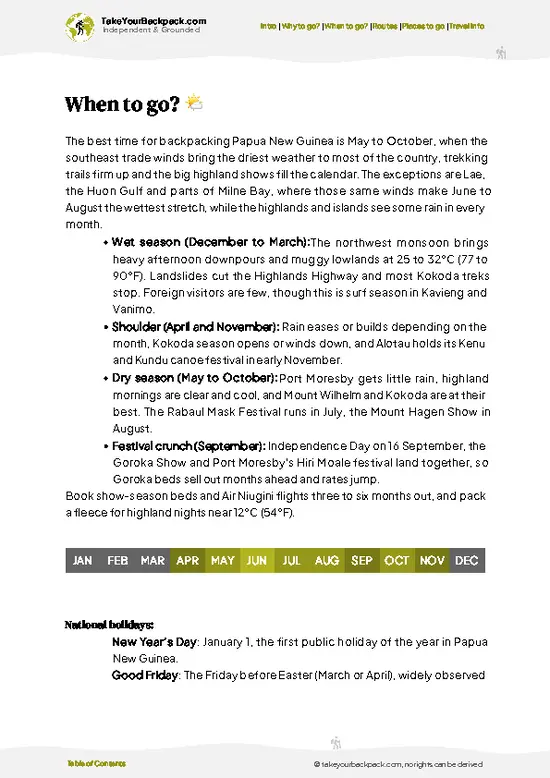
source: climatestotravel.comJANJanuary: not recommended for travelingFEBFebruary: not recommended for travelingMARMarch: not recommended for travelingAPRApril: not recommended for travelingMAYMay: excellent for travelingJUNJune: not recommended for travelingJULJuly: not recommended for travelingAUGAugust: not recommended for travelingSEPSeptember: not recommended for travelingOCTOctober: not recommended for travelingNOVNovember: not recommended for travelingDECDecember: not recommended for traveling

✈️ The backpacker research shortcutPapua New Guinea Travel Guide

An offline-friendly backpacking guide with optimized travel routes, ranked highlights, transport advice, and the best areas to stay.
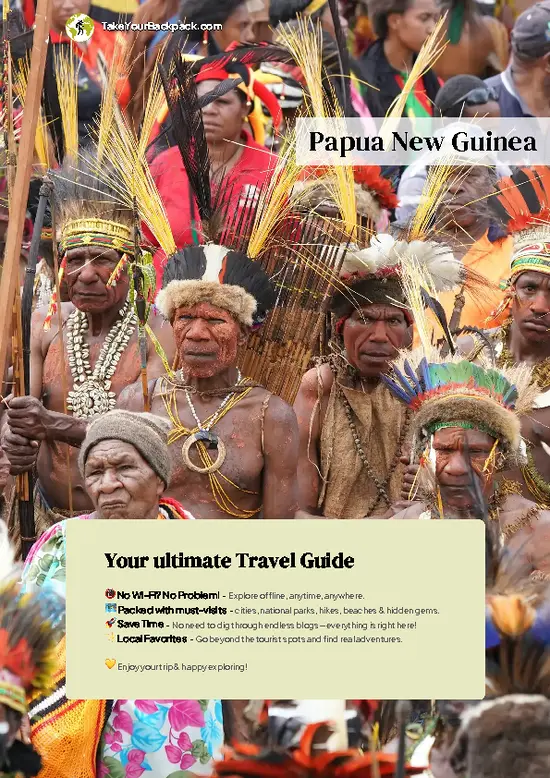
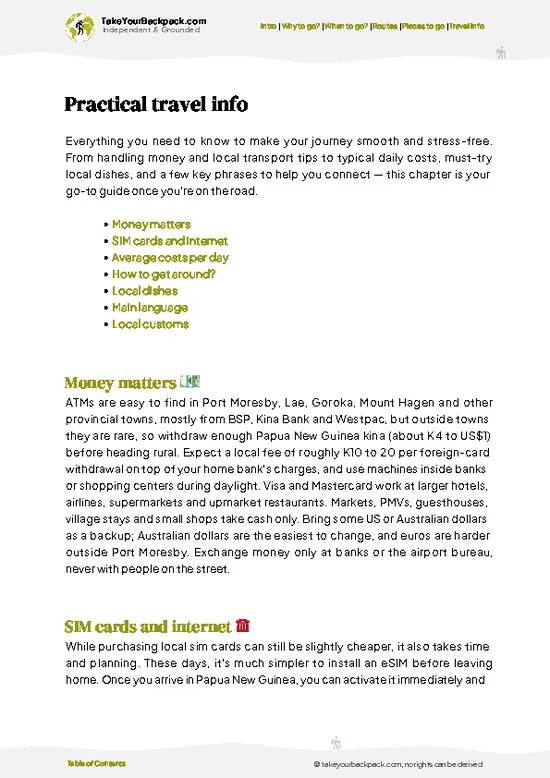
example page 0 from our offline Travel Guide for Papua New Guinea
example page 1 from our offline Travel Guide for Papua New Guinea
example page 2 from our offline Travel Guide for Papua New Guinea
example page 3 from our offline Travel Guide for Papua New Guinea
example page 4 from our offline Travel Guide for Papua New Guinea
example page 5 from our offline Travel Guide for Papua New Guinea
example page 6 from our offline Travel Guide for Papua New Guinea
example page 7 from our offline Travel Guide for Papua New Guinea
The digital guide (319 pages) contains:
86 highlights, ranked by travel appeal
Optimized 5, 10 & 15-day travel routes
Cities, national parks, landmarks, beaches
How to get around
Offline-friendly for travel without Wi-Fi
👉 Click to see all 30+ guide features

📅 Plan smarter in minutes, not weeks
Month by month travel advice
Festivals & national holidays
Budget expectations

🗺️ Go to the right places, skip the overrated ones
Honest pros & cons of destinations
Top hikes, parks & viewpoints
Lesser-known places most travelers miss
Clear “worth it vs skip it” guidance

🛏️ Travel smoothly without rookie mistakes
Best areas to stay
Transport systems explained simply
Common scams & safety advice
SIM cards, money & practical tips

🌍 Understand the country, not just visit it
Culture & traditions
52 Essential phrases & customs
Festivals worth planning around
Traveler-friendly historical context
Insights that make places more meaningful

📱 Built for real travel conditions
Fully downloadable PDF
Works completely offline
Optimized for phone use
Useful in remote areas & buses
Everything in one place
Save weeks of stressful planning
Get instant access to your full guide. 30‑day money-back guarantee.


By proceeding you agree to our terms.
Sent to your inbox immediately after payment • 100% Secure Checkout
Best Backpacking Travel Advisor 2025 tourism awardBest Backpacking
Travel Advisor
2025
What others say about Take Your Backpack Guides:
⭐⭐⭐⭐⭐
Fantastic, amazing amount of information!
⭐⭐⭐⭐⭐
My goodness this is amazing, it's what I've been looking for hats off too you!
⭐⭐⭐⭐⭐
I think this is absolutely BRILLIANT
⭐⭐⭐⭐
Very complete and informative. It's still missing places, but I gotta to commend you
⭐⭐⭐⭐⭐
This is truly amazing, thank you, can't wait to explore it with my kids!
⭐⭐⭐⭐⭐
Awesome resource, thank you!
⭐⭐⭐⭐⭐
This is amazing! Can't wait to explore the ones I haven't seen
⭐⭐⭐⭐
I love this! Well done, great idea.
⭐⭐⭐⭐⭐
Thanks for taking the time to make this gem!
⭐⭐⭐⭐⭐
This might be the best website I've ever seen.
⭐⭐⭐⭐⭐
Congratulations, and thank you so much for your work; it's incredibly valuable.
⭐⭐⭐⭐
In all seriousness I think you did a great job pointing out the important spots
⭐⭐⭐⭐⭐
10/10 very good
⭐⭐⭐⭐⭐
As someone who's only just starting to visit regularly this is awesome, thank you.
⭐⭐⭐⭐
Thank you very much! I'm going to visit my dad, it's going to be very useful!
⭐⭐⭐⭐⭐
This is really cool! We'll be travelling for the first time and this definitely come in handy.
⭐⭐⭐⭐⭐
You are now our minister of culture, congratulations 👨‍💼
⭐⭐⭐⭐⭐
Just wanted to tell you that this is a pearl! Going to follow your recommendations.
⭐⭐⭐⭐⭐
This is so cool. I'll definitely be using the resource for my travels soon.
⭐⭐⭐⭐⭐
This is very impressive! Good work.
⭐⭐⭐⭐⭐
This is an amazing and informative site. Very well done!

🛏️ Where to stay?Best areas to stay in Papua New Guinea

For the Tumbuna Festival, head to Goroka. This vibrant town is the heartbeat of the Highlands, buzzing with energy and culture. You’ll find a mix of budget-friendly accommodations that cater to backpackers and solo travelers.

Stay near the market area for easy access to local food stalls and the festival grounds. The atmosphere here is electric, filled with fellow travelers eager to share stories and tips.

Another option is to camp or find lodgings in nearby villages. This gives you a chance to connect with locals and experience authentic Papua New Guinea life. Just keep an eye on your belongings … read more 👉
For the Tumbuna Festival, head to Goroka. This vibrant town is the heartbeat of the Highlands, buzzing with energy and culture. You’ll find a mix of budget-friendly accommodations that cater to backpackers and solo travelers.

Stay near the market area for easy access to local food stalls and the festival grounds. The atmosphere here is electric, filled with fellow travelers eager to share stories and tips.

Another option is to camp or find lodgings in nearby villages. This gives you a chance to connect with locals and experience authentic Papua New Guinea life. Just keep an eye on your belongings and stay aware of your surroundings.

Embrace the challenge of navigating this unique landscape, and you’ll preserve your energy and budget for the unforgettable moments at the festival.

👛 Costs (as of 30 July 2026)What things cost and how to budget

The Tumbuna Festival in Papua New Guinea is a vibrant celebration of culture, but navigating the costs can be tricky. Here’s a breakdown to keep your budget intact while you soak in the experience.
  • Festival Tickets: Expect to pay around $10 to $20 USD for entry. This gives you access to traditional performances and local crafts. Buy your tickets early to avoid last-minute price hikes.
  • Accommodation: Options vary widely. Dormitory beds in hostels start at about $15 USD per night, while budget hotels can range from $30 to $60 USD. For a more local experience, consider guesthouses, which may cost between $25 and $50 USD.
  • Local Transport: Getting around can be an adventure. Public transport is limited, so budget around $5 to $15 USD for local buses or shared taxis. If you’re venturing further, hiring
read more 👉
The Tumbuna Festival in Papua New Guinea is a vibrant celebration of culture, but navigating the costs can be tricky. Here’s a breakdown to keep your budget intact while you soak in the experience.
  • Festival Tickets: Expect to pay around $10 to $20 USD for entry. This gives you access to traditional performances and local crafts. Buy your tickets early to avoid last-minute price hikes.
  • Accommodation: Options vary widely. Dormitory beds in hostels start at about $15 USD per night, while budget hotels can range from $30 to $60 USD. For a more local experience, consider guesthouses, which may cost between $25 and $50 USD.
  • Local Transport: Getting around can be an adventure. Public transport is limited, so budget around $5 to $15 USD for local buses or shared taxis. If you’re venturing further, hiring a private vehicle might set you back $50 to $100 USD per day.
  • Food & Drinks: Street food is your best friend here. Meals can cost as little as $3 to $7 USD. If you opt for restaurants, expect to pay $10 to $20 USD for a decent meal. Don’t forget to budget for drinks; local beer is around $2 to $5 USD.
  • Miscellaneous Expenses: Always leave room for surprises. Souvenirs, tips, or unexpected activities can add up. Set aside $20 to $50 USD for these extras to keep your experience stress-free.

Stay sharp and plan ahead. This way, you’ll have the energy and funds to dive into the heart of the festival.


source: papuanewguinea.travel
⚠️ Prices can change and everyone travels differently, so take this as a rough guide. Hope it helps you plan your adventure!

🍲 FoodLocal Cuisine & Drinks

At the Tumbuna Festival, food and drinks are a vibrant celebration of local culture. Dive into mumu, a traditional feast where meats and vegetables are slow-cooked in an underground oven. The smoky flavors are a must-try, and you’ll feel the warmth of community as people gather around to share.

Festival stalls buzz with energy, offering sago cakes and fresh tropical fruits. Don’t miss the chance to sip on kava, a traditional drink that brings a mellow vibe to the festivities. It’s not just about the taste; it’s about the experience of sharing it with others.

Be prepared for some quirks: lines can get long, so patience is key. Cash is king here; many stalls won’t accept cards. Serving sizes are generous, so consider sharing with a friend to sample more. Embrace the chaos, and let the flavors fuel your adventure!

Other Papua New Guinean festivals near Tumbuna

Explore more nearby:


💡 Not sure where to go next?
Create a personalized itinerary for Papua New Guinea including Tumbuna and the places that fit your trip.

Generate my itinerary

👉 Discover all festivals

Or checkout all Papua New Guinea has to offer (think cities, towns, villages, national parks, hikes, beaches, festivals)
Country photo of Papua New Guinea

We 💚 feedbackKey takeaways before you go

The Tumbuna Festival is a whirlwind of sound and color, but don’t underestimate the logistics. Expect crowds and plan for some delays. The best surprise? The raw energy of the local dances—it’s electric. Bring cash for food and crafts; ATMs can be scarce. Embrace the chaos; it’s part of the adventure.

✍️ Help improve this page!
The information on this page is based on in-depth research, insights shared by experienced travelers, and feedback from the local travel community in Papua New Guinea. While every effort is made to keep the information accurate and current, conditions can change — so if you spot anything incorrect or outdated, please get in touch.


🙋‍♂️ Give feedback

👋 Meet the founderWho’s Behind Take Your Backpack?

Johan, backpacker and founder of TakeYourBackpackHi, I’m Johan (Netherlands 🇳🇱), the creator of TakeYourBackpack. Over the past decade, I’ve backpacked through 80+ countries across six continents, gaining extensive experience with independent travel, long-term trips, and overland routes.

This site is built on a combination of firsthand travel experience and carefully curated insights from other backpackers. Many guides are based on places I’ve personally visited, while others bring together tips, observations, and practical advice shared by trusted travelers I’ve met along the way.

The goal is to provide realistic, experience-driven guidance — not generic itineraries — so you can explore destinations with better context, clearer expectations, and more confidence.

Get full country guide •
Instant download • 86 highlights • Full Offline guide