×

Papua New Guinea🇵🇬 | festivalsMount Hagen Cultural Showhighland tribes, feathered headdresses, competitive performances | things to do and best time to go

Explore Kenu and Kundu FestivalExplore Sepik River Crocodile Festival

Backpacking in Mount Hagen Cultural Show
🏆 Top pickfestival ranked #2
By Johan Kruseman 🇳🇱 | Updated July 30, 2026

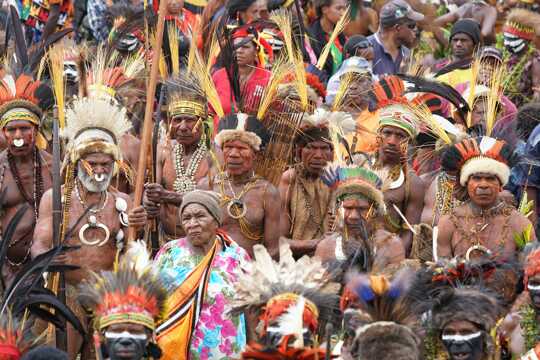
Your boots sink into churned red mud as a line of warriors stamp past, bodies painted in ochre and white, bird-of-paradise plumes shivering with every drumbeat. Bamboo flutes cut through the roar of the crowd. Smoke from roadside grills mixes with sweat, crushed grass, and the sharp tang of betel nut spit on the ground. This is the Mount Hagen Cultural Show, in the highland town of Mount Hagen, in Papua New Guinea’s Western Highlands Province. It’s a massive “sing-sing” festival where dozens of tribes perform traditional songs, war chants, and rhythmic dances in full ceremonial dress for a mix of locals, PNG expats, and a small but serious crew of photographers and backpackers. The energy is raw, chaotic, and very human. The show usually runs over a weekend in August, and it’s worth it if you want culture at full volume, not curated comfort.

Discover everything you want to know in the 📖 Papua New Guinea Travel Guide.
Loading the map 🌍
CLICK TO FILTER
cities
towns
national parks
hikes
beaches
attractions
festivals
regions
SHOW COUNTRY’S BESTSHOW ALL

✨ Why go?
Ranked #2 festival in Papua New Guinea
What makes it a must-see festival

Backpackers flock to the Mount Hagen Cultural Show for a jolt of social energy and a chance to dive into the heart of Papua New Guinea’s vibrant cultures. This isn’t just a festival; it’s a temporary community where you’ll find yourself surrounded by locals and fellow travelers, all buzzing with excitement. The immersive experience of witnessing traditional dances, colorful costumes, and spirited music creates connections that last long after the last drumbeat fades.

Planning your route around this event is a savvy move. Not only does it offer a unique cultural insight, but it’s also surprisingly affordable compared to similar festivals worldwide. You’ll get a front-row seat to a rich tapestry of traditions without breaking the bank.

Plus, it fits seamlessly into longer travel plans. Use … read more 👉
Backpackers flock to the Mount Hagen Cultural Show for a jolt of social energy and a chance to dive into the heart of Papua New Guinea’s vibrant cultures. This isn’t just a festival; it’s a temporary community where you’ll find yourself surrounded by locals and fellow travelers, all buzzing with excitement. The immersive experience of witnessing traditional dances, colorful costumes, and spirited music creates connections that last long after the last drumbeat fades.

Planning your route around this event is a savvy move. Not only does it offer a unique cultural insight, but it’s also surprisingly affordable compared to similar festivals worldwide. You’ll get a front-row seat to a rich tapestry of traditions without breaking the bank.

Plus, it fits seamlessly into longer travel plans. Use it as a launchpad to explore the stunning highlands or the lush landscapes beyond. By aligning your journey with the show, you maximize your time and budget, ensuring that every moment is packed with meaning. This festival isn’t just a stop; it’s a highlight that elevates your entire adventure.
Want to include Mount Hagen Cultural Show in your Papua New Guinea route?
Create a personalized Papua New Guinea itinerary that includes Mount Hagen Cultural Show and the places that fit your trip — based on your travel style, budget, and available time. Get your route in seconds.

Generate my trip

💡 HighlightsMust-see experiences and standout moments

  1. Mass sing-sing performances: Hundreds of performers from different highland tribes gather and perform synchronized dances and chants — it’s raw, loud, and incredibly immersive. The scale and variety (war dances, harvest songs, courtship routines) make it a one-of-a-kind live anthropology lesson you can actually feel in your chest.
  2. Spectacular traditional costumes and headdresses: Expect towering feathered plumes, woven grass skirts, shell and bone ornaments, and face paintings that are literal works of art. Many groups still wear materials and styles unique to their clan, so each costume tells a story you won’t see reproduced anywhere else.
  3. Thundering drums and unique instruments: The kundu drums and giant slit-garamuts set the pace; layered with group singing and vocal calls, the soundscape
read more 👉
  1. Mass sing-sing performances: Hundreds of performers from different highland tribes gather and perform synchronized dances and chants — it’s raw, loud, and incredibly immersive. The scale and variety (war dances, harvest songs, courtship routines) make it a one-of-a-kind live anthropology lesson you can actually feel in your chest.
  2. Spectacular traditional costumes and headdresses: Expect towering feathered plumes, woven grass skirts, shell and bone ornaments, and face paintings that are literal works of art. Many groups still wear materials and styles unique to their clan, so each costume tells a story you won’t see reproduced anywhere else.
  3. Thundering drums and unique instruments: The kundu drums and giant slit-garamuts set the pace; layered with group singing and vocal calls, the soundscape is hypnotic. It’s not background music — the rhythms drive the dances and the whole crowd moves to them.
  4. Living craft demonstrations and markets: You’ll find bilum weaving, carving, body-painting demos, and makers selling necklaces, bags, and carvings right by the performance grounds. Watching someone make traditional crafts by hand (and buying one cheaply) is the best way to take a bit of the festival home.
  5. Competitive pageantry and charged atmosphere: There’s a friendly but fierce competitive edge as tribes vie for best costume, best dance, or loudest chant — that rivalry fuels high energy and drama. Combine that with food stalls, communal fire pits, and locals proudly representing their clans, and the whole event becomes a social feast, not just a show.
Spotted a mistake or missing something? Contact us.

🌤️ When to go?When is the celebration of Mount Hagen Cultural Show?


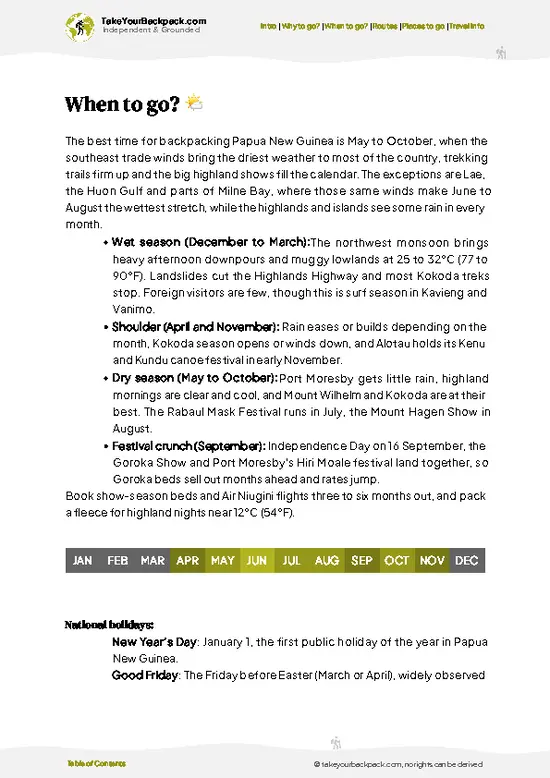
  • Topic: Weather – The festival runs in August, right in Papua New Guinea’s dry season. Expect less rain, which means trails stay firm and your gear stays drier. Rain can turn the dirt roads into mud traps, so timing your visit here is crucial.

  • Topic: Temperature – August temperatures hover around 18-25°C (64-77°F). Cool mornings and evenings keep you alert and comfortable during long days of cultural immersion. Avoid the sticky heat of the wet season that can sap your energy fast.

  • Topic: Daylight Hours – Days stretch about 11 to 12 hours, giving you ample daylight to explore beyond the festival grounds. Early starts and late finishes are doable without rushing, letting you soak in the full vibe.

  • Topic: Crowds – August draws the biggest crowds, including locals and tourists. This means
read more 👉

  • Topic: Weather – The festival runs in August, right in Papua New Guinea’s dry season. Expect less rain, which means trails stay firm and your gear stays drier. Rain can turn the dirt roads into mud traps, so timing your visit here is crucial.

  • Topic: Temperature – August temperatures hover around 18-25°C (64-77°F). Cool mornings and evenings keep you alert and comfortable during long days of cultural immersion. Avoid the sticky heat of the wet season that can sap your energy fast.

  • Topic: Daylight Hours – Days stretch about 11 to 12 hours, giving you ample daylight to explore beyond the festival grounds. Early starts and late finishes are doable without rushing, letting you soak in the full vibe.

  • Topic: Crowds – August draws the biggest crowds, including locals and tourists. This means a lively atmosphere but also higher accommodation prices and busier transport. Book early or prepare for a bustling scene.

  • Topic: Seasonal Activities – The dry season aligns with peak cultural performances and tribal gatherings. You’ll catch the most authentic dances, costumes, and rituals—this is when the show truly pulses with life.

  • Topic: Price Fluctuations – Expect a spike in prices for lodging and flights during the festival. Planning ahead and locking in deals months in advance saves you from last-minute budget shocks.


Pro-tip: Lock your visit in August for the festival’s full energy, but secure your bookings early to dodge inflated costs and logistical headaches.


source: climatestotravel.comJANJanuary: not recommended for travelingFEBFebruary: not recommended for travelingMARMarch: not recommended for travelingAPRApril: not recommended for travelingMAYMay: not recommended for travelingJUNJune: not recommended for travelingJULJuly: not recommended for travelingAUGAugust: excellent for travelingSEPSeptember: not recommended for travelingOCTOctober: not recommended for travelingNOVNovember: not recommended for travelingDECDecember: not recommended for traveling

✈️ The backpacker research shortcutPapua New Guinea Travel Guide

An offline-friendly backpacking guide with optimized travel routes, ranked highlights, transport advice, and the best areas to stay.
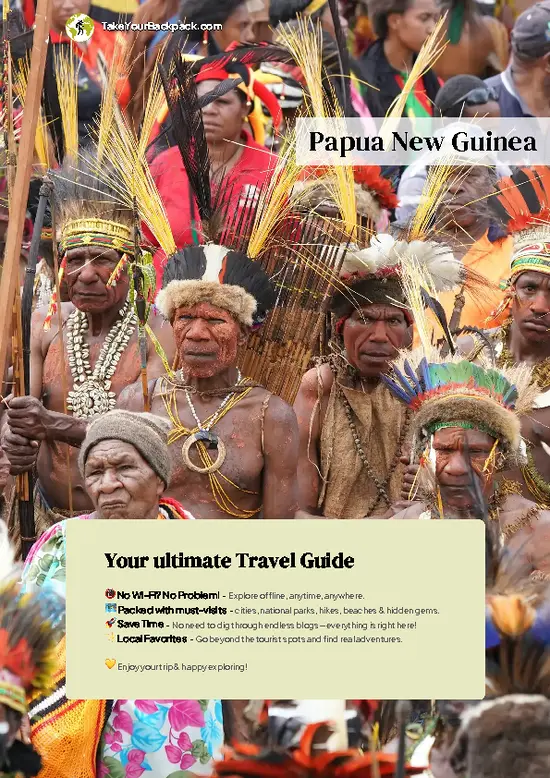
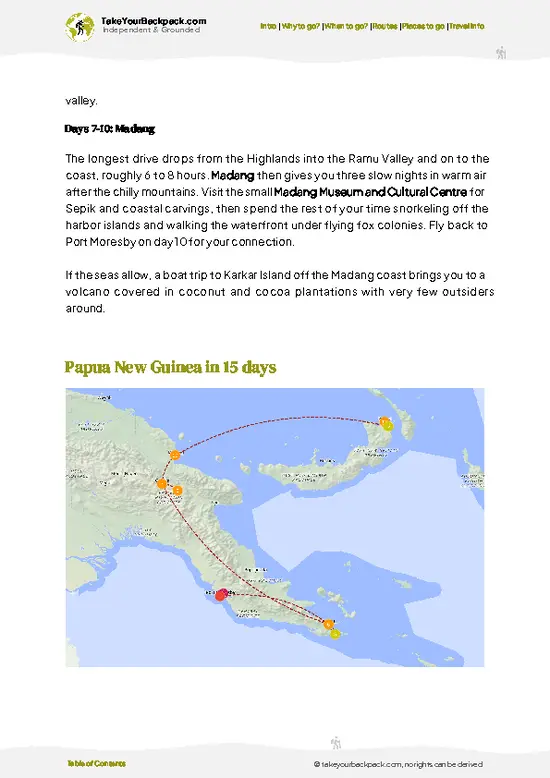
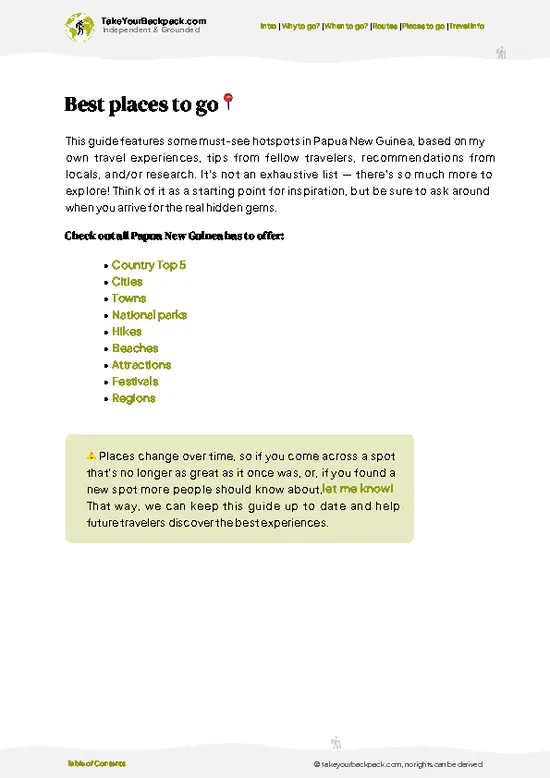
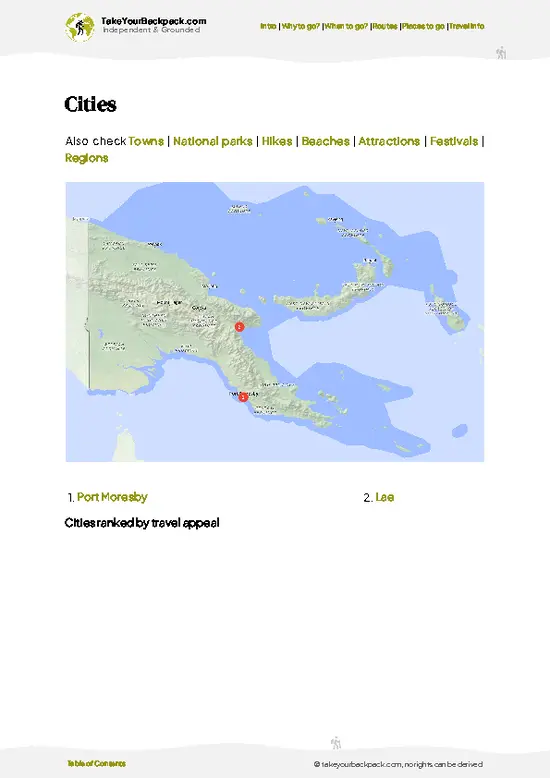
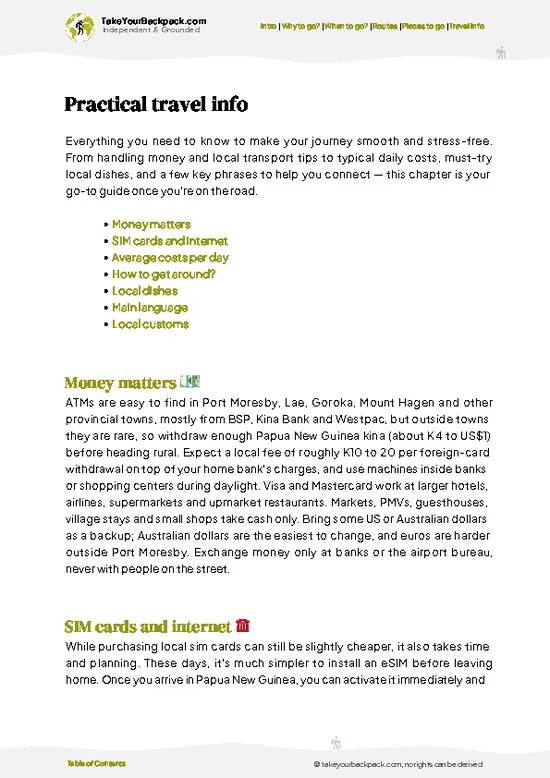
example page 0 from our offline Travel Guide for Papua New Guinea
example page 1 from our offline Travel Guide for Papua New Guinea
example page 2 from our offline Travel Guide for Papua New Guinea
example page 3 from our offline Travel Guide for Papua New Guinea
example page 4 from our offline Travel Guide for Papua New Guinea
example page 5 from our offline Travel Guide for Papua New Guinea
example page 6 from our offline Travel Guide for Papua New Guinea
example page 7 from our offline Travel Guide for Papua New Guinea
The digital guide (319 pages) contains:
86 highlights, ranked by travel appeal
Optimized 5, 10 & 15-day travel routes
Cities, national parks, landmarks, beaches
How to get around
Offline-friendly for travel without Wi-Fi
👉 Click to see all 30+ guide features

📅 Plan smarter in minutes, not weeks
Month by month travel advice
Festivals & national holidays
Budget expectations

🗺️ Go to the right places, skip the overrated ones
Honest pros & cons of destinations
Top hikes, parks & viewpoints
Lesser-known places most travelers miss
Clear “worth it vs skip it” guidance

🛏️ Travel smoothly without rookie mistakes
Best areas to stay
Transport systems explained simply
Common scams & safety advice
SIM cards, money & practical tips

🌍 Understand the country, not just visit it
Culture & traditions
52 Essential phrases & customs
Festivals worth planning around
Traveler-friendly historical context
Insights that make places more meaningful

📱 Built for real travel conditions
Fully downloadable PDF
Works completely offline
Optimized for phone use
Useful in remote areas & buses
Everything in one place
Save weeks of stressful planning
Get instant access to your full guide. 30‑day money-back guarantee.


By proceeding you agree to our terms.
Sent to your inbox immediately after payment • 100% Secure Checkout
Best Backpacking Travel Advisor 2025 tourism awardBest Backpacking
Travel Advisor
2025
What others say about Take Your Backpack Guides:
⭐⭐⭐⭐⭐
Fantastic, amazing amount of information!
⭐⭐⭐⭐⭐
My goodness this is amazing, it's what I've been looking for hats off too you!
⭐⭐⭐⭐⭐
I think this is absolutely BRILLIANT
⭐⭐⭐⭐
Very complete and informative. It's still missing places, but I gotta to commend you
⭐⭐⭐⭐⭐
This is truly amazing, thank you, can't wait to explore it with my kids!
⭐⭐⭐⭐⭐
Awesome resource, thank you!
⭐⭐⭐⭐⭐
This is amazing! Can't wait to explore the ones I haven't seen
⭐⭐⭐⭐
I love this! Well done, great idea.
⭐⭐⭐⭐⭐
Thanks for taking the time to make this gem!
⭐⭐⭐⭐⭐
This might be the best website I've ever seen.
⭐⭐⭐⭐⭐
Congratulations, and thank you so much for your work; it's incredibly valuable.
⭐⭐⭐⭐
In all seriousness I think you did a great job pointing out the important spots
⭐⭐⭐⭐⭐
10/10 very good
⭐⭐⭐⭐⭐
As someone who's only just starting to visit regularly this is awesome, thank you.
⭐⭐⭐⭐
Thank you very much! I'm going to visit my dad, it's going to be very useful!
⭐⭐⭐⭐⭐
This is really cool! We'll be travelling for the first time and this definitely come in handy.
⭐⭐⭐⭐⭐
You are now our minister of culture, congratulations 👨‍💼
⭐⭐⭐⭐⭐
Just wanted to tell you that this is a pearl! Going to follow your recommendations.
⭐⭐⭐⭐⭐
This is so cool. I'll definitely be using the resource for my travels soon.
⭐⭐⭐⭐⭐
This is very impressive! Good work.
⭐⭐⭐⭐⭐
This is an amazing and informative site. Very well done!

🛏️ Where to stay?Best areas to stay in Papua New Guinea

When you’re gearing up for the Mount Hagen Cultural Show, your choice of where to stay can make or break your experience. Aim for the heart of Mount Hagen itself. This bustling town is your best bet for safety and social vibes. You’ll find a mix of budget-friendly accommodations that attract fellow backpackers, making it easy to swap stories and tips over a shared meal.

Look for spots near the main market. It’s a hive of activity, and you’ll feel the pulse of local life. Plus, it’s a short walk to the festival grounds, so you can roll out of bed and dive straight into the action without wasting … read more 👉
When you’re gearing up for the Mount Hagen Cultural Show, your choice of where to stay can make or break your experience. Aim for the heart of Mount Hagen itself. This bustling town is your best bet for safety and social vibes. You’ll find a mix of budget-friendly accommodations that attract fellow backpackers, making it easy to swap stories and tips over a shared meal.

Look for spots near the main market. It’s a hive of activity, and you’ll feel the pulse of local life. Plus, it’s a short walk to the festival grounds, so you can roll out of bed and dive straight into the action without wasting energy on transport.

Another option is to stay near the airport. While it might seem a bit removed, it offers a quieter atmosphere and often has budget lodgings. You can catch a quick ride into town for the festivities, but you’ll appreciate the peace when you need to recharge.

Avoid the tourist traps that promise luxury but drain your wallet. Instead, focus on places where you can connect with other travelers. This is where the real adventure begins—sharing laughs, planning your next move, and soaking in the vibrant culture that surrounds you.

👛 Costs (as of 30 July 2026)Money, prices, and spending tips

The Mount Hagen Cultural Show in Papua New Guinea is a vibrant showcase of local traditions, but navigating the costs can be tricky. Here’s what you need to know to keep your budget intact while maximizing your experience.
  • Festival Tickets: Expect to pay around $10 to $20 USD for a day pass. This grants you access to performances featuring traditional dances, music, and cultural displays. Buying tickets at the venue is straightforward, but consider purchasing in advance during peak times to avoid long lines.
  • Accommodation: Options range from budget hostels at about $15 to $30 USD per night to mid-range hotels costing $50 to $100 USD. Booking early is crucial, as places fill up fast during the festival. Look for local guesthouses for a more authentic experience, but be prepared for basic amenities.
read more 👉
The Mount Hagen Cultural Show in Papua New Guinea is a vibrant showcase of local traditions, but navigating the costs can be tricky. Here’s what you need to know to keep your budget intact while maximizing your experience.
  • Festival Tickets: Expect to pay around $10 to $20 USD for a day pass. This grants you access to performances featuring traditional dances, music, and cultural displays. Buying tickets at the venue is straightforward, but consider purchasing in advance during peak times to avoid long lines.
  • Accommodation: Options range from budget hostels at about $15 to $30 USD per night to mid-range hotels costing $50 to $100 USD. Booking early is crucial, as places fill up fast during the festival. Look for local guesthouses for a more authentic experience, but be prepared for basic amenities.
  • Local Transport: Getting around Mount Hagen can be done via public buses or shared taxis. Budget around $5 to $15 USD for local transport. If you’re venturing further, consider hiring a private vehicle, which can cost $50 to $100 USD per day. Always negotiate prices upfront to avoid surprises.
  • Food & Drinks: Street food is your best friend here. You can enjoy local dishes for as little as $2 to $5 USD per meal. Restaurants will set you back about $10 to $20 USD for a decent meal. Keep an eye out for local markets; they offer not just food but a taste of the culture.
  • Miscellaneous Expenses: Factor in around $20 to $50 USD for souvenirs, tips, or unexpected costs. This could include anything from local crafts to small fees for photography in certain areas. Always carry some cash, as card payments may not be accepted everywhere.

Stay sharp and plan ahead. This way, you can focus on the vibrant culture and energy of the festival without worrying about your wallet.


source: papuanewguinea.travel
⚠️ Prices can change and everyone travels differently, so take this as a rough guide. Hope it helps you plan your adventure!

🍲 FoodEating & Drinking in Mount Hagen Cultural Show

At the Mount Hagen Cultural Show, food and drinks are as vibrant as the performances. You’ll find local specialties like mumu, a traditional dish where meat and vegetables are slow-cooked in an underground oven, infusing every bite with smoky goodness. Don’t miss the chance to try sweet potato and taro—they’re staples here, often served with a side of tangy greens.

Festival stalls buzz with energy. Vendors whip up sago pancakes and banana fritters that are crispy on the outside and soft within. Grab a cup of kula, a sweet, refreshing drink made from local fruits, to wash it all down. It’s a burst of tropical flavor that perfectly complements the hearty fare.

Etiquette is key. Be prepared to share a table and chat with locals; it’s all part of the experience. Lines can get long, so patience … read more 👉
At the Mount Hagen Cultural Show, food and drinks are as vibrant as the performances. You’ll find local specialties like mumu, a traditional dish where meat and vegetables are slow-cooked in an underground oven, infusing every bite with smoky goodness. Don’t miss the chance to try sweet potato and taro—they’re staples here, often served with a side of tangy greens.

Festival stalls buzz with energy. Vendors whip up sago pancakes and banana fritters that are crispy on the outside and soft within. Grab a cup of kula, a sweet, refreshing drink made from local fruits, to wash it all down. It’s a burst of tropical flavor that perfectly complements the hearty fare.

Etiquette is key. Be prepared to share a table and chat with locals; it’s all part of the experience. Lines can get long, so patience is your ally. Cash is king here—many stalls don’t accept cards, so stash some kina before diving in. Serving sizes are generous, so consider splitting dishes to sample more flavors without overdoing it.

This festival isn’t just about food; it’s about connecting with the culture. Savor every bite, and let the atmosphere fuel your adventure.

Other Papua New Guinean festivals near Mount Hagen Cultural Show

Explore more nearby:

  • Enga Cultural Show—Engan body paint, clay masks, highland music| 95 km away
  • Goroka Show—tribal dress, highland sing-sings, mass dance displays| 132 km away
  • Madang Festival—coastal dances, canoe processions, Madang crafts| 189 km away

💡 Not sure where to go next?
Create a personalized itinerary for Papua New Guinea including Mount Hagen Cultural Show and the places that fit your trip.

Generate my itinerary

👉 Discover all festivals

Or checkout all Papua New Guinea has to offer (think cities, towns, villages, national parks, hikes, beaches, festivals)
Country photo of Papua New Guinea

We 💚 feedbackFinal thoughts on celebrating the Mount Hagen Cultural Show

The Mount Hagen Cultural Show is a whirlwind of color and energy. You’ll feel the pulse of tradition in every drumbeat and dance. The best surprise? The genuine warmth of the performers; they’re not just putting on a show, they’re sharing their stories. But here’s the catch: don’t underestimate the sun. Bring sunscreen and stay hydrated. This isn’t just a spectacle; it’s an experience that’ll stick with you long after the last dance. Embrace it fully, and you’ll leave with a piece of Papua New Guinea in your heart.

✍️ Help improve this page!
The information on this page is based on in-depth research, insights shared by experienced travelers, and feedback from the local travel community in Papua New Guinea. While every effort is made to keep the information accurate and current, conditions can change — so if you spot anything incorrect or outdated, please get in touch.


🙋‍♂️ Give feedback

👋 Meet the founderWho’s Behind Take Your Backpack?

Johan, backpacker and founder of TakeYourBackpackHi, I’m Johan (Netherlands 🇳🇱), the creator of TakeYourBackpack. Over the past decade, I’ve backpacked through 80+ countries across six continents, gaining extensive experience with independent travel, long-term trips, and overland routes.

This site is built on a combination of firsthand travel experience and carefully curated insights from other backpackers. Many guides are based on places I’ve personally visited, while others bring together tips, observations, and practical advice shared by trusted travelers I’ve met along the way.

The goal is to provide realistic, experience-driven guidance — not generic itineraries — so you can explore destinations with better context, clearer expectations, and more confidence.

Get full country guide •
Instant download • 86 highlights • Full Offline guide