×

Paraguay🇵🇾 | citiesPilarRiver costanera, textile outlets, chipa market, old port | things to do and best time to go

Explore Pedro Juan CaballeroExplore Itauguá

Backpacking in Pilar
👌 Worth visitingcity ranked #5
By Johan Kruseman 🇳🇱 | Updated November 7, 2026

Pilar sits directly across the Paraguay River from Formosa province in Argentina, and the two countries trade people, fuel and groceries daily, so prices here follow Argentine exchange swings. The city lies in the southwest of Paraguay, in the Ñeembucú department, roughly 380 km from Asunción by road. I walked the riverside costanera at the end of the afternoon and bought a bag of warm chipa from a stall near the old port, then ate it on the seawall watching the boats cross. That small routine is the best of Pilar. The old streets, the textile tradition and the river are worth a slow day. The nightlife and the museum list are thin, so do not plan a long stay around them. It suits travelers who like quiet border towns and local food, and it will bore anyone who needs hostels, parties and a checklist of sights.

Part of Backpacking in Paraguay: all 65 places on one map, with routes and the best time to go.
Discover everything you want to know in the 📖 Paraguay Travel Guide.


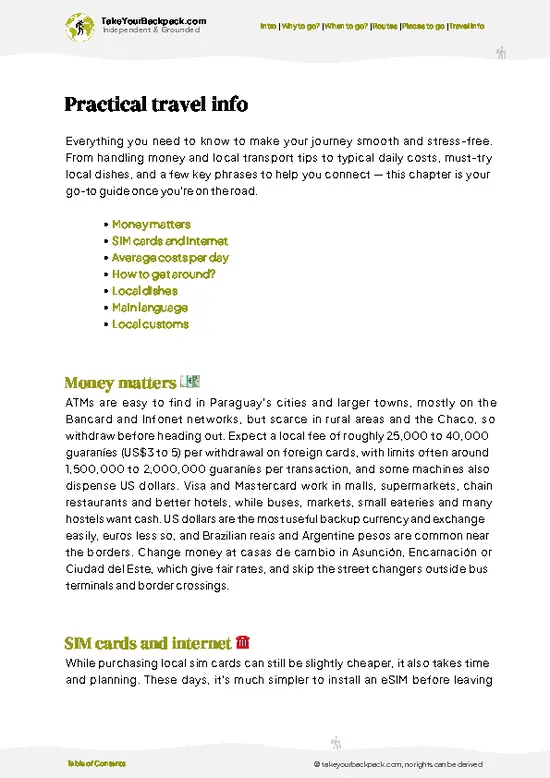
example page 0 from our offline Travel Guide for Paraguay
example page 1 from our offline Travel Guide for Paraguay
example page 2 from our offline Travel Guide for Paraguay
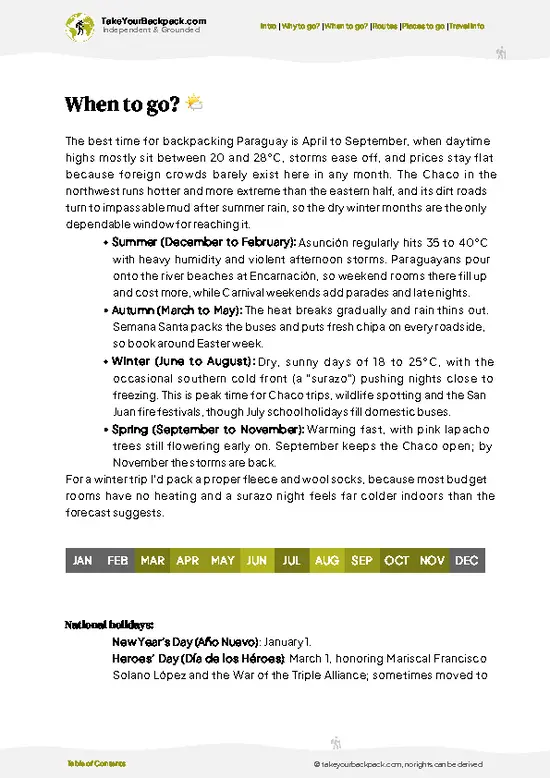
example page 3 from our offline Travel Guide for Paraguay
example page 4 from our offline Travel Guide for Paraguay
example page 5 from our offline Travel Guide for Paraguay
example page 6 from our offline Travel Guide for Paraguay
example page 7 from our offline Travel Guide for Paraguay
Loading the map 🌍
CLICK TO FILTER
cities
towns
landmarks
national parks
hikes
beaches
attractions
festivals
regions
SHOW COUNTRY’S BESTSHOW ALL

✨ Why go?
Ranked #5 city in Paraguay
Why Pilar should be on your travel list

Pilar earns its place on a route for one clear reason: it is the quietest working river crossing in southern Paraguay, and it links well with the Argentine side. If you are heading between Asunción and northern Argentina by a less-used way, it breaks the journey without the chaos of larger border cities. The town is flat and compact, so you can cover the center, the waterfront and the market on foot in a morning. It is also known for its cotton textile mill, Manufactura de Pilar, and for Ñeembucú wetland country on its doorstep, which gives you something to look at beyond the town itself. Do not expect many hostels or a social scene. Pilar works best as one or two slow nights, a chance to eat river fish, talk with locals and see an ordinary Paraguayan town that few foreigners reach. If you want sights every hour, keep moving.

💡 HighlightsMust-see experiences and standout moments

  1. Costanera and Paraguay River waterfront: the town’s main public space, with views across to Argentina and fishermen working the bank. Free, 1 hour. Late afternoon is best.
  2. Catedral de Nuestra Señora del Pilar: the central church on the plaza, worth a short look at its interior and square. Free, 20 to 30 minutes. Visit in the morning.
  3. Plaza Mariscal López and the old center: the tree-shaded grid of low colonial-style buildings where local life plays out. Free, 45 minutes. Early evening is lively.
  4. Textile outlets: Pilar is known for its cotton mill, Manufactura de Pilar, founded in 1930, and outlet shops sell its towels, bedding and clothing. Expect US$5 to 30 for small items; 30 to 60 minutes. Go on weekday mornings.
  5. Mercado Municipal: the place for chipa, mbejú, fried river fish and fresh produce.
… read more 👉
  1. Costanera and Paraguay River waterfront: the town’s main public space, with views across to Argentina and fishermen working the bank. Free, 1 hour. Late afternoon is best.
  2. Catedral de Nuestra Señora del Pilar: the central church on the plaza, worth a short look at its interior and square. Free, 20 to 30 minutes. Visit in the morning.
  3. Plaza Mariscal López and the old center: the tree-shaded grid of low colonial-style buildings where local life plays out. Free, 45 minutes. Early evening is lively.
  4. Textile outlets: Pilar is known for its cotton mill, Manufactura de Pilar, founded in 1930, and outlet shops sell its towels, bedding and clothing. Expect US$5 to 30 for small items; 30 to 60 minutes. Go on weekday mornings.
  5. Mercado Municipal: the place for chipa, mbejú, fried river fish and fresh produce. A meal costs about US$2 to 5, and an hour is plenty. Go in the morning.
  6. Old port area: a rough, working edge of the river where small boats and cargo come and go. Free, 30 minutes. Late afternoon has the best activity.
  7. Local history museum visit: a small municipal collection on the town’s river and war-era past. Usually a few dollars or free, about 30 minutes. Opening hours vary, so go in the morning.
Day trips from Pilar include the wetlands of Ñeembucú and the Argentine town of Formosa across the river, while Humaitá and its ruined church on the Paraguay River are also within reach. If time is short, skip the museum and spend the hour at the waterfront.
Spotted a mistake or missing something? Contact us.

🏘️ NeighborhoodsKey areas and districts to know

Pilar is small enough that you can sort it into a few areas, and only two of them need real time.
  • Costanera and the riverfront: The long promenade along the Paraguay River is the best place in town to spend an evening. Locals gather with tereré thermoses at sunset, and kiosks sell snacks. Fully walkable, and worth an hour or two.
  • Plaza and the old center: Around Plaza Mariscal López you find the cathedral, a few older low buildings, banks, pharmacies and cheap lunch counters. It is quiet and flat, and a loop takes under an hour. Do not expect much sightseeing beyond that.
  • Market area: The streets near the municipal market are the practical heart of town, with produce, cheap meals, clothing stalls and bus-stop noise. Come in the morning, when it is busiest. Skip it after dark.
  • Textile district
… read more 👉
Pilar is small enough that you can sort it into a few areas, and only two of them need real time.
  • Costanera and the riverfront: The long promenade along the Paraguay River is the best place in town to spend an evening. Locals gather with tereré thermoses at sunset, and kiosks sell snacks. Fully walkable, and worth an hour or two.
  • Plaza and the old center: Around Plaza Mariscal López you find the cathedral, a few older low buildings, banks, pharmacies and cheap lunch counters. It is quiet and flat, and a loop takes under an hour. Do not expect much sightseeing beyond that.
  • Market area: The streets near the municipal market are the practical heart of town, with produce, cheap meals, clothing stalls and bus-stop noise. Come in the morning, when it is busiest. Skip it after dark.
  • Textile district and the outskirts: Pilar is known for its cotton textile industry, and factory outlets on the edges sell towels, bedding and clothing at low prices. A moto-taxi is easier than walking here, since distances are long and shade is thin.
Nightlife is modest and mostly happens along the riverfront on weekends.

⌛️ 1 dayWhat you can realistically do in a day

8:00 AM, Mercado Municipal: Start here because the market is liveliest in the morning and breakfast is cheap. Try chipa and a cup of hot mate or coffee, then look at the produce and fish stalls. Walk five minutes to the plaza.
9:30 AM, Plaza Mariscal López and the cathedral: Sit under the trees, then step inside the cathedral. The plaza shows how the town runs, with office workers, motorbikes and old men playing cards. It is flat, so the stroll is easy.
11:00 AM, Textile shops: Visit a store selling cotton towels, bedding and clothing from the local mill. It is a small, practical souvenir and the clearest link to local craft.
1:00 PM, Lunch near the center: Order fried river fish or a plain sopa paraguaya at a family restaurant. Take a long break through the hottest part of the day.
3:30 PM, Old … read more 👉
8:00 AM, Mercado Municipal: Start here because the market is liveliest in the morning and breakfast is cheap. Try chipa and a cup of hot mate or coffee, then look at the produce and fish stalls. Walk five minutes to the plaza.
9:30 AM, Plaza Mariscal López and the cathedral: Sit under the trees, then step inside the cathedral. The plaza shows how the town runs, with office workers, motorbikes and old men playing cards. It is flat, so the stroll is easy.
11:00 AM, Textile shops: Visit a store selling cotton towels, bedding and clothing from the local mill. It is a small, practical souvenir and the clearest link to local craft.
1:00 PM, Lunch near the center: Order fried river fish or a plain sopa paraguaya at a family restaurant. Take a long break through the hottest part of the day.
3:30 PM, Old port: This working edge of town is usually skipped. Watch small boats load and unload and talk to people fishing from the bank. Keep bags close and photograph politely.
5:00 PM, Costanera: Walk the waterfront with a cold drink and watch Argentina across the water. This is the best view in town. Stay until dusk, when families come out and the promenade fills.
7:30 PM, Dinner on the plaza: Finish with grilled meat or empanadas at a casual spot, and walk back to your lodging.

🌤️ When to go?Weather, crowds, and seasonal trade-offs

  • Autumn (March to May): Highs of 22 to 29°C (72 to 84°F) and lower humidity make this the most comfortable stretch. Crowds are minimal and prices stay flat.
  • Winter (June to August): Days are mild at 18 to 24°C (64 to 75°F), but cold fronts can drop nights to 3 to 8°C (37 to 46°F). Daylight is shorter, about 10 hours, and skies are often clear.
  • Spring (September to November): Warming quickly to 25 to 33°C (77 to 91°F), with sudden thunderstorms. Good for riverside evenings.
  • Summer (December to February): Very hot and sticky, at 30 to 38°C (86 to 100°F), with heavy rain and about 14 hours of daylight. Local holidays around Christmas and New Year raise bus demand, and the Carnival period brings festivities along the river.
Aim for April or May, when the heat has broken and the roads are usually dry.

source: climatestotravel.comJANJanuary: fair for travelingFEBFebruary: fair for travelingMARMarch: good for travelingAPRApril: highly recommended for travelingMAYMay: good for travelingJUNJune: highly recommended for travelingJULJuly: highly recommended for travelingAUGAugust: highly recommended for travelingSEPSeptember: highly recommended for travelingOCTOctober: good for travelingNOVNovember: good for travelingDECDecember: fair for traveling
paraguay-city-pilar v1
© Google |

✈️ The backpacker research shortcutParaguay Travel Guide

What the free pages can't give you: ready-made routes, every place ranked, and it works offline. All in 1 guide.
example page 0 from our offline Travel Guide for Paraguay
example page 1 from our offline Travel Guide for Paraguay
example page 2 from our offline Travel Guide for Paraguay
example page 3 from our offline Travel Guide for Paraguay
example page 4 from our offline Travel Guide for Paraguay
example page 5 from our offline Travel Guide for Paraguay
example page 6 from our offline Travel Guide for Paraguay
example page 7 from our offline Travel Guide for Paraguay
The digital guide (226 pages) contains:-page digital guide:
✅ Ready-made 5, 10 & 15-day routes
✅ All 65 places ranked, so you skip the overrated ones
✅ Works offline, all in 1 guide
✅ Cities, national parks, landmarks, beaches
✅ How to get around
👉 Click to see all 30+ guide features

📅 Plan smarter in minutes, not weeks
✅ Month by month travel advice
✅ Festivals & national holidays
✅ Budget expectations

🗺️ Go to the right places, skip the overrated ones
✅ Honest pros & cons of destinations
✅ Top hikes, parks & viewpoints
✅ Lesser-known places most travelers miss
✅ Clear “worth it vs skip it” guidance

🛏️ Travel smoothly without rookie mistakes
✅ Best areas to stay
✅ Transport systems explained simply
✅ Common scams & safety advice
✅ SIM cards, money & practical tips

🌍 Understand the country, not just visit it
✅ Culture & traditions
✅ 52 Essential phrases & customs
✅ Festivals worth planning around
✅ Traveler-friendly historical context
✅ Insights that make places more meaningful

📱 Built for real travel conditions
✅ Fully downloadable PDF
✅ Works completely offline
✅ Optimized for phone use
✅ Useful in remote areas & buses
✅ All in 1 guide
Stop searching, start planning
Get instant access to your full guide. 30‑day money-back guarantee.


By proceeding you agree to our terms.
Sent to your inbox immediately after payment • 100% Secure Checkout
Best Backpacking Travel Advisor 2025 tourism awardBest Backpacking
Travel Advisor
2025
What others say about Take Your Backpack Guides:
⭐⭐⭐⭐⭐
Fantastic, amazing amount of information!
⭐⭐⭐⭐⭐
My goodness this is amazing, it's what I've been looking for hats off too you!
⭐⭐⭐⭐⭐
I think this is absolutely BRILLIANT
⭐⭐⭐⭐
Very complete and informative. It's still missing places, but I gotta to commend you
⭐⭐⭐⭐⭐
This is truly amazing, thank you, can't wait to explore it with my kids!
⭐⭐⭐⭐⭐
Awesome resource, thank you!
⭐⭐⭐⭐⭐
This is amazing! Can't wait to explore the ones I haven't seen
⭐⭐⭐⭐
I love this! Well done, great idea.
⭐⭐⭐⭐⭐
Thanks for taking the time to make this gem!
⭐⭐⭐⭐⭐
This might be the best website I've ever seen.
⭐⭐⭐⭐⭐
Congratulations, and thank you so much for your work; it's incredibly valuable.
⭐⭐⭐⭐
In all seriousness I think you did a great job pointing out the important spots
⭐⭐⭐⭐⭐
10/10 very good
⭐⭐⭐⭐⭐
As someone who's only just starting to visit regularly this is awesome, thank you.
⭐⭐⭐⭐
Thank you very much! I'm going to visit my dad, it's going to be very useful!
⭐⭐⭐⭐⭐
This is really cool! We'll be travelling for the first time and this definitely come in handy.
⭐⭐⭐⭐⭐
You are now our minister of culture, congratulations 👨‍💼
⭐⭐⭐⭐⭐
Just wanted to tell you that this is a pearl! Going to follow your recommendations.
⭐⭐⭐⭐⭐
This is so cool. I'll definitely be using the resource for my travels soon.
⭐⭐⭐⭐⭐
This is very impressive! Good work.
⭐⭐⭐⭐⭐
This is an amazing and informative site. Very well done!

🛏️ Where to stay?How to pick the right area

The center near Plaza Mariscal López is the best bet for a budget bed in Pilar. Options are few, mostly simple guesthouses and small hotels with private rooms at roughly US$15 to 30, and dorm-style hostels are scarce, so book ahead by message or phone.
Staying within a few blocks of the plaza puts you near the bus terminal, ATMs, pharmacies and lunch counters, and you can walk everywhere. Streets are quiet at night and walking back after dinner is comfortable. Noise is mostly motorbikes and the odd roosting dog.
The second option is the stretch close to the riverfront. It is calmer still, with breezes … read more 👉
The center near Plaza Mariscal López is the best bet for a budget bed in Pilar. Options are few, mostly simple guesthouses and small hotels with private rooms at roughly US$15 to 30, and dorm-style hostels are scarce, so book ahead by message or phone.
Staying within a few blocks of the plaza puts you near the bus terminal, ATMs, pharmacies and lunch counters, and you can walk everywhere. Streets are quiet at night and walking back after dinner is comfortable. Noise is mostly motorbikes and the odd roosting dog.
The second option is the stretch close to the riverfront. It is calmer still, with breezes in summer, and it keeps the promenade at your door. Fewer places operate there, so rooms may be pricier and you may need a short moto-taxi ride to the market or terminal.
Avoid the far outskirts near the textile factories unless you have a vehicle, as distances are long and transport thins out after dark. Air conditioning is worth paying a few extra dollars for from November to March.

🚌 Getting aroundTransportation options and practical tips

A moto-taxi ride within Pilar costs roughly US$0.80 to 1.50, paid in cash in guaraníes at the end of the trip. Agree on the fare before you climb on, because there are no meters. The town is flat and compact, so most visitors walk, then use a motorbike for longer hops like the textile outlets. Public transport is limited to intercity buses, and traffic is light.
  • Walking: The center, plaza and riverfront promenade are all within about 15 minutes of each other. Worth doing on foot, though midday heat in summer makes it tiring.
  • Moto-taxi: The fastest and cheapest way to cross town, at US$0.80 to 1.50 per ride. Drivers wait near the plaza and market. Helmets are not always offered, so ask.
  • Taxi: A few cars operate from the center and bus terminal. Expect US$2 to 4 for most trips in town. Call ahead
… read more 👉
A moto-taxi ride within Pilar costs roughly US$0.80 to 1.50, paid in cash in guaraníes at the end of the trip. Agree on the fare before you climb on, because there are no meters. The town is flat and compact, so most visitors walk, then use a motorbike for longer hops like the textile outlets. Public transport is limited to intercity buses, and traffic is light.
  • Walking: The center, plaza and riverfront promenade are all within about 15 minutes of each other. Worth doing on foot, though midday heat in summer makes it tiring.
  • Moto-taxi: The fastest and cheapest way to cross town, at US$0.80 to 1.50 per ride. Drivers wait near the plaza and market. Helmets are not always offered, so ask.
  • Taxi: A few cars operate from the center and bus terminal. Expect US$2 to 4 for most trips in town. Call ahead or ask your accommodation to arrange one for early departures.
  • Intercity bus: Buses leave from the terminal to Asunción (about 5 to 6 hours, US$10 to 15), to Formosa across the border in Argentina, and to Humaitá and Encarnación on the national route network. Service is daily, with the first departures early in the morning and the last in the evening. Book longer routes a day ahead in holiday periods.
  • Bicycle: Some locals ride, and the flat streets suit it. Rentals are not easy to find, so do not plan on it unless your lodging lends bikes.
For a stay of one or two days, you will barely need anything beyond your feet and a moto-taxi.

👛 Costs (as of 7 November 2026)What things cost and how to budget

Expect to spend about US$38 a day in Pilar on a tight budget, since the town is cheap and has few tourist extras.
CategoryBudget RangeLocal Reality
Dorm accommodation (high season)US$12 to 20Dorms are scarce, so a simple private room is the norm.
Dorm accommodation (off-season)US$10 to 16Slightly lower rates from March to August.
MealsUS$8 to 14Market and lunch counter plates cost US$3 to 6.
Local transportUS$2 to 5Moto-taxi rides are US$0.80 to 1.50.
City transport passNot availableNo pass exists, you pay per ride in cash.
Basic activities/entry feesUS$3 to 10Most sights are free, guided wetland trips cost more.
MiscellaneousUS$3 to 6Water, snacks, repellent and sunscreen.
Total Daily BudgetUS$38 to 71About US$38 at the low end, using the high season bed at US$12 plus the lowest figures.
Carry small … read more 👉
Expect to spend about US$38 a day in Pilar on a tight budget, since the town is cheap and has few tourist extras.
CategoryBudget RangeLocal Reality
Dorm accommodation (high season)US$12 to 20Dorms are scarce, so a simple private room is the norm.
Dorm accommodation (off-season)US$10 to 16Slightly lower rates from March to August.
MealsUS$8 to 14Market and lunch counter plates cost US$3 to 6.
Local transportUS$2 to 5Moto-taxi rides are US$0.80 to 1.50.
City transport passNot availableNo pass exists, you pay per ride in cash.
Basic activities/entry feesUS$3 to 10Most sights are free, guided wetland trips cost more.
MiscellaneousUS$3 to 6Water, snacks, repellent and sunscreen.
Total Daily BudgetUS$38 to 71About US$38 at the low end, using the high season bed at US$12 plus the lowest figures.
Carry small cash in guaraníes, because many small places do not take cards, and eat your main meal at lunch, when set menus are cheapest.


source: senatur.gov.py
⚠️ Prices can change and everyone travels differently, so take this as a rough guide. Hope it helps you plan your adventure!

🚌 Day tripsShort trips worth adding

Pilar sits in a quiet corner of southwest Paraguay, so day trips are about river country and border towns rather than big sights.Ñeembucú Wetlands: The Ñeembucú marshes and lagoons spread around town and hold capybaras, caimans and large numbers of waterbirds. A local guide with a car or boat costs about US$40 to 80 for a half day, split among a group. Go in the cooler months when the mud is drier. First-timers often set out without a guide and get stuck on unpaved tracks after rain.
Humaitá: The ruined church and riverside fortress remains here mark one of the defining sites of the Paraguayan War. It lies about 1 to 1.5 hours by road, with buses at around US$3 to 5 each way. Plan a morning visit, since return buses thin out in the afternoon. Entry is cheap or free.
Formosa, Argentina: Crossing … read more 👉
Pilar sits in a quiet corner of southwest Paraguay, so day trips are about river country and border towns rather than big sights.Ñeembucú Wetlands: The Ñeembucú marshes and lagoons spread around town and hold capybaras, caimans and large numbers of waterbirds. A local guide with a car or boat costs about US$40 to 80 for a half day, split among a group. Go in the cooler months when the mud is drier. First-timers often set out without a guide and get stuck on unpaved tracks after rain.
Humaitá: The ruined church and riverside fortress remains here mark one of the defining sites of the Paraguayan War. It lies about 1 to 1.5 hours by road, with buses at around US$3 to 5 each way. Plan a morning visit, since return buses thin out in the afternoon. Entry is cheap or free.
Formosa, Argentina: Crossing the river by the border route gives you a very different city with a larger riverside and more shopping. Count on 1 to 2 hours including formalities, and US$5 to 15 for transport. Carry your passport and check entry rules beforehand. Many people forget that Argentine banks and shops close in the afternoon siesta.
Pilar Textile Outlets: A short ride to the factory shops on the edge of town lets you buy cotton towels and bedding at local prices, often US$3 to 15 per item. Weekday mornings work best.

🍲 FoodEating & Drinking in Pilar

Pilar sits on the Paraguay River, so river fish is the local specialty. Look for surubí or dorado grilled over coals or fried in thick steaks, often served with mandioca and a squeeze of lemon. A bowl of sopa de pescado or a fish milanesa makes a cheap, filling lunch at about US$4 to 8.
Pilar is also known for textile production, so working-class lunch counters near the factories and the market serve quick plates of rice, beef and salad at low prices. The municipal market is the place for fresh chipa, empanadas, fruit and cold drinks in the morning.
For drinks, tereré is part of daily life and you will see thermoses everywhere along the riverfront promenade in the evening. Kiosks there sell snacks, cold beer and grilled meat, and it is the easiest place to sit with locals. Sit-down restaurants … read more 👉
Pilar sits on the Paraguay River, so river fish is the local specialty. Look for surubí or dorado grilled over coals or fried in thick steaks, often served with mandioca and a squeeze of lemon. A bowl of sopa de pescado or a fish milanesa makes a cheap, filling lunch at about US$4 to 8.
Pilar is also known for textile production, so working-class lunch counters near the factories and the market serve quick plates of rice, beef and salad at low prices. The municipal market is the place for fresh chipa, empanadas, fruit and cold drinks in the morning.
For drinks, tereré is part of daily life and you will see thermoses everywhere along the riverfront promenade in the evening. Kiosks there sell snacks, cold beer and grilled meat, and it is the easiest place to sit with locals. Sit-down restaurants near the plaza open mainly for lunch and dinner, and many close in the afternoon heat.

🛡️ SafetyScams, Hazards, and Annoyances

Pilar is a calm, small town where petty crime is uncommon and most visitors have no problems. Daytime is relaxed in the center, the riverfront and the market. At night, stick to the lit streets around the plaza and the promenade, and use a moto-taxi rather than walking through dark edges of town. Solo travelers, including women, generally report no more than curious looks and friendly questions, though a firm no is the best response to persistent offers. Keep your phone and bag close in the market, where pickpocketing is possible but rare. The more common annoyances are practical: unmetered moto-taxis where the fare must be agreed first, stray dogs at night, and strong sun and mosquitoes near the river and wetlands. Use repellent and carry water. If you cross into Argentina, keep your passport on you and check opening hours.

FAQTraveler FAQ

One to two days is enough for Pilar. Spend an evening on the riverfront promenade, a morning at the market and plaza, and add a half day for the Ñeembucú wetlands (US$40 to 80 with a guide) or the textile outlets. A third day only makes sense if you add Humaitá, about 1 to 1.5 hours away.
Yes, Pilar is generally safe for solo backpackers. Crime is low, the center and the riverfront are comfortable in the evening, and moto-taxis cost around US$0.80 to 1.50 if you prefer not to walk at night. Keep valuables close in the market and agree fares before you ride.
Pilar is known for its cotton textile industry, its position on the Paraguay River opposite Argentina, and the nearby Ñeembucú wetlands with capybaras and birds. Locals also enjoy fresh river fish like surubí and dorado. The town is close to Humaitá, a key Paraguayan War site about 1 to 1.5 hours away.
⚠️ Things can change over time, so always validate details locally before you go.

Other Paraguayan cities near Pilar

Explore more nearby:

  • Itauguá—Ñandutí lace, Virgin of Candelaria, roadside stalls, home workshops| 187 km away
  • Asunción—Riverfront palace, national pantheon, colonial house museums, railway station| 188 km away
  • Encarnación—Riverside promenade, man-made beach, Carnival parade ground, lower town| 245 km away

💡 Not sure where to go next?
Create a personalized itinerary for Paraguay including Pilar and the places that fit your trip.

Generate my itinerary

👉 Discover all cities

Or checkout all Paraguay has to offer (think cities, towns, villages, national parks, hikes, beaches, festivals)
Country photo of Paraguay

We 💚 feedbackKey takeaways before you go

Pilar is a mistake for travelers who treat it as a checklist stop and leave after an hour. Give it an evening instead. I would arrive by mid-afternoon, walk the costanera at dusk and eat at the market the next morning before moving on.

✈️ When did I visit Paraguay?
Before visiting Argentina in September 2012, I crossed through Paraguay, ending up at the magical Iguazu Falls.

✍️ Help improve this page!
The information on this page is based on my own backpacking experience in Paraguay, supplemented with up-to-date research and feedback from other travelers. Travel details can change, so if you notice anything outdated or incomplete, feel free to let me know.


🙋‍♂️ Give feedback

👋 Meet the founderWho’s Behind Take Your Backpack?

Johan, backpacker and founder of TakeYourBackpackHi, I’m Johan (Netherlands 🇳🇱), the creator of TakeYourBackpack. Over the past 30 years, I’ve backpacked through 88 countries across six continents, gaining extensive experience with independent travel, long-term trips, and overland routes.

This site is built on a combination of firsthand travel experience and carefully curated insights from other backpackers. Many guides are based on places I’ve personally visited, while others bring together tips, observations, and practical advice shared by trusted travelers I’ve met along the way.

The goal is to provide realistic, experience-driven guidance — not generic itineraries — so you can explore destinations with better context, clearer expectations, and more confidence.