
×

Peru🇵🇪 | hikesHuchuy Qosqo TrekLake Piuray start, 4,400 m pass, Inca estate ruins, drop to Lamay | things to do and best time to go

Explore MarcahuasiExplore Islas Ballestas

Backpacking in Huchuy Qosqo Trek
👌 Worth visitinghike ranked #11
By Johan Kruseman 🇳🇱 | Updated October 19, 2026

Huchuy Qosqo means “Little Cusco,” and the Inca site at the end of the trail sits about 600 meters lower than Cusco, so the trail ends in warm, maize-growing air. The trek runs north of Cusco in Peru’s Sacred Valley region, 2 days of high passes, lakes and Andean villages. The scenery beats the crowded Inca Trail, and the walk is moderate. Getting to the start takes a taxi or colectivo, but the exit is easy. Buy the ticket at the site, since the Cusco Tourist Ticket doesn’t cover it, and carry cash. I still hear the wind in the eucalyptus and the bells of grazing sheep near Lake Piuray. Start early, fill your bottles, and aim for the first pass by midday.

Discover everything you want to know in the 📖 Peru Travel Guide.
Best time to go: April - October
Duration: 2 days
Distance: 24 kilometers
Total ascent: 900 meters


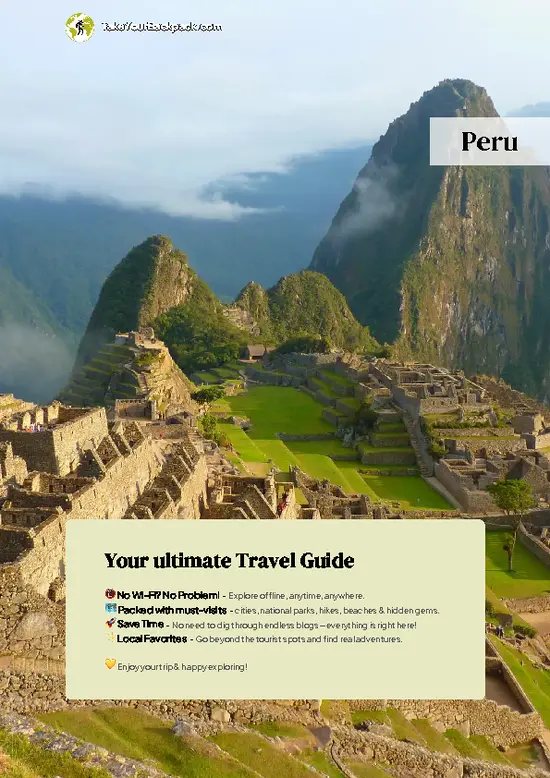
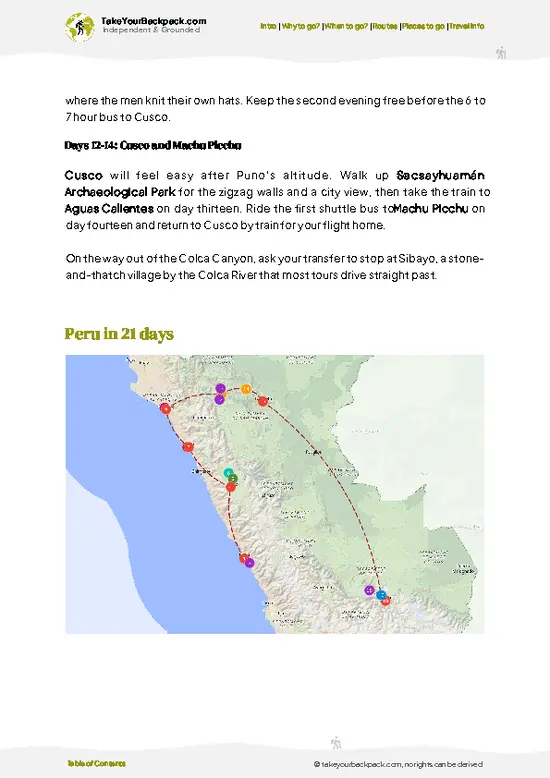
example page 0 from our offline Travel Guide for Peru
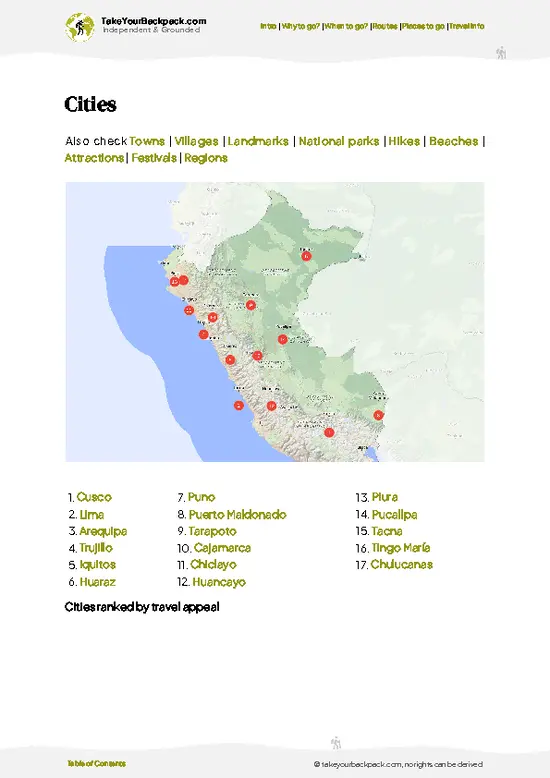
example page 1 from our offline Travel Guide for Peru
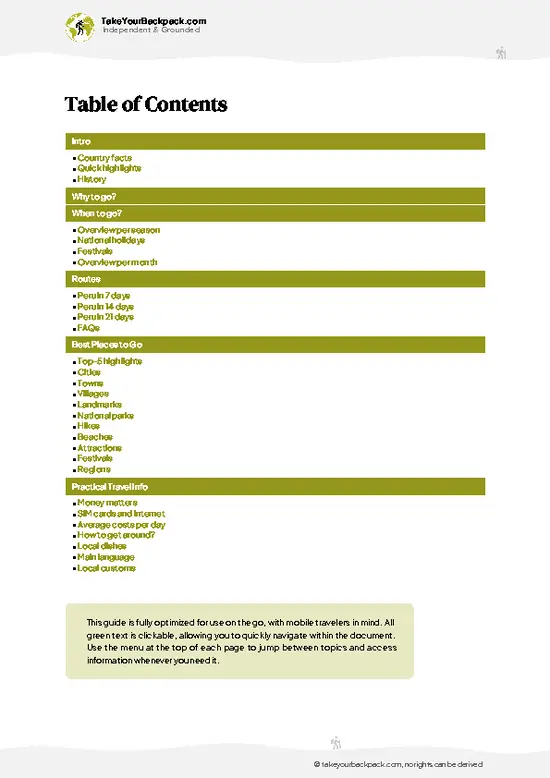
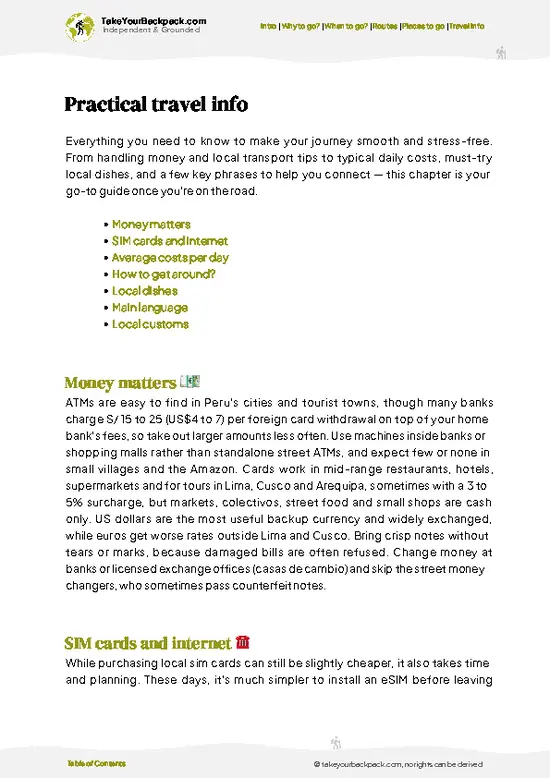
example page 2 from our offline Travel Guide for Peru
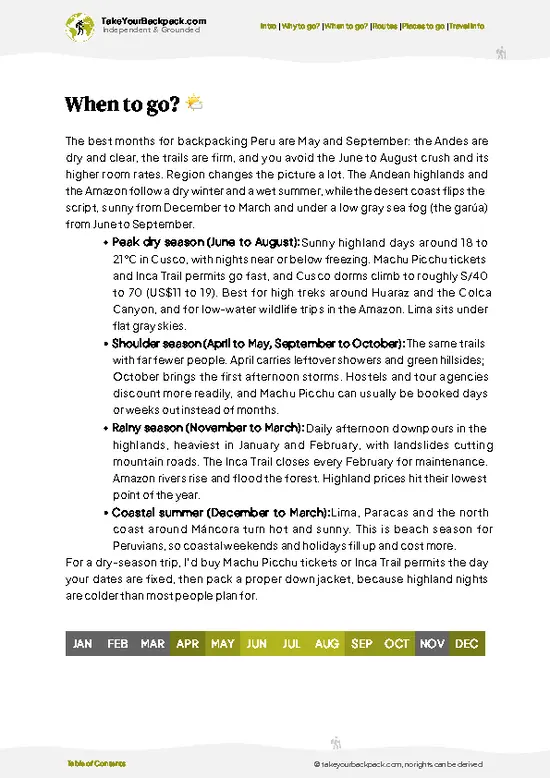
example page 3 from our offline Travel Guide for Peru
example page 4 from our offline Travel Guide for Peru
example page 5 from our offline Travel Guide for Peru
example page 6 from our offline Travel Guide for Peru
example page 7 from our offline Travel Guide for Peru
Loading the map 🌍
CLICK TO FILTER
cities
towns
villages
landmarks
national parks
hikes
beaches
attractions
festivals
regions
SHOW COUNTRY’S BESTSHOW ALL

✨ Why go?
Ranked #11 hike in Peru
Why Huchuy Qosqo Trek should be on your travel list

Huchuy Qosqo Trek gives you a high Andean walk without Inca Trail permits, quotas or booking months ahead. You can simply turn up in Cusco, hire a guide or go independently, and be walking within a day. Its biggest draw is the sharp contrast: you start above Lake Piuray at around 3,700 meters, cross a pass above 4,400 meters, then drop to the ruins perched above the Sacred Valley. That variety packs a lot into two days. The route also ends in Lamay, close to the valley towns, so you can continue to Pisac, Ollantaytambo or Machu Picchu without doubling back. Villages along the way see few trekkers, which makes the walk feel quieter and more personal than most Cusco-area options.

💡 HighlightsPlaces and moments you shouldn't skip

  1. Huchuy Qosqo Ruins: The headline sight is the Inca estate high above the Sacred Valley, with a large kallanka hall, stone terraces and adobe walls still standing. The view down toward Lamay is the prize.
  2. Lake Piuray: The trail begins near this glacial-style lake, where reeds, birds and still water give a calm start before the climb.
  3. Pass above 4,400 meters: The high point opens a wide sweep of snow-capped peaks and tight green valleys. The thin air makes every step count.
  4. Andean villages: Quechua farming communities along the way keep llamas, potatoes and weaving traditions. Greeting locals is part of the walk.
  5. Descent to Lamay: The final drop passes terraces, fields and stone paths down into the valley floor, a satisfying finish with warmer air and a quick ride onward.
Huchuy Qosqo Trek starts … read more 👉
  1. Huchuy Qosqo Ruins: The headline sight is the Inca estate high above the Sacred Valley, with a large kallanka hall, stone terraces and adobe walls still standing. The view down toward Lamay is the prize.
  2. Lake Piuray: The trail begins near this glacial-style lake, where reeds, birds and still water give a calm start before the climb.
  3. Pass above 4,400 meters: The high point opens a wide sweep of snow-capped peaks and tight green valleys. The thin air makes every step count.
  4. Andean villages: Quechua farming communities along the way keep llamas, potatoes and weaving traditions. Greeting locals is part of the walk.
  5. Descent to Lamay: The final drop passes terraces, fields and stone paths down into the valley floor, a satisfying finish with warmer air and a quick ride onward.
Huchuy Qosqo Trek starts best at Lake Piuray, so see it first: it gives you time to acclimatize on flat ground before the climb begins.
Spotted a mistake or missing something? Contact us.

Things to do around Huchuy Qosqo Trek

Ratings based on Tripadvisor reviews. When you book through this link, you support our work at no extra cost to you.

🌤️ When to go?Best time to hike the Huchuy Qosqo Trek

  • Dry Season (May to September): The best window for Huchuy Qosqo Trek, with clear skies and little rain. Days reach 17 to 20°C (63 to 68°F) and nights at camp drop to -2 to 3°C (28 to 37°F). Daylight lasts roughly 11 to 12 hours.
  • June to August: Peak crowds and the highest prices for guided departures. Book a week or more ahead.
  • Shoulder Months (April, October): Greener valleys, fewer hikers, and occasional afternoon showers.
  • Wet Season (November to March): Daily rain, muddy descents, and cloud over the pass at 4,400 m (14,400 ft). Prices drop, but views suffer.
Start the trek on a weekday in May or September to get dry weather with thinner crowds.

source: climatestotravel.comJANJanuary: fair for travelingFEBFebruary: fair for travelingMARMarch: fair for travelingAPRApril: good for travelingMAYMay: highly recommended for travelingJUNJune: excellent for travelingJULJuly: excellent for travelingAUGAugust: excellent for travelingSEPSeptember: highly recommended for travelingOCTOctober: good for travelingNOVNovember: fair for travelingDECDecember: fair for traveling
peru-hike-huchuy-qosqo-trek
© Google |

✈️ The backpacker research shortcutPeru Travel Guide

An offline-friendly backpacking guide with optimized travel routes, ranked highlights, transport advice, and the best areas to stay.
example page 0 from our offline Travel Guide for Peru
example page 1 from our offline Travel Guide for Peru
example page 2 from our offline Travel Guide for Peru
example page 3 from our offline Travel Guide for Peru
example page 4 from our offline Travel Guide for Peru
example page 5 from our offline Travel Guide for Peru
example page 6 from our offline Travel Guide for Peru
example page 7 from our offline Travel Guide for Peru
The digital guide (310 pages) contains:
✅ 102 highlights, ranked by travel appeal
✅ Optimized 7, 14 & 21-day travel routes
✅ Cities, national parks, landmarks, beaches
✅ How to get around
✅ Offline-friendly for travel without Wi-Fi
👉 Click to see all 30+ guide features

📅 Plan smarter in minutes, not weeks
✅ Month by month travel advice
✅ Festivals & national holidays
✅ Budget expectations

🗺️ Go to the right places, skip the overrated ones
✅ Honest pros & cons of destinations
✅ Top hikes, parks & viewpoints
✅ Lesser-known places most travelers miss
✅ Clear “worth it vs skip it” guidance

🛏️ Travel smoothly without rookie mistakes
✅ Best areas to stay
✅ Transport systems explained simply
✅ Common scams & safety advice
✅ SIM cards, money & practical tips

🌍 Understand the country, not just visit it
✅ Culture & traditions
✅ 52 Essential phrases & customs
✅ Festivals worth planning around
✅ Traveler-friendly historical context
✅ Insights that make places more meaningful

📱 Built for real travel conditions
✅ Fully downloadable PDF
✅ Works completely offline
✅ Optimized for phone use
✅ Useful in remote areas & buses
✅ Everything in one place
Stop searching, start planning
Get instant access to your full guide. 30‑day money-back guarantee.
+ Add another guide for just

By proceeding you agree to our terms.
Sent to your inbox immediately after payment • 100% Secure Checkout
Best Backpacking Travel Advisor 2025 tourism awardBest Backpacking
Travel Advisor
2025
What others say about Take Your Backpack Guides:
⭐⭐⭐⭐⭐
Fantastic, amazing amount of information!
⭐⭐⭐⭐⭐
My goodness this is amazing, it's what I've been looking for hats off too you!
⭐⭐⭐⭐⭐
I think this is absolutely BRILLIANT
⭐⭐⭐⭐
Very complete and informative. It's still missing places, but I gotta to commend you
⭐⭐⭐⭐⭐
This is truly amazing, thank you, can't wait to explore it with my kids!
⭐⭐⭐⭐⭐
Awesome resource, thank you!
⭐⭐⭐⭐⭐
This is amazing! Can't wait to explore the ones I haven't seen
⭐⭐⭐⭐
I love this! Well done, great idea.
⭐⭐⭐⭐⭐
Thanks for taking the time to make this gem!
⭐⭐⭐⭐⭐
This might be the best website I've ever seen.
⭐⭐⭐⭐⭐
Congratulations, and thank you so much for your work; it's incredibly valuable.
⭐⭐⭐⭐
In all seriousness I think you did a great job pointing out the important spots
⭐⭐⭐⭐⭐
10/10 very good
⭐⭐⭐⭐⭐
As someone who's only just starting to visit regularly this is awesome, thank you.
⭐⭐⭐⭐
Thank you very much! I'm going to visit my dad, it's going to be very useful!
⭐⭐⭐⭐⭐
This is really cool! We'll be travelling for the first time and this definitely come in handy.
⭐⭐⭐⭐⭐
You are now our minister of culture, congratulations 👨‍💼
⭐⭐⭐⭐⭐
Just wanted to tell you that this is a pearl! Going to follow your recommendations.
⭐⭐⭐⭐⭐
This is so cool. I'll definitely be using the resource for my travels soon.
⭐⭐⭐⭐⭐
This is very impressive! Good work.
⭐⭐⭐⭐⭐
This is an amazing and informative site. Very well done!

🛏️ Where to stay?How to pick the right area

If you enjoy meeting fellow travelers, consider choosing hostels with high ratings for atmosphere. On the other hand, if you prefer having your own space, a hotel might be a better option.

🥾 Hike detailsRoute, distance, and difficulty explained

Huchuy Qosqo Trek is a moderate 2-day walk from Cusco’s highlands to the Sacred Valley.
Total Distance: About 22 to 25 kilometers.
Estimated Duration: 2 days, with a camp or basic lodging on the way.
Difficulty: Moderate, mostly because of altitude and a long climb to the pass.
Starting Point: Near Lake Piuray, reached by taxi or colectivo from Cusco. The trek ends in Lamay, with transport on to Calca, Pisac or Urubamba.
Major Landmarks:
  • Lake Piuray: Starting point with reeds and open grassland.
  • High pass: Reaches above 4,400 meters, with mountain views.
  • Huchuy Qosqo ruins: Inca terraces and halls above
… read more 👉
Huchuy Qosqo Trek is a moderate 2-day walk from Cusco’s highlands to the Sacred Valley.
Total Distance: About 22 to 25 kilometers.
Estimated Duration: 2 days, with a camp or basic lodging on the way.
Difficulty: Moderate, mostly because of altitude and a long climb to the pass.
Starting Point: Near Lake Piuray, reached by taxi or colectivo from Cusco. The trek ends in Lamay, with transport on to Calca, Pisac or Urubamba.
Major Landmarks:
  • Lake Piuray: Starting point with reeds and open grassland.
  • High pass: Reaches above 4,400 meters, with mountain views.
  • Huchuy Qosqo ruins: Inca terraces and halls above the valley.
Terrain and Scenery: Stony paths, grassy slopes, steep switchbacks and wide valley views. The final descent is knee-testing.
Vegetation: High-altitude puna grass at the top, with eucalyptus, maize and terraced fields lower down.
Wildlife: Llamas, alpacas, sheep and Andean birds, with occasional condors possible in the high sections.
⚠️ Hiking info can sometimes be outdated or inaccurate. Before you hit the trail, check the latest conditions with locals. If you do spot anything that's off, I'd love to hear from you, so I can update it for fellow travelers.

🛡️ SafetySafety Tips and Common Scams in Huchuy Qosqo Trek

Huchuy Qosqo Trek is a moderate, well-trodden route, and most problems come from altitude and weather. The pass sits near 4,400 meters (14,400 feet), so spend two or three days in Cusco first and walk slowly on the climb from Tambomachay. Cold rain can arrive within an hour, even in the dry season, so carry a proper shell and warm layers for camp. The descent to Lamay has loose, steep sections, and trekking poles take pressure off your knees. Stray dogs near villages can be noisy but are rarely a problem. Carry enough water and purification tablets, since streams pass livestock. Sun at altitude burns fast, so bring sunscreen and a hat.

FAQFrequently asked questions about Huchuy Qosqo Trek

Huchuy Qosqo Trek takes 2 days and 1 night for most hikers, covering roughly 20 to 22 kilometers (12 to 14 miles). Day one runs from Tambomachay near Cusco over the pass to a camp near Huchuy Qosqo, about 5 to 6 hours of walking. Day two descends to Lamay in the Sacred Valley in around 4 to 5 hours. A one-day version exists but is rushed and tiring.
Huchuy Qosqo Trek is rated moderate, easier than the Salkantay or Inca Trail. The highest point is around 4,400 meters (14,400 feet), so the first climb from Tambomachay is the hardest part. The second day is a long, steep downhill that is tough on knees. Hikers who have spent a few days in Cusco acclimatizing generally manage well.
Huchuy Qosqo Trek needs no permit, and you can hike it independently with good navigation and camping gear. Most travelers book a guided trip from Cusco with a cook and muleteers, usually US$100 to 180 per person for two days. A site entry fee of roughly US$10 to 15 is typically collected at Huchuy Qosqo, and the ruins are not covered by the Cusco Tourist Ticket (Boleto Turístico).
⚠️ Things can change over time, so always validate details locally before you go.

Other Peruvian hikes near Huchuy Qosqo Trek

Explore more nearby:

  • Lares Trek—Weaving villages, hot springs, Ipsaycocha lakes, alpaca herds| 29 km away
  • Inca Trail—Permit-only, Sun Gate, Dead Woman’s Pass, cloud-forest ruins| 54 km away
  • Salkantay Trek—Savage Mountain, Humantay Lake, 4,630 m pass, coffee-country descent| 66 km away

💡 Not sure where to go next?
Create a personalized itinerary for Peru including Huchuy Qosqo Trek and the places that fit your trip.

Generate my itinerary

👉 Discover all hikes

Or checkout all Peru has to offer (think cities, towns, villages, national parks, hikes, beaches, festivals)
Country photo of Peru

We 💚 feedbackWhat to keep in mind

Huchuy Qosqo Trek is best in the dry season, from May to September, and I would start at dawn so you cross the pass in clear light before afternoon clouds roll in. Bring a warm layer for the cold camp and cash for the ruins.

✈️ When did I visit Peru?
Peru I visited during my half year trip through South and Central America back in 2003

✍️ Help improve this page!
The information on this page is based on my own backpacking experience in Peru, supplemented with up-to-date research and feedback from other travelers. Travel details can change, so if you notice anything outdated or incomplete, feel free to let me know.


🙋‍♂️ Give feedback

👋 Meet the founderWho’s Behind Take Your Backpack?

Johan, backpacker and founder of TakeYourBackpackHi, I’m Johan (Netherlands 🇳🇱), the creator of TakeYourBackpack. Over the past 3 decades, I’ve backpacked through 90+ countries across six continents, gaining extensive experience with independent travel, long-term trips, and overland routes.

This site is built on a combination of firsthand travel experience and carefully curated insights from other backpackers. Many guides are based on places I’ve personally visited, while others bring together tips, observations, and practical advice shared by trusted travelers I’ve met along the way.

The goal is to provide realistic, experience-driven guidance — not generic itineraries — so you can explore destinations with better context, clearer expectations, and more confidence.