×
Cusco

Peru🇵🇪 | citiesCuscoInca masonry, steep cobbles, Sacred Valley gateway, San Blas workshops | things to do and best time to go

Explore ChiclayoExplore Huancayo

Backpacking in Cusco
UNESCO World Heritage site
🏆 Top pickcity ranked #1
By Johan Kruseman 🇳🇱 | Updated October 19, 2026

Cusco used to be the dusty last stop before the Inca Trail, a place where you grabbed a permit, a poncho and left. Today it is a full-blown destination with specialty coffee roasters, rooftop pisco bars and Inca walls you can touch for free on the street. It sits in the southeastern Andes of Peru, at about 3,400 meters. I stepped off the bus, turned a corner on Hatunrumiyoc and found a stone wall with twelve angles locked tight, no mortar, and a tourist-free silence around it. Hooked instantly. Cusco suits history nerds, trekkers and anyone who likes to wander steep cobbled lanes. It does not suit travelers wanting a quiet, flat, hassle-free stay, because touts and traffic fill the center. The smarter move: arrive and keep the first day easy, because altitude sickness is the reason most people lose a day, and experienced travelers sip coca tea and book treks only after acclimating.

Discover everything you want to know in the 📖 Peru Travel Guide.


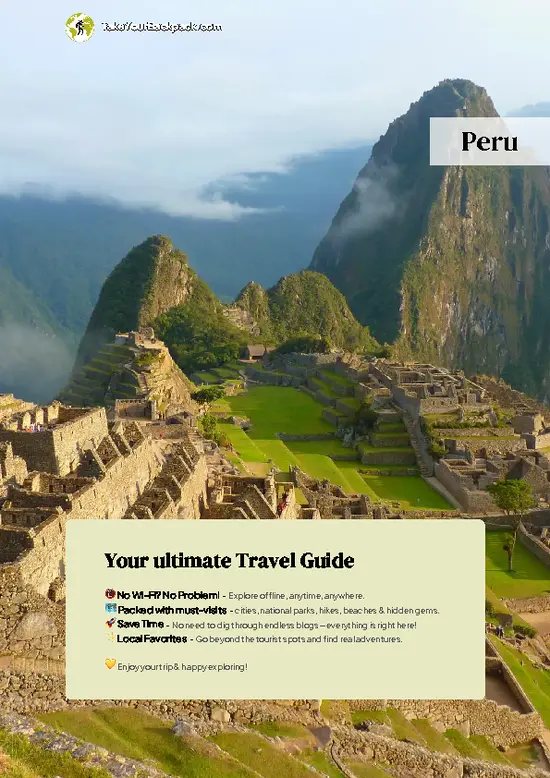
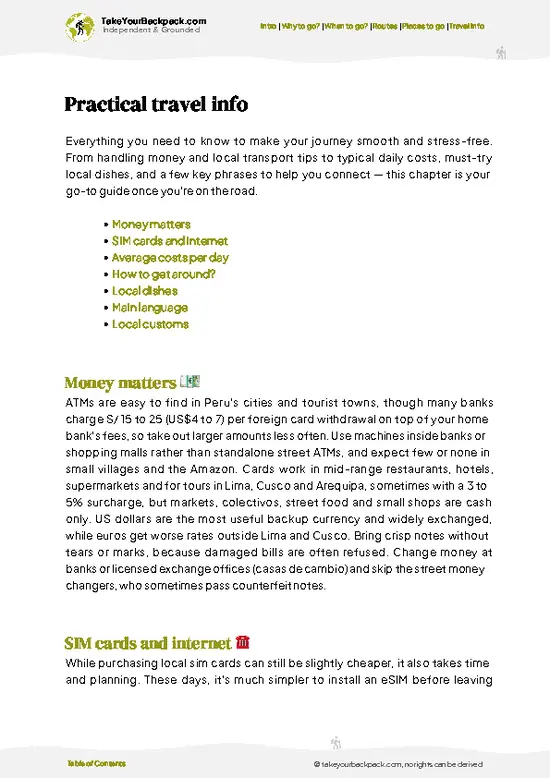
example page 0 from our offline Travel Guide for Peru
example page 1 from our offline Travel Guide for Peru
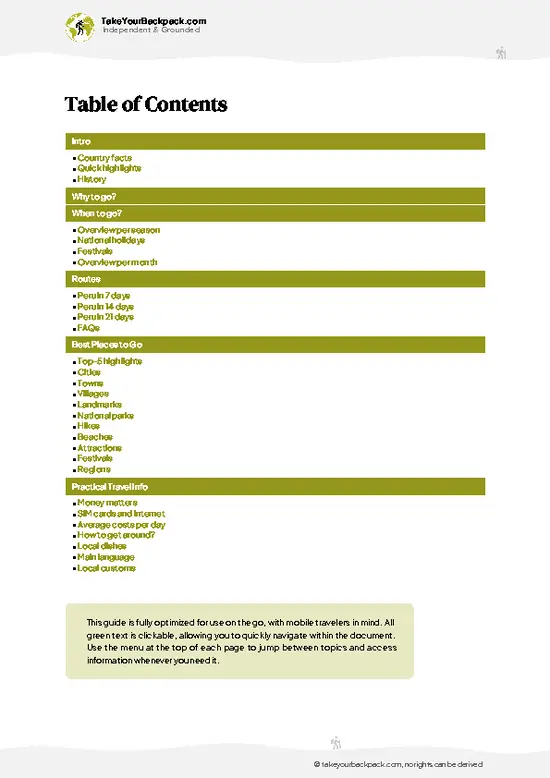
example page 2 from our offline Travel Guide for Peru
example page 3 from our offline Travel Guide for Peru
example page 4 from our offline Travel Guide for Peru
example page 5 from our offline Travel Guide for Peru
example page 6 from our offline Travel Guide for Peru
example page 7 from our offline Travel Guide for Peru
Loading the map 🌍
CLICK TO FILTER
cities
towns
villages
landmarks
national parks
hikes
beaches
attractions
festivals
regions
SHOW COUNTRY’S BESTSHOW ALL

✨ Why go?
Ranked #1 city in Peru
What makes it a must-see city

Cusco works as the hub of southern Peru, and that is the main reason backpackers pass through. Nearly every route to the Sacred Valley and Machu Picchu starts here, so you can compare tour operators face to face, haggle in person and pick up trekking gear instead of booking blind online. The old center packs a lot into a few walkable blocks: Inca foundations under Spanish colonial houses, markets, and museums, so you can fill several days without a bus. Hostels are plentiful and social, and the San Blas neighborhood gives you steep lanes, artisan workshops and cafes where trip partners are easy to find. Food ranges from cheap set lunches in the market to creative Andean kitchens. Nights run late around the Plaza de Armas, with clubs that start after midnight. The honest limit is altitude and … read more 👉
Cusco works as the hub of southern Peru, and that is the main reason backpackers pass through. Nearly every route to the Sacred Valley and Machu Picchu starts here, so you can compare tour operators face to face, haggle in person and pick up trekking gear instead of booking blind online. The old center packs a lot into a few walkable blocks: Inca foundations under Spanish colonial houses, markets, and museums, so you can fill several days without a bus. Hostels are plentiful and social, and the San Blas neighborhood gives you steep lanes, artisan workshops and cafes where trip partners are easy to find. Food ranges from cheap set lunches in the market to creative Andean kitchens. Nights run late around the Plaza de Armas, with clubs that start after midnight. The honest limit is altitude and tourist pressure: the first two days feel slow, and the center can feel crowded. Treat Cusco as a base for a week of trips, or a three-day stop if you only want the city.

💡 HighlightsPlaces and moments you shouldn't skip

  1. Plaza de Armas: The historic heart, ringed by arcades, the Cathedral and the Jesuit church La Compañía. Free to wander. Come at dawn for quiet or after dark when the stonework is lit. Allow 1 hour.
  2. Qorikancha: The Inca Temple of the Sun, with Spanish convent walls built on top of precise Inca masonry. Entry about US$6 to 7. Go in the morning, 1 hour.
  3. Sacsayhuamán: A hilltop fortress with zigzag walls of enormous limestone blocks above town. Covered by the Boleto Turístico, about US$35 to 37 for the multi-site ticket. Go in the morning, 2 to 3 hours. The walk up from San Blas is steep but short.
  4. Calle Hatunrumiyoc and the Twelve-Angled Stone: A lane of Inca wall where one block fits 12 corners. Free, a 15-minute stop. Best early, before the crowds.
  5. San Blas: A hillside quarter of whitewashed lanes,
… read more 👉
  1. Plaza de Armas: The historic heart, ringed by arcades, the Cathedral and the Jesuit church La Compañía. Free to wander. Come at dawn for quiet or after dark when the stonework is lit. Allow 1 hour.
  2. Qorikancha: The Inca Temple of the Sun, with Spanish convent walls built on top of precise Inca masonry. Entry about US$6 to 7. Go in the morning, 1 hour.
  3. Sacsayhuamán: A hilltop fortress with zigzag walls of enormous limestone blocks above town. Covered by the Boleto Turístico, about US$35 to 37 for the multi-site ticket. Go in the morning, 2 to 3 hours. The walk up from San Blas is steep but short.
  4. Calle Hatunrumiyoc and the Twelve-Angled Stone: A lane of Inca wall where one block fits 12 corners. Free, a 15-minute stop. Best early, before the crowds.
  5. San Blas: A hillside quarter of whitewashed lanes, workshops and a small church with a carved wooden pulpit. Church entry roughly US$3 to 5. Late afternoon, 1 to 2 hours.
  6. Mercado San Pedro: A covered market with juice stalls, cheese, produce and cheap lunches. Entry free, lunches around US$2 to 4. Go mid-morning, 1 hour.
  7. Cathedral of Cusco: Colonial paintings including the Last Supper with a guinea pig on the table, and carved cedar choir stalls. About US$10 to 15. Mornings are calmer, 1 to 1.5 hours.
  8. Museo de Arte Precolombino (MAP): Pre-Columbian ceramics and gold displayed in a restored colonial mansion. About US$10 to 12. Allow 1 to 1.5 hours, any time of day.
Day trips include the Sacred Valley towns of Pisac and Ollantaytambo, Moray, the Maras salt pans and Rainbow Mountain. For a first visit, start with Qorikancha, where Inca and colonial layers sit in one building.
Spotted a mistake or missing something? Contact us.

Things to do in Cusco

Ratings based on Tripadvisor reviews. When you book through this link, you support our work at no extra cost to you.

🏘️ NeighborhoodsWhere things are and how it's laid out

Cusco packs its best corners into a few steep, cobbled kilometers, so you can sample every area on foot if your lungs (at 3,400 m / 11,150 ft) cooperate.
  • Plaza de Armas and the historic center: Arcades, cathedral and Inca-stone lanes like Hatunrumiyoc, where the 12-angled stone sits. Restaurants here aim at tour groups and touts hover on every corner, so duck one block off the plaza for cheaper meals. Walk it early, before the tour buses arrive.
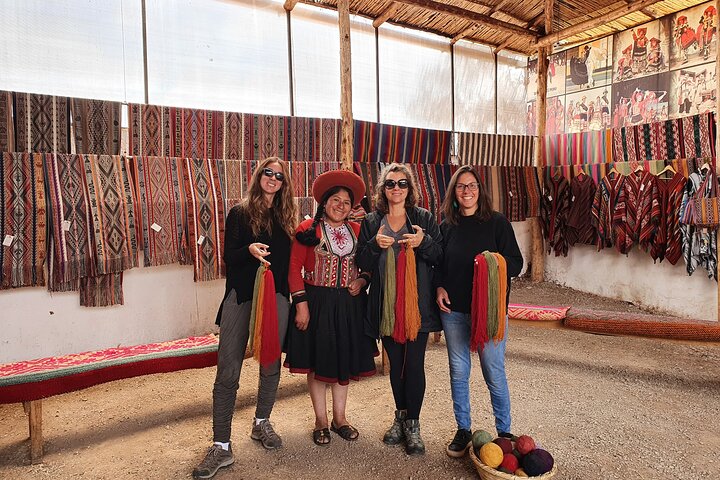
  • San Blas: A hillside of artisan workshops, steep stairs and small cafés. Climb slowly, since the altitude punishes sprinters, and wander in late afternoon when the workshops are open and the plaza below fills with evening light. Quiet at night, which suits early sleepers.
  • San Pedro and Mercado Central: The working heart of town. Market stalls sell fresh
… read more 👉
Cusco packs its best corners into a few steep, cobbled kilometers, so you can sample every area on foot if your lungs (at 3,400 m / 11,150 ft) cooperate.
  • Plaza de Armas and the historic center: Arcades, cathedral and Inca-stone lanes like Hatunrumiyoc, where the 12-angled stone sits. Restaurants here aim at tour groups and touts hover on every corner, so duck one block off the plaza for cheaper meals. Walk it early, before the tour buses arrive.
  • San Blas: A hillside of artisan workshops, steep stairs and small cafés. Climb slowly, since the altitude punishes sprinters, and wander in late afternoon when the workshops are open and the plaza below fills with evening light. Quiet at night, which suits early sleepers.
  • San Pedro and Mercado Central: The working heart of town. Market stalls sell fresh juices, cheese, bread and soups, and the set lunches nearby cost far less than plaza menus. Locals shop here, so go in the morning and eat where the queue is.
  • Calle Procuradores and Plateros: The nightlife strip, loud and crowded after dark with bars, clubs and pizza slices at 2 a.m. Locals call it Gringo Alley. Go for a dance, then leave before the third round of free-shot flyers wears you out.
  • Santa Ana and Av. El Sol: Hilly, local and low-key, with everyday restaurants and viewpoints above the center. Use it for a break from the crowds and a better look at how Cusco actually lives.

⌛️ 1 day1-day itinerary for Cusco

Keep the day on foot, since the historic core is compact, and plan a slow midday break to rest at altitude and avoid sun at its fiercest.
8:00 AM, Mercado San Pedro: Start with a fresh juice and a bread roll among the stalls. It is a lively morning scene and a cheap breakfast. Walk ten minutes up to the center.
9:30 AM, Plaza de Armas and the Cathedral: Take in the arcades and step inside the Cathedral to see the colonial paintings. Stroll the short distance to Qorikancha.
11:00 AM, Qorikancha: See the finest Inca stonework in town, with colonial convent walls above. A guide is helpful here, but the signs are enough.
1:00 PM, Lunch and rest: Eat a set menu at a small restaurant off the plaza, then rest for an hour. Altitude makes you tired and this saves your afternoon.
3:00 PM, Calle Hatunrumiyoc: … read more 👉
Keep the day on foot, since the historic core is compact, and plan a slow midday break to rest at altitude and avoid sun at its fiercest.
8:00 AM, Mercado San Pedro: Start with a fresh juice and a bread roll among the stalls. It is a lively morning scene and a cheap breakfast. Walk ten minutes up to the center.
9:30 AM, Plaza de Armas and the Cathedral: Take in the arcades and step inside the Cathedral to see the colonial paintings. Stroll the short distance to Qorikancha.
11:00 AM, Qorikancha: See the finest Inca stonework in town, with colonial convent walls above. A guide is helpful here, but the signs are enough.
1:00 PM, Lunch and rest: Eat a set menu at a small restaurant off the plaza, then rest for an hour. Altitude makes you tired and this saves your afternoon.
3:00 PM, Calle Hatunrumiyoc: Find the twelve-angled stone, then wander uphill to San Blas. Browse the workshops and peek into the small church.
4:30 PM, Sacsayhuamán: Climb the steps from San Blas, slowly, to the fortress. Late light on the huge walls is superb and the views over red roofs are wide. The Boleto Turístico covers it.
6:30 PM, Cristo Blanco viewpoint: The quiet viewpoint over the lit city is a good place to end the afternoon, a short walk beyond Sacsayhuamán.
8:00 PM, Dinner in San Blas: Come back down for an Andean dinner, such as alpaca or trout, in one of the small restaurants.

🌤️ When to go?Weather, crowds, and seasonal trade-offs

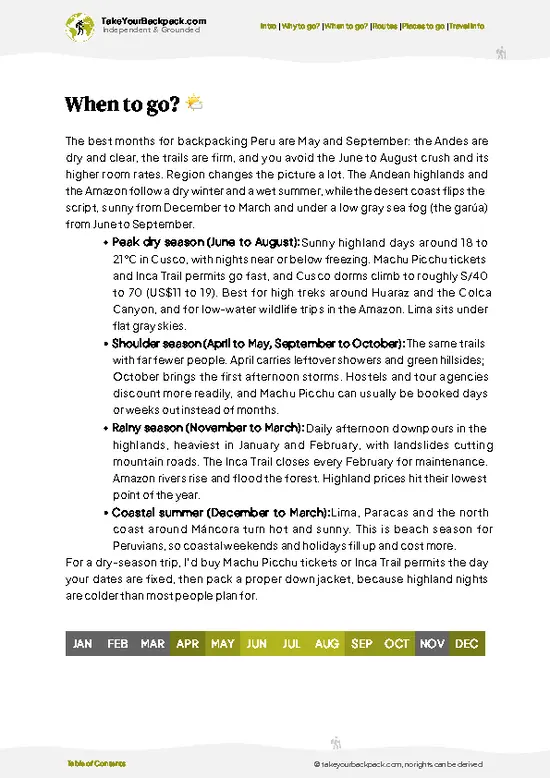
  • Dry Season (May to September): Sunny days reach about 19 to 22°C (66 to 72°F), but nights drop to around -2 to 3°C (28 to 37°F), so bring a real jacket. Daylight runs roughly 11.5 hours. This is peak season for Inca Trail permits, Inti Raymi on June 24 and crowds, with beds and tours at their highest prices, especially July and August.
  • Shoulder Months (April and October to November): Daytime stays around 18 to 21°C (64 to 70°F), with fewer people and easier bookings. Showers start returning by November, usually in the afternoon.
  • Wet Season (December to March): Rain falls most afternoons, highs sit near 18 to 20°C (64 to 68°F) and nights are milder at 5 to 7°C (41 to 45°F). Prices drop, hostels empty out, and the Inca Trail closes in February. Landslides can occasionally disrupt rail and road
… read more 👉
  • Dry Season (May to September): Sunny days reach about 19 to 22°C (66 to 72°F), but nights drop to around -2 to 3°C (28 to 37°F), so bring a real jacket. Daylight runs roughly 11.5 hours. This is peak season for Inca Trail permits, Inti Raymi on June 24 and crowds, with beds and tours at their highest prices, especially July and August.
  • Shoulder Months (April and October to November): Daytime stays around 18 to 21°C (64 to 70°F), with fewer people and easier bookings. Showers start returning by November, usually in the afternoon.
  • Wet Season (December to March): Rain falls most afternoons, highs sit near 18 to 20°C (64 to 68°F) and nights are milder at 5 to 7°C (41 to 45°F). Prices drop, hostels empty out, and the Inca Trail closes in February. Landslides can occasionally disrupt rail and road access.
Book Machu Picchu entry and Inca Trail permits months ahead for June to August, and leave two days in Cusco to acclimatize first.


source: climatestotravel.comJANJanuary: fair for travelingFEBFebruary: fair for travelingMARMarch: fair for travelingAPRApril: highly recommended for travelingMAYMay: excellent for travelingJUNJune: excellent for travelingJULJuly: excellent for travelingAUGAugust: excellent for travelingSEPSeptember: excellent for travelingOCTOctober: highly recommended for travelingNOVNovember: fair for travelingDECDecember: fair for traveling
Peru - Cusco

✈️ The backpacker research shortcutPeru Travel Guide

An offline-friendly backpacking guide with optimized travel routes, ranked highlights, transport advice, and the best areas to stay.
example page 0 from our offline Travel Guide for Peru
example page 1 from our offline Travel Guide for Peru
example page 2 from our offline Travel Guide for Peru
example page 3 from our offline Travel Guide for Peru
example page 4 from our offline Travel Guide for Peru
example page 5 from our offline Travel Guide for Peru
example page 6 from our offline Travel Guide for Peru
example page 7 from our offline Travel Guide for Peru
The digital guide (310 pages) contains:
✅ 102 highlights, ranked by travel appeal
✅ Optimized 7, 14 & 21-day travel routes
✅ Cities, national parks, landmarks, beaches
✅ How to get around
✅ Offline-friendly for travel without Wi-Fi
👉 Click to see all 30+ guide features

📅 Plan smarter in minutes, not weeks
✅ Month by month travel advice
✅ Festivals & national holidays
✅ Budget expectations

🗺️ Go to the right places, skip the overrated ones
✅ Honest pros & cons of destinations
✅ Top hikes, parks & viewpoints
✅ Lesser-known places most travelers miss
✅ Clear “worth it vs skip it” guidance

🛏️ Travel smoothly without rookie mistakes
✅ Best areas to stay
✅ Transport systems explained simply
✅ Common scams & safety advice
✅ SIM cards, money & practical tips

🌍 Understand the country, not just visit it
✅ Culture & traditions
✅ 52 Essential phrases & customs
✅ Festivals worth planning around
✅ Traveler-friendly historical context
✅ Insights that make places more meaningful

📱 Built for real travel conditions
✅ Fully downloadable PDF
✅ Works completely offline
✅ Optimized for phone use
✅ Useful in remote areas & buses
✅ Everything in one place
Stop searching, start planning
Get instant access to your full guide. 30‑day money-back guarantee.
+ Add another guide for just

By proceeding you agree to our terms.
Sent to your inbox immediately after payment • 100% Secure Checkout
Best Backpacking Travel Advisor 2025 tourism awardBest Backpacking
Travel Advisor
2025
What others say about Take Your Backpack Guides:
⭐⭐⭐⭐⭐
Fantastic, amazing amount of information!
⭐⭐⭐⭐⭐
My goodness this is amazing, it's what I've been looking for hats off too you!
⭐⭐⭐⭐⭐
I think this is absolutely BRILLIANT
⭐⭐⭐⭐
Very complete and informative. It's still missing places, but I gotta to commend you
⭐⭐⭐⭐⭐
This is truly amazing, thank you, can't wait to explore it with my kids!
⭐⭐⭐⭐⭐
Awesome resource, thank you!
⭐⭐⭐⭐⭐
This is amazing! Can't wait to explore the ones I haven't seen
⭐⭐⭐⭐
I love this! Well done, great idea.
⭐⭐⭐⭐⭐
Thanks for taking the time to make this gem!
⭐⭐⭐⭐⭐
This might be the best website I've ever seen.
⭐⭐⭐⭐⭐
Congratulations, and thank you so much for your work; it's incredibly valuable.
⭐⭐⭐⭐
In all seriousness I think you did a great job pointing out the important spots
⭐⭐⭐⭐⭐
10/10 very good
⭐⭐⭐⭐⭐
As someone who's only just starting to visit regularly this is awesome, thank you.
⭐⭐⭐⭐
Thank you very much! I'm going to visit my dad, it's going to be very useful!
⭐⭐⭐⭐⭐
This is really cool! We'll be travelling for the first time and this definitely come in handy.
⭐⭐⭐⭐⭐
You are now our minister of culture, congratulations 👨‍💼
⭐⭐⭐⭐⭐
Just wanted to tell you that this is a pearl! Going to follow your recommendations.
⭐⭐⭐⭐⭐
This is so cool. I'll definitely be using the resource for my travels soon.
⭐⭐⭐⭐⭐
This is very impressive! Good work.
⭐⭐⭐⭐⭐
This is an amazing and informative site. Very well done!

🛏️ Where to stay?Choosing the right base

The old center, especially the streets around San Blas and just off Plaza de Armas, is where most backpackers sleep. Dorm beds there typically cost US$6 to 12 a night, and you can reach most sights, bars and tour offices on foot.
San Blas is quieter, with cafés, steep stairs and fewer late-night bars. Evenings are calm and the walk home at night is short, though you will be climbing with your bags. Dorms fill early in June to August, so reserve ahead, and expect cold rooms because many cheap places have no heating. Check for extra blankets or hot water bottles.
The streets around Procuradores and … read more 👉
The old center, especially the streets around San Blas and just off Plaza de Armas, is where most backpackers sleep. Dorm beds there typically cost US$6 to 12 a night, and you can reach most sights, bars and tour offices on foot.
San Blas is quieter, with cafés, steep stairs and fewer late-night bars. Evenings are calm and the walk home at night is short, though you will be climbing with your bags. Dorms fill early in June to August, so reserve ahead, and expect cold rooms because many cheap places have no heating. Check for extra blankets or hot water bottles.
The streets around Procuradores and Plateros have the most hostels and the most noise. Music can run until 3 or 4 a.m., so pack earplugs or choose a room at the back. It suits anyone who wants to meet other travelers and go out after dinner. Taxis and colectivos are easy to find here.
For lower prices and a local feel, look at San Pedro near the market and the bus station area. It is busier and less polished, but beds can be a bit cheaper and the Terminal Terrestre is close. Stick to well-lit main streets after dark, and arrive before nightfall with your bags.

🚌 Getting aroundTransportation options and practical tips

Colectivo vans and local buses cost about US$0.25 to 0.40 per ride, paid in cash in soles to the conductor as you board or exit, so keep coins ready. Most of central Cusco is walkable in under 30 minutes, though the hills and thin air slow you down. Traffic is heavy on Av. El Sol and around Plaza de Armas at rush hour, and there is no metro or tram.
  • Walking: Free and usually fastest in the old center, where lanes are narrow and cars crawl. Take it slow for the first two days, since altitude makes even gentle slopes feel steep.
  • Colectivos and city buses: Minivans display route numbers and letters on the windshield, run from roughly 5:30 a.m. to 10 p.m., and cost US$0.25 to 0.40. They are crowded but cover everything the walking legs do not, including the airport and outer districts. Ask the driver
… read more 👉
Colectivo vans and local buses cost about US$0.25 to 0.40 per ride, paid in cash in soles to the conductor as you board or exit, so keep coins ready. Most of central Cusco is walkable in under 30 minutes, though the hills and thin air slow you down. Traffic is heavy on Av. El Sol and around Plaza de Armas at rush hour, and there is no metro or tram.
  • Walking: Free and usually fastest in the old center, where lanes are narrow and cars crawl. Take it slow for the first two days, since altitude makes even gentle slopes feel steep.
  • Colectivos and city buses: Minivans display route numbers and letters on the windshield, run from roughly 5:30 a.m. to 10 p.m., and cost US$0.25 to 0.40. They are crowded but cover everything the walking legs do not, including the airport and outer districts. Ask the driver or fellow passengers before boarding, since stops are informal.
  • Taxis: Short rides in town cost US$1.50 to 3, and the airport runs about US$4 to 7. Prices are agreed before you get in because meters are rare. Experienced travelers order through a taxi app or ask a hostel to call a registered company rather than flagging cars off the street at night.
  • Shared vans to the Sacred Valley: Departing from Pavitos and other terminals, vans to Pisac or Urubamba run about US$1.50 to 3 and take 1 to 1.5 hours. They leave when full, so go early and you wait less. Buses to Ollantaytambo take about 2 hours and are the cheapest way into the valley, saving the cost of a private tour.
  • Trains and long-distance buses: Trains to Machu Picchu leave from Poroy or Ollantaytambo, not central Cusco, and are far pricier than road transport. Long-distance buses leave from the Terminal Terrestre, about 10 minutes from the center by taxi.

👛 Costs (as of 19 October 2026)Typical daily expenses

Expect to spend about US$25 to 49 per day backpacking in Cusco, and roughly US$38 with a high-season dorm bed and a mix of cheap meals and basic sights.
CategoryBudget RangeLocal Reality
Dorm (high season, June to August)US$8 to 14Beds in 6 to 10 bed dorms, often with breakfast; many are unheated.
Dorm (off-season)US$6 to 10Cheaper, with more room to bargain for longer stays.
MealsUS$8 to 14Menú del día at US$2 to 4, market juice and breakfast, a cafe dinner around US$5 to 8.
Local transportUS$1 to 3Colectivos cost US$0.25 to 0.40 a ride; short taxis US$1.50 to 3.
City transport passUS$0No pass exists; the center is walkable and you pay per ride.
Basic activities/entry feesUS$5 to 12The Boleto Turístico costs about US$35 to 37 for multiple sites, so budget it separately; single museum entries cost
… read more 👉
Expect to spend about US$25 to 49 per day backpacking in Cusco, and roughly US$38 with a high-season dorm bed and a mix of cheap meals and basic sights.
CategoryBudget RangeLocal Reality
Dorm (high season, June to August)US$8 to 14Beds in 6 to 10 bed dorms, often with breakfast; many are unheated.
Dorm (off-season)US$6 to 10Cheaper, with more room to bargain for longer stays.
MealsUS$8 to 14Menú del día at US$2 to 4, market juice and breakfast, a cafe dinner around US$5 to 8.
Local transportUS$1 to 3Colectivos cost US$0.25 to 0.40 a ride; short taxis US$1.50 to 3.
City transport passUS$0No pass exists; the center is walkable and you pay per ride.
Basic activities/entry feesUS$5 to 12The Boleto Turístico costs about US$35 to 37 for multiple sites, so budget it separately; single museum entries cost a few dollars.
MiscellaneousUS$3 to 6Water, snacks, coca tea, laundry, the occasional beer.
Total Daily BudgetUS$25 to 49About US$38 midpoint with a high-season dorm.
To save money, eat the menú del día at lunch rather than dinner, and buy the Boleto Turístico only if you will visit several sites.


source: peru.travel
⚠️ Prices can change and everyone travels differently, so take this as a rough guide. Hope it helps you plan your adventure!

🚌 Day tripsExploring the surroundings

Cusco works well as a base for day trips, since public vans and buses reach the Sacred Valley and nearby ruins cheaply, and you are back by evening.
Pisac:
A hillside Inca citadel above a village with a big Sunday market. Vans take roughly 1 hour and cost about US$1.50 to 3. The Tourist Ticket (Boleto Turístico) is required for the ruins. Go early, because tour groups arrive by late morning, and hike up if your lungs allow rather than taking a taxi. Budget about US$10 to 20 with lunch, plus the ticket.

Moray and Maras salt pans:
Circular agricultural terraces and thousands of salt pools still worked by local families. Reaching both by public transport means a van to Urubamba, then a taxi or collectivo, around 1.5 to 2 hours each way. Costs are about US$15 to 25 with entry. A common mistake … read more 👉
Cusco works well as a base for day trips, since public vans and buses reach the Sacred Valley and nearby ruins cheaply, and you are back by evening.
Pisac:
A hillside Inca citadel above a village with a big Sunday market. Vans take roughly 1 hour and cost about US$1.50 to 3. The Tourist Ticket (Boleto Turístico) is required for the ruins. Go early, because tour groups arrive by late morning, and hike up if your lungs allow rather than taking a taxi. Budget about US$10 to 20 with lunch, plus the ticket.

Moray and Maras salt pans:
Circular agricultural terraces and thousands of salt pools still worked by local families. Reaching both by public transport means a van to Urubamba, then a taxi or collectivo, around 1.5 to 2 hours each way. Costs are about US$15 to 25 with entry. A common mistake is going in a rush and skipping the salt pans, which are best in dry-season sun.

Ollantaytambo:
A living Inca town with enormous terraces and steep stone steps. Direct vans take about 2 hours and cost US$2 to 4. Start early, since the climb is exposed, and you can stay for dinner and catch the last van back before dark. Entry is covered by the Boleto Turístico. Budget US$10 to 20 for the day.

Rainbow Mountain (Vinicunca):
A long day with a pre-dawn pickup, about 3 hours each way by road and a hike at 5,000 m (16,400 ft). Tours cost US$20 to 35 plus a small entry fee, and altitude hits hard, so acclimatize for at least three days first. Dry months are best, and clouds can hide the colors in the wet season.

🍲 FoodLocal Cuisine & Drinks

Cusco’s cooking leans on high-Andean ingredients, and the best-known local plate is cuy (roasted guinea pig), served whole and crisp, usually at special-occasion restaurants for about US$12 to 20. A cheaper regional favorite is chiri uchu, a cold plate of guinea pig, dried fish, corn cake and seaweed served around Corpus Christi. Look for adobo cusqueño, a vinegary pork stew eaten at breakfast, and lechón, roast suckling pig. Thick chuño and Andean potatoes appear in many stews, and choclo con queso, giant-kernel corn with fresh cheese, is the local snack. Warm up with muña tea or coca tea, and try chicha de jora, a fermented corn drink, in small picanterías.
Backpackers eat best at Mercado de San Pedro, where juice stalls, soups and set lunches (menú del día) run about US$2 to 4. Side streets … read more 👉
Cusco’s cooking leans on high-Andean ingredients, and the best-known local plate is cuy (roasted guinea pig), served whole and crisp, usually at special-occasion restaurants for about US$12 to 20. A cheaper regional favorite is chiri uchu, a cold plate of guinea pig, dried fish, corn cake and seaweed served around Corpus Christi. Look for adobo cusqueño, a vinegary pork stew eaten at breakfast, and lechón, roast suckling pig. Thick chuño and Andean potatoes appear in many stews, and choclo con queso, giant-kernel corn with fresh cheese, is the local snack. Warm up with muña tea or coca tea, and try chicha de jora, a fermented corn drink, in small picanterías.
Backpackers eat best at Mercado de San Pedro, where juice stalls, soups and set lunches (menú del día) run about US$2 to 4. Side streets around San Pedro and Santa Ana have cheap, local-filled lunch spots. Plaza de Armas restaurants cost double. For nightlife, bars along Plateros serve pisco sours and local craft beers. Altitude and strong drinks do not mix well, so go slowly the first night.

🛡️ SafetyScams, Hazards, and Annoyances

Cusco is relaxed and mostly safe, and the main problems are petty theft and altitude, not violence. Pickpockets and bag slashers work crowds around Plaza de Armas, San Pedro market and the bus terminal, so keep your daypack in front and your phone away on crowded streets. Night-time is fine in the center if you stay on lit streets, but avoid empty alleys and steep side streets after the bars close. Solo travelers should use registered taxis or apps late at night, and skip unmarked cars. Drinks can be spiked around the nightlife strip, so keep yours in sight and do not accept ones from strangers. Touts offering massages, restaurants or cheap tours are constant but harmless, and a firm “no gracias” works. Book trekking through licensed agencies, and check reviews. Altitude sickness is the most … read more 👉
Cusco is relaxed and mostly safe, and the main problems are petty theft and altitude, not violence. Pickpockets and bag slashers work crowds around Plaza de Armas, San Pedro market and the bus terminal, so keep your daypack in front and your phone away on crowded streets. Night-time is fine in the center if you stay on lit streets, but avoid empty alleys and steep side streets after the bars close. Solo travelers should use registered taxis or apps late at night, and skip unmarked cars. Drinks can be spiked around the nightlife strip, so keep yours in sight and do not accept ones from strangers. Touts offering massages, restaurants or cheap tours are constant but harmless, and a firm “no gracias” works. Book trekking through licensed agencies, and check reviews. Altitude sickness is the most common issue, so drink water, go easy on alcohol for two days, and rest. Pharmacies sell coca tea and altitude pills.

FAQFrequently asked questions about Cusco

Three to four days works for Cusco itself, and that gives you time to acclimatize at 3,400 m (11,150 ft) before hiking. Spend one or two days on the center, San Blas and nearby ruins like Sacsayhuamán, then add a day trip to the Sacred Valley. Add 3 to 5 more days if you plan the Inca Trail or Machu Picchu.
Yes, Cusco is generally manageable for solo backpackers, and the main risks are pickpocketing and drink spiking, not violent crime. Keep valuables out of sight around Plaza de Armas, San Pedro market and the bus terminal. Use registered taxis or apps at night, and book treks with licensed agencies. Altitude sickness is the more common problem, so take it slow for the first 48 hours.
Cusco is known as the gateway to Machu Picchu and the former capital of the Inca Empire. The center holds Inca stonework like the 12-angled stone, the Qorikancha temple and the Plaza de Armas, while Sacsayhuamán sits just above town. Trains and treks to Machu Picchu start here, the Sacred Valley is 1 to 2 hours away, and dorm beds cost about US$6 to 14.
⚠️ Things can change over time, so always validate details locally before you go.

Other Peruvian cities near Cusco

Explore more nearby:

  • Puerto Maldonado—Madre de Dios, macaw clay lick, Tambopata access, oxbow lake| 318 km away
  • Arequipa—Sillar stone, volcano views, picanterías, convent lanes| 323 km away
  • Puno—Lake Titicaca, reed islands, Taquile knitters, 3,830 meters| 331 km away

💡 Not sure where to go next?
Create a personalized itinerary for Peru including Cusco and the places that fit your trip.

Generate my itinerary

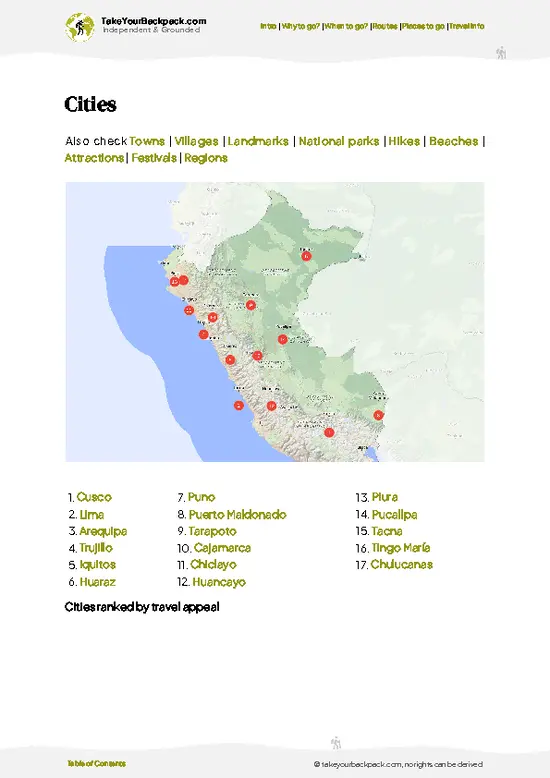
👉 Discover all cities

Or checkout all Peru has to offer (think cities, towns, villages, national parks, hikes, beaches, festivals)
Country photo of Peru

We 💚 feedbackParting advice and final tips

Give Cusco three to four days if you want the city properly, plus extra if you are trekking. The first two will feel slow thanks to the altitude, so I would spend them on the center and save big hikes for later. Skip the rush, drink coca tea and book tours once you know how you feel.

✈️ When did I visit Peru?
Peru I visited during my half year trip through South and Central America back in 2003

✍️ Help improve this page!
The information on this page is based on my own backpacking experience in Peru, supplemented with up-to-date research and feedback from other travelers. Travel details can change, so if you notice anything outdated or incomplete, feel free to let me know.


🙋‍♂️ Give feedback

👋 Meet the founderWho’s Behind Take Your Backpack?

Johan, backpacker and founder of TakeYourBackpackHi, I’m Johan (Netherlands 🇳🇱), the creator of TakeYourBackpack. Over the past 3 decades, I’ve backpacked through 90+ countries across six continents, gaining extensive experience with independent travel, long-term trips, and overland routes.

This site is built on a combination of firsthand travel experience and carefully curated insights from other backpackers. Many guides are based on places I’ve personally visited, while others bring together tips, observations, and practical advice shared by trusted travelers I’ve met along the way.

The goal is to provide realistic, experience-driven guidance — not generic itineraries — so you can explore destinations with better context, clearer expectations, and more confidence.