×

Peru🇵🇪 | citiesArequipaSillar stone, volcano views, picanterías, convent lanes | things to do and best time to go

Explore Playa Las PocitasExplore Cajamarca

Backpacking in Arequipa
UNESCO World Heritage site
🏆 Top pickcity ranked #3
By Johan Kruseman 🇳🇱 | Updated October 19, 2026

Arequipa sits at about 2,300 meters, which means you can acclimatize here before Cusco or Colca instead of suffering through it there. It lies in the south of Peru, ringed by three volcanoes, and the white volcanic stone downtown glows against a hard blue sky. I expected a museum-piece colonial center and a sleepy pace. Instead, I found a Saturday lunch crowd of locals queuing at a picantería, ordering rocoto relleno and fighting over the last chicharrón, with a volcano looming over the rooftops like it belonged to the family. That is the real city: proud, food-obsessed, and very much alive. It suits foodies, hikers and anyone who wants comfort between rougher stops. It suits party-first travelers less, and the traffic around the center can be loud. The smarter move is to skip the first agency that grabs you for treks and compare a few, since prices and group sizes vary a lot. Carry small bills for taxis and markets.

Discover everything you want to know in the 📖 Peru Travel Guide.


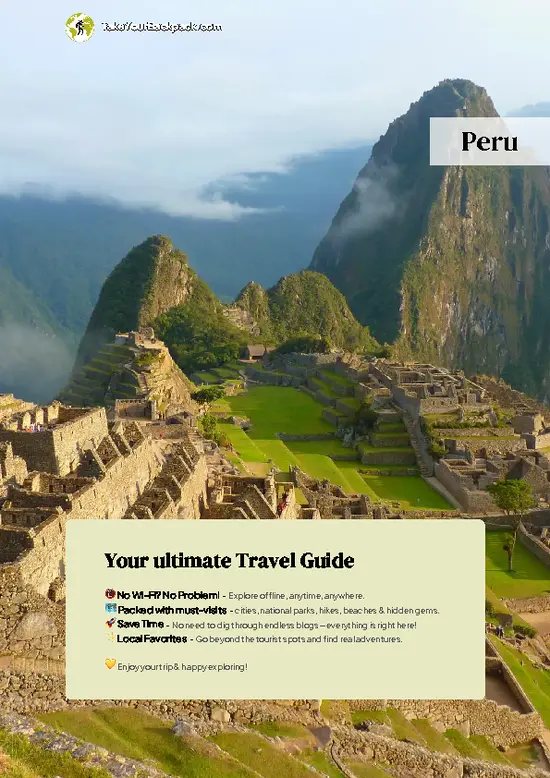
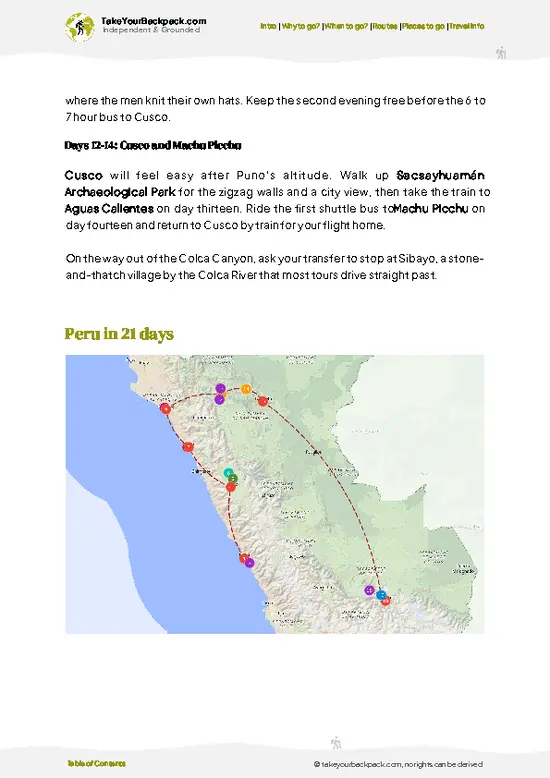
example page 0 from our offline Travel Guide for Peru
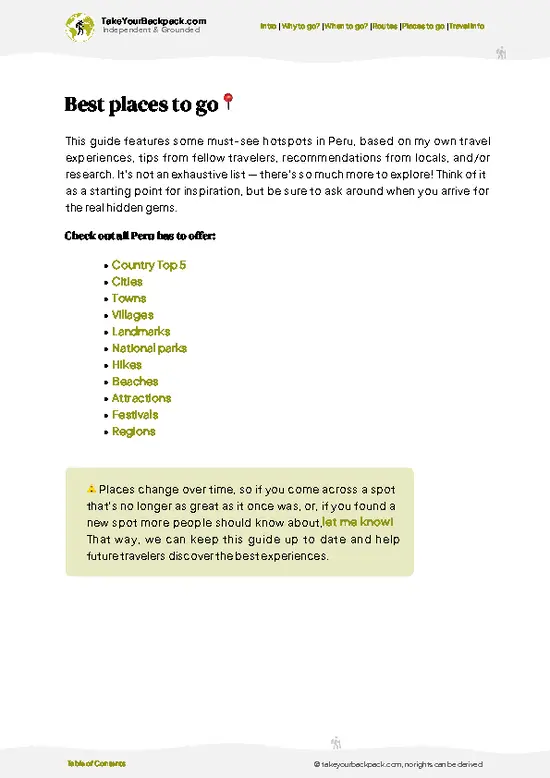
example page 1 from our offline Travel Guide for Peru
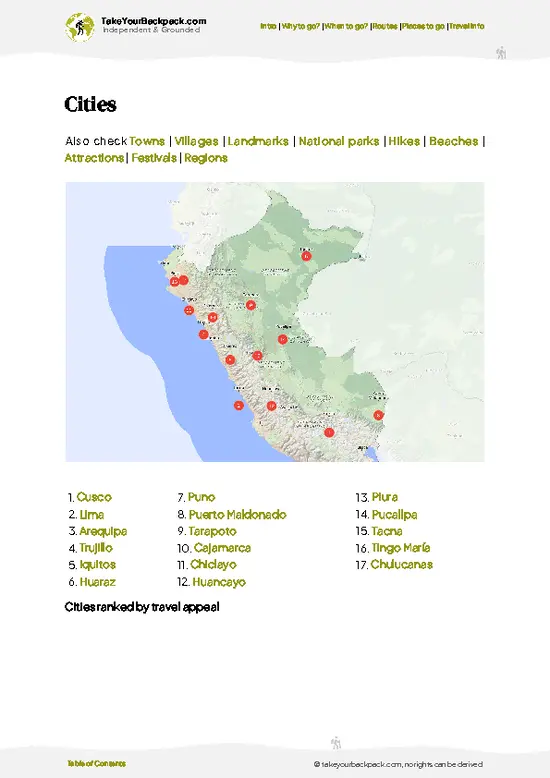
example page 2 from our offline Travel Guide for Peru
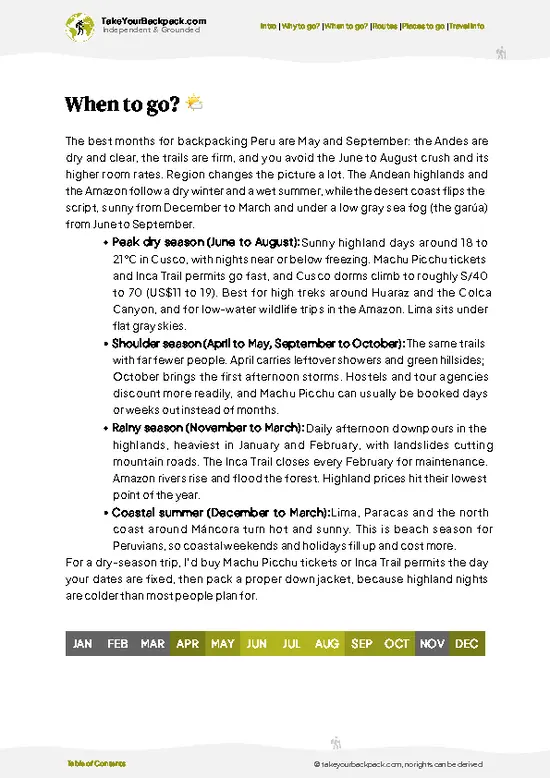
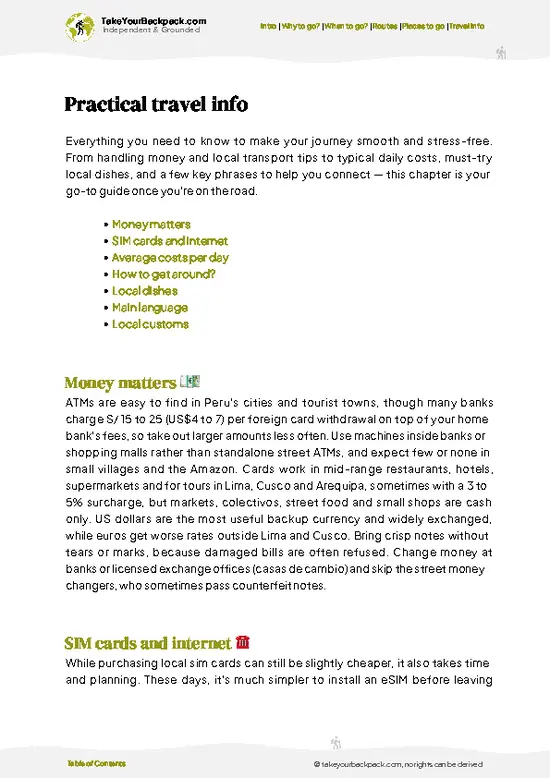
example page 3 from our offline Travel Guide for Peru
example page 4 from our offline Travel Guide for Peru
example page 5 from our offline Travel Guide for Peru
example page 6 from our offline Travel Guide for Peru
example page 7 from our offline Travel Guide for Peru
Loading the map 🌍
CLICK TO FILTER
cities
towns
villages
landmarks
national parks
hikes
beaches
attractions
festivals
regions
SHOW COUNTRY’S BESTSHOW ALL

✨ Why go?
Ranked #3 city in Peru
What sets this place apart

Arequipa earns its place on a southern Peru route because it does three jobs at once. It is the easiest spot to adjust to altitude, it is the gateway to some of the deepest canyon country in the Andes, and it feeds you better than almost anywhere else in the country. The center is compact, so you can walk from a hostel to nearly everything, and the sillar-stone arcades make wandering a pleasure rather than a chore. Hostels cluster near the main square and run from basic dorms to rooftop spots with direct views of Misti volcano, which is the best free entertainment in town. Adventure operators here run trekking trips into Colca Canyon and volcano climbs, so you can book and leave within a day. Buses to Cusco, Puno and the coast leave from the terminals daily, which keeps onward travel simple. … read more 👉
Arequipa earns its place on a southern Peru route because it does three jobs at once. It is the easiest spot to adjust to altitude, it is the gateway to some of the deepest canyon country in the Andes, and it feeds you better than almost anywhere else in the country. The center is compact, so you can walk from a hostel to nearly everything, and the sillar-stone arcades make wandering a pleasure rather than a chore. Hostels cluster near the main square and run from basic dorms to rooftop spots with direct views of Misti volcano, which is the best free entertainment in town. Adventure operators here run trekking trips into Colca Canyon and volcano climbs, so you can book and leave within a day. Buses to Cusco, Puno and the coast leave from the terminals daily, which keeps onward travel simple. Nightlife is steady rather than wild, with bars and live music around Calle San Francisco. Plan on two to three nights here as a base; a short stop works if you only want the food and the main sights.

💡 HighlightsKey sights and experiences for travelers

  1. Monasterio de Santa Catalina: A walled citadel-within-a-city founded in the 1500s, with blue and terracotta-painted lanes, cloisters, and old kitchens. Go at opening (around 9 AM) or after 4 PM when the light is warm and tour groups thin out. Entry is about US$14 to 15, and it takes 1.5 to 2 hours.
  2. Plaza de Armas: The main square, framed by white sillar arcades and the cathedral, with Misti behind. Best in the late afternoon and evening when it fills with locals. Free, 30 to 60 minutes.
  3. Museo Santuarios Andinos: Home of Juanita, an Inca girl sacrificed on Ampato and preserved in ice for centuries. Visits are by guided tour, usually in English or Spanish. Morning is quieter. About US$6 to 7, 1 hour.
  4. Mirador de Yanahuara: A viewpoint lined with carved sillar arches, looking straight to Misti and
… read more 👉
  1. Monasterio de Santa Catalina: A walled citadel-within-a-city founded in the 1500s, with blue and terracotta-painted lanes, cloisters, and old kitchens. Go at opening (around 9 AM) or after 4 PM when the light is warm and tour groups thin out. Entry is about US$14 to 15, and it takes 1.5 to 2 hours.
  2. Plaza de Armas: The main square, framed by white sillar arcades and the cathedral, with Misti behind. Best in the late afternoon and evening when it fills with locals. Free, 30 to 60 minutes.
  3. Museo Santuarios Andinos: Home of Juanita, an Inca girl sacrificed on Ampato and preserved in ice for centuries. Visits are by guided tour, usually in English or Spanish. Morning is quieter. About US$6 to 7, 1 hour.
  4. Mirador de Yanahuara: A viewpoint lined with carved sillar arches, looking straight to Misti and across the city. Come late afternoon for the best light. Free, 45 to 60 minutes including the walk through the quiet neighborhood.
  5. Mercado San Camilo: The central market, with fruit juices, cheese, bread stalls and cheap set lunches. Go in the morning when produce is freshest. Budget US$2 to 5 for a snack or juice, 45 to 60 minutes.
  6. Iglesia de la Compañía: A Jesuit church with an ornate mestizo-baroque facade and the painted San Ignacio chapel. Visit in the morning. Church entry is around US$1 to 2, and the cloisters nearby have craft shops. Allow 30 to 45 minutes.
  7. Museo Histórico Municipal: A small museum on the city’s history, with maps, uniforms and old photos. A good rainy-day or midday escape, and rarely crowded. Entry is roughly US$1 to 2, 45 minutes.
  8. Molino de Sabandía: A restored colonial stone mill in the green countryside just outside the center, with grazing llamas and alpacas. Best in the morning. Entry is around US$3 to 4, 1 hour.
Day trips from Arequipa include Colca Canyon and the Cruz del Cóndor viewpoint, the Salinas y Aguada Blanca reserve, and the Toro Muerto petroglyphs.

All of it fits comfortably into two full days, or one very packed one.
Spotted a mistake or missing something? Contact us.

Things to do in Arequipa

Ratings based on Tripadvisor reviews. When you book through this link, you support our work at no extra cost to you.

🏘️ NeighborhoodsWhere things are and how it's laid out

Arequipa rewards walkers, and the white-stone center, the colonial quarters and the nearby districts all sit within a few kilometers of each other. Here is how to tackle them.
  • Centro Histórico: The Plaza de Armas, the cathedral and the Jesuit church of La Compañía anchor everything, and it is flat, so you cover it on foot in half a day. The stone is sillar, a pale volcanic rock, which is why the buildings glow white in the sun. Climb to a rooftop terrace around the plaza at dusk for the volcano views, and eat your main meal on side streets, where menus cost far less than on the plaza itself.
  • Santa Catalina quarter: The huge walled convent dominates here, and the lanes around it hold small cafés and craft shops. Go right at opening or late afternoon, when tour groups thin out. Evenings are quiet.
… read more 👉
Arequipa rewards walkers, and the white-stone center, the colonial quarters and the nearby districts all sit within a few kilometers of each other. Here is how to tackle them.
  • Centro Histórico: The Plaza de Armas, the cathedral and the Jesuit church of La Compañía anchor everything, and it is flat, so you cover it on foot in half a day. The stone is sillar, a pale volcanic rock, which is why the buildings glow white in the sun. Climb to a rooftop terrace around the plaza at dusk for the volcano views, and eat your main meal on side streets, where menus cost far less than on the plaza itself.
  • Santa Catalina quarter: The huge walled convent dominates here, and the lanes around it hold small cafés and craft shops. Go right at opening or late afternoon, when tour groups thin out. Evenings are quiet.
  • San Lázaro: Arequipa’s oldest quarter, with narrow alleys and steep stairs above the center. It is a ten-minute uphill stroll, so go early for views and photos, and leave your wallet light after dark.
  • Yanahuara: Sillar arches frame Misti and the rooftops from the mirador, and the surrounding lanes are known for traditional snack stalls. Take a short taxi or the walk across the river, then wander back at your own pace.
  • Cayma and Selva Alegre: Residential, calm and green, with local markets and everyday eateries. Visit for a slower look at daily life, not for sights.

⌛️ 1 dayA smart one-day plan

A walking-and-eating day that stays inside the white stone center, with one detour to a viewpoint outside the usual circuit.

8:00 AM: Mercado San Camilo
Start with fresh fruit juice and bread with cheese at the market stalls. Take a loop through the produce aisles to see how people shop here, then walk about ten minutes to the main square.

9:30 AM: Monasterio de Santa Catalina
Arrive when it opens and get the painted lanes almost to yourself. Follow the blue and red alleys, peek into the old kitchens, and take your time. Leave by late morning and stroll toward the square.

12:00 PM: Plaza de Armas and Iglesia de la Compañía
Sit under the arcades, then step into the Jesuit church next door and look up at the carved facade. It is a pleasant, flat walk between both.

1:30 PM: Lunch at a picantería
Head … read more 👉
A walking-and-eating day that stays inside the white stone center, with one detour to a viewpoint outside the usual circuit.

8:00 AM: Mercado San Camilo
Start with fresh fruit juice and bread with cheese at the market stalls. Take a loop through the produce aisles to see how people shop here, then walk about ten minutes to the main square.

9:30 AM: Monasterio de Santa Catalina
Arrive when it opens and get the painted lanes almost to yourself. Follow the blue and red alleys, peek into the old kitchens, and take your time. Leave by late morning and stroll toward the square.

12:00 PM: Plaza de Armas and Iglesia de la Compañía
Sit under the arcades, then step into the Jesuit church next door and look up at the carved facade. It is a pleasant, flat walk between both.

1:30 PM: Lunch at a picantería
Head to a traditional spot and order rocoto relleno. Local lunches run late morning to mid-afternoon, so do not leave it for evening.

3:30 PM: Museo Santuarios Andinos
Join a guided tour to see Juanita, the ice mummy. It adds real context to the mountains around you.

5:00 PM: Mirador de Carmen Alto
Skip the busier lookouts and take a taxi to this quieter edge-of-town viewpoint, where fields run up to the volcano slopes and few tourists show up. Stay as the light fades.

7:30 PM: Calle San Francisco
Walk back for a drink at a rooftop or live-music bar, then dinner nearby.

🌤️ When to go?Weather, crowds, and seasonal trade-offs

Arequipa sits at about 2,300 meters (7,550 feet) and gets sun nearly every day of the year, so timing is mostly about rain and crowds.
  • Dry Season (May to November): Days are bright and run 20 to 24°C (68 to 75°F), while nights drop to 5 to 8°C (41 to 46°F). This is the best window for climbing Misti and trekking Colca Canyon, and also the busiest, with prices for tours and rooms at their highest.
  • Wet Season (December to March): Afternoon storms come in, usually short, with highs of 21 to 23°C (70 to 73°F) and milder nights. The mountain trails get muddy and some tours are canceled, but beds and tours cost less and the city is quieter.
  • Shoulder Months (April and late November): Skies are mostly clear, crowds are modest and rates sit between the two extremes.
  • Festivals: The city’s anniversary on
… read more 👉
Arequipa sits at about 2,300 meters (7,550 feet) and gets sun nearly every day of the year, so timing is mostly about rain and crowds.
  • Dry Season (May to November): Days are bright and run 20 to 24°C (68 to 75°F), while nights drop to 5 to 8°C (41 to 46°F). This is the best window for climbing Misti and trekking Colca Canyon, and also the busiest, with prices for tours and rooms at their highest.
  • Wet Season (December to March): Afternoon storms come in, usually short, with highs of 21 to 23°C (70 to 73°F) and milder nights. The mountain trails get muddy and some tours are canceled, but beds and tours cost less and the city is quieter.
  • Shoulder Months (April and late November): Skies are mostly clear, crowds are modest and rates sit between the two extremes.
  • Festivals: The city’s anniversary on August 15 brings parades and fireworks, and rooms fill early.
Book hotels a few weeks ahead if you arrive around mid-August.


source: climatestotravel.comJANJanuary: fair for travelingFEBFebruary: fair for travelingMARMarch: fair for travelingAPRApril: highly recommended for travelingMAYMay: excellent for travelingJUNJune: excellent for travelingJULJuly: excellent for travelingAUGAugust: excellent for travelingSEPSeptember: excellent for travelingOCTOctober: highly recommended for travelingNOVNovember: fair for travelingDECDecember: fair for traveling
peru-city-arequipa
© Google | Javier Rischmoller

✈️ The backpacker research shortcutPeru Travel Guide

An offline-friendly backpacking guide with optimized travel routes, ranked highlights, transport advice, and the best areas to stay.
example page 0 from our offline Travel Guide for Peru
example page 1 from our offline Travel Guide for Peru
example page 2 from our offline Travel Guide for Peru
example page 3 from our offline Travel Guide for Peru
example page 4 from our offline Travel Guide for Peru
example page 5 from our offline Travel Guide for Peru
example page 6 from our offline Travel Guide for Peru
example page 7 from our offline Travel Guide for Peru
The digital guide (310 pages) contains:
✅ 102 highlights, ranked by travel appeal
✅ Optimized 7, 14 & 21-day travel routes
✅ Cities, national parks, landmarks, beaches
✅ How to get around
✅ Offline-friendly for travel without Wi-Fi
👉 Click to see all 30+ guide features

📅 Plan smarter in minutes, not weeks
✅ Month by month travel advice
✅ Festivals & national holidays
✅ Budget expectations

🗺️ Go to the right places, skip the overrated ones
✅ Honest pros & cons of destinations
✅ Top hikes, parks & viewpoints
✅ Lesser-known places most travelers miss
✅ Clear “worth it vs skip it” guidance

🛏️ Travel smoothly without rookie mistakes
✅ Best areas to stay
✅ Transport systems explained simply
✅ Common scams & safety advice
✅ SIM cards, money & practical tips

🌍 Understand the country, not just visit it
✅ Culture & traditions
✅ 52 Essential phrases & customs
✅ Festivals worth planning around
✅ Traveler-friendly historical context
✅ Insights that make places more meaningful

📱 Built for real travel conditions
✅ Fully downloadable PDF
✅ Works completely offline
✅ Optimized for phone use
✅ Useful in remote areas & buses
✅ Everything in one place
Stop searching, start planning
Get instant access to your full guide. 30‑day money-back guarantee.
+ Add another guide for just

By proceeding you agree to our terms.
Sent to your inbox immediately after payment • 100% Secure Checkout
Best Backpacking Travel Advisor 2025 tourism awardBest Backpacking
Travel Advisor
2025
What others say about Take Your Backpack Guides:
⭐⭐⭐⭐⭐
Fantastic, amazing amount of information!
⭐⭐⭐⭐⭐
My goodness this is amazing, it's what I've been looking for hats off too you!
⭐⭐⭐⭐⭐
I think this is absolutely BRILLIANT
⭐⭐⭐⭐
Very complete and informative. It's still missing places, but I gotta to commend you
⭐⭐⭐⭐⭐
This is truly amazing, thank you, can't wait to explore it with my kids!
⭐⭐⭐⭐⭐
Awesome resource, thank you!
⭐⭐⭐⭐⭐
This is amazing! Can't wait to explore the ones I haven't seen
⭐⭐⭐⭐
I love this! Well done, great idea.
⭐⭐⭐⭐⭐
Thanks for taking the time to make this gem!
⭐⭐⭐⭐⭐
This might be the best website I've ever seen.
⭐⭐⭐⭐⭐
Congratulations, and thank you so much for your work; it's incredibly valuable.
⭐⭐⭐⭐
In all seriousness I think you did a great job pointing out the important spots
⭐⭐⭐⭐⭐
10/10 very good
⭐⭐⭐⭐⭐
As someone who's only just starting to visit regularly this is awesome, thank you.
⭐⭐⭐⭐
Thank you very much! I'm going to visit my dad, it's going to be very useful!
⭐⭐⭐⭐⭐
This is really cool! We'll be travelling for the first time and this definitely come in handy.
⭐⭐⭐⭐⭐
You are now our minister of culture, congratulations 👨‍💼
⭐⭐⭐⭐⭐
Just wanted to tell you that this is a pearl! Going to follow your recommendations.
⭐⭐⭐⭐⭐
This is so cool. I'll definitely be using the resource for my travels soon.
⭐⭐⭐⭐⭐
This is very impressive! Good work.
⭐⭐⭐⭐⭐
This is an amazing and informative site. Very well done!

🛏️ Where to stay?Where staying makes the most sense

The best budget base is the area within five or six blocks of the Plaza de Armas, where dorm beds and cheap private rooms cluster along the streets that lead toward Santa Catalina. Most tour agencies are here, you can walk to the main sights and restaurants, and taxis are easy to find at any hour. It is also well lit and busy until late, which suits solo travelers arriving after dark.
Noise is the only real downside. Streets right off the plaza have bars and traffic until around midnight, and some dorms sit above them, so ask for a room at the back or an upper floor. Light sleepers do better a … read more 👉
The best budget base is the area within five or six blocks of the Plaza de Armas, where dorm beds and cheap private rooms cluster along the streets that lead toward Santa Catalina. Most tour agencies are here, you can walk to the main sights and restaurants, and taxis are easy to find at any hour. It is also well lit and busy until late, which suits solo travelers arriving after dark.
Noise is the only real downside. Streets right off the plaza have bars and traffic until around midnight, and some dorms sit above them, so ask for a room at the back or an upper floor. Light sleepers do better a few blocks farther out.
The second option is the San Lázaro and Santa Catalina edge of the center, which is quieter, more residential and a little cheaper, and still ten minutes on foot from the plaza. The streets are steep and dimmer at night, so a short taxi ride home is smart after dinner.
Dorm beds are plentiful in both areas, and in the dry season weekends fill, so book a day or two ahead. Staying close to the center also keeps you near the early pickups for Colca Canyon tours.

🚌 Getting aroundMoving around without the hassle

The historic center is flat, compact and best seen on foot, but walking stops making sense once you head to outlying districts such as Yanahuara, Cayma or the bus terminals, where distances and hills add up. Traffic jams the center at rush hour, and the colorful minibuses are cheap but confusing. Most backpackers walk the middle and grab a taxi for the rest.
  • Walking: Free and quicker than any vehicle inside the central blocks. At 2,300 meters you tire faster than you expect on the first day, so slow down and drink water.
  • Taxis: Short rides in town cost about US$1.50 to 3, and the airport runs about US$5 to 8. There are no meters, so agree the fare before you get in, and use apps like Uber or inDrive, which show the price up front and avoid haggling.
  • Combis and buses: Minibuses with route numbers
… read more 👉
The historic center is flat, compact and best seen on foot, but walking stops making sense once you head to outlying districts such as Yanahuara, Cayma or the bus terminals, where distances and hills add up. Traffic jams the center at rush hour, and the colorful minibuses are cheap but confusing. Most backpackers walk the middle and grab a taxi for the rest.
  • Walking: Free and quicker than any vehicle inside the central blocks. At 2,300 meters you tire faster than you expect on the first day, so slow down and drink water.
  • Taxis: Short rides in town cost about US$1.50 to 3, and the airport runs about US$5 to 8. There are no meters, so agree the fare before you get in, and use apps like Uber or inDrive, which show the price up front and avoid haggling.
  • Combis and buses: Minibuses with route numbers and painted windshield signs cost about US$0.30 to 0.50 a ride and run roughly 5 a.m. to 10 p.m. Ask the driver or the fare collector, because routes change with traffic, and keep your bag on your lap.
  • Colectivos: Shared cars run set routes to nearby districts for about US$0.50 to 1 per seat. They leave when full, so mornings are fastest.
  • Long-distance buses: Terminals sit south of the center, a US$2 to 3 taxi away. Buses to Cusco take 10 to 11 hours for about US$15 to 30, and to Lima 15 to 17 hours for about US$25 to 45. Overnight cama seats save a hotel night.

👛 Costs (as of 19 October 2026)Travel costs and budget guide for Arequipa

A backpacker in Arequipa can expect to spend about US$33 to 57 a day, and a figure of US$44 is realistic in high season. Prices are lower than Lima and similar to Cusco, with set lunches and market food keeping costs down.
CategoryBudget RangeLocal Reality
Dorm bed (high season)US$9 to 14Central hostels with breakfast fill up from June to September.
Dorm bed (off-season)US$7 to 11Discounts are common in the wet months, and negotiating for longer stays often works.
MealsUS$9 to 16Set lunches cost US$2.50 to 5, market breakfasts are under US$2, and a restaurant dinner is US$6 to 9.
Local transportUS$1 to 4Combis cost US$0.30 to 0.50, and short taxi rides are US$1.50 to 3.
City transport passUS$0 to 2There is no pass, so you pay per ride in cash, and walking covers the center.
Activities and entry feesUS$7
… read more 👉
A backpacker in Arequipa can expect to spend about US$33 to 57 a day, and a figure of US$44 is realistic in high season. Prices are lower than Lima and similar to Cusco, with set lunches and market food keeping costs down.
CategoryBudget RangeLocal Reality
Dorm bed (high season)US$9 to 14Central hostels with breakfast fill up from June to September.
Dorm bed (off-season)US$7 to 11Discounts are common in the wet months, and negotiating for longer stays often works.
MealsUS$9 to 16Set lunches cost US$2.50 to 5, market breakfasts are under US$2, and a restaurant dinner is US$6 to 9.
Local transportUS$1 to 4Combis cost US$0.30 to 0.50, and short taxi rides are US$1.50 to 3.
City transport passUS$0 to 2There is no pass, so you pay per ride in cash, and walking covers the center.
Activities and entry feesUS$7 to 14Santa Catalina Monastery costs about US$14, and the museum with Juanita is about US$6 to 8.
MiscellaneousUS$3 to 6Bottled water, snacks, laundry and SIM data.
Total Daily BudgetUS$33 to 57About US$44 in high season, using the middle of each range.
Eat the big meal at midday, since set lunches cost about half of what the same food costs at dinner.


source: peru.travel
⚠️ Prices can change and everyone travels differently, so take this as a rough guide. Hope it helps you plan your adventure!

🚌 Day tripsExploring the surroundings

Arequipa is an excellent base for day trips, since volcano, canyon and countryside options leave from the center before dawn and return by evening.
Colca Canyon (one-day tour):
The canyon is among the deepest in the world, and condors ride the morning thermals at the Cruz del Cóndor lookout. The one-day tour starts around 3 a.m., takes about 3.5 to 4 hours each way and costs roughly US$25 to 40, plus a US$20 entrance ticket. It is a long day, so keep the trek for a two-day trip, and arrive early because condors fade by mid-morning. Best from May to November.
👉 Explore Colca Canyon
Salinas y Aguada Blanca Reserve:
This high plateau of vicuñas and flamingo lagoons stretches beneath Misti and Chachani at around 4,000 meters. Half-day tours take 4 to 5 hours and cost about US$15 to 25. Many first-timers … read more 👉
Arequipa is an excellent base for day trips, since volcano, canyon and countryside options leave from the center before dawn and return by evening.
Colca Canyon (one-day tour):
The canyon is among the deepest in the world, and condors ride the morning thermals at the Cruz del Cóndor lookout. The one-day tour starts around 3 a.m., takes about 3.5 to 4 hours each way and costs roughly US$25 to 40, plus a US$20 entrance ticket. It is a long day, so keep the trek for a two-day trip, and arrive early because condors fade by mid-morning. Best from May to November.
👉 Explore Colca Canyon
Salinas y Aguada Blanca Reserve:
This high plateau of vicuñas and flamingo lagoons stretches beneath Misti and Chachani at around 4,000 meters. Half-day tours take 4 to 5 hours and cost about US$15 to 25. Many first-timers underestimate the altitude, so chew coca leaves or sip tea and don’t rush uphill.

Campiña and Sabandía:
Green terraced fields and a restored stone mill lie only 8 kilometers (5 miles) from town. A colectivo or taxi costs about US$1 to 5 each way, and the entry to the mill is under US$2. Spend a morning here, then eat at a rural picanteria for local stews.

Toro Muerto Petroglyphs:
Thousands of carved figures cover a vast field of volcanic boulders in the desert near Corire, around 3 hours away. Go with a tour for about US$30 to 50 or a shared car, wear a hat, and bring water, because there is no shade. Mornings are cooler.

🍲 FoodEating & Drinking in Arequipa

Arequipa has its own cooking tradition, hot and hearty, built around local chilies. Try rocoto relleno, a spicy red pepper stuffed with beef, peanuts and cheese, and adobo arequipeño, pork stewed in chicha vinegar and served on Sunday mornings. Soltero de queso, a fresh cheese salad with broad beans, is the lighter pick, and chupe de camarones is a rich river shrimp soup from the valleys. Finish with queso helado, which despite its name is a cinnamon coconut ice cream.
The traditional place to eat is the picantería, a lunchtime-only spot that serves regional stews and heavy plates, usually from midday to around 4 p.m. Do not expect dinner service at these places. For quick budget meals, set lunch menus run about US$2.50 to 5 on the side streets, and the San Camilo market sells fresh juices, … read more 👉
Arequipa has its own cooking tradition, hot and hearty, built around local chilies. Try rocoto relleno, a spicy red pepper stuffed with beef, peanuts and cheese, and adobo arequipeño, pork stewed in chicha vinegar and served on Sunday mornings. Soltero de queso, a fresh cheese salad with broad beans, is the lighter pick, and chupe de camarones is a rich river shrimp soup from the valleys. Finish with queso helado, which despite its name is a cinnamon coconut ice cream.
The traditional place to eat is the picantería, a lunchtime-only spot that serves regional stews and heavy plates, usually from midday to around 4 p.m. Do not expect dinner service at these places. For quick budget meals, set lunch menus run about US$2.50 to 5 on the side streets, and the San Camilo market sells fresh juices, cheese and breakfast for even less. Avoid the plaza arcades for cheap eating, since you pay for the view.
For a drink, try a pisco sour or a local craft beer in the bars near Calle San Francisco in the evening.

🛡️ SafetyStaying Safe: What Travelers Should Know

Arequipa is calm and easy for most travelers, and the usual problems are petty theft and a few annoyances. Watch bags and phones around the Plaza de Armas, the San Camilo market and bus terminals, where pickpockets work crowds and slit bags on packed combis. Carry only the cash you need and keep your phone out of sight while walking. After dark, stick to lit streets and take a taxi (booked through an app or hotel) instead of flagging one on the street. Solo travelers, including women, usually find the center comfortable in the evening, though quiet side streets and the hills of San Lázaro deserve extra care late at night. Tour touts sometimes push low-price Colca or Misti trips, and cheap deals can mean poor guides or weak gear, so compare a couple of agencies and confirm what is included. … read more 👉
Arequipa is calm and easy for most travelers, and the usual problems are petty theft and a few annoyances. Watch bags and phones around the Plaza de Armas, the San Camilo market and bus terminals, where pickpockets work crowds and slit bags on packed combis. Carry only the cash you need and keep your phone out of sight while walking. After dark, stick to lit streets and take a taxi (booked through an app or hotel) instead of flagging one on the street. Solo travelers, including women, usually find the center comfortable in the evening, though quiet side streets and the hills of San Lázaro deserve extra care late at night. Tour touts sometimes push low-price Colca or Misti trips, and cheap deals can mean poor guides or weak gear, so compare a couple of agencies and confirm what is included. Altitude gives the most common trouble, so take it easy on day one.

FAQCommon questions from travelers

Three days covers Arequipa well: one for the Plaza de Armas, the Santa Catalina Monastery (US$14 for foreign adults) and the Yanahuara viewpoint, one for the Mundo Alpaca and Sabandía area or the market and cafés, and one for a Colca Canyon tour. Add a fourth and fifth day if you want to climb Misti (2 days) or trek into the canyon itself. Arequipa sits at about 2,330 meters, so the first day should stay easy.
Arequipa is one of the easier Peruvian cities for solo backpackers, with a walkable, well-lit historic center where the main risks are petty theft and unlicensed taxis. Keep your phone tucked away near the bus terminal and the San Camilo market, order taxis through an app or your hostel, and avoid empty side streets late at night. Solo women commonly travel here, though catcalling happens and tour operators sometimes push hard on Colca Canyon deals, so compare two or three before paying.
Arequipa is known as the White City for its buildings made of pale volcanic sillar stone, and for the snow-capped Misti volcano (5,822 meters) that looms over the skyline. The big draws are the Santa Catalina Monastery, a walled colonial complex entered for US$14 as a foreign adult, and the gateway to Colca Canyon, roughly 3 hours away by road before the tour even begins. Food is a major reason to come too, especially rocoto relleno and the spicy chicha-bar cooking of the picanterías.
⚠️ Things can change over time, so always validate details locally before you go.

Other Peruvian cities near Arequipa

Explore more nearby:

  • Puno—Lake Titicaca, reed islands, Taquile knitters, 3,830 meters| 174 km away
  • Tacna—Border city, Eiffel fountain, railway museum, desert valley| 225 km away
  • Cusco—Inca masonry, steep cobbles, Sacred Valley gateway, San Blas workshops| 323 km away

💡 Not sure where to go next?
Create a personalized itinerary for Peru including Arequipa and the places that fit your trip.

Generate my itinerary

👉 Discover all cities

Or checkout all Peru has to offer (think cities, towns, villages, national parks, hikes, beaches, festivals)
Country photo of Peru

We 💚 feedbackIs it worth it?

Give Arequipa three nights. The first day is for acclimatizing and eating, the second for the convent and the markets, the third for a hike or trip into the canyon country. Two nights feels rushed if you want a trek, while a week is too long unless you are studying Spanish. I would book the Colca trip locally, not from home.

✈️ When did I visit Peru?
Peru I visited during my half year trip through South and Central America back in 2003

✍️ Help improve this page!
The information on this page is based on my own backpacking experience in Peru, supplemented with up-to-date research and feedback from other travelers. Travel details can change, so if you notice anything outdated or incomplete, feel free to let me know.


🙋‍♂️ Give feedback

👋 Meet the founderWho’s Behind Take Your Backpack?

Johan, backpacker and founder of TakeYourBackpackHi, I’m Johan (Netherlands 🇳🇱), the creator of TakeYourBackpack. Over the past 3 decades, I’ve backpacked through 90+ countries across six continents, gaining extensive experience with independent travel, long-term trips, and overland routes.

This site is built on a combination of firsthand travel experience and carefully curated insights from other backpackers. Many guides are based on places I’ve personally visited, while others bring together tips, observations, and practical advice shared by trusted travelers I’ve met along the way.

The goal is to provide realistic, experience-driven guidance — not generic itineraries — so you can explore destinations with better context, clearer expectations, and more confidence.