×

Peru🇵🇪 | regionsCuzco Sacred ValleyInca ruins, terraced valleys, Andean villages | things to do and best time to go

Explore Titicaca National ReserveExplore Huacachina Desert Oasis

Backpacking in Cuzco Sacred Valley
🏆 Top pickregion ranked #1
By Johan Kruseman 🇳🇱 | Updated September 4, 2026

Everyone thinks the Cuzco–Sacred Valley is just the waiting room for Machu Picchu. It isn’t. It’s the engine room of Andean culture, and also one of the easiest places in Peru to accidentally overspend and under-experience.

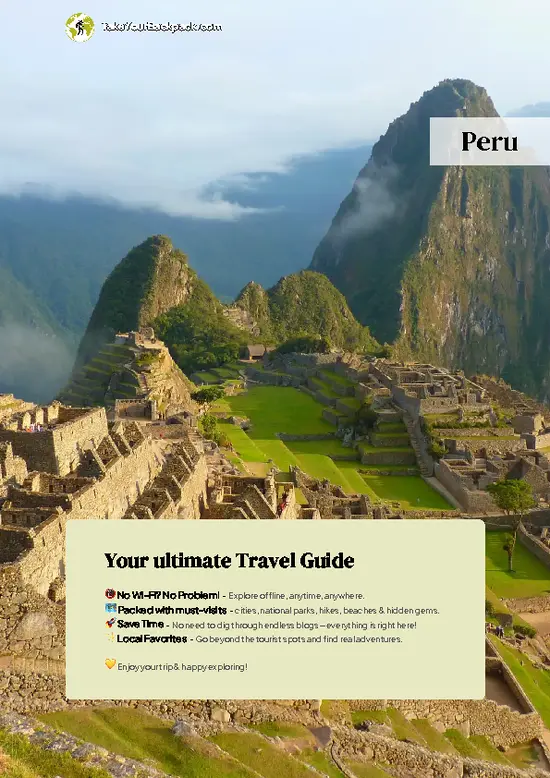
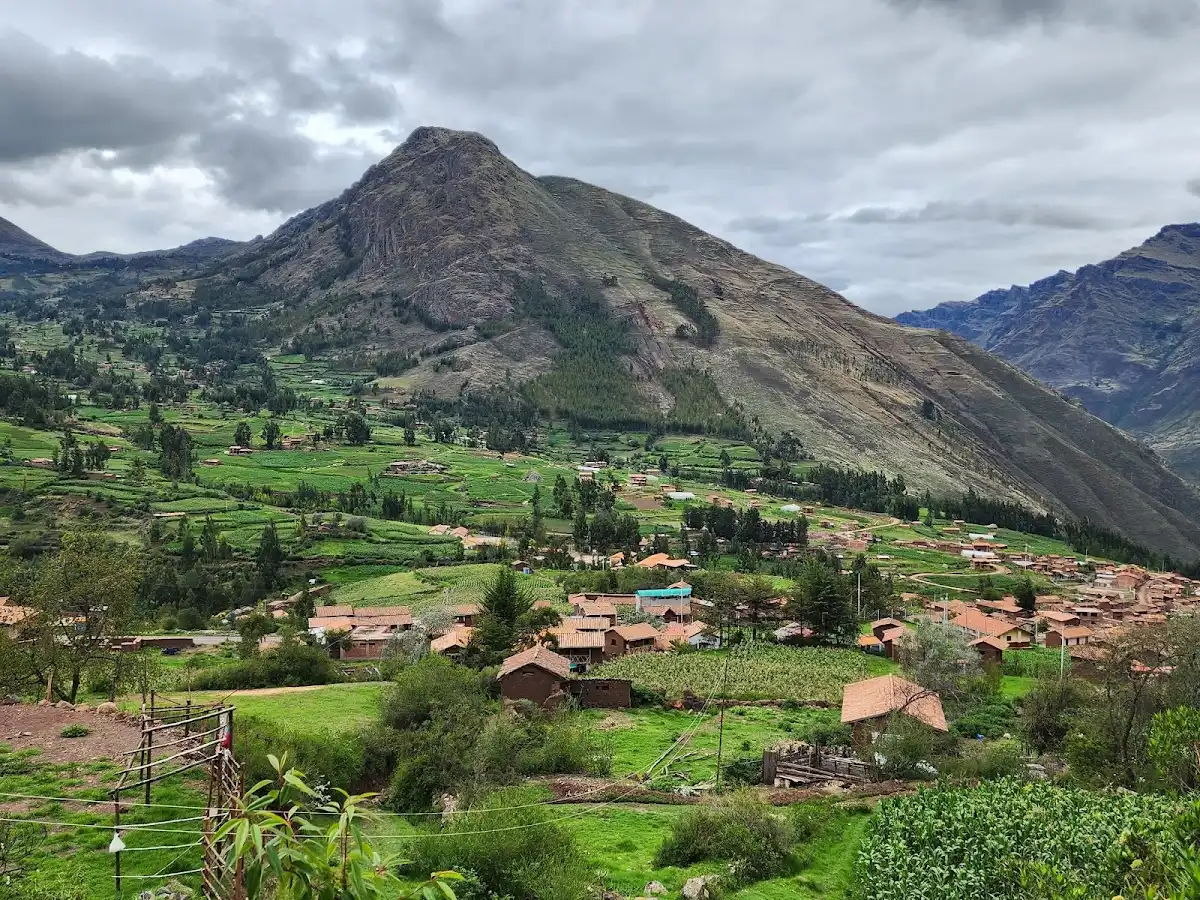
You’re in southern Peru, high in the Andes, with Cuzco as the hub and the Sacred Valley running northwest toward Ollantaytambo and Machu Picchu. For backpackers, it’s a sweet spot: wild mountains, terraced valleys, Inca ruins everywhere, and a bus network so dense you can town-hop on pocket change. Cuzco itself is busy and polished, with real history under a layer of tourist gloss; the Plaza de Armas can feel like a theme park, but duck two streets away and you’re haggling for menú del día with Quechua-speaking grandmothers. The Valley towns split the difference: Pisac for markets and mellow hostels, Ollantaytambo for cobbled lanes and sunrise trains. Compared with Arequipa or Huaraz, it’s pricier and more crowded, but also more compact and easier to stitch into a tight itinerary.

Discover everything you want to know in the 📖 Peru Travel Guide.


Get your Peru guide
113 ranked highlights, routes & tips, works offline (416 pages)
Loading the map 🌍
CLICK TO FILTER
cities
towns
villages
landmarks
national parks
hikes
beaches
attractions
festivals
regions
SHOW COUNTRY’S BESTSHOW ALL

✨ Why go?
Ranked #1 region in Peru
Why Cuzco Sacred Valley should be on your travel list

In the Cuzco Sacred Valley, backpackers find a sweet spot where time, money, and comfort converge. This region offers a variety of landscapes — from lush valleys to towering mountains — all within a short distance. You can hike, explore ancient ruins, or chill by a river without the hassle of constant relocation.

Transport here is a breeze. Buses and colectivos run frequently, giving you the flexibility to roam at your own pace. Want to hit up Pisac for its market and ruins one day, then trek to Ollantaytambo the next? Easy.

But it’s not just about the sights. The Sacred Valley is a place where nature and culture intertwine seamlessly. You can sip on a local brew while chatting with artisans, or take a cooking class that dives into traditional Peruvian cuisine. This blend of experiences … read more 👉
In the Cuzco Sacred Valley, backpackers find a sweet spot where time, money, and comfort converge. This region offers a variety of landscapes — from lush valleys to towering mountains — all within a short distance. You can hike, explore ancient ruins, or chill by a river without the hassle of constant relocation.

Transport here is a breeze. Buses and colectivos run frequently, giving you the flexibility to roam at your own pace. Want to hit up Pisac for its market and ruins one day, then trek to Ollantaytambo the next? Easy.

But it’s not just about the sights. The Sacred Valley is a place where nature and culture intertwine seamlessly. You can sip on a local brew while chatting with artisans, or take a cooking class that dives into traditional Peruvian cuisine. This blend of experiences allows for slow travel, letting you soak in the essence of the region without feeling rushed.

So, if you’re looking to stretch your time and money while diving deep into the heart of Peru, the Sacred Valley is your playground.
Want to include Cuzco Sacred Valley in your Peru route?
Create a personalized Peru itinerary that includes Cuzco Sacred Valley and the places that fit your trip — based on your travel style, budget, and available time. Get your route in seconds.

Generate my trip

💡 HighlightsEssential experiences to have while visiting Cuzco Sacred Valley

  1. Pisac Archaeological Park — Huge terraced hilltop complex with tombs carved into the cliff and sweeping views of the valley. Walk the terraces, check out the burial caves and watch how the town below still uses the same agricultural logic the Incas planned; sunrise here is quietly special.
  2. Pisac Market (Village Feria) — One of the best places to see everyday Andean life: farmers selling produce, handmade textiles straight from nearby communities, and local snacks you won’t get in the big tourist markets. It’s a lively, colorful contrast to the ruins above.
  3. Ollantaytambo Fortress & Living Town — A working Inca town where narrow streets, original foundations and an imposing stone fortress meet daily life; the terraces and carved stones feel raw and immediate. The town’s still-inhabited layout
read more 👉
  1. Pisac Archaeological Park — Huge terraced hilltop complex with tombs carved into the cliff and sweeping views of the valley. Walk the terraces, check out the burial caves and watch how the town below still uses the same agricultural logic the Incas planned; sunrise here is quietly special.
  2. Pisac Market (Village Feria) — One of the best places to see everyday Andean life: farmers selling produce, handmade textiles straight from nearby communities, and local snacks you won’t get in the big tourist markets. It’s a lively, colorful contrast to the ruins above.
  3. Ollantaytambo Fortress & Living Town — A working Inca town where narrow streets, original foundations and an imposing stone fortress meet daily life; the terraces and carved stones feel raw and immediate. The town’s still-inhabited layout — people living above and below the terraces — is a rare, living example of Inca urban planning. (Personal favorite)
  4. Pinkuylluna Inca Storehouses (Ollanta hillside) — Hidden gem: climb the short trail above Ollantaytambo to see the rounded Inca storehouses carved into the rock. Fewer people go up here, so you get quiet views of the town and terraces below — perfect for a low-key half-hour escape.
  5. Moray Circular Terraces — Those concentric, amphitheater-like agricultural terraces aren’t just photogenic; they’re an Inca experimental “laboratory” of microclimates. The strange, precise geometry and the way crops would have been trialed here make Moray unlike any other archaeological site in Peru.
  6. Salineras de Maras (Maras Salt Mines) — Thousands of stepped salt pans clinging to a hillside, still harvested by local families using ancient techniques. The color, scale and human continuity here are unique: it’s a landscape shaped by both nature and centuries of practical craft.
  7. Chinchero — Weaving Tradition & Inca Terraces — A small town where colonial church frescoes, Inca terrace backdrops and active weaving cooperatives sit together. It’s one of the clearest places to see living textile traditions: natural dyes, back-strap looms and the whole storytelling behind each pattern.
  8. Willoq (traditional Quechua community) — Hidden gem: a remote, authentic village near Ollantaytambo where residents still wear ancestral clothing and maintain old customs. Visiting is about quiet observation and respectful exchange — markets and homestays here are local, not touristy.
  9. Huchuy Qosqo (Little Cusco) ruins — Hidden gem: reached by a scenic hike above the Sacred Valley, this compact Inca settlement offers fantastic valley panoramas and fewer crowds than the big sites. The walk up is rewarding and the site’s atmosphere feels intimate and intact.
  10. Patacancha Valley & Community Treks — Local experience: short multi-hour treks into Patacancha take you past highland farms, alpaca herds and small weaving villages not flooded with tour groups. It’s the best way to see everyday high-Andean life and support local artisans directly.
Spotted a mistake or missing something? Contact us.

Things to do around Cuzco Sacred Valley

Ratings based on Tripadvisor reviews. When you book through this link, you support our work at no extra cost to you.

⌛️ 5 daysSeeing the highlights in 5 days

Day 1: Cuzco
Cuzco is your launchpad. Spend the day acclimatizing to the altitude and soaking in the vibrant culture. Explore the Plaza de Armas, grab a bite at a local market, and visit the San Pedro Market for fresh juices and street food. This sets the pace for your journey. You’ll need energy for the days ahead, and the local flavors will fuel your spirit.

Day 2: Sacred Valley (Pisac)
Head to Pisac early. The bus ride is about an hour, and it’s a scenic introduction to the Sacred Valley. The ruins here are stunning, but the real treasure is the market. Arrive on a Sunday for the full experience. You’ll find everything from textiles to local crafts. This day is about immersing yourself in local life, which is a crucial part of the Sacred Valley experience.

Day 3: Sacred Valley (Ollantaytambo) … read more 👉
Day 1: Cuzco
Cuzco is your launchpad. Spend the day acclimatizing to the altitude and soaking in the vibrant culture. Explore the Plaza de Armas, grab a bite at a local market, and visit the San Pedro Market for fresh juices and street food. This sets the pace for your journey. You’ll need energy for the days ahead, and the local flavors will fuel your spirit.

Day 2: Sacred Valley (Pisac)
Head to Pisac early. The bus ride is about an hour, and it’s a scenic introduction to the Sacred Valley. The ruins here are stunning, but the real treasure is the market. Arrive on a Sunday for the full experience. You’ll find everything from textiles to local crafts. This day is about immersing yourself in local life, which is a crucial part of the Sacred Valley experience.

Day 3: Sacred Valley (Ollantaytambo)
Travel to Ollantaytambo next. The train station here is a gateway to Machu Picchu, but don’t rush. Spend the day exploring the ruins and the charming streets. The town is a living Incan site, and you can feel the history in the air. This is where you’ll want to linger, soaking in the atmosphere and planning your next moves.

Day 4: Machu Picchu
This is the big one. Take the early train from Ollantaytambo to Aguas Calientes. Arrive at Machu Picchu before the crowds. The sunrise view is worth every penny. Spend the day wandering the ruins, and don’t miss the hike to Huayna Picchu for a breathtaking perspective. This is the highlight of your trip, the moment that justifies every step you’ve taken.

Day 5: Off-Path Reward (Moray & Maras)
On your way back to Cuzco, take a detour to Moray and Maras. The circular terraces of Moray are a fascinating agricultural experiment, and the salt mines of Maras are visually striking. This off-path reward adds depth to your understanding of Incan ingenuity.

If you can only pick one day, make it Day 4. Machu Picchu is the crown jewel of the Sacred Valley, and experiencing it at sunrise is a memory that will stay with you long after the trip ends.
Turn your Cuzco Sacred Valley visit into an Peru adventure
Build a complete Peru route with Cuzco Sacred Valley, hidden gems, must-see destinations, and realistic travel times included.

Generate my trip

🌤️ When to go?Best time to visit Cuzco Sacred Valley


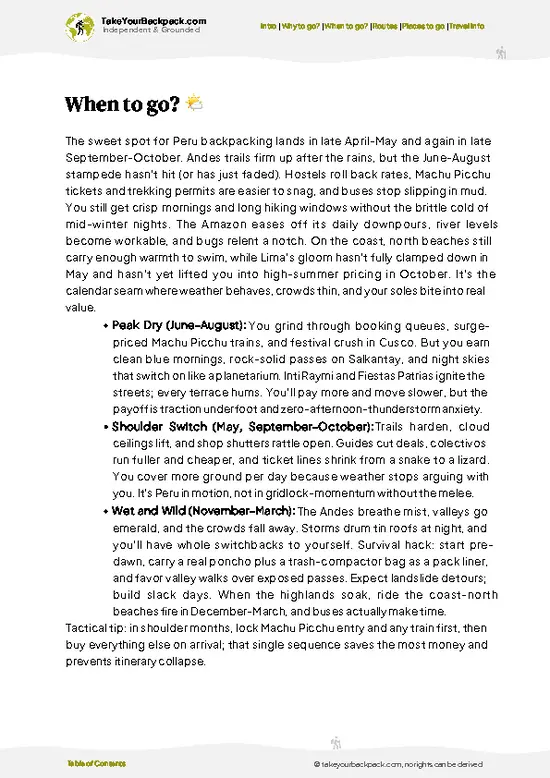
  • Weather: The dry season from May to September is your best bet—clear skies and almost no rain. The wet season, October to April, can turn trails into muddy messes and cloud your mountain views.

  • Temperature: Days in the dry season hover around 18-20°C (64-68°F), perfect for hiking without overheating. Nights dip sharply to 0-5°C (32-41°F), so pack layers. Wet season nights stay milder but wetter.

  • Daylight Hours: Around 11-12 hours of daylight year-round, but the dry season’s crisp mornings and longer sunny afternoons give you more reliable trekking windows.

  • Crowds: June to August is peak season—expect busloads of tourists at Machu Picchu and Ollantaytambo. Shoulder months May and September offer a quieter vibe without sacrificing weather.

  • Seasonal Activities: June’s Inti Raymi festival
read more 👉

  • Weather: The dry season from May to September is your best bet—clear skies and almost no rain. The wet season, October to April, can turn trails into muddy messes and cloud your mountain views.

  • Temperature: Days in the dry season hover around 18-20°C (64-68°F), perfect for hiking without overheating. Nights dip sharply to 0-5°C (32-41°F), so pack layers. Wet season nights stay milder but wetter.

  • Daylight Hours: Around 11-12 hours of daylight year-round, but the dry season’s crisp mornings and longer sunny afternoons give you more reliable trekking windows.

  • Crowds: June to August is peak season—expect busloads of tourists at Machu Picchu and Ollantaytambo. Shoulder months May and September offer a quieter vibe without sacrificing weather.

  • Seasonal Activities: June’s Inti Raymi festival in Cuzco is a cultural jackpot but book well in advance. The dry season also means better conditions for exploring ruins and high-altitude hikes.

  • Price Fluctuations: Peak months jack up prices on lodging and tours. Booking in shoulder seasons can save you 20-30% without losing the essentials.


Pro-tip: Arrive late April or early May to catch the tail end of the wet season’s lush greenery, then ride the dry season’s perfect trail conditions before the crowds flood in.


source: climatestotravel.comJANJanuary: fair for travelingFEBFebruary: below average for travelingMARMarch: fair for travelingAPRApril: good for travelingMAYMay: highly recommended for travelingJUNJune: highly recommended for travelingJULJuly: highly recommended for travelingAUGAugust: highly recommended for travelingSEPSeptember: highly recommended for travelingOCTOctober: fair for travelingNOVNovember: fair for travelingDECDecember: fair for traveling
peru-region-cuzco-sacred-valley
© Google |

✈️ The backpacker research shortcutPeru Travel Guide

An offline-friendly backpacking guide with optimized travel routes, ranked highlights, transport advice, and the best areas to stay.
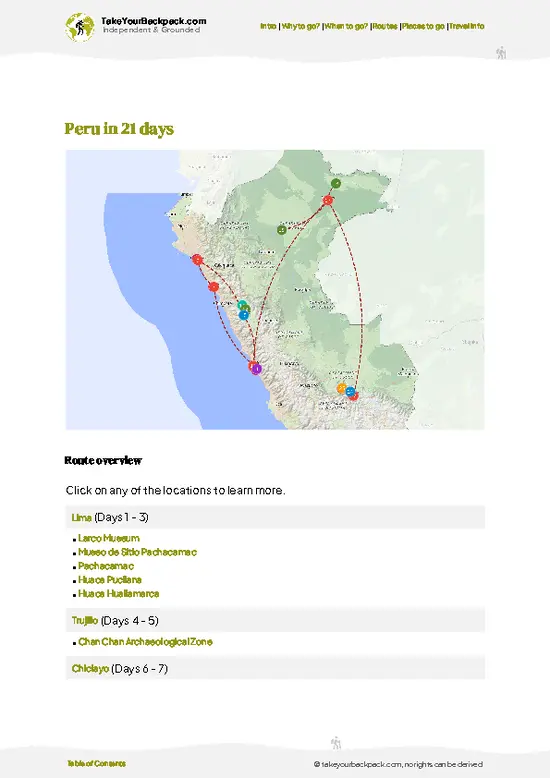
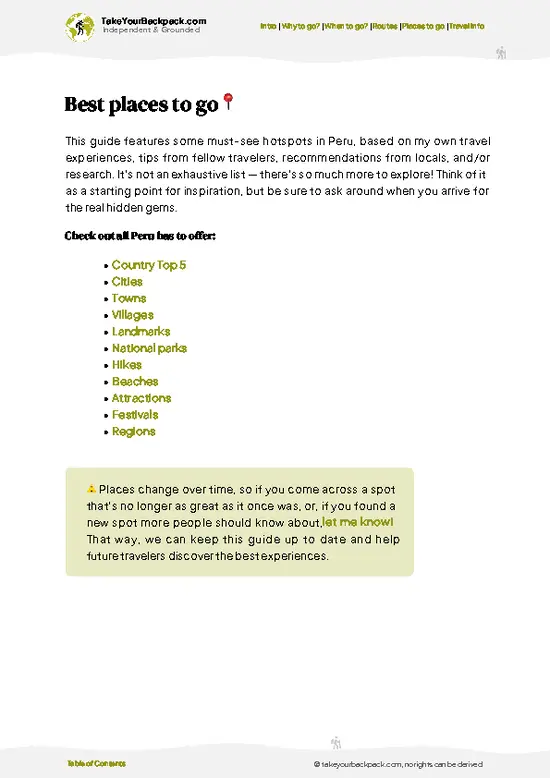
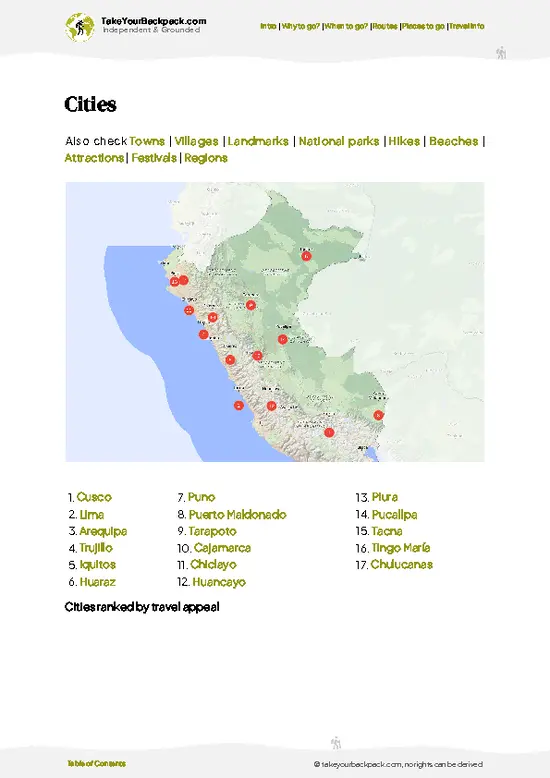
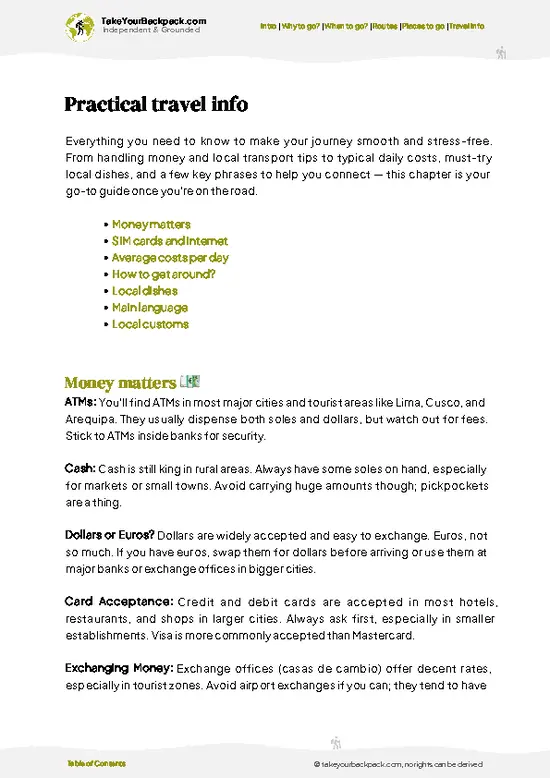
example page 0 from our offline Travel Guide for Peru
example page 1 from our offline Travel Guide for Peru
example page 2 from our offline Travel Guide for Peru
example page 3 from our offline Travel Guide for Peru
example page 4 from our offline Travel Guide for Peru
example page 5 from our offline Travel Guide for Peru
example page 6 from our offline Travel Guide for Peru
example page 7 from our offline Travel Guide for Peru
The digital guide (416 pages) contains:
113 highlights, ranked by travel appeal
Optimized 7, 14 & 21-day travel routes
Cities, national parks, landmarks, beaches
How to get around
Offline-friendly for travel without Wi-Fi
👉 Click to see all 30+ guide features

📅 Plan smarter in minutes, not weeks
Month by month travel advice
Festivals & national holidays
Budget expectations

🗺️ Go to the right places, skip the overrated ones
Honest pros & cons of destinations
Top hikes, parks & viewpoints
Lesser-known places most travelers miss
Clear “worth it vs skip it” guidance

🛏️ Travel smoothly without rookie mistakes
Best areas to stay
Transport systems explained simply
Common scams & safety advice
SIM cards, money & practical tips

🌍 Understand the country, not just visit it
Culture & traditions
52 Essential phrases & customs
Festivals worth planning around
Traveler-friendly historical context
Insights that make places more meaningful

📱 Built for real travel conditions
Fully downloadable PDF
Works completely offline
Optimized for phone use
Useful in remote areas & buses
Everything in one place
Save weeks of stressful planning
Get instant access to your full guide. 30‑day money-back guarantee.
+ Add another guide for just US$7.80

By proceeding you agree to our terms.
Sent to your inbox immediately after payment • 100% Secure Checkout
Best Backpacking Travel Advisor 2025 tourism awardBest Backpacking
Travel Advisor
2025
What others say about Take Your Backpack Guides:
⭐⭐⭐⭐⭐
Fantastic, amazing amount of information!
⭐⭐⭐⭐⭐
My goodness this is amazing, it's what I've been looking for hats off too you!
⭐⭐⭐⭐⭐
I think this is absolutely BRILLIANT
⭐⭐⭐⭐
Very complete and informative. It's still missing places, but I gotta to commend you
⭐⭐⭐⭐⭐
This is truly amazing, thank you, can't wait to explore it with my kids!
⭐⭐⭐⭐⭐
Awesome resource, thank you!
⭐⭐⭐⭐⭐
This is amazing! Can't wait to explore the ones I haven't seen
⭐⭐⭐⭐
I love this! Well done, great idea.
⭐⭐⭐⭐⭐
Thanks for taking the time to make this gem!
⭐⭐⭐⭐⭐
This might be the best website I've ever seen.
⭐⭐⭐⭐⭐
Congratulations, and thank you so much for your work; it's incredibly valuable.
⭐⭐⭐⭐
In all seriousness I think you did a great job pointing out the important spots
⭐⭐⭐⭐⭐
10/10 very good
⭐⭐⭐⭐⭐
As someone who's only just starting to visit regularly this is awesome, thank you.
⭐⭐⭐⭐
Thank you very much! I'm going to visit my dad, it's going to be very useful!
⭐⭐⭐⭐⭐
This is really cool! We'll be travelling for the first time and this definitely come in handy.
⭐⭐⭐⭐⭐
You are now our minister of culture, congratulations 👨‍💼
⭐⭐⭐⭐⭐
Just wanted to tell you that this is a pearl! Going to follow your recommendations.
⭐⭐⭐⭐⭐
This is so cool. I'll definitely be using the resource for my travels soon.
⭐⭐⭐⭐⭐
This is very impressive! Good work.
⭐⭐⭐⭐⭐
This is an amazing and informative site. Very well done!

🛏️ Where to stay?Best areas to stay in Peru

When you hit the Sacred Valley, you want to be where the action is, but also where you can kick back and soak it all in. Start with Ollantaytambo. This town is a backpacker’s dream. It’s got a laid-back vibe, stunning ruins, and a train to Machu Picchu. The streets are alive with travelers swapping stories over a beer. You’ll find plenty of budget-friendly eateries and shops, plus it’s safe to wander around at night.

Next up, Pisac. This place is a haven for those who love markets and hiking. The Sunday market is a must-see, filled with local crafts and fresh produce. The surrounding hills offer … read more 👉
When you hit the Sacred Valley, you want to be where the action is, but also where you can kick back and soak it all in. Start with Ollantaytambo. This town is a backpacker’s dream. It’s got a laid-back vibe, stunning ruins, and a train to Machu Picchu. The streets are alive with travelers swapping stories over a beer. You’ll find plenty of budget-friendly eateries and shops, plus it’s safe to wander around at night.

Next up, Pisac. This place is a haven for those who love markets and hiking. The Sunday market is a must-see, filled with local crafts and fresh produce. The surrounding hills offer trails that lead to ancient ruins. It’s social, too; you’ll meet fellow backpackers in the cafes and hostels, sharing tips and plans.

Don’t overlook Chinchero. It’s smaller and quieter but has a rich cultural scene. The weaving workshops are fascinating, and the views are breathtaking. It’s a great spot to recharge before heading back to the hustle.

Each of these towns offers a unique slice of the Sacred Valley, balancing comfort, community, and adventure. Choose wisely, and you’ll create memories that stick.

🚌 Getting aroundMoving around without the hassle

The Sacred Valley of Cuzco is a dance of vibrant chaos and serene beauty. Picture this: you’re surrounded by towering mountains, ancient ruins, and bustling markets, where time feels fluid. Rigid schedules? Forget it. Here, intuition reigns. You’ll find locals weaving through the streets, their laughter echoing against the backdrop of history. The transport options reflect this rhythm—some are quick and efficient, while others invite you to slow down and soak in the scenery. Whether you’re racing to catch the sunrise at Machu Picchu or meandering through the quaint town of Ollantaytambo, knowing your transport options is key to maximizing your experience without breaking the bank.


  • Collectivo: These shared vans are the lifeblood of local transport. They run frequently from Cuzco to various
read more 👉
The Sacred Valley of Cuzco is a dance of vibrant chaos and serene beauty. Picture this: you’re surrounded by towering mountains, ancient ruins, and bustling markets, where time feels fluid. Rigid schedules? Forget it. Here, intuition reigns. You’ll find locals weaving through the streets, their laughter echoing against the backdrop of history. The transport options reflect this rhythm—some are quick and efficient, while others invite you to slow down and soak in the scenery. Whether you’re racing to catch the sunrise at Machu Picchu or meandering through the quaint town of Ollantaytambo, knowing your transport options is key to maximizing your experience without breaking the bank.


  • Collectivo: These shared vans are the lifeblood of local transport. They run frequently from Cuzco to various points in the Sacred Valley, like Pisac and Ollantaytambo. Expect to pay around 10-15 soles ($3-4) and enjoy a ride that takes about 1-1.5 hours. They’re a bit cramped, but you’ll get a taste of local life.


  • Bus: The larger buses are a solid choice for budget travelers. They operate on a set schedule, usually starting around 6 AM and running until 6 PM. Prices hover around 5-10 soles ($1.50-3), and the journey can take up to 2 hours. Comfort varies, but you’ll have more space than in a collectivo.


  • Taxi: For a more direct route, taxis are available, especially in Cuzco. A ride to Ollantaytambo can cost around 70-100 soles ($20-30), depending on your negotiation skills. While pricier, they offer comfort and speed, taking about 1.5 hours. Perfect for when you’re short on time.


  • Inca Rail or PeruRail: If you’re heading to Machu Picchu, these trains are the way to go. Prices range from $60 to $200, depending on the class. The journey is scenic, taking about 1.5 hours from Ollantaytambo to Aguas Calientes. Book in advance to snag the best deals.


Here’s a tactical tip: always negotiate taxi fares before getting in. Locals know the game, and you should too. If you’re feeling adventurous, hop on a collectivo for a local experience, but don’t hesitate to splurge on a taxi if you’re racing against the clock. The Sacred Valley is yours to explore—just choose your ride wisely!

🍲 FoodLocal Cuisine & Drinks

In the Cuzco Sacred Valley, food is a vibrant tapestry of flavors that tells the story of the land and its people. Dive into cuy, a roasted guinea pig that’s a local delicacy. The crispy skin and tender meat are a rite of passage for any adventurous eater. Pair it with papas a la huancaína, potatoes smothered in a creamy, spicy cheese sauce that’ll make your taste buds dance.

Street food is where the magic happens. Stroll through local markets, where vendors serve up anticuchos—grilled skewers of marinated beef heart, seasoned to perfection. The smoky aroma wafts through the air, mingling with the scent of fresh choclo (Peruvian corn) and empanadas. Grab a seat at a bustling café and sip on chicha morada, a refreshing drink made from purple corn, or try pisco sour, the region’s iconic cocktail … read more 👉
In the Cuzco Sacred Valley, food is a vibrant tapestry of flavors that tells the story of the land and its people. Dive into cuy, a roasted guinea pig that’s a local delicacy. The crispy skin and tender meat are a rite of passage for any adventurous eater. Pair it with papas a la huancaína, potatoes smothered in a creamy, spicy cheese sauce that’ll make your taste buds dance.

Street food is where the magic happens. Stroll through local markets, where vendors serve up anticuchos—grilled skewers of marinated beef heart, seasoned to perfection. The smoky aroma wafts through the air, mingling with the scent of fresh choclo (Peruvian corn) and empanadas. Grab a seat at a bustling café and sip on chicha morada, a refreshing drink made from purple corn, or try pisco sour, the region’s iconic cocktail that packs a punch.

Dining here is a communal affair. Expect to share tables and stories with locals. Don’t be surprised if you’re offered a taste of someone’s dish—it’s all part of the experience. Remember to say “gracias” and embrace the warmth of the people. This isn’t just about eating; it’s about connecting with the heart of the Sacred Valley.

FAQTraveler FAQ

3 to 4 days are ideal to explore the Cuzco Sacred Valley thoroughly. This allows time to visit key sites like Pisac, Ollantaytambo, and Moray, plus the salt mines at Maras. Spending extra days lets you acclimate to the altitude and enjoy local markets and hiking trails.
You can get around the Cuzco Sacred Valley using colectivos (shared minivans) and local buses, which are frequent and cost around 5-10 soles per trip. Taxis are also available but more expensive, typically 20-40 soles for short distances. Many travelers also rent bikes or join guided tours for convenience and access to remote sites.
The Cuzco Sacred Valley is known for its stunning Inca archaeological sites, including Ollantaytambo fortress and Pisac ruins. It is also famous for its vibrant indigenous markets, traditional weaving, and the unique salt terraces of Maras. The valley's combination of cultural heritage and natural beauty makes it a key destination in Peru.
⚠️ Things can change over time, so always validate details locally before you go.

Other Peruvian regions near Cuzco Sacred Valley

Explore more nearby:


💡 Not sure where to go next?
Create a personalized itinerary for Peru including Cuzco Sacred Valley and the places that fit your trip.

Generate my itinerary

👉 Discover all regions

Or checkout all Peru has to offer (think cities, towns, villages, national parks, hikes, beaches, festivals)
Country photo of Peru

We 💚 feedbackParting advice and final tips

Cuzco and the Sacred Valley are a must for the sheer magic of the Inca heritage. Standing in the ruins of Ollantaytambo, you can almost hear the whispers of history. But let’s keep it real: altitude sickness can hit hard. Take it slow, hydrate, and give yourself time to acclimate. The reward? A deeper connection to a culture that’s as rich as the landscape itself. Trust me, it’s worth the effort.

✈️ When did I visit Peru?
Peru I visited during my half year trip through South and Central America back in 2003

✍️ Help improve this page!
The information on this page is based on my own backpacking experience in Peru, supplemented with up-to-date research and feedback from other travelers. Travel details can change, so if you notice anything outdated or incomplete, feel free to let me know.


🙋‍♂️ Give feedback

👋 Meet the founderWho’s Behind Take Your Backpack?

Johan, backpacker and founder of TakeYourBackpackHi, I’m Johan (Netherlands 🇳🇱), the creator of TakeYourBackpack. Over the past decade, I’ve backpacked through 80+ countries across six continents, gaining extensive experience with independent travel, long-term trips, and overland routes.

This site is built on a combination of firsthand travel experience and carefully curated insights from other backpackers. Many guides are based on places I’ve personally visited, while others bring together tips, observations, and practical advice shared by trusted travelers I’ve met along the way.

The goal is to provide realistic, experience-driven guidance — not generic itineraries — so you can explore destinations with better context, clearer expectations, and more confidence.

Get full Peru guide •
Instant download • 113 highlights • Full Offline guide