×

Peru🇵🇪 | regionsLake TiticacaIsland homestays, reed boats, chullpa towers, Puno shoreline | things to do and best time to go

Explore Cordillera BlancaExplore Paracas and the Ballestas Islands

Backpacking in Lake Titicaca
👍 Recommendedregion ranked #3
By Johan Kruseman 🇳🇱 | Updated October 19, 2026

Lake Titicaca is the highest navigable lake on earth, and the reed-built Uros islands and woven-textile culture of Taquile are what pull most people here. What gets overlooked is the quiet shoreline: farming villages, colonial churches and family homestays well away from the Puno docks. The lake sits in southeastern Peru, shared with Bolivia across a border that runs through its middle. I once paid a dock tout for a one-day boat that crammed in the Uros and Taquile, and spent most of it chugging between photo stops. Lesson learned: the big boats run on tight loops, so an experienced traveler books direct with island community boats and sleeps a night on Amantani, where the evening is yours. Climb the hills, swap a few words with host families, take shared vans along the shore. Slow-travelers and culture hunters will love it. Anyone wanting nonstop nightlife or luxury polish will not.

Discover everything you want to know in the 📖 Peru Travel Guide.


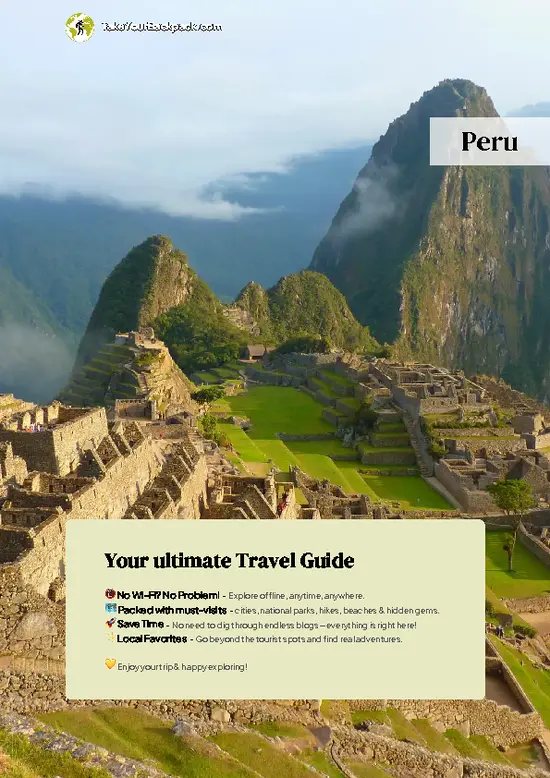
example page 0 from our offline Travel Guide for Peru
example page 1 from our offline Travel Guide for Peru
example page 2 from our offline Travel Guide for Peru
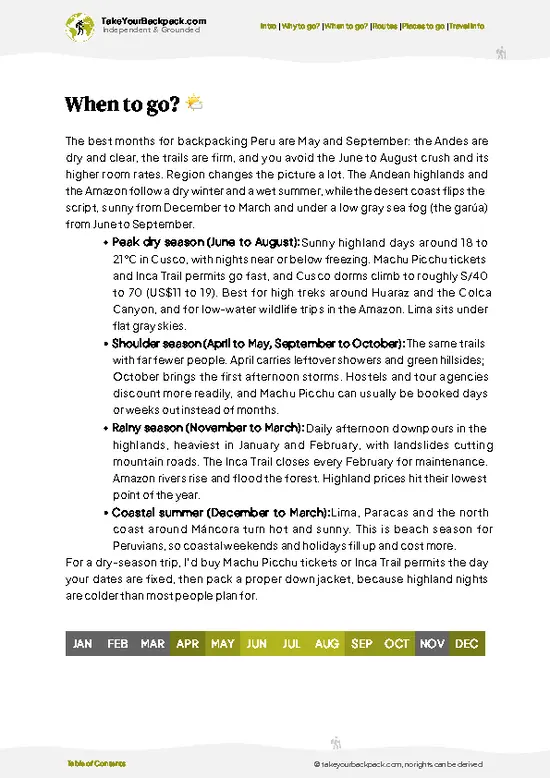
example page 3 from our offline Travel Guide for Peru
example page 4 from our offline Travel Guide for Peru
example page 5 from our offline Travel Guide for Peru
example page 6 from our offline Travel Guide for Peru
example page 7 from our offline Travel Guide for Peru
Loading the map 🌍
CLICK TO FILTER
cities
towns
villages
landmarks
national parks
hikes
beaches
attractions
festivals
regions
SHOW COUNTRY’S BESTSHOW ALL

✨ Why go?
Ranked #3 region in Peru
What makes this region worth visiting

Lake Titicaca rewards backpackers who want culture without hopping cities. Everything radiates from Puno, so you can base yourself in one place and still sleep on a different island or peninsula each night. That means fewer bag-hauling days and more time actually looking around.
The first reason is the island homestay circuit. On Amantani and Taquile, families host travelers in simple stone houses, cook with potatoes and quinoa grown on terraced slopes, and often lend you traditional clothing for the evening dance. Rotating community boats keep the money local, which you will not get on a polished day-trip.
The second is the mix of landscapes and history. Within reach of the shore you get the funerary towers of Sillustani, the Aymara-speaking villages of the southern edge, and the farming peninsula … read more 👉
Lake Titicaca rewards backpackers who want culture without hopping cities. Everything radiates from Puno, so you can base yourself in one place and still sleep on a different island or peninsula each night. That means fewer bag-hauling days and more time actually looking around.
The first reason is the island homestay circuit. On Amantani and Taquile, families host travelers in simple stone houses, cook with potatoes and quinoa grown on terraced slopes, and often lend you traditional clothing for the evening dance. Rotating community boats keep the money local, which you will not get on a polished day-trip.
The second is the mix of landscapes and history. Within reach of the shore you get the funerary towers of Sillustani, the Aymara-speaking villages of the southern edge, and the farming peninsula of Capachica, where lake, terraces and snow-dusted skies sit in one frame. Shared vans and small boats link nearly everything, so you can improvise instead of locking in tours. Add the easy border crossing toward Bolivia and the lake works as a gateway as much as a destination.

💡 HighlightsPlaces and moments you shouldn't skip

  1. Uros Floating Islands: Reed islands anchored off Puno, rebuilt layer by layer with totora reeds that rot from below. Go early, pick an island where families actually live, and pay the small entry fee (around US$3 to 5), plus a bit extra for a reed boat ride.
  2. Taquile Island: A car-free island where men knit the caps and the textile tradition is recognized by UNESCO. Expect stone terraces, Inca-style arches, a climb of several hundred steps, and a simple trout lunch with lake views.
  3. Amantaní Island: Homestays here put you at a family table with quinoa soup and muña tea. Two hilltop ruins, Pachatata and Pachamama, catch the evening light, and the night sky is ink-black.
  4. Sillustani: Pre-Inca burial towers (chullpas) stand on a peninsula in Lake Umayo, some taller than 10 meters. The best-built ones
… read more 👉
  1. Uros Floating Islands: Reed islands anchored off Puno, rebuilt layer by layer with totora reeds that rot from below. Go early, pick an island where families actually live, and pay the small entry fee (around US$3 to 5), plus a bit extra for a reed boat ride.
  2. Taquile Island: A car-free island where men knit the caps and the textile tradition is recognized by UNESCO. Expect stone terraces, Inca-style arches, a climb of several hundred steps, and a simple trout lunch with lake views.
  3. Amantaní Island: Homestays here put you at a family table with quinoa soup and muña tea. Two hilltop ruins, Pachatata and Pachamama, catch the evening light, and the night sky is ink-black.
  4. Sillustani: Pre-Inca burial towers (chullpas) stand on a peninsula in Lake Umayo, some taller than 10 meters. The best-built ones show tightly fitted stone with a lizard carved into one tower. Entry is about US$3 to 4.
  5. Puno Cathedral and Plaza de Armas: A baroque stone facade with carved Andean motifs, facing a plaza where parades and dance troupes practice year-round. It is the easiest way to see why Puno is called Peru’s folklore capital.
  6. Mirador Kuntur Wasi: A hilltop lookout above Puno, reached by a steep staircase of about 600 steps, with a condor statue and a wide view across the bay. Locals walk up late afternoon, so you will not be alone.
  7. Chucuito and the Inca Uyo temple: A quiet lakeside town with a field of stone phalluses used in fertility rites. Colonial plazas, small churches and sheep grazing in the lanes make it feel far from Puno’s tour buses.
  8. Juli: Called “Little Rome of the Andes” for its four colonial churches, including San Juan Bautista with its painted canvases. Few foreign visitors stop, and the lake views from the hillside are open and calm.
  9. Llachón Peninsula: A community-run stretch where families host guests, you cook with them, and you walk between potato fields to hilltop shrines. It is quieter and less staged than the islands.
  10. Cutimbo: Burial towers on a volcanic hill outside Puno, some round and some square, with views over the plain. Often empty, so you can wander without a crowd.
Together these take about four to five days if you sleep on one island and treat the mainland sites as half-day outings.
Spotted a mistake or missing something? Contact us.

Things to do around Lake Titicaca

Ratings based on Tripadvisor reviews. When you book through this link, you support our work at no extra cost to you.

⌛️ 5 days5-day itinerary for Lake Titicaca

Day 1: Uros Islands: Start with the reed islands, the stop you should not skip. Boats leave Puno in the morning, and going early means you reach them before the larger tour groups and can talk with families on the quieter islands. Return to Puno for the night, since the longer island boats run on a fixed morning schedule.
Day 2: Amantani: Take the early community boat out to Amantani and settle with your host family. The slow boat sets the pace, so use the afternoon to climb the two ruin hilltops and watch the sunset. The evening dance and a candlelit meal are part of the stay.
Day 3: Taquile: Boats continue to Taquile the next morning, then back to Puno in the afternoon. Walk the stone paths, watch the knitting and eat trout before the return crossing.
Day 4: Sillustani: Head out on a half-day … read more 👉
Day 1: Uros Islands: Start with the reed islands, the stop you should not skip. Boats leave Puno in the morning, and going early means you reach them before the larger tour groups and can talk with families on the quieter islands. Return to Puno for the night, since the longer island boats run on a fixed morning schedule.
Day 2: Amantani: Take the early community boat out to Amantani and settle with your host family. The slow boat sets the pace, so use the afternoon to climb the two ruin hilltops and watch the sunset. The evening dance and a candlelit meal are part of the stay.
Day 3: Taquile: Boats continue to Taquile the next morning, then back to Puno in the afternoon. Walk the stone paths, watch the knitting and eat trout before the return crossing.
Day 4: Sillustani: Head out on a half-day trip to the chullpa towers. This is the detour, and it fits because it returns you to Puno by evening and leaves your onward plans untouched. The late-afternoon light brings out the stonework.
Day 5: Capachica and Llachón: Finish on the peninsula. Collectivos and small vans run along the shore, so you can improvise rather than book a tour. Stay with a family, paddle, and eat what they grew. If one day justifies the whole trip, I would pick Amantani: the dusk from Pachatata, the village dance and the silence after the generator-free lights go out are what the lake is really about.

🌤️ When to go?Seasonal considerations and timing

  • Dry Season (May to September): Days are sunny and crisp at roughly 15 to 18°C (59 to 64°F), but nights on the altiplano drop to -5 to 2°C (23 to 36°F). Daylight runs about 11.5 hours. This is the busiest window, with the highest prices for Uros and Taquile tours and for boats and beds, especially around the Puno festivals.
  • Wet Season (December to March): Afternoon downpours are common, with highs near 13 to 16°C (55 to 61°F) and milder nights of 3 to 5°C (37 to 41°F). Fields turn green, crowds thin, and room rates soften.
  • Shoulder Months (April, October, November): Rain is patchy, the lake is calmer than in peak season, and you get lower prices with fewer tour groups.
  • Festival Season (February): The Virgen de la Candelaria celebrations in Puno bring dancers, brass bands and sold-out hostels for
… read more 👉
  • Dry Season (May to September): Days are sunny and crisp at roughly 15 to 18°C (59 to 64°F), but nights on the altiplano drop to -5 to 2°C (23 to 36°F). Daylight runs about 11.5 hours. This is the busiest window, with the highest prices for Uros and Taquile tours and for boats and beds, especially around the Puno festivals.
  • Wet Season (December to March): Afternoon downpours are common, with highs near 13 to 16°C (55 to 61°F) and milder nights of 3 to 5°C (37 to 41°F). Fields turn green, crowds thin, and room rates soften.
  • Shoulder Months (April, October, November): Rain is patchy, the lake is calmer than in peak season, and you get lower prices with fewer tour groups.
  • Festival Season (February): The Virgen de la Candelaria celebrations in Puno bring dancers, brass bands and sold-out hostels for about two weeks.
Book Puno beds at least a month ahead for February and for the July to August peak.


source: climatestotravel.comJANJanuary: fair for travelingFEBFebruary: good for travelingMARMarch: fair for travelingAPRApril: highly recommended for travelingMAYMay: excellent for travelingJUNJune: excellent for travelingJULJuly: excellent for travelingAUGAugust: excellent for travelingSEPSeptember: excellent for travelingOCTOctober: highly recommended for travelingNOVNovember: fair for travelingDECDecember: fair for traveling
peru-region-lake-titicaca
© Google | Spca663 Little B

✈️ The backpacker research shortcutPeru Travel Guide

An offline-friendly backpacking guide with optimized travel routes, ranked highlights, transport advice, and the best areas to stay.
example page 0 from our offline Travel Guide for Peru
example page 1 from our offline Travel Guide for Peru
example page 2 from our offline Travel Guide for Peru
example page 3 from our offline Travel Guide for Peru
example page 4 from our offline Travel Guide for Peru
example page 5 from our offline Travel Guide for Peru
example page 6 from our offline Travel Guide for Peru
example page 7 from our offline Travel Guide for Peru
The digital guide (310 pages) contains:
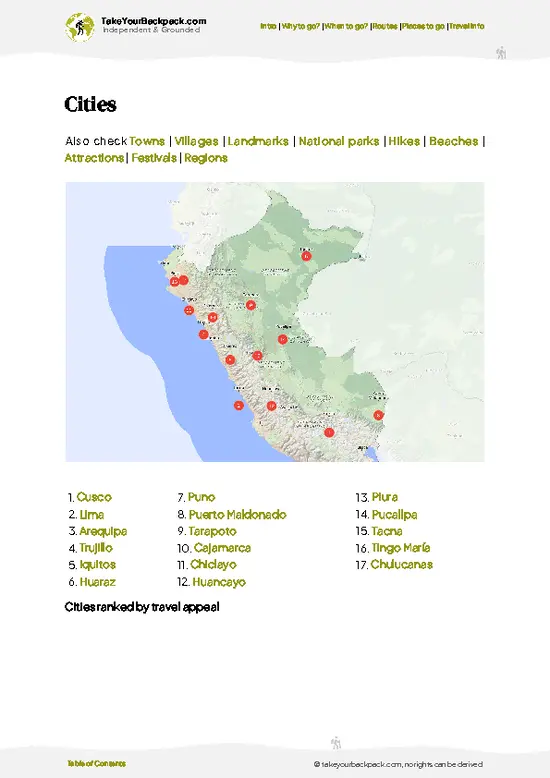
✅ 102 highlights, ranked by travel appeal
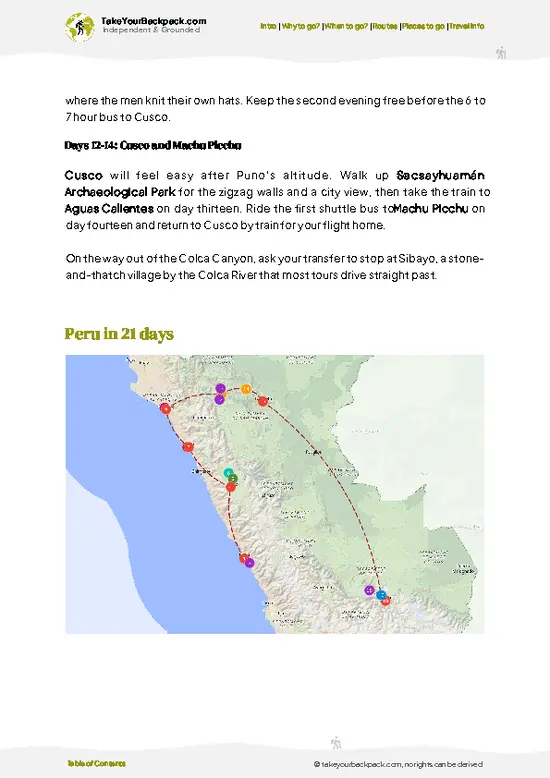
✅ Optimized 7, 14 & 21-day travel routes
✅ Cities, national parks, landmarks, beaches
✅ How to get around
✅ Offline-friendly for travel without Wi-Fi
👉 Click to see all 30+ guide features

📅 Plan smarter in minutes, not weeks
✅ Month by month travel advice
✅ Festivals & national holidays
✅ Budget expectations

🗺️ Go to the right places, skip the overrated ones
✅ Honest pros & cons of destinations
✅ Top hikes, parks & viewpoints
✅ Lesser-known places most travelers miss
✅ Clear “worth it vs skip it” guidance

🛏️ Travel smoothly without rookie mistakes
✅ Best areas to stay
✅ Transport systems explained simply
✅ Common scams & safety advice
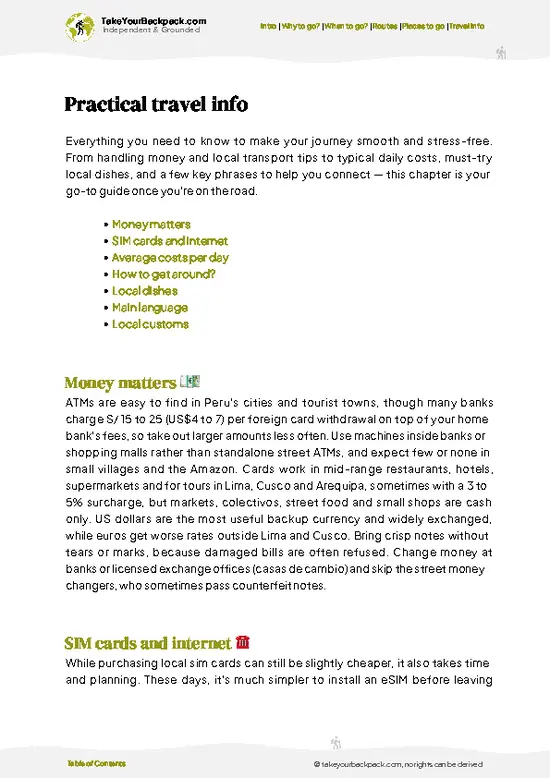
✅ SIM cards, money & practical tips

🌍 Understand the country, not just visit it
✅ Culture & traditions
✅ 52 Essential phrases & customs
✅ Festivals worth planning around
✅ Traveler-friendly historical context
✅ Insights that make places more meaningful

📱 Built for real travel conditions
✅ Fully downloadable PDF
✅ Works completely offline
✅ Optimized for phone use
✅ Useful in remote areas & buses
✅ Everything in one place
Stop searching, start planning
Get instant access to your full guide. 30‑day money-back guarantee.
+ Add another guide for just

By proceeding you agree to our terms.
Sent to your inbox immediately after payment • 100% Secure Checkout
Best Backpacking Travel Advisor 2025 tourism awardBest Backpacking
Travel Advisor
2025
What others say about Take Your Backpack Guides:
⭐⭐⭐⭐⭐
Fantastic, amazing amount of information!
⭐⭐⭐⭐⭐
My goodness this is amazing, it's what I've been looking for hats off too you!
⭐⭐⭐⭐⭐
I think this is absolutely BRILLIANT
⭐⭐⭐⭐
Very complete and informative. It's still missing places, but I gotta to commend you
⭐⭐⭐⭐⭐
This is truly amazing, thank you, can't wait to explore it with my kids!
⭐⭐⭐⭐⭐
Awesome resource, thank you!
⭐⭐⭐⭐⭐
This is amazing! Can't wait to explore the ones I haven't seen
⭐⭐⭐⭐
I love this! Well done, great idea.
⭐⭐⭐⭐⭐
Thanks for taking the time to make this gem!
⭐⭐⭐⭐⭐
This might be the best website I've ever seen.
⭐⭐⭐⭐⭐
Congratulations, and thank you so much for your work; it's incredibly valuable.
⭐⭐⭐⭐
In all seriousness I think you did a great job pointing out the important spots
⭐⭐⭐⭐⭐
10/10 very good
⭐⭐⭐⭐⭐
As someone who's only just starting to visit regularly this is awesome, thank you.
⭐⭐⭐⭐
Thank you very much! I'm going to visit my dad, it's going to be very useful!
⭐⭐⭐⭐⭐
This is really cool! We'll be travelling for the first time and this definitely come in handy.
⭐⭐⭐⭐⭐
You are now our minister of culture, congratulations 👨‍💼
⭐⭐⭐⭐⭐
Just wanted to tell you that this is a pearl! Going to follow your recommendations.
⭐⭐⭐⭐⭐
This is so cool. I'll definitely be using the resource for my travels soon.
⭐⭐⭐⭐⭐
This is very impressive! Good work.
⭐⭐⭐⭐⭐
This is an amazing and informative site. Very well done!

🛏️ Where to stay?Where staying makes the most sense

Puno is the best base for most backpackers, since it has the widest choice of beds and the easiest links to every boat and bus. Dorms usually run US$7 to 14 a night and private rooms US$20 to 40. The pedestrian street Lima, with its cafés and bars, is where you meet other travelers over pizza and coca tea, and the main plaza area feels safe after dark. Stay central, because the lakefront and terminal zones are quieter at night.

Capachica Peninsula, about an hour from Puno, suits travelers wanting slower days. Family homestays in villages like Llachón cost about US$15 to 25 with meals included, … read more 👉
Puno is the best base for most backpackers, since it has the widest choice of beds and the easiest links to every boat and bus. Dorms usually run US$7 to 14 a night and private rooms US$20 to 40. The pedestrian street Lima, with its cafés and bars, is where you meet other travelers over pizza and coca tea, and the main plaza area feels safe after dark. Stay central, because the lakefront and terminal zones are quieter at night.

Capachica Peninsula, about an hour from Puno, suits travelers wanting slower days. Family homestays in villages like Llachón cost about US$15 to 25 with meals included, and you share dinner with hosts, hike to hilltop viewpoints, and watch the lake turn pink at dusk. Amantaní offers similar family stays at US$15 to 25 with dinner, plus a village party night. Taquile has simple lodging as well, though most people visit it as a day trip.

Chucuito, a short ride south, has an old plaza and a small fertility temple, and sits quiet and uncrowded, a fine overnight if Puno wears you out. Copacabana on the Bolivian side is also a social stop.

🚌 Getting aroundMoving around without the hassle

The easiest way to get around is by shared minibus and colectivo along the lake road, because they run constantly from Puno and cost little. Puno is the hub, and nearly everything radiates out from its terminal and harbor. Reliability is good on main routes, though departures often wait until the vehicle fills, so patience is part of the deal.
  • Tourist Boats from Puno Harbor: Trips to the Uros floating islands take about 2 to 3 hours and cost US$5 to 8, while Taquile and Amantaní overnight trips run US$20 to 35. Prices are fixed by the boat cooperatives, so skip haggling at the dock and book straight at the port. An experienced traveler picks the longer Amantaní overnight to dodge the midday tour crowds.
  • Long-Distance Buses: Comfortable coaches link Puno with Cusco (6 to 7 hours, US$10 to 25)
… read more 👉
The easiest way to get around is by shared minibus and colectivo along the lake road, because they run constantly from Puno and cost little. Puno is the hub, and nearly everything radiates out from its terminal and harbor. Reliability is good on main routes, though departures often wait until the vehicle fills, so patience is part of the deal.
  • Tourist Boats from Puno Harbor: Trips to the Uros floating islands take about 2 to 3 hours and cost US$5 to 8, while Taquile and Amantaní overnight trips run US$20 to 35. Prices are fixed by the boat cooperatives, so skip haggling at the dock and book straight at the port. An experienced traveler picks the longer Amantaní overnight to dodge the midday tour crowds.
  • Long-Distance Buses: Comfortable coaches link Puno with Cusco (6 to 7 hours, US$10 to 25) and Arequipa (5 to 6 hours, US$8 to 15). Daytime departures show you the altiplano, and the pricier tourist buses with lunch stops sometimes visit Raqchi and La Raya pass. Book with a company that has its own terminal bay, not a street tout.
  • Colectivos and Minibuses: These reach Juli, Pomata, Chucuito and Capachica for roughly US$1 to 4, leaving when full from the terminal. They are usually cramped, so travel light and grab an early seat. Leave by mid-morning, because afternoon services thin out.
  • Mototaxis: These three-wheelers zip across Puno for US$0.75 to 1.50 a ride. Agree the fare before you hop in, since drivers rarely use meters.
  • Border Transport to Bolivia: Colectivos and buses to Copacabana take 3 to 4 hours for US$5 to 10, crossing at Kasani, while buses to La Paz use Desaguadero. Kasani is calmer and safer than Desaguadero, and you cross on foot with your bag.
At 3,800 meters, take one day to acclimatize before any long ride, and carry small coins and bills, because drivers rarely have change.

🍲 FoodWhat to Eat & Drink

Start with trucha (lake trout), grilled, fried or baked, served with rice, potatoes and a sharp onion salad. It arrives crisp-skinned and mild, usually for US$4 to 8. Try pejerrey too, a small silver fish often battered into golden strips. For a hot start on a freezing morning, order quinoa soup, earthy and thick with potato and vegetables, or chairo, a hearty Puno stew of lamb, chuño (freeze-dried potato), corn and herbs. Highland chuño and oca tubers show up everywhere, and the fried cheese queso frito comes with a boiled potato and sometimes a fiery ají sauce.

The daily menú is the backpacker's friend: soup, main, and sometimes a drink for about US$2 to 4 at small family restaurants. Mercado Central in Puno stacks bread rolls, fruit juice stalls and steaming bowls of soup, while evening … read more 👉
Start with trucha (lake trout), grilled, fried or baked, served with rice, potatoes and a sharp onion salad. It arrives crisp-skinned and mild, usually for US$4 to 8. Try pejerrey too, a small silver fish often battered into golden strips. For a hot start on a freezing morning, order quinoa soup, earthy and thick with potato and vegetables, or chairo, a hearty Puno stew of lamb, chuño (freeze-dried potato), corn and herbs. Highland chuño and oca tubers show up everywhere, and the fried cheese queso frito comes with a boiled potato and sometimes a fiery ají sauce.

The daily menú is the backpacker's friend: soup, main, and sometimes a drink for about US$2 to 4 at small family restaurants. Mercado Central in Puno stacks bread rolls, fruit juice stalls and steaming bowls of soup, while evening street vendors sell anticuchos and sugary breakfast api, a thick purple corn drink, with fried dough.

For drinks, sip mate de coca to take the edge off altitude, and try emoliente, a warm herbal drink sold by street carts. Pisco sours are everywhere, and local craft beer has appeared in Puno's bars.

On Taquile and Amantaní, meals come as simple family portions, so accept what is served, and eat slowly because the altitude dulls appetite.

FAQFrequently asked questions about Lake Titicaca

Plan 3 to 4 days for Lake Titicaca if you are based in Puno and want to see the Uros islands, Taquile and Amantaní. A half day covers the Uros, and an overnight on Amantaní or Capachica adds depth for about US$15 to 35. Add a day for Sillustani's burial towers, 45 minutes from Puno, and one more day to adjust to 3,800 meters.
Without a car, rely on Puno's harbor boats, colectivos and mototaxis. Boats to the Uros cost US$5 to 8 and take 2 to 3 hours, while colectivos to Chucuito, Juli and Capachica run US$1 to 4. Long-distance buses connect Puno to Cusco in 6 to 7 hours and Arequipa in 5 to 6 hours, and mototaxis cover town for under US$2.
Lake Titicaca is known as one of the world's highest navigable lakes, sitting at roughly 3,810 meters and shared with Bolivia. Visitors come for the Uros floating reed islands, Taquile's textile traditions and Amantaní's homestays. Puno's Candelaria festival each February draws dancers from across the region, and the sunsets over the water are a highlight.
⚠️ Things can change over time, so always validate details locally before you go.

Other Peruvian regions near Lake Titicaca

Explore more nearby:


💡 Not sure where to go next?
Create a personalized itinerary for Peru including Lake Titicaca and the places that fit your trip.

Generate my itinerary

👉 Discover all regions

Or checkout all Peru has to offer (think cities, towns, villages, national parks, hikes, beaches, festivals)
Country photo of Peru

We 💚 feedbackIs it worth it?

Lake Titicaca is more than islands. Most first-timers rush through Puno and miss the shoreline villages of Juli, Chucuito and Pomata, where colonial churches stand almost empty. I would leave a spare day for that road and carry plenty of small bills in soles, since island families and community boats rarely have change.

✈️ When did I visit Peru?
Peru I visited during my half year trip through South and Central America back in 2003

✍️ Help improve this page!
The information on this page is based on my own backpacking experience in Peru, supplemented with up-to-date research and feedback from other travelers. Travel details can change, so if you notice anything outdated or incomplete, feel free to let me know.


🙋‍♂️ Give feedback

👋 Meet the founderWho’s Behind Take Your Backpack?

Johan, backpacker and founder of TakeYourBackpackHi, I’m Johan (Netherlands 🇳🇱), the creator of TakeYourBackpack. Over the past 3 decades, I’ve backpacked through 90+ countries across six continents, gaining extensive experience with independent travel, long-term trips, and overland routes.

This site is built on a combination of firsthand travel experience and carefully curated insights from other backpackers. Many guides are based on places I’ve personally visited, while others bring together tips, observations, and practical advice shared by trusted travelers I’ve met along the way.

The goal is to provide realistic, experience-driven guidance — not generic itineraries — so you can explore destinations with better context, clearer expectations, and more confidence.