×

Peru🇵🇪 | festivalsMisturaCeviche counters, native potatoes, Amazonian fruits, chef stages | things to do and best time to go

Explore Semana Santa de AyacuchoExplore Virgen del Carmen de Celendín

Backpacking in Mistura
By Johan Kruseman 🇳🇱 | Updated October 20, 2026

Mistura packs hundreds of cooks, farmers and street vendors into one site, so a single entry ticket lets you taste your way across Peru without booking a single regional bus. The festival is Peru’s big food fair, held in Lima, the capital, with the grounds on the Costa Verde side of the city, at Magdalena del Mar, west of the center, in recent editions. Expect ceviche counters, anticuchos smoking over charcoal, Amazonian fruit stands and Andean potato growers showing off dozens of colors. Crowds are young, local and hungry, plus chefs, food students and travelers who plan their day around the next plate. It runs about ten days, usually in September. I still connect it with the hiss of a hot grill as a vendor flipped anticuchos, a sound that pulled me through the crowd before I saw the stall. Come hungry, pay in soles, and buy tickets for food stalls in small portions so you can taste more.

Discover everything you want to know in the 📖 Peru Travel Guide.


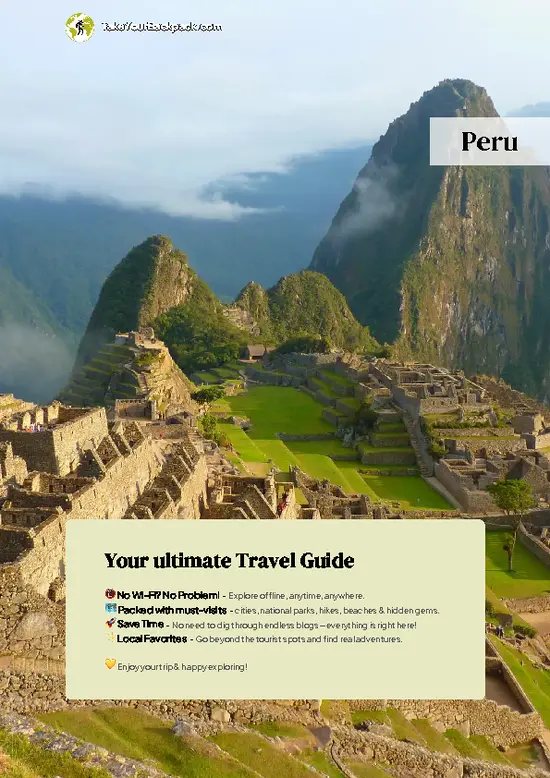
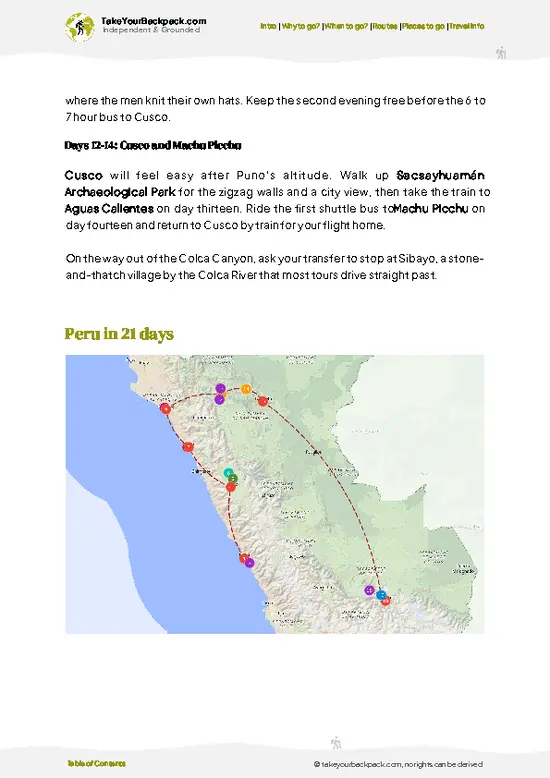
example page 0 from our offline Travel Guide for Peru
example page 1 from our offline Travel Guide for Peru
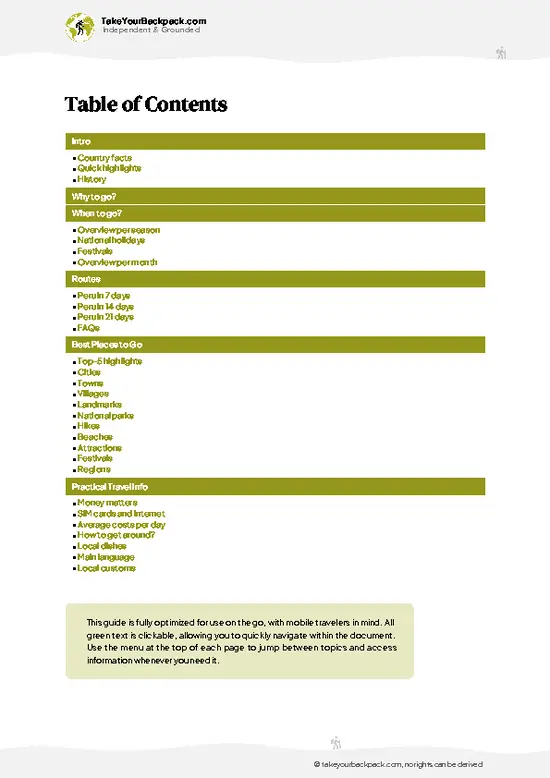
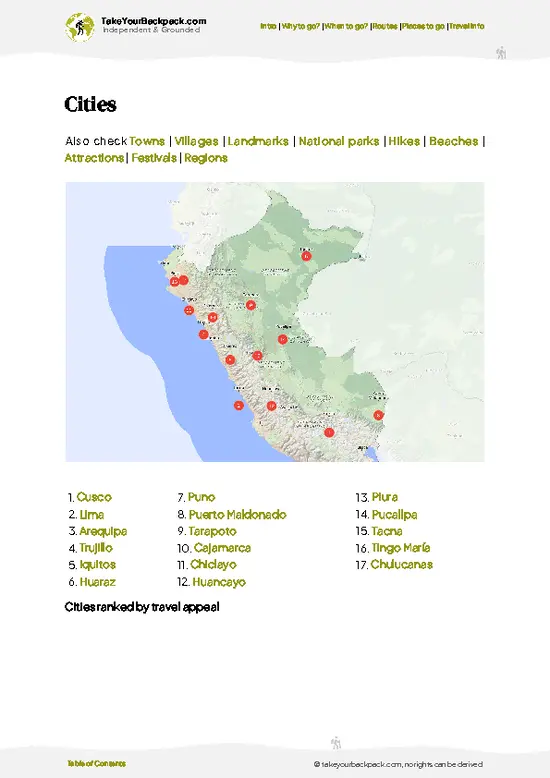
example page 2 from our offline Travel Guide for Peru
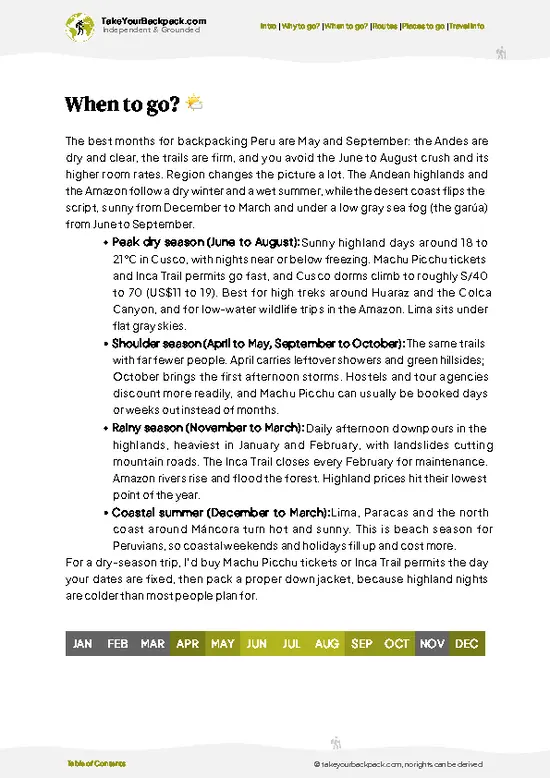
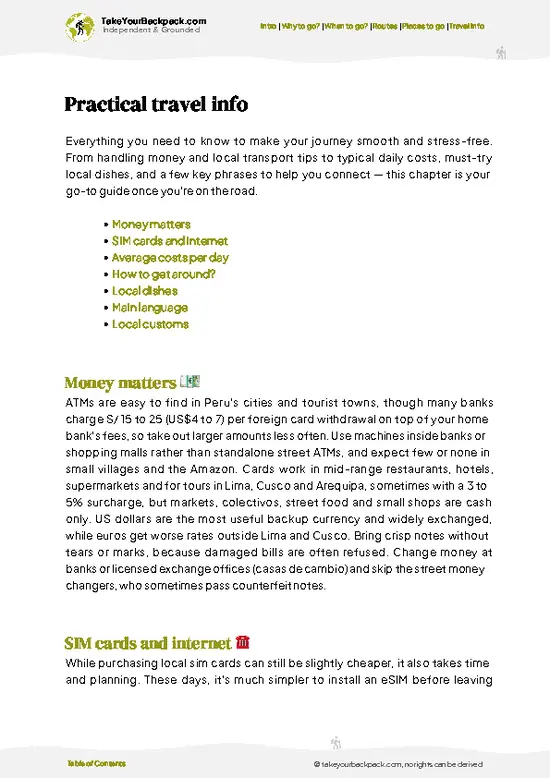
example page 3 from our offline Travel Guide for Peru
example page 4 from our offline Travel Guide for Peru
example page 5 from our offline Travel Guide for Peru
example page 6 from our offline Travel Guide for Peru
example page 7 from our offline Travel Guide for Peru
Loading the map 🌍
CLICK TO FILTER
cities
towns
villages
landmarks
national parks
hikes
beaches
attractions
festivals
regions
SHOW COUNTRY’S BESTSHOW ALL

✨ Why go?
Ranked #99 festival in Peru
Why visitors keep coming back

Mistura gives you a compressed tour of Peru’s kitchens that would otherwise take weeks of overland travel. In one afternoon you can move from Amazonian paiche and camu camu to highland potato growers and Pacific seafood, all cooked by people who actually make these dishes at home. That makes it an unusually efficient stop for anyone building a route through Lima, Cusco and the jungle: eat here first and you will know what to order later.
The social side is the other draw. Long shared tables, queues at famous stalls and strangers arguing over the best ají sauce turn a food fair into a temporary neighborhood. Portions are small and priced for tasting, so you can sample widely on a backpacker budget and still walk away full. Locals treat it as a celebration of national pride, and you feel welcome in it.

💡 HighlightsThe experiences that define the visit

  1. Ceviche stalls: Peru’s signature dish is the festival’s main event, with raw fish cured in lime, onion and ají limo. Compare coastal styles side by side and notice how each cook adjusts acidity and heat.
  2. Anticuchos and street grills: Skewers sizzle over open flame and the smoke announces them from far away. This is the quick, cheap food that Lima’s street corners are known for.
  3. Native potato displays: Andean farmers show tubers in purple, yellow and speckled varieties, often with tastings. It is the clearest way to understand why Peru claims thousands of potato types.
  4. Amazonian ingredient stands: Look for paiche, juanes, cocona and camu camu juice. Most travelers on the coast never taste these, and the vendors are happy to explain them.
  5. Chef demonstrations and cooking talks: Well-known Peruvian
… read more 👉
  1. Ceviche stalls: Peru’s signature dish is the festival’s main event, with raw fish cured in lime, onion and ají limo. Compare coastal styles side by side and notice how each cook adjusts acidity and heat.
  2. Anticuchos and street grills: Skewers sizzle over open flame and the smoke announces them from far away. This is the quick, cheap food that Lima’s street corners are known for.
  3. Native potato displays: Andean farmers show tubers in purple, yellow and speckled varieties, often with tastings. It is the clearest way to understand why Peru claims thousands of potato types.
  4. Amazonian ingredient stands: Look for paiche, juanes, cocona and camu camu juice. Most travelers on the coast never taste these, and the vendors are happy to explain them.
  5. Chef demonstrations and cooking talks: Well-known Peruvian chefs and regional cooks show techniques on stage. You pick up why Nikkei, Chifa and Criollo cooking all sit under one national cuisine.
For a first visit, start with the ceviche stalls, because they teach you the flavors that everything else in Peru builds on.
Spotted a mistake or missing something? Contact us.

Things to do near Mistura

Ratings based on Tripadvisor reviews. When you book through this link, you support our work at no extra cost to you.

🌤️ When to go?When is the celebration of Mistura?

Mistura, Lima’s big food fair, has run in September in recent editions, usually over about ten days, with the dates announced each year and the grounds set in the city’s central parks and exhibition areas.
  • Best day: Weekdays are calmer, so you can reach the stalls without long queues. Weekends and the opening days are the most crowded, but also the most festive.
  • Weather: Lima in September is cool and gray, about 15 to 19°C (59 to 66°F), with heavy humidity, drizzle at most and little sun. Bring a light jacket and closed shoes.
  • Booking: Reserve your bed 4 to 6 weeks ahead. Prices in Miraflores and the center can rise 20 to 40 percent around the dates. Buy entry online if available.
  • Crowds: Arrive at opening to avoid the lunch crush. Leave before 6 pm, when buses and the Metropolitano are packed.
… read more 👉
Mistura, Lima’s big food fair, has run in September in recent editions, usually over about ten days, with the dates announced each year and the grounds set in the city’s central parks and exhibition areas.
  • Best day: Weekdays are calmer, so you can reach the stalls without long queues. Weekends and the opening days are the most crowded, but also the most festive.
  • Weather: Lima in September is cool and gray, about 15 to 19°C (59 to 66°F), with heavy humidity, drizzle at most and little sun. Bring a light jacket and closed shoes.
  • Booking: Reserve your bed 4 to 6 weeks ahead. Prices in Miraflores and the center can rise 20 to 40 percent around the dates. Buy entry online if available.
  • Crowds: Arrive at opening to avoid the lunch crush. Leave before 6 pm, when buses and the Metropolitano are packed.
Arrive at opening on a weekday and eat your biggest meal before noon.


source: climatestotravel.comJANJanuary: not recommended for travelingFEBFebruary: not recommended for travelingMARMarch: not recommended for travelingAPRApril: not recommended for travelingMAYMay: not recommended for travelingJUNJune: not recommended for travelingJULJuly: not recommended for travelingAUGAugust: not recommended for travelingSEPSeptember: excellent for travelingOCTOctober: not recommended for travelingNOVNovember: not recommended for travelingDECDecember: not recommended for traveling

✈️ The backpacker research shortcutPeru Travel Guide

An offline-friendly backpacking guide with optimized travel routes, ranked highlights, transport advice, and the best areas to stay.
example page 0 from our offline Travel Guide for Peru
example page 1 from our offline Travel Guide for Peru
example page 2 from our offline Travel Guide for Peru
example page 3 from our offline Travel Guide for Peru
example page 4 from our offline Travel Guide for Peru
example page 5 from our offline Travel Guide for Peru
example page 6 from our offline Travel Guide for Peru
example page 7 from our offline Travel Guide for Peru
The digital guide (310 pages) contains:
✅ 102 highlights, ranked by travel appeal
✅ Optimized 7, 14 & 21-day travel routes
✅ Cities, national parks, landmarks, beaches
✅ How to get around
✅ Offline-friendly for travel without Wi-Fi
👉 Click to see all 30+ guide features

📅 Plan smarter in minutes, not weeks
✅ Month by month travel advice
✅ Festivals & national holidays
✅ Budget expectations

🗺️ Go to the right places, skip the overrated ones
✅ Honest pros & cons of destinations
✅ Top hikes, parks & viewpoints
✅ Lesser-known places most travelers miss
✅ Clear “worth it vs skip it” guidance

🛏️ Travel smoothly without rookie mistakes
✅ Best areas to stay
✅ Transport systems explained simply
✅ Common scams & safety advice
✅ SIM cards, money & practical tips

🌍 Understand the country, not just visit it
✅ Culture & traditions
✅ 52 Essential phrases & customs
✅ Festivals worth planning around
✅ Traveler-friendly historical context
✅ Insights that make places more meaningful

📱 Built for real travel conditions
✅ Fully downloadable PDF
✅ Works completely offline
✅ Optimized for phone use
✅ Useful in remote areas & buses
✅ Everything in one place
Stop searching, start planning
Get instant access to your full guide. 30‑day money-back guarantee.
+ Add another guide for just

By proceeding you agree to our terms.
Sent to your inbox immediately after payment • 100% Secure Checkout
Best Backpacking Travel Advisor 2025 tourism awardBest Backpacking
Travel Advisor
2025
What others say about Take Your Backpack Guides:
⭐⭐⭐⭐⭐
Fantastic, amazing amount of information!
⭐⭐⭐⭐⭐
My goodness this is amazing, it's what I've been looking for hats off too you!
⭐⭐⭐⭐⭐
I think this is absolutely BRILLIANT
⭐⭐⭐⭐
Very complete and informative. It's still missing places, but I gotta to commend you
⭐⭐⭐⭐⭐
This is truly amazing, thank you, can't wait to explore it with my kids!
⭐⭐⭐⭐⭐
Awesome resource, thank you!
⭐⭐⭐⭐⭐
This is amazing! Can't wait to explore the ones I haven't seen
⭐⭐⭐⭐
I love this! Well done, great idea.
⭐⭐⭐⭐⭐
Thanks for taking the time to make this gem!
⭐⭐⭐⭐⭐
This might be the best website I've ever seen.
⭐⭐⭐⭐⭐
Congratulations, and thank you so much for your work; it's incredibly valuable.
⭐⭐⭐⭐
In all seriousness I think you did a great job pointing out the important spots
⭐⭐⭐⭐⭐
10/10 very good
⭐⭐⭐⭐⭐
As someone who's only just starting to visit regularly this is awesome, thank you.
⭐⭐⭐⭐
Thank you very much! I'm going to visit my dad, it's going to be very useful!
⭐⭐⭐⭐⭐
This is really cool! We'll be travelling for the first time and this definitely come in handy.
⭐⭐⭐⭐⭐
You are now our minister of culture, congratulations 👨‍💼
⭐⭐⭐⭐⭐
Just wanted to tell you that this is a pearl! Going to follow your recommendations.
⭐⭐⭐⭐⭐
This is so cool. I'll definitely be using the resource for my travels soon.
⭐⭐⭐⭐⭐
This is very impressive! Good work.
⭐⭐⭐⭐⭐
This is an amazing and informative site. Very well done!

🛏️ Where to stay?Best areas to stay in Peru

Miraflores is the easiest base for backpackers visiting Mistura, with walkable streets, plenty of hostels, a steady flow of solo travelers and good late-night safety on the main avenues. It is the most social area, with cafes, bars and common-room evenings where you can find people to share festival plates with.
Barranco is the better choice if you want a younger, artsier mood. It has leafy lanes, live music and a relaxed bar scene, and the area around the main plaza feels safe in the evening. Stick to well-lit streets and take a taxi late at night.
Central Lima (Cercado) puts you closest to the … read more 👉
Miraflores is the easiest base for backpackers visiting Mistura, with walkable streets, plenty of hostels, a steady flow of solo travelers and good late-night safety on the main avenues. It is the most social area, with cafes, bars and common-room evenings where you can find people to share festival plates with.
Barranco is the better choice if you want a younger, artsier mood. It has leafy lanes, live music and a relaxed bar scene, and the area around the main plaza feels safe in the evening. Stick to well-lit streets and take a taxi late at night.
Central Lima (Cercado) puts you closest to the festival grounds and the historic sights, and beds are often cheaper. It is livelier by day and emptier after dark, so use registered taxis at night and keep valuables out of sight.
San Isidro and Lince are quieter, cheaper alternatives with easy bus access, though they have fewer hostels and less nightlife.
For transport, the Metropolitano bus runs from Miraflores and Barranco toward the center, taking about 25 to 40 minutes. Book early, since festival weeks fill the most popular dorms.

👛 Costs (as of 20 October 2026)Travel costs and budget guide for Mistura

A day at Mistura costs about US$5 to 15 for an independent traveler, with the Total Daily Budget of US$78 counting a high-season dorm bed.
CategoryBudget RangeLocal Reality
Festival ticketsUS$5 to 15Daily entry is usually modest, with higher prices on weekends. Tokens or tasting vouchers may be sold separately.
AccommodationUS$12 to 30Dorms in Miraflores or Barranco cost about US$12 to 20 in low season and US$18 to 30 in high season. Festival weeks sit at the upper end.
Local transportUS$2 to 8The Metropolitano and buses cost under US$1 per ride. Taxis from apps run about US$3 to 8 for short hops.
Food & drinksUS$15 to 35Tasting plates cost US$2 to 6 each, a pisco sour US$4 to 8, and a set lunch outside the festival about US$3 to 5.
Miscellaneous expensesUS$5 to 15Covers a rain jacket, SIM data,
… read more 👉
A day at Mistura costs about US$5 to 15 for an independent traveler, with the Total Daily Budget of US$78 counting a high-season dorm bed.
CategoryBudget RangeLocal Reality
Festival ticketsUS$5 to 15Daily entry is usually modest, with higher prices on weekends. Tokens or tasting vouchers may be sold separately.
AccommodationUS$12 to 30Dorms in Miraflores or Barranco cost about US$12 to 20 in low season and US$18 to 30 in high season. Festival weeks sit at the upper end.
Local transportUS$2 to 8The Metropolitano and buses cost under US$1 per ride. Taxis from apps run about US$3 to 8 for short hops.
Food & drinksUS$15 to 35Tasting plates cost US$2 to 6 each, a pisco sour US$4 to 8, and a set lunch outside the festival about US$3 to 5.
Miscellaneous expensesUS$5 to 15Covers a rain jacket, SIM data, tips and small purchases of spices or sweets.
Total Daily BudgetUS$39 to 103About US$78 with a high-season dorm bed and moderate eating.


source: peru.travel
⚠️ Prices can change and everyone travels differently, so take this as a rough guide. Hope it helps you plan your adventure!

🍲 FoodLocal Cuisine & Drinks

Mistura is all about Peruvian cooking, so come hungry and plan to graze. Stalls and restaurant booths serve ceviche, anticuchos, causa, lomo saltado and ají de gallina, plus Amazonian and Andean dishes you rarely see in one place, from juane to pachamanca. Desserts include picarones, hot squash rings dipped in syrup, and suspiro limeño.
For drinks, try pisco sour, chicha morada and emoliente, and look for craft beer and coffee from small producers. Most plates are tasting-size, usually about US$2 to 6, so you can try many things instead of committing to a full meal.
The best strategy is to walk the whole grounds first, then pick the stalls with the longest local lines. Those queues move steadily and usually pay off. Go with a friend and share plates, which gets you more variety for the same … read more 👉
Mistura is all about Peruvian cooking, so come hungry and plan to graze. Stalls and restaurant booths serve ceviche, anticuchos, causa, lomo saltado and ají de gallina, plus Amazonian and Andean dishes you rarely see in one place, from juane to pachamanca. Desserts include picarones, hot squash rings dipped in syrup, and suspiro limeño.
For drinks, try pisco sour, chicha morada and emoliente, and look for craft beer and coffee from small producers. Most plates are tasting-size, usually about US$2 to 6, so you can try many things instead of committing to a full meal.
The best strategy is to walk the whole grounds first, then pick the stalls with the longest local lines. Those queues move steadily and usually pay off. Go with a friend and share plates, which gets you more variety for the same money.
Carry cash in small bills, since many stalls prefer it, though some take cards or tokens. Bring hand wipes and a bottle for water, and expect to eat standing up or on the grass.

FAQTraveler FAQ

Mistura takes place in Lima, usually in September, and recent editions have run for about ten days. The grounds sit in the city’s central parks and exhibition areas, a short Metropolitano ride from Miraflores. Exact dates are announced each year, so check before booking a bed.
Attending Mistura typically costs about US$5 to 15 for daily entry, plus roughly US$15 to 35 for food and drinks. Tasting plates run about US$2 to 6 each. A backpacker spending a full day, including a dorm bed and transport, should plan on around US$78.
Buying tickets for Mistura in advance is wise, especially for weekends and opening days when queues at the gate grow long. Online sales, when offered, can save you 30 to 60 minutes at the entrance. Weekday visitors can sometimes pay at the gate, but book your Lima bed 4 to 6 weeks ahead.
⚠️ Things can change over time, so always validate details locally before you go.

Other Peruvian festivals near Mistura

Explore more nearby:


💡 Not sure where to go next?
Create a personalized itinerary for Peru including Mistura and the places that fit your trip.

Generate my itinerary

👉 Discover all festivals

Or checkout all Peru has to offer (think cities, towns, villages, national parks, hikes, beaches, festivals)
Country photo of Peru

We 💚 feedbackSumming up the experience

Mistura rewards the traveler who arrives hungry and early, yet most people show up at lunch peak and spend an hour in a single line for one famous dish. Skip that. Go on a weekday morning, carry small bills for the tasting stalls, and graze across many cheap plates instead of committing to one big meal. Bring a tote bag for the market produce too.

✈️ When did I visit Peru?
Peru I visited during my half year trip through South and Central America back in 2003

✍️ Help improve this page!
The information on this page is based on my own backpacking experience in Peru, supplemented with up-to-date research and feedback from other travelers. Travel details can change, so if you notice anything outdated or incomplete, feel free to let me know.


🙋‍♂️ Give feedback

👋 Meet the founderWho’s Behind Take Your Backpack?

Johan, backpacker and founder of TakeYourBackpackHi, I’m Johan (Netherlands 🇳🇱), the creator of TakeYourBackpack. Over the past 3 decades, I’ve backpacked through 90+ countries across six continents, gaining extensive experience with independent travel, long-term trips, and overland routes.

This site is built on a combination of firsthand travel experience and carefully curated insights from other backpackers. Many guides are based on places I’ve personally visited, while others bring together tips, observations, and practical advice shared by trusted travelers I’ve met along the way.

The goal is to provide realistic, experience-driven guidance — not generic itineraries — so you can explore destinations with better context, clearer expectations, and more confidence.