×

Peru🇵🇪 | festivalsSeñor de los MilagrosPurple robes, silver litter, Nazarenas mural, turrón de Doña Pepa | things to do and best time to go

Explore Virgen del Carmen de CelendínExplore Semana de Puno

Backpacking in Señor de los Milagros
👀 For curious travelersfestival ranked #15
By Johan Kruseman 🇳🇱 | Updated October 20, 2026

Señor de los Milagros suits travelers who like their culture loud, communal and unscripted, and it is less rewarding if you want a polished show with seats and a schedule. The October procession winds through central Lima, Peru’s capital, as hundreds of thousands in purple robes follow a painted image of Christ on a litter. Expect incense, brass bands and sung hymns. I stepped off the bus on Avenida Tacna and heard the marching band before I saw it, then watched the purple tide swallow the whole intersection. Wear purple if you can, and arrive early to claim a curb spot.

Discover everything you want to know in the 📖 Peru Travel Guide.


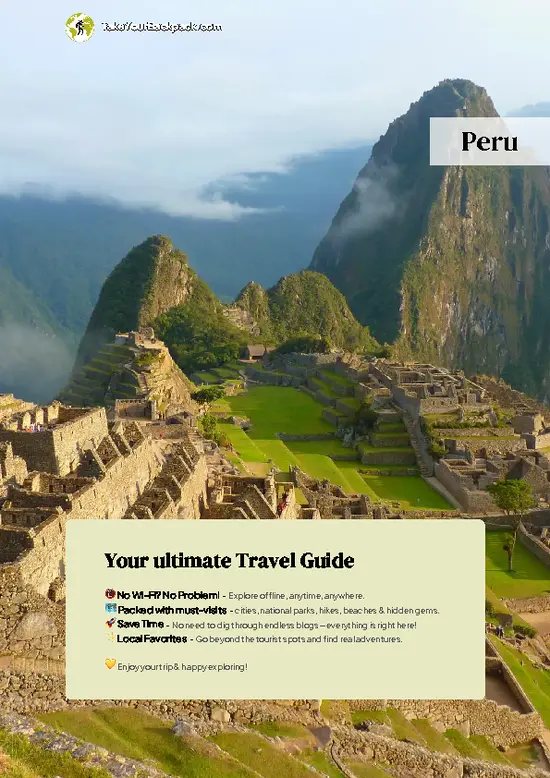
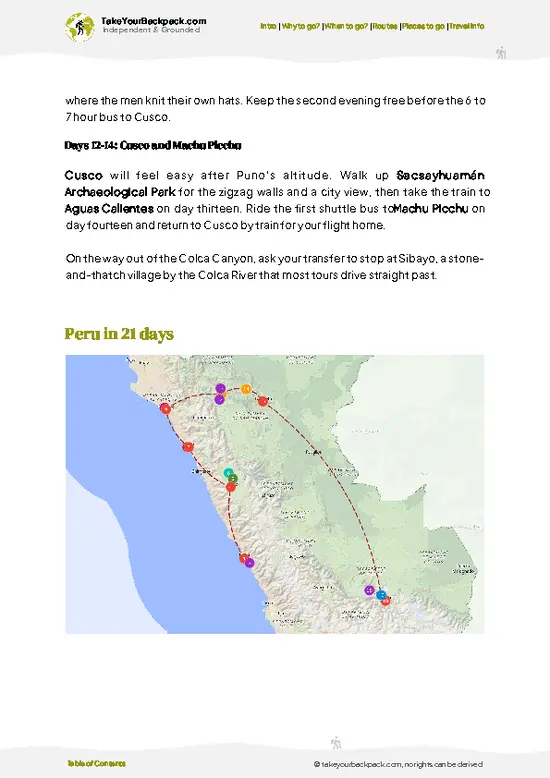
example page 0 from our offline Travel Guide for Peru
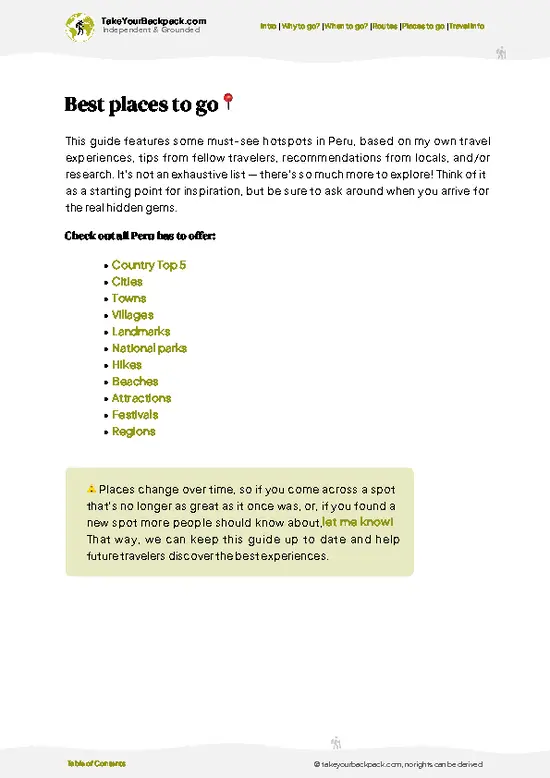
example page 1 from our offline Travel Guide for Peru
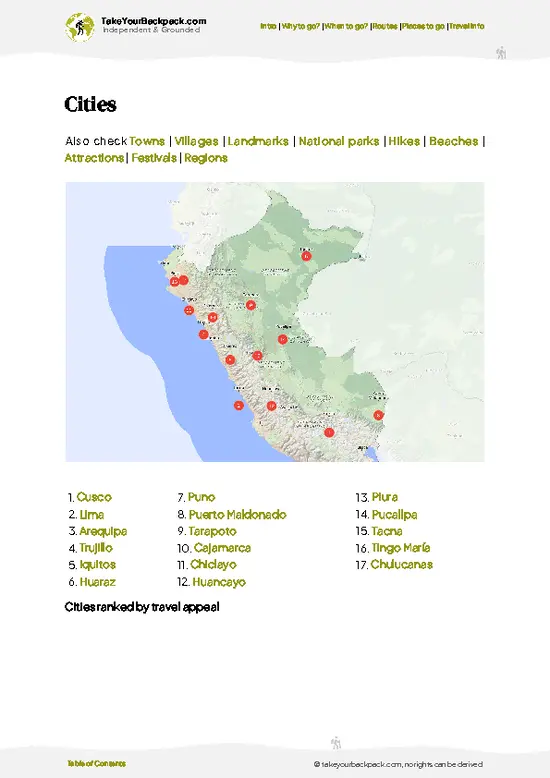
example page 2 from our offline Travel Guide for Peru
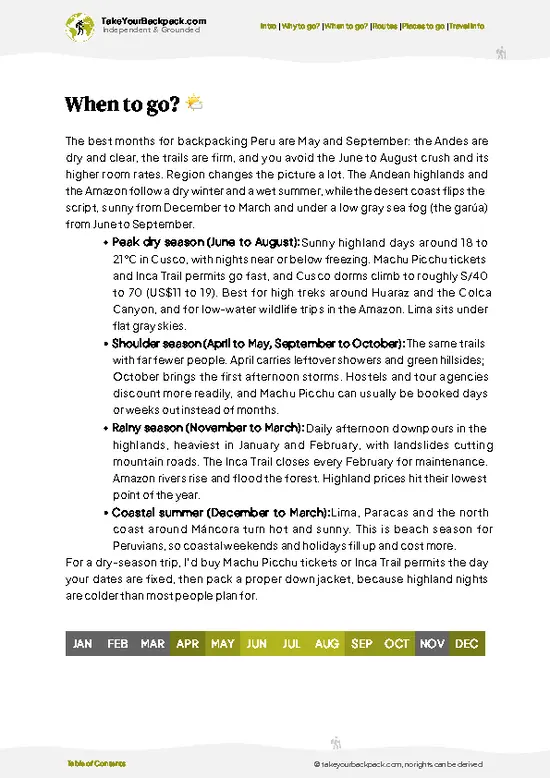
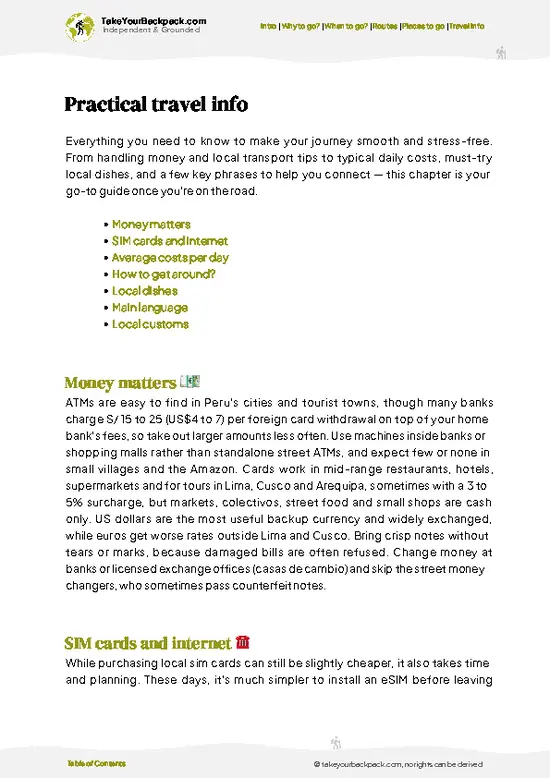
example page 3 from our offline Travel Guide for Peru
example page 4 from our offline Travel Guide for Peru
example page 5 from our offline Travel Guide for Peru
example page 6 from our offline Travel Guide for Peru
example page 7 from our offline Travel Guide for Peru
Loading the map 🌍
CLICK TO FILTER
cities
towns
villages
landmarks
national parks
hikes
beaches
attractions
festivals
regions
SHOW COUNTRY’S BESTSHOW ALL

✨ Why go?
Ranked #15 festival in Peru
Why Señor de los Milagros should be on your travel list

Señor de los Milagros gives you something no ticketed festival can: a three-century-old image painted on an adobe wall carried by neighborhood brotherhoods through Lima’s streets. You are not a spectator behind a barrier. You walk with families, eat alongside them and get pulled into the singing. Dates also help your route, since the October procession days fit neatly between the coast and the Andes. Street stalls selling turrón de Doña Pepa and anticuchos keep the whole thing cheap, and strangers will gladly explain what everything means if you ask.

💡 HighlightsPlaces and moments you shouldn't skip

  1. The Main Procession: The huge silver litter, carried by relays of cargadores in shuffling rhythm, moves slowly through downtown Lima while crowds sing and throw petals. This is what everyone comes for.
  2. Las Nazarenas Sanctuary (Iglesia de las Nazarenas): The shrine holds the original mural, painted by an enslaved Angolan man around 1651. It survived the 1655 earthquake and later quakes, and the story gives the whole festival its weight.
  3. The Sea of Purple Robes: Devotees wear the hábito morado, a purple tunic with a cord, and many women walk barefoot. The color covers whole avenues and makes for unbeatable photos.
  4. Turrón de Doña Pepa: This sticky anise-honey candy, topped with colored sprinkles, is the season’s signature sweet. Vendors set up all along the route, so you can try it fresh.
  5. Street
… read more 👉
  1. The Main Procession: The huge silver litter, carried by relays of cargadores in shuffling rhythm, moves slowly through downtown Lima while crowds sing and throw petals. This is what everyone comes for.
  2. Las Nazarenas Sanctuary (Iglesia de las Nazarenas): The shrine holds the original mural, painted by an enslaved Angolan man around 1651. It survived the 1655 earthquake and later quakes, and the story gives the whole festival its weight.
  3. The Sea of Purple Robes: Devotees wear the hábito morado, a purple tunic with a cord, and many women walk barefoot. The color covers whole avenues and makes for unbeatable photos.
  4. Turrón de Doña Pepa: This sticky anise-honey candy, topped with colored sprinkles, is the season’s signature sweet. Vendors set up all along the route, so you can try it fresh.
  5. Street Food Stalls Along the Route: Grilled beef-heart anticuchos, picarones and hot drinks fill the side streets. Eating here beside devout families is the most social part of the day.
If time is short, skip the sweets stalls and put every minute into the procession itself.
Spotted a mistake or missing something? Contact us.

Things to do around Señor de los Milagros

Ratings based on Tripadvisor reviews. When you book through this link, you support our work at no extra cost to you.

🌤️ When to go?When is the celebration of Señor de los Milagros?

Señor de los Milagros is held throughout October in Lima, with the biggest processions on October 18, 19 and 28, starting from the Church of Las Nazarenas on Avenida Tacna in the historic center.
  • Best day: October 18 and 19 bring two of the biggest processions and heavy crowds. The 28th is the main day, with the Lord of Miracles carried for hours.
  • Weather: Expect gray, damp, cool days, roughly 15 to 20°C (59 to 68°F), with coastal mist rather than rain. Bring a light jacket and comfortable shoes.
  • Booking: Reserve beds 3 to 4 weeks ahead near the center, where rates climb 20 to 40 percent.
  • Crowds: Streets close along the route, so arrive early by Metropolitano and leave on foot or by bus.
Wear purple and get a spot on the route by 7 a.m.

source: climatestotravel.comJANJanuary: not recommended for travelingFEBFebruary: not recommended for travelingMARMarch: not recommended for travelingAPRApril: not recommended for travelingMAYMay: not recommended for travelingJUNJune: not recommended for travelingJULJuly: not recommended for travelingAUGAugust: not recommended for travelingSEPSeptember: not recommended for travelingOCTOctober: excellent for travelingNOVNovember: not recommended for travelingDECDecember: not recommended for traveling

✈️ The backpacker research shortcutPeru Travel Guide

An offline-friendly backpacking guide with optimized travel routes, ranked highlights, transport advice, and the best areas to stay.
example page 0 from our offline Travel Guide for Peru
example page 1 from our offline Travel Guide for Peru
example page 2 from our offline Travel Guide for Peru
example page 3 from our offline Travel Guide for Peru
example page 4 from our offline Travel Guide for Peru
example page 5 from our offline Travel Guide for Peru
example page 6 from our offline Travel Guide for Peru
example page 7 from our offline Travel Guide for Peru
The digital guide (310 pages) contains:
✅ 102 highlights, ranked by travel appeal
✅ Optimized 7, 14 & 21-day travel routes
✅ Cities, national parks, landmarks, beaches
✅ How to get around
✅ Offline-friendly for travel without Wi-Fi
👉 Click to see all 30+ guide features

📅 Plan smarter in minutes, not weeks
✅ Month by month travel advice
✅ Festivals & national holidays
✅ Budget expectations

🗺️ Go to the right places, skip the overrated ones
✅ Honest pros & cons of destinations
✅ Top hikes, parks & viewpoints
✅ Lesser-known places most travelers miss
✅ Clear “worth it vs skip it” guidance

🛏️ Travel smoothly without rookie mistakes
✅ Best areas to stay
✅ Transport systems explained simply
✅ Common scams & safety advice
✅ SIM cards, money & practical tips

🌍 Understand the country, not just visit it
✅ Culture & traditions
✅ 52 Essential phrases & customs
✅ Festivals worth planning around
✅ Traveler-friendly historical context
✅ Insights that make places more meaningful

📱 Built for real travel conditions
✅ Fully downloadable PDF
✅ Works completely offline
✅ Optimized for phone use
✅ Useful in remote areas & buses
✅ Everything in one place
Stop searching, start planning
Get instant access to your full guide. 30‑day money-back guarantee.
+ Add another guide for just

By proceeding you agree to our terms.
Sent to your inbox immediately after payment • 100% Secure Checkout
Best Backpacking Travel Advisor 2025 tourism awardBest Backpacking
Travel Advisor
2025
What others say about Take Your Backpack Guides:
⭐⭐⭐⭐⭐
Fantastic, amazing amount of information!
⭐⭐⭐⭐⭐
My goodness this is amazing, it's what I've been looking for hats off too you!
⭐⭐⭐⭐⭐
I think this is absolutely BRILLIANT
⭐⭐⭐⭐
Very complete and informative. It's still missing places, but I gotta to commend you
⭐⭐⭐⭐⭐
This is truly amazing, thank you, can't wait to explore it with my kids!
⭐⭐⭐⭐⭐
Awesome resource, thank you!
⭐⭐⭐⭐⭐
This is amazing! Can't wait to explore the ones I haven't seen
⭐⭐⭐⭐
I love this! Well done, great idea.
⭐⭐⭐⭐⭐
Thanks for taking the time to make this gem!
⭐⭐⭐⭐⭐
This might be the best website I've ever seen.
⭐⭐⭐⭐⭐
Congratulations, and thank you so much for your work; it's incredibly valuable.
⭐⭐⭐⭐
In all seriousness I think you did a great job pointing out the important spots
⭐⭐⭐⭐⭐
10/10 very good
⭐⭐⭐⭐⭐
As someone who's only just starting to visit regularly this is awesome, thank you.
⭐⭐⭐⭐
Thank you very much! I'm going to visit my dad, it's going to be very useful!
⭐⭐⭐⭐⭐
This is really cool! We'll be travelling for the first time and this definitely come in handy.
⭐⭐⭐⭐⭐
You are now our minister of culture, congratulations 👨‍💼
⭐⭐⭐⭐⭐
Just wanted to tell you that this is a pearl! Going to follow your recommendations.
⭐⭐⭐⭐⭐
This is so cool. I'll definitely be using the resource for my travels soon.
⭐⭐⭐⭐⭐
This is very impressive! Good work.
⭐⭐⭐⭐⭐
This is an amazing and informative site. Very well done!

🛏️ Where to stay?Choosing the right base

Miraflores and Barranco are the best bases for backpackers, while the historic center suits anyone who wants to step out the door and join the procession.
The historic center puts you within a few blocks of Las Nazarenas and the route, but streets can feel empty and sketchy late at night, so choose lodging on lit, busy blocks and take licensed taxis after dark. Hostels are cheapest here.
Miraflores is the safest and most social option, with plenty of hostels, cafes and constant foot traffic. The Metropolitano bus runs from there to the center in about 30 to 40 minutes.
Barranco has a younger, artsy … read more 👉
Miraflores and Barranco are the best bases for backpackers, while the historic center suits anyone who wants to step out the door and join the procession.
The historic center puts you within a few blocks of Las Nazarenas and the route, but streets can feel empty and sketchy late at night, so choose lodging on lit, busy blocks and take licensed taxis after dark. Hostels are cheapest here.
Miraflores is the safest and most social option, with plenty of hostels, cafes and constant foot traffic. The Metropolitano bus runs from there to the center in about 30 to 40 minutes.
Barranco has a younger, artsy crowd, great for meeting other solo travelers over pisco and live music, though it is a bit farther from the route.
During October, book ahead in all three areas.

👛 Costs (as of 20 October 2026)How expensive it really is

Expect to spend about US$48 a day for Señor de los Milagros in Lima, since the procession itself is free.
CategoryBudget RangeLocal Reality
Festival ticketsUS$0Processions and street gatherings are free to join. Church seating is not ticketed.
AccommodationUS$12 to 25Hostel dorms in Miraflores or the center rise during October. Figure US$20 in high season.
Local transportUS$2 to 6Metropolitano rides cost under US$1. Taxis from central streets run US$3 to 6.
Food & drinksUS$10 to 18Street snacks cost US$1 to 4, and set lunch menus cost US$3 to 5. Figure US$15.
MiscellaneousUS$3 to 10Candles, small offerings, a purple scarf or souvenirs. Figure US$8.
Total Daily BudgetUS$48Based on US$0 + US$20 + US$5 + US$15 + US$8.


source: peru.travel
⚠️ Prices can change and everyone travels differently, so take this as a rough guide. Hope it helps you plan your adventure!

🍲 FoodEating & Drinking in Señor de los Milagros

The smell of turrón de Doña Pepa reaches you before the procession does. This honey-drizzled, candy-sprinkled anise cake is the dish of the festival, sold from stands along the route and around Las Nazarenas. Buy a slice and eat it right there.
Stalls also sell anticuchos (grilled beef heart), picarones (squash and sweet potato doughnuts with syrup), tamales, and hot chicha morada against the damp evening chill. Look for the picarones frying in big pans, and eat them hot.
Carry small bills and coins, since vendors rarely take cards and big notes slow everything down. Portions are sized for sharing, so split a turrón with your hostel mates. Lines move fast but get long right after processions pass, so grab food before or well after. Expect to pay US$1 to 4 per item.

FAQTraveler FAQ

Señor de los Milagros takes place every October in Lima, with main processions on October 18, 19 and 28. The route starts at the Church of Las Nazarenas on Avenida Tacna in the historic center. Each procession lasts many hours, and the 28th is the biggest day.
Attending Señor de los Milagros is free, since the processions run through public streets. A realistic daily budget is about US$40 to 55, mostly for a hostel bed (US$12 to 25) and food (US$10 to 18). Turrón and street snacks cost US$1 to 4 each.
Señor de los Milagros needs no tickets, because the processions are open to everyone along the route. What you should book ahead is a bed, 3 to 4 weeks early for central Lima, as October prices rise noticeably. Arrive by 7 a.m. on October 18, 19 or 28 to get a good spot.
⚠️ Things can change over time, so always validate details locally before you go.

Other Peruvian festivals near Señor de los Milagros

Explore more nearby:

  • Mistura—Ceviche counters, native potatoes, Amazonian fruits, chef stages| 1 km away
  • Festival de la Vendimia—Grape stomping, bodega tastings, Afro-Peruvian cajón, pisco sours| 266 km away
  • Semana Santa de Ayacucho—Holy Sepulcher, flower carpets, Palm Sunday donkey, Easter dawn| 329 km away

💡 Not sure where to go next?
Create a personalized itinerary for Peru including Señor de los Milagros and the places that fit your trip.

Generate my itinerary

👉 Discover all festivals

Or checkout all Peru has to offer (think cities, towns, villages, national parks, hikes, beaches, festivals)
Country photo of Peru

We 💚 feedbackWhat to keep in mind

Señor de los Milagros is best for curious travelers who enjoy crowds, ritual and conversation with locals. It is not a party, so respect the devotion. I would wear dark or purple clothing, keep your phone close and stay for the evening hymns.

✈️ When did I visit Peru?
Peru I visited during my half year trip through South and Central America back in 2003

✍️ Help improve this page!
The information on this page is based on my own backpacking experience in Peru, supplemented with up-to-date research and feedback from other travelers. Travel details can change, so if you notice anything outdated or incomplete, feel free to let me know.


🙋‍♂️ Give feedback

👋 Meet the founderWho’s Behind Take Your Backpack?

Johan, backpacker and founder of TakeYourBackpackHi, I’m Johan (Netherlands 🇳🇱), the creator of TakeYourBackpack. Over the past 3 decades, I’ve backpacked through 90+ countries across six continents, gaining extensive experience with independent travel, long-term trips, and overland routes.

This site is built on a combination of firsthand travel experience and carefully curated insights from other backpackers. Many guides are based on places I’ve personally visited, while others bring together tips, observations, and practical advice shared by trusted travelers I’ve met along the way.

The goal is to provide realistic, experience-driven guidance — not generic itineraries — so you can explore destinations with better context, clearer expectations, and more confidence.