×

Peru🇵🇪 | festivalsSemana Santa de AyacuchoHoly Sepulcher, flower carpets, Palm Sunday donkey, Easter dawn | things to do and best time to go

Explore Qoyllur Rit’iExplore Mistura

Backpacking in Semana Santa de Ayacucho
🌟 Highlightfestival ranked #4
By Johan Kruseman 🇳🇱 | Updated October 20, 2026

The Good Friday procession in Ayacucho carries the Holy Sepulcher through streets blanketed with flower petals and colored sawdust carpets, laid down overnight by neighborhood families. Semana Santa runs in the Andean highlands of Peru, with Ayacucho the heart of it, a colonial city of 33 churches. Expect the week before Easter Sunday, with the biggest crowds from Palm Sunday on. Pilgrims, Peruvian families and a growing number of backpackers fill the plaza. Book beds weeks ahead, arrive early for processions and eat at the market stalls. I expected solemn silence. Instead, a brass band struck up behind a float at dusk and half the street started clapping along, kids darting between the bearers. Finish your night at the Plaza de Armas, where the cathedral bells ring over fried street snacks and candles flicker on every step.

Discover everything you want to know in the 📖 Peru Travel Guide.


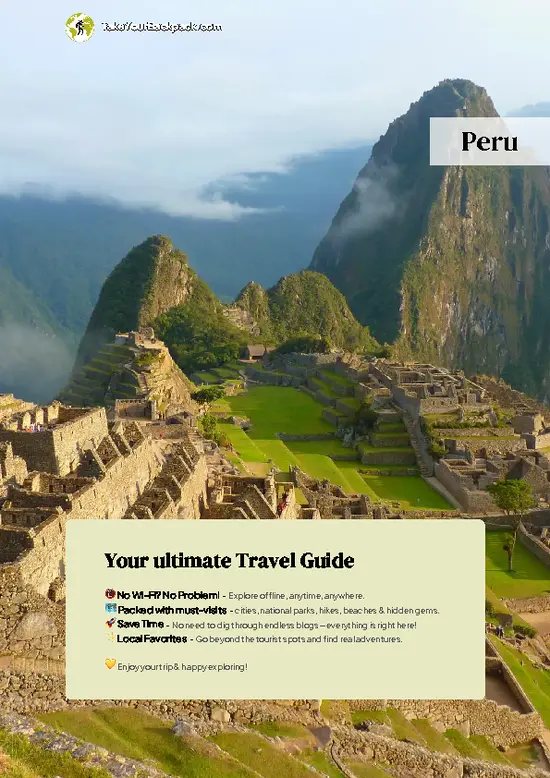
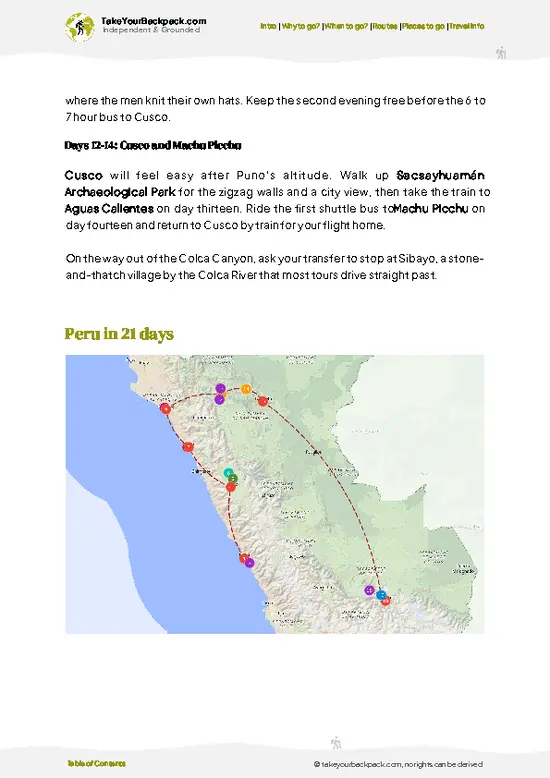
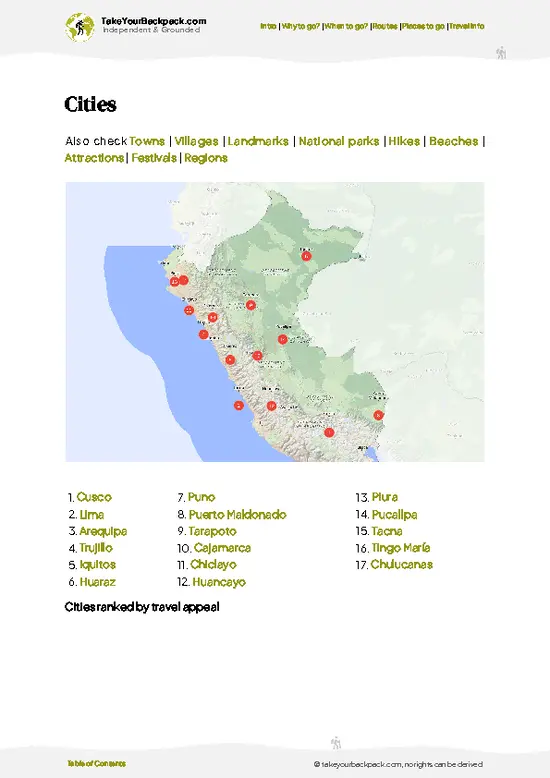
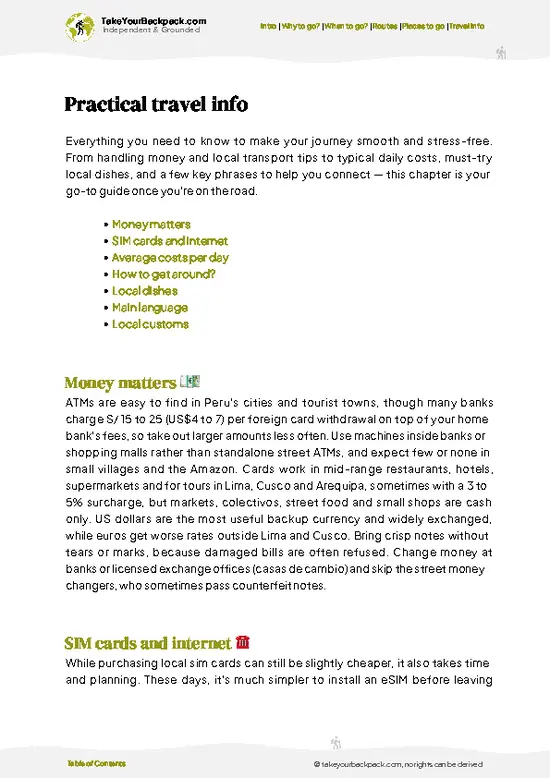
example page 0 from our offline Travel Guide for Peru
example page 1 from our offline Travel Guide for Peru
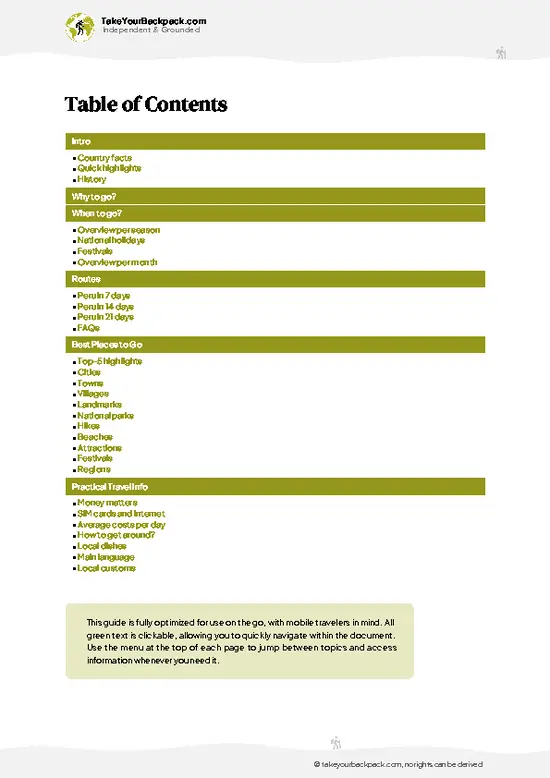
example page 2 from our offline Travel Guide for Peru
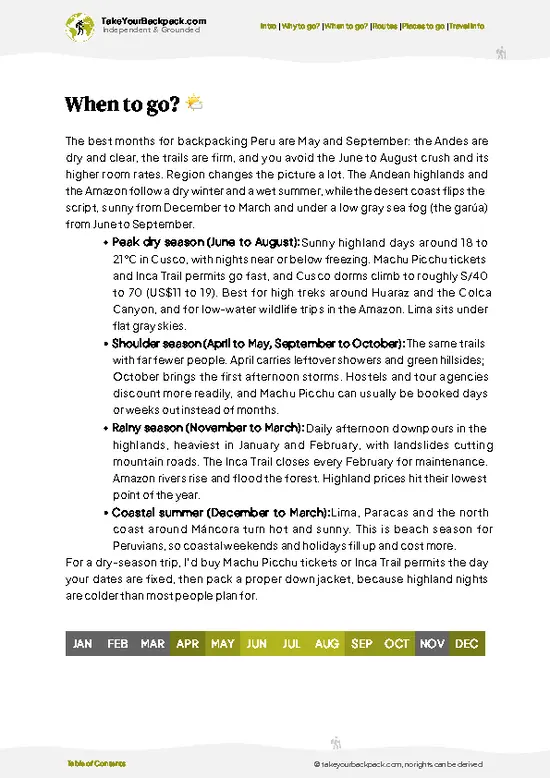
example page 3 from our offline Travel Guide for Peru
example page 4 from our offline Travel Guide for Peru
example page 5 from our offline Travel Guide for Peru
example page 6 from our offline Travel Guide for Peru
example page 7 from our offline Travel Guide for Peru
Loading the map 🌍
CLICK TO FILTER
cities
towns
villages
landmarks
national parks
hikes
beaches
attractions
festivals
regions
SHOW COUNTRY’S BESTSHOW ALL

✨ Why go?
Ranked #4 festival in Peru
The unique appeal for travelers

Semana Santa in Ayacucho is the one Peruvian festival where you can wander from procession to procession on foot, because the old center is compact and every church runs its own event. That density creates a temporary community. You end up standing shoulder to shoulder with local families at 4 a.m. watching the alfombras (carpets) go down, then sharing a plate of mondongo or a cup of hot ponche afterward. Travelers swap tips about which float is leaving next. It also fits a longer route neatly. Most people come overland through the Andes and tie it to a longer loop through the central highlands. The week is also a rare time when the city feels fully local, with 33 churches each putting on their own devotions and the Easter Sunday bull-run and fireworks closing things with a loud, joyful release. … read more 👉
Semana Santa in Ayacucho is the one Peruvian festival where you can wander from procession to procession on foot, because the old center is compact and every church runs its own event. That density creates a temporary community. You end up standing shoulder to shoulder with local families at 4 a.m. watching the alfombras (carpets) go down, then sharing a plate of mondongo or a cup of hot ponche afterward. Travelers swap tips about which float is leaving next. It also fits a longer route neatly. Most people come overland through the Andes and tie it to a longer loop through the central highlands. The week is also a rare time when the city feels fully local, with 33 churches each putting on their own devotions and the Easter Sunday bull-run and fireworks closing things with a loud, joyful release. Compared to Cusco’s crowds, prices for food stay modest, though beds jump in price and fill early.

💡 HighlightsMust-see experiences and standout moments

  1. Good Friday Procession of the Holy Sepulcher: the emotional peak of the week. A glass-sided coffin is carried through the center at night, followed by slow-walking crowds, candles and a band playing dirges.
  2. Alfombras of Flowers and Sawdust: families lay patterned carpets along procession routes through the night. Walk the streets in the early hours to watch them take shape before they are trampled by the float bearers.
  3. Plaza de Armas and the Cathedral: the main stage for the week. Come at dusk when the bells ring, the stone facade glows and vendors sell hot snacks around the square.
  4. Palm Sunday Entry of Jesus on a Donkey: a lively opening event where a figure of Christ rides a donkey through the streets, welcomed by palm-waving crowds. It sets the tone for the week.
  5. Easter Sunday Celebration:
… read more 👉
  1. Good Friday Procession of the Holy Sepulcher: the emotional peak of the week. A glass-sided coffin is carried through the center at night, followed by slow-walking crowds, candles and a band playing dirges.
  2. Alfombras of Flowers and Sawdust: families lay patterned carpets along procession routes through the night. Walk the streets in the early hours to watch them take shape before they are trampled by the float bearers.
  3. Plaza de Armas and the Cathedral: the main stage for the week. Come at dusk when the bells ring, the stone facade glows and vendors sell hot snacks around the square.
  4. Palm Sunday Entry of Jesus on a Donkey: a lively opening event where a figure of Christ rides a donkey through the streets, welcomed by palm-waving crowds. It sets the tone for the week.
  5. Easter Sunday Celebration: after days of mourning, the city turns festive with fireworks, music, and the Burning of Judas ritual, along with the local Resurrection procession at dawn.
Smaller churches like Santo Domingo and San Cristóbal hold intimate evening processions that draw far thinner crowds and let you stand right beside the bearers.
Spotted a mistake or missing something? Contact us.

Things to do near Semana Santa de Ayacucho

Ratings based on Tripadvisor reviews. When you book through this link, you support our work at no extra cost to you.

🌤️ When to go?When is the celebration of Semana Santa de Ayacucho?

Semana Santa runs from Palm Sunday to Easter Sunday, usually late March or April, and the date moves with the Christian calendar; the most intense celebrations are in Ayacucho, with big processions also in Cusco and Lima.
  • Best days: Holy Thursday and Good Friday bring the heaviest processions, while Saturday night’s vigil in Ayacucho and the Easter Sunday dawn procession are the emotional peak. Palm Sunday is quieter and easier for photos.
  • Weather: Ayacucho (2,750 m) is mild and dry by day, around 22 to 24°C (72 to 75°F), and drops to about 8 to 10°C (46 to 50°F) at night. Cusco is colder after dark, near 3°C (37°F). Bring a warm layer, rain jacket, sun hat and comfortable shoes.
  • Booking: Reserve beds and buses 2 to 3 months ahead. Rooms in Ayacucho can cost double or triple normal rates from
… read more 👉
Semana Santa runs from Palm Sunday to Easter Sunday, usually late March or April, and the date moves with the Christian calendar; the most intense celebrations are in Ayacucho, with big processions also in Cusco and Lima.
  • Best days: Holy Thursday and Good Friday bring the heaviest processions, while Saturday night’s vigil in Ayacucho and the Easter Sunday dawn procession are the emotional peak. Palm Sunday is quieter and easier for photos.
  • Weather: Ayacucho (2,750 m) is mild and dry by day, around 22 to 24°C (72 to 75°F), and drops to about 8 to 10°C (46 to 50°F) at night. Cusco is colder after dark, near 3°C (37°F). Bring a warm layer, rain jacket, sun hat and comfortable shoes.
  • Booking: Reserve beds and buses 2 to 3 months ahead. Rooms in Ayacucho can cost double or triple normal rates from Wednesday to Saturday.
  • Crowds and roads: Buses fill on the Wednesday before and the Sunday after, so travel Tuesday and leave Monday.
Arrive by Tuesday to catch the early processions and settle in before prices peak.


source: climatestotravel.comJANJanuary: not recommended for travelingFEBFebruary: not recommended for travelingMARMarch: highly recommended for travelingAPRApril: highly recommended for travelingMAYMay: not recommended for travelingJUNJune: not recommended for travelingJULJuly: not recommended for travelingAUGAugust: not recommended for travelingSEPSeptember: not recommended for travelingOCTOctober: not recommended for travelingNOVNovember: not recommended for travelingDECDecember: not recommended for traveling

✈️ The backpacker research shortcutPeru Travel Guide

An offline-friendly backpacking guide with optimized travel routes, ranked highlights, transport advice, and the best areas to stay.
example page 0 from our offline Travel Guide for Peru
example page 1 from our offline Travel Guide for Peru
example page 2 from our offline Travel Guide for Peru
example page 3 from our offline Travel Guide for Peru
example page 4 from our offline Travel Guide for Peru
example page 5 from our offline Travel Guide for Peru
example page 6 from our offline Travel Guide for Peru
example page 7 from our offline Travel Guide for Peru
The digital guide (310 pages) contains:
✅ 102 highlights, ranked by travel appeal
✅ Optimized 7, 14 & 21-day travel routes
✅ Cities, national parks, landmarks, beaches
✅ How to get around
✅ Offline-friendly for travel without Wi-Fi
👉 Click to see all 30+ guide features

📅 Plan smarter in minutes, not weeks
✅ Month by month travel advice
✅ Festivals & national holidays
✅ Budget expectations

🗺️ Go to the right places, skip the overrated ones
✅ Honest pros & cons of destinations
✅ Top hikes, parks & viewpoints
✅ Lesser-known places most travelers miss
✅ Clear “worth it vs skip it” guidance

🛏️ Travel smoothly without rookie mistakes
✅ Best areas to stay
✅ Transport systems explained simply
✅ Common scams & safety advice
✅ SIM cards, money & practical tips

🌍 Understand the country, not just visit it
✅ Culture & traditions
✅ 52 Essential phrases & customs
✅ Festivals worth planning around
✅ Traveler-friendly historical context
✅ Insights that make places more meaningful

📱 Built for real travel conditions
✅ Fully downloadable PDF
✅ Works completely offline
✅ Optimized for phone use
✅ Useful in remote areas & buses
✅ Everything in one place
Stop searching, start planning
Get instant access to your full guide. 30‑day money-back guarantee.
+ Add another guide for just

By proceeding you agree to our terms.
Sent to your inbox immediately after payment • 100% Secure Checkout
Best Backpacking Travel Advisor 2025 tourism awardBest Backpacking
Travel Advisor
2025
What others say about Take Your Backpack Guides:
⭐⭐⭐⭐⭐
Fantastic, amazing amount of information!
⭐⭐⭐⭐⭐
My goodness this is amazing, it's what I've been looking for hats off too you!
⭐⭐⭐⭐⭐
I think this is absolutely BRILLIANT
⭐⭐⭐⭐
Very complete and informative. It's still missing places, but I gotta to commend you
⭐⭐⭐⭐⭐
This is truly amazing, thank you, can't wait to explore it with my kids!
⭐⭐⭐⭐⭐
Awesome resource, thank you!
⭐⭐⭐⭐⭐
This is amazing! Can't wait to explore the ones I haven't seen
⭐⭐⭐⭐
I love this! Well done, great idea.
⭐⭐⭐⭐⭐
Thanks for taking the time to make this gem!
⭐⭐⭐⭐⭐
This might be the best website I've ever seen.
⭐⭐⭐⭐⭐
Congratulations, and thank you so much for your work; it's incredibly valuable.
⭐⭐⭐⭐
In all seriousness I think you did a great job pointing out the important spots
⭐⭐⭐⭐⭐
10/10 very good
⭐⭐⭐⭐⭐
As someone who's only just starting to visit regularly this is awesome, thank you.
⭐⭐⭐⭐
Thank you very much! I'm going to visit my dad, it's going to be very useful!
⭐⭐⭐⭐⭐
This is really cool! We'll be travelling for the first time and this definitely come in handy.
⭐⭐⭐⭐⭐
You are now our minister of culture, congratulations 👨‍💼
⭐⭐⭐⭐⭐
Just wanted to tell you that this is a pearl! Going to follow your recommendations.
⭐⭐⭐⭐⭐
This is so cool. I'll definitely be using the resource for my travels soon.
⭐⭐⭐⭐⭐
This is very impressive! Good work.
⭐⭐⭐⭐⭐
This is an amazing and informative site. Very well done!

🛏️ Where to stay?How to pick the right area

Stay in the historic center of Ayacucho, within a few blocks of the Plaza de Armas, because the processions, stalls and vigils all pass through it and public transport is mostly stuck in traffic during the festival. This is the best area for solo backpackers. Streets around the plaza stay lit and busy with families until late, and you can walk everywhere, which matters when taxis stop running or charge triple. The blocks near Jirón 28 de Julio and the streets toward the Santa Clara neighborhood have the highest concentration of budget guesthouses and hostels, and common rooms are where you meet … read more 👉
Stay in the historic center of Ayacucho, within a few blocks of the Plaza de Armas, because the processions, stalls and vigils all pass through it and public transport is mostly stuck in traffic during the festival. This is the best area for solo backpackers. Streets around the plaza stay lit and busy with families until late, and you can walk everywhere, which matters when taxis stop running or charge triple. The blocks near Jirón 28 de Julio and the streets toward the Santa Clara neighborhood have the highest concentration of budget guesthouses and hostels, and common rooms are where you meet other travelers heading to the same processions.
The Santa Ana neighborhood in Ayacucho, a short uphill walk from the plaza, is calmer and good for sleeping, with artisans’ workshops nearby. Avoid the outskirts near the bus terminals after dark. They are a longer walk and poorly lit.
If Ayacucho is full, Cusco’s San Blas and the streets around Plaza de Armas are the usual alternatives for backpackers. Both are social, compact and walkable to the Holy Week processions, including the Lord of the Earthquakes procession on Monday. Book early in either city.

👛 Costs (as of 20 October 2026)Money, prices, and spending tips

A realistic budget for one day at Semana Santa in Peru is about US$30 to 80, with accommodation priced at festival rates.
CategoryBudget RangeLocal Reality
Festival ticketsUS$0Processions, vigils and plaza events are free. Only a few special concerts or reserved seats cost extra.
AccommodationUS$15 to 40Dorm beds in Ayacucho or Cusco are about US$8 to 12 normally and can double or triple during Holy Week. Private rooms run US$30 to 60.
Local transportUS$2 to 10Walking covers most routes. Short taxi rides cost US$1.50 to 4, with surcharges during processions. Long-distance buses cost more on festival days.
Food & drinksUS$10 to 20Set lunch menus cost US$3 to 5, and festival stalls sell dishes for US$2 to 6. Beer costs around US$2 to 4.
Miscellaneous expensesUS$3 to 10Candles, small donations, sunscreen,
… read more 👉
A realistic budget for one day at Semana Santa in Peru is about US$30 to 80, with accommodation priced at festival rates.
CategoryBudget RangeLocal Reality
Festival ticketsUS$0Processions, vigils and plaza events are free. Only a few special concerts or reserved seats cost extra.
AccommodationUS$15 to 40Dorm beds in Ayacucho or Cusco are about US$8 to 12 normally and can double or triple during Holy Week. Private rooms run US$30 to 60.
Local transportUS$2 to 10Walking covers most routes. Short taxi rides cost US$1.50 to 4, with surcharges during processions. Long-distance buses cost more on festival days.
Food & drinksUS$10 to 20Set lunch menus cost US$3 to 5, and festival stalls sell dishes for US$2 to 6. Beer costs around US$2 to 4.
Miscellaneous expensesUS$3 to 10Candles, small donations, sunscreen, a warm layer from a market and luggage storage if you arrive early.
Total Daily BudgetUS$30 to 80Roughly US$55 to 95 at high-season festival prices, with the upper end for private rooms.


source: peru.travel
⚠️ Prices can change and everyone travels differently, so take this as a rough guide. Hope it helps you plan your adventure!

🍲 FoodLocal Flavors for Backpackers

Holy Week eating in Peru is meatless on Friday, so the stalls around the plazas fill with fish and vegetable dishes instead of the usual grills. The star is doce de semana santa, the Lenten meal built around a dozen sweet and savory dishes that families share, and in Ayacucho you will see sopa de mote, puca picante, while Cusco serves chiriuchu on other festival days. Look for ceviche and fried trout on Friday, and sopa de habas or locro at market counters.
For sweets, try mazamorra morada, arroz con leche and turrón de Doña Pepa, though that last one is more an October tradition. In Ayacucho, buy queso helado and dulces de tuna from plaza vendors. Wash it down with chicha de jora, a mildly sour corn beer, emoliente on cold nights or a hot api at dawn.
Carry small cash in soles, because most … read more 👉
Holy Week eating in Peru is meatless on Friday, so the stalls around the plazas fill with fish and vegetable dishes instead of the usual grills. The star is doce de semana santa, the Lenten meal built around a dozen sweet and savory dishes that families share, and in Ayacucho you will see sopa de mote, puca picante, while Cusco serves chiriuchu on other festival days. Look for ceviche and fried trout on Friday, and sopa de habas or locro at market counters.
For sweets, try mazamorra morada, arroz con leche and turrón de Doña Pepa, though that last one is more an October tradition. In Ayacucho, buy queso helado and dulces de tuna from plaza vendors. Wash it down with chicha de jora, a mildly sour corn beer, emoliente on cold nights or a hot api at dawn.
Carry small cash in soles, because most stalls do not take cards and cannot break large bills. Portions are generous and many families share, so order one plate between two and add a second. Lines move slowly around processions, so eat before the route reaches your corner, and keep your hands free on crowded streets.

FAQTraveler FAQ

Semana Santa takes place in the week before Easter Sunday, usually between late March and late April, and the exact dates change each year. The main events run from Palm Sunday through Holy Thursday, Good Friday and Easter Sunday. Ayacucho holds the largest celebrations, and Cusco and Lima also hold major processions.
Attending Semana Santa costs nothing for the processions and vigils, which take place in public streets and plazas. Your main costs are beds, which can rise to US$15 to 40 for a dorm bed or US$30 to 60 for a private room in Ayacucho, plus food at roughly US$10 to 20 a day. Expect a total of about US$55 to 95 a day.
Semana Santa events themselves need no tickets, since processions and plaza celebrations are free to watch. What you must book ahead is lodging and long-distance bus seats, ideally two to three months before Holy Week. Buses between Lima, Ayacucho and Cusco fill up around Wednesday and the Sunday after Easter, and a few special concerts or reserved viewing seats may carry a small fee.
⚠️ Things can change over time, so always validate details locally before you go.

Other Peruvian festivals near Semana Santa de Ayacucho

Explore more nearby:


💡 Not sure where to go next?
Create a personalized itinerary for Peru including Semana Santa de Ayacucho and the places that fit your trip.

Generate my itinerary

👉 Discover all festivals

Or checkout all Peru has to offer (think cities, towns, villages, national parks, hikes, beaches, festivals)
Country photo of Peru

We 💚 feedbackIs it worth it?

Ayacucho during Semana Santa works best as the middle stop on a highlands loop, paired with a few days in Huancavelica or the nearby ruins of Wari before heading on toward Cusco. The crowds and prices are real, so I would book a bed early and bring layers for the cold nights.

✈️ When did I visit Peru?
Peru I visited during my half year trip through South and Central America back in 2003

✍️ Help improve this page!
The information on this page is based on my own backpacking experience in Peru, supplemented with up-to-date research and feedback from other travelers. Travel details can change, so if you notice anything outdated or incomplete, feel free to let me know.


🙋‍♂️ Give feedback

👋 Meet the founderWho’s Behind Take Your Backpack?

Johan, backpacker and founder of TakeYourBackpackHi, I’m Johan (Netherlands 🇳🇱), the creator of TakeYourBackpack. Over the past 3 decades, I’ve backpacked through 90+ countries across six continents, gaining extensive experience with independent travel, long-term trips, and overland routes.

This site is built on a combination of firsthand travel experience and carefully curated insights from other backpackers. Many guides are based on places I’ve personally visited, while others bring together tips, observations, and practical advice shared by trusted travelers I’ve met along the way.

The goal is to provide realistic, experience-driven guidance — not generic itineraries — so you can explore destinations with better context, clearer expectations, and more confidence.