
×

Peru🇵🇪 | national parksPacaya-Samiria National Reserveflooded forest, pink river dolphins, blackwater lakes | things to do and best time to go

Explore Manu National ParkExplore Paracas National Reserve

Backpacking in Pacaya-Samiria National Reserve
🏆 Top picknational park ranked #5
By Johan Kruseman 🇳🇱 | Updated May 24, 2026

Most people realize too late that Pacaya-Samiria quietly forces you into a full-package tour, which kills spontaneity but saves you from bleeding money and energy on bad logistics. Deep in Peru’s Loreto region, between the Marañón and Ucayali rivers near Iquitos, it’s a flooded forest reserve where you travel more by boat than by trail. For backpackers, the payoff is serious wildlife—pink river dolphins, macaws, caimans—but hiking is limited to short, muddy walks from river camps, not long-distance treks. Access is slow and pricey compared with places like Manu or Tambopata, and the mandatory guides, boats, and permits stack up, though split costs make it manageable. Crowds are light, camping is basic but atmospheric, and village homestays beat “eco-lodges” on value. Overall vibe: raw, humid, and immersive, better for patient nature nerds than checklist chasers.

Discover everything you want to know in the 📖 Peru Travel Guide.


Get your Peru guide
118 ranked highlights, routes & tips, works offline (442 pages)
Loading the map 🌍
CLICK TO FILTER
cities
towns
villages
landmarks
national parks
hikes
beaches
attractions
festivals
regions
SHOW COUNTRY’S BESTSHOW ALL

✨ Why go?
Ranked #5 national park in Peru
Why Pacaya-Samiria National Reserve should be on your travel list

Backpackers flock to Pacaya-Samiria National Reserve for its blend of independent exploration and affordable options. The park offers a chance to dive into the Amazon’s heart without the constraints of guided tours. You can set your own pace, wandering through diverse trails that range from easy walks to more challenging treks.

Budget-conscious travelers will appreciate the nearby camping spots and hostels that keep costs low while providing a base for adventure. This flexibility allows you to stretch your budget further, saving funds for experiences that matter, like a night under the stars or a local meal.

While some areas are best navigated with a guide, many trails are accessible for self-guided travelers. Just be sure to carry a reliable map and stay aware of your surroundings. The … read more 👉
Backpackers flock to Pacaya-Samiria National Reserve for its blend of independent exploration and affordable options. The park offers a chance to dive into the Amazon’s heart without the constraints of guided tours. You can set your own pace, wandering through diverse trails that range from easy walks to more challenging treks.

Budget-conscious travelers will appreciate the nearby camping spots and hostels that keep costs low while providing a base for adventure. This flexibility allows you to stretch your budget further, saving funds for experiences that matter, like a night under the stars or a local meal.

While some areas are best navigated with a guide, many trails are accessible for self-guided travelers. Just be sure to carry a reliable map and stay aware of your surroundings. The park’s vastness can be disorienting, but that’s part of the allure. Embrace the wild, but respect the environment, and you’ll find Pacaya-Samiria to be a rewarding experience.
Want to include Pacaya-Samiria National Reserve in your Peru route?
Create a personalized Peru itinerary that includes Pacaya-Samiria National Reserve and the places that fit your trip — based on your travel style, budget, and available time. Get your route in seconds.

Generate my trip

💡 HighlightsTop highlights of Pacaya-Samiria National Reserve

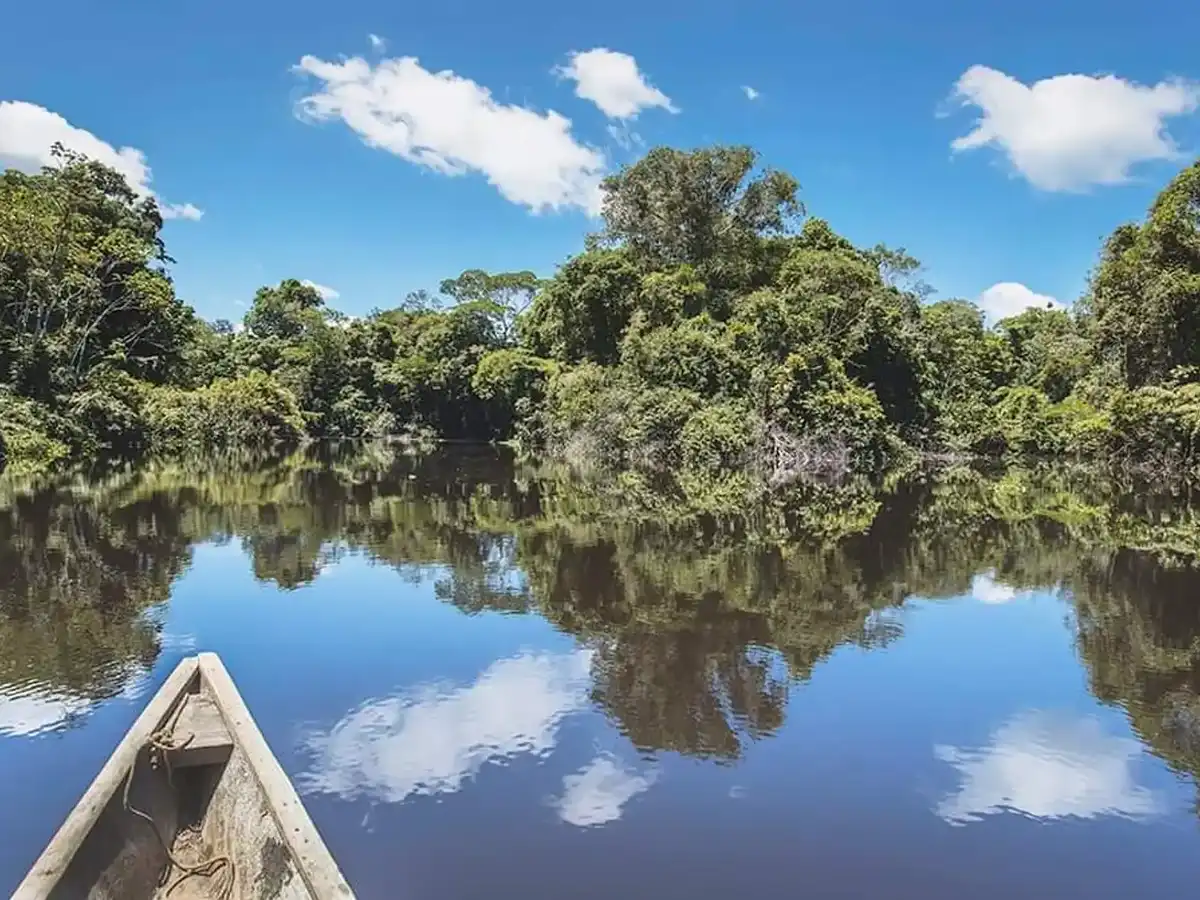
  • Varzea flooded forest — The seasonal floodplain that gives the reserve its pulse: trees half-submerged, mirrored water corridors, and a constantly changing landscape that concentrates wildlife where you can actually see it from a boat.
  • Oxbow lakes and lagunas — Curved lagoons cut off from the main river that glow at sunrise and dusk. They’re wildlife magnets (birds, otters, caimans) and perfect for quiet canoeing or photography — my personal favorite for peaceful mornings and glassy reflections.
  • Arapaima (paiche) sightings — These enormous, prehistoric-looking fish surface to breathe and are a highlight for many visitors. Local guides know the spots and it’s a rare chance to see one in the wild without a zoo fence between you.
  • Pink river dolphins — Playful and curious, the pink (and grey)
read more 👉
  • Varzea flooded forest — The seasonal floodplain that gives the reserve its pulse: trees half-submerged, mirrored water corridors, and a constantly changing landscape that concentrates wildlife where you can actually see it from a boat.
  • Oxbow lakes and lagunas — Curved lagoons cut off from the main river that glow at sunrise and dusk. They’re wildlife magnets (birds, otters, caimans) and perfect for quiet canoeing or photography — my personal favorite for peaceful mornings and glassy reflections.
  • Arapaima (paiche) sightings — These enormous, prehistoric-looking fish surface to breathe and are a highlight for many visitors. Local guides know the spots and it’s a rare chance to see one in the wild without a zoo fence between you.
  • Pink river dolphins — Playful and curious, the pink (and grey) river dolphins often cruise river bends and side channels. Dawn and dusk boat trips up narrow channels are your best bet.
  • Giant river otters and caiman spotting — Giant otters are social and fun to watch; caimans light up at night with headlamp reflections. Daytime river surveys and night boat safaris give very different, equally thrilling views.
  • Birdlife and parrot flocks — Hoatzins, herons, kingfishers, and squawking parrot/macaw flocks along the riverbanks. Early-morning birdwatching from a skiff is unbeatable for color and noise.
  • Jungle walks and canopy observation towers — Short guided walks into terra firme and climbs up simple towers give you a different perspective — from leaf-level squeaks and monkey calls to sweeping canopy views where you can spot raptors and monkey groups.
Spotted a mistake or missing something? Contact us.

Things to do around Pacaya-Samiria National Reserve

Ratings based on Tripadvisor reviews. When you book through this link, you support our work at no extra cost to you.

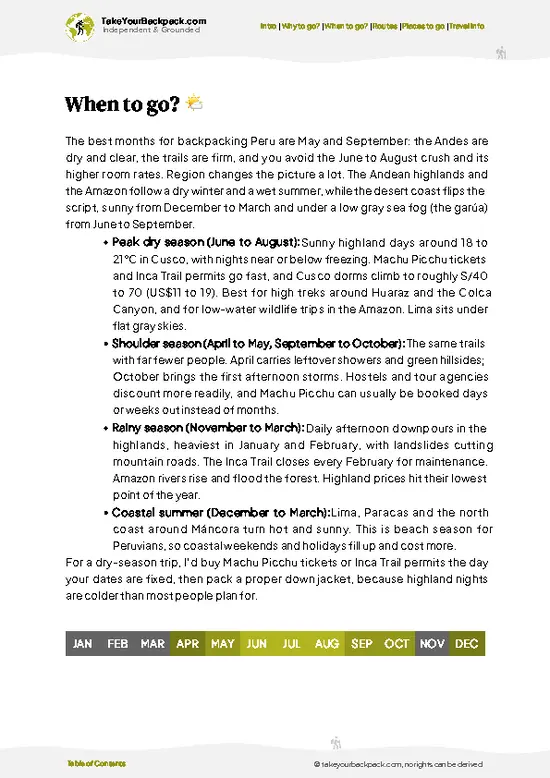
🌤️ When to go?Choosing the right time of year


  • Weather: The dry season from June to November is your best bet. Rainfall drops significantly, making trails less muddy and river levels more predictable. The wet season (December to May) floods much of the reserve, limiting access and increasing mosquito activity.

  • Temperature: Expect daytime highs around 30-33°C (86-91°F) year-round, with nights cooling to 22-24°C (72-75°F). The dry season feels more comfortable due to lower humidity, which can make a big difference on long hikes.

  • Daylight Hours: Near the equator, daylight is steady—about 11.5 to 12.5 hours daily. This consistency means you won’t lose time to short days, but plan for early starts to avoid afternoon heat and insects.

  • Crowds: The dry season draws more visitors, especially July and August. While it’s not overwhelming,
read more 👉

  • Weather: The dry season from June to November is your best bet. Rainfall drops significantly, making trails less muddy and river levels more predictable. The wet season (December to May) floods much of the reserve, limiting access and increasing mosquito activity.

  • Temperature: Expect daytime highs around 30-33°C (86-91°F) year-round, with nights cooling to 22-24°C (72-75°F). The dry season feels more comfortable due to lower humidity, which can make a big difference on long hikes.

  • Daylight Hours: Near the equator, daylight is steady—about 11.5 to 12.5 hours daily. This consistency means you won’t lose time to short days, but plan for early starts to avoid afternoon heat and insects.

  • Crowds: The dry season draws more visitors, especially July and August. While it’s not overwhelming, expect more boats and guided tours. The wet season offers solitude but at the cost of limited access.

  • Seasonal Activities: Wildlife spotting peaks in the dry months when animals gather around shrinking water sources. The wet season floods the forest, creating unique boat routes but fewer terrestrial sightings.

  • Price Fluctuations: Accommodation and tours can be 20-30% pricier in the dry season due to demand. Booking ahead is crucial during these months to avoid last-minute premiums.


Pro-tip: Aim for late dry season (September-November) to balance fewer crowds, good wildlife viewing, and better prices—plus, you’ll dodge the peak heat and tourist rush.


source: climatestotravel.comJANJanuary: fair for travelingFEBFebruary: fair for travelingMARMarch: fair for travelingAPRApril: fair for travelingMAYMay: good for travelingJUNJune: highly recommended for travelingJULJuly: excellent for travelingAUGAugust: excellent for travelingSEPSeptember: excellent for travelingOCTOctober: excellent for travelingNOVNovember: highly recommended for travelingDECDecember: fair for traveling

✈️ The backpacker research shortcutPeru Travel Guide

An offline-friendly backpacking guide with optimized travel routes, ranked highlights, transport advice, and the best areas to stay.
example page 0 from our offline Travel Guide for Peru
example page 1 from our offline Travel Guide for Peru
example page 2 from our offline Travel Guide for Peru
example page 3 from our offline Travel Guide for Peru
example page 4 from our offline Travel Guide for Peru
example page 5 from our offline Travel Guide for Peru
example page 6 from our offline Travel Guide for Peru
example page 7 from our offline Travel Guide for Peru
The digital guide (442 pages) contains:
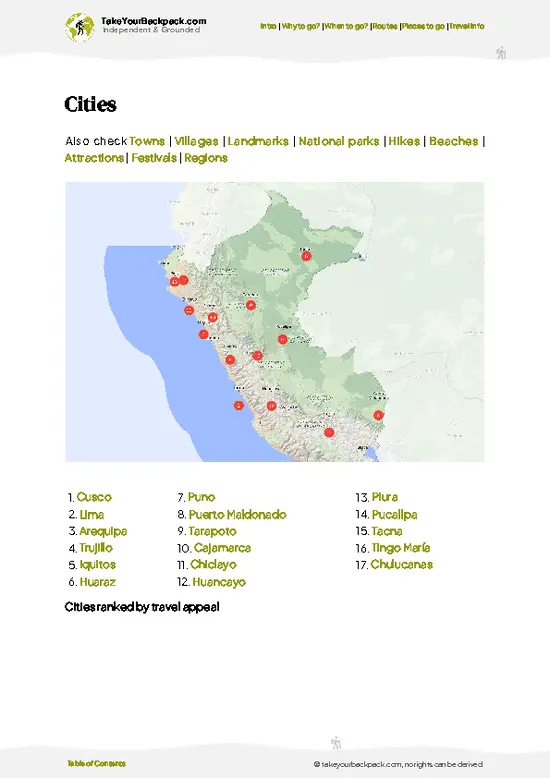
118 highlights, ranked by travel appeal
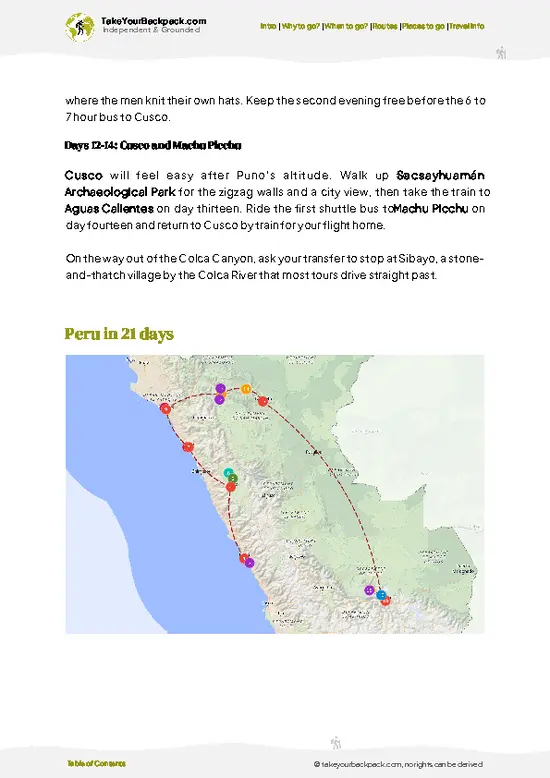
Optimized 7, 14 & 21-day travel routes
Cities, national parks, landmarks, beaches
How to get around
Offline-friendly for travel without Wi-Fi
👉 Click to see all 30+ guide features

📅 Plan smarter in minutes, not weeks
Month by month travel advice
Festivals & national holidays
Budget expectations

🗺️ Go to the right places, skip the overrated ones
Honest pros & cons of destinations
Top hikes, parks & viewpoints
Lesser-known places most travelers miss
Clear “worth it vs skip it” guidance

🛏️ Travel smoothly without rookie mistakes
Best areas to stay
Transport systems explained simply
Common scams & safety advice
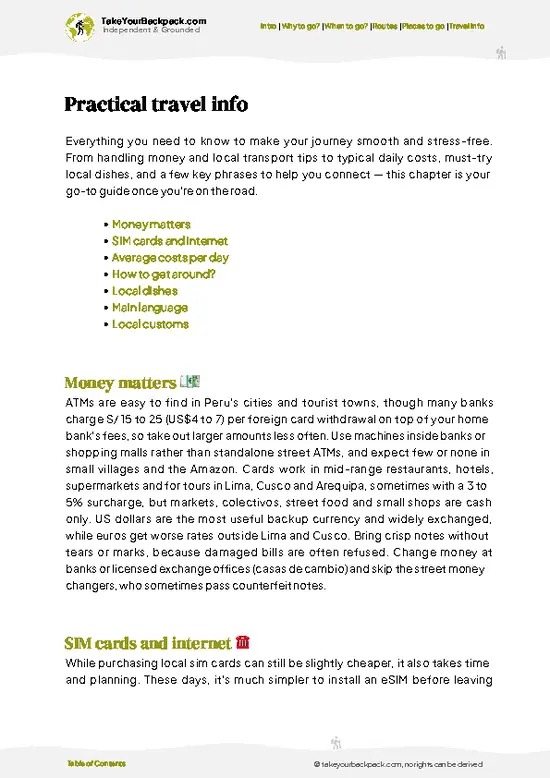
SIM cards, money & practical tips

🌍 Understand the country, not just visit it
Culture & traditions
52 Essential phrases & customs
Festivals worth planning around
Traveler-friendly historical context
Insights that make places more meaningful

📱 Built for real travel conditions
Fully downloadable PDF
Works completely offline
Optimized for phone use
Useful in remote areas & buses
Everything in one place
Save weeks of stressful planning
Get instant access to your full guide. 30‑day money-back guarantee.


By proceeding you agree to our terms.
Sent to your inbox immediately after payment • 100% Secure Checkout
Best Backpacking Travel Advisor 2025 tourism awardBest Backpacking
Travel Advisor
2025
What others say about Take Your Backpack Guides:
⭐⭐⭐⭐⭐
Fantastic, amazing amount of information!
⭐⭐⭐⭐⭐
My goodness this is amazing, it's what I've been looking for hats off too you!
⭐⭐⭐⭐⭐
I think this is absolutely BRILLIANT
⭐⭐⭐⭐
Very complete and informative. It's still missing places, but I gotta to commend you
⭐⭐⭐⭐⭐
This is truly amazing, thank you, can't wait to explore it with my kids!
⭐⭐⭐⭐⭐
Awesome resource, thank you!
⭐⭐⭐⭐⭐
This is amazing! Can't wait to explore the ones I haven't seen
⭐⭐⭐⭐
I love this! Well done, great idea.
⭐⭐⭐⭐⭐
Thanks for taking the time to make this gem!
⭐⭐⭐⭐⭐
This might be the best website I've ever seen.
⭐⭐⭐⭐⭐
Congratulations, and thank you so much for your work; it's incredibly valuable.
⭐⭐⭐⭐
In all seriousness I think you did a great job pointing out the important spots
⭐⭐⭐⭐⭐
10/10 very good
⭐⭐⭐⭐⭐
As someone who's only just starting to visit regularly this is awesome, thank you.
⭐⭐⭐⭐
Thank you very much! I'm going to visit my dad, it's going to be very useful!
⭐⭐⭐⭐⭐
This is really cool! We'll be travelling for the first time and this definitely come in handy.
⭐⭐⭐⭐⭐
You are now our minister of culture, congratulations 👨‍💼
⭐⭐⭐⭐⭐
Just wanted to tell you that this is a pearl! Going to follow your recommendations.
⭐⭐⭐⭐⭐
This is so cool. I'll definitely be using the resource for my travels soon.
⭐⭐⭐⭐⭐
This is very impressive! Good work.
⭐⭐⭐⭐⭐
This is an amazing and informative site. Very well done!

🛏️ Where to stay?How to pick the right area

When it comes to staying near Pacaya-Samiria National Reserve, your best bet is to base yourself in Iquitos. This bustling city is the gateway to the reserve and offers a range of accommodations, from budget hostels to mid-range hotels. Look for places like the El Dorado Plaza or Hostal La Casa de Don Carlos for decent comfort without breaking the bank.

Inside the reserve, options are limited. Most visitors opt for guided tours that include lodging in basic lodges or floating accommodations. These can vary in quality, so read reviews carefully. Places like Amazon Eco Lodge provide a more immersive … read more 👉
When it comes to staying near Pacaya-Samiria National Reserve, your best bet is to base yourself in Iquitos. This bustling city is the gateway to the reserve and offers a range of accommodations, from budget hostels to mid-range hotels. Look for places like the El Dorado Plaza or Hostal La Casa de Don Carlos for decent comfort without breaking the bank.

Inside the reserve, options are limited. Most visitors opt for guided tours that include lodging in basic lodges or floating accommodations. These can vary in quality, so read reviews carefully. Places like Amazon Eco Lodge provide a more immersive experience, but be prepared for rustic conditions.

Keep in mind that transportation costs can add up. Boat rides to the reserve can be pricey, so factor that into your budget. Also, be aware of the seasonal variations in accessibility; the rainy season can affect travel plans.

By planning wisely, you can save your energy and funds for the real adventure—exploring the incredible biodiversity of the Amazon.

👛 Costs (as of 15 April 2025)What things cost and how to budget

Visiting Pacaya-Samiria National Reserve in Peru can be a rewarding experience, but it’s essential to be aware of the costs involved to avoid surprises.

Entry fees to the reserve typically range from $10 to $15 USD per person. This fee grants you access to the park, but it’s just the beginning. Guided tours are highly recommended for a deeper understanding of the ecosystem. Expect to pay between $50 and $150 USD for a day tour, depending on the group size and inclusions.

If you’re considering multi-day excursions, prices can escalate. A three-day, two-night package might cost anywhere from $200 to $500 USD. This usually includes meals, accommodation, and guided activities, but always confirm what’s covered.

Transportation to the reserve is another factor. If you’re starting from Iquitos, … read more 👉
Visiting Pacaya-Samiria National Reserve in Peru can be a rewarding experience, but it’s essential to be aware of the costs involved to avoid surprises.

Entry fees to the reserve typically range from $10 to $15 USD per person. This fee grants you access to the park, but it’s just the beginning. Guided tours are highly recommended for a deeper understanding of the ecosystem. Expect to pay between $50 and $150 USD for a day tour, depending on the group size and inclusions.

If you’re considering multi-day excursions, prices can escalate. A three-day, two-night package might cost anywhere from $200 to $500 USD. This usually includes meals, accommodation, and guided activities, but always confirm what’s covered.

Transportation to the reserve is another factor. If you’re starting from Iquitos, a boat ride can set you back around $30 to $50 USD one way. Factor in the time it takes to get there—sometimes several hours—so plan accordingly.

Accommodation options vary widely. Basic lodges can be found for about $20 to $40 USD per night, while more comfortable options can reach $100 USD or more. Always check reviews to ensure you’re getting what you pay for.

Lastly, don’t forget about additional costs like tips for guides and staff, which can add up. Budgeting an extra $10 to $20 USD for this is wise.

By keeping these costs in mind, you can preserve your energy and budget for the experiences that truly matter in this stunning reserve.


source: peru.travel
⚠️ Prices can change and everyone travels differently, so take this as a rough guide. Hope it helps you plan your adventure!

🥾 TrailsWhere to hike in Pacaya-Samiria National Reserve: trails for every level

In Pacaya-Samiria National Reserve, the hiking scene is a bit different from your typical mountain trails. You’re mostly looking at riverine landscapes and flooded forests, which gives you a unique chance to experience the Amazon’s vibe. The terrain can be muddy and uneven, so be prepared for some squishy steps. Wildlife is a major highlight here; keep your eyes peeled for pink river dolphins, capybaras, and a variety of bird species.

While there aren’t a ton of designated trails like you’d find in more traditional parks, you can explore areas with local guides who know the ins and outs. One … read more 👉
In Pacaya-Samiria National Reserve, the hiking scene is a bit different from your typical mountain trails. You’re mostly looking at riverine landscapes and flooded forests, which gives you a unique chance to experience the Amazon’s vibe. The terrain can be muddy and uneven, so be prepared for some squishy steps. Wildlife is a major highlight here; keep your eyes peeled for pink river dolphins, capybaras, and a variety of bird species.

While there aren’t a ton of designated trails like you’d find in more traditional parks, you can explore areas with local guides who know the ins and outs. One option to consider is the Cocama Trail, which is a great introduction to the area. Here are some details:
  • Length: 5 km
  • Estimated Duration: 2-3 hours
  • Difficulty Level: Moderate
  • Key Features: Stunning views of the Amazon River, diverse flora, and the chance to spot wildlife.
  • Terrain: Wet, muddy paths with some uneven ground.

Getting to the park isn’t too tricky. You can hop on a bus from Iquitos, which takes about 2-3 hours. Just be ready for some bumpy roads and a bit of a wait. As for crowds, it’s generally less touristy than other spots in Peru, so you can enjoy a bit of solitude, especially if you venture off the beaten path. Entrance fees are pretty reasonable, but it’s always good to double-check the latest info before you go. Just remember to bring bug spray—mosquitoes can be relentless!
⚠️ Hiking info can sometimes be outdated or inaccurate. Before you hit the trail, check the latest conditions with locals. If you do spot anything that's off, I'd love to hear from you, so I can update it for fellow travelers.

🛡️ SafetyStaying Safe: What Travelers Should Know

In Pacaya-Samiria National Reserve, safety and preparation are your best friends. The weather can shift quickly; expect rain, especially from November to April. A good rain jacket and quick-dry gear are essential. The terrain is generally manageable, but muddy paths and occasional river crossings can challenge footing. Trekking poles can help maintain balance.

Wildlife encounters are part of the experience. Keep a respectful distance from animals, and avoid feeding them. This preserves their natural behavior and your safety.

Many first-timers underestimate the humidity and heat. Hydration is crucial; carry enough water and consider a purification method. Timing your hikes for early morning or late afternoon can help you avoid the peak heat.

Overall, the trails are well-marked, making … read more 👉
In Pacaya-Samiria National Reserve, safety and preparation are your best friends. The weather can shift quickly; expect rain, especially from November to April. A good rain jacket and quick-dry gear are essential. The terrain is generally manageable, but muddy paths and occasional river crossings can challenge footing. Trekking poles can help maintain balance.

Wildlife encounters are part of the experience. Keep a respectful distance from animals, and avoid feeding them. This preserves their natural behavior and your safety.

Many first-timers underestimate the humidity and heat. Hydration is crucial; carry enough water and consider a purification method. Timing your hikes for early morning or late afternoon can help you avoid the peak heat.

Overall, the trails are well-marked, making navigation straightforward. Just stay aware of your surroundings, and you’ll be set for an enriching adventure.

Other Peruvian national parks near Pacaya-Samiria National Reserve

Explore more nearby:


💡 Not sure where to go next?
Create a personalized itinerary for Peru including Pacaya-Samiria National Reserve and the places that fit your trip.

Generate my itinerary

👉 Discover all national parks

Or checkout all Peru has to offer (think cities, towns, villages, national parks, hikes, beaches, festivals)
Country photo of Peru

We 💚 feedbackIs it worth it?

Pacaya-Samiria is a wild symphony of life. The chance to see pink river dolphins and countless bird species in their natural habitat is a thrill that lingers long after you leave. But be prepared: the humidity can be relentless, and the mosquitoes are no joke. Bring strong repellent and lightweight gear. This isn’t a stroll in the park; it’s an adventure that demands respect, but the rewards are worth every drop of sweat.

✈️ When did I visit Peru?
Peru I visited during my half year trip through South and Central America back in 2003

✍️ Help improve this page!
The information on this page is based on my own backpacking experience in Peru, supplemented with up-to-date research and feedback from other travelers. Travel details can change, so if you notice anything outdated or incomplete, feel free to let me know.


🙋‍♂️ Give feedback

👋 Meet the founderWho’s Behind Take Your Backpack?

Johan, backpacker and founder of TakeYourBackpackHi, I’m Johan (Netherlands 🇳🇱), the creator of TakeYourBackpack. Over the past decade, I’ve backpacked through 80+ countries across six continents, gaining extensive experience with independent travel, long-term trips, and overland routes.

This site is built on a combination of firsthand travel experience and carefully curated insights from other backpackers. Many guides are based on places I’ve personally visited, while others bring together tips, observations, and practical advice shared by trusted travelers I’ve met along the way.

The goal is to provide realistic, experience-driven guidance — not generic itineraries — so you can explore destinations with better context, clearer expectations, and more confidence.

Get full Peru guide •
Instant download • 118 highlights • Full Offline guide