×

Peru🇵🇪 | regionsSacred ValleyInca terraces, salt pans, Sunday markets, fortress towns | things to do and best time to go

Explore Titicaca National ReserveExplore Huacachina Desert Oasis

Backpacking in Sacred Valley
🏆 Top pickregion ranked #1
By Johan Kruseman 🇳🇱 | Updated October 19, 2026

A woman at a Pisac stall pressed a cob of giant-kernel choclo into my palm, and I braced for the sales pitch. It never came. She just wanted to know which village my muddy boots had walked in from. I had expected a stage set for tour buses and found a working valley. Sacred Valley runs northwest of Cusco in Peru, a farming corridor along the Urubamba River lined with Inca terraces, salt pans and fortress towns. The big ruins get busy, yet two ridges away you can have a trail to yourself. Package tours cost more and cram everything into a rushed day, though they spare you the logistics. Colectivos and local vans are cheap and let you linger, at the price of cramped seats and some waiting. For a backpacker, going independent wins by a wide margin. In Ollantaytambo, water still runs down Inca stone channels beside the doorways.

Discover everything you want to know in the 📖 Peru Travel Guide.


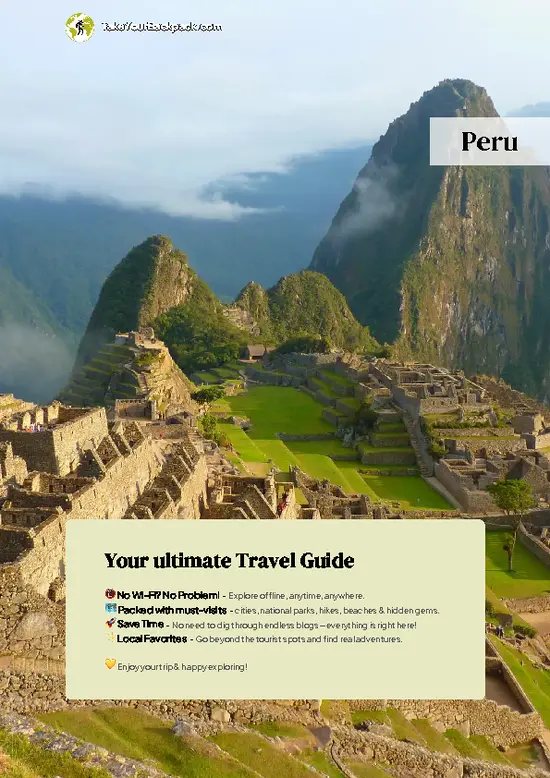
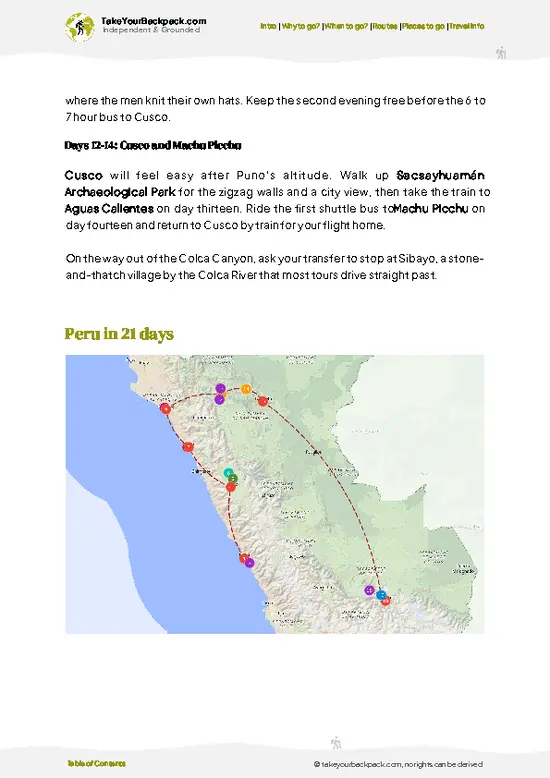
example page 0 from our offline Travel Guide for Peru
example page 1 from our offline Travel Guide for Peru
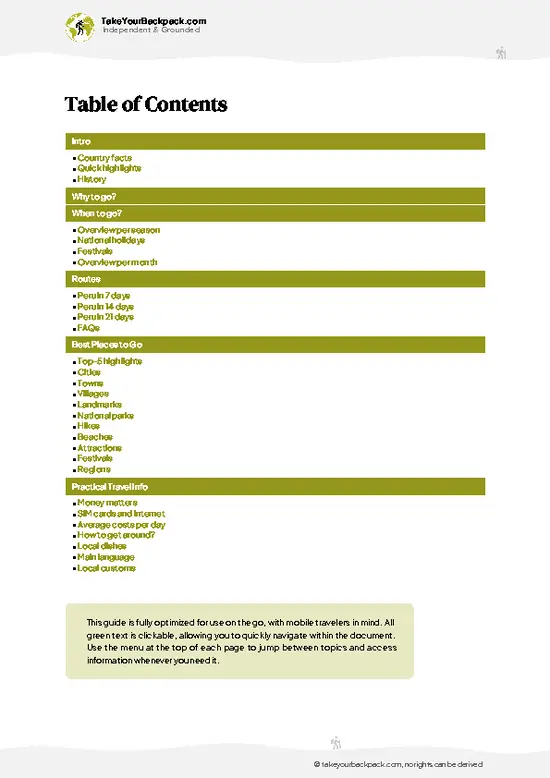
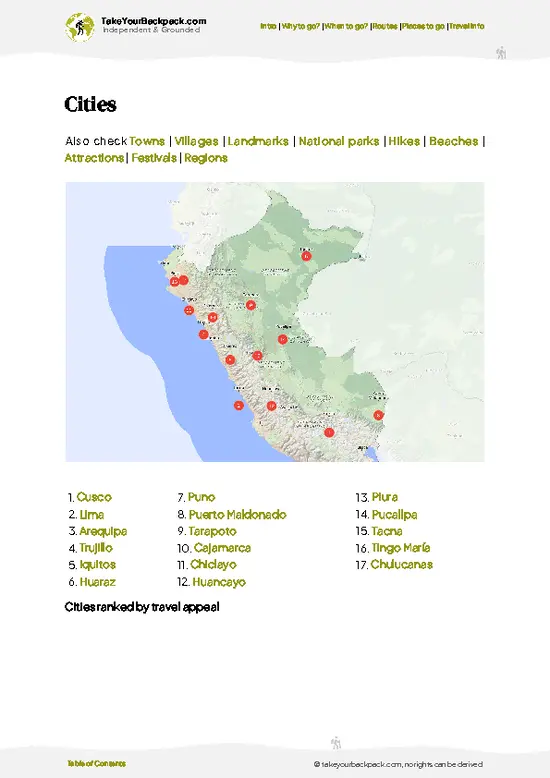
example page 2 from our offline Travel Guide for Peru
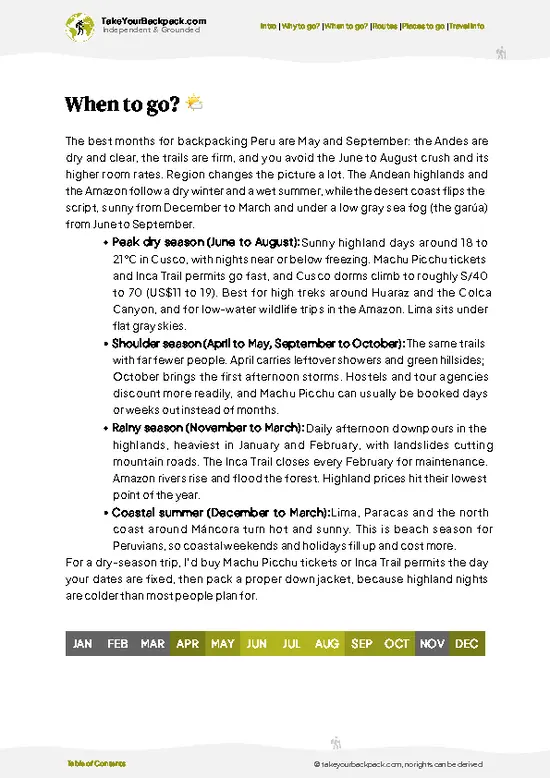
example page 3 from our offline Travel Guide for Peru
example page 4 from our offline Travel Guide for Peru
example page 5 from our offline Travel Guide for Peru
example page 6 from our offline Travel Guide for Peru
example page 7 from our offline Travel Guide for Peru
Loading the map 🌍
CLICK TO FILTER
cities
towns
villages
landmarks
national parks
hikes
beaches
attractions
festivals
regions
SHOW COUNTRY’S BESTSHOW ALL

✨ Why go?
Ranked #1 region in Peru
What makes this region worth visiting

Sacred Valley rewards backpackers because everything sits along one river road, so you can change scenery without repacking your life every night. Altitude drops as you move down the valley, which means high-puna weaving villages, maize fields and warm orchard towns all fit into one loop.
The second reason is how much is built into the land itself. Moray’s circular terraces look like an amphitheater sunk into the earth, and the Maras salt pans are still worked by local families on thousands of small pools. Pisac and Chinchero keep real markets going, where locals trade produce and textiles alongside the souvenir stalls.
The third is access. Ollantaytambo is where the train to Machu Picchu departs, and it is also a living Inca town with a fortress above and stone-lined lanes below. You can sleep … read more 👉
Sacred Valley rewards backpackers because everything sits along one river road, so you can change scenery without repacking your life every night. Altitude drops as you move down the valley, which means high-puna weaving villages, maize fields and warm orchard towns all fit into one loop.
The second reason is how much is built into the land itself. Moray’s circular terraces look like an amphitheater sunk into the earth, and the Maras salt pans are still worked by local families on thousands of small pools. Pisac and Chinchero keep real markets going, where locals trade produce and textiles alongside the souvenir stalls.
The third is access. Ollantaytambo is where the train to Machu Picchu departs, and it is also a living Inca town with a fortress above and stone-lined lanes below. You can sleep there, hike to ruins from your hostel, and still catch an early departure without a detour back to Cusco. Frequent vans, cheap taxis and walkable trails let you pace yourself. Spend a few slow days here and you cover more culture and more mountain than a rushed day tour ever could.

💡 HighlightsPlaces and moments you shouldn't skip

  1. Ollantaytambo Fortress: Steep agricultural terraces climb to a temple hill built of massive pink rhyolite blocks that Inca masons hauled from a quarry across the valley. In 1537 Manco Inca’s forces defeated a Spanish expedition here. Entry is included in the partial tourist ticket, about US$20.
  2. Pisac Archaeological Park: Curving terraces hang above the town, with a citadel, ceremonial baths and cliffside tombs. Go early and hike up from the town square instead of taking a taxi.
  3. Moray: Concentric terraces sink into a natural bowl, and the temperature shifts from rim to floor. The Inca likely used them for crop experiments. It is included in the same partial ticket.
  4. Salineras de Maras: Thousands of white salt pans step down a hillside, fed by a warm salty spring. Families still harvest by hand.
… read more 👉
  1. Ollantaytambo Fortress: Steep agricultural terraces climb to a temple hill built of massive pink rhyolite blocks that Inca masons hauled from a quarry across the valley. In 1537 Manco Inca’s forces defeated a Spanish expedition here. Entry is included in the partial tourist ticket, about US$20.
  2. Pisac Archaeological Park: Curving terraces hang above the town, with a citadel, ceremonial baths and cliffside tombs. Go early and hike up from the town square instead of taking a taxi.
  3. Moray: Concentric terraces sink into a natural bowl, and the temperature shifts from rim to floor. The Inca likely used them for crop experiments. It is included in the same partial ticket.
  4. Salineras de Maras: Thousands of white salt pans step down a hillside, fed by a warm salty spring. Families still harvest by hand. Entry is about US$5.
  5. Chinchero: A high village with Inca walls under a colonial church and weaving cooperatives that show wool being spun and dyed with plants and cochineal. The Sunday market is the one locals use.
  6. Pisac Market: Sunday is the biggest day, with stacks of potatoes, corn and herbs between the souvenir stalls. Come with an appetite and a small coin purse.
  7. Pinkuylluna Storehouses: A short, steep climb up the hill facing Ollantaytambo leads to Inca granaries with the best view of the fortress and the town grid. It is free and hardly anyone lingers.
  8. Pumamarca: A small ruin of a circular enclosure above the Patacancha valley, reached on a quiet walk from Ollantaytambo past farms and canals. You may meet only goats.
  9. Seminario Ceramics Studio, Urubamba: A potter’s workshop and gallery in Urubamba where Inca-inspired vessels are made and displayed. Staff walk you through the clay work, and there is no pressure to buy.
  10. Huchuy Qosqo: Remote ruins perched above the valley, reached by a day hike from Lamay or the high pass at Chinchero. The walls hold a ruined palace and a sweeping view over the Urubamba.
Huchuy Qosqo is the one most visitors never reach, which is exactly why you can wander the old palace walls with only the wind for company.
Spotted a mistake or missing something? Contact us.

Things to do around Sacred Valley

Ratings based on Tripadvisor reviews. When you book through this link, you support our work at no extra cost to you.

⌛️ 5 daysWhat you can realistically do in a week

Start in Pisac, because its market and terraces are best before the tour buses arrive, and its colectivo stop is the easiest place to enter the valley from Cusco.
Day 1: Pisac: Climb to the ruins on foot from the town, then wander the market stalls and take an afternoon van down the valley. Vans and colectivos run along one main road, so you can hop on and off without booking anything, but they leave when full. That is what sets your pace: plan one big stop each morning and let the afternoon bend around the next van.
Day 2: Urubamba: Use Urubamba as a mid-valley hub with the widest choice of food and lodging. Spend the day at the Seminario ceramics studio, then ride the colectivo to its terminal for the next morning. For a detour, hire a taxi for a half-day loop to Moray and the Maras salt pans. … read more 👉
Start in Pisac, because its market and terraces are best before the tour buses arrive, and its colectivo stop is the easiest place to enter the valley from Cusco.
Day 1: Pisac: Climb to the ruins on foot from the town, then wander the market stalls and take an afternoon van down the valley. Vans and colectivos run along one main road, so you can hop on and off without booking anything, but they leave when full. That is what sets your pace: plan one big stop each morning and let the afternoon bend around the next van.
Day 2: Urubamba: Use Urubamba as a mid-valley hub with the widest choice of food and lodging. Spend the day at the Seminario ceramics studio, then ride the colectivo to its terminal for the next morning. For a detour, hire a taxi for a half-day loop to Moray and the Maras salt pans. It adds two of the valley’s best sights without breaking the route, and the cost drops if you split it with other travelers.
Day 3: Ollantaytambo: Settle in here for two nights. The fortress comes first, because the light is gentler in the morning. On day 4, climb Pinkuylluna and then walk out to Pumamarca. Ollantaytambo is compact, so you never need transport once you arrive, and the evening trains to Machu Picchu are close if you want to continue.
Day 5: Chinchero: Finish high on the plateau, where the weaving cooperatives and the Inca walls under the church close the loop before the ride back to Cusco.
My pick for the one day that justifies the trip is day 4: the climb above Ollantaytambo, with granaries above the grid of Inca streets and a quiet trail to Pumamarca afterward.

🌤️ When to go?Weather, crowds, and seasonal trade-offs

May to September is the dry season, and it’s when most backpackers come to the Sacred Valley. Plan around the weather, the crowds and the altitude, which keeps the valley floor cooler than you might expect.
  • Dry Season (May to September): Days are sunny and rain is rare, with highs of 20 to 24°C (68 to 75°F) in Urubamba and Ollantaytambo. Nights drop to 0 to 5°C (32 to 41°F), so pack a real jacket. Daylight runs roughly 11.5 hours. Inca Trail permits and Machu Picchu trains sell out weeks ahead, and prices peak in July and August.
  • Wet Season (December to March): Afternoon downpours are the norm, highs sit near 19 to 22°C (66 to 72°F), and landslides occasionally block roads and rail. Hostel rates fall, ruins empty out and the hillsides turn bright green. The Inca Trail closes in February.
  • Shoulder
… read more 👉
May to September is the dry season, and it’s when most backpackers come to the Sacred Valley. Plan around the weather, the crowds and the altitude, which keeps the valley floor cooler than you might expect.
  • Dry Season (May to September): Days are sunny and rain is rare, with highs of 20 to 24°C (68 to 75°F) in Urubamba and Ollantaytambo. Nights drop to 0 to 5°C (32 to 41°F), so pack a real jacket. Daylight runs roughly 11.5 hours. Inca Trail permits and Machu Picchu trains sell out weeks ahead, and prices peak in July and August.
  • Wet Season (December to March): Afternoon downpours are the norm, highs sit near 19 to 22°C (66 to 72°F), and landslides occasionally block roads and rail. Hostel rates fall, ruins empty out and the hillsides turn bright green. The Inca Trail closes in February.
  • Shoulder Months (April, October, November): Showers are short, the light is crisp, trails are quieter and prices are softer. Expect highs of 20 to 23°C (68 to 73°F).
  • Festivals: Inti Raymi on June 24 in nearby Cusco fills the valley with visitors, and Holy Week brings processions to the villages.
Book Machu Picchu entry and train seats first, then build the rest of your valley days around them.


source: climatestotravel.comJANJanuary: fair for travelingFEBFebruary: below average for travelingMARMarch: fair for travelingAPRApril: good for travelingMAYMay: highly recommended for travelingJUNJune: highly recommended for travelingJULJuly: highly recommended for travelingAUGAugust: highly recommended for travelingSEPSeptember: highly recommended for travelingOCTOctober: fair for travelingNOVNovember: fair for travelingDECDecember: fair for traveling
peru-region-sacred-valley
© Google |

✈️ The backpacker research shortcutPeru Travel Guide

An offline-friendly backpacking guide with optimized travel routes, ranked highlights, transport advice, and the best areas to stay.
example page 0 from our offline Travel Guide for Peru
example page 1 from our offline Travel Guide for Peru
example page 2 from our offline Travel Guide for Peru
example page 3 from our offline Travel Guide for Peru
example page 4 from our offline Travel Guide for Peru
example page 5 from our offline Travel Guide for Peru
example page 6 from our offline Travel Guide for Peru
example page 7 from our offline Travel Guide for Peru
The digital guide (310 pages) contains:
✅ 102 highlights, ranked by travel appeal
✅ Optimized 7, 14 & 21-day travel routes
✅ Cities, national parks, landmarks, beaches
✅ How to get around
✅ Offline-friendly for travel without Wi-Fi
👉 Click to see all 30+ guide features

📅 Plan smarter in minutes, not weeks
✅ Month by month travel advice
✅ Festivals & national holidays
✅ Budget expectations

🗺️ Go to the right places, skip the overrated ones
✅ Honest pros & cons of destinations
✅ Top hikes, parks & viewpoints
✅ Lesser-known places most travelers miss
✅ Clear “worth it vs skip it” guidance

🛏️ Travel smoothly without rookie mistakes
✅ Best areas to stay
✅ Transport systems explained simply
✅ Common scams & safety advice
✅ SIM cards, money & practical tips

🌍 Understand the country, not just visit it
✅ Culture & traditions
✅ 52 Essential phrases & customs
✅ Festivals worth planning around
✅ Traveler-friendly historical context
✅ Insights that make places more meaningful

📱 Built for real travel conditions
✅ Fully downloadable PDF
✅ Works completely offline
✅ Optimized for phone use
✅ Useful in remote areas & buses
✅ Everything in one place
Stop searching, start planning
Get instant access to your full guide. 30‑day money-back guarantee.
+ Add another guide for just

By proceeding you agree to our terms.
Sent to your inbox immediately after payment • 100% Secure Checkout
Best Backpacking Travel Advisor 2025 tourism awardBest Backpacking
Travel Advisor
2025
What others say about Take Your Backpack Guides:
⭐⭐⭐⭐⭐
Fantastic, amazing amount of information!
⭐⭐⭐⭐⭐
My goodness this is amazing, it's what I've been looking for hats off too you!
⭐⭐⭐⭐⭐
I think this is absolutely BRILLIANT
⭐⭐⭐⭐
Very complete and informative. It's still missing places, but I gotta to commend you
⭐⭐⭐⭐⭐
This is truly amazing, thank you, can't wait to explore it with my kids!
⭐⭐⭐⭐⭐
Awesome resource, thank you!
⭐⭐⭐⭐⭐
This is amazing! Can't wait to explore the ones I haven't seen
⭐⭐⭐⭐
I love this! Well done, great idea.
⭐⭐⭐⭐⭐
Thanks for taking the time to make this gem!
⭐⭐⭐⭐⭐
This might be the best website I've ever seen.
⭐⭐⭐⭐⭐
Congratulations, and thank you so much for your work; it's incredibly valuable.
⭐⭐⭐⭐
In all seriousness I think you did a great job pointing out the important spots
⭐⭐⭐⭐⭐
10/10 very good
⭐⭐⭐⭐⭐
As someone who's only just starting to visit regularly this is awesome, thank you.
⭐⭐⭐⭐
Thank you very much! I'm going to visit my dad, it's going to be very useful!
⭐⭐⭐⭐⭐
This is really cool! We'll be travelling for the first time and this definitely come in handy.
⭐⭐⭐⭐⭐
You are now our minister of culture, congratulations 👨‍💼
⭐⭐⭐⭐⭐
Just wanted to tell you that this is a pearl! Going to follow your recommendations.
⭐⭐⭐⭐⭐
This is so cool. I'll definitely be using the resource for my travels soon.
⭐⭐⭐⭐⭐
This is very impressive! Good work.
⭐⭐⭐⭐⭐
This is an amazing and informative site. Very well done!

🛏️ Where to stay?Where staying makes the most sense

Ollantaytambo is the best base for most backpackers in the Sacred Valley, because the town sits at the gateway to the Machu Picchu train and its cobbled Inca-era streets stay lively after dark. Hostel beds typically run US$8 to 15, and travelers swap trail stories at the plaza cafés. It’s compact, safe to walk at night and close to the Inca Trail and Salkantay-style trek logistics.

Pisac is the other social favorite, with a relaxed, artsy feel and a big market on Tuesdays, Thursdays and Sundays. It’s a short ride from Cusco, has yoga studios, bakeries and clay-oven empanada stalls, and works … read more 👉
Ollantaytambo is the best base for most backpackers in the Sacred Valley, because the town sits at the gateway to the Machu Picchu train and its cobbled Inca-era streets stay lively after dark. Hostel beds typically run US$8 to 15, and travelers swap trail stories at the plaza cafés. It’s compact, safe to walk at night and close to the Inca Trail and Salkantay-style trek logistics.

Pisac is the other social favorite, with a relaxed, artsy feel and a big market on Tuesdays, Thursdays and Sundays. It’s a short ride from Cusco, has yoga studios, bakeries and clay-oven empanada stalls, and works well if you want hiking above the ruins without a long transfer. Dorm beds run about US$8 to 14.

Urubamba suits those who want quiet and a cheaper, local feel. It’s the valley’s main commercial town, with supermarkets, ATMs and easy transport links, but fewer backpacker hangouts. Expect US$7 to 12 for a bed.

Maras and Moray are better as day trips, while small villages such as Chinchero and Huaran offer a few basic homestays for those wanting a slower pace. Many travelers split their time between Pisac and Ollantaytambo, spending one or two nights in each.

🚌 Getting aroundGetting around like a local

Colectivos, the shared minivans and cars that shuttle between valley towns, are the quickest way to get around the Sacred Valley, because they leave when full and cost little. They run from dawn until late afternoon along the main road, and they’re dependable on the Cusco, Pisac, Urubamba and Ollantaytambo corridor. Side valleys and remote ruins take more effort, but that’s where the fun starts.
  • Colectivos: Hop in at Pisac, Urubamba or Ollantaytambo for US$1 to 3 per hop. You squeeze in with locals and bags, and there’s no timetable, so you wait 10 to 20 minutes at most. For the money and speed, nothing beats them.
  • Local buses: Big buses from Cusco to Pisac cost about US$1 and take around an hour. They stop often and fill up on market days, but they’re the cheapest option and you get the whole
… read more 👉
Colectivos, the shared minivans and cars that shuttle between valley towns, are the quickest way to get around the Sacred Valley, because they leave when full and cost little. They run from dawn until late afternoon along the main road, and they’re dependable on the Cusco, Pisac, Urubamba and Ollantaytambo corridor. Side valleys and remote ruins take more effort, but that’s where the fun starts.
  • Colectivos: Hop in at Pisac, Urubamba or Ollantaytambo for US$1 to 3 per hop. You squeeze in with locals and bags, and there’s no timetable, so you wait 10 to 20 minutes at most. For the money and speed, nothing beats them.
  • Local buses: Big buses from Cusco to Pisac cost about US$1 and take around an hour. They stop often and fill up on market days, but they’re the cheapest option and you get the whole valley rolling past the window.
  • Mototaxis: These three-wheeled rickshaws zip you around Urubamba, Pisac and Ollantaytambo for US$1 to 2. They’re perfect for hauling a pack to a hostel or reaching trailheads, and they’re loud and open to the breeze.
  • Trains: PeruRail and Inca Rail connect Ollantaytambo to Aguas Calientes in about 1.5 hours. Backpacker-class seats run roughly US$60 to 90 one way. That’s steep, but the panoramic windows and the gorge make it a real highlight, and it saves a full day compared with the alternatives.
  • Taxis and guided day tours: A private taxi from Cusco to Pisac costs around US$20 to 35, and it pays off when split among three or four people. Group tours of the valley run US$15 to 30 and squeeze in a lot, though you get rushed at each stop.
Start early, carry small bills for fares, and ride colectivos from the main plaza stops instead of the roadside, where drivers tend to quote higher prices.

🍲 FoodLocal Flavors for Backpackers

The valley’s high-altitude farms feed its kitchens, so you’ll taste choclo, the giant-kernel Andean corn with a chewy, nutty bite, served with fresh queso fresco for about US$2 to 3. Order cuy (roast guinea pig) if you’re curious, with crackling skin and a rich, gamey flavor, and expect to pay US$12 to 20. Sip chicha de jora, the cloudy fermented corn beer, at village chicherías marked with a red plastic bag on a pole, where a big glass costs under US$1.

Pisac’s clay wood-fired ovens turn out hot beef or cheese empanadas for US$1 to 2, and they smell of smoke and baked dough long before you reach them. Markets in Pisac and Urubamba sell fruit juices, fresh quinoa soup and breakfasts of bread with avocado for US$1 to 3. Set menú del día lunches, with soup, a main and a drink, cost US$3 to … read more 👉
The valley’s high-altitude farms feed its kitchens, so you’ll taste choclo, the giant-kernel Andean corn with a chewy, nutty bite, served with fresh queso fresco for about US$2 to 3. Order cuy (roast guinea pig) if you’re curious, with crackling skin and a rich, gamey flavor, and expect to pay US$12 to 20. Sip chicha de jora, the cloudy fermented corn beer, at village chicherías marked with a red plastic bag on a pole, where a big glass costs under US$1.

Pisac’s clay wood-fired ovens turn out hot beef or cheese empanadas for US$1 to 2, and they smell of smoke and baked dough long before you reach them. Markets in Pisac and Urubamba sell fruit juices, fresh quinoa soup and breakfasts of bread with avocado for US$1 to 3. Set menú del día lunches, with soup, a main and a drink, cost US$3 to 5 and fill you up. Evenings in Ollantaytambo mean pizza ovens, trout from nearby streams and cafés pouring Peruvian coffee, with hot mate de coca to ease the altitude.

Greet staff with a quick “buen provecho,” and expect unhurried service. Meals are slow and servers don’t bring the bill until you ask. Carry small coins for market stalls, and drink bottled or boiled water.

FAQTraveler FAQ

Three to five days is enough to see Sacred Valley’s main sites at a relaxed pace. Spend one day on Pisac’s ruins and market, another on Moray, Maras salt pans and Ollantaytambo’s fortress, and add one or two more for Machu Picchu via the train from Ollantaytambo, which takes about 1.5 hours. Trekkers heading onto the Inca Trail should add four days.
Colectivos are the simplest way to cover Sacred Valley without a car, running between Cusco, Pisac, Urubamba and Ollantaytambo for roughly US$1 to 3 per leg. Pisac is about an hour from Cusco, and Ollantaytambo is around 1.5 to 2 hours. Mototaxis cover short hops for US$1 to 2, and the Ollantaytambo to Aguas Calientes train runs about US$60 to 90 one way.
Sacred Valley is known for its Inca ruins, including Pisac, Ollantaytambo, the Moray agricultural terraces and the Maras salt pans, plus the gateway to Machu Picchu. It also draws crowds to its artisan markets, especially Pisac’s on Sundays, and to its fertile corn farmland at around 2,800 meters (9,200 ft). Most visitors enjoy easy day hikes, and entry to the main sites is covered by the Boleto Turístico, which costs about US$37 for the full ticket.
⚠️ Things can change over time, so always validate details locally before you go.

Other Peruvian regions near Sacred Valley

Explore more nearby:

  • Uros Floating Islands—Totora reeds, floating islands, crescent boats, family hosts| 360 km away
  • Lake Titicaca—Island homestays, reed boats, chullpa towers, Puno shoreline| 389 km away
  • Huacachina Desert Oasis—Dune buggies, sandboarding, lagoon boardwalk, pisco vineyards| 402 km away

💡 Not sure where to go next?
Create a personalized itinerary for Peru including Sacred Valley and the places that fit your trip.

Generate my itinerary

👉 Discover all regions

Or checkout all Peru has to offer (think cities, towns, villages, national parks, hikes, beaches, festivals)
Country photo of Peru

We 💚 feedbackWhat to keep in mind

Sacred Valley is best in the early morning, when the markets are still setting up and the ruins sit empty, and in the dry months from May to September when trails stay firm. Mornings beat afternoons here, always. I would skip rushing the loop and stay two nights in Ollantaytambo, and I would pack a light rain shell regardless of the month, because afternoon clouds roll in fast.

✈️ When did I visit Peru?
Peru I visited during my half year trip through South and Central America back in 2003

✍️ Help improve this page!
The information on this page is based on my own backpacking experience in Peru, supplemented with up-to-date research and feedback from other travelers. Travel details can change, so if you notice anything outdated or incomplete, feel free to let me know.


🙋‍♂️ Give feedback

👋 Meet the founderWho’s Behind Take Your Backpack?

Johan, backpacker and founder of TakeYourBackpackHi, I’m Johan (Netherlands 🇳🇱), the creator of TakeYourBackpack. Over the past 3 decades, I’ve backpacked through 90+ countries across six continents, gaining extensive experience with independent travel, long-term trips, and overland routes.

This site is built on a combination of firsthand travel experience and carefully curated insights from other backpackers. Many guides are based on places I’ve personally visited, while others bring together tips, observations, and practical advice shared by trusted travelers I’ve met along the way.

The goal is to provide realistic, experience-driven guidance — not generic itineraries — so you can explore destinations with better context, clearer expectations, and more confidence.