
×

Philippines🇵🇭 | citiesDavaourban parks, durian stalls, mountain skyline | things to do and best time to go

Explore CebuExplore Dumaguete

Backpacking in Davao
🏆 Top pickcity ranked #2
By Johan Kruseman 🇳🇱 | Updated June 8, 2026

Everyone talks about Davao because of Mount Apo and durian, but if you’re backpacking, the real story is how calm, controlled, and slightly odd this big southern city feels. Davao sits on the southeastern edge of Mindanao, far from the Luzon–Visayas circuit most travelers stick to, and that distance shapes everything. It’s organized, relatively safe by Philippine standards, and cheap for a city this size, but it’s not exactly a social furnace; you’ll meet more locals than backpackers, and hostels are fewer than in Cebu or Siargao. I liked wandering People’s Park at dusk, grabbing grilled tuna at Roxas Night Market, then realizing the nightlife is… fine, not wild. Jeepneys and taxis make it easy to move, but the city is spread out, and the vibe is more “liveable hometown” than “instant travel crush.” Compared to nearby General Santos or Cagayan de Oro, Davao feels stricter, cleaner, and slower-burning.

Discover everything you want to know in the 📖 Philippines Travel Guide.
Loading the map 🌍
CLICK TO FILTER
cities
towns
landmarks
national parks
hikes
beaches
attractions
festivals
regions
SHOW COUNTRY’S BESTSHOW ALL

✨ Why go?
Ranked #2 city in Philippines
What makes this city worth visiting

Davao is a strategic hub for backpackers navigating the Philippines. It offers a unique blend of affordability and accessibility that makes it a worthy stop on your journey. The hostel scene is vibrant, with options that cater to every budget, allowing you to rest without breaking the bank. Plus, the city’s walkability means you can explore local markets and street food stalls without needing a taxi, making it easy to dive into the culture.

Davao is also a basecamp for day trips to stunning natural wonders, which means you can pack in adventure without the hassle of constant travel. The food scene is a highlight in itself, with local delicacies that are both delicious and cheap. When the sun sets, the nightlife offers a mix of chill bars and lively spots, perfect for unwinding after a day … read more 👉
Davao is a strategic hub for backpackers navigating the Philippines. It offers a unique blend of affordability and accessibility that makes it a worthy stop on your journey. The hostel scene is vibrant, with options that cater to every budget, allowing you to rest without breaking the bank. Plus, the city’s walkability means you can explore local markets and street food stalls without needing a taxi, making it easy to dive into the culture.

Davao is also a basecamp for day trips to stunning natural wonders, which means you can pack in adventure without the hassle of constant travel. The food scene is a highlight in itself, with local delicacies that are both delicious and cheap. When the sun sets, the nightlife offers a mix of chill bars and lively spots, perfect for unwinding after a day of exploration.

If you’re looking for a place that balances comfort and value, Davao fits the bill. It’s not just a stopover; it’s a chance to experience the heart of Mindanao while keeping your itinerary flexible. Whether you stay for a few days or just a night, you’ll find that Davao enriches your backpacking adventure.
Want to include Davao in your Philippines route?
Create a personalized Philippines itinerary that includes Davao and the places that fit your trip — based on your travel style, budget, and available time. Get your route in seconds.

Generate my trip

💡 HighlightsPlaces and moments you shouldn't skip

  1. People’s Park — A bright, walkable green square full of indigenous-inspired sculptures, native plants and a durian-shaped dome; great for people-watching, free public art and a quick intro to Davao’s civic vibe.
  2. Museo Dabawenyo — Compact but well-curated local museum that lays out Davao’s history, indigenous cultures and trade ties; excellent if you want context before exploring the city’s neighborhoods and markets.
  3. Philippine Eagle Center (Malagos) — The conservation center that saved the country’s national bird; you can see eagles up close, learn about endangered-species work, and understand why Davao matters for wildlife protection.
  4. Malagos Garden Resort — Beyond pretty gardens: an award-winning local chocolate house, orchid and bird displays, and hands-on farm experiences. A good
read more 👉
  1. People’s Park — A bright, walkable green square full of indigenous-inspired sculptures, native plants and a durian-shaped dome; great for people-watching, free public art and a quick intro to Davao’s civic vibe.
  2. Museo Dabawenyo — Compact but well-curated local museum that lays out Davao’s history, indigenous cultures and trade ties; excellent if you want context before exploring the city’s neighborhoods and markets.
  3. Philippine Eagle Center (Malagos) — The conservation center that saved the country’s national bird; you can see eagles up close, learn about endangered-species work, and understand why Davao matters for wildlife protection.
  4. Malagos Garden Resort — Beyond pretty gardens: an award-winning local chocolate house, orchid and bird displays, and hands-on farm experiences. A good day out that mixes nature, taste-testing and slow, rural Davao life.
  5. San Pedro Cathedral — The city’s historic cathedral at the downtown core; it’s simple, active with local worshippers, and worth a stop for architecture and to feel how faith threads the city’s everyday rhythm.
  6. Roxas Night Market — Foodie heaven after dark: grilled seafood and skewers, piles of fresh-and stinky-durian, cheap eats and a lively street vibe. It’s where locals hang out and where you learn to love (or tolerate) durian.
  7. Aldevinco Shopping Center — The best place in the city to hunt for Mindanaoan handicrafts, woven textiles, beads and pearls; small, bustling stalls with fair bargaining and real local makers represented.
  8. Jack’s Ridge / Shrine Hills — A high viewpoint with sunset panoramas, casual restaurants, and a patch of WWII and local-history flavor. Nice spot for an evening drink and to see the city spread out below.
  9. Eden Nature Park & Resort — A cool, planted mountain resort inside city limits (Toril) with trails, gardens, pick-your-own produce and a slower, cooler side of Davao—perfect for escaping the heat without leaving the city jurisdiction.
  10. D’Bone Collector Museum — A quirky, educational bone and skeleton museum that showcases marine and wildlife osteology; surprising, small-scale and memorable, especially if you like natural-history oddities.
A few solid day trips outside Davao city: Island Garden City of Samal for island-hopping, Hagimit Falls and Monfort Bat Sanctuary (both on Samal), and several snorkeling spots around Talikud — my personal favorite for a day trip is island-hopping to Talikud for easy snorkeling and quiet sandbars.
Spotted a mistake or missing something? Contact us.

Things to do near Davao

Ratings based on Tripadvisor reviews. When you book through this link, you support our work at no extra cost to you.

🏘️ NeighborhoodsWhere things are and how it's laid out

Davao is a vibrant city that offers a mix of urban energy and natural beauty, making it a prime spot for backpackers. Here’s a breakdown of key neighborhoods to help you navigate your stay.

Downtown Davao
This is the heart of the city, buzzing with activity. You’ll find affordable hostels and local eateries. The walkability is excellent, with markets and parks nearby. Nightlife is lively but not overwhelming, perfect for a quick drink after a day of exploring. Ideal for short stays, as everything is within reach.

Matina
A bit more laid-back, Matina offers a blend of residential charm and local culture. It’s less touristy, which means lower prices on food and accommodations. The area is walkable, but you might need a trike for longer distances. It’s quieter at night, making it suitable … read more 👉
Davao is a vibrant city that offers a mix of urban energy and natural beauty, making it a prime spot for backpackers. Here’s a breakdown of key neighborhoods to help you navigate your stay.

Downtown Davao
This is the heart of the city, buzzing with activity. You’ll find affordable hostels and local eateries. The walkability is excellent, with markets and parks nearby. Nightlife is lively but not overwhelming, perfect for a quick drink after a day of exploring. Ideal for short stays, as everything is within reach.

Matina
A bit more laid-back, Matina offers a blend of residential charm and local culture. It’s less touristy, which means lower prices on food and accommodations. The area is walkable, but you might need a trike for longer distances. It’s quieter at night, making it suitable for those looking to recharge. Great for longer stays if you want a more local experience.

Samal Island
Technically not part of Davao City, but a short ferry ride away. This area is all about beaches and relaxation. Accommodations range from budget hostels to mid-range resorts. While it’s not as walkable, the island vibe is perfect for unwinding. Ideal for both short and longer stays, especially if you want to escape the city hustle.

Agdao
A mix of residential and commercial, Agdao is affordable and offers a glimpse into local life. It’s walkable, but public transport is readily available. Nightlife is low-key, making it a good choice for those who prefer a quieter atmosphere. Suitable for longer stays, especially if you want to immerse yourself in the local scene.

⌛️ 1 dayWhat you can realistically do in a day

Davao, a bustling city in the Philippines, is a blend of urban energy and natural beauty. Known for its rich culture and the towering presence of Mount Apo, the country’s highest peak, Davao offers a unique mix of experiences that can be savored in just one day.

Start your morning in the vibrant neighborhood of Bankerohan. Grab a cup of local coffee at a street-side café and indulge in some fresh durian pastries. Yes, durian! It’s a polarizing fruit, but trying it here is a rite of passage. After breakfast, head to the Bankerohan Public Market. The lively atmosphere, filled with vendors selling everything from tropical fruits to handmade crafts, gives you a taste of local life. Don’t rush; soak it in.

In the afternoon, make your way to the People’s Park in the heart of the city. This green … read more 👉
Davao, a bustling city in the Philippines, is a blend of urban energy and natural beauty. Known for its rich culture and the towering presence of Mount Apo, the country’s highest peak, Davao offers a unique mix of experiences that can be savored in just one day.

Start your morning in the vibrant neighborhood of Bankerohan. Grab a cup of local coffee at a street-side café and indulge in some fresh durian pastries. Yes, durian! It’s a polarizing fruit, but trying it here is a rite of passage. After breakfast, head to the Bankerohan Public Market. The lively atmosphere, filled with vendors selling everything from tropical fruits to handmade crafts, gives you a taste of local life. Don’t rush; soak it in.

In the afternoon, make your way to the People’s Park in the heart of the city. This green oasis features beautiful sculptures and a serene ambiance, perfect for a leisurely stroll. If you’re feeling adventurous, consider visiting the Philippine Eagle Center, a bit off the beaten path but worth the trip. Here, you can learn about the conservation efforts for the critically endangered Philippine Eagle while enjoying the lush surroundings.

As evening approaches, explore the bustling night market along Roxas Avenue. This is where Davao truly comes alive. Sample street food like grilled seafood and local delicacies while browsing through stalls selling handmade goods. It’s a feast for the senses, and the energy is contagious.

Wrap up your day with a visit to Jack’s Ridge, perched on a hill with stunning views of the city. Enjoy a cold drink as the sun sets, casting a golden hue over Davao. This day might be short, but it’s packed with experiences that capture the essence of this vibrant city. You’ll leave feeling like you’ve truly tasted Davao, not just seen it.
Turn your Davao visit into an Philippines adventure
Build a complete Philippines route with Davao, hidden gems, must-see destinations, and realistic travel times included.

Generate my trip

🌤️ When to go?Weather, crowds, and seasonal trade-offs


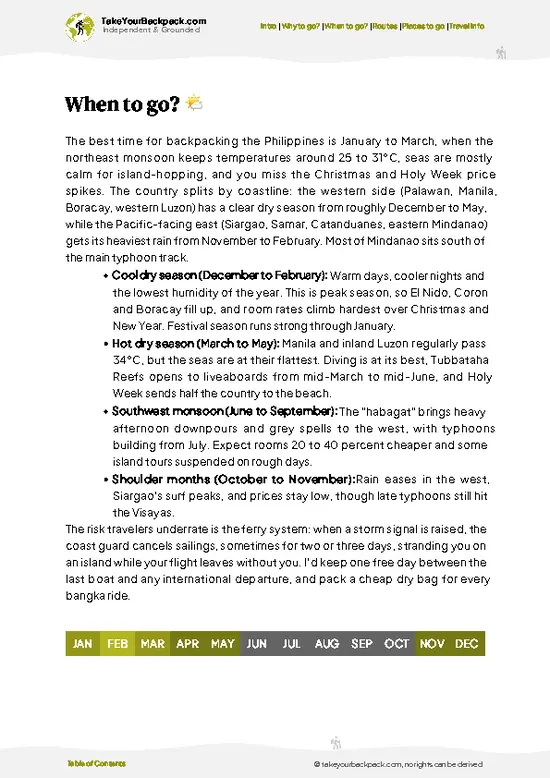
  • Topic: Weather – Davao’s climate is tropical, with a wet season from June to November and a dry season from December to May. The dry months offer less rain, making trekking and outdoor activities more reliable. However, the wet season brings lush landscapes if you don’t mind occasional downpours.

  • Topic: Temperature – Temperatures hover between 24°C to 32°C (75°F to 90°F) year-round. The heat is steady, so timing your visit isn’t about escaping extremes but managing humidity and rain.

  • Topic: Daylight Hours – Davao enjoys roughly 11 to 12 hours of daylight throughout the year, with sunrise around 6 AM and sunset near 6 PM, giving you consistent daylight for planning hikes or city exploration.

  • Topic: Crowds – Peak tourist influx aligns with the dry season and local festivals like Kadayawan
read more 👉

  • Topic: Weather – Davao’s climate is tropical, with a wet season from June to November and a dry season from December to May. The dry months offer less rain, making trekking and outdoor activities more reliable. However, the wet season brings lush landscapes if you don’t mind occasional downpours.

  • Topic: Temperature – Temperatures hover between 24°C to 32°C (75°F to 90°F) year-round. The heat is steady, so timing your visit isn’t about escaping extremes but managing humidity and rain.

  • Topic: Daylight Hours – Davao enjoys roughly 11 to 12 hours of daylight throughout the year, with sunrise around 6 AM and sunset near 6 PM, giving you consistent daylight for planning hikes or city exploration.

  • Topic: Crowds – Peak tourist influx aligns with the dry season and local festivals like Kadayawan in August. Visiting just before or after these times means fewer crowds and better deals.

  • Topic: Seasonal Activities – The Kadayawan Festival in August is a cultural highlight but expect higher prices and packed accommodations. The dry season supports island hopping and mountain trekking, while the wet season suits those seeking quieter trails and lower costs.

  • Topic: Price Fluctuations – Accommodation and flights spike during December to February and August due to holidays and festivals. Traveling in shoulder months like May or November can save money without sacrificing too much comfort.


Pro-tip: Aim for late May or early November to balance fewer crowds, manageable weather, and wallet-friendly prices—perfect for a savvy backpacker who wants to experience Davao without the hassle.


source: climatestotravel.comJANJanuary: highly recommended for travelingFEBFebruary: highly recommended for travelingMARMarch: excellent for travelingAPRApril: excellent for travelingMAYMay: highly recommended for travelingJUNJune: good for travelingJULJuly: good for travelingAUGAugust: fair for travelingSEPSeptember: fair for travelingOCTOctober: fair for travelingNOVNovember: highly recommended for travelingDECDecember: highly recommended for traveling
when-to-go

✈️ The backpacker research shortcutPhilippines Travel Guide

An offline-friendly backpacking guide with optimized travel routes, ranked highlights, transport advice, and the best areas to stay.
example page 0 from our offline Travel Guide for Philippines
example page 1 from our offline Travel Guide for Philippines
example page 2 from our offline Travel Guide for Philippines
example page 3 from our offline Travel Guide for Philippines
example page 4 from our offline Travel Guide for Philippines
example page 5 from our offline Travel Guide for Philippines
example page 6 from our offline Travel Guide for Philippines
example page 7 from our offline Travel Guide for Philippines
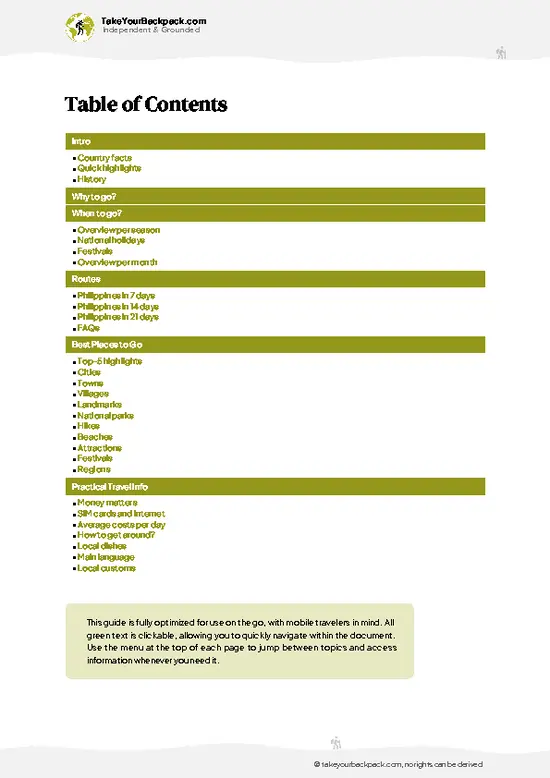
The digital guide (505 pages) contains:
144 highlights, ranked by travel appeal
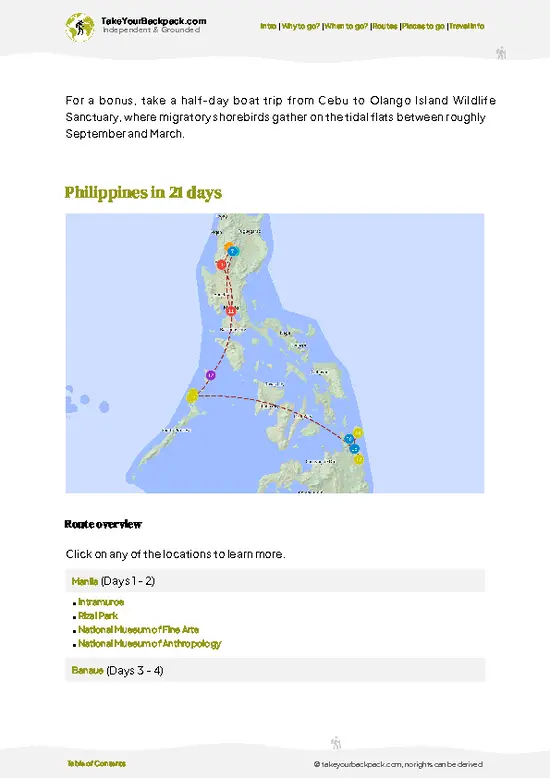
Optimized 7, 14 & 21-day travel routes
Cities, national parks, landmarks, beaches
How to get around
Offline-friendly for travel without Wi-Fi
👉 Click to see all 30+ guide features

📅 Plan smarter in minutes, not weeks
Month by month travel advice
Festivals & national holidays
Budget expectations

🗺️ Go to the right places, skip the overrated ones
Honest pros & cons of destinations
Top hikes, parks & viewpoints
Lesser-known places most travelers miss
Clear “worth it vs skip it” guidance

🛏️ Travel smoothly without rookie mistakes
Best areas to stay
Transport systems explained simply
Common scams & safety advice
SIM cards, money & practical tips

🌍 Understand the country, not just visit it
Culture & traditions
52 Essential phrases & customs
Festivals worth planning around
Traveler-friendly historical context
Insights that make places more meaningful

📱 Built for real travel conditions
Fully downloadable PDF
Works completely offline
Optimized for phone use
Useful in remote areas & buses
Everything in one place
Save weeks of stressful planning
Get instant access to your full guide. 30‑day money-back guarantee.


By proceeding you agree to our terms.
Sent to your inbox immediately after payment • 100% Secure Checkout
Best Backpacking Travel Advisor 2025 tourism awardBest Backpacking
Travel Advisor
2025
What others say about Take Your Backpack Guides:
⭐⭐⭐⭐⭐
Fantastic, amazing amount of information!
⭐⭐⭐⭐⭐
My goodness this is amazing, it's what I've been looking for hats off too you!
⭐⭐⭐⭐⭐
I think this is absolutely BRILLIANT
⭐⭐⭐⭐
Very complete and informative. It's still missing places, but I gotta to commend you
⭐⭐⭐⭐⭐
This is truly amazing, thank you, can't wait to explore it with my kids!
⭐⭐⭐⭐⭐
Awesome resource, thank you!
⭐⭐⭐⭐⭐
This is amazing! Can't wait to explore the ones I haven't seen
⭐⭐⭐⭐
I love this! Well done, great idea.
⭐⭐⭐⭐⭐
Thanks for taking the time to make this gem!
⭐⭐⭐⭐⭐
This might be the best website I've ever seen.
⭐⭐⭐⭐⭐
Congratulations, and thank you so much for your work; it's incredibly valuable.
⭐⭐⭐⭐
In all seriousness I think you did a great job pointing out the important spots
⭐⭐⭐⭐⭐
10/10 very good
⭐⭐⭐⭐⭐
As someone who's only just starting to visit regularly this is awesome, thank you.
⭐⭐⭐⭐
Thank you very much! I'm going to visit my dad, it's going to be very useful!
⭐⭐⭐⭐⭐
This is really cool! We'll be travelling for the first time and this definitely come in handy.
⭐⭐⭐⭐⭐
You are now our minister of culture, congratulations 👨‍💼
⭐⭐⭐⭐⭐
Just wanted to tell you that this is a pearl! Going to follow your recommendations.
⭐⭐⭐⭐⭐
This is so cool. I'll definitely be using the resource for my travels soon.
⭐⭐⭐⭐⭐
This is very impressive! Good work.
⭐⭐⭐⭐⭐
This is an amazing and informative site. Very well done!

🛏️ Where to stay?Best areas and accommodation options

Davao’s backpacker sweet spot is the area around Bajada and the nearby Poblacion District. This zone nails the balance between safety, social buzz, and budget-friendly options. Bajada is a practical choice because it’s close enough to the city center to tap into local life without the chaos of downtown traffic. You’ll find a handful of hostels here, mostly small, friendly spots where it’s easy to meet other travelers. The vibe leans toward laid-back but with enough activity to keep you engaged—think street food stalls, local markets, and casual hangouts rather than tourist traps.

Poblacion District, … read more 👉
Davao’s backpacker sweet spot is the area around Bajada and the nearby Poblacion District. This zone nails the balance between safety, social buzz, and budget-friendly options. Bajada is a practical choice because it’s close enough to the city center to tap into local life without the chaos of downtown traffic. You’ll find a handful of hostels here, mostly small, friendly spots where it’s easy to meet other travelers. The vibe leans toward laid-back but with enough activity to keep you engaged—think street food stalls, local markets, and casual hangouts rather than tourist traps.

Poblacion District, just a short ride away, offers a slightly more urban feel with a growing number of hostels and guesthouses catering to solo travelers. It’s a bit more social, with cafes and bars that attract a mix of locals and expats, making it easier to strike up conversations. Both areas are known for being safe, which is a big plus when you’re navigating a new city solo.

Contrast this with the downtown core or the business district, where accommodation tends to be pricier and less social, or the outskirts, which might save you a few pesos but cost you time and convenience. In Davao, choosing Bajada or Poblacion means you’re optimizing for comfort and connection without blowing your budget or wasting time on long commutes. It’s a smart trade-off that keeps your trip efficient and enjoyable.

🚌 Getting aroundHow to get from A to B

Davao moves at its own rhythm—partly laid-back, partly bustling, but never quite predictable. The city’s pulse is a blend of orderly markets and spontaneous street life, where schedules exist but bend to the flow of local habits. You’ll find that time here is elastic: a jeepney might wait for a few more passengers before rolling out, or a tricycle driver might dart off the moment you hop in. This is a place where intuition often trumps rigid timetables, and your best bet is to read the room and adapt. Understanding this flow is your secret weapon to mastering Davao’s transit game without wasting time or pesos.


  • Jeepneys: The backbone of Davao’s budget transit, jeepneys run from early morning (around 5:30 AM) until about 9 PM. Fares hover between 8 to 15 PHP depending on distance. They’re
read more 👉
Davao moves at its own rhythm—partly laid-back, partly bustling, but never quite predictable. The city’s pulse is a blend of orderly markets and spontaneous street life, where schedules exist but bend to the flow of local habits. You’ll find that time here is elastic: a jeepney might wait for a few more passengers before rolling out, or a tricycle driver might dart off the moment you hop in. This is a place where intuition often trumps rigid timetables, and your best bet is to read the room and adapt. Understanding this flow is your secret weapon to mastering Davao’s transit game without wasting time or pesos.


  • Jeepneys: The backbone of Davao’s budget transit, jeepneys run from early morning (around 5:30 AM) until about 9 PM. Fares hover between 8 to 15 PHP depending on distance. They’re slow, noisy, and packed, but unbeatable for cheap, authentic local travel. Comfort is minimal—think open windows, tight benches, and the occasional blaring radio—but the experience is pure city life. Expect stops on demand, so travel time varies.


  • Tricycles: These three-wheeled motorcycles are perfect for short hops or areas where jeepneys don’t reach. They operate 24/7, but prices aren’t fixed—always negotiate before hopping on. Trips usually cost between 20 to 50 PHP. Tricycles are faster than jeepneys for short distances but less comfortable and less safe on busy roads. Ideal for quick errands or late-night rides when other options vanish.


  • City Buses: For longer distances within and around Davao, air-conditioned city buses offer a more comfortable ride. They start around 5 AM and run until 9 PM, with fares from 15 to 40 PHP. Buses stick to schedules better than jeepneys but still allow some flexibility. They’re slower than private cars but provide a smoother, less chaotic experience—worth it if you’re covering more ground and want to avoid the crush of jeepneys.


  • Walking: Davao’s city center is surprisingly walkable, especially around key areas like Roxas Avenue and the People’s Park vicinity. Walking costs nothing and lets you soak in the city’s vibe at your own pace. It’s the best way to catch street food stalls, local chatter, and unexpected sights. Just watch for uneven sidewalks and the occasional stray dog.


  • Grab (Ride-Hailing): For those moments when time is tight or comfort is non-negotiable, Grab is your go-to. Prices vary widely depending on demand but expect to pay 100 to 300 PHP for typical city rides. It’s the fastest and most comfortable option, with air conditioning and door-to-door service. Use it sparingly if you’re on a budget, but it’s a smart splurge when you need to beat the clock or avoid the heat.


Mastering Davao’s transit is about balancing your priorities: save money by embracing jeepneys and tricycles, save time with buses and Grab, or save your energy by walking. Each choice shifts your experience—sometimes trading comfort for authenticity, or speed for savings. Play the system smart, and you’ll turn the city’s chaotic charm into your personal advantage.

👛 Costs (as of 2 July 2026)Money, prices, and spending tips

Backpacking in Davao, Philippines, offers a clear trade-off between cost and comfort, with prices that let you stretch your budget or indulge a bit without breaking the bank.
  • Dorm Accommodation (High Season): Expect to pay around $8 to $12 per night for a bed in a shared dorm during peak travel months. These places are basic but clean, often with air conditioning and Wi-Fi, which is a must in the tropical heat.
  • Dorm Accommodation (Off-Season): Prices drop to about $5 to $8 per night when the tourist flow slows. This is the sweet spot for budget travelers who don’t mind a little humidity and fewer crowds.
  • Meals: Street food and local eateries dominate here. You can eat well for $2 to $5 per meal. Think grilled skewers, fresh tropical fruits, and hearty rice dishes. Western-style cafes or
read more 👉
Backpacking in Davao, Philippines, offers a clear trade-off between cost and comfort, with prices that let you stretch your budget or indulge a bit without breaking the bank.
  • Dorm Accommodation (High Season): Expect to pay around $8 to $12 per night for a bed in a shared dorm during peak travel months. These places are basic but clean, often with air conditioning and Wi-Fi, which is a must in the tropical heat.
  • Dorm Accommodation (Off-Season): Prices drop to about $5 to $8 per night when the tourist flow slows. This is the sweet spot for budget travelers who don’t mind a little humidity and fewer crowds.
  • Meals: Street food and local eateries dominate here. You can eat well for $2 to $5 per meal. Think grilled skewers, fresh tropical fruits, and hearty rice dishes. Western-style cafes or restaurants will push that to $7-$12 per meal.
  • Local Transport: Jeepneys and tricycles are the go-to options, costing roughly $0.20 to $0.50 per ride. They’re slow but cheap and a great way to soak in local life.
  • City Transport Pass: Davao doesn’t have a formal city transport pass system like bigger metros, so budgeting around $1 to $2 daily for multiple rides is realistic if you plan to move around a lot.
  • Basic Activities/Entry Fees: Most natural attractions and museums charge between $1 and $5. For example, entry to parks or cultural sites is affordable, making it easy to fill your days without splurging.
  • Miscellaneous Expenses: This covers bottled water, snacks, occasional coffee, or small souvenirs. Budget around $2 to $4 daily to stay comfortably covered.

All told, a sensible daily budget for backpacking in Davao ranges from about $15 on the leanest days to $30 if you want a bit more comfort and flexibility. This balance lets you experience the city’s character without feeling like you’re constantly pinching pennies.
⚠️ Prices can change and everyone travels differently, so take this as a rough guide. Hope it helps you plan your adventure!

🚌 Day tripsEasy escapes and nearby places

Davao is a fantastic base for day trips, offering a mix of natural beauty and cultural experiences that are easily accessible. Here’s how to maximize your time, money, and comfort while exploring the surrounding gems.

**Mount Apo**
A trek to the Philippines’ highest peak is a must for the adventurous spirit. The journey takes about 2-3 hours from Davao, and while it’s a challenging hike, the views from the summit are worth every drop of sweat. Expect to spend around PHP 1,500 for a guided tour, which includes permits and meals. The best time to go is during the dry season, from November to May. A common mistake is underestimating the difficulty; make sure you’re prepared with proper gear and hydration.


**Samal Island**
Just a short 30-minute boat ride from Davao, Samal Island offers … read more 👉
Davao is a fantastic base for day trips, offering a mix of natural beauty and cultural experiences that are easily accessible. Here’s how to maximize your time, money, and comfort while exploring the surrounding gems.

**Mount Apo**
A trek to the Philippines’ highest peak is a must for the adventurous spirit. The journey takes about 2-3 hours from Davao, and while it’s a challenging hike, the views from the summit are worth every drop of sweat. Expect to spend around PHP 1,500 for a guided tour, which includes permits and meals. The best time to go is during the dry season, from November to May. A common mistake is underestimating the difficulty; make sure you’re prepared with proper gear and hydration.


**Samal Island**
Just a short 30-minute boat ride from Davao, Samal Island offers pristine beaches and lush landscapes. You can spend the day lounging at the famous Pearl Farm Beach Resort or exploring hidden coves. Budget around PHP 1,000 for the round-trip ferry and a meal. The island is best visited during the dry months, but be cautious of peak weekends when it can get crowded. First-timers often miss out on the local eateries; don’t just stick to the resorts!
👉 Explore Samal Island

**Eden Nature Park**
This eco-park is only about an hour from Davao and is perfect for a day of relaxation and exploration. You can stroll through beautifully landscaped gardens, enjoy a buffet meal for around PHP 500, and even try zip-lining. The park is best visited in the cooler months, from December to February. A common oversight is skipping the guided tour; it’s worth it for the insider knowledge and to avoid getting lost in the vast area.


**Philippine Eagle Center**
Located about 30 minutes from the city, this conservation center is dedicated to protecting the critically endangered Philippine Eagle. Admission is around PHP 150, and you’ll gain insight into the local wildlife. The best time to visit is early morning when the eagles are most active. Many first-timers rush through; take your time to absorb the educational exhibits and enjoy the serene environment.


**Malagos Garden Resort**
Just an hour away, this resort combines nature with fun activities like chocolate-making workshops and butterfly watching. Entrance fees are around PHP 500, and you can easily spend a full day here. The dry season is ideal for visiting, but weekends can get busy. A common mistake is not checking the schedule for workshops; they can fill up quickly, so plan ahead!
Want to know what more Philippines offers?
The Philippines Travel Guide describes 144 highlights, from cities to national parks, from beaches to hikes

Get the Travel Guide -

🍲 FoodWhat to Eat & Drink

In Davao, **food** is a celebration of local flavors and vibrant culture. You can’t miss trying **Kinilaw**, a fresh ceviche made with raw fish marinated in vinegar and citrus. The zing of lime and the crunch of onions create a refreshing bite that dances on your palate. Pair it with **Durian**, the infamous fruit that’s either loved or loathed. Its creamy texture and strong aroma are a rite of passage for any traveler.

For a true local experience, head to the **street food stalls**. The **night market** is a bustling hub where you can sample skewered meats, grilled seafood, and the ever-popular **isaw** (grilled chicken intestines). The smoky aroma wafts through the air, drawing you in. Don’t shy away from the **sago’t gulaman**, a sweet drink made from tapioca pearls and jelly, perfect … read more 👉
In Davao, **food** is a celebration of local flavors and vibrant culture. You can’t miss trying **Kinilaw**, a fresh ceviche made with raw fish marinated in vinegar and citrus. The zing of lime and the crunch of onions create a refreshing bite that dances on your palate. Pair it with **Durian**, the infamous fruit that’s either loved or loathed. Its creamy texture and strong aroma are a rite of passage for any traveler.

For a true local experience, head to the **street food stalls**. The **night market** is a bustling hub where you can sample skewered meats, grilled seafood, and the ever-popular **isaw** (grilled chicken intestines). The smoky aroma wafts through the air, drawing you in. Don’t shy away from the **sago’t gulaman**, a sweet drink made from tapioca pearls and jelly, perfect for cooling off in the tropical heat.

Dining here is often communal. Expect to share tables and engage in lively conversations. It’s customary to greet vendors with a smile and a friendly “Salamat!” (thank you). This openness fosters a sense of community, making every meal feel like a gathering. Embrace the chaos and savor the flavors; Davao’s culinary scene is a feast for the senses.

🛡️ SafetyTraveler Safety Guide

Davao is generally safe, but like any city, it has its quirks. Stay aware in crowded markets like Aldevinco, where pickpockets might lurk. Keep your belongings close and avoid flashy displays of wealth.

If you’re solo, stick to well-lit areas at night. The waterfront promenade is lively and a good spot for a stroll, but trust your instincts. If something feels off, don’t hesitate to change your route.

Scams are rare, but be cautious with taxi drivers. Always opt for metered taxis or ride-hailing apps to avoid overcharging. Street vendors can be persistent, so a polite but firm “no, thank you” usually does the trick.

Overall, Davao is a city that rewards awareness and common sense. Carry yourself confidently, engage with locals, and you’ll find the experience enriching rather than daunting. … read more 👉
Davao is generally safe, but like any city, it has its quirks. Stay aware in crowded markets like Aldevinco, where pickpockets might lurk. Keep your belongings close and avoid flashy displays of wealth.

If you’re solo, stick to well-lit areas at night. The waterfront promenade is lively and a good spot for a stroll, but trust your instincts. If something feels off, don’t hesitate to change your route.

Scams are rare, but be cautious with taxi drivers. Always opt for metered taxis or ride-hailing apps to avoid overcharging. Street vendors can be persistent, so a polite but firm “no, thank you” usually does the trick.

Overall, Davao is a city that rewards awareness and common sense. Carry yourself confidently, engage with locals, and you’ll find the experience enriching rather than daunting. Embrace the rhythm of the city, and you’ll navigate it just fine.

Other Filipino cities near Davao

Explore more nearby:

  • Kidapawan—Mt. Apo trailhead, fruit stands, rural gateway| 61 km away
  • Mati—Dahican Beach, skimboarding, Mindanao sunrise| 61 km away
  • General Santos City—tuna port, mountain views, public markets| 113 km away

💡 Not sure where to go next?
Create a personalized itinerary for Philippines including Davao and the places that fit your trip.

Generate my itinerary

👉 Discover all cities

Or checkout all Philippines has to offer (think cities, towns, villages, national parks, hikes, beaches, festivals)
Country photo of Philippines

We 💚 feedbackKey takeaways before you go

Davao is a breath of fresh air, literally and figuratively. The city’s lush landscapes and vibrant culture make it a refreshing escape from the usual tourist traps. But let’s be real: the heat can be intense, and the public transport isn’t always reliable. You’ll need to plan your days wisely to avoid the midday sun and get around efficiently. Embrace the quirks, and you’ll find Davao’s charm is worth the effort.

✈️ When did I visit Philippines?
Philippines being one of my favorites, due to the people and their mentality. I visited it first in 2010 and came back in January 2016 as part of my 1.5 year world trip.

✍️ Help improve this page!
The information on this page is based on my own backpacking experience in Philippines, supplemented with up-to-date research and feedback from other travelers. Travel details can change, so if you notice anything outdated or incomplete, feel free to let me know.


🙋‍♂️ Give feedback

👋 Meet the founderWho’s Behind Take Your Backpack?

Johan, backpacker and founder of TakeYourBackpackHi, I’m Johan (Netherlands 🇳🇱), the creator of TakeYourBackpack. Over the past decade, I’ve backpacked through 80+ countries across six continents, gaining extensive experience with independent travel, long-term trips, and overland routes.

This site is built on a combination of firsthand travel experience and carefully curated insights from other backpackers. Many guides are based on places I’ve personally visited, while others bring together tips, observations, and practical advice shared by trusted travelers I’ve met along the way.

The goal is to provide realistic, experience-driven guidance — not generic itineraries — so you can explore destinations with better context, clearer expectations, and more confidence.

Get full country guide •
Instant download • 144 highlights • Full Offline guide