×

Philippines🇵🇭 | citiesMatiDahican Beach, skimboarding, Mindanao sunrise | things to do and best time to go

Explore CatarmanExplore Kidapawan

Backpacking in Mati
🌟 Highlightcity ranked #10
By Johan Kruseman 🇳🇱 | Updated June 5, 2026

Years ago, Mati felt like a sleepy edge-of-the-map town: a long bus ride, a few sari-sari stores, empty shoreline, and mostly locals eyeing you with quiet curiosity. Today, it’s still laid-back, but the secret’s out. You’ll see more surfboards on roofs, more weekenders from Davao, a couple of low-key hostels, and simple cafés facing the water. Mati sits in Davao Oriental, on the southeastern curve of Mindanao, and works best as a base for nature rather than a destination town in itself. Think Dahican Beach for waves and sunrise, coastal viewpoints, and slow evenings with beer and grilled fish instead of nightlife. It’s cheaper and calmer than Davao City, safer-feeling than its reputation suggests, and social enough if you stay where backpackers cluster. Buses and vans make it easy to reach, tricycles fill the gaps, and your days revolve more around the sea than the streets.

Discover everything you want to know in the 📖 Philippines Travel Guide.
Loading the map 🌍
CLICK TO FILTER
cities
towns
landmarks
national parks
hikes
beaches
attractions
festivals
regions
SHOW COUNTRY’S BESTSHOW ALL

✨ Why go?
Ranked #10 city in Philippines
Why Mati should be on your travel list

Mati, in the Philippines, serves as a gateway for backpackers seeking both adventure and relaxation. Its proximity to stunning hikes like the Dahican Beach trail makes it a perfect base for those who crave the outdoors. The local food scene is a treat; savor fresh seafood at beachside stalls while the sun dips below the horizon, painting the sky in hues of orange and pink.

The town’s walkable streets invite exploration, whether you’re hunting for a cozy guesthouse or chatting with friendly locals. This isn’t a party town; it’s more suited for slow travelers and solo adventurers who appreciate a laid-back vibe. Many backpackers linger a few days, soaking in the tranquility and community spirit, while others might just stop for a night before heading to nearby islands. If you’re looking for … read more 👉
Mati, in the Philippines, serves as a gateway for backpackers seeking both adventure and relaxation. Its proximity to stunning hikes like the Dahican Beach trail makes it a perfect base for those who crave the outdoors. The local food scene is a treat; savor fresh seafood at beachside stalls while the sun dips below the horizon, painting the sky in hues of orange and pink.

The town’s walkable streets invite exploration, whether you’re hunting for a cozy guesthouse or chatting with friendly locals. This isn’t a party town; it’s more suited for slow travelers and solo adventurers who appreciate a laid-back vibe. Many backpackers linger a few days, soaking in the tranquility and community spirit, while others might just stop for a night before heading to nearby islands. If you’re looking for a place that balances nature and culture without the chaos, Mati is a solid choice.
Want to include Mati in your Philippines route?
Create a personalized Philippines itinerary that includes Mati and the places that fit your trip — based on your travel style, budget, and available time. Get your route in seconds.

Generate my trip

💡 HighlightsMust-see experiences and standout moments

  • Dahican Beach — The headline attraction: long white sand, consistent right-hand waves for bodyboarding and longboard surfing, shallow sandbars for swimming, and evening campfire vibes. It’s where Mati’s beach culture really shows up—locals, surfers, and turtle watchers all in one stretch.
  • Dahican Turtle-Watching & Night Patrols — Community-run turtle conservation happens here (occasionally nesting season permitting). Seeing hatchlings or spotting nesting turtles with a local guide is a quiet, hands-on way to connect with the place and support residents’ conservation work.
  • Pujada Bay — A sweeping bay with mangroves, islands, and calm snorkeling spots. Boat rides around the bay reveal small islets, fishing villages, and coral gardens; it’s the marine heart of Mati and gives a different,
read more 👉
  • Dahican Beach — The headline attraction: long white sand, consistent right-hand waves for bodyboarding and longboard surfing, shallow sandbars for swimming, and evening campfire vibes. It’s where Mati’s beach culture really shows up—locals, surfers, and turtle watchers all in one stretch.
  • Dahican Turtle-Watching & Night Patrols — Community-run turtle conservation happens here (occasionally nesting season permitting). Seeing hatchlings or spotting nesting turtles with a local guide is a quiet, hands-on way to connect with the place and support residents’ conservation work.
  • Pujada Bay — A sweeping bay with mangroves, islands, and calm snorkeling spots. Boat rides around the bay reveal small islets, fishing villages, and coral gardens; it’s the marine heart of Mati and gives a different, tranquil seaside feel than Dahican’s surf.
  • Pujada Island (and nearby islets) — Short boat hop from Mati proper: clear water, easy snorkeling off the rocks, and simple island exploration. Great for half-day trips if you want to get offshore without a big boat charter.
  • Pujada Bay Mangrove Areas — Walk or boat through the mangrove fringes to see birdlife, mud crabs, and the ecosystems that protect the coastline. It’s low-effort nature that tells a lot about why Mati’s fisheries and shoreline look the way they do.
  • Mati Baywalk / Seaside Boulevard — Evening hangout for locals: open-air eateries, sunset views over Pujada Bay, and stalls selling grilled seafood and snacks. Good for people-watching and sampling simple regional eats without fuss.
  • St. Nicholas of Tolentino Cathedral (Mati Cathedral) — The main Catholic church in Mati and a community center for festivals and processions. Visits give a sense of local faith life and the rhythms of town celebrations.
  • Davao Oriental Provincial Capitol & Grounds — The provincial capitol complex in Mati is both an administrative hub and a green space where locals gather. Architecturally and socially it helps explain Mati’s role as the province’s seat.
  • Mati Public Market (Poblacion Market) — Raw and real: fresh fish, local fruits (think marang and coconuts), small eateries serving Filipino comfort food, and the best place to read local life in one morning. Bring small bills and a sense of adventure.
  • Local Dive & Snorkel Sites off Mati — Day operators run short trips to coral gardens and drop-offs near Pujada Bay and nearby islets. Not big-ticket dive resorts, but excellent, accessible snorkeling and diving that show off healthy reef patches and local fish life.
A few great day trips outside Mati: the UNESCO
Spotted a mistake or missing something? Contact us.

Things to do near Mati

Ratings based on Tripadvisor reviews. When you book through this link, you support our work at no extra cost to you.

🏘️ NeighborhoodsUnderstanding the local layout

Mati, a coastal town in the Philippines, offers a blend of laid-back charm and adventure. Here’s how to navigate its neighborhoods for an optimal backpacking experience.

Barangay Dahican: This area is a surfer’s paradise, known for its long, sandy beaches and vibrant surf culture. Expect a youthful vibe with budget-friendly accommodations. Walkability is high here; you can easily stroll between surf spots and local eateries. Nightlife is lively but not overwhelming, making it perfect for both short and longer stays.

Barangay Central: The heart of Mati, this neighborhood buzzes with local life. Markets and street food stalls abound, offering a taste of authentic Filipino culture. It’s more urban, so expect a mix of noise and activity. Transport access is excellent, with jeepneys and tricycles … read more 👉
Mati, a coastal town in the Philippines, offers a blend of laid-back charm and adventure. Here’s how to navigate its neighborhoods for an optimal backpacking experience.

Barangay Dahican: This area is a surfer’s paradise, known for its long, sandy beaches and vibrant surf culture. Expect a youthful vibe with budget-friendly accommodations. Walkability is high here; you can easily stroll between surf spots and local eateries. Nightlife is lively but not overwhelming, making it perfect for both short and longer stays.

Barangay Central: The heart of Mati, this neighborhood buzzes with local life. Markets and street food stalls abound, offering a taste of authentic Filipino culture. It’s more urban, so expect a mix of noise and activity. Transport access is excellent, with jeepneys and tricycles readily available. Ideal for short stays, but longer visitors may find it a bit hectic.

Barangay Taguibo: A quieter option, Taguibo is perfect for those seeking peace. It’s less touristy, with a more local atmosphere. Accommodations are affordable, and the area is walkable, though you might need a tricycle for longer distances. This neighborhood suits longer stays, especially for those wanting to immerse themselves in daily life.

Each area has its own flavor, so choose based on what kind of adventure you’re after.

⌛️ 1 dayHow to make the most of one day

Mati, a coastal town in the Philippines, is a blend of stunning beaches and a laid-back vibe that invites exploration. The air is thick with the scent of salt and tropical blooms, and the sound of waves crashing against the shore sets the perfect backdrop for a day of adventure.

Start your morning at the local market in Barangay Central. The vibrant colors of fresh fruits and vegetables pop against the rustic stalls. Grab a warm, flaky empanada from a vendor—its savory filling is a delightful way to fuel up. Afterward, stroll to Dahican Beach. The soft, white sand feels like a warm hug underfoot, and the gentle breeze carries the laughter of surfers riding the waves. If you’re feeling adventurous, rent a paddleboard and glide over the crystal-clear water, soaking in the morning sun.

As the … read more 👉
Mati, a coastal town in the Philippines, is a blend of stunning beaches and a laid-back vibe that invites exploration. The air is thick with the scent of salt and tropical blooms, and the sound of waves crashing against the shore sets the perfect backdrop for a day of adventure.

Start your morning at the local market in Barangay Central. The vibrant colors of fresh fruits and vegetables pop against the rustic stalls. Grab a warm, flaky empanada from a vendor—its savory filling is a delightful way to fuel up. Afterward, stroll to Dahican Beach. The soft, white sand feels like a warm hug underfoot, and the gentle breeze carries the laughter of surfers riding the waves. If you’re feeling adventurous, rent a paddleboard and glide over the crystal-clear water, soaking in the morning sun.

As the afternoon rolls in, head to the less-trodden path of the Mt. Hamiguitan Range Wildlife Sanctuary. This UNESCO site is often overlooked, but the lush greenery and diverse wildlife are worth the trek. The trail is a bit rugged, but the reward is a panoramic view that stretches for miles, where the horizon meets the sea.

As evening approaches, return to the town center and find a local eatery. Try the kinilaw, a fresh ceviche that dances on your palate with zesty flavors. The sun setting over the bay paints the sky in hues of orange and pink, creating a perfect end to your day.

Mati may not be on every tourist’s radar, but its charm lies in these authentic experiences that make you feel like a local, not just a visitor.
Turn your Mati visit into an Philippines adventure
Build a complete Philippines route with Mati, hidden gems, must-see destinations, and realistic travel times included.

Generate my trip

🌤️ When to go?Choosing the right time of year


  • Topic: Weather — Mati’s dry season from March to May offers sun-drenched days perfect for beach and jungle hikes. Avoid the wet season (June to November) when heavy rains can turn trails to mud and seas rough, limiting water activities.

  • Topic: Temperature — Expect highs around 31°C (88°F) in the dry months, with nights cooling to about 24°C (75°F). The wet season feels more humid, making the heat stickier and less comfortable for long treks.

  • Topic: Daylight Hours — Roughly 12 hours of daylight year-round, but the dry season’s clearer skies mean more reliable, golden-hour light for photography and late-afternoon beach sessions.

  • Topic: Crowds — Mati stays low-key compared to tourist hubs, but dry season weekends see local families and weekenders, especially around Dahican Beach. Weekdays
read more 👉

  • Topic: Weather — Mati’s dry season from March to May offers sun-drenched days perfect for beach and jungle hikes. Avoid the wet season (June to November) when heavy rains can turn trails to mud and seas rough, limiting water activities.

  • Topic: Temperature — Expect highs around 31°C (88°F) in the dry months, with nights cooling to about 24°C (75°F). The wet season feels more humid, making the heat stickier and less comfortable for long treks.

  • Topic: Daylight Hours — Roughly 12 hours of daylight year-round, but the dry season’s clearer skies mean more reliable, golden-hour light for photography and late-afternoon beach sessions.

  • Topic: Crowds — Mati stays low-key compared to tourist hubs, but dry season weekends see local families and weekenders, especially around Dahican Beach. Weekdays offer more solitude.

  • Topic: Seasonal Activities — Surfing peaks in the dry season with consistent swells; turtle watching aligns with nesting seasons from July to October, best timed with early morning tours.

  • Topic: Price Fluctuations — Accommodation and tours are pricier in the dry season due to demand. The wet season offers bargains but comes with the trade-off of unpredictable weather.


Pro-tip: Aim for late February to early March—before the heat peaks and crowds swell—to catch Mati’s best light, manageable temps, and early surf swells without the wet season’s hassle.


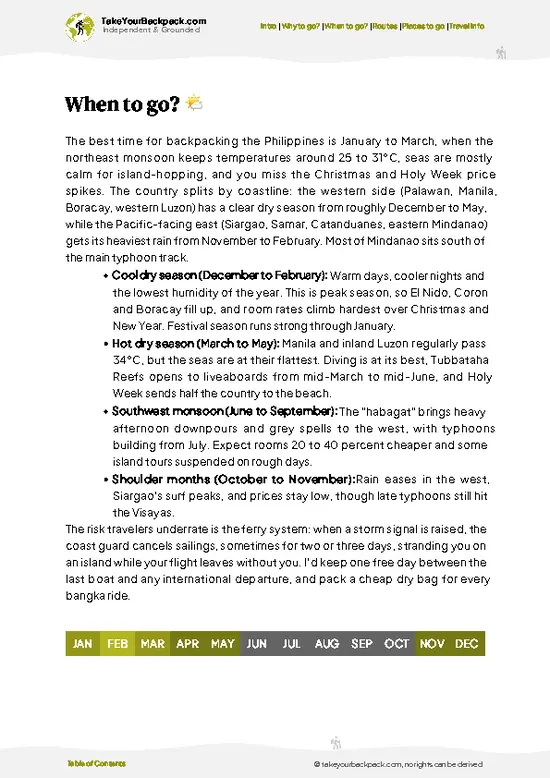
source: climatestotravel.comJANJanuary: good for travelingFEBFebruary: highly recommended for travelingMARMarch: excellent for travelingAPRApril: excellent for travelingMAYMay: excellent for travelingJUNJune: fair for travelingJULJuly: fair for travelingAUGAugust: fair for travelingSEPSeptember: fair for travelingOCTOctober: fair for travelingNOVNovember: fair for travelingDECDecember: good for traveling
when-to-go

✈️ The backpacker research shortcutPhilippines Travel Guide

An offline-friendly backpacking guide with optimized travel routes, ranked highlights, transport advice, and the best areas to stay.
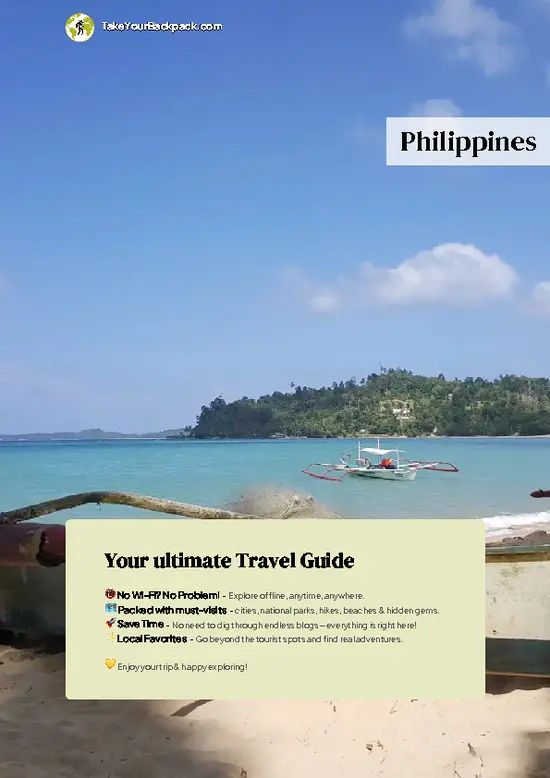
example page 0 from our offline Travel Guide for Philippines
example page 1 from our offline Travel Guide for Philippines
example page 2 from our offline Travel Guide for Philippines
example page 3 from our offline Travel Guide for Philippines
example page 4 from our offline Travel Guide for Philippines
example page 5 from our offline Travel Guide for Philippines
example page 6 from our offline Travel Guide for Philippines
example page 7 from our offline Travel Guide for Philippines
The digital guide (505 pages) contains:
144 highlights, ranked by travel appeal
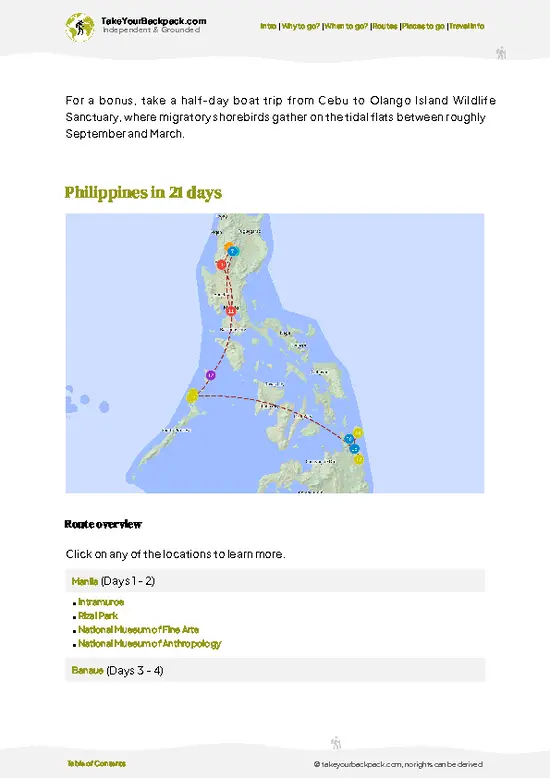
Optimized 7, 14 & 21-day travel routes
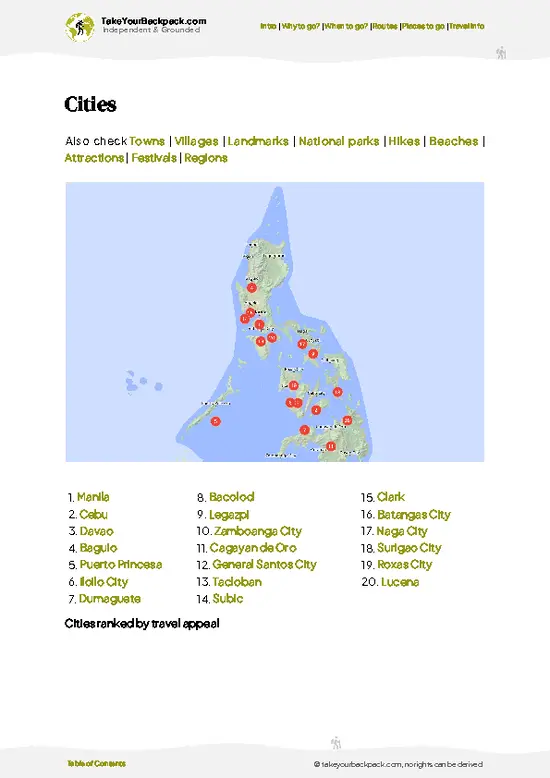
Cities, national parks, landmarks, beaches
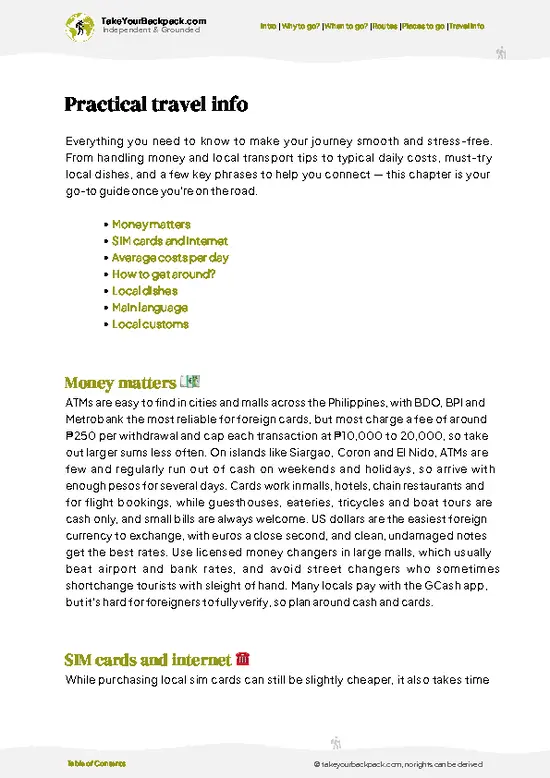
How to get around
Offline-friendly for travel without Wi-Fi
👉 Click to see all 30+ guide features

📅 Plan smarter in minutes, not weeks
Month by month travel advice
Festivals & national holidays
Budget expectations

🗺️ Go to the right places, skip the overrated ones
Honest pros & cons of destinations
Top hikes, parks & viewpoints
Lesser-known places most travelers miss
Clear “worth it vs skip it” guidance

🛏️ Travel smoothly without rookie mistakes
Best areas to stay
Transport systems explained simply
Common scams & safety advice
SIM cards, money & practical tips

🌍 Understand the country, not just visit it
Culture & traditions
52 Essential phrases & customs
Festivals worth planning around
Traveler-friendly historical context
Insights that make places more meaningful

📱 Built for real travel conditions
Fully downloadable PDF
Works completely offline
Optimized for phone use
Useful in remote areas & buses
Everything in one place
Save weeks of stressful planning
Get instant access to your full guide. 30‑day money-back guarantee.


By proceeding you agree to our terms.
Sent to your inbox immediately after payment • 100% Secure Checkout
Best Backpacking Travel Advisor 2025 tourism awardBest Backpacking
Travel Advisor
2025
What others say about Take Your Backpack Guides:
⭐⭐⭐⭐⭐
Fantastic, amazing amount of information!
⭐⭐⭐⭐⭐
My goodness this is amazing, it's what I've been looking for hats off too you!
⭐⭐⭐⭐⭐
I think this is absolutely BRILLIANT
⭐⭐⭐⭐
Very complete and informative. It's still missing places, but I gotta to commend you
⭐⭐⭐⭐⭐
This is truly amazing, thank you, can't wait to explore it with my kids!
⭐⭐⭐⭐⭐
Awesome resource, thank you!
⭐⭐⭐⭐⭐
This is amazing! Can't wait to explore the ones I haven't seen
⭐⭐⭐⭐
I love this! Well done, great idea.
⭐⭐⭐⭐⭐
Thanks for taking the time to make this gem!
⭐⭐⭐⭐⭐
This might be the best website I've ever seen.
⭐⭐⭐⭐⭐
Congratulations, and thank you so much for your work; it's incredibly valuable.
⭐⭐⭐⭐
In all seriousness I think you did a great job pointing out the important spots
⭐⭐⭐⭐⭐
10/10 very good
⭐⭐⭐⭐⭐
As someone who's only just starting to visit regularly this is awesome, thank you.
⭐⭐⭐⭐
Thank you very much! I'm going to visit my dad, it's going to be very useful!
⭐⭐⭐⭐⭐
This is really cool! We'll be travelling for the first time and this definitely come in handy.
⭐⭐⭐⭐⭐
You are now our minister of culture, congratulations 👨‍💼
⭐⭐⭐⭐⭐
Just wanted to tell you that this is a pearl! Going to follow your recommendations.
⭐⭐⭐⭐⭐
This is so cool. I'll definitely be using the resource for my travels soon.
⭐⭐⭐⭐⭐
This is very impressive! Good work.
⭐⭐⭐⭐⭐
This is an amazing and informative site. Very well done!

🛏️ Where to stay?Best areas and accommodation options

Mati’s backpacker sweet spot is the Poblacion area, the town’s beating heart where the streets hum with local life and easy camaraderie. This neighborhood isn’t just safe—it’s where you’ll find the pulse of Mati’s laid-back vibe, with small eateries serving fresh seafood and locals chatting over sweet, strong coffee. The air carries a mix of salt from the nearby shore and the earthy scent of coconut trees, grounding you in place. Hostels here cater to budget travelers and solo adventurers, offering communal spaces that make striking up conversations effortless.

Compared to the quieter, more … read more 👉
Mati’s backpacker sweet spot is the Poblacion area, the town’s beating heart where the streets hum with local life and easy camaraderie. This neighborhood isn’t just safe—it’s where you’ll find the pulse of Mati’s laid-back vibe, with small eateries serving fresh seafood and locals chatting over sweet, strong coffee. The air carries a mix of salt from the nearby shore and the earthy scent of coconut trees, grounding you in place. Hostels here cater to budget travelers and solo adventurers, offering communal spaces that make striking up conversations effortless.

Compared to the quieter, more residential parts of Mati, Poblacion delivers a social atmosphere without the chaos of a big city. It’s compact enough to explore on foot, so you’re never far from the beach or the market. Staying here means you’re plugged into the town’s rhythm, not just passing through. For backpackers craving connection and convenience, this neighborhood is the practical choice that unlocks the full Mati experience.

🚌 Getting aroundGetting around like a local

Mati moves at the pace of the sea breeze—unhurried but deliberate. It’s not a place where you’ll find strict timetables nailed to every corner, but neither is it a free-for-all of chaos. Instead, the town flows with a rhythm that’s part local intuition, part practical necessity. The sun’s angle shifts the mood: mornings bring a gentle buzz as fishermen unload their catch and markets stir to life, while afternoons slow down with the scent of salt and grilled fish hanging in the air. If you want to get around like a local, you’ll need to tune into this pulse—knowing when to wait patiently and when to move fast. Here’s how to navigate Mati without burning cash or losing time.


  • Walking: Mati’s compact center is made for feet. Streets are narrow, shaded by coconut palms, and lined with small
read more 👉
Mati moves at the pace of the sea breeze—unhurried but deliberate. It’s not a place where you’ll find strict timetables nailed to every corner, but neither is it a free-for-all of chaos. Instead, the town flows with a rhythm that’s part local intuition, part practical necessity. The sun’s angle shifts the mood: mornings bring a gentle buzz as fishermen unload their catch and markets stir to life, while afternoons slow down with the scent of salt and grilled fish hanging in the air. If you want to get around like a local, you’ll need to tune into this pulse—knowing when to wait patiently and when to move fast. Here’s how to navigate Mati without burning cash or losing time.


  • Walking: Mati’s compact center is made for feet. Streets are narrow, shaded by coconut palms, and lined with small shops and eateries. Walking is free, immersive, and often faster than waiting for transport during peak heat. Expect uneven sidewalks and occasional stray dogs—bring sturdy shoes and a relaxed pace.


  • Tricycles: The backbone of local transit, tricycles run almost 24/7 but don’t expect a fixed schedule. Fares hover around 10-20 PHP for short hops. They’re quick through narrow alleys but can get cramped and hot. Always agree on the fare before hopping in to avoid surprises.


  • Jeepneys: For longer hauls, jeepneys are your budget workhorse. Routes are semi-fixed, with morning services starting around 5:30 AM and tapering off by 7 PM. Fares are cheap—usually under 30 PHP—but rides can be slow and crowded, especially midday. They’re a great way to soak in local chatter and street scenes.


  • Motorcycle Taxis (Habals): When time is tight and the road is narrow, habal-habals cut through traffic with ease. Prices vary but expect 20-50 PHP depending on distance. Helmets aren’t always standard, so weigh speed against safety. Ideal for solo travelers comfortable with a bit of adrenaline.


  • Boat Transfers: Mati’s coastal charm extends to water taxis connecting nearby islands and beaches. These run mostly in the morning and late afternoon, weather permitting. Prices depend on distance but budget around 100-200 PHP. The ride offers a refreshing breeze and a different perspective on the town’s layout.

👛 Costs (as of 21 October 2025)How expensive it really is

Backpacking in Mati, Philippines, offers a laid-back vibe with costs that reflect its off-the-beaten-path charm. Here’s what you can expect to spend daily as an independent traveler.
  • Dorm Accommodation: Dorm beds in Mati typically run between $8 and $15 per night. These are basic but clean, often with fan cooling rather than air conditioning, which suits the tropical climate. Expect simple guesthouses or hostels rather than large hotels.
  • Meals: Local eateries serve hearty Filipino dishes for $2 to $5 per meal. Street food and small carinderias (local canteens) offer the best value, with fresh seafood and rice staples. If you opt for occasional Western-style cafes or restaurants, budget closer to $7 to $10 per meal.
  • Local Transport: Jeepneys and tricycles are the main modes of transport,
read more 👉
Backpacking in Mati, Philippines, offers a laid-back vibe with costs that reflect its off-the-beaten-path charm. Here’s what you can expect to spend daily as an independent traveler.
  • Dorm Accommodation: Dorm beds in Mati typically run between $8 and $15 per night. These are basic but clean, often with fan cooling rather than air conditioning, which suits the tropical climate. Expect simple guesthouses or hostels rather than large hotels.
  • Meals: Local eateries serve hearty Filipino dishes for $2 to $5 per meal. Street food and small carinderias (local canteens) offer the best value, with fresh seafood and rice staples. If you opt for occasional Western-style cafes or restaurants, budget closer to $7 to $10 per meal.
  • Local Transport: Jeepneys and tricycles are the main modes of transport, costing around $0.20 to $0.50 per short trip. For longer rides or day trips, expect to pay $2 to $5. Renting a motorbike is also popular, averaging $8 to $12 per day, giving you freedom to explore nearby beaches and waterfalls.
  • Basic Activities/Entry Fees: Many natural attractions like beaches and waterfalls have minimal or no entrance fees, usually under $1 to $3. Organized tours or diving sessions can push costs higher, but casual exploration stays budget-friendly.
  • Miscellaneous Expenses: This covers bottled water, snacks, occasional treats, or small souvenirs. Plan for about $1 to $3 daily, depending on your habits. Internet cafes or SIM card top-ups are cheap, around $1 to $2 for decent data packages.

All told, a realistic daily budget for Mati falls between $15 and $30. This range lets you enjoy the essentials without skimping on comfort or experiences. The town’s relaxed pace means you won’t feel pressured to spend more, and the natural beauty—sunlight filtering through palm fronds, the scent of salt air—makes every dollar feel well spent.
⚠️ Prices can change and everyone travels differently, so take this as a rough guide. Hope it helps you plan your adventure!

🚌 Day tripsExploring the surroundings

Mati, Philippines, is a backpacker’s dream base, offering easy access to stunning landscapes and vibrant local culture. Here are some day trips that make the most of your time in this coastal town.

Dahican Beach
Just a short jeepney ride away, Dahican Beach is a slice of paradise. The soft, white sand feels like silk underfoot, and the waves are perfect for surfing or just splashing around. Spend your day soaking up the sun, and don’t miss the chance to grab a fresh coconut from a local vendor. The best time to visit is from November to April, when the weather is dry and the surf is up. Expect to spend around 100 PHP for transport and a few hundred more for food. A common mistake? Arriving too late in the day; the sunsets here are worth the early start.
👉 Explore Dahican Beach

Mount read more 👉
Mati, Philippines, is a backpacker’s dream base, offering easy access to stunning landscapes and vibrant local culture. Here are some day trips that make the most of your time in this coastal town.

Dahican Beach
Just a short jeepney ride away, Dahican Beach is a slice of paradise. The soft, white sand feels like silk underfoot, and the waves are perfect for surfing or just splashing around. Spend your day soaking up the sun, and don’t miss the chance to grab a fresh coconut from a local vendor. The best time to visit is from November to April, when the weather is dry and the surf is up. Expect to spend around 100 PHP for transport and a few hundred more for food. A common mistake? Arriving too late in the day; the sunsets here are worth the early start.
👉 Explore Dahican Beach

Mount Hamiguitan
For those craving a bit of adventure, a trek up Mount Hamiguitan is a must. This UNESCO World Heritage Site is home to unique flora and fauna, including the endangered Pygmy Forest. The hike takes about 4-6 hours, depending on your pace, and the views from the summit are nothing short of breathtaking. Budget around 300 PHP for the guide fee and transport. The best months to hike are from March to May, when the trails are dry. Many first-timers underestimate the difficulty; come prepared with plenty of water and snacks.


Bonbon Beach
A hidden treasure, Bonbon Beach is perfect for a chill day away from the crowds. Accessible by a short boat ride, this beach offers crystal-clear waters and a serene atmosphere. Bring your snorkeling gear to explore the vibrant underwater life. The trip costs about 150 PHP for the boat and a few hundred for food. The ideal time to visit is during the dry season, from November to April. A common pitfall is forgetting sunscreen; the sun can be relentless here.


Pujada Island
Just a boat ride away, Pujada Island is a fantastic spot for a day of exploration. The island features lush greenery and pristine beaches, perfect for a picnic or a leisurely hike. The round trip usually takes about 2-3 hours, and you’ll spend around 200 PHP for the boat fare. Visit during the dry season for the best experience. Many backpackers overlook the need for a packed lunch; there are limited food options on the island.
Want to know what more Philippines offers?
The Philippines Travel Guide describes 144 highlights, from cities to national parks, from beaches to hikes

Get the Travel Guide -

🍲 FoodLocal Cuisine & Drinks

In Mati, the food scene is a lively dance of bold flavors and fresh ingredients that hit you right where it counts. Don’t miss the chance to try kinilaw, a local ceviche that’s bright with vinegar and coconut milk, a perfect match for the tropical heat. Another must is lechon manok, roasted chicken with crispy skin and juicy meat, often enjoyed with a side of tangy dipping sauce that wakes up your palate.

Backpackers will find themselves drawn to bustling markets and street stalls, where the air is thick with the scent of grilled seafood and sweet bananas frying in oil. These spots are where locals gather, making it easy to strike up a conversation over a plate of puso rice wrapped in woven palm leaves. Casual eateries serve up hearty, no-frills meals that fuel your adventures without draining … read more 👉
In Mati, the food scene is a lively dance of bold flavors and fresh ingredients that hit you right where it counts. Don’t miss the chance to try kinilaw, a local ceviche that’s bright with vinegar and coconut milk, a perfect match for the tropical heat. Another must is lechon manok, roasted chicken with crispy skin and juicy meat, often enjoyed with a side of tangy dipping sauce that wakes up your palate.

Backpackers will find themselves drawn to bustling markets and street stalls, where the air is thick with the scent of grilled seafood and sweet bananas frying in oil. These spots are where locals gather, making it easy to strike up a conversation over a plate of puso rice wrapped in woven palm leaves. Casual eateries serve up hearty, no-frills meals that fuel your adventures without draining your wallet.

Drinking culture here is relaxed but social. Grab a cold San Miguel beer or sip on tuba, a traditional palm wine that’s earthy and slightly sweet. Sharing drinks is common, and it’s polite to offer a toast before digging in—an unspoken invitation to connect. In Mati, food and drink aren’t just fuel; they’re a gateway to the city’s warm, unpretentious spirit.

🛡️ SafetySafety Tips and Common Scams in Mati

Mati is generally safe, but a few practical tips can enhance your experience. Stay aware in crowded markets, where distractions can lead to petty theft. If you’re solo, avoid wandering too far from the main areas after dark; the streets can feel deserted, and a little caution goes a long way.

Watch for common scams, like overly friendly locals offering unsolicited tours or services—politely decline and stick to your plan. Everyday annoyances include aggressive vendors; a firm but friendly “no, thank you” usually works.

Keep your belongings close, especially in busy spots. Carry a small daypack with essentials and leave valuables at your accommodation. By staying alert and confident, you’ll navigate Mati’s charm without a hitch.

Other Filipino cities near Mati

Explore more nearby:

  • Davao—urban parks, durian stalls, mountain skyline| 61 km away
  • Kidapawan—Mt. Apo trailhead, fruit stands, rural gateway| 121 km away
  • General Santos City—tuna port, mountain views, public markets| 140 km away

💡 Not sure where to go next?
Create a personalized itinerary for Philippines including Mati and the places that fit your trip.

Generate my itinerary

👉 Discover all cities

Or checkout all Philippines has to offer (think cities, towns, villages, national parks, hikes, beaches, festivals)
Country photo of Philippines

We 💚 feedbackFinal thoughts on visiting Mati

Mati’s coastline is a slice of paradise, where the salty breeze mingles with the scent of tropical blooms. The waves here are perfect for surfing, making it a playground for both newbies and pros. But be ready for the heat; it can be relentless, especially in the afternoons. Hydration is key, and don’t shy away from seeking shade. Embrace the sweat; it’s part of the adventure.

✈️ When did I visit Philippines?
Philippines being one of my favorites, due to the people and their mentality. I visited it first in 2010 and came back in January 2016 as part of my 1.5 year world trip.

✍️ Help improve this page!
The information on this page is based on my own backpacking experience in Philippines, supplemented with up-to-date research and feedback from other travelers. Travel details can change, so if you notice anything outdated or incomplete, feel free to let me know.


🙋‍♂️ Give feedback

👋 Meet the founderWho’s Behind Take Your Backpack?

Johan, backpacker and founder of TakeYourBackpackHi, I’m Johan (Netherlands 🇳🇱), the creator of TakeYourBackpack. Over the past decade, I’ve backpacked through 80+ countries across six continents, gaining extensive experience with independent travel, long-term trips, and overland routes.

This site is built on a combination of firsthand travel experience and carefully curated insights from other backpackers. Many guides are based on places I’ve personally visited, while others bring together tips, observations, and practical advice shared by trusted travelers I’ve met along the way.

The goal is to provide realistic, experience-driven guidance — not generic itineraries — so you can explore destinations with better context, clearer expectations, and more confidence.

Get full country guide •
Instant download • 144 highlights • Full Offline guide