

×

Philippines🇵🇭 | attractionsLas Casas Filipinas de Acuzarheritage houses, riverside resort, architectural restoration | things to do and best time to go

Explore The Ruins (TalisayExplore Mind Museum

Backpacking in Las Casas Filipinas de Acuzar
🌟 Highlightattraction ranked #9
By Johan Kruseman 🇳🇱 | Updated May 17, 2026

Your sandal catches on a cobblestone as a kalesa horse clops past, the air thick with the scent of molasses and varnished wood, while a wedding party in barong Tagalog poses under a Spanish-era balcony. Welcome to Las Casas Filipinas de Acuzar, tucked along the Bataan coastline, a few hours’ drive northwest of Manila. Here’s the truth: it’s a theme park for heritage architecture, not a living town. The price tag is steep for backpackers, and yes, you’ll share the grounds with pre-nup photo shoots and day-trippers wielding selfie sticks. But if you crave a crash course in Filipino colonial history—complete with transplanted mansions, river rides, and a surreal, time-warped energy—this place delivers a jolt you won’t get in Intramuros or Vigan. It’s curated, theatrical, sometimes kitschy, but undeniably memorable.

Discover everything you want to know in the 📖 Philippines Travel Guide.
Loading the map 🌍
CLICK TO FILTER
cities
towns
landmarks
national parks
hikes
beaches
attractions
festivals
regions
SHOW COUNTRY’S BESTSHOW ALL

✨ Why go?
Ranked #9 attraction in Philippines
Reasons people choose to visit here

Las Casas Filipinas de Acuzar isn’t your typical postcard stop. Yes, it’s crowded—tour buses roll in daily, and entrance fees aren’t exactly pocket change for a backpacker. But here’s the kicker: this place is a living, breathing time capsule of Philippine colonial history. The sprawling collection of meticulously restored Spanish-Filipino houses isn’t just for show; it’s a rare, hands-on dive into centuries of architecture and culture that you won’t find scattered elsewhere. Backpackers make time here because it’s a milestone on the route—a moment to slow down and absorb the country’s layered past beyond the usual beach and jungle shots. The effort to get there pays off with a unique blend of history, artistry, and a vibe that’s part museum, part village. If you want to understand the Philippines … read more 👉
Las Casas Filipinas de Acuzar isn’t your typical postcard stop. Yes, it’s crowded—tour buses roll in daily, and entrance fees aren’t exactly pocket change for a backpacker. But here’s the kicker: this place is a living, breathing time capsule of Philippine colonial history. The sprawling collection of meticulously restored Spanish-Filipino houses isn’t just for show; it’s a rare, hands-on dive into centuries of architecture and culture that you won’t find scattered elsewhere. Backpackers make time here because it’s a milestone on the route—a moment to slow down and absorb the country’s layered past beyond the usual beach and jungle shots. The effort to get there pays off with a unique blend of history, artistry, and a vibe that’s part museum, part village. If you want to understand the Philippines beyond the surface, this is where the story gets real, raw, and worth every peso and minute spent.
Want to include Las Casas Filipinas de Acuzar in your Philippines route?
Create a personalized Philippines itinerary that includes Las Casas Filipinas de Acuzar and the places that fit your trip — based on your travel style, budget, and available time. Get your route in seconds.

Generate my trip

💡 HighlightsTop highlights of Las Casas Filipinas de Acuzar

1. Heritage Walking Tour
Forget the Instagram-perfect facades for a second—this is the real engine of Las Casas. You’re not just gawking at old buildings; you’re walking through a Frankenstein’s monster of Philippine history, where entire ancestral homes have been uprooted, brick by brick, from all over the country and reassembled here. The guides don’t sugarcoat the colonial past, and you’ll hear stories that are equal parts tragic, bizarre, and oddly inspiring. If you want to understand the complicated soul of the Philippines, this is where you start.


2. River Cruise
Yes, it’s a bit theme-park, but the payoff is worth it. You’ll float past Spanish-era mansions, stone bridges, and cobbled streets—all with the wind in your hair and a guide who actually knows their stuff. The river isn’t exactly … read more 👉
1. Heritage Walking Tour
Forget the Instagram-perfect facades for a second—this is the real engine of Las Casas. You’re not just gawking at old buildings; you’re walking through a Frankenstein’s monster of Philippine history, where entire ancestral homes have been uprooted, brick by brick, from all over the country and reassembled here. The guides don’t sugarcoat the colonial past, and you’ll hear stories that are equal parts tragic, bizarre, and oddly inspiring. If you want to understand the complicated soul of the Philippines, this is where you start.


2. River Cruise
Yes, it’s a bit theme-park, but the payoff is worth it. You’ll float past Spanish-era mansions, stone bridges, and cobbled streets—all with the wind in your hair and a guide who actually knows their stuff. The river isn’t exactly the Seine, but the drama of the architecture reflected in the water is pure theater. It’s the best way to get the big-picture view without melting in the midday sun.


3. The Workshop Experience
This is where the place shakes off the museum dust. You can watch (or try your hand at) traditional crafts—wood carving, metalwork, brickmaking—done by artisans who aren’t just putting on a show for tourists. These are real skills, passed down through generations, and the pride is palpable. If you want a souvenir that isn’t mass-produced, this is your hunting ground.


4. The Beachfront
Here’s the curveball: Las Casas isn’t just about old houses. There’s a legit stretch of sand and sea, and it’s not overrun with the selfie-stick crowd. The water’s not Boracay-clear, but after a day of history lessons, it’s a relief to kick off your shoes and let the salt air do its thing. It’s the kind of surprise that makes you want to stay longer than you planned. (Personal favorite—nothing beats a sunset here after a day of time travel.)


5. The Theatrical Shows
Skip the dinner buffet, but don’t miss the cultural performances. These aren’t your average resort song-and-dance numbers. The shows dig into Filipino folklore, colonial drama, and even a bit of slapstick. It’s loud, proud, and sometimes a little chaotic—just like the country itself. If you want to feel the pulse of the place, this is where it’s beating hardest.
Spotted a mistake or missing something? Contact us.

Things to do near Las Casas Filipinas de Acuzar

Ratings based on Tripadvisor reviews. When you book through this link, you support our work at no extra cost to you.

🌤️ When to go?Seasonal considerations and timing


  • Weather: The dry season from November to May is your best bet. Expect less rain and more reliable sunshine, especially from February to April. June through October brings heavy monsoon rains that can dampen your visit—literally and figuratively.

  • Temperature: Temperatures hover around 27-32°C (81-90°F) year-round, but the dry months feel less muggy. The wet season cranks up humidity, making the heat feel stickier and less enjoyable for wandering the open-air heritage village.

  • Daylight Hours: Daylight is fairly consistent, about 11-12 hours daily. Longer daylight in March and April means more time to explore before sunset, which is perfect for soaking in the architecture and cobblestone streets.

  • Crowds: Peak tourist season aligns with the dry months, especially December through April.
read more 👉

  • Weather: The dry season from November to May is your best bet. Expect less rain and more reliable sunshine, especially from February to April. June through October brings heavy monsoon rains that can dampen your visit—literally and figuratively.

  • Temperature: Temperatures hover around 27-32°C (81-90°F) year-round, but the dry months feel less muggy. The wet season cranks up humidity, making the heat feel stickier and less enjoyable for wandering the open-air heritage village.

  • Daylight Hours: Daylight is fairly consistent, about 11-12 hours daily. Longer daylight in March and April means more time to explore before sunset, which is perfect for soaking in the architecture and cobblestone streets.

  • Crowds: Peak tourist season aligns with the dry months, especially December through April. Expect more visitors on weekends and holidays, which can dilute the intimate vibe. Off-peak months offer quieter, more reflective experiences but come with the risk of rain.

  • Seasonal Activities: Cultural events and festivals tend to cluster in the dry season, adding layers of local color. The rainy months see fewer events, so if you want to catch traditional performances or markets, plan accordingly.

  • Price Fluctuations: Accommodation and tours spike during peak dry months, particularly around Christmas and Holy Week. Booking ahead can save you a headache and some pesos. Off-season rates drop but factor in the weather trade-off.


Pro-tip: Aim for late February to early April—dry, warm, lively but not slammed—perfect for savoring the authentic charm without the Instagram crowd stampede.


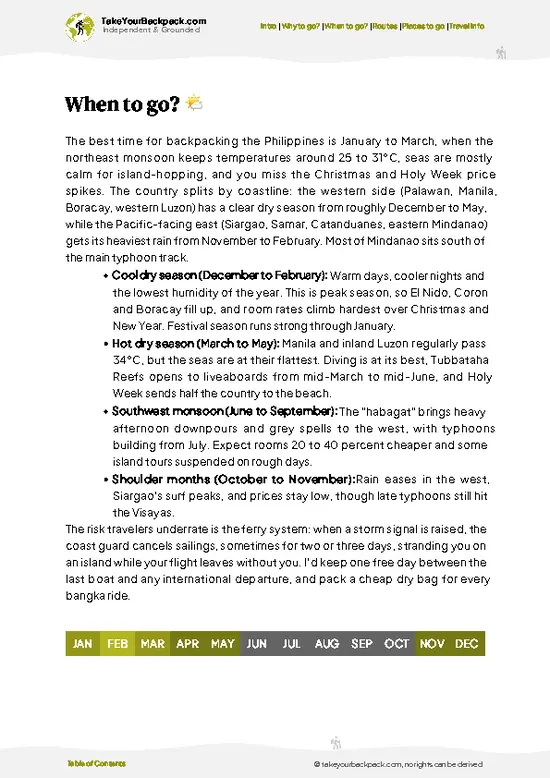
source: climatestotravel.comJANJanuary: highly recommended for travelingFEBFebruary: excellent for travelingMARMarch: excellent for travelingAPRApril: excellent for travelingMAYMay: highly recommended for travelingJUNJune: fair for travelingJULJuly: fair for travelingAUGAugust: fair for travelingSEPSeptember: fair for travelingOCTOctober: fair for travelingNOVNovember: highly recommended for travelingDECDecember: highly recommended for traveling
when-to-go

✈️ The backpacker research shortcutPhilippines Travel Guide

An offline-friendly backpacking guide with optimized travel routes, ranked highlights, transport advice, and the best areas to stay.
example page 0 from our offline Travel Guide for Philippines
example page 1 from our offline Travel Guide for Philippines
example page 2 from our offline Travel Guide for Philippines
example page 3 from our offline Travel Guide for Philippines
example page 4 from our offline Travel Guide for Philippines
example page 5 from our offline Travel Guide for Philippines
example page 6 from our offline Travel Guide for Philippines
example page 7 from our offline Travel Guide for Philippines
The digital guide (505 pages) contains:
144 highlights, ranked by travel appeal
Optimized 7, 14 & 21-day travel routes
Cities, national parks, landmarks, beaches
How to get around
Offline-friendly for travel without Wi-Fi
👉 Click to see all 30+ guide features

📅 Plan smarter in minutes, not weeks
Month by month travel advice
Festivals & national holidays
Budget expectations

🗺️ Go to the right places, skip the overrated ones
Honest pros & cons of destinations
Top hikes, parks & viewpoints
Lesser-known places most travelers miss
Clear “worth it vs skip it” guidance

🛏️ Travel smoothly without rookie mistakes
Best areas to stay
Transport systems explained simply
Common scams & safety advice
SIM cards, money & practical tips

🌍 Understand the country, not just visit it
Culture & traditions
52 Essential phrases & customs
Festivals worth planning around
Traveler-friendly historical context
Insights that make places more meaningful

📱 Built for real travel conditions
Fully downloadable PDF
Works completely offline
Optimized for phone use
Useful in remote areas & buses
Everything in one place
Save weeks of stressful planning
Get instant access to your full guide. 30‑day money-back guarantee.


By proceeding you agree to our terms.
Sent to your inbox immediately after payment • 100% Secure Checkout
Best Backpacking Travel Advisor 2025 tourism awardBest Backpacking
Travel Advisor
2025
What others say about Take Your Backpack Guides:
⭐⭐⭐⭐⭐
Fantastic, amazing amount of information!
⭐⭐⭐⭐⭐
My goodness this is amazing, it's what I've been looking for hats off too you!
⭐⭐⭐⭐⭐
I think this is absolutely BRILLIANT
⭐⭐⭐⭐
Very complete and informative. It's still missing places, but I gotta to commend you
⭐⭐⭐⭐⭐
This is truly amazing, thank you, can't wait to explore it with my kids!
⭐⭐⭐⭐⭐
Awesome resource, thank you!
⭐⭐⭐⭐⭐
This is amazing! Can't wait to explore the ones I haven't seen
⭐⭐⭐⭐
I love this! Well done, great idea.
⭐⭐⭐⭐⭐
Thanks for taking the time to make this gem!
⭐⭐⭐⭐⭐
This might be the best website I've ever seen.
⭐⭐⭐⭐⭐
Congratulations, and thank you so much for your work; it's incredibly valuable.
⭐⭐⭐⭐
In all seriousness I think you did a great job pointing out the important spots
⭐⭐⭐⭐⭐
10/10 very good
⭐⭐⭐⭐⭐
As someone who's only just starting to visit regularly this is awesome, thank you.
⭐⭐⭐⭐
Thank you very much! I'm going to visit my dad, it's going to be very useful!
⭐⭐⭐⭐⭐
This is really cool! We'll be travelling for the first time and this definitely come in handy.
⭐⭐⭐⭐⭐
You are now our minister of culture, congratulations 👨‍💼
⭐⭐⭐⭐⭐
Just wanted to tell you that this is a pearl! Going to follow your recommendations.
⭐⭐⭐⭐⭐
This is so cool. I'll definitely be using the resource for my travels soon.
⭐⭐⭐⭐⭐
This is very impressive! Good work.
⭐⭐⭐⭐⭐
This is an amazing and informative site. Very well done!

🛏️ Where to stay?Where staying makes the most sense

Las Casas Filipinas de Acuzar is a jaw-dropping dive into Philippine colonial history, but let’s cut through the postcard-perfect hype: it’s not a quiet, untouched sanctuary. Expect crowds, especially on weekends and holidays, and yes, the entrance fee isn’t what you’d call a steal. But here’s the kicker — the real magic isn’t just the restored mansions; it’s the vibe around them, the living history, the stories whispered by the wooden floors and cobblestone streets.

For backpackers, the best spots to crash are in the nearby town of Bagac or the more laid-back coastal village of Morong. Bagac … read more 👉
Las Casas Filipinas de Acuzar is a jaw-dropping dive into Philippine colonial history, but let’s cut through the postcard-perfect hype: it’s not a quiet, untouched sanctuary. Expect crowds, especially on weekends and holidays, and yes, the entrance fee isn’t what you’d call a steal. But here’s the kicker — the real magic isn’t just the restored mansions; it’s the vibe around them, the living history, the stories whispered by the wooden floors and cobblestone streets.

For backpackers, the best spots to crash are in the nearby town of Bagac or the more laid-back coastal village of Morong. Bagac offers a safer, more social scene with enough budget-friendly guesthouses and eateries to keep you connected with fellow travelers. Morong, a bit quieter, is perfect if you want to wind down after a day of exploring but still want easy access to the attraction. Both areas give you a genuine slice of local life without the tourist bubble, which is exactly what you want when you’re chasing authenticity over Instagram gloss.

👛 Costs (as of 8 June 2026)Travel costs and budget guide for Las Casas Filipinas de Acuzar

As of the most recent estimates, visiting Las Casas Filipinas de Acuzar in the Philippines involves the following costs:

- Day Tour Entrance Fee: Approximately ₱2,500 on weekdays and ₱2,900 on weekends. ([chillandtravel.com](https://chillandtravel.com/las-casas-filipinas-de-acuzar-guide/?utm_source=openai))

- Hotel Accommodation: Standard rooms start from ₱7,000 per night for two people. ([chillandtravel.com](https://chillandtravel.com/las-casas-filipinas-de-acuzar-guide/?utm_source=openai))

- Meals: Set meals are available for around ₱1,200, while buffet meals are priced at ₱1,500 per person. ([therestlesspinoytraveler.wordpress.com](https://therestlesspinoytraveler.wordpress.com/2014/06/23/bagac-bataan-las-casas-filipinas-de-acuzar/?utm_source=openai))

- Additional Activities: Optional … read more 👉
As of the most recent estimates, visiting Las Casas Filipinas de Acuzar in the Philippines involves the following costs:

- Day Tour Entrance Fee: Approximately ₱2,500 on weekdays and ₱2,900 on weekends. ([chillandtravel.com](https://chillandtravel.com/las-casas-filipinas-de-acuzar-guide/?utm_source=openai))

- Hotel Accommodation: Standard rooms start from ₱7,000 per night for two people. ([chillandtravel.com](https://chillandtravel.com/las-casas-filipinas-de-acuzar-guide/?utm_source=openai))

- Meals: Set meals are available for around ₱1,200, while buffet meals are priced at ₱1,500 per person. ([therestlesspinoytraveler.wordpress.com](https://therestlesspinoytraveler.wordpress.com/2014/06/23/bagac-bataan-las-casas-filipinas-de-acuzar/?utm_source=openai))

- Additional Activities: Optional activities such as a river cruise or calesa ride may be available, with prices varying based on the package chosen. ([eatventurers.com](https://www.eatventurers.com/2019/08/travel-and-eat-guide-las-casas-filipinas-azucar-bataan.html?utm_source=openai))

Please note that these prices are subject to change and may vary based on the season and available promotions. For the most accurate and up-to-date information, it's recommended to visit the official Las Casas Filipinas de Acuzar website.
⚠️ Prices can change and everyone travels differently, so take this as a rough guide. Hope it helps you plan your adventure!

Other Filipino attractions near Las Casas Filipinas de Acuzar

Explore more nearby:

  • Fort Santiago—stone ramparts, Rizal shrine, Spanish-era prison| 63 km away
  • Manila Ocean Park—aquarium tunnels, marine life exhibits, water shows| 63 km away
  • Intramuros—walled city, cobblestone streets, colonial landmarks| 63 km away

💡 Not sure where to go next?
Create a personalized itinerary for Philippines including Las Casas Filipinas de Acuzar and the places that fit your trip.

Generate my itinerary

👉 Discover all attractions

Or checkout all Philippines has to offer (think cities, towns, villages, national parks, hikes, beaches, festivals)
Country photo of Philippines

We 💚 feedbackFinal thoughts on visiting Las Casas Filipinas de Acuzar

Las Casas Filipinas de Acuzar isn’t your typical heritage park—it’s a bold, almost theatrical dive into Filipino colonial history with real, painstakingly restored Spanish-era houses you can walk through. But brace yourself: it’s a bit of a tourist magnet, and the entrance fee isn’t pocket change. Still, if you want a vivid, hands-on history lesson that feels like stepping into a different century, this place delivers in spades.

✈️ When did I visit Philippines?
Philippines being one of my favorites, due to the people and their mentality. I visited it first in 2010 and came back in January 2016 as part of my 1.5 year world trip.

✍️ Help improve this page!
The information on this page is based on my own backpacking experience in Philippines, supplemented with up-to-date research and feedback from other travelers. Travel details can change, so if you notice anything outdated or incomplete, feel free to let me know.


🙋‍♂️ Give feedback

👋 Meet the founderWho’s Behind Take Your Backpack?

Johan, backpacker and founder of TakeYourBackpackHi, I’m Johan (Netherlands 🇳🇱), the creator of TakeYourBackpack. Over the past decade, I’ve backpacked through 80+ countries across six continents, gaining extensive experience with independent travel, long-term trips, and overland routes.

This site is built on a combination of firsthand travel experience and carefully curated insights from other backpackers. Many guides are based on places I’ve personally visited, while others bring together tips, observations, and practical advice shared by trusted travelers I’ve met along the way.

The goal is to provide realistic, experience-driven guidance — not generic itineraries — so you can explore destinations with better context, clearer expectations, and more confidence.

Get full country guide •
Instant download • 144 highlights • Full Offline guide