
×

Philippines🇵🇭 | citiesLucenatransport hub, coconut groves, city plaza | things to do and best time to go

Explore TuguegaraoExplore Naga City

Backpacking in Lucena
👍 Recommendedcity ranked #21
By Johan Kruseman 🇳🇱 | Updated September 4, 2026

Jeepneys growl past the seawall as the air fills with grilled squid smoke and karaoke from a tin-roof bar; kids chase a basketball that keeps rolling toward Tayabas Bay. Lucena sits in Quezon Province on Luzon, a few hours southeast of Manila. It’s a working Filipino city first, backpacker stop second: cheap food, busy markets, chaotic traffic, friendly but mostly uninterested locals, very few hostels. Safer and calmer than Manila, less charming than nearby Tayabas or Lucban, but a solid, low-cost base if you like real-life city grit more than curated sights.

Discover everything you want to know in the 📖 Philippines Travel Guide.
Loading the map 🌍
CLICK TO FILTER
cities
towns
landmarks
national parks
hikes
beaches
attractions
festivals
regions
SHOW COUNTRY’S BESTSHOW ALL

✨ Why go?
Ranked #21 city in Philippines
The unique appeal for travelers

Lucena is a strategic basecamp for backpackers exploring the Philippines. It offers a solid mix of affordable hostels and local eateries, making it easy to stretch your budget. The city’s walkability means you can dive into the local vibe without needing a ride. Plus, the nightlife is lively enough to keep you entertained without overwhelming you. With its proximity to stunning day trips, Lucena serves as a practical stopover, allowing you to recharge before heading to more remote destinations. If you’re after a blend of comfort and convenience, this city fits right into your backpacking route.
Want to include Lucena in your Philippines route?
Create a personalized Philippines itinerary that includes Lucena and the places that fit your trip — based on your travel style, budget, and available time. Get your route in seconds.

Generate my trip

💡 HighlightsEssential experiences to have while visiting Lucena

  1. St. Ferdinand Cathedral (Lucena Cathedral) — The city’s religious heart: an active cathedral with solid local history, regular masses, and the kind of church vibe that tells you a lot about Lucena’s festivals and weekday rhythms.
  2. Quezon Provincial Capitol — The provincial seat in the middle of Lucena; its grounds, façade and surrounding plaza are where civic life, weekend markets and political pageantry intersect—good for photos and people-watching.
  3. Dalahican Port & Fish Market — A working port where ferries to nearby islands leave and vendors sell fresh catch; come for the seafood, the sea air, and the honest slice-of-life fishing-industry scene at sunrise or dusk.
  4. Tayabas Bayfront / Dalahican Baywalk — A low-key promenade along Tayabas Bay with sunset views, fishing boats, and street
read more 👉
  1. St. Ferdinand Cathedral (Lucena Cathedral) — The city’s religious heart: an active cathedral with solid local history, regular masses, and the kind of church vibe that tells you a lot about Lucena’s festivals and weekday rhythms.
  2. Quezon Provincial Capitol — The provincial seat in the middle of Lucena; its grounds, façade and surrounding plaza are where civic life, weekend markets and political pageantry intersect—good for photos and people-watching.
  3. Dalahican Port & Fish Market — A working port where ferries to nearby islands leave and vendors sell fresh catch; come for the seafood, the sea air, and the honest slice-of-life fishing-industry scene at sunrise or dusk.
  4. Tayabas Bayfront / Dalahican Baywalk — A low-key promenade along Tayabas Bay with sunset views, fishing boats, and street snacks; simple, local, and a favorite spot for chill evenings away from tourist circuits.
  5. Lucena Central Public Market — Bustling, noisy, and full of flavor: buy local produce, dried fish, snacks and pasalubong here to get a real taste of everyday Lucena life and bargain with friendly vendors.
  6. PNR Lucena Station — The old Philippine National Railways station still standing in the city—good for railway history buffs and for a tactile reminder of how people and goods once moved across Luzon.
  7. Manuel S. Enverga University (MSEUF) Main Campus — A long-standing local university with a compact, walkable campus; visit to see historic buildings, campus life, and occasional cultural performances or exhibits open to the public.
  8. Lucena City Hall & People’s Park (Plaza) — The civic plaza where town announcements, small festivals and nightly family strolls happen; it’s the pulse of community life and perfect for casual observation of daily rhythms.
  9. Quezon Convention Center — The city’s main events venue: if you time it right you’ll catch concerts, trade fairs or local fiestas here—an easy way to tap into Lucena’s contemporary cultural scene.
  10. SM City Lucena (local hub) — More than a mall: a meeting place for locals, with food choices, budget cinemas and weekend markets—handy for practical travel needs and sampling local fast-food twists without breaking the bank.
A few great day trips just outside Lucena: Kamay ni Hesus Shrine in Lucban (personal favorite), the Pahiyas-covered heritage town of Lucban (seasonal but unforgettable), and the beaches/islands off the Quezon coast like Cagbalete for low-key beach time.
Spotted a mistake or missing something? Contact us.

Things to do near Lucena

Ratings based on Tripadvisor reviews. When you book through this link, you support our work at no extra cost to you.

🏘️ NeighborhoodsUnderstanding the local layout

Lucena is a vibrant hub in the Philippines, offering a mix of local culture and accessibility for backpackers. Here’s how the neighborhoods stack up:

Downtown Lucena: The heart of the city, perfect for first-timers. It’s bustling, with plenty of budget-friendly eateries and shops. Walkable streets make exploring easy. Nightlife is lively but not overwhelming. Great for short stays.

Lucena Heights: A quieter area, ideal for those seeking a more relaxed vibe. It’s a bit further from the action, but the views are worth it. Transport options are available, but you’ll need to plan ahead. Suitable for longer stays.

Isabang: A local favorite, this neighborhood offers a taste of authentic life. It’s affordable and has a laid-back atmosphere. Walkability is decent, and you’ll find local markets. … read more 👉
Lucena is a vibrant hub in the Philippines, offering a mix of local culture and accessibility for backpackers. Here’s how the neighborhoods stack up:

Downtown Lucena: The heart of the city, perfect for first-timers. It’s bustling, with plenty of budget-friendly eateries and shops. Walkable streets make exploring easy. Nightlife is lively but not overwhelming. Great for short stays.

Lucena Heights: A quieter area, ideal for those seeking a more relaxed vibe. It’s a bit further from the action, but the views are worth it. Transport options are available, but you’ll need to plan ahead. Suitable for longer stays.

Isabang: A local favorite, this neighborhood offers a taste of authentic life. It’s affordable and has a laid-back atmosphere. Walkability is decent, and you’ll find local markets. Best for those who want to immerse themselves in the culture.

⌛️ 1 dayHow to make the most of one day

Lucena, a vibrant city in the Philippines, is a delightful blend of rich culture and local charm. Start your day in the bustling downtown area, where you can grab breakfast at a local eatery. Try the longganisa, a sweet sausage that pairs perfectly with garlic rice.

After fueling up, stroll through the historic Plaza Lucena. The park is a hub of activity, with locals chatting and children playing. From there, head to the nearby St. Ferdinand Cathedral, an architectural gem that showcases the city’s heritage.

In the afternoon, make your way to the less-traveled neighborhood of Gulang-Gulang. Here, you’ll find the quaint Gulang-Gulang Church, often overlooked by tourists. It’s a peaceful spot, perfect for reflection. Grab lunch at a local carinderia, where you can savor authentic Filipino … read more 👉
Lucena, a vibrant city in the Philippines, is a delightful blend of rich culture and local charm. Start your day in the bustling downtown area, where you can grab breakfast at a local eatery. Try the longganisa, a sweet sausage that pairs perfectly with garlic rice.

After fueling up, stroll through the historic Plaza Lucena. The park is a hub of activity, with locals chatting and children playing. From there, head to the nearby St. Ferdinand Cathedral, an architectural gem that showcases the city’s heritage.

In the afternoon, make your way to the less-traveled neighborhood of Gulang-Gulang. Here, you’ll find the quaint Gulang-Gulang Church, often overlooked by tourists. It’s a peaceful spot, perfect for reflection. Grab lunch at a local carinderia, where you can savor authentic Filipino dishes.

As evening approaches, return to the downtown area for a lively dinner scene. Sample fresh seafood at a local restaurant, and don’t miss the chance to try kinilaw, a Filipino ceviche. End your day with a leisurely walk along the waterfront, soaking in the warm breeze and local ambiance.
Turn your Lucena visit into an Philippines adventure
Build a complete Philippines route with Lucena, hidden gems, must-see destinations, and realistic travel times included.

Generate my trip

🌤️ When to go?Best time to visit Lucena


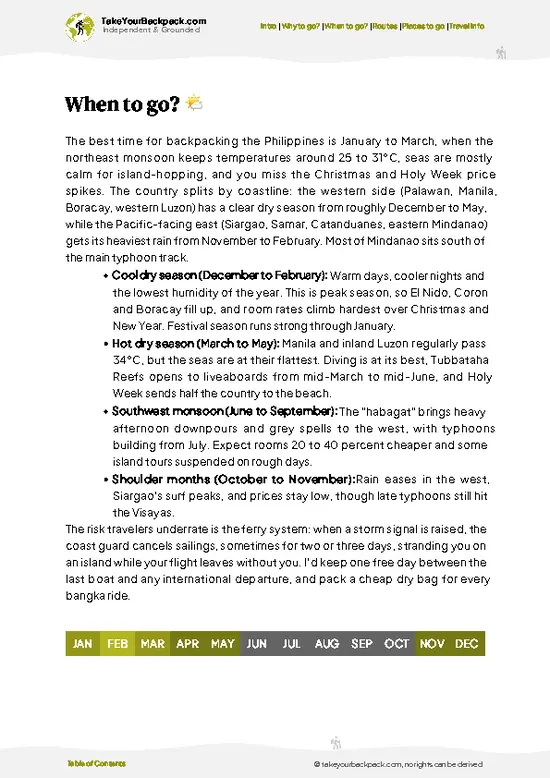
  • Topic: Weather – Lucena’s dry season runs from November to April, offering clear skies and minimal rain. The wet season, May to October, brings heavy downpours that can disrupt plans and muddy trails.

  • Topic: Temperature – Expect highs around 30–33°C (86–91°F) year-round, with nights cooling to 22–24°C (72–75°F). Humidity spikes during the rainy months, making comfort a real factor.

  • Topic: Daylight Hours – Roughly 11 to 12 hours of daylight throughout the year, with sunrise around 5:30–6:00 AM and sunset near 5:30–6:00 PM, giving you a solid window for exploration.

  • Topic: Crowds – Peak tourist flow aligns with the dry season and local holidays, especially December and March. Visiting just before or after these peaks means fewer crowds and better deals.

  • Topic: Seasonal Activities
read more 👉

  • Topic: Weather – Lucena’s dry season runs from November to April, offering clear skies and minimal rain. The wet season, May to October, brings heavy downpours that can disrupt plans and muddy trails.

  • Topic: Temperature – Expect highs around 30–33°C (86–91°F) year-round, with nights cooling to 22–24°C (72–75°F). Humidity spikes during the rainy months, making comfort a real factor.

  • Topic: Daylight Hours – Roughly 11 to 12 hours of daylight throughout the year, with sunrise around 5:30–6:00 AM and sunset near 5:30–6:00 PM, giving you a solid window for exploration.

  • Topic: Crowds – Peak tourist flow aligns with the dry season and local holidays, especially December and March. Visiting just before or after these peaks means fewer crowds and better deals.

  • Topic: Seasonal Activities – Festivals like the Pahiyas in May are vibrant but bring crowds and higher prices. Dry months favor beach trips and hiking, while wet months limit outdoor options.

  • Topic: Price Fluctuations – Accommodation and transport costs spike during the dry season and festival periods. Off-peak months offer better rates but come with the risk of rain interruptions.


Pro-tip: Aim for late February to early April—dry, warm, and just shy of peak crowds—maximizing comfort and value without the weather gamble.


source: climatestotravel.comJANJanuary: highly recommended for travelingFEBFebruary: excellent for travelingMARMarch: highly recommended for travelingAPRApril: highly recommended for travelingMAYMay: good for travelingJUNJune: fair for travelingJULJuly: fair for travelingAUGAugust: fair for travelingSEPSeptember: fair for travelingOCTOctober: fair for travelingNOVNovember: highly recommended for travelingDECDecember: good for traveling
when-to-go

✈️ The backpacker research shortcutPhilippines Travel Guide

An offline-friendly backpacking guide with optimized travel routes, ranked highlights, transport advice, and the best areas to stay.
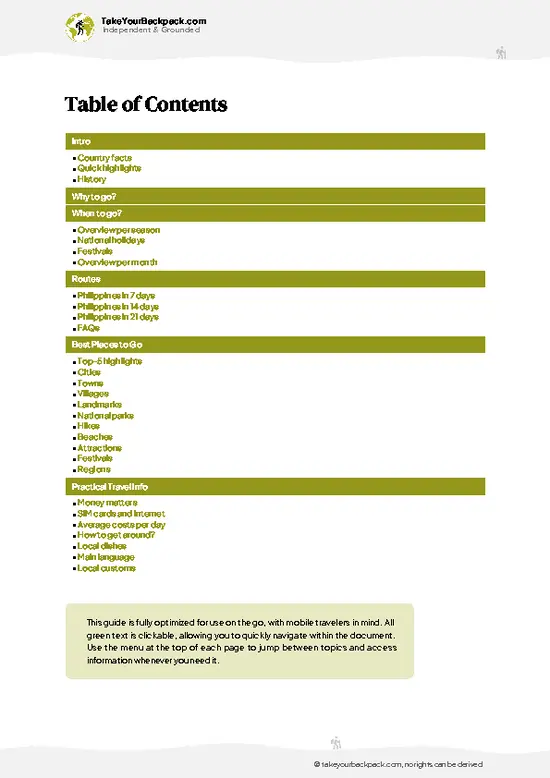
example page 0 from our offline Travel Guide for Philippines
example page 1 from our offline Travel Guide for Philippines
example page 2 from our offline Travel Guide for Philippines
example page 3 from our offline Travel Guide for Philippines
example page 4 from our offline Travel Guide for Philippines
example page 5 from our offline Travel Guide for Philippines
example page 6 from our offline Travel Guide for Philippines
example page 7 from our offline Travel Guide for Philippines
The digital guide (503 pages) contains:
144 highlights, ranked by travel appeal
Optimized 7, 14 & 21-day travel routes
Cities, national parks, landmarks, beaches
How to get around
Offline-friendly for travel without Wi-Fi
👉 Click to see all 30+ guide features

📅 Plan smarter in minutes, not weeks
Month by month travel advice
Festivals & national holidays
Budget expectations

🗺️ Go to the right places, skip the overrated ones
Honest pros & cons of destinations
Top hikes, parks & viewpoints
Lesser-known places most travelers miss
Clear “worth it vs skip it” guidance

🛏️ Travel smoothly without rookie mistakes
Best areas to stay
Transport systems explained simply
Common scams & safety advice
SIM cards, money & practical tips

🌍 Understand the country, not just visit it
Culture & traditions
52 Essential phrases & customs
Festivals worth planning around
Traveler-friendly historical context
Insights that make places more meaningful

📱 Built for real travel conditions
Fully downloadable PDF
Works completely offline
Optimized for phone use
Useful in remote areas & buses
Everything in one place
Save weeks of stressful planning
Get instant access to your full guide. 30‑day money-back guarantee.
+ Add another guide for just US$7.80

By proceeding you agree to our terms.
Sent to your inbox immediately after payment • 100% Secure Checkout
Best Backpacking Travel Advisor 2025 tourism awardBest Backpacking
Travel Advisor
2025
What others say about Take Your Backpack Guides:
⭐⭐⭐⭐⭐
Fantastic, amazing amount of information!
⭐⭐⭐⭐⭐
My goodness this is amazing, it's what I've been looking for hats off too you!
⭐⭐⭐⭐⭐
I think this is absolutely BRILLIANT
⭐⭐⭐⭐
Very complete and informative. It's still missing places, but I gotta to commend you
⭐⭐⭐⭐⭐
This is truly amazing, thank you, can't wait to explore it with my kids!
⭐⭐⭐⭐⭐
Awesome resource, thank you!
⭐⭐⭐⭐⭐
This is amazing! Can't wait to explore the ones I haven't seen
⭐⭐⭐⭐
I love this! Well done, great idea.
⭐⭐⭐⭐⭐
Thanks for taking the time to make this gem!
⭐⭐⭐⭐⭐
This might be the best website I've ever seen.
⭐⭐⭐⭐⭐
Congratulations, and thank you so much for your work; it's incredibly valuable.
⭐⭐⭐⭐
In all seriousness I think you did a great job pointing out the important spots
⭐⭐⭐⭐⭐
10/10 very good
⭐⭐⭐⭐⭐
As someone who's only just starting to visit regularly this is awesome, thank you.
⭐⭐⭐⭐
Thank you very much! I'm going to visit my dad, it's going to be very useful!
⭐⭐⭐⭐⭐
This is really cool! We'll be travelling for the first time and this definitely come in handy.
⭐⭐⭐⭐⭐
You are now our minister of culture, congratulations 👨‍💼
⭐⭐⭐⭐⭐
Just wanted to tell you that this is a pearl! Going to follow your recommendations.
⭐⭐⭐⭐⭐
This is so cool. I'll definitely be using the resource for my travels soon.
⭐⭐⭐⭐⭐
This is very impressive! Good work.
⭐⭐⭐⭐⭐
This is an amazing and informative site. Very well done!

🛏️ Where to stay?Best areas and accommodation options

Lucena’s downtown core is the sweet spot for backpackers who want safety, social buzz, and budget options all in one. This area pulses with local life—street vendors, small eateries, and easy access to public transport. It’s where you’ll find the handful of hostels catering to solo travelers and groups alike, offering a chance to meet others without sacrificing comfort. Compared to the quieter, more residential outskirts, downtown keeps you plugged into the city’s rhythm without the hassle of long commutes or sketchy neighborhoods. It’s a practical choice that balances cost, convenience, and a genuine feel for Lucena’s everyday vibe.

🚌 Getting aroundMoving around without the hassle

Lucena moves at its own rhythm—neither a frantic rush nor a slow crawl. It’s a city where schedules exist but bend to the pulse of local life. You’ll find moments where buses and jeepneys stick to timetables, but just as often, you’ll rely on intuition and a bit of patience. The trade-off here is clear: squeeze every peso and minute, or pay a little more for ease and speed. Understanding this flow means you’re not just a passenger—you’re playing the game on your terms.


  • Walking: The ultimate budget choice. Lucena’s compact downtown invites exploration on foot, saving money and letting you soak in street-level details. No schedule, no cost, but expect some sweat under the tropical sun.

  • Jeepneys: The backbone of local transit. Runs roughly from 5:00 AM to 9:00 PM, fares hover around 10-15
read more 👉
Lucena moves at its own rhythm—neither a frantic rush nor a slow crawl. It’s a city where schedules exist but bend to the pulse of local life. You’ll find moments where buses and jeepneys stick to timetables, but just as often, you’ll rely on intuition and a bit of patience. The trade-off here is clear: squeeze every peso and minute, or pay a little more for ease and speed. Understanding this flow means you’re not just a passenger—you’re playing the game on your terms.


  • Walking: The ultimate budget choice. Lucena’s compact downtown invites exploration on foot, saving money and letting you soak in street-level details. No schedule, no cost, but expect some sweat under the tropical sun.

  • Jeepneys: The backbone of local transit. Runs roughly from 5:00 AM to 9:00 PM, fares hover around 10-15 PHP. They’re slow and crowded but unbeatable for price and authentic immersion.

  • Tricycles: Short hops with flexible routes and departure times. Expect to pay 20-50 PHP depending on distance. Faster than walking, more comfortable than jeepneys, but costs add up if you rely on them exclusively.

  • Bus: For longer hauls out of Lucena, buses run from early morning until late evening. Tickets vary by destination but generally start around 100 PHP. More comfort and speed, but less frequent stops inside the city.

👛 Costs (as of 4 September 2026)Money, prices, and spending tips

Backpacking in Lucena, Philippines, offers a clear trade-off between budget and comfort, with costs that reflect its laid-back provincial vibe rather than a tourist hotspot’s premium. Here’s how your daily expenses typically break down:
  • Dorm Accommodation (High Season): Expect to pay around $8 to $12 per night for a bed in a shared dorm. High season can push prices up slightly due to demand, but it rarely spikes dramatically here.
  • Dorm Accommodation (Off-Season): Off-peak rates drop to about $5 to $8. If you’re flexible with timing, this is a solid way to stretch your budget without sacrificing basic comfort.
  • Meals: Street food and local eateries dominate. You’ll spend roughly $2 to $5 per meal, with simple rice-and-protein combos on the lower end and occasional splurges on seafood or restaurant
read more 👉
Backpacking in Lucena, Philippines, offers a clear trade-off between budget and comfort, with costs that reflect its laid-back provincial vibe rather than a tourist hotspot’s premium. Here’s how your daily expenses typically break down:
  • Dorm Accommodation (High Season): Expect to pay around $8 to $12 per night for a bed in a shared dorm. High season can push prices up slightly due to demand, but it rarely spikes dramatically here.
  • Dorm Accommodation (Off-Season): Off-peak rates drop to about $5 to $8. If you’re flexible with timing, this is a solid way to stretch your budget without sacrificing basic comfort.
  • Meals: Street food and local eateries dominate. You’ll spend roughly $2 to $5 per meal, with simple rice-and-protein combos on the lower end and occasional splurges on seafood or restaurant dishes nudging the upper limit.
  • Local Transport: Jeepneys and tricycles are the go-to. Fares typically range from $0.20 to $0.50 per trip, making it easy to get around without breaking the bank.
  • City Transport Pass: Lucena doesn’t have a formal city transport pass system, so budgeting for individual rides is necessary. Factor in about $1 to $2 daily if you plan multiple trips.
  • Basic Activities/Entry Fees: Most local attractions, like parks or small museums, charge minimal fees—usually under $2. Outdoor activities such as beach visits are often free, but budget a bit for occasional guided tours or boat rides.
  • Miscellaneous Expenses: This covers essentials like bottled water, snacks, occasional laundry, and small personal purchases. Around $1 to $3 daily is a reasonable estimate.

Altogether, you’re looking at a daily budget roughly between $12 and $25. This range balances the essentials without cutting corners on comfort or experience. Lucena’s charm lies in its simplicity, so spending more often means upgrading convenience rather than unlocking exclusive experiences.


source: tourism.gov.ph
⚠️ Prices can change and everyone travels differently, so take this as a rough guide. Hope it helps you plan your adventure!

🚌 Day tripsBest day trips from Lucena

Lucena, Philippines, is a fantastic launchpad for day trips that blend adventure with local culture. Here are some top picks that make the most of your time and budget.

Baler
Just a few hours from Lucena, Baler is a surfer’s paradise. The waves here are perfect for both newbies and seasoned pros. You’ll find charming cafes and local eateries serving fresh seafood. The trip costs around PHP 300 for a bus ticket, and the best time to visit is during the surf season from November to April. A common mistake? Forgetting to bring sunscreen; the sun can be relentless.
👉 Explore Baler

Taal Volcano
A day trip to Taal Volcano is a must for its breathtaking views and unique landscape. The boat ride to the volcano takes about 30 minutes, and the hike up is manageable for most. Expect to spend … read more 👉
Lucena, Philippines, is a fantastic launchpad for day trips that blend adventure with local culture. Here are some top picks that make the most of your time and budget.

Baler
Just a few hours from Lucena, Baler is a surfer’s paradise. The waves here are perfect for both newbies and seasoned pros. You’ll find charming cafes and local eateries serving fresh seafood. The trip costs around PHP 300 for a bus ticket, and the best time to visit is during the surf season from November to April. A common mistake? Forgetting to bring sunscreen; the sun can be relentless.
👉 Explore Baler

Taal Volcano
A day trip to Taal Volcano is a must for its breathtaking views and unique landscape. The boat ride to the volcano takes about 30 minutes, and the hike up is manageable for most. Expect to spend around PHP 1,000 for the boat and entrance fees. The dry season, from December to May, is ideal for this adventure. Many first-timers underestimate the hike’s intensity, so pace yourself!
👉 Explore Taal Volcano

Pagbilao
For a more laid-back vibe, head to Pagbilao. This coastal town offers beautiful beaches and a chance to explore the nearby Pagbilao Grande Island. The bus ride takes about an hour, and you can enjoy a day of swimming and sunbathing for under PHP 500. The best time to go is during the summer months. A common pitfall is not checking the tide schedule; low tide can limit beach access.
Want to know what more Philippines offers?
The Philippines Travel Guide describes 144 highlights, from cities to national parks, from beaches to hikes

Get the Travel Guide -

🍲 FoodWhat to Eat & Drink

In **Lucena**, the heart of Quezon Province, food is a vibrant tapestry of flavors. Dive into **pancit habhab**, a stir-fried noodle dish served on a banana leaf, bursting with local veggies and meat. Don’t miss **buko pie**, a coconut custard dessert that’s a sweet slice of paradise.

Street food stalls are your best bet for authentic bites. Grab a **kwek-kwek** (quail eggs coated in orange batter) from a vendor, and wash it down with a refreshing **sago’t gulaman**, a sweet drink made from tapioca pearls and jelly.

Dining here is casual; locals often share tables, creating a communal vibe. Embrace the **slow pace**—meals are a time to connect, not rush.

🛡️ SafetyScams, Hazards, and Annoyances

Lucena is generally safe, but like any city, it has its quirks. Stay aware in crowded markets and public transport—pickpockets can be a nuisance. If you’re solo, avoid dark alleys at night; stick to well-lit areas where people are around.

Watch for common scams, like overly friendly locals offering unsolicited help that leads to inflated prices. Carry yourself confidently, and don’t hesitate to say no. Trust your instincts, and you’ll navigate Lucena smoothly.

FAQFrequently asked questions about Lucena

2 to 3 days are sufficient to explore Lucena. This allows time to visit key spots like the Quezon Provincial Capitol, beaches nearby, and local markets. Day trips to nearby towns can also be included within this timeframe.
Yes, Lucena is generally safe for solo backpackers. Standard precautions apply, especially at night and in less crowded areas. The city has a friendly local community and a low crime rate compared to larger urban centers.
Lucena is known for its role as the regional center of Quezon Province and its vibrant local markets. It is also famous for its proximity to beaches and natural attractions, as well as its cultural festivals like the Pasayahan sa Lucena held every May.
⚠️ Things can change over time, so always validate details locally before you go.

Other Filipino cities near Lucena

Explore more nearby:

  • Batangas City—ferry port, ancestral houses, dive shops| 64 km away
  • San Juan—surf town, beach resorts, laid-back bars| 97 km away
  • Manila—Intramuros walls, jeepney routes, colonial churches, street markets| 101 km away

💡 Not sure where to go next?
Create a personalized itinerary for Philippines including Lucena and the places that fit your trip.

Generate my itinerary

👉 Discover all cities

Or checkout all Philippines has to offer (think cities, towns, villages, national parks, hikes, beaches, festivals)
Country photo of Philippines

We 💚 feedbackSumming up the experience

Lucena’s charm lies in its vibrant street food scene. You’ll find flavors that dance on your palate, from savory skewers to sweet treats. Just be ready for the heat—both from the sun and the bustling energy. It’s a trade-off, but one that’s absolutely worth it.

✈️ When did I visit Philippines?
Philippines being one of my favorites, due to the people and their mentality. I visited it first in 2010 and came back in January 2016 as part of my 1.5 year world trip.

✍️ Help improve this page!
The information on this page is based on my own backpacking experience in Philippines, supplemented with up-to-date research and feedback from other travelers. Travel details can change, so if you notice anything outdated or incomplete, feel free to let me know.


🙋‍♂️ Give feedback

👋 Meet the founderWho’s Behind Take Your Backpack?

Johan, backpacker and founder of TakeYourBackpackHi, I’m Johan (Netherlands 🇳🇱), the creator of TakeYourBackpack. Over the past decade, I’ve backpacked through 80+ countries across six continents, gaining extensive experience with independent travel, long-term trips, and overland routes.

This site is built on a combination of firsthand travel experience and carefully curated insights from other backpackers. Many guides are based on places I’ve personally visited, while others bring together tips, observations, and practical advice shared by trusted travelers I’ve met along the way.

The goal is to provide realistic, experience-driven guidance — not generic itineraries — so you can explore destinations with better context, clearer expectations, and more confidence.

Get full country guide •
Instant download • 144 highlights • Full Offline guide